
When Your Marketing Map Leads Nowhere

Marketing strategy consulting helps businesses diagnose why growth has stalled and build a clear, behavior-driven plan to restore momentum and predictable revenue. It’s not about tactics or campaigns—it’s about understanding the human on the other side of the decision and removing the uncertainty that prevents them from buying.
What Marketing Strategy Consulting Includes:
- Market research and customer segmentation
- Value proposition and brand strategy development
- Go-to-market planning and channel strategy
- Pricing strategy and competitive positioning
- Technology stack alignment (CRM, MarTech, HubSpot architecture)
- Measurement frameworks tied to revenue, not vanity metrics
Who Needs It:
- Founders and revenue leaders who’ve tried tactics that didn’t deliver consistency
- Companies experiencing flat pipelines, failed launches, or stalled growth
- Teams executing without clarity on why customers buy or where they hesitate
The Core Difference:
Marketing strategy consulting focuses on diagnosis before prescription. It uncovers the real problem—often rooted in buyer psychology and certainty gaps—before recommending any solution.
If you’re reading this, you’ve probably felt it: the growing sense that your marketing isn’t working the way it should.
The tactics are running. The tools are in place. The team is busy.
But revenue isn’t moving.
You’ve tried agencies. You’ve launched campaigns. You’ve optimized funnels. And still, something feels off.
The problem isn’t effort. It’s clarity.
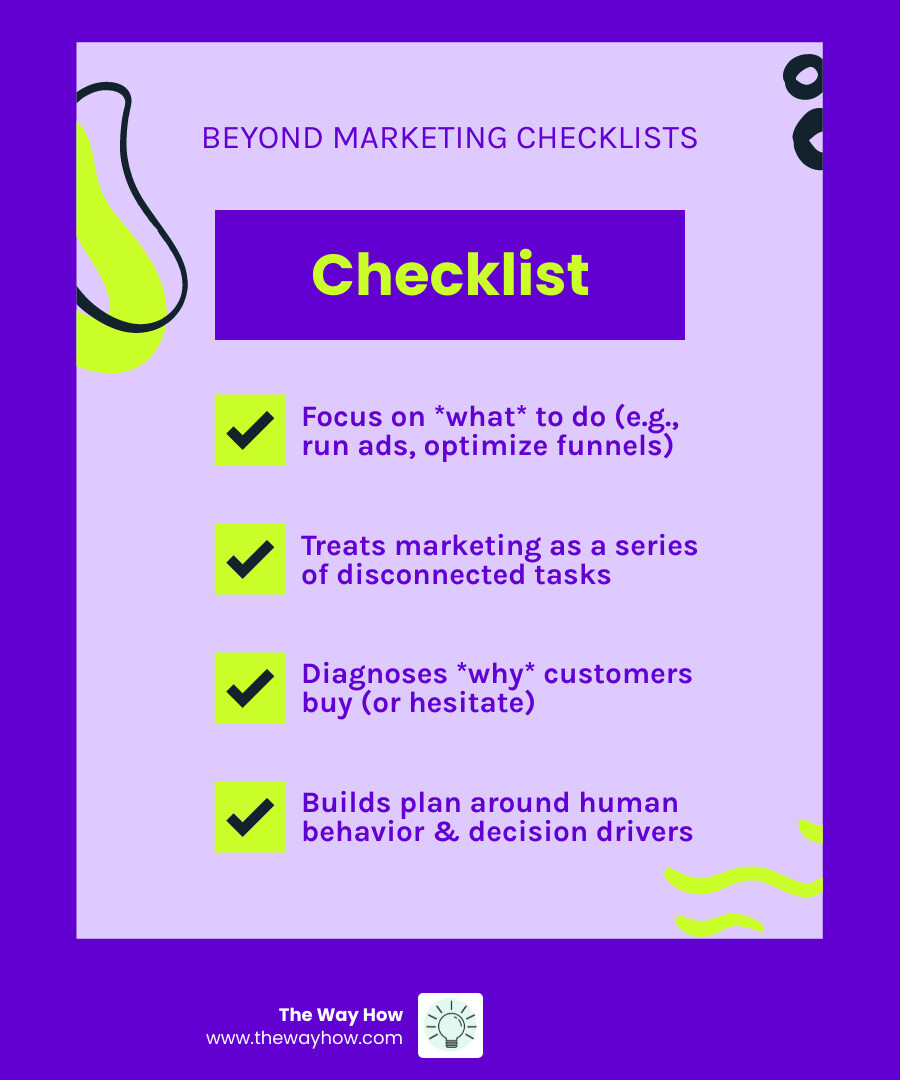
Most companies treat marketing like a checklist. They focus on what to do before understanding who they’re talking to and why that person would care. They build systems around tactics, not around the human behavior that drives decisions.
That’s where marketing strategy consulting comes in.
It’s not about running more ads or redesigning your website. It’s about stepping back, diagnosing what’s actually broken, and building a plan that reflects how people think, feel, and decide—not just how org charts are drawn.
The marketing landscape has changed dramatically. Digital, social, and mobile technologies have upended old engagement models. Consumers are better-informed, more skeptical, and divided in their attention. Data and analytics have raised expectations for marketing to prove its effectiveness. According to industry research on marketing and sales, many marketing organizations remain overwhelmed with short-term tasks, limiting their strategic influence on bottom-line issues.
A good marketing strategy consultant helps you cut through the noise. They bring an external perspective, deep expertise in buyer psychology, and a framework for connecting marketing activity to measurable business outcomes. They help you see what’s wrong, why it’s wrong, and how to fix it—without wasting more time, money, or trust.
I’m Jeremy Wayne Howell, founder of The Way How, and I’ve spent over 20 years helping companies diagnose why growth stalls and build psychology-first marketing strategy consulting systems that create predictable revenue. My work centers on understanding the human on the other side of the decision before recommending any tactic, channel, or tool.
Basic marketing strategy consulting terms:
The Real Reason Your Marketing Feels Stuck
When your marketing efforts feel like you’re constantly chasing your tail, it’s easy to blame the latest algorithm change or a new competitor. But often, the real culprit lies deeper. We’ve found that most businesses mistake symptoms for causes. A low conversion rate isn’t the problem; it’s a symptom of a deeper issue, often a fundamental lack of strategic clarity.
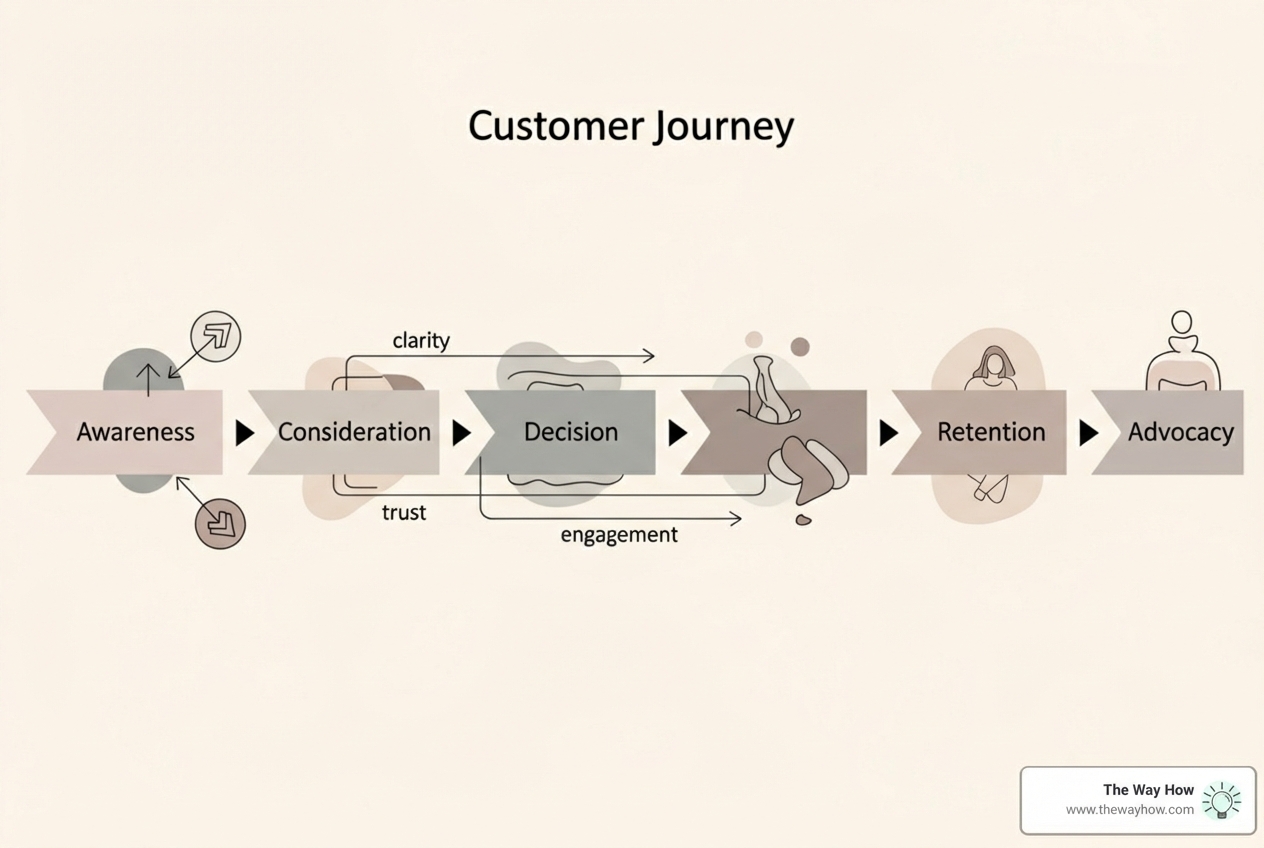
Many companies jump straight to execution, creating content, running ads, or dabbling in social media without a cohesive plan. This tactical approach often results in a disconnected customer journey, where potential buyers encounter fragmented messages and confusing pathways. They can’t build trust, and without trust, they won’t convert.
This leads to what we call “certainty gaps.” These are points in the customer journey where a potential buyer feels uncertain, confused, or lacks sufficient information to move forward. These gaps are rooted in human behavior and decision-making psychology. We diagnose these gaps by understanding how people actually think and feel when considering a purchase, rather than just observing their clicks. When we remove these certainty gaps, we create momentum.
Why Today’s Market Demands a Strategic Shift
The market today is a far cry from what it was even a decade ago. Digital, social, and mobile technologies haven’t just changed how we market; they’ve fundamentally upended the entire engagement model. Consumers are no longer passive recipients of advertising. They are better-informed, more skeptical, and their attention is fiercely divided across an “almost endless list” of content types, from videos to blogs to social media posts.
This digital change means that old models of marketing engagement are obsolete. Data analytics, while powerful, also heighten expectations. Marketing is now expected to prove its effectiveness with hard numbers. However, many marketing organizations are still overwhelmed with administrative tasks and short-term thinking, limiting their ability to impact the strategic, bottom-line issues that corporate boardrooms care about.
In this landscape, a strategic shift is not optional; it’s essential. We need to move beyond merely “doing marketing” to “strategically engaging humans.” This requires a deep understanding of human behavior to create genuine differentiation and build lasting trust. Without a clear, psychology-first strategy, businesses risk becoming another voice in the digital cacophony, struggling to capture and hold attention.
From Blueprint to Bottom Line: The Tangible Outcomes of Marketing Strategy Consulting
Our goal in marketing strategy consulting is always to move from a confusing map to a clear blueprint that drives real, measurable business outcomes. We’re not interested in busywork; we’re focused on helping you achieve sustainable, organic growth and a defensible competitive advantage. This means putting your customers at the center of your company’s sales and marketing strategy, ensuring that every action is aligned with their needs and behaviors.
When we engage with clients, we aim for end-to-end digital change that isn’t just about adopting new tools, but about fundamentally changing how you serve customers to earn their lasting devotion. We help you design systems that create trust, momentum, and predictable revenue, turning marketing into a dependable growth engine.
Core Services in Marketing Strategy Consulting
Effective marketing strategy consulting involves a comprehensive suite of services, all designed to work together to create a cohesive, behavior-driven plan. We don’t just provide recommendations; we work with you to embed change in organizational practices and processes, ensuring that the strategy translates into tangible results.
Our core services include:
- Market Research and Customer Segmentation: We dig deep beyond demographics to understand the psychographics, motivations, and pain points of your ideal customers. We use external research and quantitative analysis of sales data to define and prioritize customer segments, ensuring that your marketing speaks directly to their needs.
- Value Proposition and Brand Strategy: Based on our deep customer understanding, we help you articulate a compelling value proposition that resonates emotionally and logically. We craft brand strategies that differentiate you in the market, building trust and loyalty by addressing customer certainty gaps.
- Go-to-Market Strategy: We define the optimal path to market for your products or services, considering both direct and indirect models. This involves developing strategies that enable you to speak to the right customers in the right way at the right time, ensuring your message lands effectively.
- Channel Strategy: With the channel landscape rapidly evolving and digitizing, we help you understand customer journeys and channel requirements to develop optimal channel strategies. This includes integrating proven channels like email marketing, content marketing, and digital advertising into a unified, psychology-first plan that drives engagement and conversion.
- Pricing Strategy: Pricing is a critical commercial decision with significant impacts on both top-line and bottom-line results. We help you develop an optimal initial pricing framework and sales incentives that reflect perceived value and drive customer decision-making.
- Integration of Proven Channels: We design digital, offline, and channel marketing programs to achieve well-defined results, ensuring that every touchpoint in the customer journey builds trust and reduces uncertainty. This isn’t about chasing the latest trend; it’s about leveraging what we know works, rooted in human behavior, to create a predictable flow of leads and customers.
The Role of Technology and Digital Integration
Technology isn’t just a tool; it’s an enabler of strategic clarity and operational execution. Our approach to marketing strategy consulting heavily emphasizes aligning your MarTech stack to support your human-centric strategy. This means designing and implementing the right technology ecosystem to empower your teams and drive adoption of digital tools.
A key area of our expertise is HubSpot architecture. We help you leverage HubSpot’s capabilities to streamline your sales and marketing processes, automate customer journeys, and provide a unified view of your customer interactions. By optimizing your HubSpot instance, we ensure that your technology actively supports your psychology-first strategy, rather than creating friction.
We also focus on Customer Data Platforms (CDP), which unify customer data from various marketing and other channels. This unification improves customer insights, improves modeling and targeting, and ultimately drives customer lifetime value. By having a single, comprehensive view of your customers, you can personalize interactions and build stronger relationships based on genuine understanding.
AI in marketing is rapidly evolving, and we see its role as enhancing human insight, not replacing it. AI can help orchestrate next-best actions for personalized marketing at scale and personalize interactions to support loyalty, conversion, and revenue. However, its effectiveness is always dependent on the underlying human strategy: understanding why your customers make decisions.
We strive for data-driven decisions that link marketing activity to customer behavior and business outcomes. This means shifting reporting from historical analysis to real-time decision-making, allowing you to refine strategy and optimize spend continuously. We help you create a seamless omnichannel experience where digital, field, and third-party channels are connected for a coordinated journey, ensuring that interactions feel timely and relevant to the customer.
For readers who want a neutral, high-level definition of what marketing strategy involves (separate from any vendor or agency), see Marketing strategy.
Benefits for Every Business Size
The value of marketing strategy consulting extends across the spectrum of business sizes, though the specific benefits may manifest differently. Whether you’re a nimble startup or a sprawling enterprise, a clear, behavior-driven strategy is your foundation for predictable revenue.
- Small businesses: For smaller businesses, often run by founders and lean leadership teams, our consulting services are invaluable for establishing foundational strategy. We help maximize limited budgets by ensuring every dollar spent on marketing is aligned with customer behavior and designed to reduce certainty gaps. This builds early momentum, allowing you to scale efficiently and avoid costly tactical detours that drain resources. We help you define your unique path to market and avoid the “one size fits all” approach that often traps smaller players.
- Large enterprises: Large organizations face immense complexity. Our marketing strategy consulting helps in navigating this complexity by aligning disparate departments, often bogged down by administrative tasks, under a shared strategic vision. We drive innovation by focusing on customer-centric systems and leveraging technology like HubSpot architecture and CDPs to scale personalized experiences. For enterprises, the goal is to transform marketing into a strategic driver of growth, enhancing C-suite credibility and ensuring that marketing contributes to bottom-line issues, not just brand awareness.
Measuring Momentum, Not Just Metrics
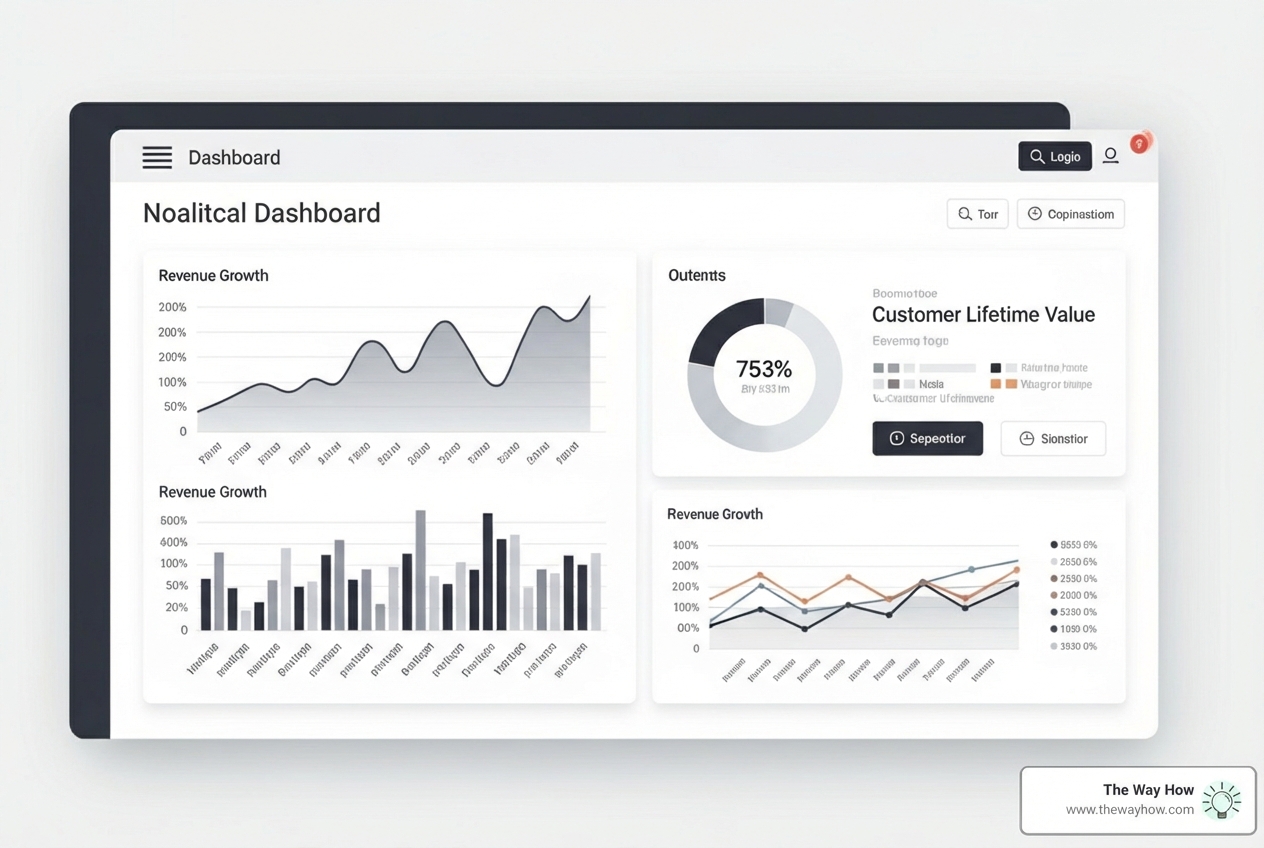
We measure momentum, not just metrics. What’s the difference? Metrics are data points; momentum is the sustained, predictable forward movement of your business. It’s about achieving consistent, scalable value. We help you connect your marketing efforts directly to ROI and meaningful business outcomes, moving beyond the “vanity metrics” that often look good on a report but don’t translate into revenue.
Our approach involves establishing clear Key Performance Indicators (KPIs) that are tied to buyer psychology and revenue. We use financial modeling to project the impact of strategic changes and to demonstrate the value of your marketing investment. This includes focusing on metrics like Customer Lifetime Value (CLV), a true indicator of sustainable growth, and implementing frameworks like the Net Promoter System™ to measure customer loyalty and its impact on your bottom line. We believe in proving effectiveness, not just through abstract numbers, but by showing how marketing becomes a dependable growth engine that directly impacts profitability.
Moving Beyond Vanity Metrics
Many businesses get caught up in tracking metrics that don’t truly reflect business health. Likes, impressions, website traffic – these can be vanity metrics if they aren’t directly tied to revenue or customer behavior change. Corporate boardrooms are primarily concerned with strategic, bottom-line issues, and marketing needs to speak that language.
We focus on building robust attribution models that connect every marketing activity to its contribution to revenue. This means we help you understand the full customer journey and identify which interactions truly drive decisions. Our goal is to ensure strong sales and marketing alignment, breaking down silos so that both teams are working from the same understanding of buyer psychology and toward shared revenue objectives. When marketing and sales are aligned, and both understand the certainty gaps in the customer journey, we can open up predictable revenue.
Demonstrating Return on Investment (ROI)
Demonstrating Return on Investment (ROI) for marketing is paramount, especially when discussing strategic changes with the C-suite. We begin by establishing baselines to understand your current performance before any strategic intervention. This provides a clear starting point for measuring progress.
Next, we use scenario modeling to forecast the potential impact of proposed strategies, allowing leadership to make informed decisions with a clearer understanding of potential outcomes. Our reports focus on reporting on business outcomes—revenue growth, increased CLV, reduced customer acquisition costs—rather than just marketing outputs. This approach builds C-suite credibility, changing marketing from a perceived cost center into a recognized driver of profitable growth. We help you communicate marketing’s value in terms that resonate directly with business objectives, ensuring that your strategic initiatives are seen as investments, not expenses.
Finding Your Guide: A Framework for Selecting the Right Partner
Choosing a marketing strategy consulting partner can feel like navigating a maze. With so many options, how do you find the right guide to lead you from uncertainty to clarity? It’s not about finding someone who promises quick fixes or the latest fad. It’s about finding a partner who understands the deep behavioral currents that drive your business forward.
What Sets a True Marketing Strategy Consultant Apart
A true marketing strategy consultant, particularly one aligned with our psychology-first approach, stands apart from general agencies or tactical implementers.
- Psychology-first approach: This is our cornerstone. We don’t just look at market trends; we dive into human behavior, empathy, and decision-making psychology. We believe that understanding why people buy, or hesitate, is the most powerful lever for growth. This means diagnosing certainty gaps and designing systems that build trust.
- Objectivity and independence: We bring an unbiased, external perspective, free from internal politics or preconceived notions. This allows us to diagnose problems accurately and recommend solutions that are truly in your best interest, not just what’s easy or familiar.
- Focus on diagnosis before prescription: We never jump to solutions. Our first step is always to understand the root cause of your stalled growth. We’re like detectives, uncovering the real problem before we even think about prescribing a fix. This prevents wasted resources on symptomatic treatments.
- Commitment to clarity and knowledge transfer: Our goal isn’t to make you dependent on us. It’s to empower you with clarity and transfer the knowledge and systems you need to sustain momentum long after our engagement. We build internal capabilities, not just external solutions.
- Long-term value creation: We’re focused on sustainable, organic growth and predictable revenue, not short-term spikes. Our strategies are designed to create lasting systems that continue to deliver value, making marketing a dependable growth engine for years to come.
Key Questions to Uncover Their Approach
When you’re evaluating potential marketing strategy consulting partners, the questions you ask are crucial. They should go beyond surface-level capabilities and probe their underlying philosophy and process.
Here are some key questions we encourage you to ask:
- How do they diagnose the real problem? Listen for a process that goes beyond analyzing data to understanding human behavior. Do they talk about certainty gaps, buyer psychology, or decision-making models? Or do they immediately jump to tactics?
- What is their process for understanding human behavior? This is critical for a psychology-first approach. Do they conduct deep qualitative research? Do they apply behavioral science principles? How do they translate behavioral insights into actionable strategy?
- How do they develop strategy, not just tactics? A true consultant builds the blueprint. An agency executes. Ask how they ensure their recommendations are foundational and integrated, rather than a series of disconnected campaigns.
- How do they measure success? Look for a focus on business outcomes (revenue, CLV, predictable pipeline) rather than vanity metrics (likes, impressions). Do they discuss financial modeling and C-suite credibility?
- What is their approach to team collaboration and knowledge transfer? A good consultant empowers your team. How do they involve your internal stakeholders? How do they ensure that the strategic insights and systems they build are embedded within your organization for long-term success?
The Role of a Marketing Strategy Consulting Partner
We view ourselves not just as vendors, but as strategic partners. Our role in marketing strategy consulting is multifaceted, designed to bring clarity, expertise, and sustainable momentum to your organization.
- Strategic advisor: We sit at the table with founders and leadership teams, offering an external perspective that challenges assumptions and identifies new opportunities. We help shape your overall direction, ensuring marketing is aligned with broader business goals.
- External perspective: It’s hard to see the forest for the trees when you’re inside the business every day. We provide fresh eyes, identifying blind spots and certainty gaps that internal teams might miss.
- Change management: Implementing a new marketing strategy often requires significant organizational change. We help you steer this process, ensuring that new practices and systems are adopted effectively across your teams.
- Building internal capabilities: A key part of our mission is to empower your team. We transfer knowledge, build robust systems (like optimized HubSpot architecture), and instill a psychology-first mindset so your organization can continue to thrive independently.
- Long-term value: Our focus is always on creating sustainable, predictable revenue. We design systems that build trust and momentum, ensuring your marketing efforts contribute to your long-term growth trajectory.
Frequently Asked Questions about Marketing Strategy Consulting
How much does marketing strategy consulting cost?
The cost of marketing strategy consulting can vary significantly, depending on the scope of the engagement, the complexity of your business challenges, and the specific expertise required. We’ve seen the strategy consulting market grow to over $30 billion in 2016, indicating the significant value businesses place on these services. This is a strategic investment in your business’s future, not a commodity.
Pricing models typically include:
- Project-based fees: For well-defined scopes, such as developing a new go-to-market strategy or diagnosing specific certainty gaps.
- Retainers: For ongoing strategic guidance, Fractional CMO leadership, or long-term partnership to implement and refine systems.
- Hourly rates: Less common for strategic engagements, but may apply for specific deep-dive analyses or ad-hoc advisory.
Factors influencing cost include the seniority of the consultants, the duration of the engagement, the depth of research required, and the level of implementation support needed. While it’s a significant investment, the potential for predictable revenue and sustainable growth often delivers a substantial ROI.
How long does a typical engagement last?
The duration of a marketing strategy consulting engagement is highly dependent on your specific needs and the complexity of the challenges we’re addressing.
- Short-term projects: A focused diagnosis of stalled growth or the development of a specific strategy (e.g., a new value proposition) might last anywhere from 1 to 3 months.
- Phased approach: For larger changes, we often break down the engagement into phases. An initial diagnostic phase might be followed by a strategy development phase, and then an implementation support phase, potentially spanning 6 to 12 months or more.
- Long-term partnerships: For clients seeking ongoing Fractional CMO leadership or continuous strategic guidance to ensure sustained momentum and predictable revenue, engagements can extend for years, evolving as your business grows and market conditions change.
Our aim is always to provide clarity and build robust systems quickly, but true strategic change and embedding new behaviors take time.
What’s the difference between a marketing agency and a strategy consultant?
This is a crucial distinction that often confuses businesses. While both can contribute to your marketing efforts, their fundamental roles and approaches differ significantly:
- Strategy vs. execution: A marketing strategy consulting firm, like The Way How, focuses on the “what” and the “why.” We build the foundational blueprint, diagnose certainty gaps, and define the overall direction based on buyer psychology. A marketing agency typically focuses on the “how”—executing campaigns, creating content, managing ads, or building websites based on an existing strategy.
- Diagnosis vs. prescription: We diagnose the root causes of stalled growth and recommend a comprehensive strategic plan. Agencies often prescribe tactics (e.g., “you need more social media ads”) without always understanding the underlying behavioral issues.
- Foundational plan vs. tactical services: We create the long-term, integrated plan that aligns all marketing efforts with business objectives and human behavior. Agencies provide specific tactical services within that plan.
- Long-term direction vs. campaign management: Our focus is on building sustainable systems that deliver predictable revenue over the long haul. Agencies often manage individual campaigns with shorter-term objectives.
Think of it this way: if your house has foundation issues (stalled growth, certainty gaps), you hire a structural engineer (marketing strategy consulting) to diagnose the problem and design a fix. Once the blueprint is clear, you hire a builder (marketing agency) to execute the construction. Both are essential, but their roles are distinct.
From Uncertainty to a Clear Path Forward
The journey from feeling stuck and uncertain about your marketing to having a clear, predictable path forward is transformative. We believe that by focusing on human behavior, empathy, and decision-making psychology, we can help founders and leadership teams remove uncertainty in their sales and marketing systems.
Our work at The Way How is dedicated to helping you achieve predictable revenue by designing systems that build trust and gain momentum with your customers. This begins with strategic clarity: understanding why your customers buy and where their certainty gaps lie. It’s followed by precise operational execution of a strategy rooted in these behavioral insights.
If you’re ready to stop chasing tactics and start building a marketing engine that consistently delivers, we’re here to help you find your way.