
Beyond the Handshake: The Science of Affinity

Liking principle marketing is the practice of applying a simple but powerful psychological truth — people say yes to those they like — to build brand trust, increase conversions, and drive sustainable revenue growth.
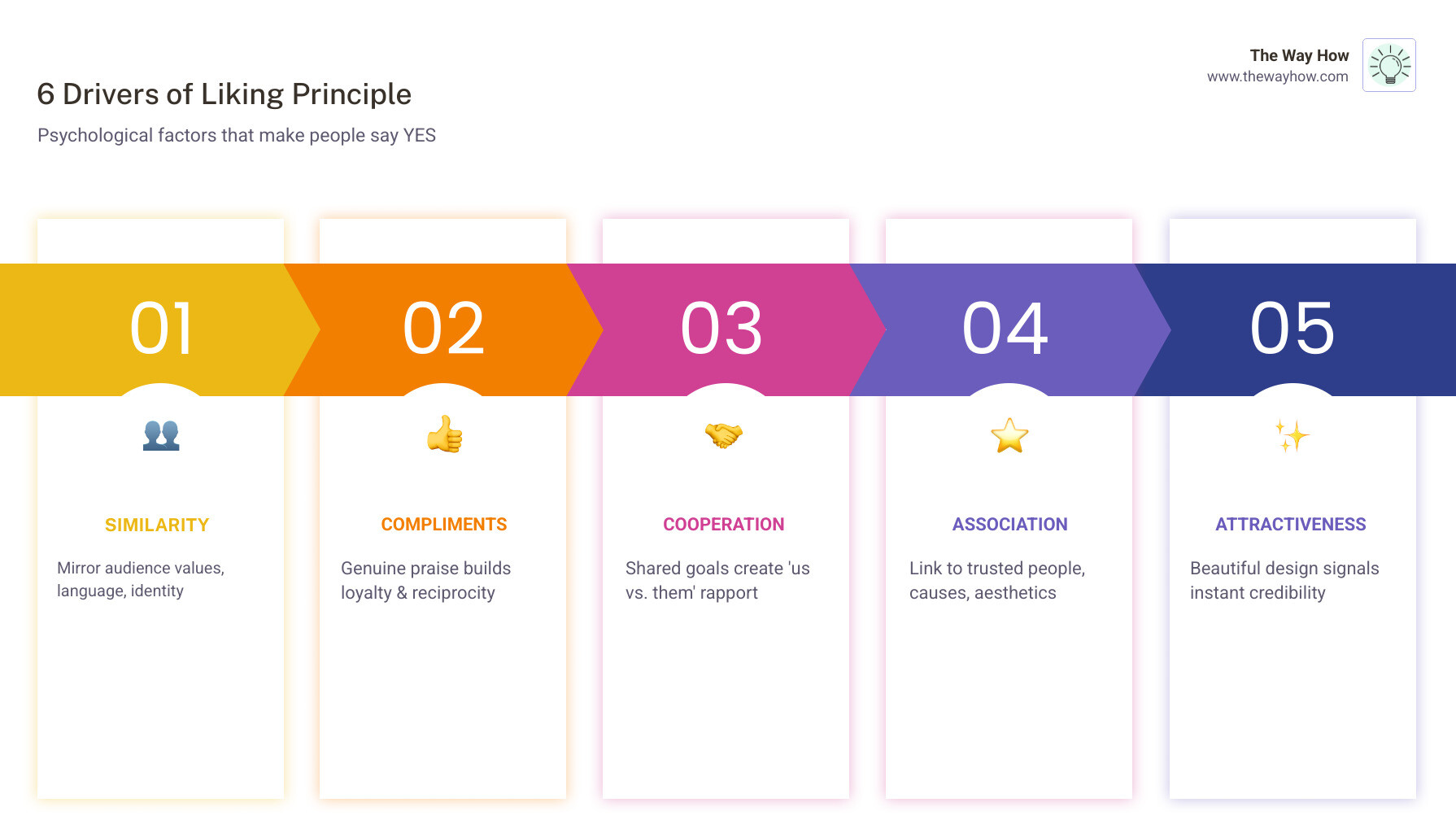
Here is what that looks like in practice:
| Driver | What It Means for Marketers |
|---|---|
| Similarity | Mirror your audience’s values, language, and identity |
| Compliments | Validate customers genuinely — they respond with loyalty |
| Cooperation | Use collaborative language and shared goals to build rapport |
| Association | Connect your brand to people, causes, or aesthetics your audience already trusts |
| Physical Attractiveness | Beautiful design signals credibility before a word is read |
| Familiarity | Consistent presence builds trust over time through the mere-exposure effect |
Most marketers think liking is a soft skill. Something you either have or you don’t. But Dr. Robert Cialdini’s research — laid out in his foundational book Influence: The Psychology of Persuasion — tells a different story. Liking is measurable, repeatable, and teachable.
Consider the Tupperware party. Research found that guests were twice as likely to buy based on their affection for the hostess — a friend — than on any assessment of the product itself. The social bond mattered more than the sales pitch. That dynamic plays out in every marketing channel you use today, from your website to your inbox to your sales calls.
The real problem for most founders and revenue leaders isn’t that their product is weak. It’s that their brand isn’t liked enough to lower the psychological barrier to yes.
I’m Jeremy Wayne Howell, founder of The Way How — a psychology-first marketing firm — and over 20 years in revenue strategy, I’ve seen liking principle marketing quietly determine outcomes in rooms where logic should have won. This guide breaks down the science, the strategy, and the practical application so you can stop leaving affinity on the table.
Common Liking principle marketing vocab:
Decoding the Liking Principle in Marketing
At its core, the Liking Principle is one of the six major weapons of persuasion identified by Dr. Robert Cialdini. It suggests that we are significantly more likely to be influenced by people we know and like. In business, this isn’t just about being “nice”; it’s about understanding What Is Liking Principle? | Importance in Business & Marketing Strategies to create a competitive advantage.
When we face a decision, our brains look for cognitive shortcuts. Instead of analyzing every technical specification of a software package or the fabric blend of a shirt, we often ask a simpler, subconscious question: “Do I like the person or brand asking me to buy this?” If the answer is yes, trust follows, and the perceived risk of the transaction drops.
The Psychology of the Liking Principle in Marketing
Our brains are hardwired for affinity bias. This stems from our evolutionary history where “in-group” favoritism was a survival mechanism. We trusted those who were like us because they were less likely to be a threat. Today, that same psychological root causes us to favor brands that reflect our own identity.
When we see a brand that shares our values or speaks our “language,” we categorize them as part of our tribe. This reduces uncertainty in the decision-making process. We aren’t just buying a product; we are validating our own self-concept by associating with something that feels familiar and safe.
Why We Say Yes to People We Like
The pressure to say “yes” to someone we like is often driven by a sense of friendship-obligation. We don’t want to let down someone we have a positive connection with. This is why social validation is so powerful; if we like a brand, we view their requests as helpful suggestions rather than intrusive sales pitches.
Neuromarketing research shows that reciprocal affection—the simple act of liking someone because they like us—is one of the most reliable drivers of persuasion. When a brand shows genuine interest in its customers, the customers feel a psychological pull to return the favor through loyalty and purchases.
The Six Pillars of Persuasive Likability
To move beyond theory and into execution, we must look at the specific factors that drive likability. These aren’t random; they are specific levers we can pull to adjust how our brand is perceived in the market.
Understanding Marketing Psychology: How to Use the Liking Principle to Grow Your Business requires mastering these six pillars.
Building Rapport Through Similarity
We like people who are similar to us. This goes beyond demographics like age or location; it’s about psychographics—values, communication styles, and even humor.
| Feature | Demographic Similarity | Psychographic Similarity |
|---|---|---|
| Focus | External traits (Age, Gender) | Internal traits (Values, Beliefs) |
| Connection | Surface-level | Deep emotional resonance |
| Marketing Use | Ad targeting | Brand voice and messaging |
| Trust Level | Moderate | High |
In our work at The Way How, we often find that growth stalls because a brand’s voice doesn’t “mirror” its audience. If you are selling to high-level engineers, your copy should reflect their precision and logic. If you’re selling to creative entrepreneurs, it should reflect their energy and vision.
The Power of Sincere Compliments
Humans have an automatic positive reaction to praise. Even when we know a compliment might be part of a sales process, it still produces a positive feeling. This is a “social gift” that validates the recipient’s self-concept.
In digital marketing, this can be automated flattery—think of a fitness app sending a “You’re a rockstar!” notification after a workout. However, the most effective compliments are those that feel earned. Highlighting a customer as a “flagship” case study is the ultimate compliment; you are telling them, and the world, that they are a success story.
Cooperation Toward Mutual Goals
Working together toward a common goal is one of the fastest ways to build rapport. This is why collaborative language is so effective. Research shows that sales representatives who use words like “us,” “we,” and “our” are 10 times more likely to close a deal.
This fosters a sense of fellowship. Instead of a vendor-client relationship, you create a partnership. Purpose-driven marketing—where a brand rallies its audience around a shared cause—leverages this beautifully. When we work together to solve a problem, liking is the natural byproduct.
Association and the Halo Effect
We like things that are connected to people or ideas we already admire. This is the principle of association. When a brand uses a celebrity endorsement or aligns with a trusted influencer, the positive feelings we have for that person are transferred to the brand.
This is known as the “Halo Effect.” If we like the messenger, we assume the message (and the product) is also high-quality. This isn’t just for B2C; in B2B, associating your brand with industry-leading partners or prestigious certifications provides the same status signaling and trust.
Physical Attractiveness and Design Credibility
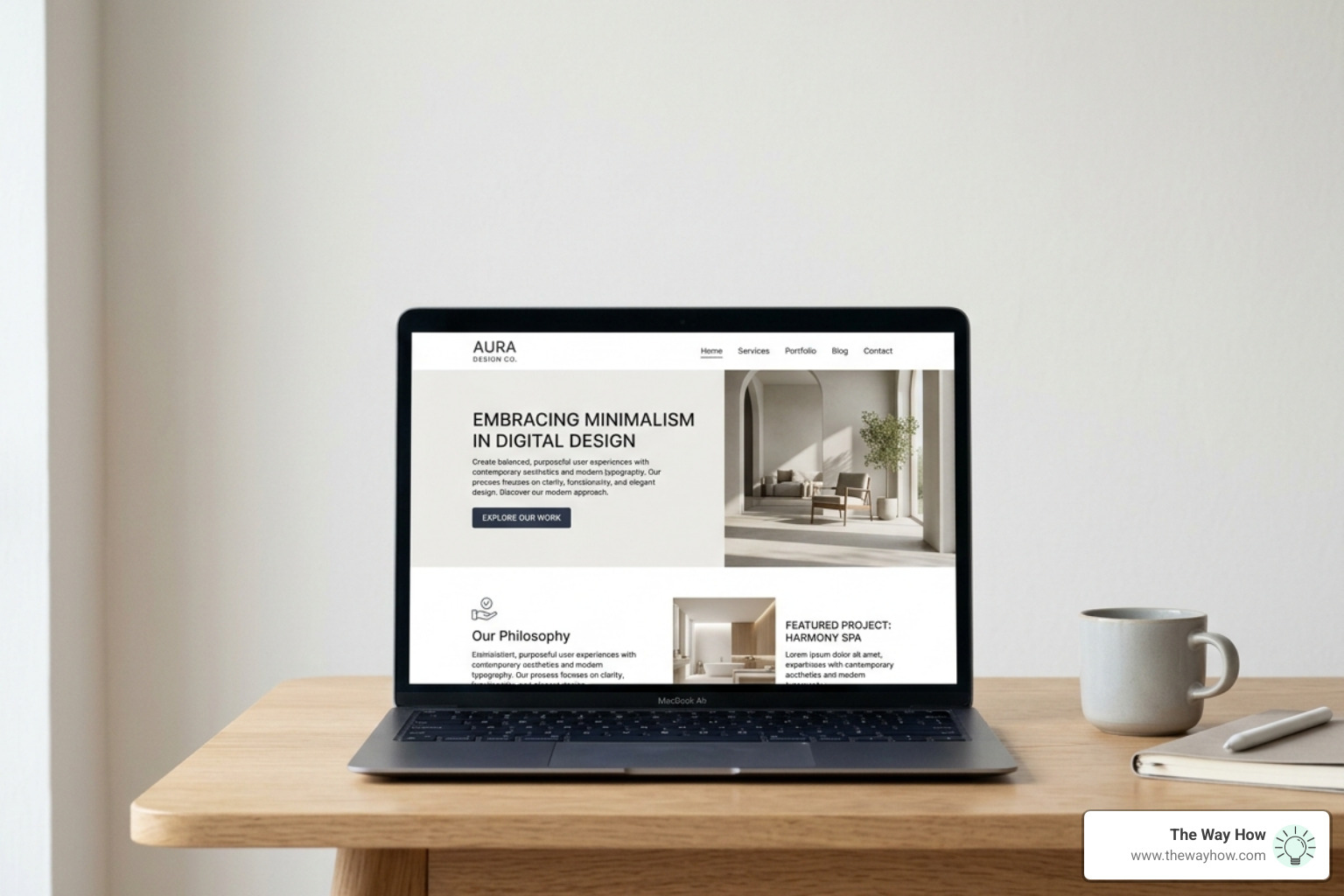
It may seem superficial, but physical attractiveness is a “cold, hard fact” of persuasion. This applies to your website and branding just as much as it does to people. Research shows that 75% of judgments on a company’s credibility are based entirely on its website’s aesthetics.
These impressions happen in milliseconds. A clean, professional, and modern design suggests that the company is competent, honest, and successful. If your virtual storefront looks dated or cluttered, you are creating a “certainty gap” that no amount of clever copy can close.
Familiarity and the Mere-Exposure Effect in Liking Principle Marketing
The more we are exposed to something, the more we tend to like it. This is the mere-exposure effect. Consistent visibility builds a sense of “safe” familiarity. We feel reassured by a logo or a brand voice we’ve seen a thousand times.
However, there is a fine line. You must maintain consistent presence without causing “wear-out.” The key is to keep the core message stable while varying the creative execution. This builds trust through presence, making your brand the “familiar friend” in a sea of unknown competitors.
Humanizing the Digital Storefront: From Pixels to People
No one likes being marketed to by a faceless corporate entity. To leverage liking principle marketing, you must put a human face on your business.

Start with your “About Us” page. Instead of stiff, corporate bios, share personal stories and passions. Show your team with their pets or in their natural environments. This builds similarity and relatability.
When applying Using the Liking Principle in Marketing (Examples and More!), consider how you handle customer support. Putting a name and a face to a support ticket—using “I’m here to help” instead of “Your request has been received”—instantly humanizes the interaction and lowers defensiveness.
Applying the Liking Principle Marketing in Email and Social Media
Email and social media are the perfect playgrounds for building affinity.
- Personalized Video: Sending a quick, unpolished video message to a prospect builds instant rapport that text never could.
- User-Generated Content: Sharing photos of real customers using your product (with their permission) signals that “people like you like this.”
- Humorous Brand Voice: Humor is a disarming tool. It makes people let their guard down and see the brand as a “funny friend” rather than a corporation.
Brands like Fitbit and Topgolf excel at this by creating communities where users feel seen and appreciated, turning a transaction into a relationship.
Moving from Vendor to Partner: Liking in High-Stakes Sales
In B2B sales, where solutions are often complex and similar on paper, the human element is often the deciding factor. Building rapport isn’t just a “soft skill”; it’s a hard-edged competitive advantage.
One powerful tactic is the Gain-Loss Effect. Research suggests that we actually like people more if they were initially skeptical of us but were eventually “won over.” Sharing a story of a customer who was hesitant but became a raving fan is often more persuasive than a story of someone who loved you from day one. It feels more authentic.
When we frame our engagements as collaborative partnerships aimed at mutual success, we reduce the perceived risk for the buyer. We aren’t just selling a service; we are joining their team.
The Fine Line Between Rapport and Manipulation
The Liking Principle is a tool, and like any tool, it can be misused. The difference between ethical influence and manipulation is authenticity.
Inauthentic flattery is often easy to spot and can lead to a “loss of esteem” that is incredibly hard to recover from. Similarly, choosing an influencer solely for their reach, rather than their alignment with your brand values, creates a “mismatch” that confuses the audience and erodes trust.
To measure the effectiveness of your efforts, look beyond “likes” and “shares.” Track metrics like:
- Referral Rates: Do your customers like you enough to put their own reputation on the line?
- Customer Lifetime Value: Does the initial affinity translate into long-term loyalty?
- Sales Cycle Length: Is rapport helping you close deals faster by reducing friction?
Frequently Asked Questions about the Liking Principle
What is the Liking Principle according to Robert Cialdini?
It is the psychological phenomenon where people are more likely to comply with requests from individuals they know and like. It is driven by six key factors: similarity, praise, cooperation, association, physical attractiveness, and familiarity.
How does the Tupperware party experiment prove this principle?
Research into Tupperware parties showed that the social bond between the guest and the hostess (the “liking”) was twice as influential in the purchase decision as the quality or price of the product itself. This proves that we often buy from people we like, regardless of the product.
What are the most common mistakes when using liking in marketing?
Common errors include using influencers who don’t genuinely align with the brand, using “fake” or overly generic flattery, and failing to humanize the brand, which makes the company feel like a faceless, untrustworthy corporation.
Turning Affinity into Predictable Revenue
At The Way How, we don’t believe in chasing the latest marketing “hacks.” We believe in diagnosing why growth has stalled and identifying the “certainty gaps” in your customer journey. Often, that gap is a lack of affinity.
By applying liking principle marketing through a structured, psychology-first lens, we help founders and leadership teams build systems that create genuine trust and momentum. Whether it’s through Fractional CMO leadership or optimizing your HubSpot architecture to feel more human, our goal is to turn your marketing into a dependable growth engine.
If you’re ready to stop guessing and start building a brand people actually like doing business with, let’s talk.