

From Hamster Wheel to Growth Engine: A New Way to Think About Automation

HubSpot marketing automation is a system that uses behavioral triggers and CRM data to deliver personalized customer experiences at scale. Here’s what it does:
- Automates repetitive marketing tasks like email follow-ups, lead scoring, and task creation
- Responds to customer behavior by triggering actions based on form submissions, email clicks, or website visits
- Unifies marketing, sales, and service data in one central CRM for seamless team collaboration
- Personalizes customer journeys using dynamic content, progressive profiling, and multi-channel coordination
- Provides analytics and reporting to measure ROI, attribution, and campaign performance
Key benefits: Businesses using HubSpot marketing automation see up to 80% more leads, 14% higher sales productivity, and improved lead quality through data-driven personalization.
You’re doing everything right on paper.
You’re sending emails. You’re posting on social. You’re running ads. Your team is busy, your calendar is full, and your tools are supposed to be helping.
But the leads aren’t converting. The pipeline feels unpredictable. And you can’t shake the feeling that your marketing is just noise — not a system that actually builds momentum.
Here’s what’s actually happening: You’re running on a hamster wheel, not a growth engine.
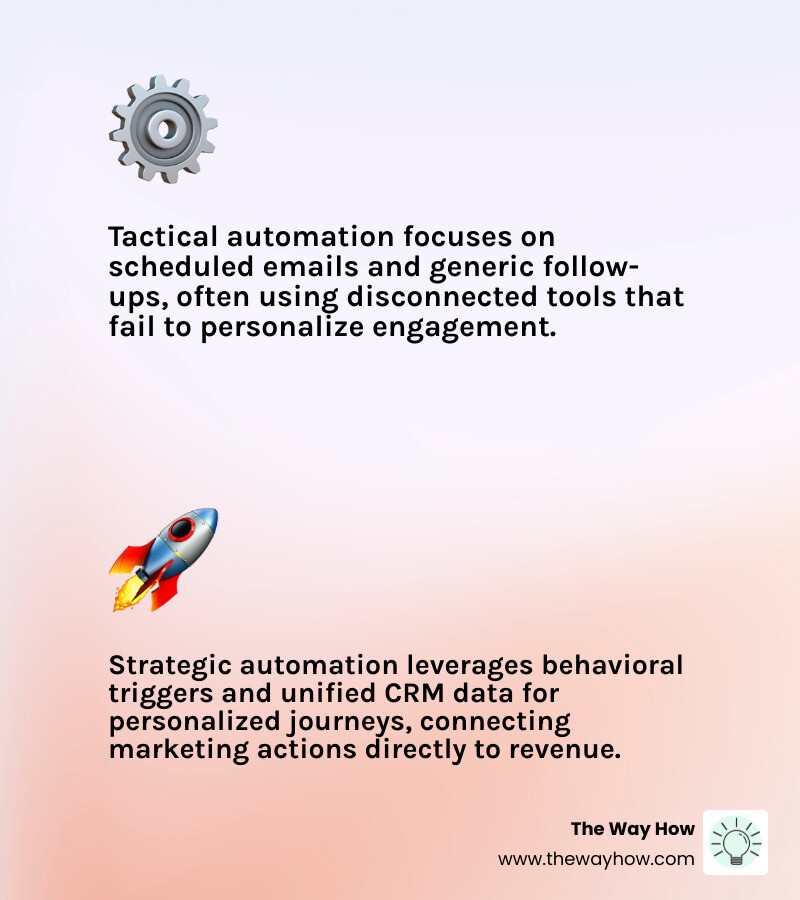
The difference? A hamster wheel is activity without direction. A growth engine is a system that listens, responds, and compounds over time.
Most marketing automation fails because it’s built backward. It starts with tactics — “Let’s automate our emails” — instead of strategy. It treats people like data points instead of humans making decisions under uncertainty.
HubSpot marketing automation, done right, is different.
It’s not about sending more emails. It’s about building a system that responds to human behavior, removes friction from the customer journey, and creates trust at scale. It’s about turning your CRM into a central nervous system that connects marketing, sales, and service into one cohesive experience.
This guide will show you how to build that system. Not with hacks or shortcuts, but with clarity, structure, and a psychology-first approach that actually works.
What HubSpot Marketing Automation Is (and What It Isn’t)
At its heart, HubSpot marketing automation is the process of using software to automate marketing activities based on consumer actions. Think of it as a sophisticated, always-on assistant that observes digital body language and responds intelligently. When a prospect subscribes to a newsletter, completes a form, or interacts with your website, HubSpot can automatically trigger a sequence of personalized communications and internal tasks.
But here’s what it isn’t: it’s not a “set it and forget it” tool where you simply flip a switch and watch the magic happen. True, it automates repetitive tasks, freeing your team from the hamster wheel of manual follow-ups and data entry. This allows your team to focus on strategy and creativity, rather than getting bogged down in the mundane. However, the intelligence of the automation comes from careful design and a deep understanding of human behavior. It’s a system for listening to your audience’s needs and building trust at scale by delivering timely, relevant messages. For those new to the platform, exploring resources like HubSpot for Beginners can provide a solid foundation.
Understanding the Core Principle: Responding to Human Behavior
The real power of HubSpot marketing automation lies in its ability to respond to human behavior. Instead of broadly sending out messages, it leverages behavioral triggers. Each action a prospect takes—a page view, a download, an email click—becomes a valuable data point. This allows us to move beyond generic demographics and deliver the right content at precisely the right time, addressing their immediate needs and interests.
Our psychology-first approach emphasizes that effective automation isn’t about pushing messages; it’s about creating a responsive dialogue. By understanding the decision-making psychology behind these actions, we can design automation that feels empathetic and helpful, not intrusive. This personalized communication nurtures leads more effectively, driving conversions because it resonates with the individual. Understanding your audience deeply through tools like the HubSpot Personas Guide is crucial for this.
The Main Benefits of a System-Driven Approach
When we implement HubSpot marketing automation with strategic clarity, the benefits are transformative:
- Increased Efficiency: Automating repetitive tasks saves significant time and resources. This allows your team to shift from reactive tasks to proactive, strategic thinking and creative work.
- Deeper Lead Nurturing: Personalized communication, custom to prospect actions, nurtures leads more effectively, building stronger relationships and guiding them through their journey.
- Improved Team Alignment: By centralizing customer data and automating handoffs, marketing, sales, and service teams operate from a unified understanding, eliminating silos and fostering collaboration. Businesses using marketing and sales automation typically see better alignment between teams.
- Data-Driven Decisions: Comprehensive analytics provide insights into what’s working and what’s not, allowing for continuous optimization of campaigns and strategies. This leads to confident, data-backed decisions rather than gut feelings.
- Higher Lead Quality: Automation allows for sophisticated lead scoring and qualification, ensuring sales teams focus their efforts on the most engaged and ready-to-buy prospects. Businesses using marketing and sales automation typically see improved lead quality and higher conversion rates.
- Increased Sales Productivity: With higher quality leads and automated administrative tasks, sales teams can dedicate more time to selling. According to an Oracle report, HubSpot marketing automation can increase leads by 80% and boost sales productivity by 14%. Seventy percent of businesses state that reaching customers more accurately is the top benefit.
These benefits are why HubSpot has been recognized by Gartner as a leader in B2B Marketing Automation Platforms for four consecutive years.
The Engine Room: How HubSpot Unifies the Entire Customer Experience
At The Way How, we view the HubSpot CRM as the central nervous system of your entire business. It’s where all customer interactions, data, and processes converge, creating a single source of truth. This centralized data is the foundation for effective HubSpot marketing automation, allowing us to break down traditional silos between departments and ensure a seamless customer experience from first touch to loyal advocate. For a deeper dive into its structure, exploring HubSpot CRM Architecture is highly recommended.
The CRM: Your System’s Central Nervous System
The HubSpot CRM is more than just a contact database; it’s the intelligence hub that fuels your automation. It stores rich data through contact properties and company records, building a comprehensive timeline of every interaction. This wealth of information is precisely what we leverage to trigger automation.
Imagine a contact property indicating a specific product interest. We can use that to enroll them in an automated workflow delivering custom content. Personalization tokens allow us to dynamically insert this data into emails and website content, making every message feel genuinely one-to-one. Furthermore, list segmentation based on CRM data ensures that automation reaches the most relevant audience, guaranteeing that every automated step is meaningful and impactful. This integration of data is key to effective HubSpot CRM Marketing.
Key Features for Implementing marketing automation hubspot
HubSpot offers a robust suite of features designed to build sophisticated automation systems:
- Workflows: These are the backbone of advanced automation, allowing us to create complex, multi-step journeys triggered by specific events or contact properties. Workflows can automate email sends, update contact records, assign tasks, rotate leads, and much more.
- Sequences: Perfect for sales teams, sequences automate a series of personalized emails and tasks to nurture individual leads over time, ensuring timely follow-ups without manual effort.
- Chatbots: These interactive tools can qualify leads, answer common questions, and route inquiries to the right team members, automating initial customer interactions.
- Email Drip Campaigns: A classic automation tool, drip campaigns deliver a pre-written series of emails over a set period, ideal for welcoming new subscribers or educating prospects.
- Lead Scoring: Automatically assigns points to leads based on their engagement and demographic data, helping sales prioritize the hottest prospects.
- Task Creation: Automate the creation of tasks for your team members based on specific triggers, ensuring no follow-up falls through the cracks.
- Internal Notifications: Keep your team informed with automated alerts when important events occur, such as a high-value lead visiting your pricing page.
These features, among others detailed in HubSpot Features, allow us to design highly responsive and efficient marketing automation systems. HubSpot also allows automation across various marketing types, including CRM, Social Media, Advertising, Mobile, Analytics, Email, Lead Management, and Omni-channel efforts, creating a truly unified approach.
Streamlining Cross-Team Processes for a Cohesive Journey
One of the most significant advantages of HubSpot marketing automation is its ability to streamline processes across marketing, sales, and support, fostering a truly cohesive customer journey. This interconnectedness breaks down the traditional departmental walls that often create friction for customers.
- Marketing to Sales Handoffs: Automation ensures that when a lead is qualified, it’s automatically routed to the right sales representative with full context of all prior marketing interactions. This eliminates fumbling and allows sales to pick up the conversation seamlessly.
- Sales Activities Triggering Marketing Workflows: HubSpot facilitates a bi-directional sync, meaning sales activities (like a deal stage change) can trigger marketing workflows. For example, if a deal closes, it can automatically initiate a customer onboarding email series from marketing.
- Service Tickets Informing Content Strategy: When support teams log common customer issues, these service tickets can inform marketing about content gaps or areas where customers need more education. This closed-loop reporting ensures that marketing efforts are continuously refined based on real-world customer needs, preventing future issues.
- Unified Customer Timeline: All teams view the same comprehensive customer timeline, ensuring everyone has a complete understanding of the customer’s journey and interactions.
By leveraging tools within the HubSpot Operations Hub, we can orchestrate these cross-team processes, ensuring that every customer interaction, regardless of department, feels like a natural continuation of a single, supportive conversation.
Designing Your Automation Blueprint: From Theory to Tangible Growth
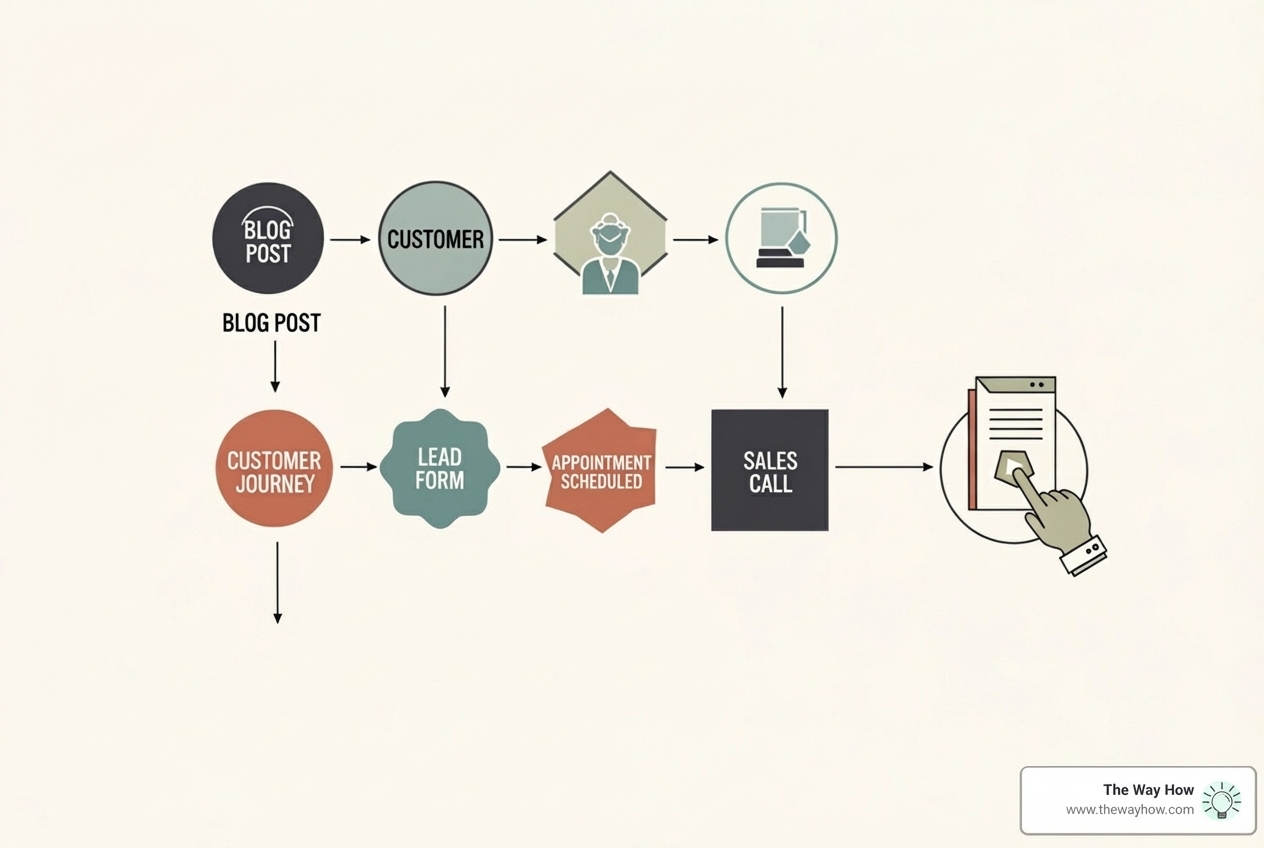
Building an effective HubSpot marketing automation system isn’t about randomly setting up triggers; it’s about designing a blueprint that aligns with human behavior and your business goals. We always start with a diagnosis, looking at why growth might be stalled and where uncertainty exists in your current customer journey. We then carefully map the customer journey, identifying key touchpoints and potential “certainty gaps” where prospects might disengage.
This blueprint then guides the implementation of automation, ensuring every step serves a purpose in building trust and guiding the customer forward. Best practices involve continuous optimization and A/B testing, because human behavior is dynamic, and our systems must evolve with it.
Practical Examples of marketing automation hubspot in Action
Here are some real-world applications where HubSpot marketing automation shines, making complex processes feel seamless:
Lead Nurturing:
- Welcoming New Subscribers: Automatically send a personalized welcome email series when someone subscribes to your newsletter, introducing your brand and offering valuable resources.
- Re-engaging Cold Leads: If a lead hasn’t engaged in a while, an automated workflow can send a series of re-engagement emails, perhaps offering a special incentive or survey to understand their current needs. HubSpot Drip Campaigns are perfect for this.
Internal Efficiency:
- Lead Rotation & Assignment: Automatically assign new leads to sales reps based on predefined criteria (e.g., territory, industry, lead score), ensuring fair distribution and prompt follow-up.
- Task Assignment: When a contact reaches a certain stage in their journey, automatically create a task for a sales rep to call them, or for a marketing specialist to prepare a personalized offer.
Customer Onboarding:
- Welcome Series: After a customer makes a purchase or signs up for a service, automate a series of emails guiding them through product setup, key features, and helpful resources.
- Feature Education: Based on product usage data, send automated emails highlighting features a customer hasn’t explored yet, enhancing their experience and retention.
E-commerce Automation:
- Abandoned Cart Reminders: If a customer adds items to their cart but doesn’t complete the purchase, an automated email can remind them of their items, perhaps offering a small discount to encourage completion. HubSpot E-commerce Automation can significantly boost conversions here.
- Post-Purchase Follow-ups: Automatically send thank-you notes, delivery updates, or requests for product reviews after a purchase.
These examples demonstrate how automation, when designed thoughtfully, anticipates human needs and delivers value at every stage of the customer journey.
Best Practices for Implementation and Optimization
Implementing HubSpot marketing automation effectively requires a strategic mindset. Here are our best practices for building a system that delivers predictable growth:
- Start with Clear Business Processes: Before you automate anything, clearly define your manual processes. As the HubSpot Academy course emphasizes, understanding the importance of set business processes is paramount. Automation should improve, not mask, poorly defined workflows.
- Segment Your Audience Deeply: Generic messages alienate. Use your CRM data to segment contacts into specific groups based on behavior, demographics, and interests. The more precise your segmentation, the more relevant your automated messages will be. Segment and target high-quality leads using the lists tool before setting up automation.
- Personalize Everything Without Being Creepy: Leverage personalization tokens and dynamic content to make every communication feel unique. This means not just using a first name, but tailoring content to their expressed interests, past interactions, and stage in the buyer’s journey. Focus on the quality and relevance of communication to avoid being disruptive.
- Test and Measure Relentlessly: Automation is not static. Always test your workflows before activating them. Conduct A/B tests on email subject lines, call-to-action buttons, and content variations to continually improve performance. Review your workflow performance from the workflow details page and troubleshoot errors or enrollment issues as they arise.
- Clean Your Data Regularly: The effectiveness of your automation hinges on the quality of your CRM data. Implement processes for regular data hygiene to ensure accuracy and relevance.
- Integrate with Inbound Efforts: Ensure your automation complements your inbound strategy, enriching the customer experience rather than replacing human interaction.
To truly master this, we recommend you implement an automation strategy with this HubSpot Academy course. It’s a free, comprehensive resource designed to help you streamline business operations and save time.
Measuring What Matters: Proving the Impact of Your Automation System
For us, measuring the impact of your HubSpot marketing automation system goes far beyond simple open rates or clicks. We focus on connecting every marketing action to tangible business outcomes and revenue. This involves moving from a tactical view to a strategic one, proving the return on investment (ROI) and demonstrating how automation contributes directly to predictable growth.
Using Analytics to Refine Your Strategy
HubSpot’s robust analytics and reporting tools are crucial for understanding and refining your automation strategy:
- Attribution Reporting: This allows us to see exactly which marketing touchpoints contribute to conversions and revenue. It helps identify revenue-driving campaigns and understand the full customer journey, rather than just the last click.
- Campaign Analytics: Dive deep into the performance of individual campaigns, understanding engagement, conversion rates, and overall effectiveness.
- Workflow Performance: HubSpot provides detailed analytics for each workflow, allowing us to review its performance, identify drop-off points, and troubleshoot any issues. This helps us optimize individual steps and overall journeys.
- Understanding Customer Buying Journeys: By analyzing conversion paths, we gain insights into how customers interact with our content and move through the sales funnel. This diagnostic approach helps us identify certainty gaps and make more informed, data-driven decisions.
- Engagement Scoring: Track and score how prospects interact with your content, emails, and website. This helps pinpoint your most valuable content and understand what resonates with your audience.
These analytics transform gut feelings into confident, data-driven decisions, allowing us to continuously improve the efficacy of our automation systems. This also extends to tracking the performance of your HubSpot Ads for a holistic view.
Reporting for Leadership: Demonstrating Real Business Impact
Translating automation’s success into metrics that matter to leadership is vital for justifying investment and demonstrating marketing’s strategic value:
- Shared Dashboards: Create customized, shared dashboards that provide real-time visibility into key performance indicators (KPIs) relevant to both marketing and sales.
- Visualizing Marketing’s Impact on Sales: Clearly demonstrate how marketing-generated leads progress through the sales pipeline and contribute to closed-won deals. This helps leadership see the direct correlation between marketing efforts and revenue.
- Calculating ROI: Present clear ROI calculations for your automation efforts, showing how the investment in HubSpot and strategic automation translates into increased revenue and reduced operational costs.
- Demonstrating Improved Efficiency: Quantify the time saved by automating repetitive tasks, allowing leadership to understand the operational efficiencies gained and how resources are being reallocated to higher-value activities.
By focusing on these metrics, we can confidently articulate the business impact of HubSpot marketing automation, positioning it as a critical driver of growth and a strategic investment.
The Future of Connection: Automation in the Age of AI Search
The landscape of digital findy is undergoing a seismic shift, largely driven by AI search. As experts in demand generation strategies rooted in human behavior, we recognize that this fundamentally rewrites how users find content. The new reality for marketers is that while there might be fewer website visits overall, those who do visit have significantly higher purchase intent. Generic content is losing its impact, as AI overviews and chat-based search engines answer simple questions before users even click a link. According to the insights presented in The State of AI in 2025 Report, this evolution demands a new level of hyper-personalization in our strategies.
How AI is Reshaping the Customer Journey
AI search is not just changing SEO; it’s redefining the entire customer journey:
- Chat-based Search Engines: Platforms like Perplexity and ChatGPT now provide direct answers to queries, intercepting up to 25% of traditional search traffic. This means the top-of-funnel findy phase is shifting.
- AI Overviews: Traditional Google search results increasingly feature AI overviews, which often provide comprehensive answers directly on the search results page, leading to fewer clickthroughs to websites.
- Top-of-Funnel Traffic Shifts: While AI search captures a significant portion of top-of-funnel traffic, it ultimately delivers more qualified clicks to websites. Users who do steer to your site are often further along in their decision-making process.
- The New Role of Your Website: Your website becomes less about broad awareness and more about deep engagement and conversion for high-intent visitors.
This evolution means our marketing automation systems must adapt to meet these more qualified, intent-driven visitors with immediate relevance and value. Leveraging AI to understand customer sentiment, as explored in Use AI to Decode Customer Feedback, becomes critical.
Adapting Your HubSpot Strategy for an AI-First World
In this AI-first world, HubSpot marketing automation is more critical than ever for meeting the demands of hyper-personalized, intent-driven engagement:
- Using Chatbots to Qualify High-Intent Visitors: With fewer, more qualified clicks, your on-site experience needs to be highly efficient. HubSpot chatbots can instantly engage visitors, qualify their needs, and route them to the appropriate resources or sales representatives. Our guide on How do chatbots qualify leads in HubSpot: A complete guide provides a comprehensive overview.
- Dynamic Content for Personalized Landing Pages: Leverage CRM data to serve dynamic content on your landing pages, ensuring that the message a visitor sees is immediately relevant to their search query or previous interactions.
- Leveraging CRM Data for Immediate Relevance: With visitors arriving with higher purchase intent, their journey needs to be seamless. Your HubSpot CRM data allows automation to provide immediate, context-rich experiences, anticipating their next question or need.
- Focusing on Bottom-of-Funnel Conversion: Shift your automation focus towards converting these high-intent visitors. This means optimizing conversion paths, offering clear calls to action, and providing resources that address specific purchase barriers.
By strategically adapting your HubSpot marketing automation to this evolving landscape, we can ensure your marketing continues to be a responsive growth engine that thrives in an AI-driven world.
Your Path to Predictable Growth: Getting Started with HubSpot
Starting on your HubSpot marketing automation journey requires understanding the tools available at different subscription levels and knowing where to find support. It’s about making an informed decision that aligns with your current needs and future growth ambitions.
Which HubSpot Subscription Do You Need?
HubSpot offers various subscription levels for its Marketing Hub, each open uping different automation capabilities:
| Feature | Marketing Hub Starter | Marketing Hub Professional | Marketing Hub Enterprise |
|---|---|---|---|
| Email Automation | Yes | Yes | Yes |
| Simple Workflows | No | Yes | Yes |
| Advanced Workflows | No | Yes (Advanced) | Yes (Custom Logic, Goals) |
| Sequences | No | Yes | Yes |
| Lead Scoring | No | Yes | Yes |
| Chatbots | Yes (Basic) | Yes (Advanced) | Yes (Advanced) |
| Custom Objects | No | No | Yes |
| Predictive Lead Scoring | No | No | Yes |
For basic email automation and simple task automation, Marketing Hub Starter might suffice. However, to truly leverage the power of advanced workflows, sequences, and comprehensive lead scoring, Marketing Hub Professional is generally required. If your business has complex data models or requires highly customized automation, Marketing Hub Enterprise offers features like custom objects and predictive lead scoring. Understanding these distinctions is crucial when reviewing HubSpot Marketing Hub Pricing. Additionally, advanced workflows are also available in Sales Hub, Service Hub, and Data Hub Professional or Enterprise subscriptions.
Finding Additional Resources and Training
HubSpot provides an extensive ecosystem of resources to help users master their platform:
- HubSpot Academy: Offers free, globally-recognized certifications and courses on every aspect of HubSpot, including comprehensive training on marketing automation.
- HubSpot Community: An active forum where users can engage with peers, ask questions, get expert tips, troubleshoot issues, and submit feedback. Getting started is easy; you can create your Community user account, introduce yourself on the Community welcome forum, and get the latest updates from the Community newsletter. We highly recommend exploring Getting Started With the HubSpot Community.
- Knowledge Base: A vast library of articles and guides covering every feature and functionality within HubSpot.
- HubSpot Onboarding Consultant: For businesses looking for expert guidance, a HubSpot Onboarding Consultant can provide custom support during implementation and strategy development.
These resources ensure that you’re never alone on your automation journey, providing the knowledge and community support needed to optimize your HubSpot investment.
Turn Your Marketing Into a Dependable Growth Engine
We’ve explored how HubSpot marketing automation, when approached strategically and with a psychology-first mindset, can transform your marketing efforts from a frantic hamster wheel into a predictable growth engine. It’s about building trust, creating momentum, and removing uncertainty from your sales and marketing systems.
At The Way How, we specialize in providing the strategic clarity, behavioral insight, and operational execution needed to achieve this. We don’t chase tactics; we diagnose why growth is stalled, identify certainty gaps in the customer journey, and design systems that create trust, momentum, and predictable revenue.
If you’re ready to move beyond fragmented efforts and build a marketing system that truly listens, responds, and delivers, we invite you to learn more about building a strategic marketing automation hubspot system with us.