
Beyond the Hype: Why AI Is a Psychology Tool, Not Just a Tech One

AI for small business is one of the most searched — and most misunderstood — topics in entrepreneurship right now. Here’s what it actually means for you:
| What AI Can Do for Your Small Business | Examples |
|---|---|
| Automate repetitive tasks | Data entry, scheduling, email sorting |
| Generate and improve content | Blog posts, social media, SEO copy |
| Enhance customer service | Chatbots, personalized email responses |
| Support smarter decisions | Sales forecasting, customer segmentation |
| Streamline HR and recruiting | CV screening, onboarding, job ads |
Most small business owners feel one of two things about AI right now: excitement they don’t know what to do with, or anxiety they don’t want to admit to.
Both reactions make sense.
AI is being sold as a silver bullet. And that framing creates a very specific kind of paralysis — the kind where you know you should do something, but you’re not sure what, and the cost of getting it wrong feels high.
Here’s the honest truth: the technology itself is the smallest part of the problem.
The real challenge is psychological. It’s about trust — in the tools, in your own judgment, and in your ability to adapt without losing what makes your business yours.
Companies using AI effectively are reportedly achieving 3.5 times greater annual growth in customer satisfaction compared to those that aren’t. And more than 20% of new businesses are already building with generative AI from day one. The gap between early adopters and everyone else is widening — quietly.
This guide won’t tell you to “just try ChatGPT.” It will help you understand why AI creates uncertainty, what to actually do about it, and how to implement it in a way that fits a real business with real constraints.
I’m Jeremy Wayne Howell, founder of The Way How and a revenue growth strategist with over 20 years of experience helping founders diagnose what’s actually stalling their growth — and AI for small business is one of the most misapplied opportunities I see across the companies I work with. If you’ve been burned by tools and tactics that promised results and didn’t deliver, this guide was written for you.
Demystifying AI for Small Business: From 1951 to Your Desktop
To understand why AI for small business feels so overwhelming today, we have to look at where it started. We often treat AI like a brand-new invention, but the earliest successful artificial intelligence (AI) program was written in 1951. For decades, these systems were the exclusive playground of massive corporations and research universities because they required astronomical computing power and specialized PhDs to operate.
So, what changed?
The Oxford Languages definition of artificial intelligence describes it as “the theory and development of computer systems able to perform tasks normally requiring human intelligence, such as visual perception, speech recognition, decision-making, and translation.” In the past, this was done via rigid “if-then” rules. Today, we have entered the era of Generative AI and Large Language Models (LLMs).
Instead of being programmed with every possible answer, modern AI uses machine learning and complex algorithms to recognize patterns in data. This shift has moved AI from a “big business” asset to a “desktop” tool. You no longer need to write code; you just need to know how to talk to the machine—a skill known as prompt engineering. This accessibility is what allows a solo founder to use the same underlying technology as a Fortune 500 company to draft a business plan or analyze market trends.
The Psychology of Efficiency: How AI for Small Business Restores Momentum
When growth stalls, it’s usually because the founder is buried in “the thick of thin things.” You’re answering the same customer questions, wrestling with a messy calendar, and trying to remember if you sent that invoice. This creates a “certainty gap.” You aren’t sure where your time is going, which makes it impossible to focus on Small Business Growth Strategies that actually move the needle.
AI helps restore momentum by acting as a cognitive offload. It isn’t just about saving money; it’s about reclaiming the mental bandwidth required for high-level decision-making. By compensating for skilled labor shortages and solving problems proactively—like flagging a potential inventory dip before it happens—AI allows small teams to punch far above their weight class.
Automating the Mundane to Reclaim Human Creativity
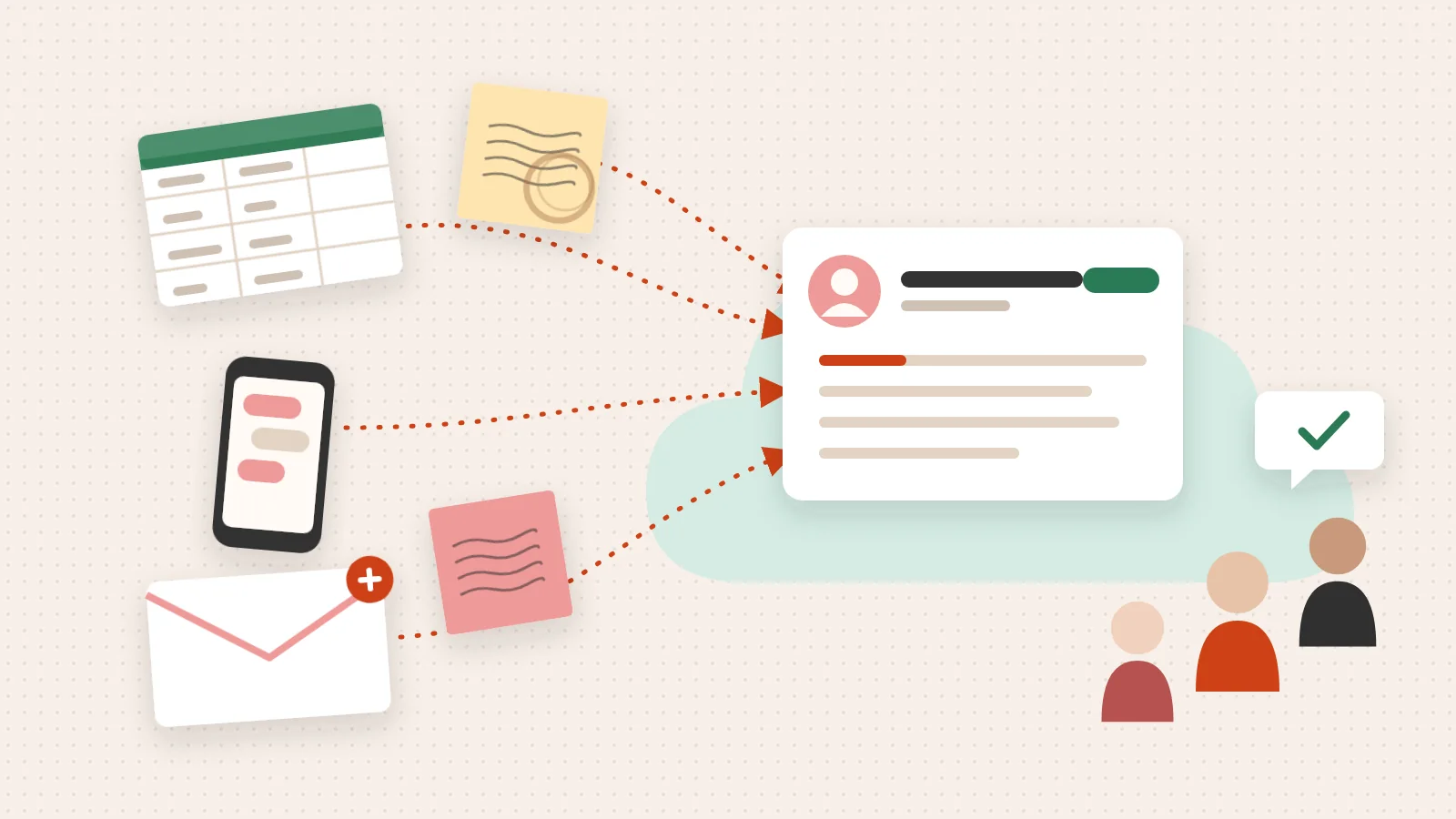
The most immediate win for any small business is automating the “boring” stuff. Every hour you spend on data entry is an hour you aren’t spending on strategy.
- Data Entry: Tools like Docuf.AI can scan documents and automatically input data into your systems, removing the risk of human error.
- Email Management: If your inbox feels like a battlefield, Levity helps by automatically sorting, labeling, and categorizing incoming messages so you only see what matters.
- Diary Management: Constant back-and-forth scheduling is a momentum killer. AI schedulers like Motion and Akiflow build optimum daily schedules by analyzing your tasks and deadlines.
- Meeting Intelligence: Stop taking manual notes. Otter.ai transcribes calls in real-time, allowing you to stay present in the conversation while ensuring you have a searchable record of every action item.
Using AI for Small Business to Predict Buyer Behavior
One of the greatest sources of anxiety for founders is the unknown. Will this product sell? Is our marketing working? AI helps remove this uncertainty through advanced data analytics.
By analyzing historical patterns, AI can assist with sales forecasting and customer segmentation. This means you can stop guessing who your best customers are and start seeing the data-backed reality of their behavior. Whether it’s managing inventory levels or identifying a Lead Generation Strategy that yields the highest ROI, AI turns raw data into strategic clarity.

Navigating the Uncertainty: Risks, Ethics, and the Human Element
We cannot talk about AI for small business without addressing the “elephant in the room”: the risks. As a psychology-first firm, we know that trust is the foundation of every business relationship. If you use AI poorly, you risk eroding that trust.
The primary concerns we see are:
- Data Privacy: Never feed sensitive customer information or proprietary trade secrets into a public AI model. If you wouldn’t post it on a public forum, don’t put it in a free chatbot.
- Algorithmic Bias: AI learns from existing data, which often contains human prejudices. Always review AI-generated HR or marketing content to ensure it aligns with your values.
- Intellectual Property: The legal landscape is still catching up. The USPTO Guidance for AI-assisted Inventions provides a framework for how to handle patents when AI is involved in the creative process.
- The “Hallucination” Factor: AI can be confidently wrong. It can invent facts, dates, and citations.
To mitigate these risks, follow Harvard University’s tips on writing better AI prompts. The better the input, the more reliable the output. Think of AI as an intern: it’s fast and helpful, but it needs a senior manager (you) to check its work before anything goes live.
Practical Implementation: A Toolkit for the Modern Founder
You don’t need a massive tech budget to start. Many of the best tools for AI for small business are either free or low-cost. When we look at Marketing Automation HubSpot and other platforms, we see AI being woven directly into the tools you already use.
| Tool | Best For | Key Benefit |
|---|---|---|
| Google Gemini | Research & Workspace | Integrates with Docs and Sheets to organize data. |
| ChatGPT | Content & Ideation | Excellent for “blank page” problems and first drafts. |
| Mastercard Small Business AI | Business Coaching | A specialized mentor for grants and financial literacy. |
For content creation, tools like Grammarly and Wordtune have evolved far beyond simple spell-check; they now help you adjust tone and clarity to match your brand voice. If you’re struggling with SEO, SEO.ai can research keywords and draft optimized copy in minutes. For visual needs, Craiyon and NightCafe allow you to generate unique images from simple text descriptions, helping you maintain a high-end look without a dedicated design team.
Transforming Customer Service without Losing Empathy
The goal of customer service is to make the customer feel heard and understood. Paradoxically, AI can help you do this better by handling the routine inquiries that usually make your team feel burnt out.
Using Freshchat, Happy Fox, or Kustomer, you can deploy intelligent chatbots that handle up to 50% of common support tickets. This frees up your human staff to handle the complex, high-emotion cases where empathy is non-negotiable. When integrated with HubSpot for Small Businesses, these interactions become part of a unified customer journey, allowing for personalized communication that feels human, even when it’s automated.
Real-World Momentum: 2025 Use Cases and Training Resources
How are founders actually using this in 2025? It’s not about “robots taking over”; it’s about small teams becoming more effective.
- HR and Recruitment: Small businesses are using Workable, Paradox, and Fetcher to analyze CVs and automate the initial screening process. This ensures you find the right talent faster without getting lost in a sea of resumes.
- Knowledge Management: NotebookLM is being used by founders to upload their own business documents—financial reports, meeting notes, project plans—to create a private, AI-powered knowledge base that can answer questions about their specific business data.
- Custom Apps: With Google AI Studio, even non-technical founders are building simple, internal AI tools to streamline their specific workflows.
If you feel behind, there are incredible resources available to help you catch up. The Google AI Certificate via Coursera offers structured training specifically for small business owners. Additionally, the Mastercard Small Business AI provides a conversational coach to help you navigate everything from digitizing your operations to finding grant resources.
Frequently Asked Questions about AI Adoption
How can a small business get started with AI tools effectively?
Start small by identifying a single repetitive task, such as scheduling or email sorting, and test free versions of tools like Google Gemini or ChatGPT to assess their impact on your daily workflow before scaling. The key is to solve a specific friction point rather than trying to “implement AI” as a vague concept.
What are the biggest security risks for small businesses using AI?
The primary risks include feeding sensitive customer data into public AI models and potential intellectual property infringement; always use enterprise-grade tools with clear data privacy policies and avoid sharing proprietary information. Look for tools that state they do not use your data to train their public models.
Will AI replace the need for human employees in my small business?
AI is designed to augment human intelligence, not replace it. It handles routine, data-heavy tasks, allowing your team to focus on high-level strategy, creative problem-solving, and building empathetic customer relationships. In many cases, it allows a small business to grow its revenue without needing to immediately increase its headcount.
Turning Uncertainty into a Dependable Growth Engine
At The Way How, we believe that the most powerful marketing doesn’t come from chasing the latest tech trend—it comes from understanding human behavior. AI for small business is a powerful tool, but it only works when it’s integrated into a clear, psychology-first strategy.
If you feel like your growth has stalled and you’re not sure if more “tech” is the answer, we’re here to help you find clarity. We specialize in Business Growth Acceleration by diagnosing the certainty gaps in your sales and marketing systems. Whether you need Fractional CMO leadership to guide your strategy or a better HubSpot architecture to manage your data, our goal is to turn your marketing into a dependable growth engine.
AI shouldn’t be a source of fear. When used with intention, it is the lever that allows you to stop being reactive and start being the visionary leader your business needs.
View our services to see how we can help you build a system rooted in trust, momentum, and predictable revenue.