A Complete Guide to CRM Systems and Database Management
 Jeremy Wayne Howell : Jul 22, 2026 9:48:31 PM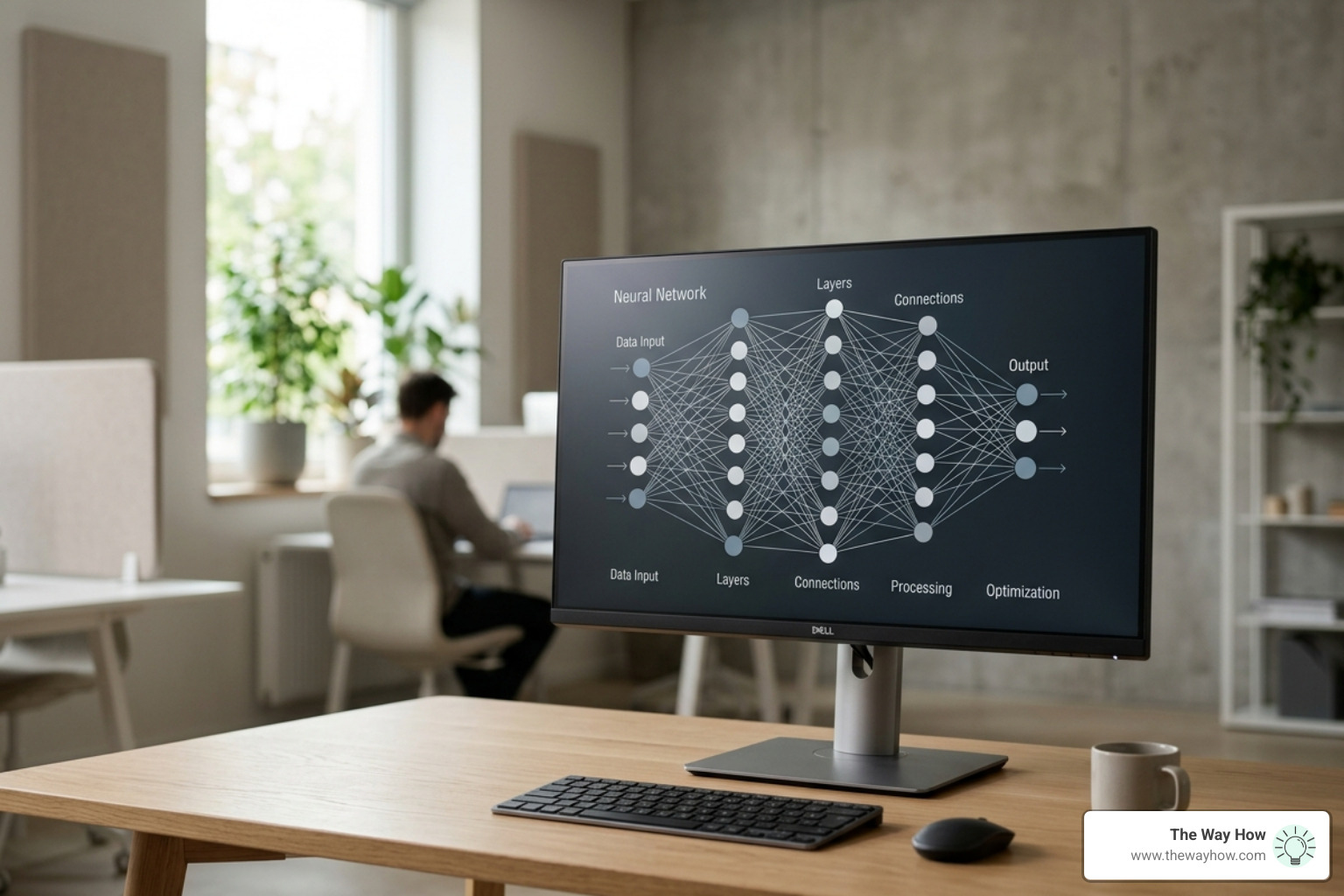
AI product development is the practice of building products where artificial intelligence drives core functionality — across research, design, engineering, and iteration.
Here is what that looks like in practice:
| Stage | What AI Does |
|---|---|
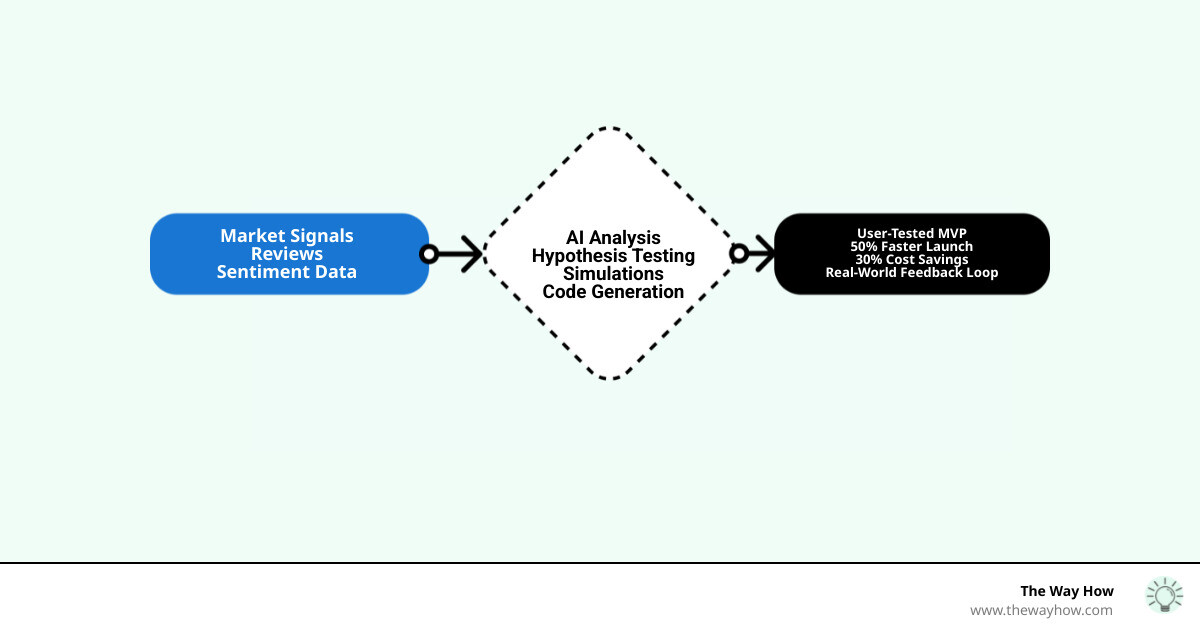
| Research | Analyzes market signals, reviews, and sentiment at scale |
| Ideation | Generates concepts and tests hypotheses faster than any team |
| Design | Runs simulations, cost estimates, and compliance checks |
| Build | Automates code generation, testing, and documentation |
| Launch | Monitors real-world data and feeds it back into the product |
The results, when done right, are significant. Companies adopting AI in R\&D and product design report 50% shorter time-to-market and 30% cost savings. Some teams now launch user-tested MVPs in a single weekend.
But here is the uncomfortable truth: 95% of new products fail every year. And most AI projects do not fail because the technology is bad. They fail because the system around the AI was never built for real users, real scale, or real decisions.
The problem is rarely technical. It is human.
Most teams jump straight to model selection, tooling, and features — before they have answered the only question that actually matters: does this solve a painful, expensive problem for a specific person?
That is where the gap lives. Not in the code. In the clarity.
I’m Jeremy Wayne Howell, founder of The Way How — a psychology-first revenue strategy firm with over 20 years of experience helping founders and revenue leaders diagnose what is actually broken in their growth systems, including how they approach AI product development. This guide is built to give you the strategic clarity most AI guides skip entirely.
Ai product development vocabulary:
To win at ai product development, we have to first understand a fundamental shift in how software is built. Traditional software is deterministic: you write a line of code, and it performs exactly the same way every time. AI is probabilistic. It deals in likelihoods, patterns, and predictions.
This shift creates a massive psychological hurdle for both developers and users. When a product is “predictably unpredictable,” trust becomes the primary currency. If a user doesn’t understand why an AI made a specific recommendation, they experience cognitive load—a mental tax that leads to friction and, eventually, abandonment.
Successful teams realize that AI is not a replacement for human creativity; it is a partner. While AI excels at high-volume analysis and pattern recognition, humans remain the masters of judgment, empathy, and high-level strategy. In fact, AI-Native Product Development | Build Guide 2026 | The Thinking Company suggests that the most successful products are those where the model is the core architecture, creating a “data flywheel” that improves with every interaction.
When we design with empathy, we move away from “bolted-on” AI features and toward systems that feel like an extension of the user’s intent. We aren’t just building faster tools; we are building smarter collaborators.
In our work at The Way How, we often see a “certainty gap”—the space between what a product claims to do and whether the buyer believes it will actually work for them. In ai product development, this gap is often widened by the “black box” nature of machine learning.
To remove this uncertainty, we must prioritize “glass-box” explanations. This means designing interfaces that show the “why” behind an AI’s output. Whether it’s a confidence score or a brief explanation of the data points used, transparency builds the emotional safety users need to move from skepticism to adoption.
Integrating AI Application Development Services is not just about the backend; it is about the “human-in-the-loop” design. By allowing users to override, correct, or refine AI outputs, we restore their sense of agency. When a user feels in control, their perception of value increases, and the certainty gap begins to close.
The traditional product development lifecycle is often slow, siloed, and rigid. Ai product development turns this linear path into a continuous, intelligent flywheel. By April 2026, the distinction between “building” and “learning” has almost entirely vanished.
| Feature | Traditional Development | AI-Native Development |
|---|---|---|
| Speed | Months/Quarters | Days/Weeks |
| Logic | Deterministic (If/Then) | Probabilistic (Patterns) |
| Scaling | Linear Headcount Growth | Exponential Model Efficiency |
| Feedback | Periodic/Manual | Real-time/Automated |
One of the most significant shifts we are seeing is the rise of agentic AI—systems that don’t just generate text or images but can actually execute multi-step tasks with minimal human oversight. Combined with the fact that 70% of new enterprise applications are now built on low-code or no-code platforms, the barrier to entry for innovation has never been lower.
According to a Generative AI Product Development: A Complete 2026 Guide, the secret to speed is not just working harder; it is using synthetic testing and rapid prototyping to validate ideas before they ever reach a human developer.
The discovery phase—where we identify what to build—used to take months of manual interviews and spreadsheets. Today, AI-driven sentiment analysis can process 100% of customer interactions in real-time. Instead of waiting for a quarterly report, we can identify a shift in market demand within hours.
We use AI to find “cross-industry inspiration.” For example, a medical device company might use AI to analyze how gaming interfaces maintain user engagement, applying those psychological triggers to patient compliance software. Predictive analytics allow us to forecast not just what users want today, but where their pain points will migrate six months from now. This proactive approach turns research from a static document into a live, competitive advantage.
As we move deeper into 2026, the regulatory landscape has caught up with the technology. The EU AI Act, with major requirements enforceable by August 2, 2026, has changed the rules of the game. For any team involved in ai product development, compliance is no longer a “nice to have”—it is a core architectural requirement.
Ethical AI involves more than just checking boxes. It requires a commitment to:
Beyond legalities, AI is also driving a revolution in sustainability. AI-enhanced industrial automation has demonstrated an 84% reduction in materials used and a 90% reduction in product weight in some sectors. By optimizing designs for efficiency, we aren’t just building better products; we are reducing the carbon footprint of manufacturing by tons of CO2 per year.
Building a demo is easy; building a production-ready system is where most teams stumble. In ai product development, two of the biggest risks are “model drift” and “hallucinations.” Model drift happens when the data the AI sees in the real world starts to look different from the data it was trained on, causing performance to degrade.
To manage this, we look to AI Product Development Company: End-to-End Guide to Building Scalable Production-Ready AI Systems | Trovix Systems for best practices in MLOps (Machine Learning Operations). This includes:
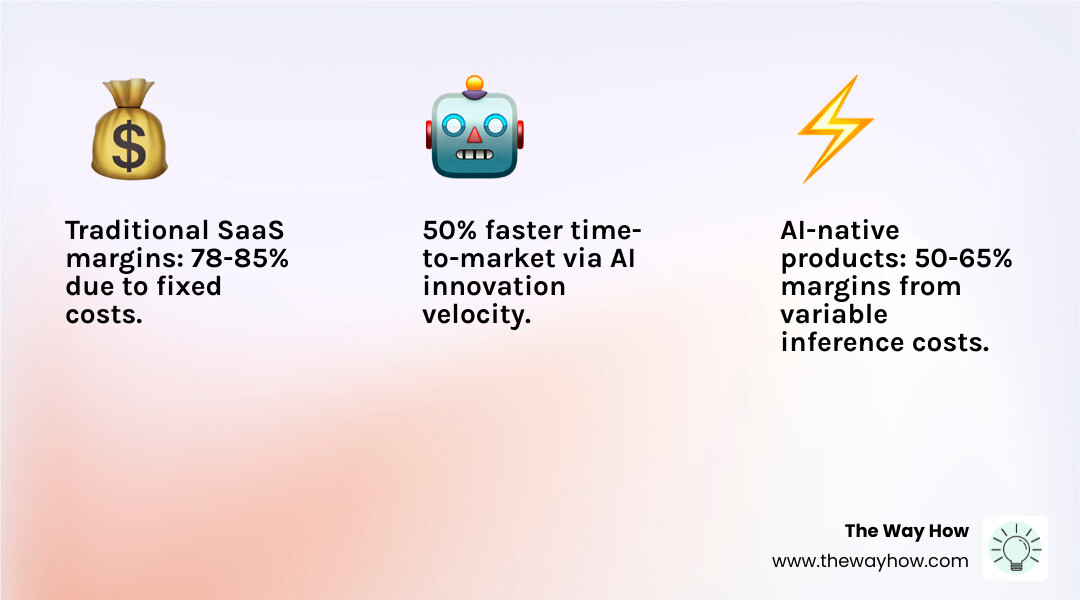
The economics of ai product development differ significantly from traditional SaaS. While traditional software has high upfront costs and high margins (78-85%), AI-native products often have variable inference costs that can squeeze margins down to 50-65%.
However, the ROI comes from the sheer velocity of innovation. When you can reduce your time-to-market by 50%, you capture market share faster than competitors can react. According to AI in Product Development: Real ROI & Implementation | RaftLabs, the real “math” of AI lies in “engineering force multiplication.” If a senior developer spends 60% of their time on repetitive boilerplate code, AI tools that automate that work provide an immediate 30% cost saving per sprint.
We encourage our clients to track “Innovation Velocity”—the number of meaningful experiments run per quarter. In 2026, the winner isn’t the company with the biggest model; it’s the company that learns the fastest.
In 2026, the timeline for a production-ready MVP typically spans 3 to 6 months. While “hackathon” versions can be built in a weekend using low-code tools, a system that handles real-world data, security, and compliance requires more rigor. The bulk of this time (often 60-70%) is spent on data strategy—sourcing, cleaning, and labeling the information the AI needs to be effective.
Think of an AI-enhanced product like a traditional car with a GPS “bolted on.” It’s better, but the core mechanics haven’t changed. An AI-native product is like a self-driving electric vehicle; the entire architecture is built around the intelligence. AI-native products cannot function without their models, and they are designed to capture data in a way that creates a continuous improvement loop.
The most effective teams use AI to handle the “heavy lifting” of pattern recognition, data sorting, and repetitive coding. This “frees the humans” to focus on what AI cannot do: understand deep human emotions, navigate complex office politics, and set high-level strategic visions. We view AI as a “junior partner” that handles the grunt work, allowing the “senior partner” (the human) to focus on the breakthroughs.
At The Way How, we believe that technology is only as good as the strategy behind it. If your ai product development efforts feel stalled, or if you are struggling to turn “cool tech” into “predictable revenue,” it is likely because there is a gap in your certainty system.
We help founders and leadership teams remove that uncertainty through psychology-first marketing and revenue strategy. Whether you need Fractional CMO leadership to guide your go-to-market strategy or a deep dive into your customer journey to identify where trust is being lost, our goal is to turn your innovation into a dependable growth engine.
AI is a tool, but clarity is the edge. If you are ready to stop chasing tactics and start designing systems that create momentum, let’s talk.
 Jeremy Wayne Howell : Jul 22, 2026 9:48:31 PM
 Jeremy Wayne Howell : Jul 21, 2026 9:47:10 PM
 Jeremy Wayne Howell : Jul 20, 2026 9:46:47 PM