
Beyond the Hype: Why Your Business Needs a Cognitive Architecture

An AI tech stack is the complete set of technologies, tools, and infrastructure layers that work together to build, run, and scale artificial intelligence inside your business — from raw data pipelines to the models that make decisions, to the applications your team and customers actually use.
If you’re evaluating AI infrastructure options, here’s what you need to know at a glance:
| Layer | What It Does | Example Tools |
|---|---|---|
| Compute & Hardware | Powers model training and inference | GPUs, TPUs, AWS, Azure |
| Data Infrastructure | Stores, cleans, and prepares your data | Snowflake, S3, Apache Spark |
| Model Training | Builds and experiments with ML models | PyTorch, TensorFlow, Hugging Face |
| Model Serving | Deploys models into production | Kubernetes, SageMaker, FastAPI |
| MLOps & Orchestration | Manages the model lifecycle | MLflow, Kubeflow, LangChain |
| Application Layer | Connects AI to your users and workflows | APIs, dashboards, automation tools |
| Governance & Observability | Monitors, audits, and keeps AI accountable | Arize AI, Weights & Biases, SHAP |
AI adoption has jumped from roughly 50% to 72% in 2024 — and that number is accelerating. But adoption and results are two very different things.
Most organizations invest in AI tools before they understand what problem the tools are solving. They assemble components without a coherent architecture. They train models that never make it out of a Jupyter notebook. And they wonder why revenue isn’t moving.
The stack isn’t just a technical question. It’s a strategic one.
A poorly designed AI tech stack doesn’t just waste engineering budget — it creates invisible friction across every revenue-critical function: sales, marketing, customer success, and pricing. It generates outputs nobody trusts, insights nobody acts on, and systems nobody owns.
This guide is designed to change that. Before prescribing tools, we’ll help you understand the architecture — the layers, the dependencies, the trade-offs — so you can make decisions with clarity instead of FOMO.
I’m Jeremy Wayne Howell, founder of The Way How, and over 20 years of working with founders and revenue teams I’ve seen how often an AI tech stack gets built around tools instead of outcomes. My work centers on diagnosing the human and strategic gaps underneath performance problems — and that lens shapes everything in this guide.
The Anatomy of a Modern AI Tech Stack
Building a digital brain requires more than just an API key. We view the ai tech stack as a layered architecture where each tier depends on the functional correctness of the one below it. This isn’t just our opinion; the National Institute of Standards and Technology (NIST) characterizes these systems in NIST AI 100-1 as complex environments where hardware, data, and software must align to manage risk.
A modular approach allows us to upgrade individual components—like swapping a language model—without tearing down the entire house. However, we must account for systemic drivers like model scale and inference economics. Research suggests that inference costs can represent 60% to 90% of total AI compute spend. If we don’t design for these costs early, the “brain” becomes too expensive to maintain.
To ensure safety and reliability, we align our architectural choices with the NIST AI Risk Management Framework, focusing on systems that are not just powerful, but trustworthy and explainable.

Compute and Hardware: The Physical Foundation
Every intelligent thought requires energy and physical space. In the AI world, this means GPU (Graphics Processing Unit) and TPU (Tensor-Processing Unit) clusters. These aren’t standard office servers; they are high-performance accelerators designed for the massive parallel processing required by modern neural networks.
The NVIDIA H100, for instance, has become a gold standard for large-scale training workloads due to its immense memory bandwidth. When choosing your foundation, we have to weigh the trade-offs between cloud-based instances (like AWS or Azure) and on-premises deployment. Cloud offers speed and scalability, while on-premises can offer better long-term cost predictability and data sovereignty for highly regulated industries.
The Data Layer: Fueling the Intelligence
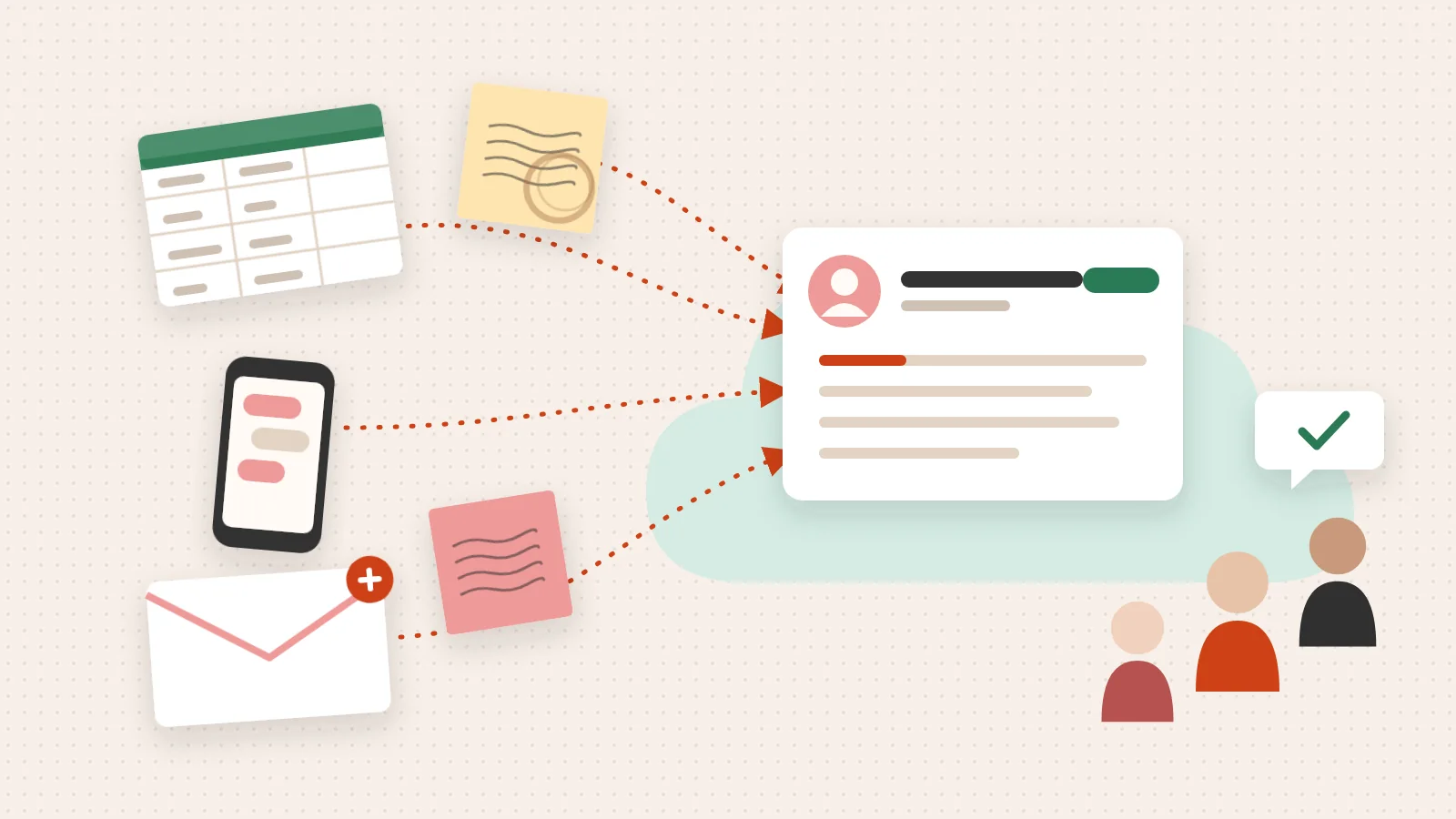
If compute is the engine, data is the fuel. But not all fuel is equal. We often see companies suffer from the “GIGO” principle—Garbage In, Garbage Out. A sophisticated model fed with fragmented, low-quality data will only produce sophisticated errors.
The data layer involves ingestion pipelines, preprocessing, and specialized storage like vector databases (e.g., Pinecone or Weaviate). Unlike traditional databases that store rows and columns, vector databases store data as mathematical representations, allowing AI to perform “semantic searches” based on meaning rather than just keywords.
Whether you are dealing with structured data from your CRM or unstructured data like call recordings and PDFs, robust Marketing Data Analysis is required to transform raw information into a format the model can actually digest.
Bridging the Model-to-Production Gap with Human-Centric Design
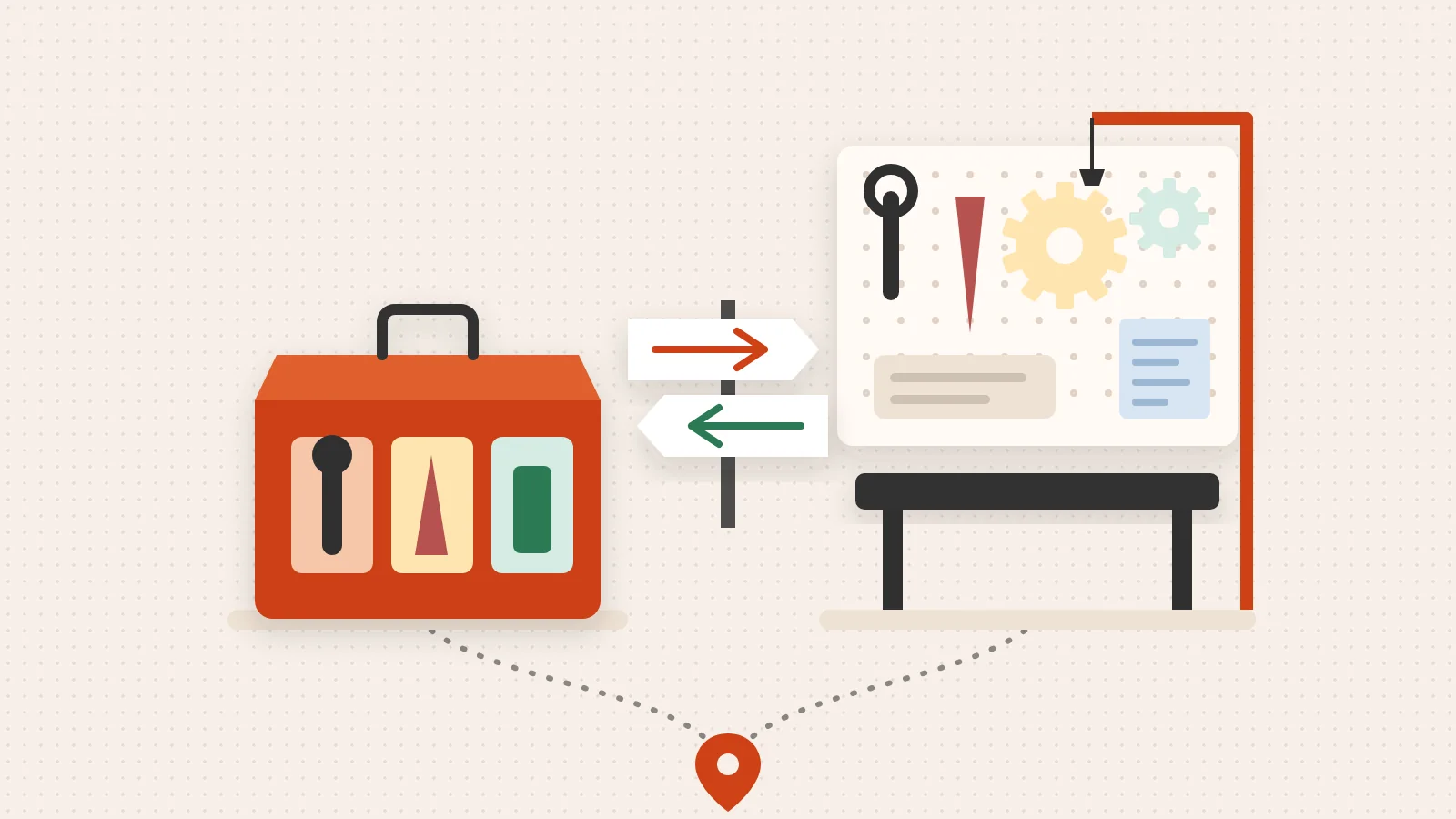
One of the most painful “certainty gaps” we see is the model-to-production gap. This happens when a data science team builds a brilliant model, but the sales team ignores its recommendations because they don’t understand why the AI made that choice.
To fix this, we must embed explainability into the ai tech stack. Tools like SHAP and LIME help “open the black box” by showing which variables most influenced a specific prediction. When a sales rep understands that a lead was scored highly because they attended three webinars in seven days, they are more likely to trust the system and take action.
Building this trust is central to Data-Driven Marketing Strategies. We don’t just want a “smart” system; we want a system that builds momentum by providing clarity to the humans using it. For those looking for a generalized enterprise starting point, reviewing IBM’s generative AI tech stack provides a solid blueprint for how these models integrate into business workflows.
Orchestration and the AI Tech Stack
Orchestration is the “nervous system” that connects the brain to the rest of the body. Frameworks like LangChain and LlamaIndex allow us to build agentic workflows—AI systems that don’t just answer questions but can actually execute tasks, like searching the web, updating a database, or sending an email.
This is where HubSpot Marketing Automation becomes incredibly powerful. By connecting your AI orchestration layer to your CRM, you can move from simple “if-then” triggers to intelligent systems that adapt their behavior based on customer sentiment or behavior. The emerging Model Context Protocol (MCP) is also becoming a standard for how these agents connect to various tools without requiring custom, brittle code for every integration.
Tailoring Your AI Tech Stack for Growth
Your stack should look different depending on your stage and goals. A startup needs a “lean” stack that prioritizes speed and low overhead, while an enterprise requires a comprehensive architecture that prioritizes compliance and scale.
| Feature | Startup Lean Stack | Enterprise Architecture |
|---|---|---|
| Primary Goal | Speed to market / MVP | Reliability / Compliance |
| Model Choice | Third-party APIs (GPT-4, Claude) | Fine-tuned open-source or private models |
| Infrastructure | Managed Serverless / PaaS | Hybrid Cloud / Dedicated GPU Clusters |
| Data Strategy | Direct API ingestion | Enterprise Data Warehouse / Data Lake |
| Governance | Basic logging | Full audit trails and bias monitoring |
We can see the power of specialized stacks in the Google DeepMind healthcare case study, where their AI system predicts life-threatening conditions like kidney failure 48 hours before symptoms appear. This requires a highly specific stack optimized for predictive analytics and medical data privacy.
Maintaining the Brain: MLOps and the AI Tech Stack
An AI system is not “set it and forget it.” Over time, models can suffer from “drift”—a decline in performance as the real-world data they encounter begins to differ from the data they were trained on.
This is why MLOps (Machine Learning Operations) is a non-negotiable layer. It provides the observability needed to monitor model health, detect bias, and ensure compliance with emerging regulations like the EU AI Act. Organizations must also consider their cyber-resilience strategy to protect these intellectual assets from evolving security threats.
By treating Business Data Analysis as an ongoing operational function rather than a one-time project, we ensure the AI remains an asset rather than a liability.
The 2026 Horizon: Hyperautomation and Quantum Readiness
Looking ahead, the ai tech stack is moving toward hyperautomation—fully autonomous systems that can manage entire business functions with minimal human intervention. According to Gartner 2025 Strategic Tech Trends, these “agentic” systems will become a primary competitive advantage.
We are also seeing the rise of:
- AutoML: Tools that allow non-experts to build high-quality models automatically.
- Green Computing: Architectures designed to reduce the massive carbon footprint of AI training.
- Quantum AI: The eventual integration of quantum computing to solve optimization problems that are currently impossible for classical computers.
Frequently Asked Questions about AI Infrastructure
What is the best AI tech stack for small businesses?
For most small businesses, we recommend starting with a “buy over build” mentality. Use open-source libraries like Scikit-learn for basic tasks and leverage cloud-based APIs (like OpenAI or Anthropic) for complex reasoning. This keeps your initial investment low while allowing you to scale as you prove the ROI of your use cases.
How does MLOps differ from traditional DevOps?
While DevOps focuses on the reliability of code and binaries, MLOps focuses on the reliability of data and probabilistic outputs. In DevOps, if the code is the same, the output is usually the same. In AI, even if the code stays the same, the model’s performance can change if the underlying data drifts. MLOps introduces specific tools for data versioning, experiment reproducibility, and constant performance monitoring.
Can I build an AI stack without coding skills?
Yes. The “democratization” of AI has led to powerful no-code platforms like DataRobot or Google AutoML. These tools provide visual model builders and drag-and-drop interfaces that allow business operators to lead AI initiatives without writing a single line of Python. However, you still need a strong understanding of your data and the problem you are trying to solve.
From Uncertainty to Momentum: Your Next Move
At The Way How, we believe that technology should never be the starting point. We start with the human behavior and the psychology of the decision-making process. If your growth is stalled, it’s rarely because you lack a specific GPU; it’s usually because there is a “certainty gap” in your customer journey that no amount of raw compute can fix.
We help founders and leadership teams remove that uncertainty by designing systems that create trust and predictable revenue. Whether you need help with HubSpot architecture or a complete revenue strategy, we diagnose the “why” before we prescribe the “how.”
If you’re ready to stop chasing tactics and start building a dependable growth engine, we invite you to Explore our Marketing and Revenue Services. Let’s turn your ai tech stack from a collection of tools into a strategic advantage.