A Complete Guide to CRM Systems and Database Management
 Jeremy Wayne Howell : Jul 22, 2026 9:48:31 PM
12 min read

Data-driven marketing strategies are the practice of using customer information—clicks, purchases, behavior patterns, and engagement signals—to guide your marketing decisions instead of relying on guesswork. When implemented correctly, these strategies help you understand who your customers are, what they need, and how to reach them with precision. The result: higher ROI, better lead quality, and scalable growth.
Quick Answer: What Makes a Data-Driven Marketing Strategy Work?
Marketing without data is like driving with your eyes closed—risky, unpredictable, and bound to lead you off course.
Yet here’s the uncomfortable truth: most companies have the data. They’re drowning in it. CRMs stuffed with contact records. Analytics dashboards tracking thousands of metrics. Email platforms generating reports no one reads.
The problem isn’t the volume of data. It’s that 87% of marketers say data is their company’s most under-used asset. They’re collecting everything but understanding nothing.
And when you don’t understand your data, you can’t understand your customers. You end up making decisions based on what feels right instead of what the evidence shows. You optimize for vanity metrics that don’t predict revenue. You launch campaigns into the void and hope something sticks.
This isn’t just inefficient. It’s expensive. One in seven marketers experienced financial losses averaging $91,000 due to poor data quality in the past year alone.
But here’s what changes when you shift from data collection to data comprehension: you stop guessing and start knowing. You see patterns in buyer behavior that reveal exactly where your growth is stalling. You understand which channels actually drive conversions, not just clicks. You personalize experiences at scale without losing the human touch.
The companies that figure this out drive 5-8 times more ROI than those who don’t.
This guide will show you how to build a data-driven marketing system that doesn’t just track numbers—it reveals the human story behind them. You’ll learn how to diagnose what’s broken, unify fragmented data sources, and activate insights that improve lead quality while scaling your marketing engine.
No hacks. No empty promises. Just clarity.
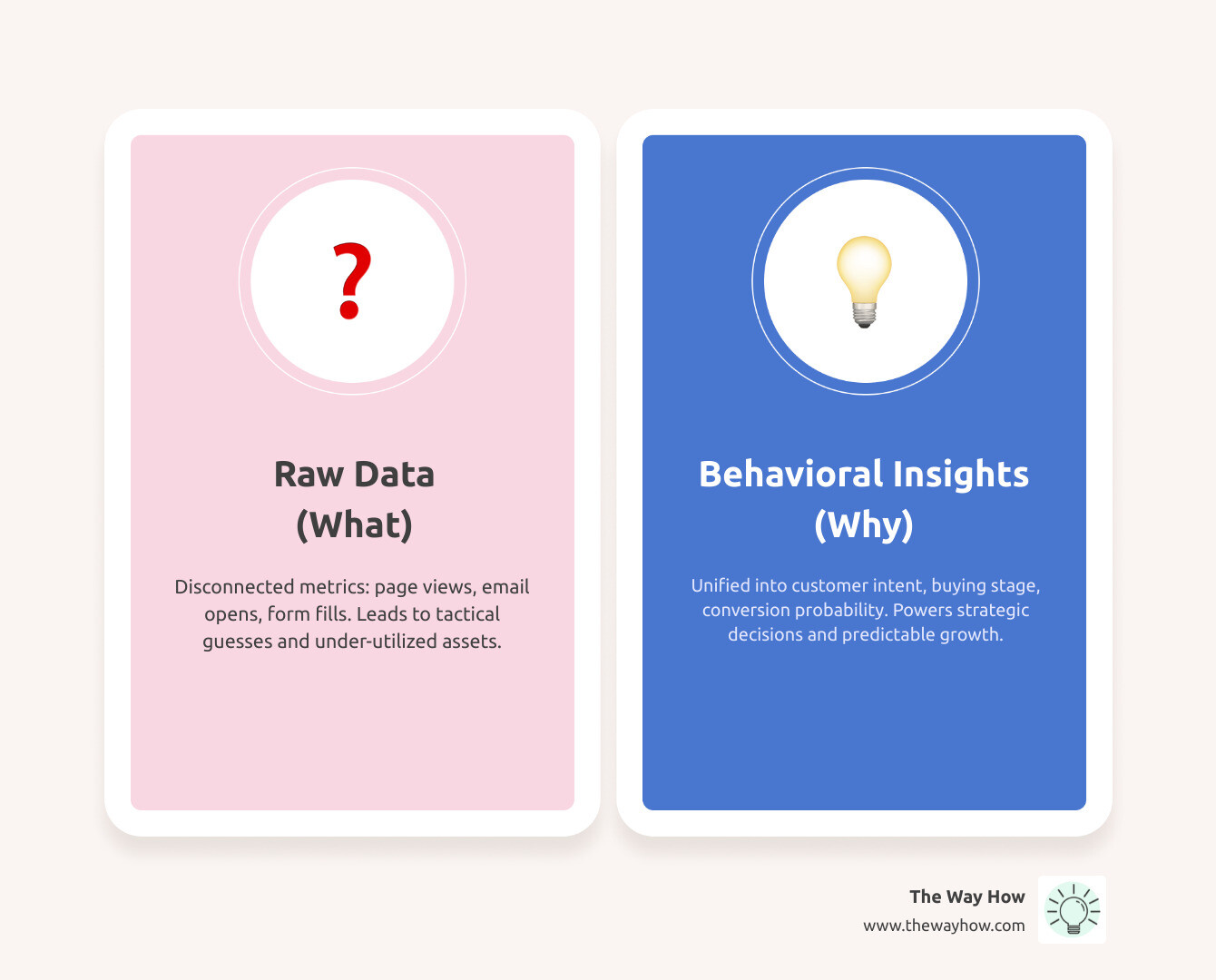
We often observe a common paradox: businesses are awash in data, yet their marketing efforts still feel like a shot in the dark. If we’re collecting so much information, why isn’t it translating into predictable growth? The answer lies in the disconnect between raw data and actionable insights.
Traditional marketing often operates on broad assumptions, relying on intuition or past successes that may no longer be relevant. While this approach might have worked in simpler times, today’s complex consumer journey demands a more precise method. Data-driven marketing strategies fill this void by integrating data analysis into every stage of the marketing process, from planning to execution and evaluation.
The core difference between traditional and data-driven marketing is simple yet profound: traditional methods rely on broad-based tactics with limited measurement and personalization, making it hard to know what truly worked or why. Data-driven marketing, on the other hand, uses customer data to tailor campaigns to specific audiences, enabling precise messaging, real-time tracking, and continuous optimization. This shift replaces hunches with facts, allowing us to treat customers as individuals, not just segments.
However, even with an abundance of data, many organizations struggle to leverage it effectively. Joseph Enever, a Senior Director Analyst at Gartner, explains that “Better data won’t incr…” marketing analytics’ decision influence if cognitive biases and a lack of data-informed culture persist. In fact, a Gartner survey reveals that marketing analytics are only influencing 53 percent of decisions. This highlights a critical “certainty gap” where data exists but isn’t effectively guiding strategy. This is where a focus on business data analysis becomes crucial, moving beyond mere collection to genuine comprehension.
The sheer volume of data available today can be overwhelming. We see businesses struggling with “data fragmentation,” where valuable customer insights are scattered across disparate systems—CRMs, web analytics platforms, email marketing tools, social media, and more. This creates data silos, making it nearly impossible to gain a unified view of the customer.
Adding to this challenge is the issue of inconsistent data. Without proper governance protocols and regular audits, data quality can quickly deteriorate. Inaccurate, incomplete, or outdated information leads to skewed insights and flawed marketing decisions. As we noted earlier, 87% of marketers say data is their company’s most under-used asset, often because they’re wrestling with these very issues.
Furthermore, many organizations face a “lack of skilled personnel” capable of not just collecting data, but also cleaning, analyzing, and interpreting it to uncover meaningful behavioral insights. This can lead to “analysis paralysis,” where marketers are so overwhelmed by the data that they struggle to extract value or make timely decisions.
The journey from traditional, gut-feel marketing to evidence-based, data-driven approaches is not new. As former Forbes council member Jon Simpson explains, marketing has long been a data-driven field, with data analysis influencing decisions for centuries. The process of analyzing data and using findings to influence decisions has been especially prominent these past two decades, accelerating in the 1980s with the development of early CRM systems. The internet and social media then dramatically increased data collection and analysis opportunities, ushering in the era of sophisticated blends of CRM and marketing automation.
This evolution underscores a fundamental shift in how we approach marketing. Instead of relying on intuition or what we think will work, we can now base our strategies on what the data shows is working. This shift from guesswork to precise, predictable systems is at the heart of effective data-driven decisions. It’s about understanding the “why” behind customer actions, not just the “what.” This deeper understanding allows us to remove uncertainty from your sales and marketing systems, creating trust and predictable revenue.
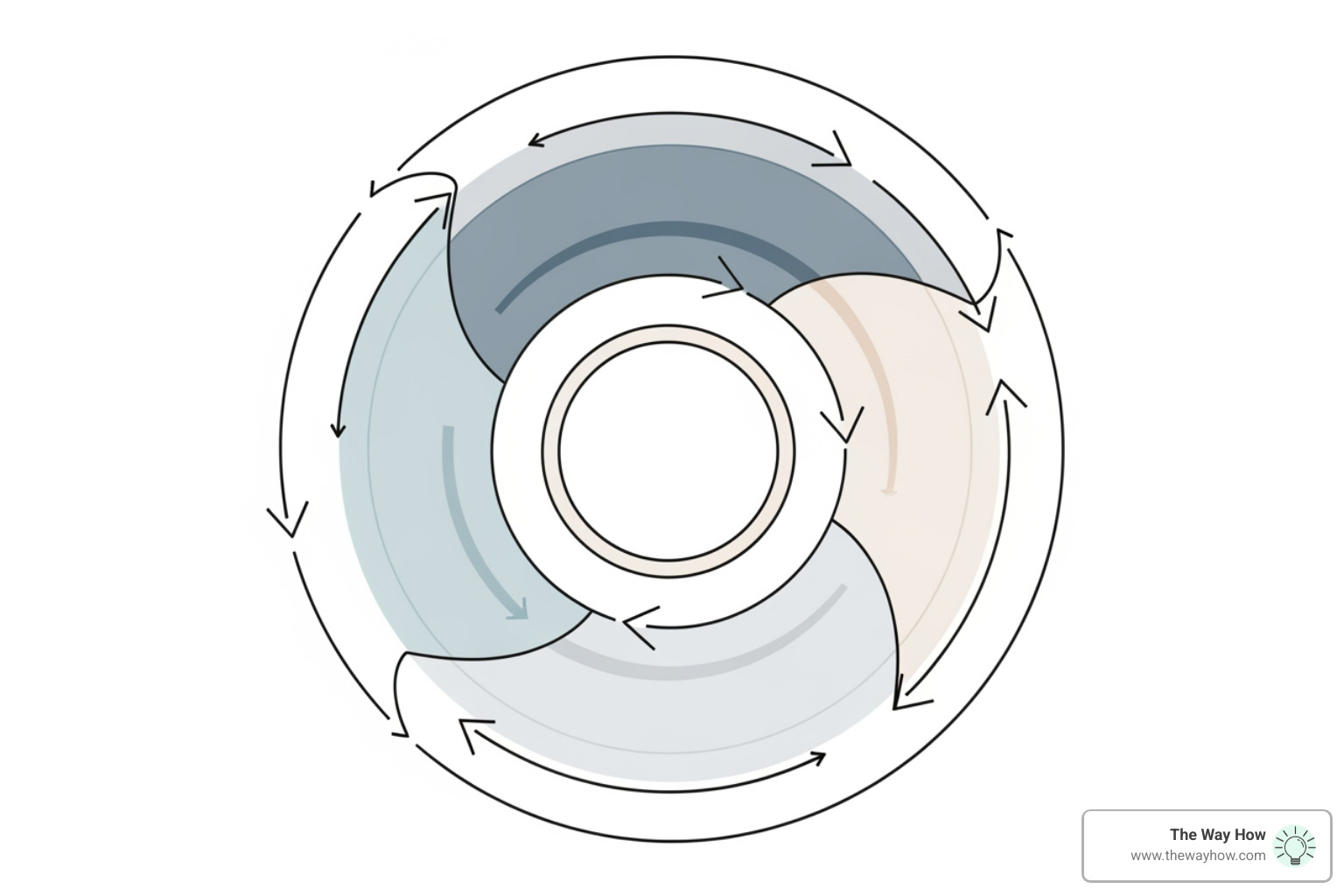
Building a robust data-driven marketing strategy isn’t about collecting every piece of data imaginable; it’s about establishing a systematic approach to gather, analyze, and activate the right data to understand human behavior and influence decision-making. We view this as a continuous feedback loop, a flywheel of insight that constantly refines your marketing efforts.
At its core, a successful strategy requires a unified data view, robust data governance, and cross-functional collaboration. The Adobe Communications Team emphasizes the importance of avoiding data silos and promoting a company culture that accepts data and agile marketing for personalization at scale. This means fostering a data-informed culture where every team member understands the value of data and how their actions contribute to a comprehensive customer understanding. Effective marketing data analysis is the cornerstone of this system.
The foundation of any effective data-driven marketing strategy is the collection of meaningful, accurate data. We prioritize first-party data—information collected directly from your customers with their consent. This includes:
To build a truly comprehensive view of your customer journey, you need to integrate these diverse data sources. This means breaking down data silos and consolidating information into a single, unified profile. This holistic perspective is essential for understanding the various customer journey stages and identifying certainty gaps where customers might be getting lost or disengaging. We’ve seen that 82% of marketers plan to increase their use of first-party data, recognizing its growing importance in a privacy-conscious world.
Once we’ve collected and unified your data, the real magic begins: analysis. This isn’t just about crunching numbers; it’s about uncovering the “why” behind the “what”—the behavioral insights that drive customer decisions.
Leveraging tools for business analysis and analytics, including advanced features within platforms like HubSpot analytics, allows us to interpret complex data sets and translate them into clear, actionable strategies.
With deep behavioral insights in hand, we can move beyond generic messaging to truly personalized experiences. Personalization is not just a trend; it’s a customer expectation. 80% of customers are more likely to purchase a product or service from a brand that provides personalized experiences. When done right, personalization builds trust and makes customers feel understood.
Personalization, rooted in behavioral insights, removes uncertainty for the customer. When they receive relevant information at the right time, it builds momentum and trust, paving the way for predictable revenue.
Once we’ve diagnosed the challenges and built a robust system for data collection and analysis, the next step is to activate these insights through practical, impactful marketing strategies. This is where the rubber meets the road, changing data into tangible results and significantly improving your boost marketing ROI. Businesses who use data-driven strategies drive five to eight times as much ROI as businesses who don’t, proving that this approach isn’t just theory—it’s a powerful engine for growth.

A core principle here is continuous optimization. We implement, test, measure, and refine. Techniques like A/B testing allow us to experiment with different variations of messaging, visuals, or calls to action, letting the data tell us what resonates most with our audience. This iterative process ensures that campaigns are constantly improving, adapting to changing customer behaviors and market trends.
Paid advertising campaigns can often feel like a money pit if not managed strategically. However, with data-driven marketing strategies, we can optimize ad spend with remarkable precision, ensuring every dollar works harder.
The impact of AI and marketing automation on data-driven marketing strategies is transformative. Nearly all marketers (93%) are investing in AI this year, recognizing its potential to streamline efforts and improve efficiency. AI is no longer a futuristic concept; it’s a core driver of modern marketing.
By blending AI and automation, we can scale personalized experiences, optimize campaigns in real-time, and free up human marketers to focus on strategic insights and creative initiatives.
A powerful example of data-driven marketing strategies in action comes from Banner Health, a major healthcare provider. Serving diverse patient populations across states, delivering personalized experiences might seem daunting. However, by embracing data-driven marketing with a HIPAA-compliant platform, Banner Health achieved remarkable results.
They leveraged conversation intelligence and other data sources to understand which marketing campaigns were driving valuable patient calls. This allowed them to:
This case study demonstrates how data-driven insights can lead to significant cost efficiencies and improved patient acquisition, changing marketing from a cost center into a predictable growth engine, even in a highly regulated industry. It’s a testament to how diagnosing certainty gaps and understanding human behavior through data can lead to profound operational and financial improvements.
The landscape of data-driven marketing strategies is constantly evolving, shaped by new technologies, changing consumer expectations, and increasingly stringent privacy regulations. To maintain predictable revenue and sustained growth, businesses must stay ahead of these trends, equip themselves with the right tools, and cultivate a culture that values data-informed decision-making.
The future of data-driven marketing is firmly rooted in first-party data. With restrictions on third-party data becoming more common, marketers are increasingly reliant on information collected directly from their customers. In fact, 82% of marketers plan to increase their use of first-party data. This shift emphasizes the importance of building direct relationships with customers and gaining their explicit consent for data collection.
To effectively implement data-driven marketing strategies, you need the right toolkit. These platforms help collect, analyze, activate, and optimize your marketing efforts:
These tools, when integrated and used strategically, provide the infrastructure for a robust data-driven marketing system.
The rise of data-driven marketing strategies has coincided with growing concerns about data privacy. Regulations like the European Union’s GDPR and the California Consumer Privacy Act (CCPA) have fundamentally changed how businesses can collect, store, and use customer data.
For us, data privacy isn’t just a compliance hurdle; it’s a foundation for building trust. We advise prioritizing transparency and consent about how you collect and use customer data. Implementing rigorous data protection measures, such as encryption and access controls, helps keep customer information safe. Adhering to these regulations is not only a legal requirement but also a critical component of ethical marketing and fostering long-term customer relationships. Your company’s privacy policy should reflect this commitment clearly and unambiguously.
Implementing a data-driven marketing strategy is an ongoing journey, not a one-time project. It requires a commitment to continuous optimization and the fostering of a data-informed culture throughout the organization.
At The Way How, we believe that data-driven marketing strategies are not just about collecting more data; they’re about understanding the human story within that data. Our psychology-first approach helps founders and leadership teams remove uncertainty in their sales and marketing systems. We diagnose why growth is stalled, identify certainty gaps in the customer journey, and design systems that create trust, momentum, and predictable revenue.
We blend strategic clarity, behavioral insight, and operational execution to turn marketing into a dependable growth engine. By focusing on empathy and decision-making psychology, we help you move beyond tactics to build enduring relationships with your customers.
Ready to transform your marketing from guesswork to a predictable growth machine? Learn how to harness the power of HubSpot marketing automation and build a system that delivers clarity and results.
 Jeremy Wayne Howell : Jul 22, 2026 9:48:31 PM
 Jeremy Wayne Howell : Jul 21, 2026 9:47:10 PM
 Jeremy Wayne Howell : Jul 20, 2026 9:46:47 PM