Why Most Leaders Are Making Decisions Blindfolded
Data driven decisions are choices made by analyzing objective information rather than relying solely on intuition. This approach reduces uncertainty, mitigates cognitive bias, and improves outcomes by grounding strategic choices in evidence.
Quick Answer: The Data-Driven Decision Making Process
- Define your objective - Start with a clear business question or problem
- Collect relevant data - Gather both quantitative metrics and qualitative insights
- Clean and analyze - Remove errors and look for patterns in the data
- Interpret through a human lens - Connect insights to customer behavior and psychology
- Act and iterate - Implement changes, measure results, and refine continuously
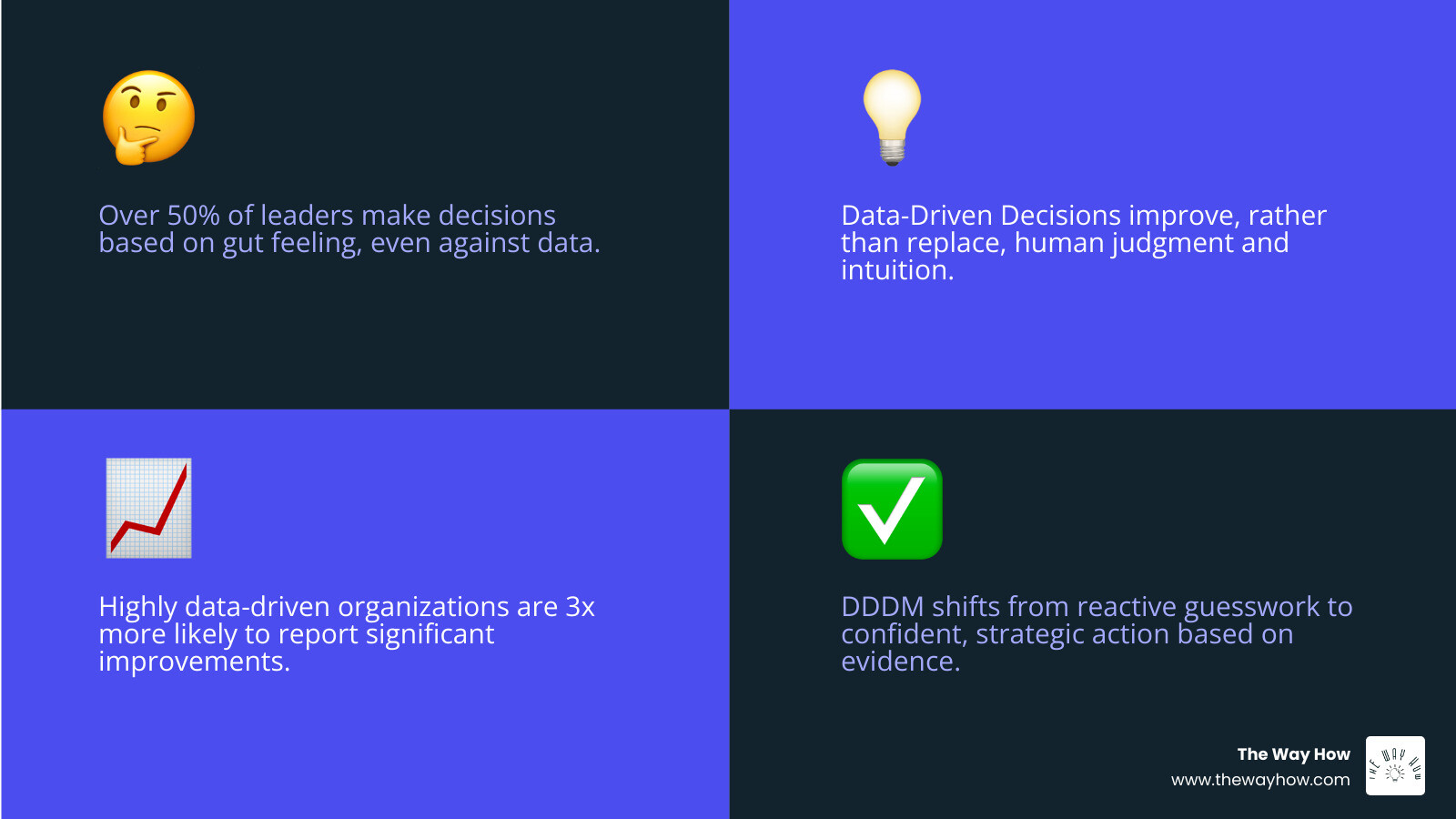
Here’s an uncomfortable truth: more than half of American business leaders make important decisions based on gut feeling, even when data suggests otherwise. Society has taught us to celebrate the “visionary” who “just knows,” but intuition without evidence isn’t vision. It’s a gamble.
The pressure to grow is real. You’ve likely tried tactics that delivered inconsistency. The problem isn’t a lack of intelligence or drive—it’s making decisions in the dark.
Data driven decisions don’t replace your judgment; they improve it. They help you see what’s actually happening with your customers and your business—not what you hope is happening.
According to PwC research, highly data-driven organizations are three times more likely to report significant improvements in decision-making. This isn’t magic—it’s because data reduces uncertainty and exposes the biases we all carry.
This is about asking better questions, gathering relevant evidence, and understanding the human behavior behind the numbers. It’s about moving from reactive guesswork to confident, strategic action. The organizations that win are the ones who know which questions to ask and how to connect the answers back to the real people they serve.
What is Data-Driven Decision Making? Shifting from Guesswork to Insight
At its core, Data-Driven Decision Making (DDDM) is the process of using data to inform choices, moving away from gut feelings and anecdotal evidence toward an objective, evidence-based approach. In today’s competitive environment, DDDM is a strategic imperative for achieving predictable revenue.
We believe DDDM improves human judgment, not replaces it. It’s a flashlight in the dark, revealing hidden patterns and insights. Grounding decisions in facts improves accuracy and provides a competitive edge. As Northeastern lecturer Joel Schwartz notes, the most successful companies are almost always using data-driven decision making.
The Core Principles of Data-Driven Decisions
Adopting a data-driven approach requires a mindset built on these principles:
- Curiosity over Confirmation: Approach data with genuine curiosity to challenge assumptions, not just to confirm existing beliefs.
- Starting with Questions: Begin with a clear business problem or uncertainty, asking “what do we need to understand?” before collecting data.
- Data Quality and Accuracy: The integrity of your decisions depends on quality data. “Garbage in, garbage out” is a harsh truth, so prioritize data governance.
- Aligning Data with Strategic Goals: Ensure data analysis directly serves business objectives and KPIs, measuring what truly matters for growth.
- Fostering Collaboration: Break down data silos and encourage cross-functional teams to collaborate on interpretation, enriching insights with diverse viewpoints.
- Focusing on Human Behavior: Data points represent human actions. Our analysis focuses on understanding the motivations and needs of your customers.
How DDDM Reduces Bias and Improves Accuracy
Our brains are prone to cognitive biases that cloud judgment. DDDM acts as a powerful antidote:
- Confirmation Bias: Data forces us to confront evidence that may contradict our hypotheses, leading to more balanced conclusions.
- Availability Heuristic: Data provides a broad, representative picture, preventing decisions based on limited or skewed information from recent experiences.
- Anchoring Bias: Comprehensive data analysis helps evaluate options against a range of criteria, rather than anchoring to the first piece of information received.
By systematically analyzing evidence, we create objective criteria for choices. This iterative process of questioning, analyzing, and acting refines our understanding and improves decision accuracy, leading to more predictable growth.
The 5-Step Framework for Making Data-Driven Decisions
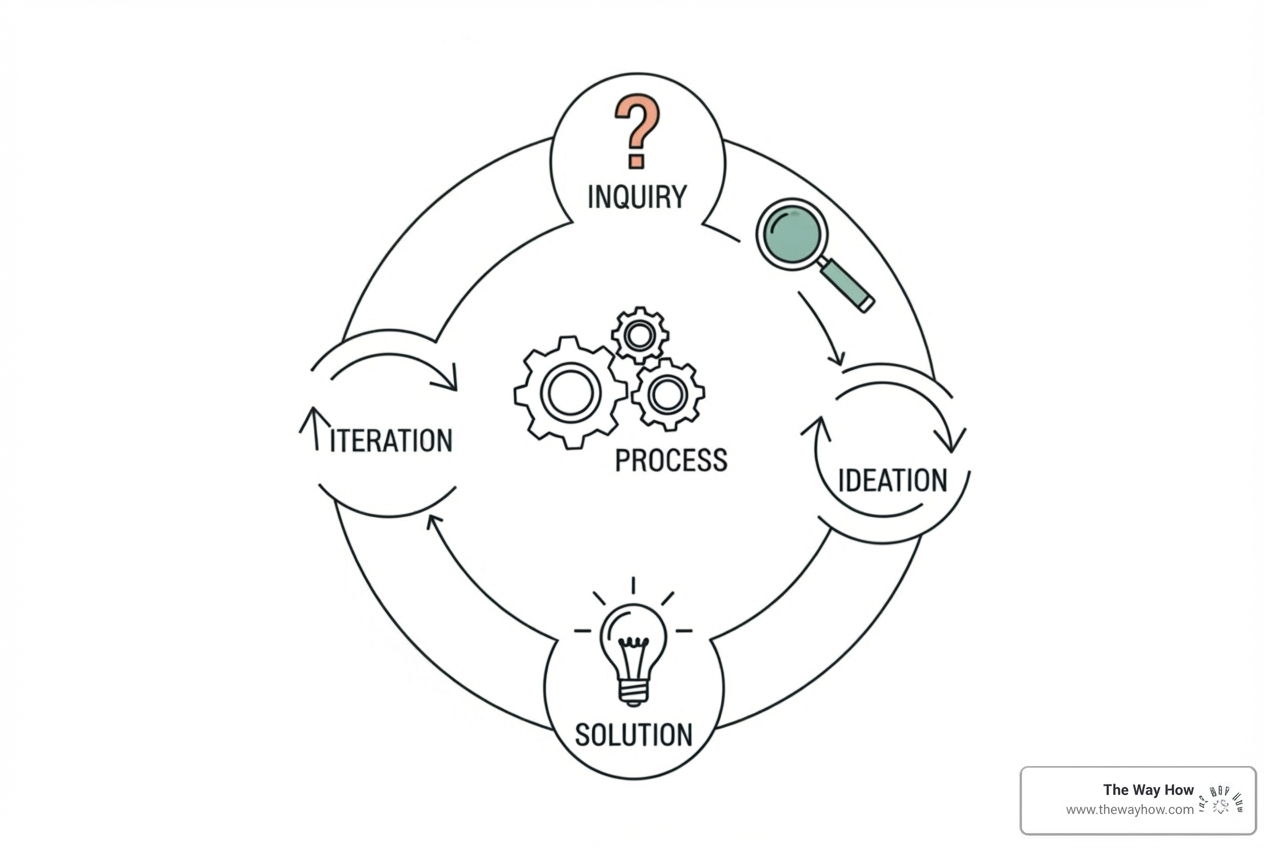
This framework is designed for clarity, not rigidity. Its goal is to understand the “why” behind the numbers, connecting data to the human behaviors that impact your business.
Step 1: Define Your Objective and Ask the Right Questions
Before gathering data, define the problem. A clear objective prevents you from drowning in irrelevant information.
- Start with a business problem: Ask “Why is growth stalled?” or “What’s preventing purchases?” instead of “What data do we have?”
- Focus on uncertainty and behavior: Pinpoint the uncertainty you need to reduce (e.g., customer churn) and the customer behavior you need to understand (e.g., cart abandonment).
- Formulate a hypothesis and set goals: Create an educated guess (e.g., “Simplifying checkout will increase conversions”) and establish measurable KPIs to track success.
Step 2: Collect Relevant Evidence
With clear questions, gather evidence from various sources. Collect both quantitative metrics (the ‘what’) and qualitative insights (the ‘why’).
- Identify data sources: Use internal data from CRM and sales records, and external data from market research or social media. Companies use a median of five internal and three external sources.
- Gather quantitative data: Track metrics like website traffic, conversion rates, and sales figures using tools like Google Analytics.
- Collect qualitative data: Understand the customer experience through surveys, interviews, and user research to get the human context behind the numbers. Our HubSpot CRM Implementation centralizes this behavioral data.
Step 3: Clean and Analyze the Data to Find the Story
Raw data is useless. It must be cleaned, organized, and analyzed to reveal meaningful patterns.
- Data cleaning and integrity: This vital step involves correcting or removing flawed data. It’s no surprise that 80% of a data analyst’s time is spent cleaning and organizing data.
- Perform analysis: Use descriptive analysis to understand what happened (e.g., monthly sales) and diagnostic analysis to find out why (e.g., the cause of a sales dip).
- Find the story: Use tools like HubSpot Analytics to look for patterns, trends, and outliers. Anomalies often hold the key to new insights.
Step 4: Interpret Insights and Connect to Human Behavior
Translate your findings into a compelling narrative that connects to business objectives and human behavior. This is the art of data storytelling.
- Create a narrative: Explain what the data means for the customer’s journey. A drop in engagement isn’t just a number; it’s a signal that customers are struggling.
- Connect to the customer’s journey: Constantly ask how the data reflects your customer’s psychological experience. Where is there friction? What creates delight?
- Combine data with empathy: Our psychology-first approach blends objective data with an understanding of human behavior and industry knowledge to derive richer insights.
- Draw actionable conclusions: Formulate concrete conclusions that directly address your initial questions and guide your recommendations.
Step 5: Act, Measure, and Iterate
The purpose of DDDM is to drive action and achieve better results. This final step closes the loop for continuous learning.
- Take action: Implement changes based on your insights, such as adjusting budget allocation away from an underperforming marketing channel.
- Monitor KPIs and create a feedback loop: Continuously track the KPIs you set in Step 1 to measure impact. DDDM is an ongoing cycle of learning and refining your strategies for sustained Business Growth.
- Foster experimentation: Encourage small, data-backed experiments to test hypotheses and learn quickly without significant risk.
Real-World Examples: How Leaders Use Data to Understand Customers
The most successful companies embed data into their DNA to deeply understand and anticipate customer needs. These examples show how leaders use data to get closer to their customers and drive predictable growth.
Amazon’s Personalization Engine
Amazon is a master of using data to understand customer behavior. Its entire business model is built on data driven decisions.
- Behavioral data: Amazon tracks every click, view, and purchase to build a comprehensive profile of each customer’s habits.
- Recommendation system: This data powers its recommendation engine, which suggests products based on past behavior and similar customer profiles. McKinsey estimated that 35 percent of Amazon’s consumer purchases could be tied back to its recommendation system.
- Understanding buying psychology: This isn’t just about showing products; it’s about predicting needs and creating a seamless, personalized experience that fosters trust.
Google’s “People Analytics”
Google applies its data prowess to understanding its own workforce. Project Oxygen is a prime example of using data to improve leadership.
- Project Oxygen: Google mined data from over 10,000 performance reviews and employee retention rates.
- Identifying behaviors of top managers: The analysis identified common traits of effective managers, shifting focus from technical skills to soft skills like coaching.
- Boosting manager effectiveness: Insights led to training that boosted median favorability scores for managers from 83 percent to 88 percent, proving data can decode leadership and drive organizational change.
Starbucks’ Location Strategy
Starbucks uses data to minimize risk and maximize success in retail location planning.
- Location analytics: Starbucks uses data on demographics, traffic patterns, and local competition to pinpoint ideal store locations.
- Predicting store success: This approach helps forecast a location’s likelihood of success, moving beyond anecdotal evidence.
- Combining data with local expertise: Critically, Starbucks integrates data insights with the intuition of its regional teams, ensuring a balanced decision that respects community behavior.
Overcoming the Human Barriers to a Data-Driven Culture
Implementing data driven decisions is a change management challenge rooted in psychology. It’s about building trust and capability, not just implementing technology. Here’s how to address common human barriers:
Challenge 1: Fear and Resistance to Change
People resist change when they feel their expertise is threatened. Data can be perceived as a weapon to prove someone wrong or replace human judgment. Managers may resist data that contradicts their “gut feeling,” and as Thomas C. Redman notes, people aren’t apathetic toward big data as much as they are afraid of it.
- Solution: Foster psychological safety: Create an environment where questioning assumptions and learning from data is encouraged, not punished.
- Solution: Provide data literacy training: Teach everyone, not just analysts, how to interpret data relevant to their roles. As Tom O’Neill of Periscope Data advises, “Train everyone at your company to use and interpret data accurately.”
- Solution: Communicate the “why”: Explain how data helps the business grow and makes everyone’s job more impactful.
Challenge 2: Data Silos and Lack of Collaboration
Information trapped in departmental silos prevents a holistic view of the business. As Data Scientist Paco Nathan of Derwen.ai states, “Silos are the enemy for data-driven business.” Departments may hoard data, viewing it as a source of power.
- Solution: Create cross-functional teams: Bring people from different departments together on data projects to foster shared ownership.
- Solution: Establish shared goals and KPIs: When everyone works toward the same objectives, collaboration increases.
- Solution: Use collaborative platforms: Integrated systems, like a unified CRM, break down technical barriers to data sharing.
Challenge 3: Poor Data Quality and Trust
If data is flawed, decisions will be unreliable, eroding trust in the process. “Garbage in, garbage out” is a common pitfall that undermines the credibility of a data-driven approach.
- Solution: Implement data governance: Establish clear policies for data collection, storage, and maintenance to define responsibility for data quality.
- Solution: Automate data entry: Reduce manual entry to minimize human error.
- Solution: Perform regular data audits: Periodically review data for accuracy and consistency, and create processes to correct errors.
The right tools transform data into clarity, making insights accessible to everyone, not just analysts. They empower teams to see the story in the data.
Business Intelligence (BI) and Visualization Tools
These tools aggregate data and present it in an understandable, visual format.
- Google Analytics: Essential for understanding website traffic, user behavior, and campaign performance.
- Google Looker Studio: A powerful, free tool for creating custom, interactive dashboards. It’s excellent for visualizing trends and making data accessible. We use it to help clients see their entire marketing ecosystem in one place.
- Visualizing trends: Dashboards with charts and graphs help identify patterns and correlations more easily than spreadsheets. Learn more in our guide on How to Create Quick and Beautiful Looker Studio Dashboards and Reports.
CRM and Marketing Automation Platforms
These platforms centralize customer data, providing a holistic view of the customer journey.
- HubSpot: We recommend and implement HubSpot because it centralizes all customer interaction data, from website visits to sales and service. This helps track the entire customer journey and provides invaluable behavioral insights.
- Centralizing data: A robust CRM eliminates silos by storing all customer data—emails, calls, purchases—in one place for a 360-degree view.
- Tracking the customer journey: Mapping touchpoints helps identify friction points and opportunities. Understanding this is critical for growth, as we explain in our insights for HubSpot for Small Businesses.
The Future: AI and Machine Learning
Artificial Intelligence (AI) and Machine Learning (ML) are augmenting human capabilities and enabling deeper, faster insights.
- Predictive analytics: AI/ML algorithms forecast future trends and customer behavior, enabling proactive strategies.
- Sentiment analysis: These tools interpret the emotional tone in customer feedback and social media.
- Anomaly detection: AI can quickly identify unusual patterns that might indicate fraud, system failures, or unexpected behavior.
- Augmenting human decisions: We believe AI is a tool to improve intuition. It processes vast amounts of data, freeing up human intelligence for strategy, empathy, and creative problem-solving.
- Real-time analytics: With data volumes growing (over 180 zettabytes by 2025), real-time analytics powered by AI are essential for agile decision-making.
Frequently Asked Questions about Data-Driven Decision Making
What’s the difference between being data-driven and data-informed?
This is a crucial distinction. “Data-driven” can imply that data is the sole input, leading to a rigid approach. An over-reliance on numbers can stifle creativity and ignore the nuances of human experience.
We advocate for being “data-informed.” This balanced approach uses data as a critical input alongside experience, intuition, and a deep understanding of human behavior. It’s about using data to improve judgment, not replace it. As data scientist Hilary Mason said, “Data is a tool for enhancing intuition.”
How can a small business start with DDDM without a data team?
You don’t need a huge data science team. The key is to start small, be focused, and leverage accessible tools.
- Start small: Identify one key question or area of uncertainty that would significantly impact your growth if resolved.
- Use accessible tools: Leverage tools you already have, like Google Analytics and your CRM. They provide valuable insights without requiring advanced technical skills.
- Empower your team: Invest in basic data literacy. A fundamental understanding of how to read reports and interpret trends makes a huge difference.
- Focus on the “why”: Combine quantitative data with qualitative insights from customer conversations for a powerful blend.
What is the single biggest mistake to avoid?
The single biggest mistake is collecting data without a clear question or objective.
This leads to overwhelming dashboards, analysis paralysis, and no actionable insights because the “so what?” isn’t clear.
Always start with the decision you need to make or the problem you’re trying to solve. Let your questions guide your data collection and analysis, not the other way around. This ensures every piece of data serves a purpose, leading to confident decisions.
Conclusion: From Data to Clarity
We’ve explored how data driven decisions are no longer a luxury but a necessity for organizations seeking predictable revenue and sustainable growth. However, it’s crucial to understand that DDDM is not merely a technical discipline; it’s a profound cultural mindset shift. It’s about fostering curiosity, actively challenging assumptions, and committing to understand the human beings behind the data points.
At The Way How, we believe true clarity emerges when we blend objective evidence with human empathy and strategic insight. This approach allows us to move beyond reactive guesswork and start making decisions with confidence, knowing they are rooted in reality rather than speculation. We diagnose why growth is stalled, identify certainty gaps in the customer journey, and design systems that create trust, momentum, and predictable revenue.
If you’re ready to build a marketing system rooted in clarity and evidence, one that understands human behavior and transforms uncertainty into a dependable engine for growth, we invite you to explore our Fractional CMO services.
 Jeremy Wayne Howell : Jul 22, 2026 9:48:31 PM