

Beyond the Dashboard: Why Your Data Feels Like a Black Box
Marketing analytics solutions are software platforms that collect, integrate, and analyze data from multiple marketing channels to help businesses understand customer behavior, optimize campaigns, and prove ROI. They go beyond basic website tracking to provide multi-channel attribution, predictive insights, and automated reporting that connects marketing efforts to revenue outcomes.
What marketing analytics solutions help you answer:
- Which marketing channels actually drive revenue (not just traffic)?
- Why is growth stalling despite increased marketing spend?
- How do different customer touchpoints work together to create conversions?
- Where are customers dropping off in their journey?
- What should you do next to improve performance?
If you’ve ever felt like you’re drowning in dashboards but still can’t answer basic questions about what’s working, you’re not alone. Research shows that only 30.55% of marketers said that data helped them determine their most effective strategies. The rest are stuck in what I call the “black box problem”—data everywhere, insight nowhere.
The issue isn’t that you lack data. It’s that most analytics systems show you what happened without helping you understand why it happened or what to do about it. You can see traffic numbers, click rates, and conversion percentages, but you can’t confidently connect those metrics to the decisions that matter: where to invest next, what messaging resonates, or why qualified leads aren’t converting.
This uncertainty creates a compounding problem. Without clear answers, teams default to guessing. They chase tactics instead of strategy. They invest in more tools that promise clarity but deliver more noise. And revenue growth stalls—not because the market changed, but because no one can see the real friction points in the customer journey.
The right marketing analytics solution doesn’t just give you more data. It removes uncertainty by revealing the why behind customer behavior and connecting that insight directly to revenue. It helps you diagnose what’s broken before you prescribe another tactic.
I’m Jeremy Wayne Howell, and over the past 20 years I’ve helped companies unstall growth by building psychology-first marketing systems that make data meaningful. Marketing analytics solutions work best when they’re chosen to answer specific behavioral questions about your customers—not just to collect more metrics.
Must-know Marketing analytics solutions terms:
Illuminating the ‘Why’ Behind Customer Behavior
For us, the core purpose of marketing analytics solutions isn’t merely to track numbers, but to understand the human behavior that drives those numbers. This means moving beyond surface-level metrics to uncover the “why” behind customer actions. Why did a customer abandon their cart? Why did they engage with one ad but ignore another? Why did they choose your competitor? These are the questions that truly open up growth.
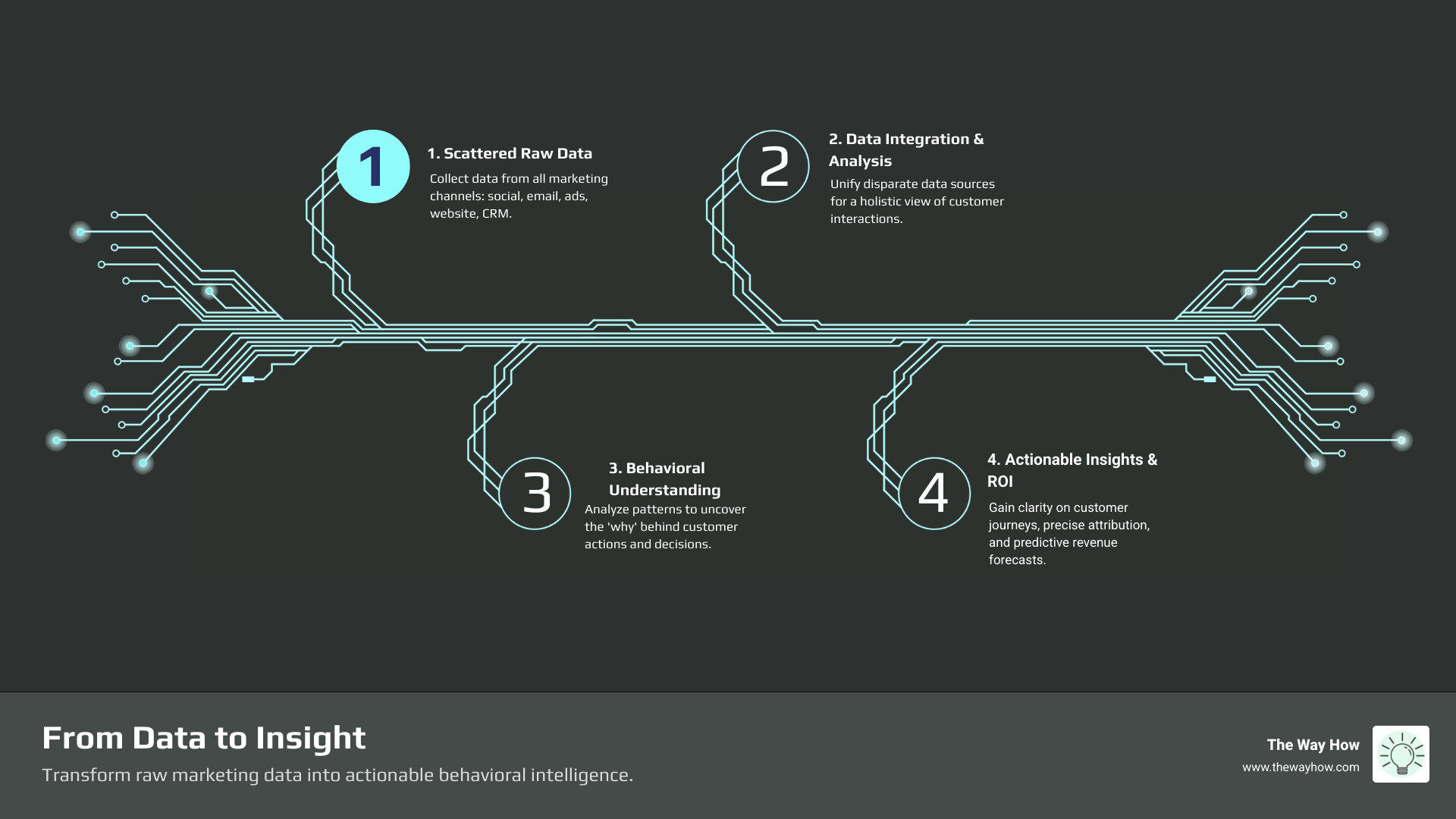
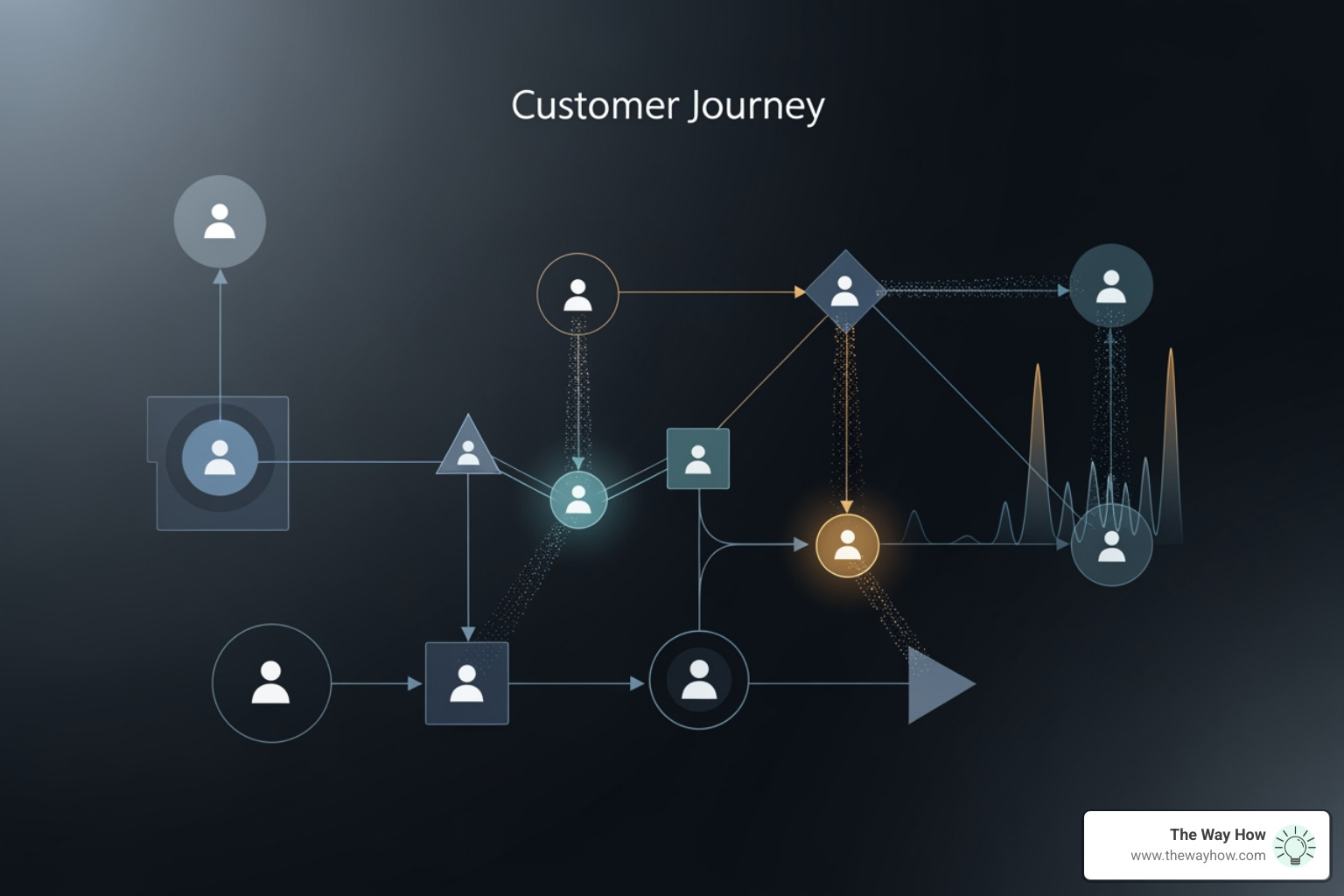
Marketing analytics solutions are essential for businesses because they provide the framework to systematically answer these questions. They help us understand the complete customer journey, from initial awareness to post-purchase advocacy. This journey is rarely linear; it involves multiple touchpoints across various channels. Without a robust analytics solution, connecting these disparate data sources becomes a Herculean task, often leaving us with fragmented insights and uncertainty.
One of the most critical aspects is multi-channel attribution. Marketing isn’t about just one platform; it’s a mix of SEO, paid ads, social media, email marketing, and more. We need a tool that doesn’t just track individual channels but actually connects the dots to show us the full customer journey. Multi-channel attribution helps us understand how different marketing touchpoints contribute to conversions. Instead of giving all credit to the last-clicked ad or page, attribution modeling lets us see the bigger picture, whether a customer interacted with a social ad, email campaign, or blog post before making a purchase. This allows us to optimize campaigns based on behavioral insights, ensuring our efforts are aligned with how customers actually interact with our brand.
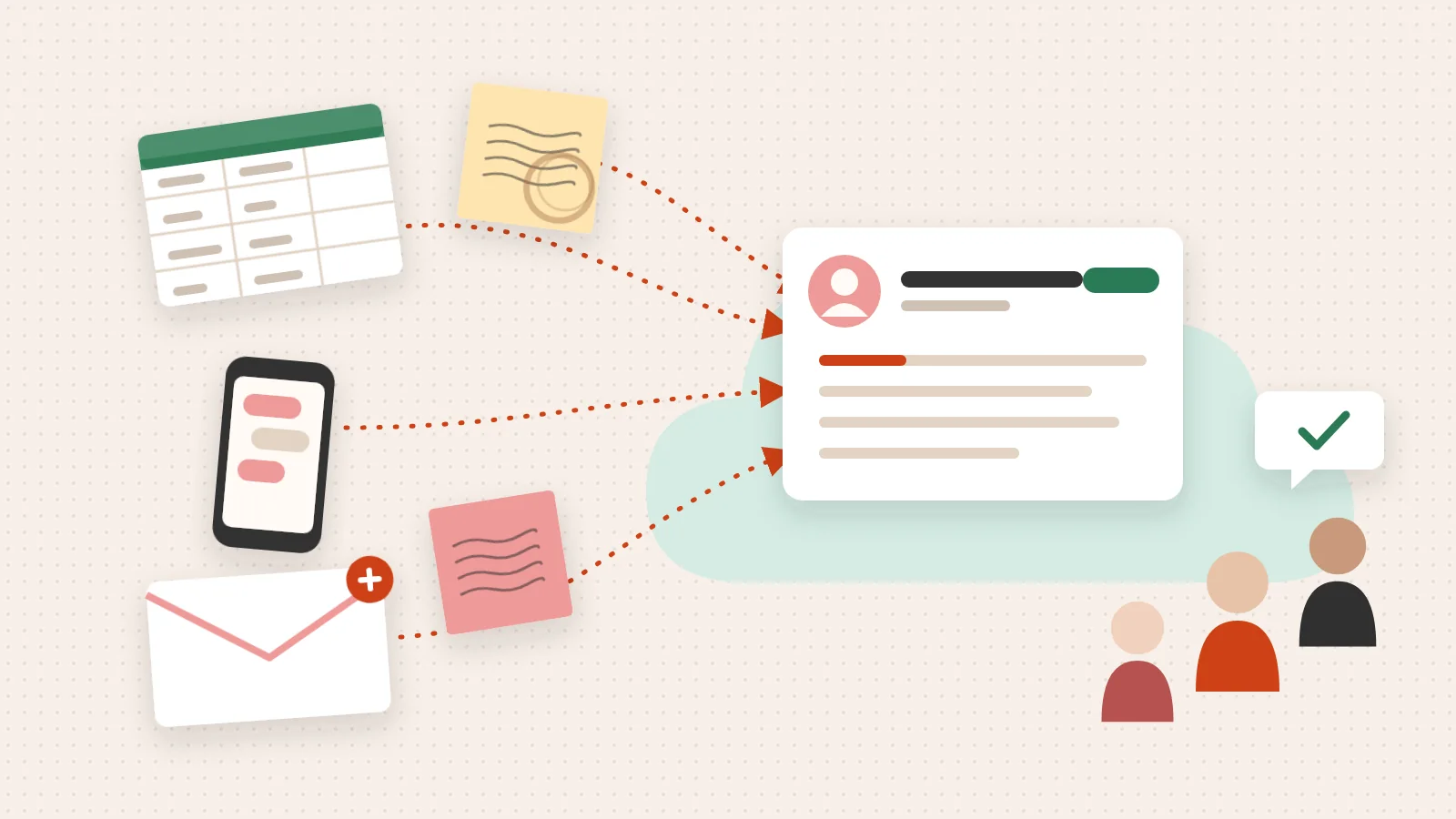
By integrating data from these various sources—ad platforms, CRM, marketing automation, web analytics, and even real-time interactions—we gain a holistic view of marketing performance. This allows us to tie marketing efforts directly to revenue impact, proving marketing’s contribution to the bottom line. As G2’s definition of marketing analytics highlights, these tools help us track, manage, and optimize our earnings by making sense of the numbers. When we understand the “why,” we can diagnose why growth is stalled and design systems that create trust, momentum, and predictable revenue.
Key Features That Drive Clarity, Not Complexity
When evaluating marketing analytics solutions, we look for features that simplify data, not complicate it. The goal is clarity, not just more data points. Here are the key features that truly make a difference in understanding customer behavior and optimizing campaigns:
- Real-time data analytics: We don’t want to wait days or even hours to see how our campaigns are performing. We need insights now. Prioritizing tools that provide real-time tracking—whether it’s website traffic, ad performance, or email engagement—gives us up-to-the-minute information to make agile decisions.
- Customizable dashboards and reports: Generic dashboards often hide the insights we need most. Effective marketing analytics solutions allow us to tailor dashboards to our specific business questions and KPIs. This means focusing on the metrics that directly impact our revenue goals, rather than getting lost in a sea of irrelevant data.
- AI-powered insights and predictive analytics: The future of marketing is smart, strategic, and backed by data. AI-powered tools use machine learning to analyze large datasets, identify trends, patterns, and anomalies. They can offer predictive insights to forecast what’s likely to happen, recommend optimizations, and even automate certain marketing decisions. This helps us make the best marketing decisions based on what’s likely to happen next, not just what’s happening now.
- User behavior and customer journey tracking: Understanding how users interact with our website, app, and other touchpoints is crucial. Features like heatmaps, session recordings, and funnel analysis help us visualize the customer journey, identify friction points, and optimize user experience. This allows us to see how each area of our marketing influences the next.
- Seamless integrations: The last thing we need is another tool that works in isolation. We always check whether an analytics platform integrates seamlessly with our existing marketing stack, whether that’s our CRM platforms, email marketing software, ad platforms, or e-commerce tools. When everything is connected, we get a complete picture of the customer journey and can activate insights across channels.
- A/B testing capabilities: To truly optimize campaigns, we need to test hypotheses. Analytics solutions that include robust A/B testing features for ad creatives, landing pages, email subject lines, or CTAs allow us to continuously refine our approach based on empirical evidence, not guesswork.
The Role of AI and Data Unification
To remove uncertainty from sales and marketing systems, AI and data unification have become indispensable. They are the engines that transform raw data into actionable intelligence, allowing us to improve marketing performance with less effort.

At its core, data unification is about bringing together all our disparate marketing data—from ad platforms, CRM, social media, web analytics, and even customer service data—into a single, coherent view. This is no small feat. As highlighted by Salesforce, modern enterprises deal with vast amounts of data. Their AI architecture unifies 1000 sources and 100 million rows in 5 minutes, showcasing the power of advanced integration. This automated data harmonization saves countless hours that would otherwise be spent on manual data preparation in custom spreadsheets, which often takes hours and hinders our ability to connect efforts to revenue.
Once data is unified, AI and machine learning step in to analyze it. Here’s how they provide immense benefits:
- Machine learning for trend prediction: AI algorithms can identify subtle patterns and trends in vast datasets that humans might miss. This enables predictive analytics, allowing us to forecast future outcomes like customer churn or purchase likelihood. Armed with these predictions, we can proactively adjust our strategies, rather than reactively responding to past events.
- Automated data harmonization and enrichment: AI can normalize and enrich marketing data by combining it with customer and business data. This deepens analysis, giving us a more complete understanding of our audience. It moves beyond just reporting metrics to provide context and meaning.
- Proactive optimization and automation: AI-powered tools can go beyond just insights; they can recommend and even automate actions. For instance, some solutions can identify and automatically pause low-performing ads, or recommend adjustments to campaigns based on real-time performance. This means improving performance with less effort, allowing our teams to focus on strategy and creativity rather than manual adjustments.
- Uncovering hidden insights: With AI, we can ask questions in natural language and have the system uncover answers from our data, eliminating the need for complex SQL queries or dependence on data teams. This self-service approach empowers marketers to explore trusted, governed data and uncover insights previously hidden within complex datasets.
By leveraging AI and machine learning, marketing analytics solutions help us move from simply observing “what” happened to understanding “why” and, crucially, “what to do next.” This predictive and prescriptive capability is key to building dependable growth engines and ensuring our marketing investments deliver predictable revenue.
A Curated Review of Top Marketing Analytics Solutions
When we talk about marketing analytics solutions, we’re not just listing tools; we’re considering how each platform helps us answer fundamental questions about human behavior and decision-making psychology. The right tool provides clarity, not just data, and helps us diagnose why growth might be stalled. Here, we review some leading solutions based on the strategic questions they help answer.
HubSpot Marketing Hub: For a Unified View of the Customer Lifecycle
Best for: Comprehensive CRM integration, inbound marketing analysis, customer journey mapping, marketing automation.
HubSpot Marketing Hub stands out for its all-in-one approach to inbound marketing. Its strength lies in its deep integration with a CRM, offering a unified view of the customer from lead generation to customer retention. This means we can track how prospects interact with our content, emails, and website, and then see how those interactions translate into sales and customer loyalty.
What we appreciate about HubSpot is its ability to connect marketing activities directly to the customer journey. We can create landing pages, automate email sequences, manage social media, and analyze performance all within one platform. This is crucial for understanding multi-channel attribution and how different touchpoints contribute to conversions. G2 reviewers highly rate its features, with 89% praising its outbound email sending capabilities. For businesses looking to streamline customer relationships and improve retention, HubSpot provides the architecture to build an integrated marketing and sales strategy.
Google Analytics: For Foundational Website Behavior Analysis
Best for: Website traffic analysis, understanding user flow, tracking on-site conversions, audience segmentation.
Google Analytics remains the bedrock for understanding what happens on your website. It’s an indispensable tool for tracking website traffic, user behavior, and conversion paths. For any business, regardless of size, it provides foundational insights into how users find your site, what they do once they’re there, and when they leave.
While often seen as a basic tool, Google Analytics, especially with its newer versions, offers powerful capabilities for understanding the customer journey. We can segment audiences, analyze user flow, and set up conversion goals to measure the effectiveness of our on-site experiences. For more advanced needs, Google Analytics 360 integrates with other Google solutions like Google Ads and Google Cloud, allowing for deeper analysis and predictive capabilities. It empowers us to turn data into value for our business by understanding unified customer journeys across devices and platforms.
Semrush: For Decoding Your Competitive Landscape
Best for: SEO optimization and competitor analysis, search rank tracking, content marketing insights, market share analysis.
For businesses operating in competitive digital landscapes, Semrush is a game-changer. It goes beyond internal data to provide a comprehensive view of the market, helping us understand not just our own performance but also how we stack up against competitors.
Semrush excels in uncovering opportunities in search engine optimization. It allows us to perform keyword research, analyze competitor strategies, monitor our search rank, and audit our website for SEO health. This is vital for designing demand generation strategies rooted in understanding the competitive environment. 89% of reviewers highlight its search rank tracking for accurately benchmarking performance against competitors. By understanding what our competitors are doing well, and where they fall short, we can refine our own content marketing and SEO efforts to capture more market share.
Amplitude: For Deep Product and User Behavior Insights
Best for: Digital products, user retention analysis, behavioral cohort analysis, A/B testing for features.
Amplitude is an AI analytics platform designed for those focused on understanding granular user behavior within digital products and websites. It’s particularly powerful for product-led growth companies or those with complex digital offerings where understanding every user action is critical.
Amplitude helps us answer questions like: What features are users engaging with most? Where are they dropping off in a specific user flow? How do different user segments behave over time? Its event-based tracking allows for deep behavioral cohort analysis and helps us identify patterns that lead to retention or churn. The platform’s emphasis on AI-guided growth, testing everything, and nonstop optimization aligns with our goal of continuous improvement. It provides quantitative and qualitative answers to user questions, helping us make smarter decisions with confidence and truly understand what our customers want—and how to give it to them.
A Strategic Framework for Choosing Your Analytics Platform
Choosing the right marketing analytics solutions can feel overwhelming, especially with countless tools available. Many businesses make the mistake of buying software before they’ve truly diagnosed their needs. At The Way How, we believe in a psychology-first approach: understand your underlying problems and behavioral questions before you prescribe a solution. This framework helps you diagnose your needs before you prescribe a solution.
How to Choose the Right Marketing Analytics Solution
The “best” solution isn’t a universally acclaimed tool; it’s the one that best fits your specific business context, team capabilities, and strategic objectives. Here’s our strategic approach to choosing the right platform:
- Define your core business questions first: Before even looking at tools, clarify what specific decisions you need to make. Are you trying to reduce customer churn, optimize ad spend, understand website conversion paths, or improve customer lifetime value? Your analytics solution should be purpose-built to answer these questions, not just to collect data.
- Assess your team’s skills and resources: Do you have data analysts on staff, or will your marketing team be self-serving insights? Some tools require technical expertise, while others are designed for ease of use. Consider the learning curve and available training resources.
- Map your existing tech stack: Your new analytics solution needs to integrate seamlessly with your current tools, including your CRM, email marketing platform, ad platforms, and other essential systems for social media and SEO. The last thing you want is another siloed data source. Seamless integrations ensure you can connect all the dots in the customer journey.
- Understand your data maturity level: Are you just starting to track basic website metrics, or do you have complex multi-channel campaigns? Your data maturity will dictate the level of sophistication you need in a tool. Start where you are and choose a solution that can scale with you.
- Focus on strategy before software: The most powerful marketing analytics solutions in the world are useless without a clear strategy. We help founders and leadership teams remove uncertainty by first diagnosing why growth is stalled, identifying certainty gaps in the customer journey, and then designing systems that create trust, momentum, and predictable revenue. The software is merely an enabler of that strategy.
Key Questions to Ask Before You Buy
To help you make an informed decision and avoid buyer’s remorse, here are the critical questions we encourage our clients to ask before investing in any marketing analytics solutions:
- What specific decisions will this data help us make? If you can’t articulate the actionable insights you expect to gain, you might not need the tool—or you haven’t clearly defined your problem.
- How will this tool integrate with our CRM? Your CRM is the heart of your customer data. Any analytics solution must connect seamlessly to provide a complete view of the customer lifecycle.
- Can we measure the entire customer journey, not just last-touch attribution? Understanding the full path to conversion, including all touchpoints, is crucial for optimizing your marketing spend and understanding the true value of each channel.
- Does this tool help us understand why customers behave a certain way? Moving beyond “what” to “why” is the hallmark of truly insightful analytics. Look for features that provide behavioral insights, not just performance metrics.
- What level of support and onboarding is provided? Even the most intuitive tool can have a learning curve. Ensure the vendor offers adequate support, training, and resources to help your team maximize its investment.
Frequently Asked Questions About Marketing Analytics
As experts in psychology-first marketing, we often encounter similar questions about marketing analytics solutions. Here are some of the most common, answered with a focus on practical application and strategic clarity.
How do marketing analytics tools differ from basic web analytics?
Basic web analytics, like the free version of Google Analytics, primarily track on-site behavior. They tell you what happened on your website: how many visitors, which pages they viewed, how long they stayed, and where they came from. These are foundational and essential for understanding your website’s performance.
However, comprehensive marketing analytics tools go much further. They integrate data from multiple, disparate channels—your CRM, advertising platforms, social media, email marketing software, and even customer service interactions. This multi-channel integration allows them to provide a complete view of the customer journey, from the first touchpoint to conversion and beyond. They help you understand how all your marketing efforts work together, attribute revenue to specific campaigns, and gain a holistic understanding of how marketing impacts your bottom line, not just your website traffic.
How do AI-powered marketing analytics tools work?
AI-powered marketing analytics solutions leverage machine learning algorithms to analyze vast amounts of data in ways that traditional methods cannot. They essentially learn from historical data to identify patterns, predict future outcomes, and automate tasks, moving beyond simple reporting to proactive intelligence.
Here’s a simplified breakdown:
- Pattern Identification: AI can spot subtle correlations and trends within massive datasets, such as which customer segments respond best to certain messaging, or which website elements lead to higher conversions.
- Predictive Analytics: Based on these identified patterns, AI can forecast future events, such as which customers are likely to churn, which leads are most likely to convert, or what the likely ROI of a new campaign will be. This helps you make proactive, data-backed decisions.
- Recommendations and Optimizations: AI can recommend specific actions to improve campaign performance, such as suggesting budget reallocation for ads, optimizing content for better engagement, or personalizing customer journeys. Some advanced systems can even automate these optimizations, like pausing underperforming ads.
- Automated Insights and Reporting: AI can synthesize complex data into digestible insights and automate report generation, freeing up your team to focus on strategy rather than data compilation. This helps you make smarter decisions faster by delivering relevant information when you need it.
AI-powered tools help remove uncertainty by giving you a clearer picture of what’s working, what’s not, and what’s likely to happen next, allowing for more strategic and efficient marketing.
Are free marketing analytics tools effective for a growing business?
Free marketing analytics solutions are an excellent starting point and can be highly effective for establishing a baseline understanding of your website traffic and basic conversions. Tools like Google Analytics, HubSpot’s free CRM, or basic social media insights provide valuable data for small businesses or those just beginning their analytics journey. They help you get a foundational grasp of what is happening.
However, as a business scales and its marketing efforts become more complex, free tools often hit their limitations. For a growing business looking to optimize its revenue engine, paid solutions become necessary for several key reasons:
- Multi-channel Attribution: Free tools typically offer limited or no multi-channel attribution modeling, making it difficult to understand the true impact of integrated campaigns across various touchpoints.
- Deeper Customer Insights: Paid platforms offer advanced segmentation, behavioral analysis, and customer journey mapping that go beyond basic page views, allowing for a more nuanced understanding of why customers behave the way they do.
- Automation and Efficiency: Paid solutions often include robust automation features for reporting, campaign optimization, and lead nurturing, saving significant time and resources as your team grows.
- Integration Capabilities: They offer seamless integrations with a broader range of marketing and sales tools, creating a unified data ecosystem crucial for a holistic view.
- Proving and Improving ROI: To confidently prove marketing’s impact on the bottom line and continuously improve ROI, the advanced analytics, predictive capabilities, and attribution models of paid solutions are indispensable.
While free tools help you see the “what,” paid marketing analytics solutions empower you to understand the “why” and “what next,” which is critical for driving predictable, sustainable growth.
Charting a Course to Predictable Growth
We’ve explored the landscape of marketing analytics solutions, from understanding the critical need to move beyond mere data collection to diagnosing the ‘why’ behind customer behavior. We’ve highlighted key features that drive clarity, the transformative power of AI and data unification, and reviewed some of the leading tools designed to help you steer this complex terrain.
The ultimate goal of any marketing analytics endeavor is not just to gather data, but to convert insights into impact. This means moving beyond vanity metrics—those numbers that look good but don’t tell you anything actionable—to truly understanding what drives your business forward. Building a data-driven strategy isn’t about chasing every new trend; it’s about systematically removing uncertainty from your growth model.
At The Way How, we specialize in helping founders and leadership teams achieve this. We diagnose why growth is stalled, identify certainty gaps in the customer journey, and design systems that create trust, momentum, and predictable revenue. Our approach blends strategic clarity, behavioral insight, and operational execution. The right marketing analytics solutions, chosen and implemented with a psychology-first mindset, are central to this process. They empower you to make informed decisions, optimize your efforts, and ultimately, build a dependable growth engine.
Ready to transform your marketing into a source of predictable revenue? Learn how we design marketing systems that create predictable revenue.