A Complete Guide to CRM Systems and Database Management
 Jeremy Wayne Howell : Jul 22, 2026 9:48:31 PM
12 min read

An automated client acquisition funnel is a system that attracts, nurtures, and converts prospects into clients without constant manual effort. Here’s what you need to know:
Key Components:
Primary Benefits:
You’re caught in the cycle. You land a few clients, deliver great work, and suddenly your pipeline is empty. So you scramble—posting on social media, sending cold emails, taking every findy call—until you’re exhausted. Then, just as you catch your breath, the cycle repeats.
This is the feast-or-famine trap that keeps businesses small.
The problem isn’t your effort. You’re working hard. The problem is that you’re treating client acquisition like a series of one-off tasks instead of a repeatable system. Every lead requires your personal attention. Every follow-up demands your time. Every proposal pulls you away from the work that actually generates revenue.
According to research, sales teams waste two-thirds of their time on non-revenue-generating tasks like manual follow-ups and data entry. That leaves just 33% of their time for actual selling. For founders wearing multiple hats, the numbers are even worse.
The freedom-growth paradox is real: you started your business for autonomy, but growth seems to demand that you sacrifice it. You’re trapped between staying small enough to manage manually or growing so fast that you lose control.
Automation isn’t about replacing human connection. It’s about creating space for it. When you automate the predictable parts of client acquisition—the follow-ups, the scheduling, the initial education—you free yourself to show up where you’re actually needed: building relationships, solving complex problems, and doing your best work.
But here’s what most advice gets wrong: automation fails when it’s just a stack of tools or a series of tactics copied from someone else’s playbook. It succeeds when it’s built on a foundation of human psychology—when it guides prospects through a journey designed around how people actually make decisions.
This article will show you how to build an automated client acquisition machine grounded in buyer psychology, not just software. You’ll learn the blueprint, the core components, and the metrics that matter. Most importantly, you’ll find how to escape the hustle and build a system that delivers clients predictably while giving you back your time.
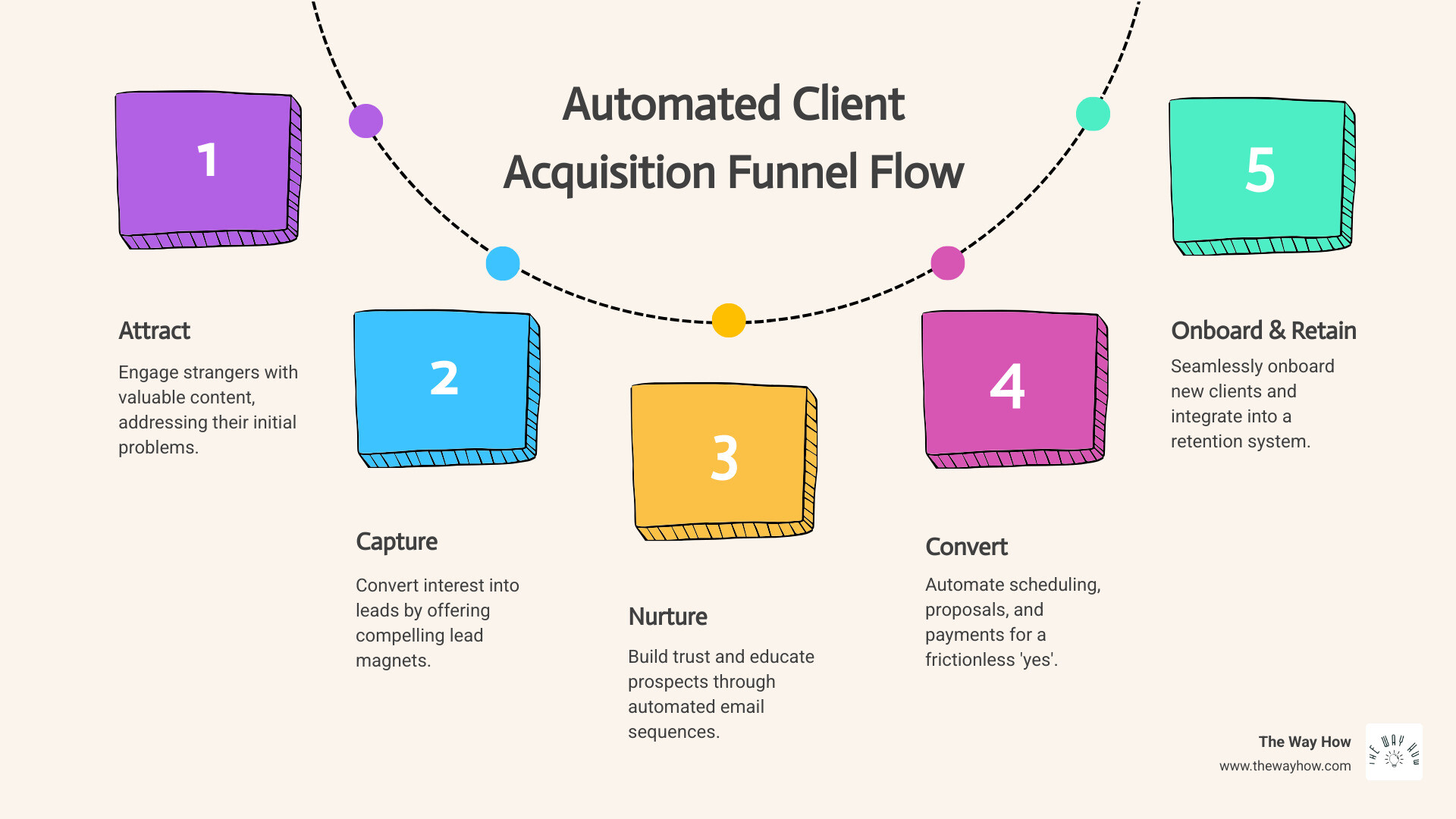
Before we dive into the “how,” we must understand the “why.” An automated client acquisition funnel isn’t just a series of automated steps; it’s a carefully orchestrated journey designed to meet your prospects where they are, understand their underlying needs, and gently guide them toward a solution. This is where psychology-first thinking comes into play.
We often observe founders struggling because they’re chasing tactics without a clear understanding of human behavior. They believe the problem is a lack of effort, when in reality, it’s a lack of a system that diagnoses uncertainty in the customer’s decision-making process. Our goal is to remove this uncertainty.

At the heart of this blueprint is your Ideal Customer Profile (ICP). Before you automate anything, you must have an almost intimate understanding of who you serve. This isn’t just demographics; it’s psychographics. What are their fears, aspirations, daily challenges, and the internal narratives driving their decisions? This clarity allows us to design a funnel that speaks directly to them, making them feel seen and understood.
Once you know your ICP, you can map out what we call the “Journey of Easy Yeses.” This principle acknowledges that people don’t jump from “stranger” to “client” in one giant leap. They take a series of small, incremental commitments. Each “yes” along the funnel should feel easy, logical, and low-risk, building trust and momentum. Think of it like building a relationship: you don’t propose on the first date. You start with a coffee, then dinner, then maybe a weekend trip. Each step is a small “yes” that paves the way for a bigger one.
This incremental commitment ties directly into “The Marketing Rule of 7,” which suggests prospects need to see or hear your messages seven times before they purchase. An automated funnel ensures this consistent, valuable touchpoint delivery, building familiarity and trust over time without you having to manually remember each interaction.
Furthermore, a well-designed funnel fosters strong alignment between marketing and sales. When marketing consistently delivers qualified leads that sales is prepared to engage with, it creates a seamless experience for the prospect. This internal alignment isn’t just good for morale; it’s great for the bottom line. Companies with strong sales and marketing alignment close 38% more deals and generate up to 208% more revenue from their marketing efforts. This synergy is a direct result of a clear, shared understanding of the customer journey, reducing friction both internally and externally.
Now that we have our psychological blueprint, let’s break down the machine into its primary systems. Each stage of your automated client acquisition funnel serves a specific purpose, guiding prospects from initial awareness to becoming a loyal client.
The first stage of any funnel is about awareness—getting the attention of your ideal prospects. But in an automated system, it’s not just about broad reach; it’s about attracting the right people and capturing their interest efficiently. This is the top of your automated client acquisition funnel.
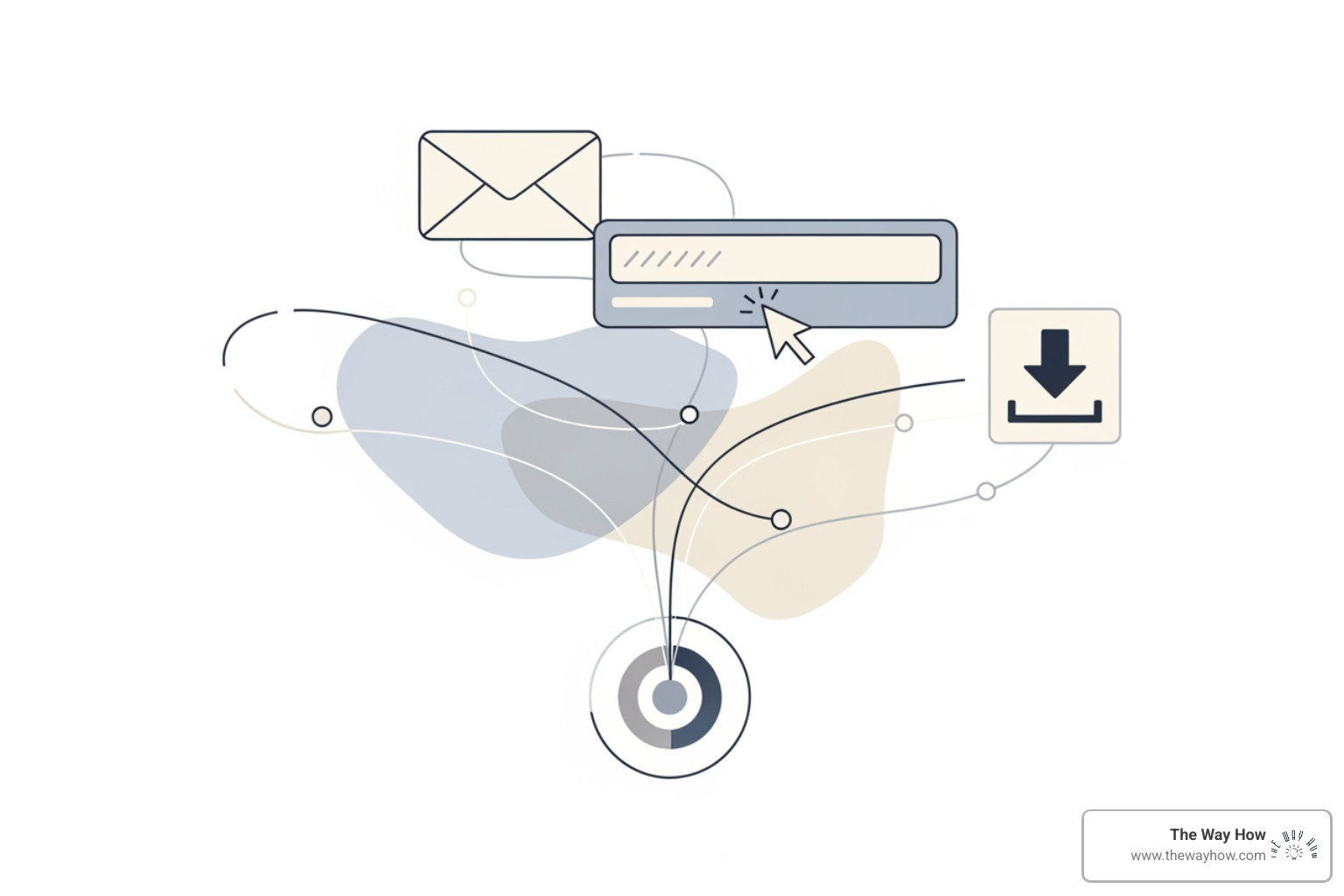
We leverage content as a magnet, drawing in prospects who are already searching for solutions to their problems. This content can range from blog posts and articles (which can be managed through a Hubspot content hub) to engaging social media posts. Social media is a powerful driver for lead generation, with 70% of the global population using social networking sites, spending an average of two-and-a-half hours on social channels each day. To maintain a consistent presence without constant manual effort, we use automated social media scheduling tools. These tools allow us to plan and publish content at optimal times, ensuring our message reaches the audience even when we’re not actively online.
Beyond general content, we use more direct lead capture mechanisms:
For B2B businesses, LinkedIn stands out. It’s accountable for 80% of B2B leads, making it an indispensable platform for automated lead generation. We can automate aspects of LinkedIn prospecting, from identifying ideal customer profiles to sending connection requests and personalized messages, ensuring we’re constantly expanding our network with high-quality prospects.
Once a prospect has entered your funnel and shown initial interest, the next critical step is to build a relationship based on trust and value. This is where your automated nurturing system shines, changing lukewarm leads into engaged prospects ready for a deeper conversation. This stage is all about understanding their evolving needs and providing timely, relevant information.
The cornerstone of automated nurturing is well-crafted email sequences. These aren’t generic newsletters; they are strategic series of emails designed to educate, inspire, and guide prospects based on their initial interaction. We can set up sophisticated Hubspot drip campaigns that trigger based on specific actions (e.g., downloading a lead magnet, visiting a certain page). These sequences allow for personalization & segmentation, delivering different messages to different segments of your audience. This ensures that every email feels relevant to the recipient’s unique journey and interests, making them more likely to open and engage.
The “Marketing Rule of 7” comes into play here. Your prospects need multiple touchpoints before they feel comfortable making a purchase decision. Automated email sequences ensure these touchpoints are delivered consistently, building familiarity and trust without manual intervention.
AI & Chatbots play an increasingly vital role in this stage. Imagine a prospect browsing your website at midnight with a question. A chatbot can provide an immediate, intelligent response, qualifying their needs and guiding them to relevant resources or even scheduling a call. As we explored in our guide on how chatbots qualify leads in Hubspot, these AI-powered tools can engage visitors 24/7, answering common questions, capturing information, and ensuring no lead is lost due to response delays. This immediate engagement builds momentum and shows prospects you value their time.
Furthermore, webinar automation can be a powerful nurturing tool. If you host educational webinars, automation can handle everything from registration reminders to post-webinar follow-ups, delivering recordings, and prompting next steps. This provides significant value to your audience while positioning you as an expert.
By automating these nurturing processes, we address a critical challenge faced by many businesses: sales teams often waste two-thirds of their time on non-revenue-generating tasks like sending emails, data entries, and internal meetings. This leaves merely 33% for active selling. An automated nurturing system frees up this valuable time, allowing your team to focus on high-impact conversations with truly engaged prospects.
The final stage of your automated client acquisition funnel is where prospects become clients. At this point, they’ve been nurtured, their questions have been answered, and their trust has been earned. The goal now is to remove any remaining friction from the decision-making process, making it as easy as possible for them to say “yes” and begin their journey as a client.
One of the biggest time-sinks for busy professionals is the back-and-forth of scheduling meetings. Automated scheduling tools like Calendly, which seamlessly integrate with platforms like Hubspot, solve this problem entirely. Prospects can view your real-time availability and book a slot that works for them, instantly adding it to both your calendars. This creates a sense of efficiency and professionalism, eliminating frustrating email chains.
When it’s time to formalize the agreement, proposal software steps in. Instead of manually creating and sending proposals, these tools allow you to generate professional, personalized proposals quickly. They can include interactive elements, digital signatures, and even payment links, streamlining the entire contracting process.
Speaking of payments, automated payments are crucial for a frictionless conversion. Whether it’s recurring subscriptions or one-time invoices, an automated system ensures payments are collected promptly and securely, often with automated reminders and receipts. This reduces administrative overhead and ensures a smooth financial transaction.
Central to managing this entire conversion and post-conversion journey is robust CRM integration. Your Customer Relationship Management (CRM) system acts as the single source of truth for all client interactions. A proper Hubspot CRM implementation ensures that every touchpoint—from their first website visit to their signed contract—is logged and accessible. This allows for continuity and personalized follow-up, preventing any client from feeling like just another number.
Finally, once a prospect becomes a client, the journey doesn’t end; it transitions into client onboarding sequences. Automated onboarding ensures that new clients receive all the necessary information, resources, and welcome messages to get started successfully. This might include a series of welcome emails, access to a client portal, or a guided setup process. As we emphasize in our guide on Hubspot client onboarding, a smooth onboarding experience is critical for client retention and sets the tone for a long, successful relationship. It reinforces their decision to choose you and builds immediate momentum.
You can have the most brilliant blueprint, but without the right tools working in harmony, your automated client acquisition funnel will be nothing more than a collection of disconnected parts. The true power of automation lies in how your technology stack integrates and communicates, creating a seamless flow of information and action.
The central brain of your entire machine is your CRM system. It’s the hub that connects every stage of the customer journey, from initial lead capture to post-conversion nurturing. As we highlight in our overview of Hubspot’s powerful business software, a robust CRM manages all relevant customer data, increasing your team’s effectiveness and building strong customer relationships. It’s where you track interactions, segment your audience, and trigger automated workflows.
When building your tech stack, you’ll face a fundamental choice: all-in-one platforms vs. point solutions.
Here’s a quick comparison:
| Feature/Consideration | All-in-One Platform (e.g., HubSpot) | Point Solutions (e.g., Calendly, Mailshake, Poptin) |
|---|---|---|
| Integration | Native and seamless across all modules | Requires connectors (e.g., Zapier) to integrate different tools |
| Functionality | Broad, comprehensive features across many areas | Deep, specialized features in a specific area |
| Complexity | Simpler to manage due to unified interface | Can be more complex to set up and maintain integrations |
| Cost | Often higher upfront or tiered pricing for full suite | Potentially lower individual tool cost, but total cost can add up with integrations |
| Flexibility | Less flexible; tied to the platform’s ecosystem | Highly flexible; choose best-of-breed tools for each specific need |
| Data Silos | Minimized; all data in one place | Potential for data silos if integrations are not robust or correctly configured |
The power of integration, regardless of your chosen path, is non-negotiable. Whether you’re using an all-in-one suite or connecting various point solutions, the ability for your tools to talk to each other is what truly automates your funnel. This is where solutions for Hubspot integrations become critical. They allow data to flow freely, triggering actions and updating records across your entire system. Without robust integration, your “automated” funnel quickly devolves into a series of manual data transfers and missed opportunities.
Building an automated client acquisition funnel isn’t a “set it and forget it” endeavor in the literal sense. While the system runs automatically, its success hinges on continuous monitoring and optimization. We believe that predictable growth comes from understanding why things are happening and constantly refining the process. This is how you fine-tune your automated client acquisition funnel.
We help founders remove uncertainty in their sales and marketing systems by diagnosing where growth is stalled. This means we need to look beyond surface-level metrics and dive into the data to identify bottlenecks and opportunities for improvement.
Key metrics we track include:
Tools like Hubspot analytics provide the dashboards and reports necessary to track these metrics across your entire funnel. They allow us to see not just what is happening, but to start asking why.
A/B testing is fundamental to continuous optimization. This involves testing different versions of your landing pages, email subject lines, calls-to-action, or ad copy to see which performs better. Even small improvements at each stage can have a compounding effect on your overall conversion rates.
Identifying bottlenecks is a critical step. If you see a significant drop-off between, say, a lead magnet download and the next email in a nurture sequence, that’s a bottleneck. It might indicate that your email content isn’t compelling enough, or the offer isn’t aligned with the prospect’s expectations. By diagnosing these “certainty gaps” in the customer journey, we can implement targeted solutions.
Continuous optimization is about constantly asking: “How can we make this journey more frictionless, more valuable, and more aligned with our prospects’ psychological needs?” It’s an iterative process of testing, learning, and refining to turn good results into predictable growth and ensure your automated machine is always running at peak performance.
This is a common and valid concern, and we address it with a psychology-first approach. The key is to automate the predictable so you can personalize the pivotal. Use personalization tokens in emails (e.g., prospect’s name, company), segment your audience based on their behavior and interests, and design your automation to trigger human intervention at key moments (e.g., a sales rep receiving a notification when a prospect hits a certain engagement score). Automation should create more time for genuine, high-value conversations, not eliminate them. It allows you to show up authentically when it matters most.
Start with your biggest bottleneck or the most time-consuming manual task that’s currently slowing down your process. For many businesses, this is either initial lead follow-up (e.g., a welcome email sequence after a lead magnet download) or appointment scheduling. Automating these early, high-volume, repetitive tasks will free up significant time and create immediate momentum. This small win will then build confidence and capacity for automating other areas of your automated client acquisition funnel.
Building a fully automated funnel is an iterative process, not a one-time project. You can start small and have your first automation (like a lead magnet delivery system) running in a single day. A more comprehensive system, integrating multiple tools and stages, can be built out and refined over several weeks or months. The goal is continuous improvement and incremental wins, not instant perfection. We advocate for starting with a clear strategy, implementing in phases, and continuously optimizing based on performance data.
The journey from manual hustle to a predictable growth engine, powered by an automated client acquisition funnel, is a strategic shift. It’s about moving beyond reactive tactics and instead building a systematic approach grounded in customer psychology. By understanding human behavior, empathy, and decision-making, we can design systems that not only attract and convert clients efficiently but also build trust and momentum throughout their journey.
Automation, when applied thoughtfully, creates the space for you to focus on your highest-value work—building deep relationships, delivering exceptional service, and innovating. It frees you from the feast-or-famine cycle, replacing uncertainty with predictable revenue. If you’re ready to move from guessing to a clear, systematic approach to growth, we can help you build a machine that works for you, delivering consistent clients and giving you back your most valuable resource: your time.
 Jeremy Wayne Howell : Jul 22, 2026 9:48:31 PM
 Jeremy Wayne Howell : Jul 21, 2026 9:47:10 PM
 Jeremy Wayne Howell : Jul 20, 2026 9:46:47 PM