A Complete Guide to CRM Systems and Database Management
 Jeremy Wayne Howell : Jul 22, 2026 9:48:31 PM
12 min read

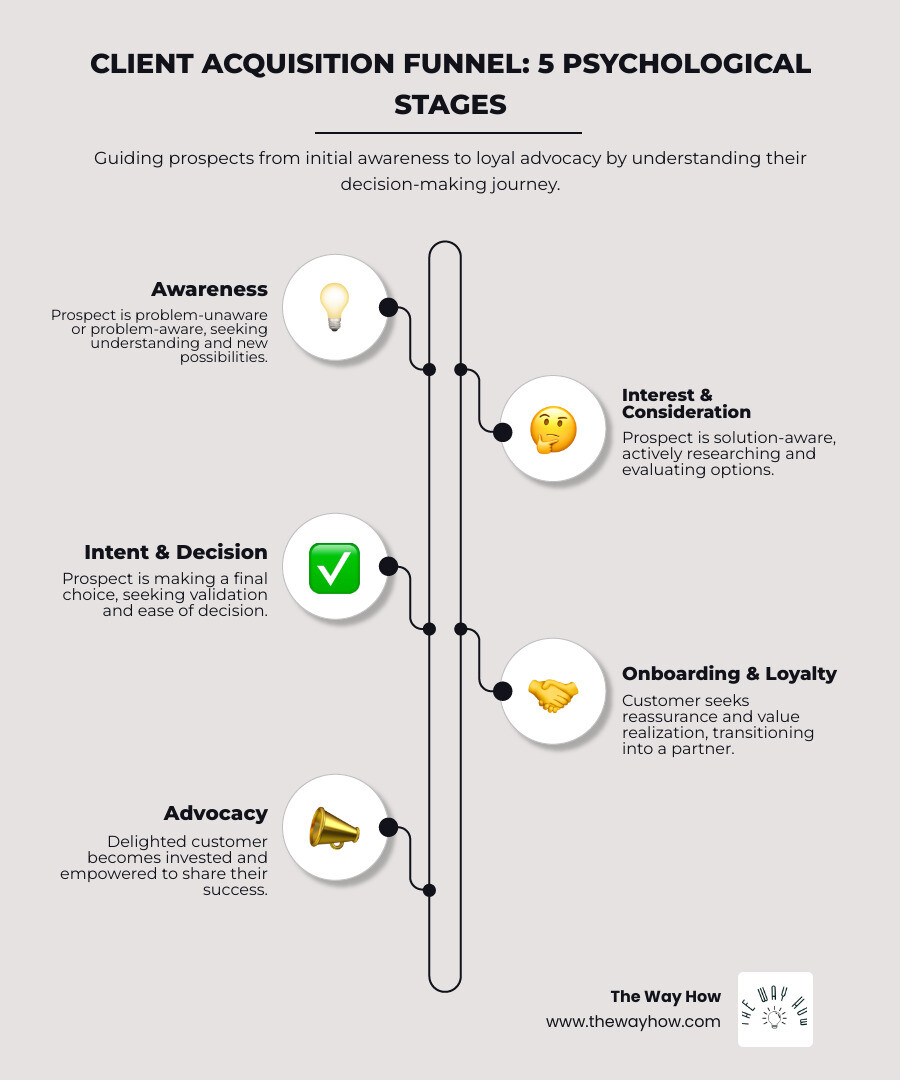
A client acquisition funnel is a structured framework that maps how prospects move from initial awareness of your business to becoming loyal customers and advocates. It typically includes five stages: Awareness, Interest, Consideration, Intent/Decision, and Advocacy. Each stage represents a shift in the buyer’s psychological state and requires different strategies to build trust, reduce uncertainty, and guide them toward commitment.
The 5 Stages of a Client Acquisition Funnel:
You’ve tried the tactics. The webinars. The ads. The content calendar. Maybe you hired an agency or bought a new tool. And yet, your revenue still feels unpredictable.
You’re not alone. The average B2B website converts at just about 2%. That means 98% of your traffic disappears without a trace.
The problem isn’t effort. It’s understanding.
Most businesses treat the client acquisition funnel as a marketing model—a static diagram with stages labeled “Awareness,” “Consideration,” and “Decision.” But that’s not what a funnel actually is. A funnel is a map of human decision-making. It reveals where trust erodes, where certainty collapses, and where buyers quietly walk away.
When you understand the psychology behind each stage—what buyers think, feel, and fear—you stop guessing. You build a system that guides prospects from skepticism to advocacy with clarity and confidence.
This guide will show you how to move from tactics to systems. You’ll learn why your current approach isn’t working, how to decode the psychology of each funnel stage, and how to build a predictable growth engine that doesn’t rely on luck.
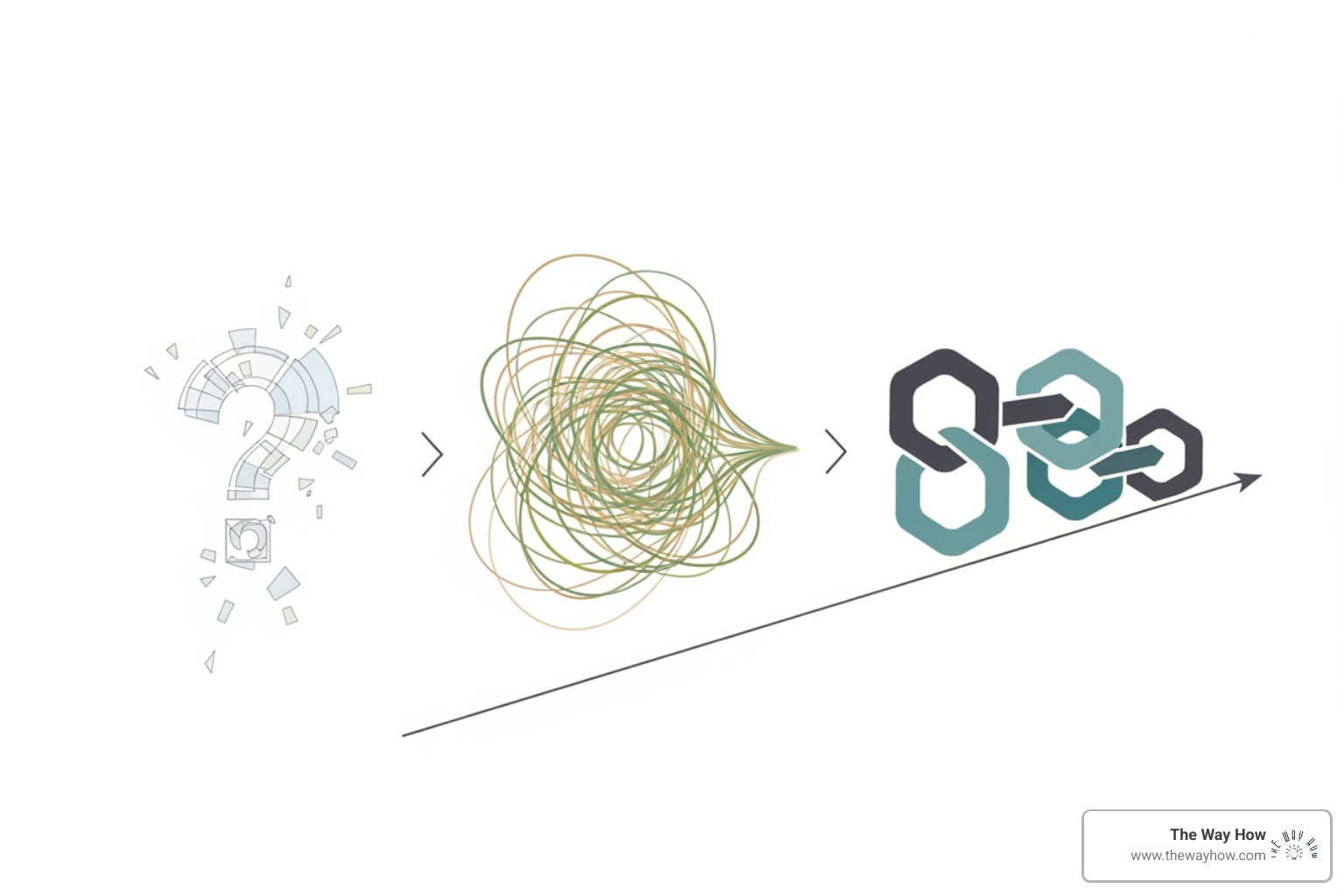
Many businesses approach client acquisition as a series of disparate marketing and sales activities. We launch campaigns, generate leads, and hope for the best. But when we treat the client acquisition funnel as merely a collection of tactics, we inevitably encounter unpredictable revenue, wasted marketing spend, and the frustrating reality that most of our efforts convert only a tiny fraction of potential clients. This is the “2% problem” that plagues many B2B businesses – we miss out on most brand-aware accounts already visiting our websites.
At The Way How, we believe the true power of a client acquisition funnel lies in understanding it not as a marketing model, but as a system rooted in human behavior. It’s a map of how people make decisions, where their uncertainties lie, and how we can guide them with empathy and clarity. This shift from chasing tactics to designing a cohesive system is what transforms erratic growth into predictable revenue.
At its core, a client acquisition funnel is far more than a linear path from lead to customer. It’s a dynamic framework that mirrors the psychological journey your potential clients undertake. It visualizes how individuals progress from being completely unaware of a problem or solution to becoming a loyal advocate for your brand. This journey is rarely linear; it’s filled with moments of doubt, research, comparison, and internal deliberation.
For us, a client acquisition funnel is a framework for empathy. It helps us step into the shoes of our potential clients, understanding their pain points, their questions, and their fears at each stage. By visualizing this buyer’s journey, we can identify “certainty gaps”—those points where prospects feel uncertain, confused, or unaddressed—and proactively fill them. This isn’t just about selling; it’s about building trust, reducing friction, and creating a smooth, logical progression from a curious prospect to a satisfied advocate. When designed with this psychological insight, your funnel becomes a predictable revenue engine, fostering long-term relationships rather than just one-off transactions.
To truly master client acquisition, it’s crucial to distinguish between these often-interchanged terms. While related, each serves a distinct purpose:
Marketing Funnel: This typically encompasses the broadest scope, covering the entire customer lifecycle from initial awareness, through engagement, conversion, and extending into post-purchase loyalty and advocacy. It’s about generating demand and nurturing relationships. Our work in HubSpot Marketing often focuses on optimizing these broader marketing touchpoints.
Sales Funnel: This is generally a subset of the acquisition funnel, managed by the sales team and primarily focused on the later stages of the buyer’s journey—qualifying leads, presenting solutions, handling objections, and ultimately closing deals. It’s about direct conversion. Effective HubSpot Sales Hub Implementation is critical for streamlining this stage.
Client Acquisition Funnel: As we define it, this funnel specifically tracks the journey from a prospect’s initial awareness to their becoming a new customer. It’s about bringing new clients into your ecosystem. Unlike the marketing funnel, which can include broader brand engagement, or the sales funnel, which is focused on closing, the client acquisition funnel unites both marketing and sales efforts with the explicit goal of securing a new client. It often extends to the initial onboarding and value realization stages to ensure that new clients are successfully integrated.
The power of this distinction lies in preventing internal friction and creating a seamless experience for your prospects. When marketing, sales, and even customer service teams are aligned around a unified client acquisition funnel, they share a common language and a common goal. This alignment isn’t just good for internal harmony; it’s great for your bottom line. Companies with strong sales and marketing alignment close 38% more deals and generate up to 208% more revenue from their marketing efforts.
Understanding the psychological state of your potential client at each stage is paramount. It allows us to design experiences that genuinely resonate, address their evolving needs, and build momentum towards a confident decision. This isn’t about manipulation; it’s about empathetic guidance. By addressing their fears, answering their unspoken questions, and providing the right information at the right time, we build trust and accelerate their journey.
Psychological State: At this initial stage, prospects are either problem-unaware (they don’t know they have a specific problem your solution addresses) or problem-aware (they know they have a problem but aren’t actively seeking a solution yet). Their state is often one of passive information consumption, curiosity, or mild frustration.
Goal: Our objective here is to interrupt their existing patterns and introduce a new possibility. We aim to educate them about their problem, or a potential solution, without being overtly salesy. The focus is on building brand recognition and establishing thought leadership.
Content: Educational blog posts that address common pain points, social media insights that spark conversations, and SEO-optimized content that answers fundamental questions are key. Think “how-to” guides, industry trends, and valuable information that positions you as a helpful resource. Our HubSpot Marketing strategies often begin here.
Channels: This stage thrives on broad reach and findability. Search Engine Optimization (SEO) is crucial for organic visibility. Social media platforms allow for broad engagement and content distribution. Public Relations (PR) can also play a role in elevating brand awareness.
Psychological State: Prospects in this stage are solution-aware and actively researching. They’ve recognized their problem and are now exploring potential solutions, including yours. They are weighing options, comparing features, and seeking evidence that your offering is a viable fit.
Goal: The primary goal is to build deeper trust and demonstrate your expertise and unique value proposition. We want to nurture their curiosity, differentiate ourselves from competitors, and provide compelling reasons for them to consider us seriously.
Content: This is where more in-depth content shines. Webinars that dig into specific solutions, detailed case studies showcasing client successes, whitepaper downloads that offer comprehensive insights, and comparison guides that highlight your competitive advantages are highly effective. Tools like HubSpot Lead Generation help us capture and manage these interested prospects.
Channels: Retargeting campaigns can keep your brand top-of-mind for those who’ve visited your site. Personalized email nurturing sequences deliver relevant content directly to their inbox. Forums and detailed guides further engage them in their research phase.
Psychological State: At this critical stage, prospects are making a final choice and seeking validation for their decision. They’re looking for reassurance, proof, and a clear path forward. They’ve likely narrowed down their options and are ready to commit.
Goal: Our aim is to remove any remaining barriers, address last-minute hesitations, and make the decision-making process as easy and confident as possible. We want to convert them from a qualified lead into a paying client.
Content: Product demonstrations (demos) offer a direct experience of your solution. Free trials allow them to test it firsthand. Transparent pricing pages clarify costs. Testimonials and reviews provide crucial social proof. We look for signals that a prospect is ready to buy, such as repeated visits to pricing pages or increased engagement with sales-focused content.
Channels: Direct sales conversations become paramount here. Personalized offers custom to their specific needs can tip the scales. Strong online reviews and third-party validation (e.g., G2, Capterra) serve as powerful reinforcements.
Psychological State: The moment a prospect becomes a customer, their psychological state shifts to seeking reassurance and realizing the value they were promised. They want to know they made the right choice and are eager to successfully integrate your solution into their operations.
Goal: This stage is all about delivering on promises, creating a seamless transition, and ensuring immediate value realization. We want to transform them from a mere customer into a valued partner.
Actions: A well-structured onboarding process, often facilitated by HubSpot Client Onboarding tools, is crucial. Welcome kits, personalized check-in calls, comprehensive training, and accessible support resources are vital. Our HubSpot Service Hub Implementation ensures that every new client feels supported and empowered from day one. This proactive approach helps reduce churn and builds a foundation for long-term relationships.
Psychological State: Clients in the advocacy stage are delighted with your solution and deeply invested in its success. They feel empowered, supported, and are eager to share their positive experiences with others. They’ve become true believers.
Goal: The ultimate goal is to empower these satisfied clients to become active advocates for your brand. Their authentic endorsements are incredibly powerful and often more effective than any marketing campaign.
Actions: Implement referral programs that reward them for spreading the word. Proactively request case studies or testimonials to capture their success stories. Facilitate user feedback collection to continuously improve and show you value their input. Develop loyalty programs that provide ongoing value and incentives. These actions not only generate new leads but also reinforce the existing client’s commitment to your brand.
Building an effective client acquisition funnel isn’t about guesswork; it’s about meticulous system design and operational execution. At The Way How, we translate theory into practice, creating a robust framework that drives predictable growth.

This blueprint requires careful planning and the right tools. Our HubSpot CRM Implementation services are often foundational to this process, providing the central nervous system for your entire acquisition machine.
Most businesses start with demographics, and while useful, it’s merely scratching the surface. To truly build an empathetic and effective funnel, we must go beyond surface-level data. Our approach involves defining your Ideal Customer Profile (ICP) through a deep psychological lens.
This means uncovering not just who your best customers are, but why they buy. We explore their deepest pain points, their underlying motivations, their aspirations, and the specific questions they ask themselves before making a purchasing decision. This often involves interviewing your best existing customers, analyzing their behavioral data, and understanding their journey. By creating detailed buyer personas to target the right audience, you gain an almost unfair advantage in crafting messaging and experiences that resonate deeply.
Once we understand your ICP, the next crucial step is to carefully map their entire customer journey. This involves charting every single touchpoint—from their first exposure to your brand to their post-purchase experience. This map isn’t just a diagram; it’s a living document that reveals the emotional and cognitive shifts your prospects undergo.
As we chart this journey, we actively look for “certainty gaps.” These are the moments where prospects might experience friction, confusion, unanswered questions, or a lack of trust. Perhaps they hit a dead end on your website, receive generic communication, or encounter conflicting information. Identifying these gaps allows us to proactively design solutions. This process also creates a shared language across your marketing, sales, and service teams, fostering alignment and enabling seamless handoffs. Our expertise in Business Data Analysis helps us pinpoint these critical areas.
A well-designed client acquisition funnel is only as effective as the systems and technology that support it. Manual processes are prone to error, inefficiency, and inconsistency, especially as you scale. This is where strategic automation becomes your superpower.
Choosing the right tools is paramount. We advocate for using a robust CRM system as your central nervous system, integrating all customer data and interactions. Platforms like HubSpot, for instance, offer powerful HubSpot Marketing Automation features that can automate nurturing sequences, score leads based on their behavior and engagement, and trigger personalized communications at precisely the right moments. This allows your teams to focus on high-value human interactions, while the system handles the repetitive tasks, ensuring no lead falls through the cracks and every prospect receives a consistent, high-quality experience.
Building the funnel is just the beginning. The real magic happens in continuous measurement and optimization. This isn’t about setting it and forgetting it; it’s about a relentless pursuit of improvement based on data-driven decisions. We move beyond vanity metrics to truly understand what’s working, what’s stalling, and where the next opportunity for growth lies. Our HubSpot Analytics expertise helps us open up these critical insights.
Understanding the health of your client acquisition funnel requires a focus on specific, actionable metrics:
Customer Acquisition Cost (CAC): This tells you how much it costs to acquire a new customer. The average CAC can vary significantly, but generally, organic acquisition costs (around $942) are lower than paid acquisition costs (around $1,907). Knowing your CAC per channel is vital for resource allocation.
Customer Lifetime Value (LTV): This metric represents the total revenue a business can reasonably expect from a single customer account over the duration of the business relationship.
LTV:CAC Ratio: This is arguably the most critical metric. A healthy business model typically aims for an LTV:CAC ratio of at least 3:1 or 4:1. This means the value a customer brings in is significantly higher than the cost to acquire them. If your ratio is too low, your acquisition strategy is likely unsustainable.
Conversion Rates by Stage: Track the percentage of prospects moving from one stage of your funnel to the next. For example, the lead-to-SQL (Sales Qualified Lead) conversion rate averages around 14%. Low conversion rates at specific stages highlight bottlenecks and areas for immediate improvement.
Sales Cycle Length: A lengthy sales cycle can increase your CAC and diminish customer experience. Monitoring this metric helps identify opportunities to streamline your sales process.
These metrics, combined with robust Business Analysis and Analytics, provide a clear picture of your funnel’s performance, allowing us to diagnose issues and prescribe effective solutions.
Our philosophy at The Way How is built on continuous improvement. We adopt a hypothesis-driven approach, constantly testing elements within your client acquisition funnel. This includes A/B testing different messaging, offers, and channels to determine what resonates best with your audience.
By carefully tracking conversion rates and analyzing drop-off points, we can pinpoint exactly where prospects are disengaging. This diagnostic approach allows us to double down on what works, eliminate wasteful efforts, and refine your funnel for maximum efficiency. Regular reviews of your customer acquisition funnels are essential to ensure alignment with evolving business goals, customer needs, and the market landscape. This iterative process is what turns a good funnel into a great, predictable growth engine.
We’ve seen our share of missteps, and thankfully, most are avoidable with the right mindset:
Effective resource allocation is a delicate balance, guided by data:
A customer-first mindset is the bedrock of a successful client acquisition funnel. It’s about shifting from what we want to sell to what they need to buy.
The client acquisition funnel, when approached with a psychology-first mindset, transforms from a confusing marketing diagram into a powerful, predictable growth engine. It’s about understanding human behavior, anticipating needs, and systematically building trust at every interaction. This approach allows you to diagnose why growth might be stalled, identify those critical “certainty gaps” in your customer journey, and design systems that create genuine momentum.
At The Way How, we believe your marketing should be a dependable growth engine, not a source of guesswork. We blend strategic clarity, behavioral insight, and operational execution to help founders and leadership teams remove uncertainty from their sales and marketing systems.
Your next step isn’t just another campaign; it’s to build a system that works for you, consistently.
 Jeremy Wayne Howell : Jul 22, 2026 9:48:31 PM
 Jeremy Wayne Howell : Jul 21, 2026 9:47:10 PM
 Jeremy Wayne Howell : Jul 20, 2026 9:46:47 PM