
Why Most Sales Funnels Feel Like Guesswork (And What Actually Drives Conversion)
Build sales funnels effectively by following these core steps:
- Map the customer’s psychological journey — understand their uncertainties, motivations, and decision-making process at each stage
- Create stage-specific content that earns attention, builds trust, and removes friction
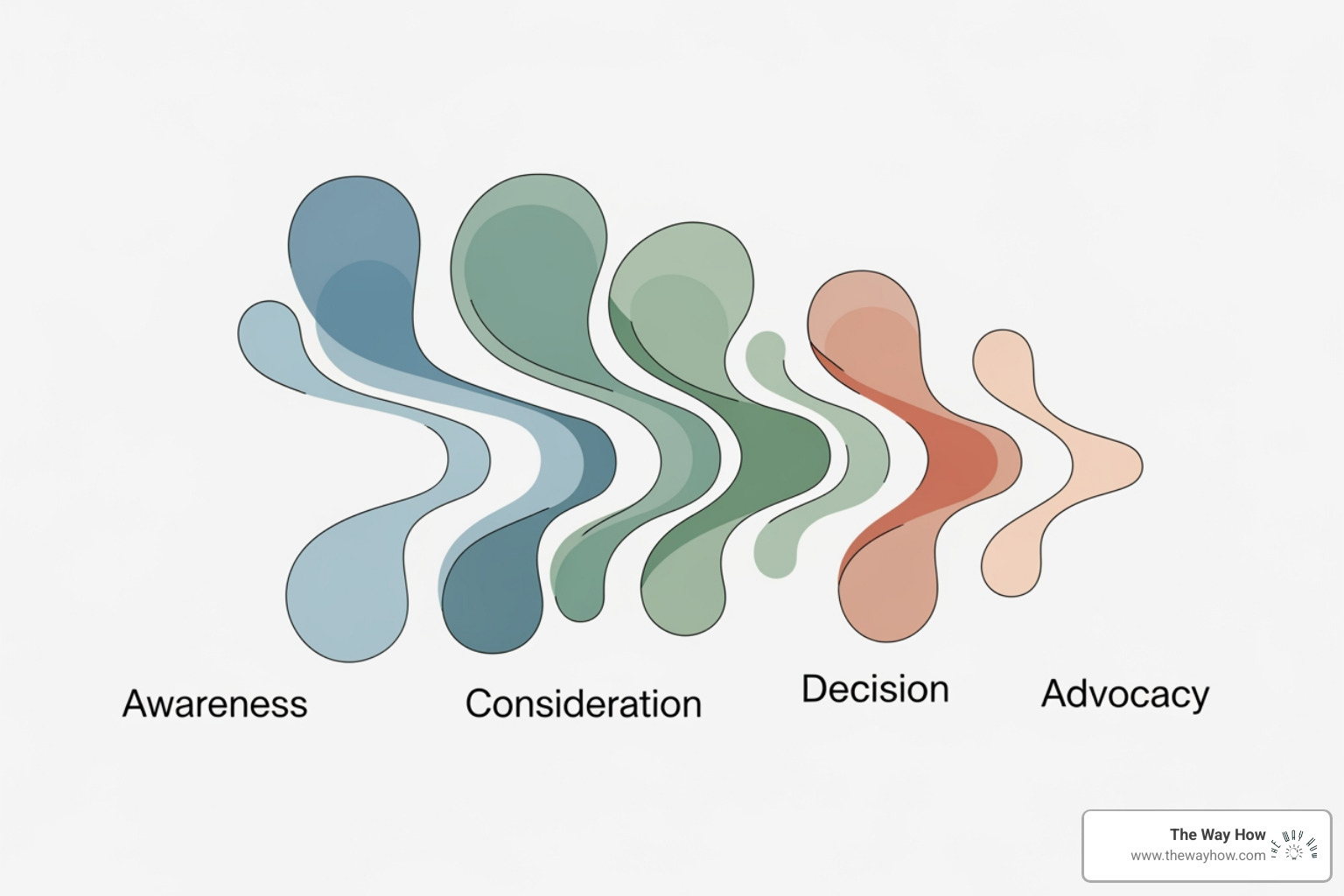
- Guide prospects through Awareness → Interest → Decision → Action with empathy and clarity
- Measure behavior, not just activity — track conversion rates, drop-offs, and customer lifetime value
- Optimize continuously based on where prospects hesitate or abandon the journey
You’ve tried the tactics. You’ve launched campaigns. You’ve invested in tools that promised to “automate your funnel” and “10x your conversions.”
But here’s what you’re probably feeling: uncertainty. Revenue still feels unpredictable. Leads don’t convert at the rate you need. And you’re not sure which part of the system is broken.
Here’s the truth most marketers won’t tell you: the problem isn’t your funnel. It’s that you built a funnel without understanding the psychology of the person moving through it.
Most sales funnels are designed from the company’s perspective — what you want the customer to do. But customers don’t move through your funnel because you designed it well. They move through it when their uncertainties are resolved, their objections are addressed, and their path forward feels clear.
According to research, 73% of leads are not ready to be sold to when they first encounter your business. They need guidance, education, and trust-building before they’re willing to act. Yet most funnels rush prospects toward a sale without addressing the “why” behind their hesitation.
A sales funnel isn’t just a sequence of landing pages and email automations. It’s a system for creating certainty — helping prospects move from “I don’t know if this is right for me” to “This is exactly what I need.”
The difference between funnels that convert and funnels that leak comes down to empathy. When you understand what your customer is thinking, feeling, and fearing at each stage, you can design experiences that remove friction instead of creating it.
In this guide, we’ll show you how to build a sales funnel that works — not because it’s clever or automated, but because it’s rooted in how people actually make decisions.
The Foundation: Mapping the Customer’s Psychological Journey
At The Way How, we believe that understanding the human behind the transaction is paramount. We don’t just build sales funnels; we map psychological journeys. The customer journey must be foundational to your sales funnel. You should design your funnel to accurately reflect your customers’ requirements and the steps they must take to buy from you, rather than just your internal needs as a vendor. This is where a sales funnel differs fundamentally from a marketing funnel.
A marketing funnel primarily focuses on activities at the top, attracting a wide audience and tracking inbound campaign success. It’s about generating awareness and interest. Once a prospect enters the system and becomes a qualified lead, the sales funnel takes over. It’s a way to visualize your company’s sales process, from initial lead generation through to quotes, negotiations, and deals won (or lost). The marketing funnel feeds the sales funnel, providing qualified leads that are ready for a more direct sales engagement.
To truly build sales funnels that resonate, we start with empathy mapping, delving into buyer psychology. This involves creating detailed buyer personas and Ideal Customer Profiles (ICPs) that go beyond demographics. We ask: What are their challenges, fears, and goals? What motivations drive them? What past solutions have they tried, and why did they fail? By gathering these insights, often through ‘voice of the customer’ surveys and qualitative research, we uncover the unresolved uncertainties that stall decision-making.
This deep understanding is also crucial for sales enablement. When sales teams are equipped with content, training, and processes that speak directly to these psychological drivers and pain points, they can guide prospects more effectively, improving conversion rates at each stage.
Understanding the “Why” Behind the Buy
Every purchase, especially in B2B or SaaS, is a response to an underlying “why.” It’s rarely just about features or price; it’s about resolving a core problem, alleviating a fear, or achieving a desired outcome. Customer motivation isn’t a static force; it fluctuates based on their current understanding, perceived risk, and emotional state.
Unresolved uncertainties are the silent killers of sales funnels. Prospects hesitate when they lack clarity on how your solution works, if it’s right for them, or if they can trust your brand. Our role is to identify these certainty gaps and design experiences that bridge them. Trust building isn’t just a feel-good phrase; it’s a strategic imperative. This involves transparent communication, consistent value delivery, and authentic engagement.
Emotional triggers play a significant role, even in seemingly logical B2B purchases. People buy with emotion and justify with logic. A compelling sales funnel addresses both. It taps into the prospect’s aspirations and fears, then provides the logical justification (ROI, efficiency gains, competitive advantage) needed to make an informed decision. The right brand perception, built on consistent messaging and values, reinforces this trust and makes the “why” to buy from you undeniable.
From AIDA to a Modern Customer-Centric Model
Many traditional sales funnels are built on the AIDA framework: Attention, Interest, Desire, Action. This model, developed in the late 19th century, provides a useful starting point for understanding consumer thought processes.
- Attention: Catching the prospect’s eye.
- Interest: Piquing their curiosity.
- Desire: Making them want the product.
- Action: Prompting the purchase.
While AIDA has its merits, we find it company-centric, focusing on our efforts to push a sale. Modern customer journeys are far more complex, iterative, and non-linear. Instead of a linear push, we prefer models that emphasize building trust and progressively offering value, like the Value Ladder concept. This approach starts with a low-barrier “bait” offer, then gradually introduces more valuable (and higher-priced) solutions, building a relationship over time.
For B2B and SaaS models, the customer lifecycle extends significantly beyond the initial purchase. As noted in our research, SaaS often operates on a subscription model, where retention and expansion revenue are critical. This means the funnel must account for post-purchase stages like onboarding, customer success, and advocacy. B2B sales cycles are typically longer, involve more decision-makers (6-10 on average), and often require customized solutions.
Here’s a comparison to illustrate the shift from a traditional, company-centric view to a psychology-first, customer-centric model:
| Aspect | Traditional AIDA Funnel | Modern, Psychology-First Customer Journey Map |
|---|---|---|
| Primary Goal | Drive a single sale | Build long-term customer relationships and maximize CLTV |
| Focus | Company’s selling process | Customer’s buying process, motivations, and uncertainties |
| Key Stages | Attention, Interest, Desire, Action | Awareness, Consideration, Preference, Purchase, Retention, Advocacy |
| Content Strategy | Product-focused, promotional | Value-driven, educational, problem-solving, empathy-led |
| Engagement | Transactional, one-way | Relational, interactive, two-way dialogue |
| Metrics | Conversion rate, sales volume | CLTV, churn rate, retention rate, referral rate, engagement by stage |
| Underlying Principle | Persuasion, pushing products | Trust-building, guiding decisions, removing friction |
| B2B/SaaS Specifics | Often too short, ignores complex decision-making | Accounts for multiple stakeholders, longer cycles, and post-sale success |
How to Build a Sales Funnel That Creates Certainty and Momentum
Building a sales funnel that truly works isn’t about setting up a few pages and hoping for the best. It’s about designing a system that anticipates and guides the customer’s psychological journey, creating certainty at every step. This involves four key stages: lead generation, lead nurturing, conversion, and customer retention.
Stage 1: Awareness & Attention - Earning the Right to a Conversation
This is where prospects first encounter your brand, often without actively seeking you out. The goal here is to attract their attention not with a hard sell, but by offering genuine value and addressing a potential need or problem they might have. We believe in earning the right to a conversation.
Tactics here include:
- Content Marketing: Creating valuable blog posts, articles, guides, and infographics that solve problems or educate. As an example, the cookware brand Great Jones uses a blog to foster community and attract customers by sharing recipes and cultural stories.
- SEO: Optimizing content for search engines so prospects can find you organically when searching for solutions.
- Paid Ads: Targeted campaigns on platforms like Google, LinkedIn, and Twitter can quickly generate awareness. The key is to offer value in the ad itself, not just a clickbait headline.
- Social Media: Engaging on platforms where your ideal customers “hang out.” This isn’t just about broadcasting; it’s about listening and participating.
- Lead Magnets: Offering something of high value in exchange for contact information. This could be an ebook, a checklist, a free tool, or a webinar. For instance, a prospect might download a guide on “Headline Hacks” to improve their writing.
We advocate for the “Hook, Story, Offer” method even at this early stage. The hook grabs attention, the story builds connection and empathy around a problem, and the offer is a low-friction way to get more value (e.g., a lead magnet). This approach builds trust from the outset.
Stage 2: Interest & Evaluation - Guiding Prospects to Clarity
Once you have a prospect’s attention, the next step is to cultivate their interest and help them evaluate potential solutions, including yours. This stage is about providing clarity and addressing their uncertainties.
- Landing Pages: These are crucial for converting initial interest into a captured lead. Research shows that landing pages have the highest conversion rate, 24%, compared to other web pages. A high-converting landing page clearly communicates your identity and unique benefits, and includes a form to capture prospect information.
- Nurturing Sequences: Most leads aren’t ready to buy immediately. Nurtured leads result in 47% more sales compared to non-nurtured leads. This means sending a series of targeted emails or communications that provide educational content, address common objections, and build a relationship over time.
- Educational Content: How-to guides, detailed articles, explainer videos, and interactive tools help prospects understand their problem better and how your solution might fit. Tower 28 Beauty uses an interactive quiz to spark interest and guide prospects.
- Case Studies & Demos: Showcasing how your solution has helped others, and allowing prospects to experience it (e.g., through a demo or free trial), builds immense credibility.
- Overcoming Objections Proactively: Instead of waiting for objections, anticipate them based on your customer research and address them in your content. This builds trust and removes friction.
Here are key components for a high-converting landing page:
- A clear, benefit-driven headline.
- Concise, engaging copy that speaks to the prospect’s pain points.
- A compelling lead magnet or offer.
- A simple, easy-to-fill-out form.
- Visuals that support the message (e.g., product images, explainer videos).
- Social proof (testimonials, trust badges).
- A clear Call-to-Action (CTA).
Stage 3: Decision & Action - Making the “Yes” Easy
At this stage, prospects are actively considering a purchase. They’re weighing options, comparing features, and looking for reasons to choose you. Our goal is to make their decision to say “yes” as easy and certain as possible.
- Sales Pages: These pages are designed to convert. They should reiterate value, highlight benefits, provide social proof, and clearly outline the offer.
- Pricing Transparency: Hidden costs or opaque pricing models create uncertainty. Be clear about your pricing, and if applicable, explain the value behind it.
- Social Proof: Nothing builds confidence like knowing others have benefited from your solution. 84% of shoppers trust online reviews as much as personal recommendations. Integrate testimonials (e.g., BOOM! Beauty increased conversion by 5.25% by adding a testimonial to its buy box), case studies, and reviews directly into your sales process. Our Place uses quotes and editorial logos as social proof.
- Urgency and Scarcity (Ethically): Time-bound offers or limited availability can encourage action, but it must be genuine. False urgency erodes trust.
- Call-to-Action (CTA) Optimization: CTAs should be clear, concise, and compelling. They should tell the prospect exactly what to do next.
- Streamlining Checkout: Any friction in the checkout process can lead to abandonment. Make it fast, secure, and intuitive.
- The Power of Guarantees: Guarantees minimize perceived risk for the buyer. A money-back guarantee or a satisfaction guarantee can significantly boost confidence. Away helps customers verify cabin baggage meets airline requirements, which is a form of reassurance.
Stage 4: Retention & Advocacy - Turning Customers into Your Best Marketers
The journey doesn’t end with a sale; it’s just beginning. For sustainable growth, especially in B2B and SaaS, customer retention and advocacy are paramount. This stage focuses on maximizing customer lifetime value (CLTV).
- Onboarding Experience: A smooth and supportive onboarding process ensures customers quickly realize the value of your product. This can include welcome emails, personalized training, or access to key resources.
- Post-Purchase Communication: Continue to provide value and support after the sale. This could be educational content on using the product, tips for maximizing benefits, or proactive check-ins.
- Upsells and Cross-Sells: Once a customer is happy, they are more open to purchasing additional products or services that improve their experience. This should be based on their needs and usage, not just aggressive selling.
- Loyalty Programs: Rewarding loyal customers encourages repeat business. Data shows that 81% of customers say loyalty programs make them more likely to continue doing business with the brand.
- Referral Marketing: Delighted customers are your most effective marketers. Referred customers have a 37% higher retention rate and are 4x more likely to refer others. Encourage them to share their positive experiences.
By focusing on these post-purchase stages, you transform customers into brand champions, creating a powerful flywheel effect that continuously feeds your sales funnel with high-quality, pre-qualified leads.
Measuring and Optimizing Your Funnel for Predictable Growth
Building a sales funnel is an iterative process. It’s not a “set it and forget it” task. To achieve predictable revenue, we must constantly measure, analyze, and optimize. This means moving beyond guesswork and relying on data to inform our decisions.
This optimization process involves continuous A/B testing (or split testing) different elements of your funnel, from headlines and CTAs to pricing models and email subject lines. Conversion Rate Optimization (CRO) helps us identify where prospects are dropping off, or “leaking,” from the funnel. By conducting regular audits and deep data analysis, we can pinpoint these leaks and develop strategies to fix them.
Key Metrics That Reveal Customer Behavior
Tracking the right metrics is essential for understanding customer behavior and the health of your sales funnel. These metrics go beyond vanity numbers and provide actionable insights:
- Conversion Rates by Stage: How many prospects move from Awareness to Interest, Interest to Decision, and Decision to Action? This reveals the effectiveness of your content and strategies at each stage. A conversion rate between 3.1%-5% is considered good for a sales funnel.
- Customer Acquisition Cost (CAC): How much does it cost to acquire a new customer? This helps us evaluate the efficiency of our lead generation efforts.
- Customer Lifetime Value (CLTV): The total revenue a customer is expected to generate over their relationship with your business. Maximizing CLTV is a core focus for us, especially in subscription models.
- Sales Cycle Length: How long does it take for a prospect to move from initial awareness to a closed deal? This metric helps in forecasting and identifying bottlenecks.
- Churn Rate: The percentage of customers who stop using your service or product over a given period. High churn is a red flag for retention strategies.
- Lead-to-Customer Ratio: The overall percentage of leads that convert into paying customers.
By tracking these metrics, we don’t just see what’s happening; we understand why it’s happening, allowing us to make informed decisions to optimize our funnels.
How to Build Sales Funnels with Smart Automation and AI
Automation and Artificial Intelligence (AI) are not just buzzwords; they are powerful tools that, when used strategically, can significantly improve sales funnel performance. Our approach is to leverage technology to improve human connection and empathy, not replace it.
- Automating Repetitive Tasks: Tools can handle tasks like data entry, scheduling follow-ups, and sending initial nurturing emails. This frees up your team to focus on high-value activities that require human judgment and empathy. Sales teams can save 15-20 minutes per prospect by automating account research.
- Personalization at Scale: Automation allows us to deliver highly personalized content and offers to prospects based on their behavior and stage in the funnel, without manual effort for every single lead.
- AI for Lead Scoring: AI can analyze vast amounts of data to score leads based on their likelihood to convert, helping sales teams prioritize high-intent prospects.
- Predictive Analytics: AI can flag at-risk deals or recommend the “next-best action” for a sales rep, guiding them on how to interact with a prospect most effectively.
The key is to use automation and AI to eliminate uncertainty, streamline processes, and provide your team with the insights they need to deliver truly empathetic and effective customer experiences.
Frequently Asked Questions about Building Sales Funnels
What are the most common mistakes when you build sales funnels?
Based on our experience and industry research, the most common mistakes we see when businesses build sales funnels include:
- Ignoring Customer Psychology: The biggest mistake is designing a funnel from a company-centric view rather than understanding the customer’s motivations, fears, and decision-making process. This leads to friction and high drop-off rates.
- Disconnected Tactics: Implementing individual marketing tactics (e.g., a landing page, an email sequence) without a cohesive strategy for how they guide the customer through a journey.
- Not Mapping the Full Customer Journey: Focusing only on the pre-purchase stages and neglecting the critical role of post-purchase experience in retention and advocacy.
- Poor Lead Nurturing: Rushing prospects to a sale before they’re ready or failing to provide continuous value and education. 73% of leads are not ready to be sold to immediately.
- Focusing Only on Acquisition, Not Retention: Neglecting existing customers, even though existing customers spend up to 31% more than new customers. Churn can quickly negate acquisition efforts.
- Lack of Optimization: Building a funnel and never revisiting it. Without continuous measurement, analysis, and A/B testing, funnels become outdated and inefficient.
How do sales funnels apply to B2B or SaaS business models?
Sales funnels are incredibly vital for B2B and SaaS, though their structure and emphasis differ significantly from B2C:
- Longer Sales Cycles: B2B purchases often involve higher stakes and more complex solutions, leading to extended decision-making periods. The funnel must accommodate this with sustained nurturing.
- Multiple Decision-Makers: B2B deals typically involve 6-10 stakeholders. The funnel needs to address the concerns and needs of various roles (e.g., technical, financial, end-user) at different stages.
- Emphasis on Demos and Consultations: Direct interaction, product demonstrations, and personalized consultations are crucial in the Interest and Decision stages to build trust and tailor solutions.
- Importance of Retention and Expansion Revenue: For SaaS subscription models, the real value comes from customer retention and opportunities for upsells and cross-sells. The funnel extends well into the post-purchase phase, focusing on customer success and maximizing CLTV.
- High-Touch vs. Low-Touch Funnels: Depending on the price point and complexity, B2B funnels can be high-touch (requiring significant human interaction) or low-touch (more self-service and automated).
How long does it take to see results from a new sales funnel?
The timeline for seeing results from a new sales funnel is rarely immediate and depends on several factors:
- Sales Cycle Length: If your typical sales cycle is 3-6 months, expect to see significant conversion results within that timeframe.
- Traffic Sources: Paid traffic (ads) can bring faster initial results, while organic traffic (SEO, content marketing) builds momentum over several months.
- Complexity of the Offer: Simpler products or services might convert faster than highly complex, customized solutions.
- Optimization Efforts: The more diligently you measure, analyze, and optimize your funnel, the faster you’ll identify and fix issues, accelerating results.
Building a sales funnel is an iterative process. It’s not a one-time setup; it’s a continuous cycle of refinement. We often tell clients to expect initial data within weeks, but meaningful, predictable revenue changes usually take several months of dedicated optimization.
Conclusion: From Disconnected Tactics to a Cohesive Growth System
In a world drowning in marketing tactics, we believe true growth stems from a deeper understanding: the psychology of your customer. To build sales funnels that deliver predictable revenue, you must shift your perspective from simply pushing products to empathetically guiding prospects through their decision-making journey.
This means building systems rooted in human behavior, empathy, and decision-making psychology. It’s about diagnosing why growth is stalled, identifying certainty gaps in the customer journey, and designing cohesive experiences that build trust, momentum, and clarity. When you do this, your sales funnel transforms from a leaky, unpredictable pipe into a dependable growth engine.
At The Way How, we specialize in helping founders and leadership teams remove uncertainty in their sales and marketing systems. We blend strategic clarity with behavioral insight and operational execution to turn marketing into a predictable, high-performing asset.
Ready to move beyond disconnected tactics and build a sales funnel that truly understands and serves your customers? Learn how to implement these systems with HubSpot marketing automation.