
Why Most Product Launches Feel Like Betting on Uncertainty
A go to market process is the structured system that connects your product to the people who need it—through the right channels, messaging, and timing. It’s how you transform a solution into predictable revenue.
Here’s what a complete go-to-market process includes:
- Target market identification – Who will buy, and why now?
- Value proposition – What problem do you solve better than anyone else?
- Pricing strategy – How you capture the value you create
- Promotion and messaging – How you communicate that value
- Sales and distribution channels – Where and how customers buy
- Performance metrics – How you measure what’s working
This isn’t a marketing plan. It’s broader. A marketing plan tells you how to reach a defined audience. A go-to-market process tells you who that audience is, why they’ll care, what they’ll pay, and how the entire system—from first touch to closed deal—will work together.
Most founders and revenue leaders treat product launches like a gamble. They’ve built something they believe in. They’ve hired agencies, run campaigns, and pushed their teams hard. But the results are inconsistent. The pipeline stalls. The messaging doesn’t land. The sales team can’t close.
The problem isn’t effort. It’s certainty.
When you don’t understand why people buy, you’re guessing. You’re running experiments without a hypothesis. You’re optimizing tactics without a strategy. And every quarter, you’re left wondering if the next campaign will finally be the one that works.
A psychology-first go-to-market process removes that uncertainty. It starts with how humans make decisions—not how you want them to decide, but how they actually decide. It maps the gaps in their certainty. It aligns your product, pricing, and promotion around the moments that matter most.
This isn’t about hacks or trends. It’s about building a system that creates trust, reduces friction, and turns interest into momentum.
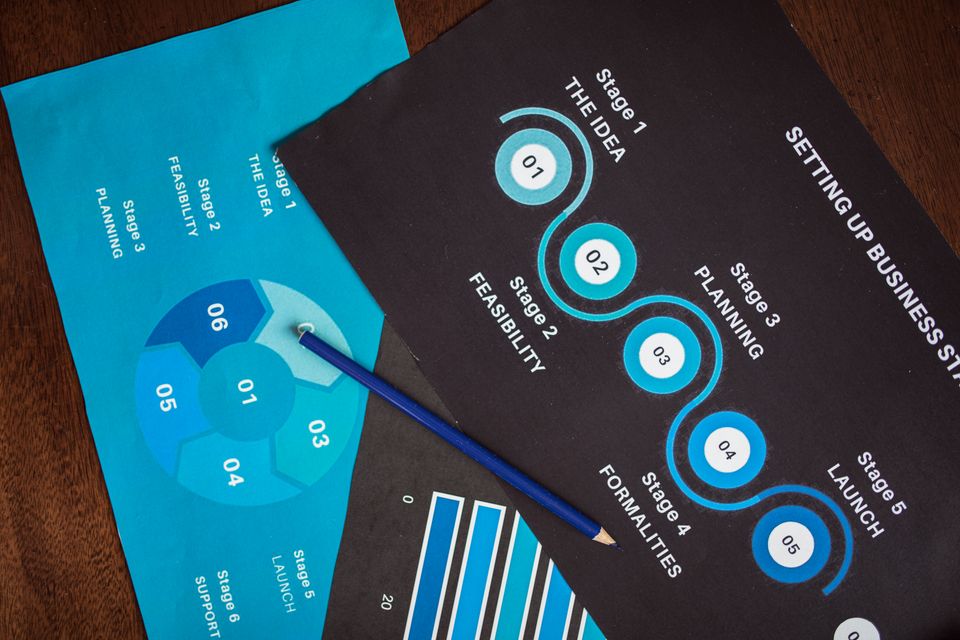
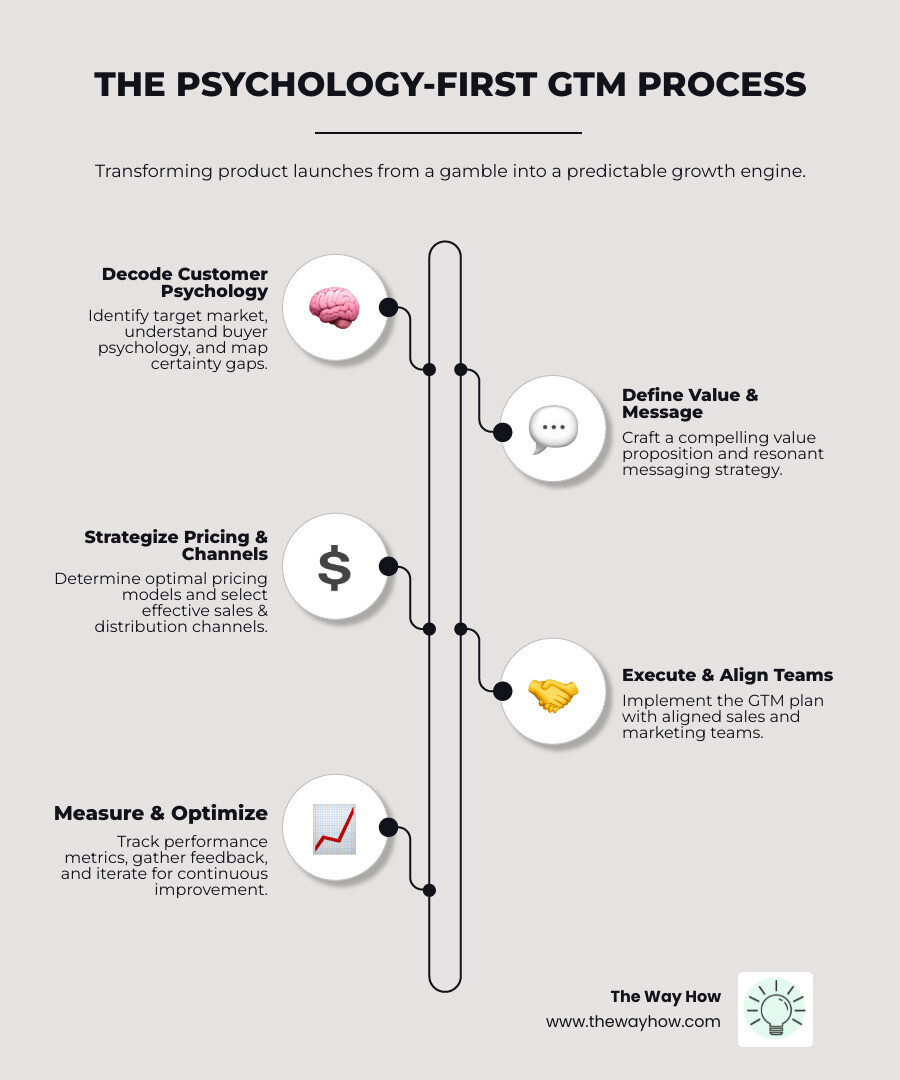
In this guide, we’ll walk through the complete go-to-market process: from understanding your customer’s psychology to executing a launch that delivers predictable results. You’ll learn how to identify your true target market, craft a value proposition that resonates, choose the right channels, and measure what matters—so you can stop guessing and start growing.
Decoding the Customer: The Psychological Foundation of Your GTM Strategy
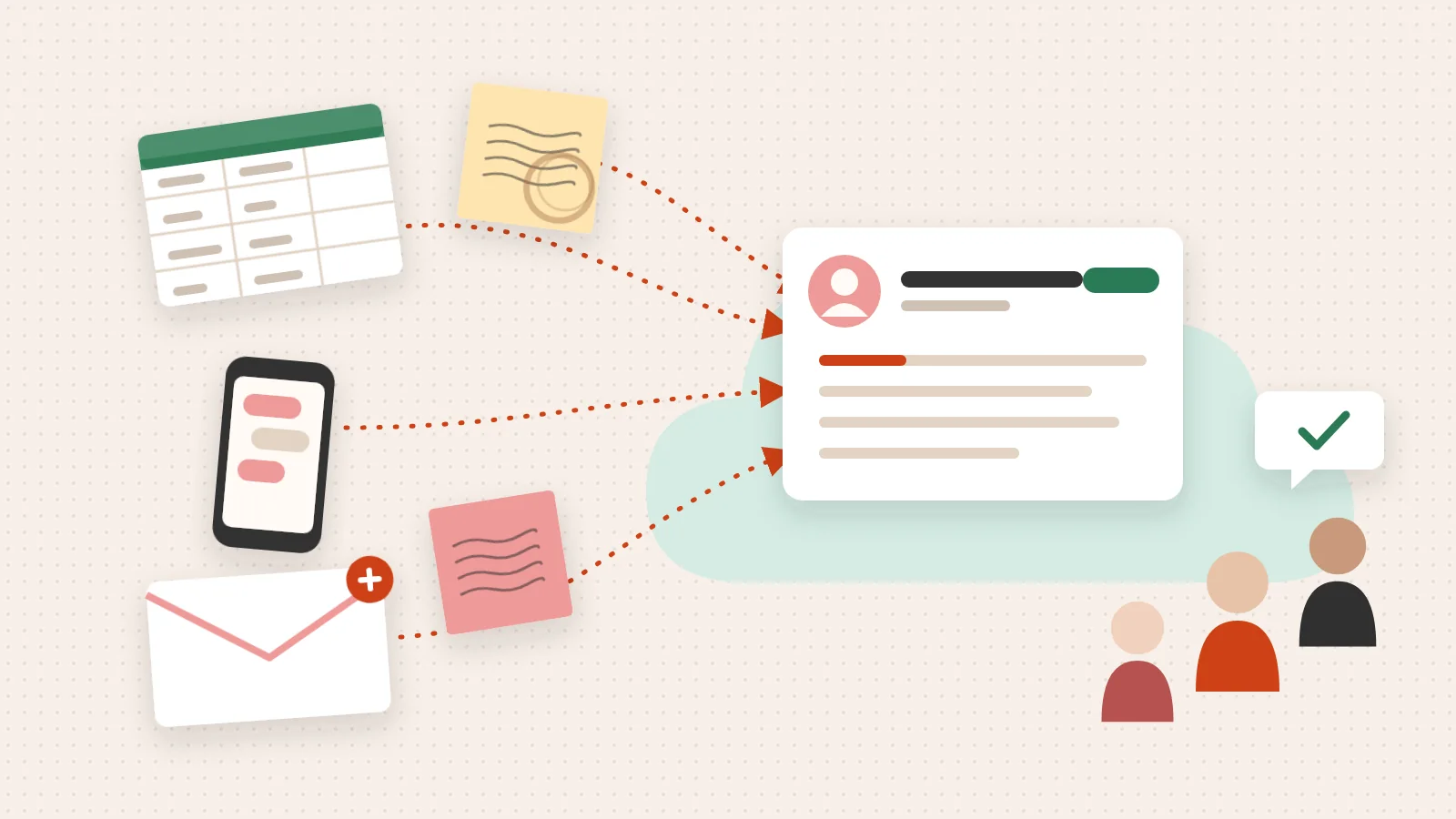
Before we even think about tactics, we must first understand the human at the center of our go to market process. This means going beyond surface-level demographics and diving deep into buyer psychology. What drives their decisions? What are their fears, aspirations, and, most importantly, their “certainty gaps”—the points of doubt or confusion that prevent them from moving forward? By approaching our strategy with empathy, we don’t just sell a product; we solve a problem and build trust. This deep understanding is crucial for achieving product-market fit, ensuring our product is a “must-have” solution, often referred to as a “painkiller” rather than just a “vitamin.” This foundational work ultimately reduces costs and time to market by ensuring we’re building and marketing something people genuinely need and are willing to pay for.
Identifying Your True Target Market
Identifying your target market isn’t just about who might buy your product; it’s about understanding who needs your product and why they need it. This involves a multi-layered approach incorporating demographics (age, location, income), psychographics (values, attitudes, lifestyles), and behavioral data (past purchases, online activity). We create Ideal Customer Profiles (ICPs) and detailed buyer personas to bring these abstract concepts to life.
For instance, rather than simply targeting “small businesses,” we might define an ICP as “early-stage SaaS startups with 10-25 employees, struggling with fragmented marketing efforts and seeking unified demand generation strategies.” Then, we build personas within that ICP, like “Sarah, the CEO, who prioritizes predictable revenue and strategic clarity,” and “Mark, the Head of Marketing, who needs actionable insights and efficient execution.”
This level of detail helps us uncover their deepest pain points and unspoken needs. What specific frustrations can our product alleviate? What problems are they willing to pay to solve? As exemplified by Apple, a company renowned for its customer-centric design, emphasizing customer experience by analyzing customer needs and designing products accordingly is key to market success. We ask, what are their certainty gaps around solving this problem? These insights form the bedrock of our entire go to market process.
Crafting a Resonant Value Proposition
A value proposition is not a list of features; it’s a concise statement articulating the unique value your product delivers and why customers should choose it over alternatives. It’s an attempt to articulate the key assumption that underlies why a customer is likely to use your product. Identifying a compelling value hypothesis is what finding product/market fit is about. For us, it’s about speaking to the emotional and rational drivers behind their decision-making.
Think about it: people don’t buy drills; they buy holes. Your value proposition should clearly state the “hole” you provide, not just the “drill.” We develop a value matrix that breaks down each persona, their pain points, the specific value our product brings, and a key message that conveys how our product solves their unique problem. This ensures our messaging consistently highlights how we address their certainty gaps, reducing their perceived risk and increasing their desire. Does our product offer a unique feature or experience? Does it solve a problem that no one else does, or do it significantly better? These are the questions that help us articulate value effectively.
Mapping the Buyer’s Decision-Making Journey
Understanding the buyer’s journey is critical to guiding them from initial awareness to becoming a loyal customer. This journey typically involves three stages: Awareness (they realize they have a problem), Consideration (they research solutions), and Decision (they choose a product). For each stage, we identify specific customer touchpoints and, crucially, the “certainty gaps” that might arise.
We often look at this journey through two lenses: the traditional Funnel model or the more modern Flywheel model. The Funnel focuses on converting prospects into customers, moving them linearly through stages. While effective for initial acquisition, we often advocate for the Flywheel model, which, as Elaine Chen, Founder of marketing consultancy Excogita, recommends, builds long-term customers by focusing on an ongoing relationship. This means that after a purchase, our efforts shift to delighting customers, turning them into advocates who, in turn, drive new business. This approach is rooted in understanding that human behavior is influenced by trust and positive experiences, creating continuous momentum rather than a one-time transaction.
The Go-to-Market Process: A System for Creating Certainty
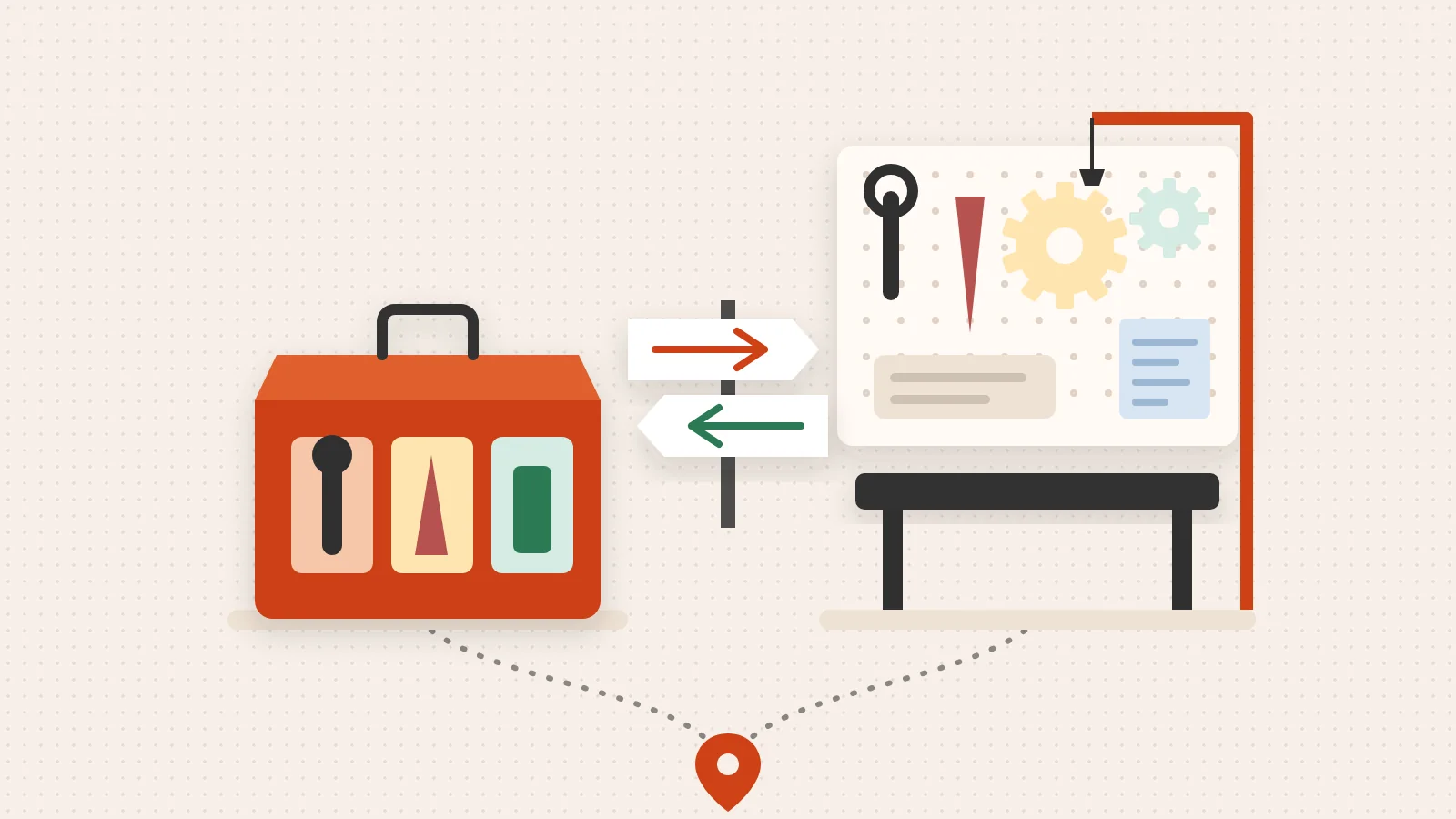
Once we understand our customers’ psychology and their journey, we can build a robust go to market process that systematically addresses their needs and drives predictable revenue. This system integrates various core components, ensuring strategic alignment across all functions—from product development to sales and marketing. Each part of the process is designed to work in concert, much like well-oiled gears, to create a cohesive plan that minimizes uncertainty.

Pricing Strategy: The Psychology of Value
Pricing isn’t just a number; it’s a powerful psychological signal that communicates value, quality, and positioning. Our pricing strategy considers multiple factors: our cost to produce, competitor pricing, and, most importantly, our customer’s perceived value and their willingness to pay. We dig into whether a cost-plus or value-based pricing model is appropriate, with a strong lean towards value-based when possible, as it directly ties to the problem we solve and the certainty we provide.
We also evaluate different models, such as subscription models (common for SaaS) or transactional models, asking what our target market is willing to pay. As the Wharton School notes, pricing strategies should be revisited often, particularly keeping a watchful eye on the competition and gathering data on your product and experience. This ongoing review allows us to adapt to market shifts and customer feedback, ensuring our pricing remains competitive and aligned with the value we deliver. Pricing acts as a “gravitational force” in our GTM strategy, influencing everything from sales approach to target audience.
Promotion and Messaging Strategy
Our promotion and messaging strategy is where we articulate our value proposition to the right audience, through the right channels, and with the right emotional resonance. This involves deciding between inbound (attracting customers through valuable content) and outbound (reaching out directly) marketing efforts, or often a hybrid approach. We carefully select marketing channels where our target audience spends their time, whether that’s social media, search engines, email campaigns, or industry events.
The core of our strategy is crafting a compelling brand narrative that makes the customer the hero of the story, not our product. We focus on their challenges, aspirations, and how our solution empowers them to achieve their goals. A great example of this is Oatly. When the Swedish company expanded into the US, oat milk wasn’t top of mind for American consumers. But instead of traditional ads, they partnered with artisanal coffee shops, directly reaching customers seeking dairy alternatives. This grassroots approach helped their revenue grow ten-fold between 2017 and 2018 after expanding into the US market. Similarly, Apple’s 1998 launch of the iMac G3 targeted first-time buyers, loyal users, and PC owners with a $100 million marketing blitz that conveyed stability, a unique experience, and excitement. This highlights the power of understanding your audience and tailoring your message to resonate with their specific needs and desires.
Sales and Distribution Channels
Choosing the right sales and distribution channels is about creating the most seamless, lowest-friction path for our customers to acquire our product. This decision is heavily influenced by the nature of our product, the customer’s buying behavior, and the Average Contract Value (ACV). For instance, a low ACV product might lean towards self-service or inside sales, while a high ACV, complex solution often requires a more relationship-driven approach through field sales or channel partners.
As Reid Hoffman, founder of LinkedIn, believes, network effect businesses must develop their distribution strategy alongside their product. This means thinking about how our product will reach customers from the very beginning, integrating distribution into the product development cycle. Whether we opt for direct sales, leveraging our website or an in-house team, or indirect channels through partners and resellers, the goal is to align our chosen channels with where our target market prefers to shop and how they prefer to buy. This ensures we meet customers where they are, reducing their effort and increasing their certainty in the purchasing process.
From Blueprint to Reality: Executing Your Behavior-Driven Launch
With our customer insights and strategic components in place, the next phase of the go to market process is about bringing this blueprint to life through meticulous execution. This requires strong cross-functional alignment, where product, marketing, sales, and customer success teams work in harmony. Our focus remains on the human element, ensuring that every touchpoint and interaction reinforces trust and guides the customer through their decision-making process with clarity and confidence.

The complete go to market process checklist
Execution is where strategy meets reality. Our checklist ensures every piece of the go to market process is covered:
- Competitive Analysis: Before launching, we carefully research competitors to understand their offerings, strategies, and customer feedback. This isn’t just about identifying differences; it’s about understanding why popular competitor products resonate with customers. We leverage AI tools for comprehensive market research and can even apply game theory to anticipate competitor moves and plan counterstrategies. This helps us differentiate our product by highlighting unique value propositions and identifying market gaps.
- Define Target Audience & Value Proposition: Revisit and refine your ICPs, buyer personas, and value proposition. Ensure your messaging addresses their pain points and certainty gaps.
- Set Clear Goals: What does success look like? We use frameworks like SMART goals (Specific, Measurable, Achievable, Relevant, Time-bound) or OKRs (Objectives and Key Results) to define our targets. For example, a goal might be to “achieve 1M total app downloads and 50K new user accounts within six months.”
- Build Your GTM Team: A successful launch requires a dedicated, cross-functional team. This includes representatives from product, product marketing, sales, sales enablement, and customer success. On average, there are 6.8 people in every organization making purchasing decisions for a single sale, so aligning our internal teams is crucial. A 2023 report found that 37.2% of respondents described their company culture as product-first, indicating a strong emphasis on product development, which our GTM team must reflect.
- Develop Sales & Marketing Plans: This involves outlining specific campaigns, content strategies, sales enablement materials, and lead generation tactics for each stage of the buyer’s journey.
- Align Stakeholders: Ensuring everyone from product developers to customer support understands the strategy, their role, and the core messaging is paramount. This removes internal uncertainty and ensures a consistent customer experience.
Setting and Monitoring Performance Metrics
Once we launch, our work isn’t over—it’s just beginning. We establish Key Performance Indicators (KPIs) to continuously monitor the health and effectiveness of our go to market process. These aren’t just vanity metrics; they are direct feedback loops on human behavior and decision-making within our customer base.
Key metrics we track include:
- Customer Acquisition Cost (CAC): How much does it cost to acquire a new customer?
- Conversion Rates: What percentage of prospects move through each stage of the buyer’s journey?
- Sales Cycle Length: How long does it take to convert a lead into a paying customer?
- Customer Lifetime Value (LTV): What is the total revenue a customer is expected to generate over their relationship with us?
- Retention and Churn Rates: How many customers do we keep versus lose over time?
By watching these KPIs, we gain real-time insights into what’s working and what’s not. This data allows us to make informed, agile adjustments to our strategy. We can identify which messages resonate most effectively, which channels deliver the best ROI, and where customers are encountering friction. For more insights on how marketing experts approach this, we recommend you watch the webinar on launching high-impact campaigns. This data-driven approach allows us to continually optimize for trust, momentum, and, ultimately, predictable revenue.
Sustaining Momentum: Adapting and Optimizing Post-Launch
A go to market process is not a one-time event; it’s a continuous cycle of learning, adapting, and optimizing. The market is dynamic, customer needs evolve, and competitors innovate. Our commitment to a psychology-first approach means we’re always listening, observing, and refining our strategy to maintain momentum and ensure long-term success.
Common Pitfalls and How to Avoid Them
Even the best-laid plans can encounter turbulence. We’ve identified common pitfalls in the go to market process and how to sidestep them:
- Lack of Market Understanding: This is perhaps the biggest culprit. Without a deep, empathetic understanding of your target market’s pain points and certainty gaps, your product might solve a problem no one has, or one they don’t care enough to pay for. To avoid this, invest heavily in pre-launch research and continuous customer feedback.
- Ineffective Messaging: If your value proposition doesn’t resonate, or your message is unclear, you’ll struggle to capture attention. Test your messaging with real customers before a full launch. Remember the importance of making the customer the hero.
- Poor Sales Execution: A great product and message can fall flat if your sales team isn’t equipped to convert. Ensure they have the right tools, training, and understanding of the buyer’s journey to address customer concerns effectively.
- Misaligned Teams: When product, marketing, and sales operate in silos, the customer experience suffers. Foster strong cross-functional collaboration and clear communication to ensure everyone is pulling in the same direction.
- Ignoring Customer Feedback: Post-launch, customers will tell you what works and what doesn’t. Ignoring this invaluable feedback is a recipe for stagnation.
A prime example of avoiding these pitfalls is Apple’s 1998 launch of the iMac G3. Apple successfully targeted three distinct consumer groups: first-time computer buyers, loyal Apple users, and PC owners (who made up 85 percent of the market). Their strategy conveyed stability, a unique experience, and created excitement, directly addressing diverse needs and effectively avoiding market misunderstanding.
How to evaluate your go to market process post-launch
Post-launch evaluation is not about judgment; it’s about learning. We implement robust feedback loops, including customer surveys, win/loss analysis (understanding why we won or lost deals), and A/B testing on messaging and campaigns. This continuous flow of information allows us to iterate on our strategy, making data-driven adjustments based on actual customer behavior.
Did our initial assumptions about customer pain points hold true? Did our messaging effectively address their certainty gaps? Are our sales channels delivering the expected results? By asking these questions and actively seeking answers, we can adapt to market changes, refine our value proposition, and optimize our entire go to market process for sustained momentum.
The Future of GTM: AI, Data, and Digital Change
The landscape of the go to market process is constantly evolving, with digital change, AI, and automation playing increasingly central roles. Digital marketing, in particular, appears to play a central role in modern go-to-market strategies, acting as a bridge between strategy and customer acquisition. It allows for scalable, data-driven channels like social media, search engines, and content marketing to build awareness and generate demand.
AI and machine learning platforms are revolutionizing our ability to understand and respond to human behavior at scale. These tools can uncover actionable insights from vast datasets, predict future market conditions and consumer behavior (predictive analytics), and enable personalization at scale. This means we can deliver highly relevant messages to individual customers at the exact moment they are most receptive, further reducing certainty gaps and building trust. The role of data and analytics in modern GTM planning is undeniable; it allows us to make informed decisions and continually refine our strategies for agility and responsiveness.
Frequently Asked Questions about the Go-to-Market Process
What is the difference between a go-to-market strategy and a marketing plan?
A go to market process or strategy is a comprehensive plan for launching a new product or service, expanding into a new market, or targeting a new audience. It’s a holistic blueprint that covers all aspects of bringing a product to customers, including market segmentation, value proposition, pricing, sales, distribution, and marketing. A marketing plan, on the other hand, is a component within the GTM strategy. It focuses specifically on how to communicate with the target audience through branding, campaigns, and promotional activities. Think of the GTM strategy as the entire house, and the marketing plan as the interior design.
Who is typically responsible for creating and managing a GTM strategy?
While a go to market process requires cross-functional collaboration, the primary responsibility often falls to product marketing managers or a dedicated GTM owner. These individuals act as orchestrators, coordinating efforts across product development, sales, marketing, and customer success teams. Their role is to ensure alignment, maintain a clear vision, and drive the execution of the strategy. Executive leadership backing is crucial for their success.
How often should a GTM strategy be reviewed and updated?
A go to market process should be viewed as a living document, not a static plan. It should be reviewed and updated regularly, especially after a major launch, when entering new markets, or when significant market shifts occur. Post-launch, continuous monitoring of performance metrics and customer feedback provides critical data for iterative adjustments. For established products or markets, an annual or semi-annual review is a good practice, but agility dictates that you should be prepared to adapt whenever new data or market conditions warrant it.
Turn Your Go-to-Market Process into a Predictable Growth Engine
The go to market process is more than a checklist; it’s a strategic framework for creating certainty in an uncertain world. By grounding your strategy in human behavior, empathy, and decision-making psychology, you move beyond guesswork to build systems that foster trust, generate momentum, and deliver predictable revenue.
We believe that true growth comes from understanding why people buy, identifying the certainty gaps in their journey, and designing systems that bridge those gaps. This approach delivers not just launches, but lasting success.
Ready to transform your product launches from a gamble into a predictable growth engine? We’re here to help you gain strategic clarity, refine your operational execution, and build the trust that drives momentum. Learn more about our psychology-first revenue strategies.