A Complete Guide to CRM Systems and Database Management
 Jeremy Wayne Howell : Jul 22, 2026 9:48:31 PM
Disruption marketing is a strategic approach that challenges conventional marketing norms by creating unexpected, memorable experiences that capture attention and drive engagement. Instead of following predictable patterns, it breaks through the noise by surprising audiences, forging emotional connections, and changing passive observers into active participants.
Key characteristics of disruption marketing:
Your prospects see between 6,000 and 10,000 ads every single day.
Most of those ads are invisible. Not because they’re poorly designed or badly placed, but because the human brain has learned to ignore predictable patterns. When everything looks the same, sounds the same, and promises the same things, attention shuts down.
This isn’t a creative problem. It’s a psychological one.
Traditional marketing operates on a simple assumption: if you show up enough times in enough places, people will eventually pay attention. But that model was built for a world with fewer channels, less competition, and audiences who hadn’t yet learned to tune out commercial messages entirely.
That world no longer exists.
Today, 88% of consumers want to engage with brands that set new standards and push boundaries. They’re not looking for louder ads or bigger budgets. They’re looking for different. For brands that understand them, surprise them, and invite them into something worth paying attention to.
This is where disruption marketing separates itself from everything else. It’s not about being edgy for the sake of it or chasing viral moments. It’s about understanding why people stop paying attention — and then designing experiences that earn it back.
The companies that figure this out don’t just get noticed. They change how their entire industry thinks about engagement.
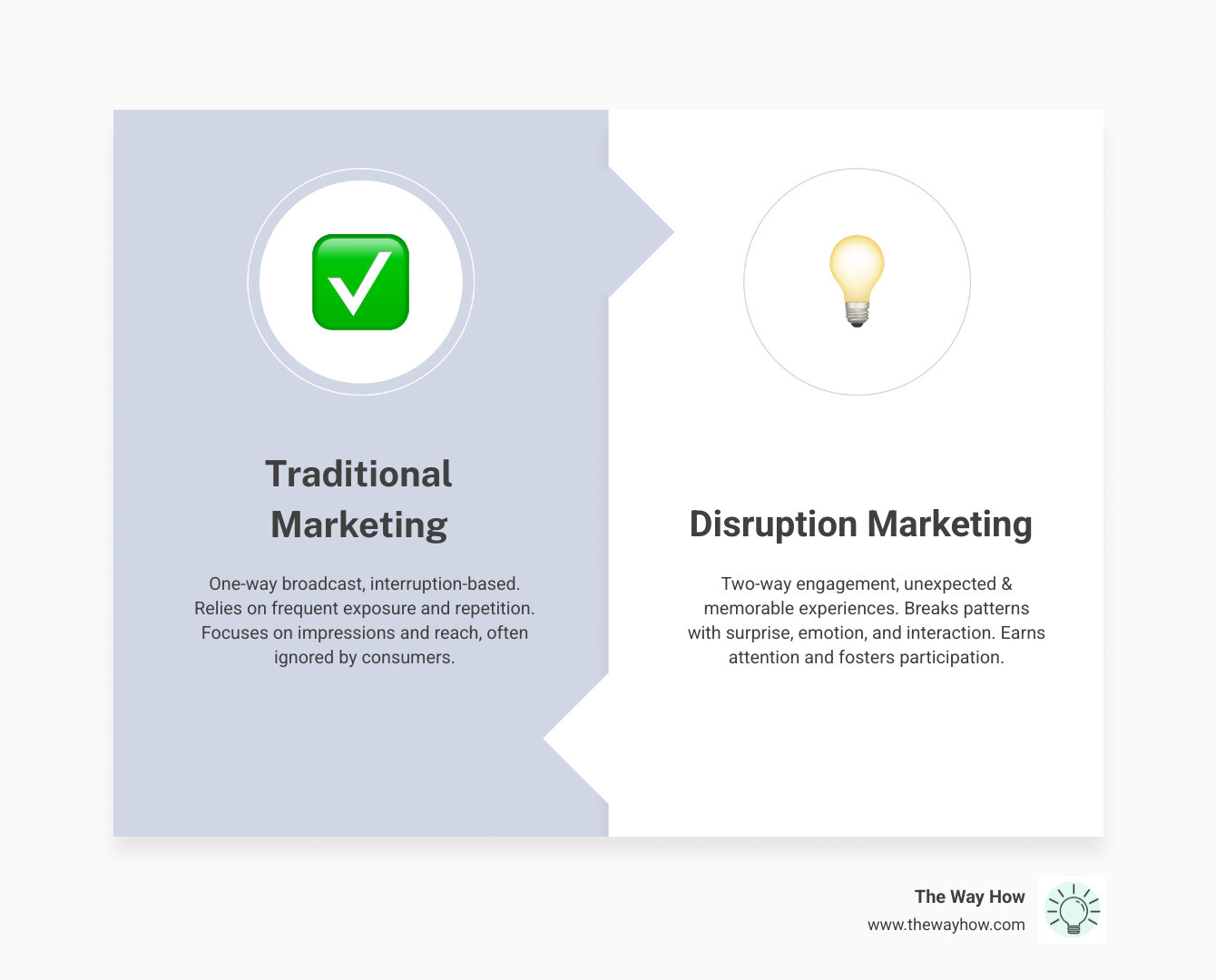
For decades, the marketing playbook was straightforward: broadcast your message far and wide, repeat it often, and hope it sticks. This “shouting” approach, characteristic of traditional marketing, relied on interruption. We saw it in TV commercials, print ads, and direct mail. It was an outbound strategy designed for a world where consumer choice was limited, and information was scarce.
But the world has changed. The age of the customer has shifted the balance of power. Consumers are now empowered, connected, and discerning. They no longer passively receive messages; they actively seek out brands that resonate with their values and needs. Sticking to anything for too long, especially outdated marketing methods, leads to stagnation. As the way customers understand, react to, and accept companies has evolved, marketers must take more risks and accept new approaches.
Today, our audience is exposed to thousands of brand messages daily, yet only a fraction truly registers. This isn’t just noise; it’s a profound psychological barrier. Consumers are craving products that deliver novelty and fun, and they are 22 times more likely to remember a fact if it has been embellished with a story. This highlights a fundamental truth: effective brand storytelling is invaluable. We must move beyond simply informing and start engaging.

At its core, disruption marketing is about more than just a catchy campaign; it’s a strategic mindset that fundamentally challenges the status quo. It’s an approach that involves experiments with methods of promotion that are diametrically opposed to what has previously been done. This isn’t about being different for the sake of it, but about identifying and leveraging unmet needs or overlooked opportunities to create a new market or redefine an existing one.
Instead of merely competing within established rules, disruption marketing seeks to rewrite them. It accepts fresh ideas and new solutions, taking advantage of everything that other marketers haven’t tried previously. This can involve anything from a new business model that democratizes access to products, to an advertising campaign that uses unexpected humor, to a customer experience that sets entirely new standards. The goal is to create an unforgettable experience that makes your brand stand out and stay at the top of your target audience’s mind, going beyond the conventional and shaking things up.
As a psychology-first firm, we understand that effective marketing isn’t just about what you say, but how it impacts the human brain. Disruption marketing works because it taps into fundamental aspects of human behavior and buyer psychology. In a world of constant stimuli, our brains are wired to filter out the mundane and focus on the novel. This cognitive bias is the bedrock of disruptive success. By understanding these psychological levers, we can design experiences that build trust, overcome uncertainty, and genuinely engage.
Our brains are constantly trying to predict what will happen next. When something deviates from that prediction, it triggers a heightened state of awareness. This is cognitive disruption in action. Our brains are wired to pay attention to unexpected and surprising events. This isn’t just a fleeting glance; it’s a deeper level of engagement that leaves a lasting impression.
Disruption marketing deliberately leverages this by challenging mental models and defying conventions. It introduces unexpected elements that jolt consumers out of their routines. This could be a quirky commercial, a pop-up event in an unusual location, or an advertising campaign that directly questions an industry’s long-held assumptions. By doing so, brands position themselves as trailblazers, showing that they are not content to follow the well-trodden path. This not only captures attention but also signals innovation and a fresh perspective, which, in 2015, 84% of consumers said was important in the brands they buy from. Today, it’s essential.
While surprise captures initial attention, emotional resonance is what truly makes a message stick. Effective disruption marketing tells a story that customers can easily understand, tapping into consumers’ emotions to forge a personal connection with the brand. This creates an experience that transcends a mere transaction and builds a deeper, more meaningful relationship.
Consider the power of storytelling: consumers are 22 times more likely to remember a fact if it has been embellished with a story. Stories elicit emotional responses, making information more memorable and relatable. Brands that successfully link themselves with specific emotions and values create strong audience associations. A prime example is Coca-Cola’s “Open Happiness” campaign, which successfully linked the brand with feelings of joy and positivity, creating an enduring emotional connection with its audience. This isn’t just about selling a product; it’s about selling a feeling, an experience, a connection that resonates deeply within us.
The most impactful disruption marketing campaigns don’t just speak to an audience; they invite them to participate. Interactive engagement blurs the lines between the brand and the consumer, changing passive observers into active participants. This shift fosters a sense of ownership and community, making the brand experience far more memorable and sticky.
The emerging power of user-generated content (UGC) is a testament to this principle. When consumers become co-creators, their involvement deepens significantly. Initiatives like contests, challenges, or platforms where users can submit their own ideas are powerful tools. LEGO Ideas, for instance, is an online community where members share their ideas, submit their own designs, and give feedback to each other. From projects that receive at least 10,000 votes, LEGO picks a winner, then creates and sells the product, with the original designer receiving a percentage of the sales. This level of interaction not only generates fresh content and product ideas but also builds fierce brand loyalty and advocacy.
Designing a successful disruption marketing strategy requires more than just a flash of brilliance; it demands rigorous strategic planning, systems thinking, and a psychology-first approach. At The Way How, we believe in prioritizing process over tactics. This means diagnosing why growth is stalled, identifying certainty gaps in the customer journey, and then designing systems that create trust, momentum, and predictable revenue. This is critical for any form of Disruption in advertising.
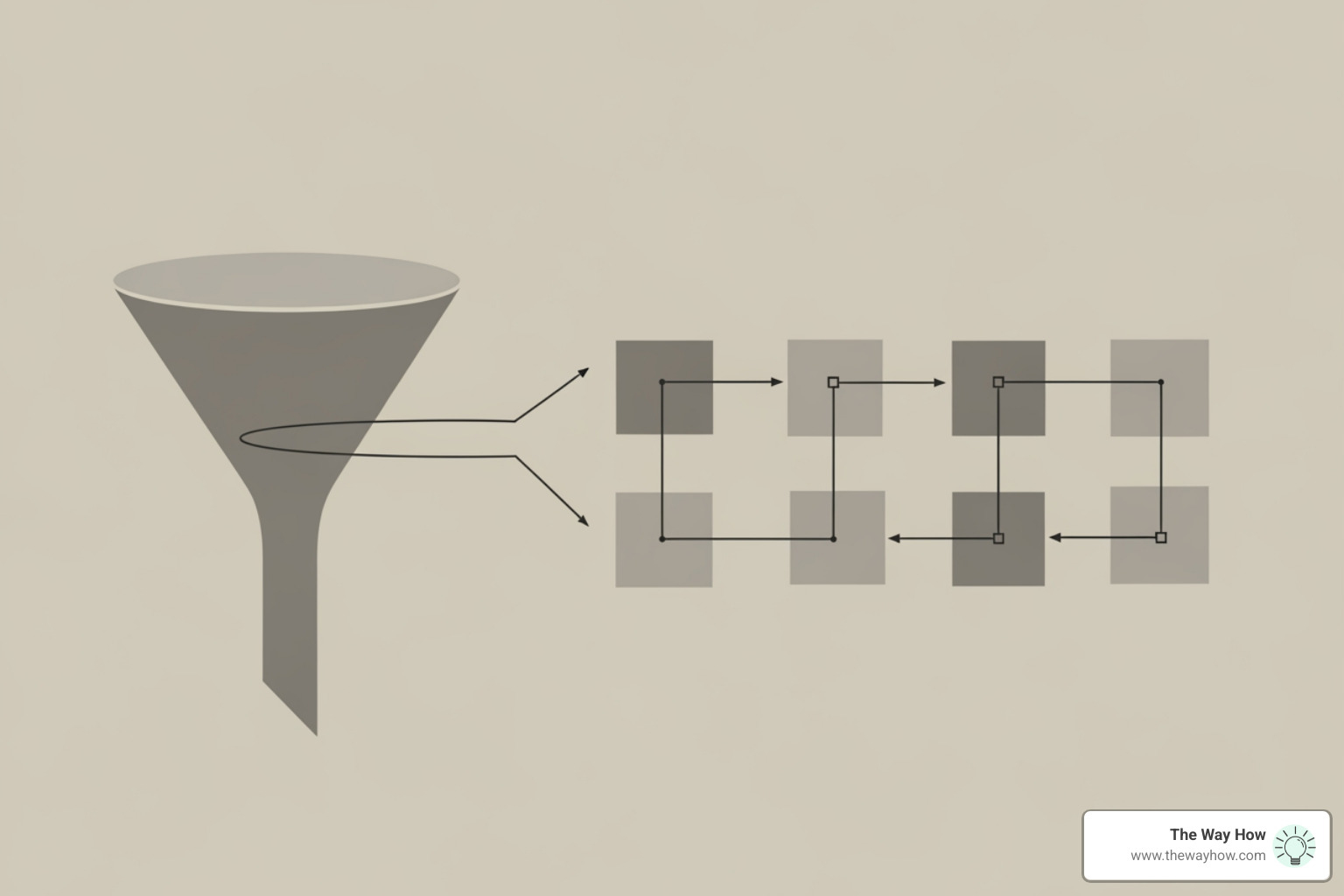
Before we can disrupt, we must understand. Our first step is always to diagnose. This involves an in-depth analysis of the industry, competitors, and, most importantly, the customer. We’re looking for industry weaknesses, unmet needs, and critical pain points that traditional approaches have overlooked or failed to address.
Robust market research and competitor analysis are essential here. Tools like Think With Google, Survey Monkey, and BizStats provide invaluable insights into market trends, consumer sentiment, and competitive landscapes. By carefully mapping the customer journey, we can pinpoint those “certainty gaps”—moments of hesitation, frustration, or unmet expectation—where a disruptive approach can provide a uniquely valuable solution. This diagnostic phase ensures that our disruption isn’t random; it’s strategic and purposeful.
Once we’ve identified the fertile ground for disruption, the next step is to cultivate a core disruptive idea. This isn’t about incremental improvements; it’s about fundamental innovation in how value is created and delivered. This could manifest as a novel value proposition, a groundbreaking business model, a pricing strategy, or a new approach to distribution and channels.
Technology plays a pivotal role in enabling these disruptive ideas. Artificial Intelligence (AI) can now power highly personalized marketing messages, enabling ultra-targeted campaigns that resonate individually with consumers. “Phygital” experiences, blending physical and digital elements through technologies like augmented reality (AR) or virtual reality (VR), create immersive and unforgettable interactions. These tools allow us to craft unique offerings and experiences that challenge existing norms and captivate audiences in ways previously unimaginable.
For disruption marketing to be truly effective and sustainable, it must be authentic. This means deeply integrating a company’s culture and values into its marketing strategy. It’s about aligning what your brand stands for with what your target audience believes in. This “culture comes first” approach is particularly vital with newer generations; 73% of Gen Z want brands and retailers to connect with them, and 55% choose eco-friendly and socially responsible brands.
Brands like Nike’s have successfully demonstrated this by aligning their marketing with broader cultural movements and values, for example, by debuting a performance hijab for female Muslim athletes. This isn’t just about selling sportswear; it’s about supporting inclusion and empowerment, resonating deeply with a specific audience segment. When a brand’s disruptive efforts are rooted in genuine purpose and values, they build trust, mobilize community support, and foster enduring loyalty.
History is replete with examples of disruption marketing that fundamentally shifted markets and consumer expectations. From Johannes Gutenberg’s printing press disrupting how information spread in 1440, to merchant traders holding the first-ever trade fairs between the ninth and twelfth centuries, disruption is not new. These historical precedents set the stage for modern marketing. Today, we see brands continuously innovating, learning from past successes, and applying those lessons to new contexts.
When Dollar Shave Club launched, the shaving industry was dominated by a few major players with high-priced blades. Dollar Shave Club didn’t just offer a cheaper product; they disrupted the entire value proposition with humor and direct-to-consumer convenience. Their infamous viral video, featuring founder Michael Dubin, was not just funny; it was relatable, directly addressing the pain points of expensive, over-engineered razors.
The campaign garnered millions of views and established a unique brand voice. As Adam Weber, CMO of Dollar Shave Club, put it, “The way to reach guys nowadays and to have that authentic feel, is to be relatable, allow guys to put themselves in your shoes as a brand, as opposed to talking at them or talking above them.” This approach eventually led to a $1 billion acquisition by Unilever, demonstrating the immense power of a well-executed disruptive value proposition.
Spotify Wrapped is a masterclass in experience disruption. Each year, Spotify compiles users’ listening habits and presents them in a personalized, visually engaging format. This annual campaign transforms raw data—something typically dry and impersonal—into a highly shareable, emotional experience.
What makes it so disruptive? It leverages hyper-personalization, social sharing, and a dash of FOMO (fear of missing out). Users eagerly anticipate their Wrapped summary, sharing it across social media platforms, turning a private data insight into a public celebration of personal identity. This recurring engagement builds deep customer loyalty and provides immense organic reach, effectively turning every user into a brand ambassador. It’s a testament to how data can be used not just for targeting, but for creating a delightful, disruptive customer experience.
Brandless tackled the crowded consumer packaged goods (CPG) market by challenging the fundamental assumption that quality products need to be expensive or come with a brand name premium. They understood that “$3 is just not the entry price to that market” for organic, non-GMO, and clean products. Their disruptive idea was simple: everything is $3.
By democratizing access to high-quality, ethically sourced goods at fair prices, Brandless disrupted traditional CPG norms. They streamlined their business model, focusing on direct-to-consumer sales and minimalist branding. This approach resonated with consumers tired of paying for brand prestige, proving that a clear, values-driven mission combined with a disruptive pricing strategy can carve out a significant market niche.
While the allure of disruption marketing is strong, it’s not without its challenges. As a firm focused on removing uncertainty, we understand that true innovation involves calculated risks. However, it’s crucial to steer potential pitfalls and establish robust methods for measuring success beyond mere virality.
Disruption marketing is not about being “different for difference’s sake.” If a campaign is edgy but misaligned with brand values or alienates the core audience, it can cause significant damage. The infamous Chanel Advent calendar fiasco, for example, highlighted how a poor customer experience, despite being intended as unique, can quickly lead to widespread negative backlash and reputational harm.
McKinsey’s research points to several “blind spots” that can impede marketing’s potential, even when attempting disruption. These include a lack of formal content strategy, a disconnect between leadership and front-line teams on agile processes, and a failure to adequately invest in data and analytics capabilities. Without a clear strategy, transparent communication, and thorough testing, a disruptive campaign risks becoming merely controversial, rather than revolutionary.
Measuring the success of disruption marketing requires looking beyond traditional vanity metrics like impressions or clicks. We need to focus on what truly indicates long-term impact and predictable revenue. Key metrics include:
Unlike traditional campaigns focusing on immediate sales, disruption marketing prioritizes engagement quality, word-of-mouth amplification, and shifts in brand perception. B2B disruptive campaigns, for instance, typically show initial engagement within 2-4 weeks, but meaningful business impact often takes 3-6 months. We must be patient and meticulous in our measurement, using data to pivot or iterate campaigns as needed.
While often conflated, disruption marketing and guerrilla marketing are distinct, though sometimes overlapping, concepts.
Disruption Marketing:
Guerrilla Marketing:
Guerrilla marketing can be a tactic used within a broader disruption marketing strategy. Disruptive marketing encompasses a wider vision of challenging market structures and consumer expectations, while guerrilla marketing focuses on achieving immediate attention through unconventional means.
The ever-increasing noise in the market demands that we rethink our approach to marketing. Disruption marketing isn’t a trend; it’s a necessary evolution for brands seeking to earn attention, build trust, and achieve predictable revenue. It requires a shift from chasing fleeting tactics to implementing strategic clarity, grounded in human behavior and decision-making psychology.
At The Way How, we specialize in helping founders and leadership teams steer this complex landscape. Rather than defaulting to generic marketing tips or trend-based commentary, we diagnose why growth is stalled, identify certainty gaps in the customer journey, and design systems that create trust, momentum, and predictable revenue. Our work blends strategic insight, behavioral understanding, and operational execution to turn marketing into a dependable growth engine.
By embracing a psychology-first approach and a commitment to continuous diagnosis and iteration, we can transform the chaos of the modern market into a clear path for growth. Ready to challenge the status quo and build a marketing system that truly resonates?
 Jeremy Wayne Howell : Jul 22, 2026 9:48:31 PM
 Jeremy Wayne Howell : Jul 21, 2026 9:47:10 PM
 Jeremy Wayne Howell : Jul 20, 2026 9:46:47 PM