
The High Cost of Being Correct but Invisible

Disruptive B2B marketing is the practice of breaking away from safe, interchangeable marketing to create campaigns that interrupt expectations, trigger emotion, and build real preference — before a buyer ever talks to sales.
What disruptive B2B marketing looks like in practice:
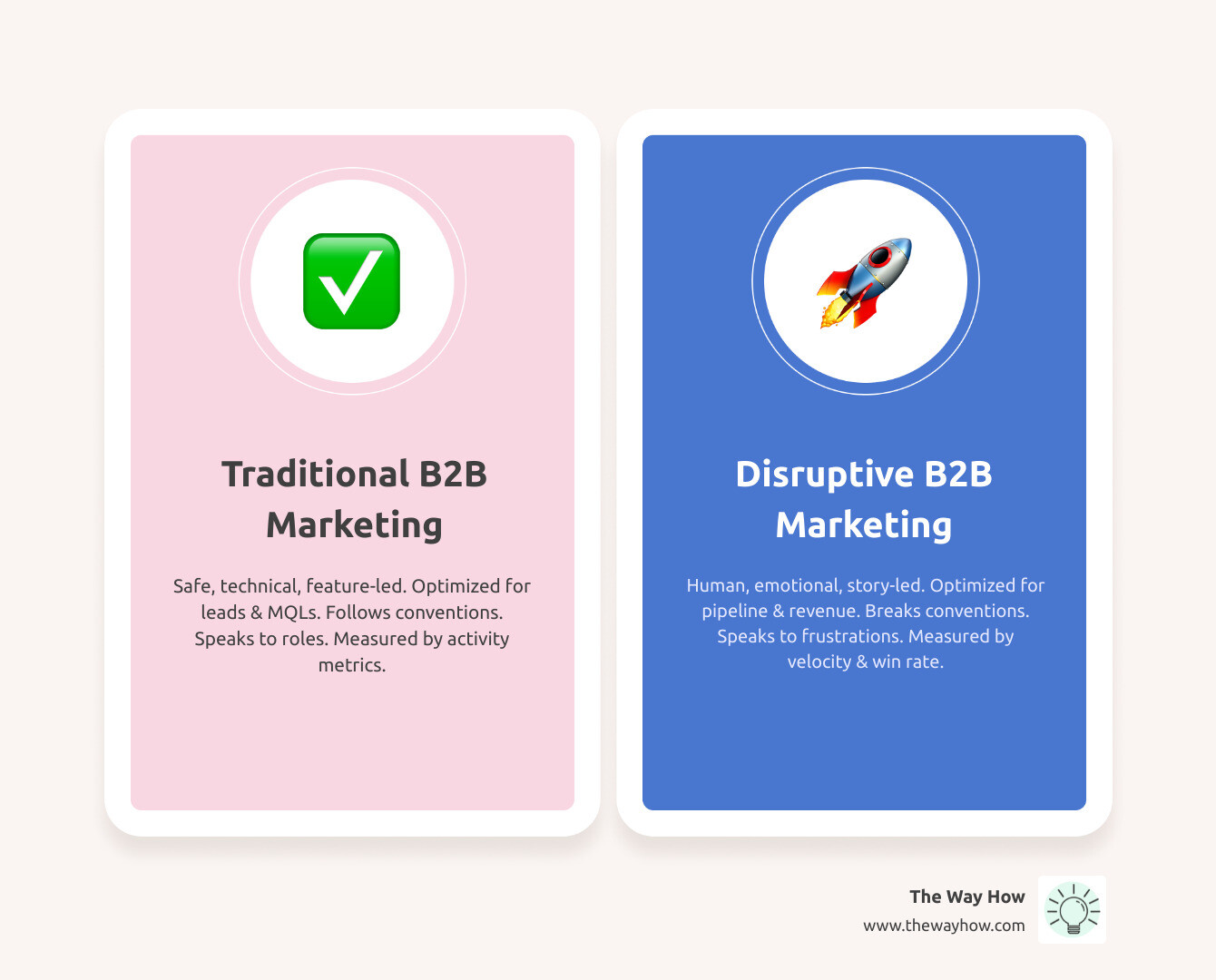
| Traditional B2B Marketing | Disruptive B2B Marketing |
|---|---|
| Safe, technical, feature-led | Human, emotional, story-led |
| Optimized for leads and MQLs | Optimized for pipeline and revenue |
| Follows category conventions | Breaks or redefines them |
| Speaks to roles and titles | Speaks to people and their frustrations |
| Measured by activity metrics | Measured by pipeline velocity and win rate |
Here is the uncomfortable truth most marketing teams won’t say out loud: correct is not the same as effective.
Most B2B marketing works just enough to disappear. It follows the playbook. It checks the boxes. It produces MQLs that never convert. And then leadership wonders why growth is stalled.
The companies breaking through in 2026 are doing something different. They’re not louder. They’re not reckless. They’re more human, more specific, and more willing to say what their buyers are already thinking.
Buyers are exposed to more than 10,000 brand messages every day. Millennials and Gen Z now make up 71% of B2B buyers — and they expect more than a white paper and a product demo. Nearly 88% of B2B CMOs are already pushing for bolder creative. The window for “safe” marketing is closing fast.
I’m Jeremy Wayne Howell, founder of The Way How — a psychology-first marketing and revenue strategy firm — and I’ve spent over 20 years helping founders and revenue leaders diagnose why their marketing isn’t working before prescribing what to do about it. My approach to disruptive B2B marketing is rooted in buyer psychology and decision-making behavior, not trend-chasing. In the sections below, I’ll walk you through exactly how to build disruption that connects — and converts.
Basic disruptive b2b marketing vocab:

In the current B2B landscape of April 2026, the greatest risk to your brand isn’t being “wrong” — it’s being invisible. We often see companies invest millions in marketing that is technically accurate, compliant, and approved by every stakeholder, yet it fails to move the needle. Why? Because it lacks the power to interrupt the noise.
Consumers and B2B buyers alike are now exposed to over 10,000 brand messages every single day. In this environment, 72% of buyers expect companies to understand their unique needs and expectations immediately. If your message looks and sounds like every other vendor in your category, the buyer’s brain simply filters you out to save cognitive energy.
The demographic shift has accelerated this need for change. Millennials and Gen Z now account for 71% of B2B buyers. These individuals grew up with high-quality B2C marketing; they don’t leave their expectations for emotional resonance and seamless digital experiences at the door when they start their workday.
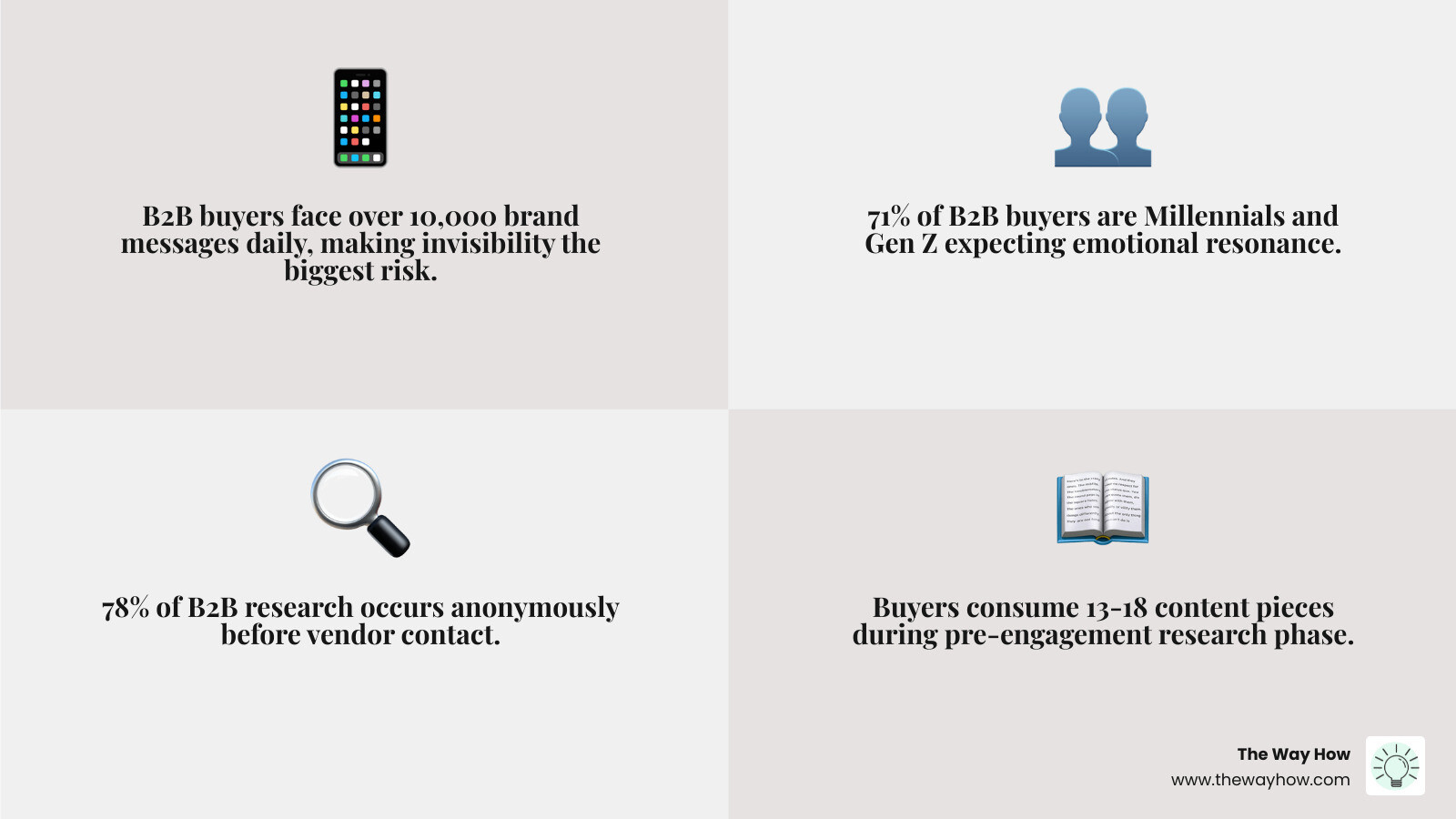
Research shows that 78% of B2B research happens anonymously before a vendor is ever contacted. If your marketing is merely “correct” but fails to spark curiosity or provide a unique perspective during those 13 to 18 pre-engagement content pieces, you are losing the deal before you even know it exists.
Defining the New Standard: Meaning Over Correctness
To succeed today, we must shift our focus from technical correctness to emotional meaning. Disruption is the new differentiator in B2B because it allows a brand to break through the “sea of sameness.”
Traditional B2B marketing often lives in the shadow of B2C, clinging to dry white papers and safe trade show booths. However, 69% of B2B leaders now agree that purchasing decisions are just as emotionally driven as consumer choices. Disruptive b2b marketing isn’t about being “wacky”; it’s about the intentional interruption of expectations in service of meaning. It is about having the courage to say the thing that everyone else is carefully avoiding.
The Psychology of Disruptive B2B Marketing
At The Way How, we look at marketing through the lens of human behavior. Every B2B purchase involves a “certainty gap” — the distance between a buyer’s current problem and their trust in your solution. Traditional marketing tries to bridge this gap with data alone. Disruptive marketing bridges it with empathy.
Only 39% of B2B leaders are currently using storytelling, emotion, and humor to make their campaigns stick. This represents a massive opportunity. When you use storytelling, you reduce the cognitive load on the buyer. Instead of forcing them to synthesize technical specs, you provide a narrative framework that makes the value of your solution intuitive. By addressing the frustrations and “vendor dating horror stories” buyers actually face, you build a level of trust that data points can’t touch.
Why Safe Marketing is the Riskiest Bet in 2026
Safety is a trap. When 88% of CMOs are advocating for bolder creative approaches, staying “safe” means you are intentionally choosing to be outperformed. Around 61% of those who have embraced bolder creative are already seeing stronger engagement.
True disruption is anchored in your brand’s DNA. It’s about being relevant in a way that feels unexpected. When you break the rules of your industry — whether that’s by using humor in a dry regulatory space or by being radically transparent about pricing — you signal to the buyer that you are different. This differentiation is what creates the 3-4x engagement lift we see in edgier organic posts compared to safe ones.
Two Seismic Shifts: E-Commerce and Systematic Selling
The B2B world is experiencing two major shifts that require a complete rethink of the sales and marketing engine. We call these “seismic shifts” because they fundamentally change the landscape upon which we build our businesses.
| Virtual Selling | B2B E-Commerce |
|---|---|
| Video calls and digital sales rooms | Self-guided, digital purchase workflows |
| Seller-led | Buyer-led |
| Manual touchpoints | Automated, data-driven experiences |
| Linear funnel progression | Non-linear, multi-stakeholder journey |
B2B E-Commerce as a Self-Guided Experience
The first shift is the rise of B2B e-commerce. This isn’t just about “selling online”; it’s about enabling the 87% of buyers who want to self-serve part or all of their journey. Buyers today consume 13-18 pieces of content before they ever talk to a human.
A disruptive approach here means creating frictionless buying journeys where the buyer can explore, research, and even purchase on their own terms. By providing these self-service purchase workflows, you don’t just make it easier to buy; you collect invaluable data on buyer intent and progress. This allows you to meet the 78% of buyers who prefer to remain anonymous during their initial research phase with the exact information they need to move forward.
Systematic Selling for Predictable Revenue
The second shift is systematic selling. This is the optimization of talent, processes, and infrastructure to create a predictable revenue engine. Most B2B companies generate thousands of MQLs annually but convert fewer than 2% to revenue. This is a failure of the system.
Systematic selling moves away from “random acts of marketing” and toward an insights-driven leadership model. It’s about cross-functional integration where marketing and sales are not just “aligned” but operating as a single unit. By focusing on pipeline velocity — how fast deals move through the system — you can identify where momentum is stalling and apply psychological triggers to restore it.
6 Untapped Strategies for Disruptive B2B Marketing
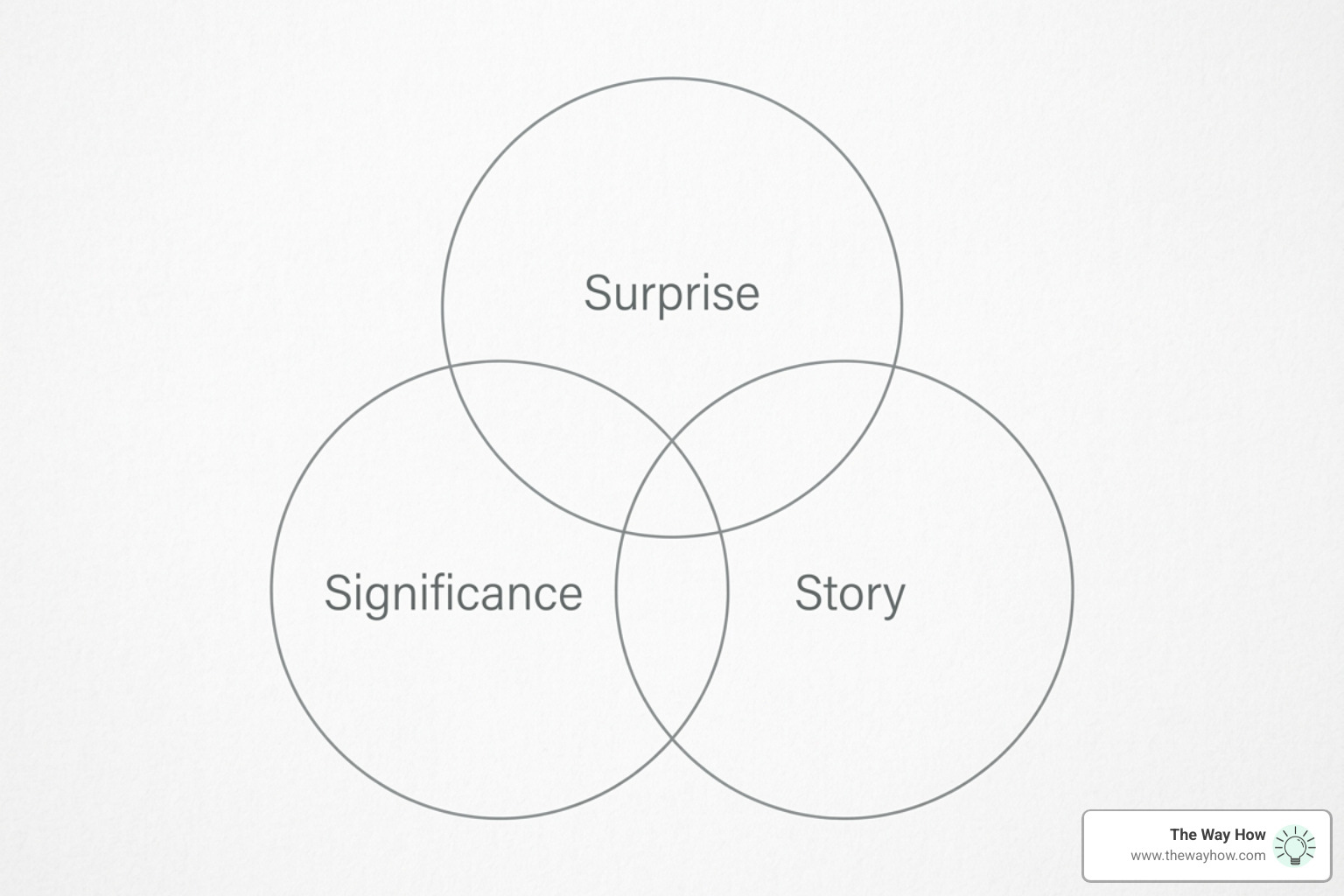
To truly disrupt the status quo, we recommend looking at strategies that your competitors are likely ignoring. These six areas often provide the highest return on creativity:
- Trendjacking: Intuitively listening to social trends and creatively incorporating them into your B2B narrative. This makes your brand feel contemporary and relatable.
- Experiential Marketing: Transforming public spaces or digital environments into immersive experiences. Think beyond the booth — use AR, drone shows, or pop-up events to create “awe.”
- Community Outreach: Building brand visibility through local events or niche digital communities. This fosters authentic word-of-mouth that scales.
- Co-branding: Partnering with complementary brands to reach new audiences. This expands your reach while lending third-party credibility to your message.
- Rich Content: Moving beyond the PDF. Use HTML5 ads, interactive calculators, podcasts, and vlogs to engage the buyer’s senses.
- Word-of-Mouth: In 2026, word-of-mouth is digital. Creating buzz-worthy campaigns that naturally inspire conversation is the new “viral” for B2B.
Leveraging AI-Mediated Discovery and Compounding Content
The way buyers find information is changing. Between 31% and 42% of enterprise research now involves AI assistants that name specific vendors in synthesized answers. To stay relevant, you must optimize for “Entity Engineering” — ensuring AI models understand exactly who you are and what you do.
We also advocate for the 60/20/20 budget rule:
- 60% Compounding Content: Assets like pillar guides and original research that appreciate in value over time and feed AI recommendations.
- 20% Campaign Assets: Short-term creative designed for immediate impact.
- 20% Enablement Assets: Content that helps sales close deals.
Compounding content can reduce your Customer Acquisition Cost (CAC) by 70-80% over three years because it creates a permanent authority that doesn’t disappear when you stop paying for ads.
Hyperpersonalization and the Human Connection
With 72% of consumers expecting companies to understand their unique needs, hyperpersonalization is no longer optional. But this isn’t just about putting a first name in an email. It’s about signal-based engagement.
By using account-based orchestration, you can deliver specific messages based on real-time signals — like a target account hiring a new leader or a surge in intent data. This level of relevance builds trust because it proves you are paying attention to the buyer’s specific “certainty gaps.”
Case Studies: When B2B Brands Refused to Blend In
Successful disruptive b2b marketing isn’t a theory; it’s a proven competitive advantage.
- Volvo Trucks: Their “Epic Split” commercial used a celebrity and a high-stakes stunt to prove product precision. It wasn’t just a video; it was a demonstration of engineering excellence that became a global phenomenon.
- UpWork: Their “Hey World” campaign hijacked pop culture conversations with celebrity name-drops to position freelancers as the solution to modern business problems.
- Thorn Technologies: They used edgier organic posts that outperformed their “safe” content by 3-4x. By using humor and relatable “break-up” metaphors for switching vendors, they humanized a technical software category.
- IBM & Hexagon: These brands have leveraged experiential marketing, such as augmented reality annual reports, to turn dry data into an engaging story for investors and partners.
These brands understood that B2B buyers are humans first. They used storytelling, emotion, and humor to make their messages stick in a way that a standard product feature list never could.
Building a Revenue-First Disruptive Framework
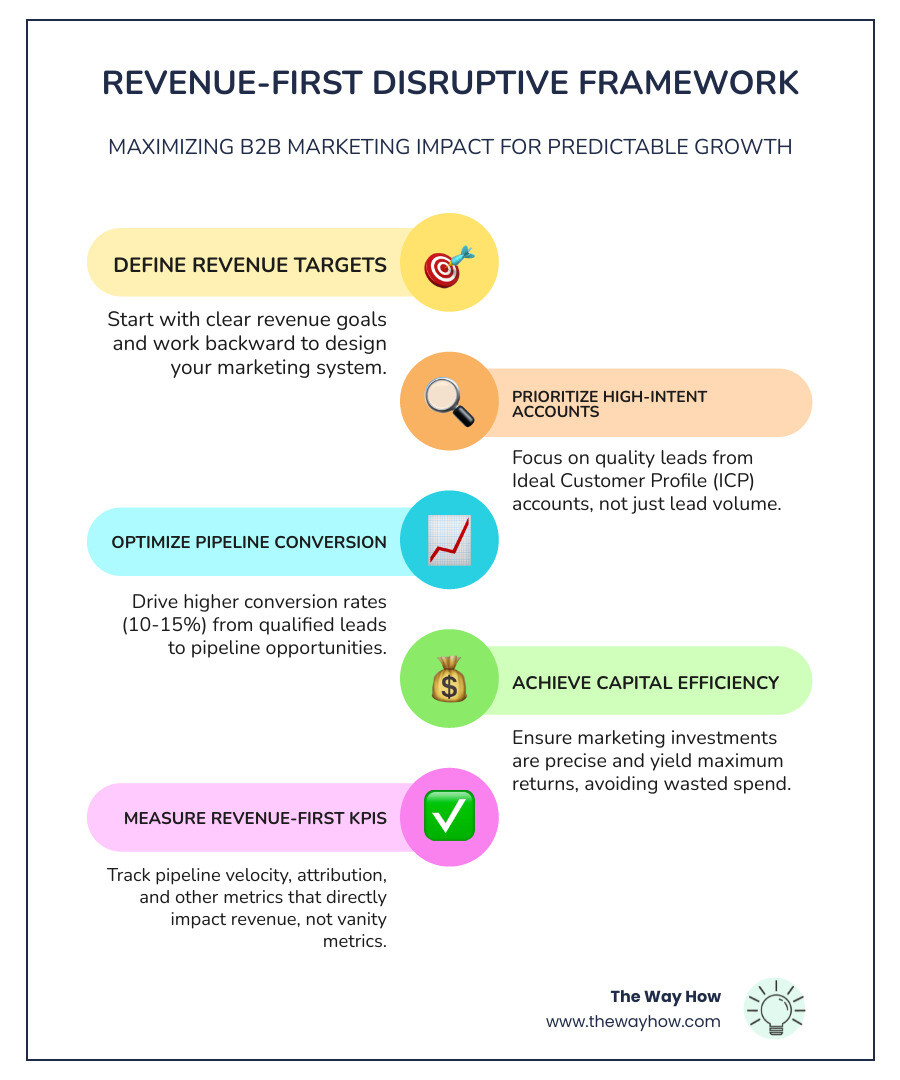
A disruptive strategy must be a revenue-first strategy. We start with the revenue target and work backward to design the system. This prevents “vanity metrics” from distracting us from the goal.
A company that generates 500 leads from high-intent, ICP-fit (Ideal Customer Profile) accounts will convert 10-15% to pipeline. Compare that to a company generating 5,000 leads from generic ebook downloads, which only converts 1-2%. The “volume” approach is 10x less capital-efficient. Precision is the ultimate disruption.
Measuring Disruptive B2B Marketing for Revenue
We must connect every marketing dollar to the pipeline through a documented causal chain. If an activity doesn’t have a clear path to revenue, we eliminate it.
The primary metric for 2026 is Pipeline Velocity. By improving four variables — Qualified Opportunities, Average Deal Value, Win Rate, and Sales Cycle Length — by just 10% each, you achieve a 46% increase in overall pipeline velocity. This is how you earn CFO confidence: by showing that marketing isn’t just a cost center, but a compounding revenue engine.
Frequently Asked Questions
What is the difference between disruptive and traditional B2B marketing?
Traditional marketing focuses on technical correctness and safe, linear funnels. It often results in “interchangeable” messaging that buyers ignore. Disruptive b2b marketing prioritizes human psychology, emotional meaning, and interrupting expectations. It aims to make the buyer “stop the scroll” and feel something real, creating a lasting brand affinity.
How do you measure the ROI of a disruptive campaign?
Success is measured through revenue-first KPIs. We look at pipeline velocity, cost per qualified opportunity, and the cross-channel influence rate (the percentage of won deals touched by 3+ channels). We move away from “leads” and toward “pipeline contribution” and “win rate improvement.”
Is disruptive marketing too risky for regulated B2B industries?
The real risk is being forgettable. In regulated industries, disruption isn’t about breaking laws; it’s about breaking boredom. We use “Disruptive Awe” to frame technical precision through human stories. For example, instead of just listing security specs, you frame the product by the “peace of mind” it protects for the human beings behind the company.
Restoring Momentum Through Strategic Clarity
At The Way How, we believe that growth stalls when uncertainty enters the buyer’s journey. Our psychology-first strategy is designed to remove that uncertainty by building systems rooted in human behavior and empathy.
Whether you need Fractional CMO leadership to guide your transition to a revenue-first model or a complete HubSpot architecture overhaul to support systematic selling, we help you see the problem clearly before we ever talk about solutions. We don’t just chase tactics; we design dependable growth engines that turn marketing into your most valuable asset.
If your marketing feels “correct” but your growth is flat, it’s time to bridge the certainty gap. More info about our services can help you understand how to turn your brand into a differentiator that actually wins.