

Why Most “Disruptive” Marketing Isn’t Actually Disruptive
Disruptive marketing examples aren’t just about being loud, weird, or shocking for attention’s sake. True disruption changes how people perceive value by challenging a single, deeply held expectation about your industry.
Quick Answer: Top Disruptive Marketing Examples
| Brand | What They Disrupted | Psychological Lever | Result |
|---|---|---|---|
| Dollar Shave Club | Challenged the razor industry’s pricing and buying experience with humor | Expectation Violation | Millions of YouTube views, thousands of signups in weeks |
| Spotify Wrapped | Turned user data into a shareable annual experience | Identity Play + FOMO | Viral user-generated content engine |
| Liquid Death | Sold water in beer cans with dark humor and extreme sports branding | Expectation Violation + Identity Play | $68,200 casket cooler auction, cult following |
| Patagonia | “Don’t Buy This Jacket” anti-consumerism campaign | Identity Play + Values Alignment | Strengthened brand loyalty, increased sales |
| Diamond Shreddies | Rotated cereal 45° and called it “Diamond” shaped | Framing Effect | 18% market share increase, eBay resellers |
| MailChimp | Created fake brands (FailChips, VeilHymn) that rhymed with their name | Curiosity Gaps | 334 million reach vs. 36 million from previous best campaign |
Here’s what most marketing leaders get wrong: they think disruption is about creativity. It’s not. It’s about psychology.
You’re reading this because traditional marketing isn’t working anymore. The average person sees between 4,000 and 10,000 ads per day. Sixty-five percent skip online video ads the moment they can. Seventy-six percent do it out of pure habit.
Your buyers are smart, skeptical, and exhausted by noise. They don’t need another ad. They need you to change how they think about the problem you solve.
Disruptive marketing works by leveraging cognitive biases—the mental shortcuts people use to make decisions. It challenges expectations, reframes value, and turns customers into advocates. Not by shouting louder, but by showing them something they’sve stopped seeing.
This article deconstructs the most successful disruptive campaigns—not to celebrate creativity, but to teach you the psychological systems behind them. Because the brands that break through aren’t the ones with the biggest budgets. They’re the ones who understand human behavior better than their competitors do.
What is Disruptive Marketing? (And Why It’s Not About Being Louder)
In an era where consumers are bombarded with advertisements at every turn, standing out is more challenging than ever. CNBC shared disappointing stats revealing that 65% of people skip online video ads as soon as they get the chance, with 76% doing so out of ingrained behavior. This isn’t just a trend; it’s a testament to widespread ad fatigue.
Traditional marketing approaches, often focused on interruption and repetition, are losing their grip. We spend 75% of our screen time on connected devices, yet merely being present in the digital space is no longer enough. Many brands assumed online was the place to be, but as Proctor & Gamble Co. (the world’s biggest advertiser) demonstrated by cutting $200 million in digital ad spending due to loss of control over ad placement and controversial content, the approach needed radical rethinking.
Disruptive marketing, by contrast, is a strategic approach that challenges the status quo and redefines industry norms. It’s not just about being different for the sake of it; it’s about reimagining the possibilities of marketing to create lasting impressions. It involves using experimental tactics that attract customers and carve a unique niche by giving them a reason to look twice. While guerrilla marketing, with its low-cost, high-creativity stunts, can be a powerful tactic within this framework, disruptive marketing encompasses broader strategies including digital innovation, market repositioning, and long-term industry change. It’s about shifting perception, not just getting attention.
Disruptive marketing goes beyond shouting louder; it’s about understanding the underlying psychology of your audience. It recognizes that “selling is dead, but ongoing conversation thrives.” Consumers today create better content about brands than brands often do. They go with their feelings, not the noise. This requires marketers to cultivate curiosity and creativity, fostering authentic engagement and turning customers into active participants rather than passive recipients.
The Core Principles of Disruption
At The Way How, we believe effective marketing is rooted in human behavior, empathy, and decision-making psychology. This is precisely where disruptive marketing shines, adhering to several core principles:
- Consumer-centric: It places the consumer at the heart of every campaign, deeply understanding their pain points, desires, and what truly resonates with them. This means going beyond demographics to understand their emotional landscape.
- Value-driven: Disruptive campaigns offer genuine value, whether through novel solutions, improved experiences, or alignment with a customer’s personal values and identity.
- Emotional connection: Rather than just listing features, disruptive marketing aims to evoke strong emotions, creating memorable experiences that forge deeper bonds between the brand and its audience.
- Authenticity: In a world rife with skepticism, transparency and authenticity are paramount. Disruptive brands are often unafraid to be unconventional, even polarizing, as long as it aligns with their true identity.
- Calculated risk-taking: True disruption involves daring to be different and taking calculated risks. It means forgetting traditional methods and thinking outside the box, often venturing into uncharted territories or targeting overlooked market segments.
These principles are not mere buzzwords; they are the bedrock upon which effective small business growth strategies are built, enabling brands to stand out and thrive.
Why Disruption is Crucial in a Saturated Market
In today’s hyper-competitive landscape, merely being present isn’t enough. The sheer volume of daily posts on platforms like Instagram—over 6 billion—means the market has become diluted. This makes it incredibly difficult for brands to cut through the clutter and capture precious consumer attention.
Disruptive marketing offers a powerful antidote to this saturation by:
- Breaking through clutter: By challenging expectations and offering unexpected messaging, disruptive campaigns grab attention in a way traditional ads cannot. They offer a reason for consumers to pause their scrolling.
- Building brand disciples: When a brand genuinely connects with consumers on an emotional or value-driven level, it fosters loyalty that transcends mere transactions. These customers become passionate advocates, spreading the brand’s message organically.
- Creating conversations: Disruptive campaigns are often designed to be shareable and talk-worthy. They spark curiosity, debate, and user-generated content, turning passive viewers into active participants in the brand’s narrative.
- Earning trust, not just views: In a culture where “fake news” is common, consumers crave authenticity and transparency. Disruptive marketing, particularly experiential activations, can foster two-way conversations and build trust by aligning a company’s values with those of its target audience.
- Higher ROI through creativity over media spend: One of the most compelling aspects is its cost-effectiveness. Disruptive marketing often costs 30-50% less than traditional campaigns by leveraging creativity over media spend. Instead of allocating heavy budgets to TV and print, it prioritizes ingenious tactics, viral content, and targeted digital strategies to maximize impact with minimal investment. This approach significantly contributes to understanding how important is content quality for SEO, as high-quality, shareable content drives organic reach.
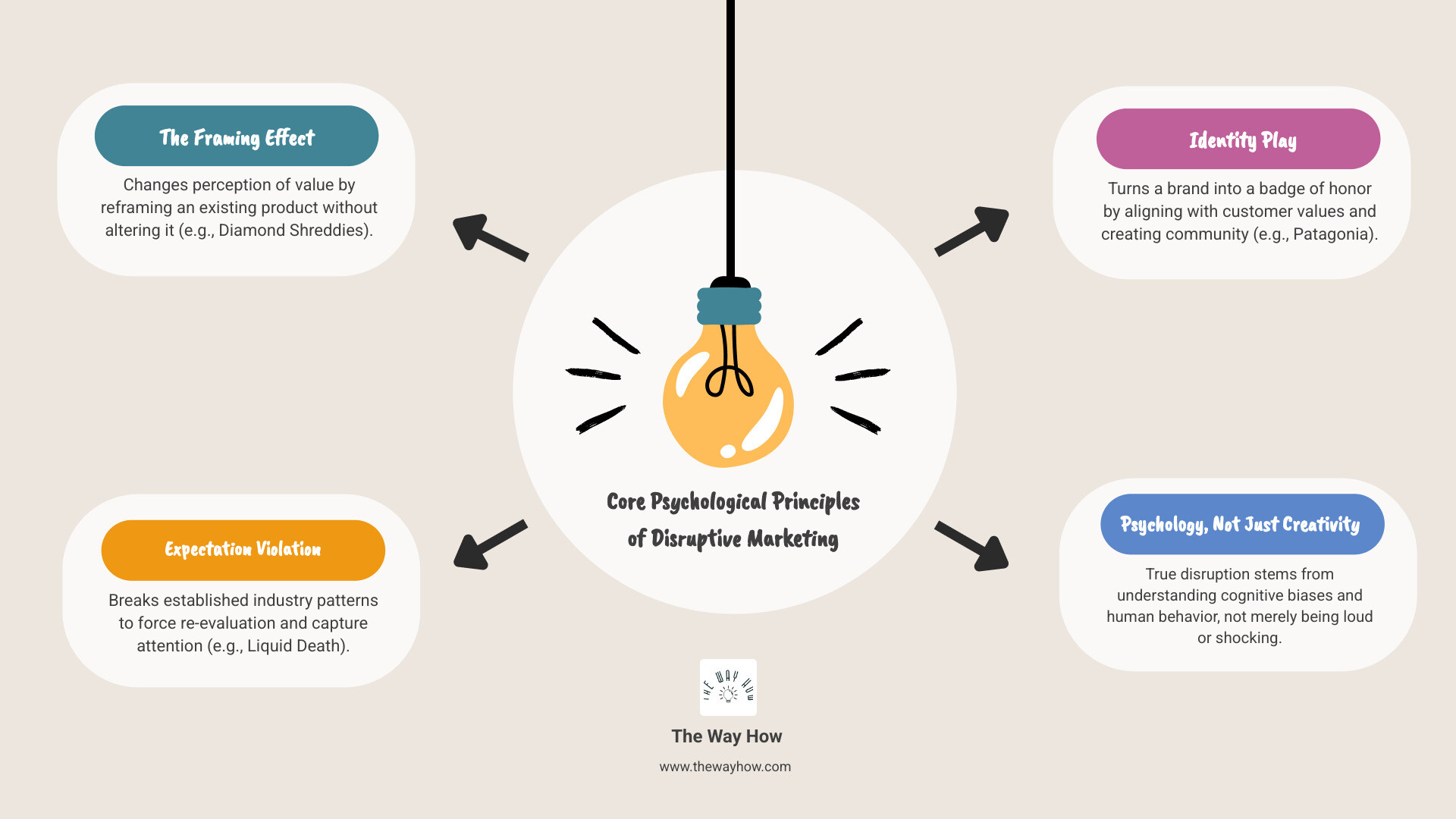
The Psychological Levers Behind Unforgettable Campaigns
At The Way How, we understand that behind every successful disruptive campaign lies a deep understanding of human behavior. It’s not magic; it’s applied psychology. We diagnose why growth is stalled by identifying certainty gaps in the customer journey, and then we design systems that create trust, momentum, and predictable revenue. This section explains the “why” behind the “what,” focusing on the psychological triggers that make these campaigns unforgettable.
The Framing Effect: Changing the Meaning, Not the Product
The Framing Effect demonstrates how the way information is presented (or “framed”) can influence people’s decisions and perceptions, even if the underlying facts remain the same. One of the most brilliant disruptive marketing examples of this is the Diamond Shreddies campaign.
For decades, Shreddies cereal was, well, square. An intern, perhaps playfully, observed, “this cereal isn’t a square, it’s a diamond.” What followed was a marketing masterstroke. The brand launched a campaign promoting “Diamond Shreddies,” claiming a new, improved shape. They didn’t change the product, only its orientation by 45 degrees.
The results were astonishing: an 18%+ market share increase for Kraft. Consumers reported the “diamond” shaped cereal tasted better, despite it being the exact same product. People were so enamored that they even bought and resold limited-edition packaging on eBay. The campaign leveraged our reliance on shortcuts, attention to novel patterns, and the power of playful debate, even launching “combo packs” (half squares, half diamonds) to invite public participation. As the case study reveals, the most powerful upgrade isn’t always in the product itself, but in the story people use to judge it. Perception truly is reality, and by simply reframing a familiar product, Shreddies open uped significant growth.
Expectation Violation: Breaking the Pattern to Force Re-evaluation
When something defies our expectations, it forces us to pay attention and re-evaluate our assumptions. This psychological lever is at the heart of many bold disruptive marketing examples. Liquid Death, a canned water brand, is a perfect case study in expectation violation.
Forget the soft launch—Liquid Death came crashing into the packaged water industry in 2019 with a debut video that made one thing clear: this brand was here to break the rules, not follow them. In an industry dominated by serene imagery and health claims, Liquid Death sells water in “tallboy” aluminum cans, usually associated with beer, with dark humor and a punk rock aesthetic. Their tagline? “Murder Your Thirst.”
They challenge category norms by embracing shock value, controversial campaigns, and unexpected partnerships. From a casket cooler auction that started at $15,000 and ended at an absurd $68,200, to turning online criticism into content (like their “Greatest Hates” Spotify playlist where internet trolls’ comments become death metal lyrics), Liquid Death leans into the absurdity. Their marketing creates an “in-group” of fans who “get the joke” and appreciate the brand’s unapologetic attitude. Liquid Death’s rise is a masterful blend of outrageous humor, shock value, and unapologetic branding, proving that prioritizing attitude and brand identity over product conformity can truly disrupt.
Identity Play: Turning Your Brand into a Badge of Honor
Humans are social creatures, constantly seeking to express their identity and align with groups that share their values. Disruptive marketing harnesses this by turning a brand into a badge of honor, a statement about who the customer is and what they believe in.
Patagonia’s “Don’t Buy This Jacket” campaign is a legendary example. Launched on Black Friday, a day synonymous with rampant consumerism, the ad encouraged consumers not to buy their products unless absolutely necessary, and to repair, reuse, and recycle instead. This counter-intuitive message wasn’t about reducing sales; it was about reinforcing Patagonia’s deep commitment to environmental sustainability and responsible consumption. By aligning with their customers’ values, Patagonia created a powerful identity statement. Owning a Patagonia jacket became less about the garment itself and more about being part of a community that cares for the planet.
Similarly, Red Bull didn’t just sell an energy drink; they built a media empire around extreme sports and adrenaline-fueled stunts. A Mashable article aptly describes them as “a publishing empire that also happens to sell a beverage.” From sponsoring Felix Baumgartner’s record-breaking space jump (which garnered over 43 million YouTube views) to countless extreme sports events, Red Bull sells a lifestyle of pushing limits. Their brand became synonymous with adventure, daring, and high performance. Customers aren’t just buying a drink; they’re buying into an identity, making them brand advocates, not just customers. This deep alignment with customer values is a powerful engine for business growth.
Iconic Disruptive Marketing Examples Deconstructed
Now that we’ve explored the psychological levers, let’s dive into some concrete disruptive marketing examples that have reshaped industries, analyzing them through our psychology-first lens. These aren’t just creative ads; they are strategic interventions designed to alter perception and behavior.
Dollar Shave Club: A Masterclass in Disruptive Marketing Examples
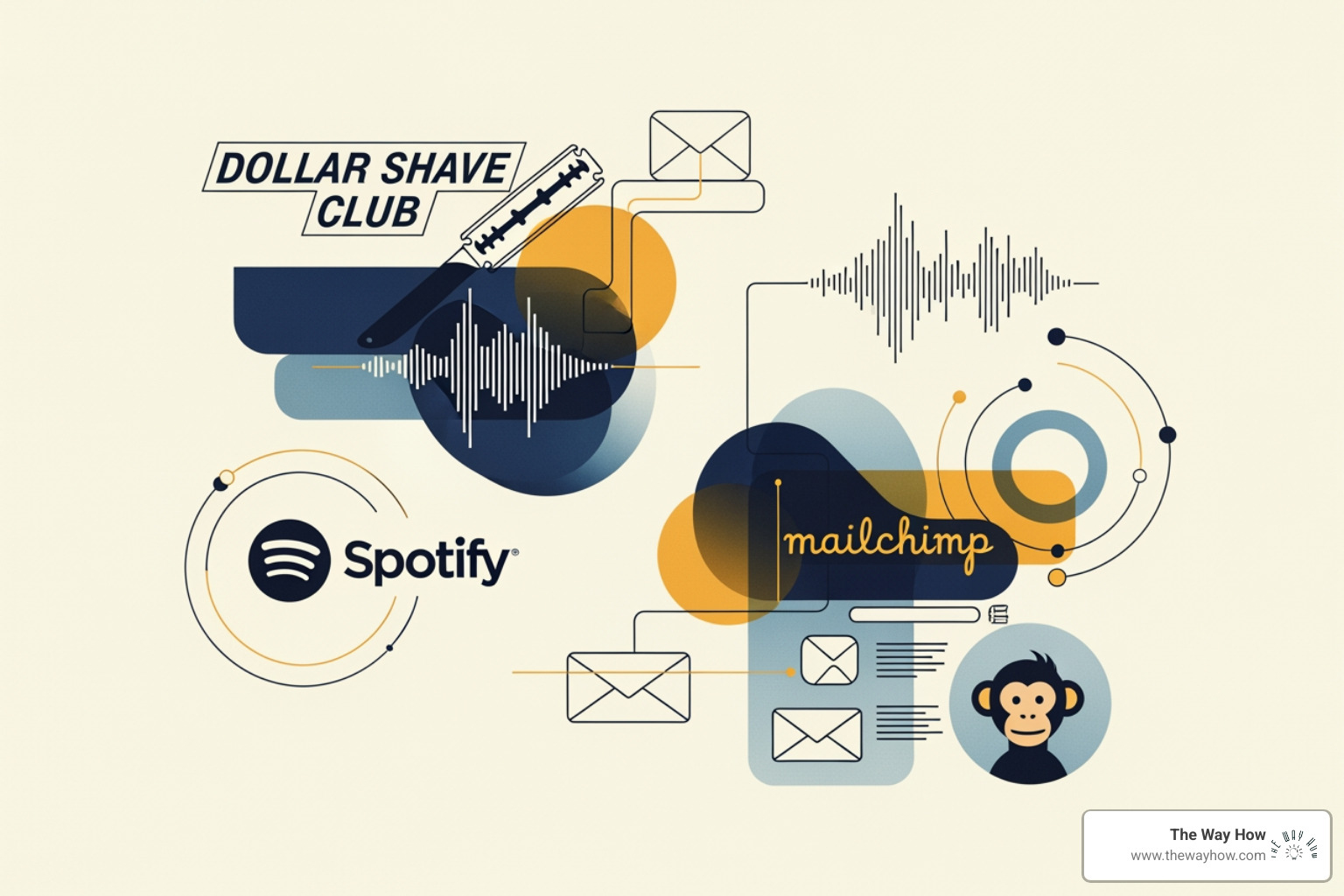
When Dollar Shave Club launched in 2012, the razor industry was dominated by a few giants, most notably Gillette, which focused on increasingly complex, multi-blade razors at premium prices. Dollar Shave Club didn’t just offer a cheaper alternative; they disrupted the entire buying experience and perception of value with a single, iconic video.
Their launch video is a classic example of disruptive marketing. It starred founder Michael Dubin with a deadpan, humorous delivery, directly addressing the absurdity of expensive, over-engineered razors. “Are our blades any good? No. Our blades are f***ing great,” he declared, simplifying the customer’s problem (expensive razors) and offering a straightforward, affordable solution delivered to your door.
The video went viral, racking up millions of YouTube views and thousands of sign-ups in just days. It leveraged:
- Humor as a weapon: It made people laugh while simultaneously making them question their existing razor purchases.
- Simplifying the customer’s problem: It cut through the noise of “5-blade technology” and “flexball” to focus on the core need: a clean shave at a fair price.
- Directly challenging the industry leader: It explicitly called out the high cost of traditional razors, positioning DSC as the consumer-friendly alternative.
- Building a brand voice: The video established a bold, irreverent, and authentic brand personality that resonated deeply with its target audience.
This campaign was a masterclass in expectation violation and framing, showing that you don’t need a massive budget to outmaneuver industry giants; you need a profound understanding of customer frustration and a willingness to challenge the status quo.
Spotify Wrapped: Annual Disruptive Marketing Examples at Scale
Spotify Wrapped isn’t just a marketing campaign; it’s a cultural phenomenon and one of the most brilliant annual disruptive marketing examples. Each year, Spotify compiles users’ listening habits and presents them in a personalized, visually engaging, and highly shareable format.
What makes it disruptive? Spotify Wrapped turns data—something typically dry and impersonal—into a highly shareable experience. It leverages:
- Personalization: Users receive a unique, intimate summary of their year in music, making them feel seen and understood by the platform.
- Data as a shareable experience: Wrapped is designed for social media. Users eagerly share their top artists, songs, and podcasts, turning their personal listening data into a public badge of identity.
- Leveraging FOMO (Fear Of Missing Out): The ubiquity of Wrapped on social feeds creates a powerful sense of FOMO, encouraging non-users to sign up and current users to anticipate the next year’s summary.
- Turning customers into marketers: By creating content that users want to share, Spotify effectively turns its entire user base into a massive, organic marketing engine. It’s user-generated content at its most effective, driving brand awareness and engagement year after year.
Spotify Wrapped is a prime example of how understanding human desires for self-expression and social connection can transform a routine data report into a viral, disruptive marketing success.
MailChimp’s “Did You Mean?” Campaign
In 2017, the email marketing platform MailChimp launched a famously unconventional campaign that defied traditional advertising logic. Inspired by a mispronunciation of their name in a popular podcast ad (“MailKimp”), they acceptd the confusion and turned it into a disruptive masterpiece: the “Did You Mean MailChimp?” campaign.
Instead of directly promoting their services, MailChimp, in partnership with Droga5, created nine bizarre, interconnected “sham” brands and pieces of content that rhymed with “MailChimp.” These included:
- VeilHymn: A real music collaboration with artists like Blood Orange, streamed over 1.5 million times.
- FailChips: Intentionally crushed potato chips distributed in stores.
- MaleCrimp: A pop-up barbershop offering hair crimping during New York Fashion Week.
- WhaleSynth: A web-based musical instrument that used whale sounds.
The goal was to create an “internet rabbit hole” that leveraged curiosity gaps. Each of these seemingly unrelated campaigns led back to a central landing page, eventually revealing the connection to MailChimp. The campaign reached an astounding 334 million people in a few months, dwarfing their previous best campaign’s reach of 36 million.
This campaign proved that being weird works when it’s strategically executed and rooted in psychological principles:
- Leveraging curiosity gaps: The bizarre nature of the sham brands compelled people to investigate and connect the dots.
- Targeting subcultures: Each “sham” brand targeted a specific niche audience (music fans, foodies, fashionistas), creating authentic engagement within those communities.
- Proving that being weird works: The campaign intentionally aimed for strong, polarized reactions (“people either loved it or hated it”), understanding that indifference is the real enemy in a saturated market.
MailChimp didn’t just advertise; they created an immersive, puzzling experience that rewarded curiosity and cemented their brand in the cultural consciousness.
How to Engineer Your Own Disruptive Strategy
At The Way How, we don’t believe in chasing tactics; we believe in designing systems. Engineering your own disruptive strategy isn’t about following a checklist of trends, but about adopting a system for thinking. We teach before we persuade, and diagnose before we prescribe. Our approach is to identify certainty gaps in your customer’s journey and design systems that create trust, momentum, and predictable revenue. This means moving beyond generic marketing tips to a deeper understanding of your market and your customer.
To truly disrupt, you need to understand the fundamental truths of human behavior that drive decision-making. This is why we integrate Marketing strategies with HubSpot that are not just about automation, but about optimizing for human connection and psychological triggers.
Step 1: Identify the “Tension Point” in Your Industry
Disruption begins with diagnosis. We ask: where are the unspoken frustrations? What are the outdated customer experiences that everyone tolerates but secretly hates? What is the “unchanged truth” that people have stopped seeing? This is your opportunity for disruption.
- Outdated customer experiences: Think about industries with clunky processes, poor customer service, or unnecessary middlemen. Warby Parker, for instance, disrupted the eyewear industry by challenging the system of highly marked-up glasses, offering a direct-to-consumer model and home try-ons.
- Secretly hated aspects: What do customers begrudgingly accept because there’s no better alternative? Dollar Shave Club targeted the frustration with expensive razors and inconvenient shopping trips.
- Unspoken truths: What are the deep-seated beliefs or assumptions within an industry that no one questions? Patagonia challenged the assumption that growth always means more consumption.
- Friction points: Where do customers encounter unnecessary effort, confusion, or delays? Uber disrupted the taxi industry by removing friction from booking and payment.
These tension points are not just problems; they are fertile ground for innovation and the starting blocks for truly disruptive campaigns.
Step 2: Challenge a Single, Core Expectation
Once you’ve identified a tension point, the next step isn’t to try and fix everything. True disruption often comes from challenging a single, core expectation in a profound way. Don’t try to change everything; pick one thing to flip.
- The product’s form: Liquid Death challenged the expectation of how water should be packaged and branded.
- The buying process: Dollar Shave Club and Warby Parker disrupted how people buy personal care items and eyewear, respectively.
- The brand’s message: Patagonia flipped the script on consumerism, telling people not to buy.
- The price model: Many subscription services disrupt by offering predictable, lower-cost access compared to traditional retail.
By focusing your disruptive energy on one specific, deeply held expectation, you create a powerful contrast that forces re-evaluation and captures attention.
Step 3: Measure What Matters & Mitigate Risks
Disruptive marketing isn’t just about making a splash; it’s about achieving measurable results. However, the metrics for success often differ from traditional campaigns.
| Traditional Metrics | Disruptive Metrics |
|---|---|
| Impressions | Engagement Quality (shares, comments, user-generated content) |
| Reach | Earned Media Value (PR mentions, organic buzz) |
| Clicks | Brand Lift (awareness, perception shifts, sentiment) |
| Conversions | Word-of-Mouth Amplification, Community Growth |
While traditional campaigns focus on immediate sales, disruptive marketing prioritizes engagement quality, word-of-mouth amplification, and long-term brand perception shifts. For instance, B2B disruptive campaigns typically show initial engagement within 2-4 weeks, but meaningful business impact takes 3-6 months.
It’s okay to be polarizing. The biggest risk isn’t being disliked; it’s being ignored. However, you must mitigate risks by ensuring your disruption is authentic to your brand’s core values. If it feels like a gimmick, customers will see right through it. Test your ideas, gather feedback, and be transparent. The goal is to be memorably authentic, not just shocking.
Frequently Asked Questions about Disruptive Marketing
How much does disruptive marketing cost?
Disruptive marketing often costs 30-50% less than traditional campaigns. This is because it prioritizes creativity, unconventional tactics, and psychological insight over massive media buys. The value comes from earned media, viral spread, and word-of-mouth, rather than relying solely on paid reach. While traditional marketing allocates heavy budgets to TV and print, disruptive approaches leverage guerrilla tactics, viral content, and targeted digital strategies to maximize impact with minimal investment.
Can B2B companies use disruptive marketing?
Absolutely. While B2C campaigns can go viral overnight, B2B disruption operates on a different timeline and with different objectives. B2B disruptive campaigns typically show initial engagement within 2-4 weeks, but meaningful business impact takes 3-6 months. It’s about challenging established norms, influencing key decision-makers, and building trust within often longer sales cycles. Industries with high market concentration, outdated customer experiences, or significant “tension points” (like SaaS, fintech, or healthcare technology) see the best results. For B2B, disruption means becoming a thought leader and challenging the status quo to address unmet needs, not just a vendor.
What’s the biggest risk of disruptive marketing?
The biggest risk isn’t failure, but brand misalignment. A disruptive campaign must be authentic to your company’s core values and purpose. If the message or execution feels like a gimmick, or if it clashes with your brand’s true identity, customers will perceive it as inauthentic, leading to distrust and potential backlash. The goal is to be memorably authentic, not just shocking for attention. Disruptive marketing, when done right, creates a strong opinion—people either love it or hate it—but it must always reinforce, not contradict, your brand’s true essence.
From Maverick to Mainstream: Your Path to Disruption
We’ve seen that true disruption isn’t a random act of creativity; it’s a psychological strategy. It’s about changing perception by challenging a single, deeply held expectation. The most successful disruptive marketing examples are rooted in a profound understanding of human behavior, empathy, and decision-making psychology. They don’t just stand out; they redefine categories and create loyal communities.
At The Way How, we specialize in helping founders and leadership teams remove uncertainty in their sales and marketing systems. Rather than chasing fleeting tactics, we diagnose why growth is stalled, identify certainty gaps in the customer journey, and design systems that create trust, momentum, and predictable revenue. Our work blends strategic clarity, behavioral insight, and operational execution to turn marketing into a dependable growth engine.
To build a marketing system that creates predictable growth through these principles, it’s time to stop chasing tactics and start diagnosing your strategy. We can help you uncover the tension points in your industry and engineer campaigns that resonate deeply with your audience. Discover our services and let us help you become the next marketing maverick.