A Complete Guide to CRM Systems and Database Management
 Jeremy Wayne Howell : Jul 22, 2026 9:48:31 PM
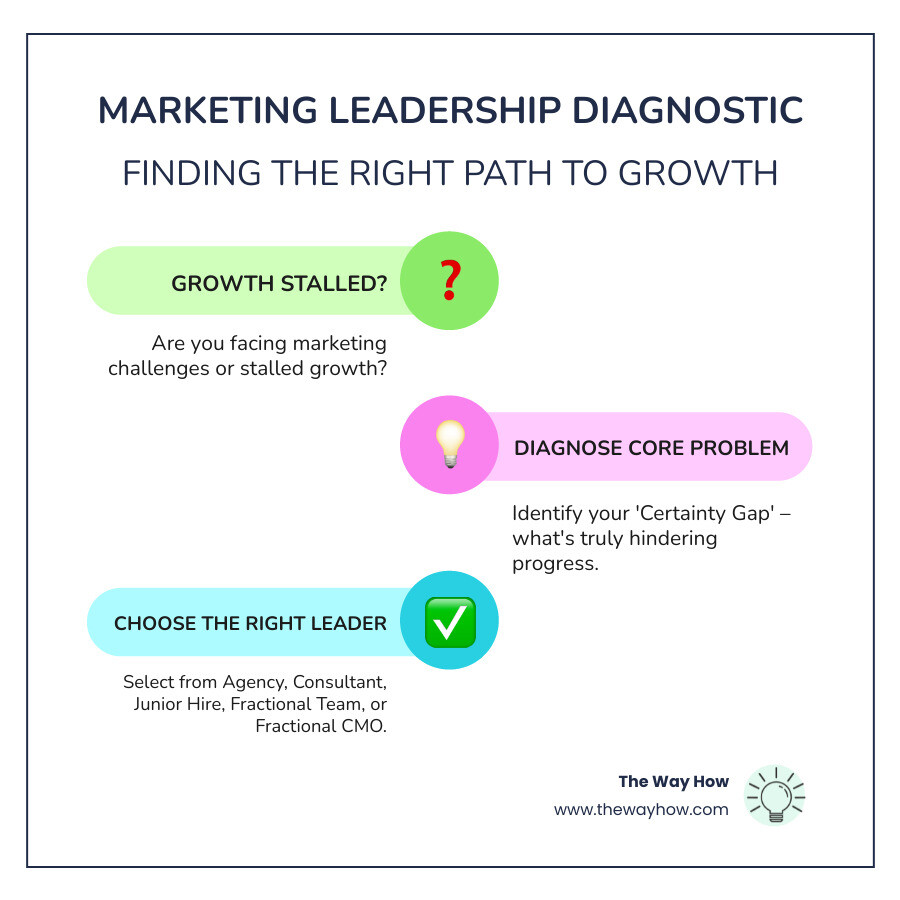
Fractional CMO alternative options include specialized marketing agencies for channel-specific execution, generalist growth consultants for identifying and testing growth channels, junior growth hires for hands-on in-house capability building, and fractional marketing teams for integrated strategy and execution. The right choice depends on your company’s growth stage, immediate needs, and whether you require strategic leadership, tactical execution, or both.
Quick comparison of alternatives:
You’ve heard the advice. Hire a Fractional CMO. It’s the marketing leadership solution everyone’s talking about.
But here’s what no one tells you: a Fractional CMO isn’t always the answer.
Sometimes you need execution, not strategy. Sometimes you need a specialist, not a generalist. Sometimes you’re too early-stage for executive oversight, or your team already has leadership but lacks the hands to do the work.
Most founders and revenue leaders face a version of this problem: We know we need marketing help, but we don’t know what kind.
The real question isn’t “Should I hire a Fractional CMO?” It’s “What kind of marketing leadership does my business actually need right now?”
That’s what this article diagnoses. We’ll walk through the most common alternatives to a Fractional CMO, when each one makes sense, and how to choose the right fit based on your company’s stage, budget, and most urgent growth problems.
Because the wrong hire doesn’t just cost money. It costs momentum.
Before exploring a Fractional CMO alternative, it’s crucial to understand what a Fractional CMO (fCMO) truly is and what they bring to the table. A Fractional CMO is an executive-level marketing leader who provides strategic guidance and leadership to a company on a part-time, flexible basis. They are seasoned professionals, often with 10+ years of experience, who step into a c-suite role without the commitment of a full-time executive salary. Their core responsibilities typically include developing comprehensive marketing strategies, overseeing their implementation, analyzing performance, building brand equity, and advising leadership on critical marketing decisions. You can dive deeper into this role with our Fractional Chief Marketing Officer Guide.
The primary benefits of hiring a Fractional CMO are clear: access to senior-level expertise without the full-time cost, flexibility to scale engagement up or down, and a fresh, external perspective motivated to deliver impact quickly. They integrate with internal teams, becoming part of the operation, understanding your culture, goals, and market. This integrated approach, as some sources suggest, makes them a “smarter, more integrated solution” than traditional agency setups, offering agency-level skillsets with far more agility and ROI. Our 10 Benefits of Fractional CMO article further elaborates on these advantages.
One of the most compelling arguments for a Fractional CMO is the significant cost savings compared to a full-time Chief Marketing Officer. Based on Glassdoor data, the average annual salary for a Traditional CMO in the United States in 2024 ranges from $255,000 to $475,000, not including bonuses, benefits, or recruitment costs. This is a substantial investment, often out of reach for startups or growing businesses.
In contrast, Fractional CMOs offer executive-level marketing leadership at a fraction of that cost. Their rates typically range between $3,000 and $15,000 per month, depending on the scope of work, hours committed, and industry. This makes them a highly cost-effective, experienced, and flexible alternative. They allow companies to tap into high-level marketing guidance and strategic acumen without the overhead of a full-time executive, enabling businesses to scale and grow by avoiding or delaying the need for new hires. The Value of Fractional Chief Marketing Officer is in their ability to deliver strategic impact and drive revenue at a more accessible price point.
While a Fractional CMO offers immense value, it’s not a one-size-fits-all solution. As we always emphasize at The Way How, diagnosing the problem before prescribing a solution is paramount. There are specific scenarios where a Fractional CMO alternative might be a more suitable choice.
We often play “devil’s advocate” regarding the rise of fCMOs, especially for early-stage startups. If your business is still trying to find product-market fit (pre-Seed or Seed stage), a Fractional CMO might not be the best initial hire. Why? Because early-stage growth often requires intense, hands-on experimentation across various growth pillars. A Fractional CMO, by definition, provides advisory and strategic leadership on a part-time basis. They are not typically in the trenches, executing daily campaigns or running rapid-fire A/B tests.
If your primary need is for someone to handle day-to-day execution, manage specific channels, or fill tactical gaps, a solo Fractional CMO might not have the bandwidth or the direct execution focus required. They might bring in contractors, but these individuals often lack the integrated processes and shared culture of a cohesive team, leading to inefficiencies.
A Fractional CMO is generally a strong fit for companies that already have an established internal marketing team (even a small one) and need strategic direction, leadership, and optimization. They can provide monthly advisory calls even for pre-Series B startups, but relying on them for all tasks before having a growth team in place can be premature. For a deeper understanding of when to consider this role, consult our Hiring a Fractional CMO Guide.
The journey of a business is dynamic, and so are its marketing needs. What works for a Series C+ company with an established growth team won’t necessarily be the right fit for a pre-Seed startup still searching for its audience. At The Way How, we believe in identifying the certainty gaps in your customer journey and then designing systems that create trust, momentum, and predictable revenue. This often means considering a range of Fractional CMO alternative options custom to your unique situation.

Problem Solved: You know what you need to do (e.g., improve SEO, run paid ads, create content), but you lack the in-house expertise or bandwidth to execute it effectively.
When to Choose: Your company has a clear understanding of its target audience and a defined growth channel or area where specialized execution is needed. You’re past the initial experimentation phase and need to scale a proven tactic.
Pros:
Cons:
Problem Solved: You’re an early-stage startup (pre-Seed or Seed) and you’re unsure which growth channels to pursue. You need help experimenting and identifying your core growth pillars.
When to Choose: You’re in the exploratory phase, need help validating marketing hypotheses, or require an objective perspective on potential growth avenues before committing to specific channels or hires.
Pros:
Cons:
Problem Solved: Your Series A startup has identified a key growth lever or channel, and you need someone embedded in your team to execute, learn, and build in-house capability.
When to Choose: You have some initial funding, a clear understanding of a specific marketing area that needs dedicated attention, and the capacity to mentor or provide guidance to a less experienced hire.
Pros:
Cons:
For tips on navigating early marketing hires, our Hiring Part-Time CMO Tips can offer some guidance, even if the role isn’t explicitly a CMO.
Problem Solved: You need both strategic leadership and integrated execution across multiple marketing functions, but aren’t ready for multiple full-time hires or the fragmented nature of individual agencies.
When to Choose: Your business needs a plug-and-play marketing department that functions as a cohesive unit, extending your existing team with diverse skill sets and a shared understanding of your goals.
Pros:
Cons:
This model is a powerful Fractional CMO alternative when you need more than just strategic leadership. Our Fractional Marketing Director Guide provides additional context on leveraging fractional leadership within your marketing structure.
Choosing the right marketing leadership model is less about what’s popular and more about what genuinely addresses your business’s unique challenges. At The Way How, we believe in a psychology-first approach, diagnosing why growth is stalled and identifying certainty gaps in the customer journey before prescribing any solution. This means a careful self-assessment is in order.
Here’s a framework to help you decide between a Fractional CMO and its alternatives:
| Alternative | Best For (Company Stage) | Primary Focus (Strategy vs. Execution) | Typical Cost | Key Benefit |
|---|---|---|---|---|
| Specialized Agency | Growth/Scaling (proven channels) | Execution (deep channel expertise) | Variable (project/retainer based) | High-level, focused execution |
| Generalist Consultant | Early-stage (Pre-Seed/Seed) | Strategy (channel findy/validation) | Hourly/Project | Objective guidance on growth paths |
| Junior Growth Hire | Series A (defined channel) | Execution (embedded learning) | Salary + Benefits | Building in-house capability, cost-effective |
| Fractional Marketing Team | Growth/Scaling (multi-channel needs) | Both (integrated strategy & execution) | Monthly Retainer | Cohesive, plug-and-play department |
| Fractional CMO | Series C+ (with existing team) | Strategy (executive leadership) | Monthly Retainer | Senior strategic oversight, cost-effective |
Your business’s stage of development is arguably the most critical factor in determining the right marketing leadership.
Are you lost in the woods, needing a map (strategy), or do you have a map and just need someone to clear the path (execution)?
Budget constraints are a reality for most businesses, and your existing team structure also dictates the best fit.
Understanding the nuances of the Chief Marketing Officer role, whether full-time or fractional, is key to making an informed decision. Explore our Chief Marketing Officer (CMO) Explained for more context.
Navigating the landscape of marketing leadership can bring up many questions. We aim to bring clarity to these common uncertainties, ensuring you make choices rooted in understanding, not just trends.

This is a common point of confusion. The fundamental difference lies in their role, integration, and accountability:
To summarize, a Fractional CMO is a strategic leader who sets the direction, while an agency is an executor that follows the direction. For more on this, consider our insights on Outsourced CMO benefits.
Measuring success goes beyond vanity metrics. For any marketing leader, whether a Fractional CMO or an alternative, we focus on KPIs that directly tie back to revenue and business growth. These include:
A strong marketing leader, especially a Fractional CMO, will establish clear metrics, reporting systems, and accountability measures to track these KPIs and demonstrate impact.
Interviewing for a senior marketing role, be it a Fractional CMO or a leader for one of the alternatives, requires a focus on strategic thinking, problem-solving, and leadership capabilities rather than just tactical checklists. Here’s what we recommend:
For a more in-depth guide on hiring marketing leaders, our The Ultimate Guide to Hiring a Fractional Marketing Director offers valuable insights that apply broadly to senior marketing roles.
The decision of who to bring into your marketing leadership, whether a Fractional CMO or a well-chosen Fractional CMO alternative, is a pivotal one. It’s not about chasing the latest trend or defaulting to the most obvious solution. It’s about a deep, honest diagnosis of your current growth challenges, understanding the certainty gaps in your customer journey, and then strategically selecting the right expertise to build systems that create trust, momentum, and predictable revenue.
At The Way How, we specialize in helping founders and leadership teams remove uncertainty in their sales and marketing systems. Our psychology-first approach means we don’t just chase tactics; we diagnose why growth is stalled. We blend strategic clarity, behavioral insight, and operational execution to turn marketing into a dependable growth engine for your business.
Whether you need a Fractional CMO to lead your existing team, a specialized agency for targeted execution, a consultant to chart your initial growth path, a junior hire to build in-house, or a fractional marketing team to act as your complete department, the right choice is the one that aligns with your specific needs, stage, and budget.
We are here to help you steer these complex decisions, providing the clarity and strategic guidance needed to move forward with confidence. If you’re ready to diagnose your growth problem and design a system for predictable revenue, we invite you to explore our strategic marketing services.
 Jeremy Wayne Howell : Jul 22, 2026 9:48:31 PM
 Jeremy Wayne Howell : Jul 21, 2026 9:47:10 PM
 Jeremy Wayne Howell : Jul 20, 2026 9:46:47 PM