A Complete Guide to CRM Systems and Database Management
 Jeremy Wayne Howell : Jul 22, 2026 9:48:31 PM

HubSpot hosting pricing is one of the most misunderstood topics for founders and marketing leaders evaluating their website stack. The short answer: hosting is included at no extra charge across all Content Hub tiers — including the free tier. But the full picture is more nuanced.
Here’s a quick breakdown before we go deeper:
| Content Hub Plan | Monthly Cost | Hosting Included | Key Limits |
|---|---|---|---|
| Free | $0 | Yes | 30 pages, HubSpot branding, no custom domain |
| Starter | $15/month | Yes | Custom domain, basic features, 1 seat |
| Professional | $450/month | Yes | Unlimited blogs, SEO tools, 3 seats |
| Enterprise | $1,500/month | Yes | 10 root domains, advanced governance, 5 seats |
What’s always included in hosting (all plans):
No separate hosting bill. No storage-based charges. No traffic spikes that cost you extra.
The confusion — and the decision fatigue — comes from not knowing what “free hosting” actually means in practice, and where the real costs live as your business grows. That’s exactly what this guide untangles.
I’m Jeremy Wayne Howell, a revenue growth strategist and founder of The Way How, with over 20 years of experience helping businesses implement HubSpot CRM systems and make smarter infrastructure decisions — including navigating hubspot hosting pricing across every growth stage. In the sections ahead, I’ll walk you through every tier, every hidden cost, and how to think about this decision the right way.
When founders and marketing executives sit down to build or migrate a corporate website, they rarely start by worrying about server architecture. Instead, they find themselves staring at a chaotic patchwork of subscription options. There is the domain registrar, the DNS manager, the website builder, the security plugin, the CDN provider, and the actual hosting server.
This fragmentation creates an intense cognitive load. We call this the “ecosystem tax” of modern web development. It is not just a financial tax; it is a psychological one.

Every disconnected tool in your marketing stack represents a potential point of failure. When your website goes down, or when a form stops sending leads to your CRM, the immediate reaction is anxiety. Where is the break? Is it a conflict between the host and the security plugin? Did the SSL certificate expire? Is the database overloaded?
This state of chronic uncertainty paralyzes marketing teams. Instead of focusing on customer psychology, demand generation, and brand positioning, leadership teams find themselves playing digital mechanics—constantly tightening loose bolts on a machine they did not want to build in the first place.
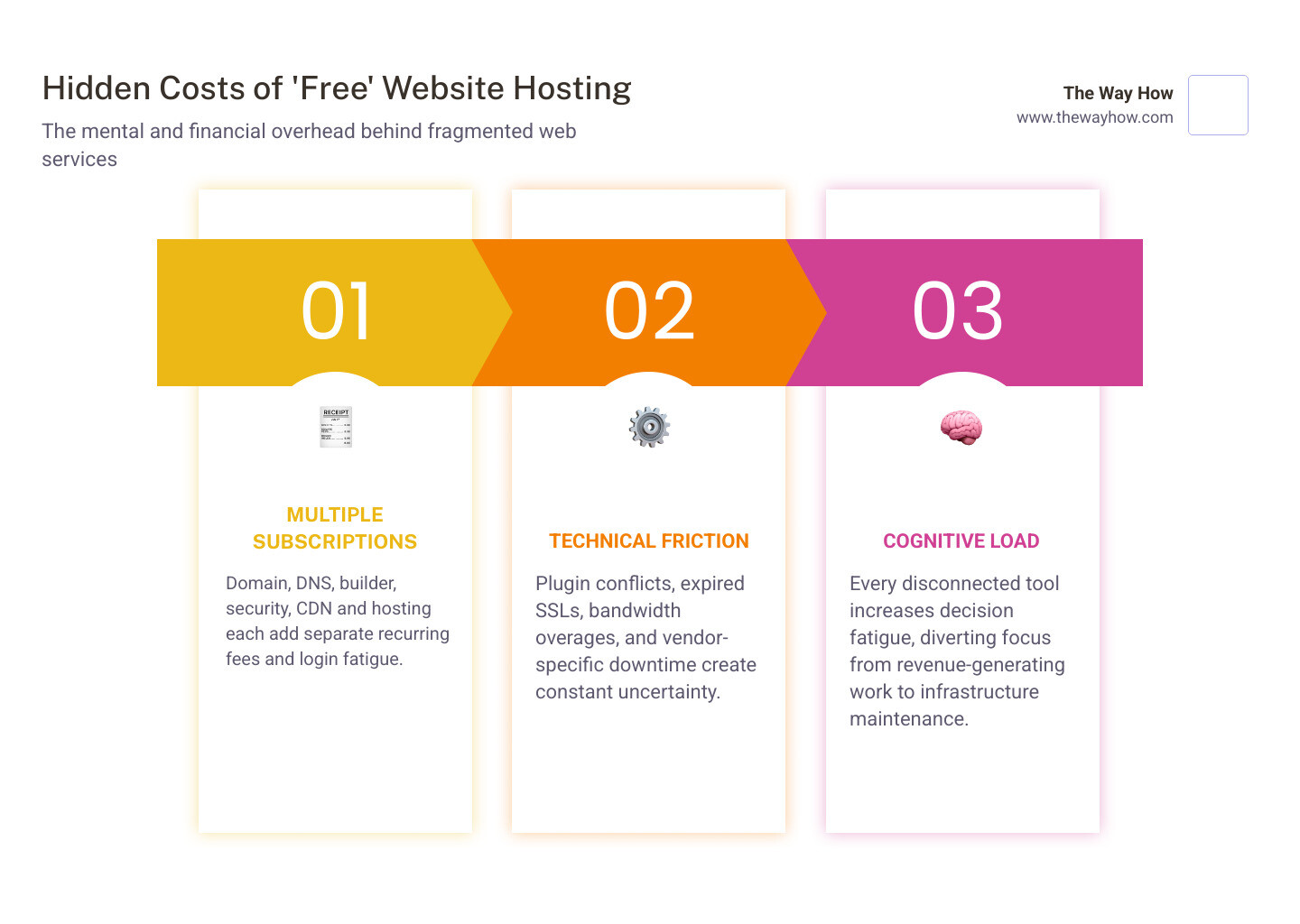
At The Way How, we believe that strategic clarity cannot exist in an environment of operational chaos. When you choose a hosting environment, you are not just buying server space; you are buying cognitive peace of mind. The true value of unified hosting is the elimination of these friction points, allowing your team to focus entirely on what actually drives revenue: the customer journey.
To understand how HubSpot’s hosting works, we must first look at its transition from the legacy “CMS Hub” to the modern “Content Hub.” HubSpot does not sell standalone server space. You cannot upload a custom PHP application or host a website built on an external framework like Laravel or Ruby on Rails.
Instead, HubSpot offers a fully managed, proprietary hosting environment. This means the hosting infrastructure is inextricably linked to HubSpot’s Content Hub. When you build a page using their drag-and-drop editor, that page is automatically generated, optimized, and served directly from HubSpot’s servers.
This architecture is built on top of Amazon Web Services (AWS), one of the most reliable cloud platforms in the world. To ensure that your pages load instantly for users regardless of their geographic location, HubSpot routes all traffic through a highly sophisticated global delivery network. This is achieved through strategic partnerships with industry leaders Cloudflare and Akamai.
Because of this enterprise-grade foundation, HubSpot provides a 99.95% uptime guarantee. If you want to learn more about how to get started with this infrastructure, you can explore their official Free Web Hosting | Launch Your Website Today page.
In a traditional hosting setup, securing your website is your responsibility. You must purchase, configure, and renew SSL certificates. You have to install a Web Application Firewall (WAF) to block malicious traffic, and you must set up third-party services to mitigate Distributed Denial of Service (DDoS) attacks.
With HubSpot, these critical security measures are baked directly into the platform at no additional cost across all tiers:
To make an informed decision, we must demystify how hubspot hosting pricing scales across the different tiers of Content Hub. Because hosting is bundled into the software subscription, your hosting capabilities are directly determined by the tier you choose.
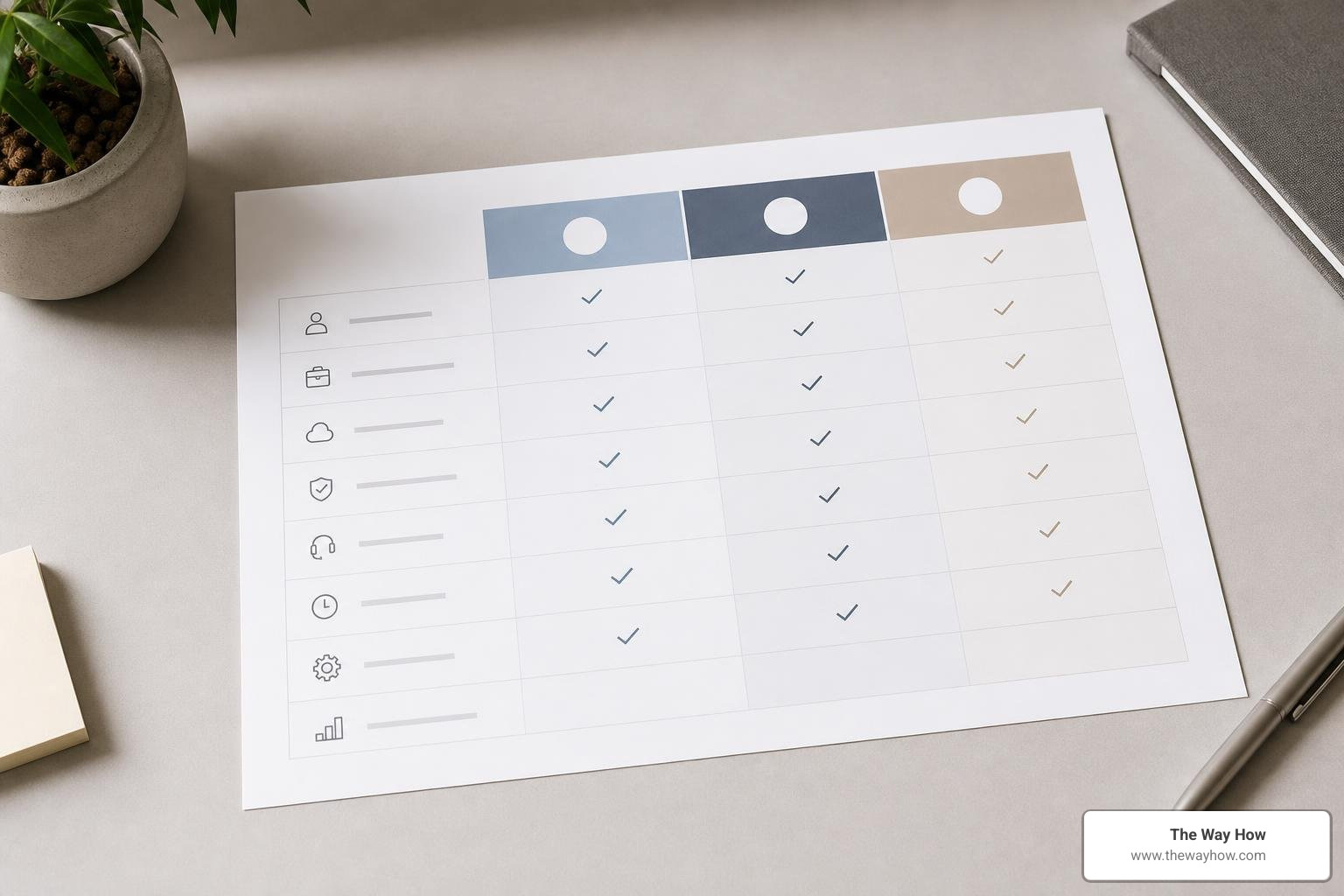
Let’s look at the financial realities of these tiers as of June 2026. For a complete look at how these tiers fit into the broader product ecosystem, check out the HubSpot Content Hub pricing guide — smarter content, built to scale.
It is true: HubSpot offers free website hosting with no credit card required. For early-stage startups or businesses testing a new concept, this is highly appealing. However, the free tier comes with significant psychological and operational trade-offs that you must consider before building your brand on it.
First, the free tier limits you to a maximum of 30 website pages and 30 landing pages. While this is plenty for a simple brochure site, it quickly becomes restrictive as you begin implementing content marketing or detailed product pages.
Second, your website will carry prominent HubSpot branding. From a buyer psychology perspective, this can subtly signal a lack of operational maturity. If a prospective client is evaluating your firm for a high-value contract, seeing another company’s branding in your footer can erode trust.
Third, and perhaps most importantly, the free tier does not allow you to connect a custom root domain (like yourbrand.com) for your primary website pages. Instead, you are forced to use a HubSpot-branded subdomain. To connect your own domain and unlock professional marketing tools, you will need to step up to a paid tier. If your marketing strategy requires broader capabilities, it is also worth reviewing the Hubspot Marketing Hub Pricing to see how your website and marketing engines can run in parallel.
As your organization grows, your technical and operational requirements will naturally become more complex. You may need to manage multiple brands, deploy advanced content governance, or support a larger team of content creators.
This is where the Professional and Enterprise tiers of Content Hub come into play:
To understand how these costs integrate with your broader operational software, you can read our deep dives on Hubspot Professional Pricing and Hubspot Operations Hub Pricing.
The most common debate in boardrooms is whether to build on HubSpot or stick with WordPress. WordPress is often championed because the core software is open-source and “free.” But this is a classic cognitive trap. It focuses entirely on the upfront acquisition cost while ignoring the long-term operational friction.
When you build on WordPress, you are responsible for assembling your own hosting, security, and maintenance stack. You might pay $30 a month for a managed WordPress host, but then you must buy a premium security plugin, a CDN subscription, backup software, and a premium theme.
More importantly, you must factor in the “cost of delay” and developer dependency. When a marketing team wants to launch a new landing page on WordPress, they often have to submit a ticket to an external developer or an internal IT team to ensure the update doesn’t break existing plugins. This delay stalls momentum.
Let’s look at the actual total cost of ownership over a three-year horizon:
| Cost Category (3-Year Horizon) | WordPress (Self-Managed) | HubSpot Content Hub (Pro) |
|---|---|---|
| Core Platform / Software Fees | $0 | $16,200 ($450/mo) |
| Managed Hosting Infrastructure | $1,080 - $10,800 | $0 (Included) |
| Security Certificates & WAF | $600 - $2,400 | $0 (Included) |
| Premium Plugins & Extensions | $1,500 - $5,000 | $0 (Built-in) |
| Ongoing Maintenance & Emergency Fixes | $1,800 - $18,000 | $0 (Fully Managed) |
| External Developer Dependency | High ($5,000 - $30,000) | Low (Drag-and-drop) |
| Estimated 3-Year Total Cost | $9,980 - $66,200+ | $16,200 |
For a broader perspective on how these numbers break down across the web design industry, you can read the comprehensive guide: How Much Does a Website Cost? Everything You Need to Know.
The behavioral take-away is clear: WordPress looks cheaper in month one, but HubSpot is highly predictable. With HubSpot, you do not face surprise bills from developers to fix a broken plugin after an automatic core update. You trade unpredictable maintenance headaches for a flat, predictable software fee.
When budgeting for your new website, you must look beyond the monthly subscription fees. There are onboarding, migration, and implementation realities that will impact your Year 1 budget.
For the Professional and Enterprise tiers, HubSpot typically requires a one-time onboarding fee (usually starting at $1,000). This fee is designed to ensure your team is set up for success, but it can often be waived or heavily optimized if you partner with a certified Solutions Partner who handles your implementation and architecture.
Additionally, you must consider the cost of migrating your existing content. While HubSpot offers basic migration services, complex websites with custom databases, advanced interactive elements, or deep integrations will require professional development. To dive deeper into these hidden fees and platform structures, we recommend reading How Much Does HubSpot Cost in 2026? CRM Pricing, Hubs, and Hidden Fees | CompareTiers and HubSpot Pricing 2026 (Tested May 2026) — Real Costs + Hidden Fees.
If your business relies heavily on automated, transactional communications triggered by website actions, you should also factor in specialized delivery systems. You can read our analysis of Hubspot Transactional Email Pricing to see how to budget for high-volume email protocols.
Yes. The free tier of Content Hub includes hosting with no expiration date. However, your site will carry HubSpot branding and be limited to 30 pages, and you will not be able to connect a custom root domain for your primary website pages.
No. HubSpot’s hosting infrastructure is proprietary and specifically designed to serve websites built within the Content Hub ecosystem. You cannot use it to host a WordPress site, a custom PHP application, or an external e-commerce store.
Because the platform is built on AWS and integrated with Cloudflare and Akamai, it automatically scales to handle massive, unexpected traffic spikes. Unlike traditional shared hosting, you will not receive an overage bill or have your site temporarily suspended for exceeding bandwidth limits.
A website is not an isolated piece of software. It is the digital front door of your business, the primary touchpoint of your customer journey, and the engine that feeds your CRM. When you evaluate hubspot hosting pricing, you are not just comparing server specs; you are deciding how much friction your marketing team should tolerate.
At The Way How, we help founders and leadership teams remove uncertainty from their growth engines. We do this by diagnosing the psychological and systemic gaps that stall momentum. If your team is spending more time managing plugin updates, server alerts, and disconnected marketing tools than they are talking to your customers, your system is broken.
We design unified, behavior-driven HubSpot architectures that turn your digital infrastructure into a predictable revenue generator. Let us help you clear the clutter and build a system rooted in clarity, trust, and momentum.
Align your marketing and hosting strategy with our HubSpot Marketing Hub Pricing guide
 Jeremy Wayne Howell : Jul 22, 2026 9:48:31 PM
 Jeremy Wayne Howell : Jul 21, 2026 9:47:10 PM
 Jeremy Wayne Howell : Jul 20, 2026 9:46:47 PM