A Complete Guide to CRM Systems and Database Management
 Jeremy Wayne Howell : Jul 22, 2026 9:48:31 PM

Framing effect marketing is a psychological principle where the way you present information influences how people perceive it and the decisions they make—even when the underlying facts remain identical.
How to apply the framing effect in marketing:
Consider this: When signing up for auto insurance, 80% of New Jersey residents chose “limited right to sue” because it was presented as the default option. In Pennsylvania, where the default was “full rights to sue,” only 25% chose the limited option. Same choice. Different frame. Completely different outcome.
This isn’t manipulation. It’s communication.
The challenge most founders and revenue leaders face isn’t that their product lacks value. It’s that their message fails to help buyers perceive that value. You’re not losing to better competitors—you’re losing to better communicators.
The framing effect reveals a fundamental truth about human decision-making: we don’t evaluate information objectively. We evaluate it relative to how it’s presented. Two identical products can have vastly different conversion rates based solely on whether you say “95% effective” or “fails 5% of the time.”
This isn’t about trickery. It’s about understanding how your buyers actually process information, make comparisons, and justify decisions. When you frame your message to align with how people naturally think, you’re not distorting reality—you’re removing friction from their decision-making process.
In this guide, you’ll learn exactly how to apply framing effect principles to your marketing. Not as a hack, but as a systematic approach grounded in behavioral psychology. You’ll understand why certain messages convert while others don’t, and you’ll gain a practical framework for testing and implementing framing strategies that build trust while driving results.
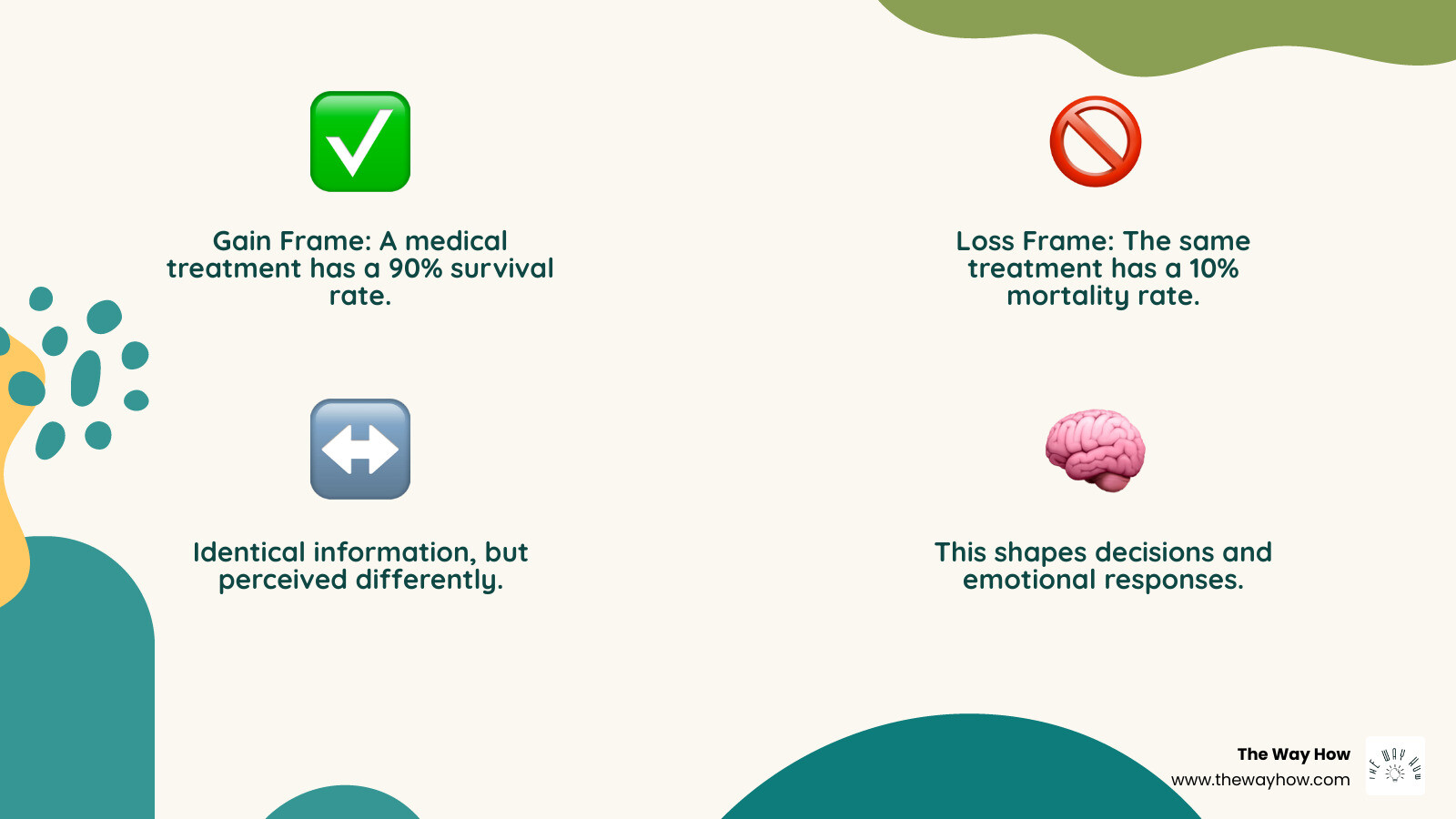
At The Way How, we believe that truly effective marketing starts with understanding human behavior. This isn’t just a catchy phrase; it’s the bedrock of why the framing effect is so potent. Our decisions aren’t always rational, logical computations. Often, they’re guided by psychological shortcuts and emotional responses, making the presentation of information just as, if not more, important than the information itself.
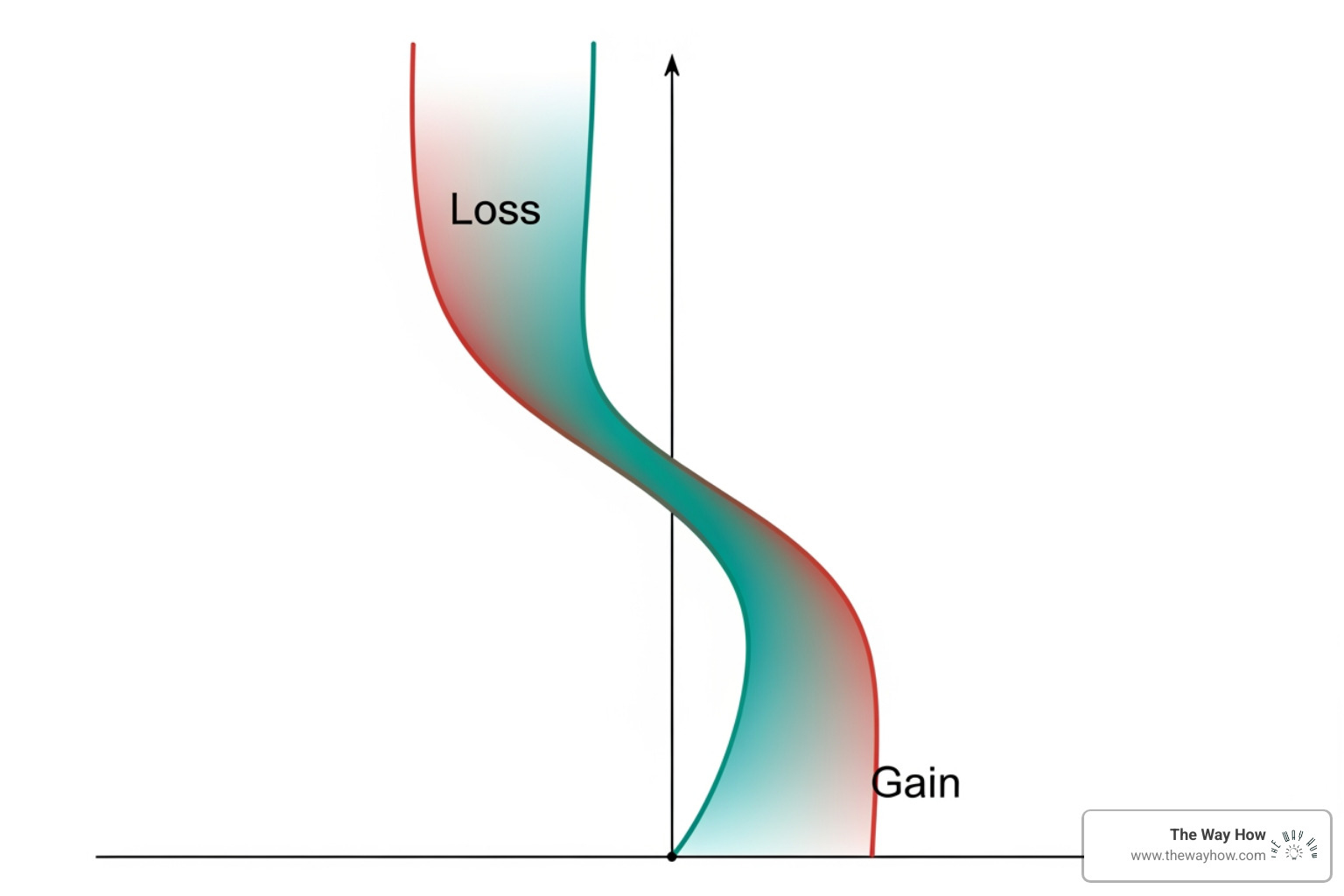
The foundation of our understanding of the framing effect comes from the groundbreaking work of psychologists Daniel Kahneman and Amos Tversky, particularly their development of Prospect Theory. This theory posits that people evaluate potential outcomes in terms of gains and losses relative to a reference point, rather than in terms of absolute final states. The critical insight here is loss aversion: the psychological pain of losing something is roughly twice as powerful as the pleasure of gaining an equivalent amount. We are inherently wired to avoid losses.
This means that when faced with a choice, we tend to be risk-averse when options are framed as potential gains, but risk-seeking when options are framed as potential losses. Consider the famous “Asian Disease Problem” experiment by Kahneman and Tversky, where participants chose between programs to combat a disease expected to kill 600 people. When framed positively (“Program A saves 200 lives”), people chose the certain option. When framed negatively (“Program C, 400 people will die”), people chose the risky option, even though the statistical outcomes were identical.
We see this same phenomenon in simple gambling scenarios. In one study, 62 percent of people chose to gamble when their other choice was presented as losing $30. However, when the alternative was framed as walking away with $20 (which is the same outcome as losing $30 from an initial $50), only 43 percent chose to gamble. The change in wording, from “losing $30” to “walking away with $20,” significantly altered people’s risk preference.
These cognitive heuristics – mental shortcuts we use to make decisions quickly – are powerful. They allow us to steer a complex world without constantly performing deep, analytical calculations. However, they also make us susceptible to the way information is framed. As Kahneman eloquently details in his seminal book, Thinking Fast and Slow, our “fast thinking” system is highly responsive to framing, often overriding our “slow thinking” rational analysis.
Understanding these psychological mechanisms is not about manipulating people; it’s about recognizing the inherent biases in human perception. For us at The Way How, this insight is crucial. It means that to truly serve our clients and their customers, we must diagnose why a message isn’t resonating, often finding the root cause in how the value is framed, rather than the intrinsic value itself. It’s about speaking to the human brain in a language it instinctively understands.
To move from theory to practical application, it’s helpful to categorize the different ways we can frame information. Research, such as the comprehensive work presented in ”All Frames Are Not Created Equal: A Typology of Framing Effects”, helps us distinguish between various types of valence framing. This typology allows us to approach framing effect marketing with precision and intent, rather than just guesswork.
Attribute framing focuses on presenting a single characteristic or attribute of an object or event in either a positive or negative light. The key is that the underlying information remains the same; only the description changes.
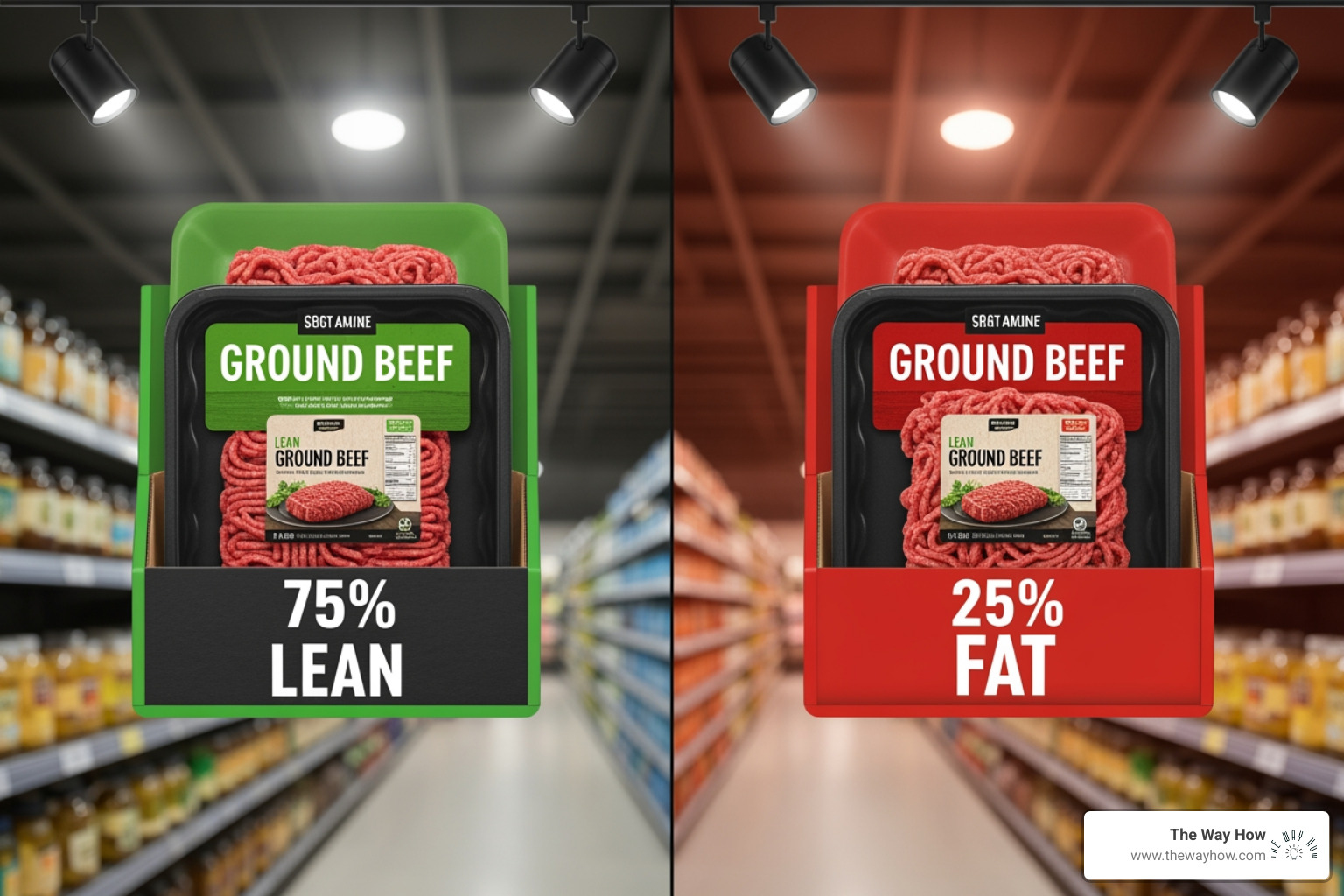
A classic example, mentioned in multiple sources, is the difference between “90% fat-free” versus “10% fat.” Objectively, these statements convey identical information about a product’s fat content. However, the “90% fat-free” frame consistently leads to a more positive evaluation and higher purchase intent. Why? Because “fat-free” emphasizes a positive absence, while “10% fat” highlights a negative presence.
Similarly, consider disinfectant wipes. A product claiming to “kill 95% of all germs” sounds far more appealing than one stating “only 5% of germs survive.” The first frame accentuates the product’s efficacy, while the second draws attention to its limitations. This difference in framing directly shapes a consumer’s perception of quality and effectiveness, influencing their purchasing decision.
Goal framing emphasizes the consequences of taking a particular action or, conversely, the consequences of not taking that action. It’s often used to motivate specific behaviors, particularly in public health campaigns or when promoting preventative measures.
This type of framing typically comes in two flavors:
Interestingly, research suggests that for preventative behaviors (like health screenings or using sunscreen), loss frames can be more effective. One statistic notes that adult men improved their use of sunscreen if they were presented with a loss-frame message, such as “More than two people die of skin cancer every hour. If you do not apply sunscreen, you could have [twice as high a chance to develop the disease.]” This resonates with loss aversion; the fear of potential harm motivates action more strongly than the promise of a future benefit.
In marketing, this could translate to “Get the best sleep of your life tonight with our mattress” (gain frame) versus “Stop tossing and turning and avoid chronic back pain with our mattress” (loss frame). The choice depends on the desired emotional trigger and the behavior you wish to encourage.
Risky choice framing involves presenting options with uncertain outcomes in terms of potential gains or potential losses. As Prospect Theory teaches us, this directly influences whether individuals will be risk-averse or risk-seeking.
The gambling example we discussed earlier perfectly illustrates risky choice framing:
The statistic that 62 percent of people chose to gamble when their other choice was presented as losing $30, compared to only 43 percent when told their other option was to walk away with $20, is a powerful testament to this effect. Even though both scenarios lead to the same financial outcome, the framing dramatically shifted risk tolerance.
This type of framing is particularly relevant in financial services, insurance, and medical decisions, where choices often involve inherent risks. By understanding whether your audience is primarily motivated by securing gains or avoiding losses, you can frame your offerings to align with their natural risk preferences.
By categorizing frames in this way, we move beyond simply knowing the framing effect exists. We equip ourselves with a structured toolkit to strategically apply these insights, ensuring our messages resonate deeply with the psychological drivers of decision-making.
Understanding the theory behind the framing effect is one thing; applying it effectively in your marketing campaigns is another. At The Way How, we translate these behavioral insights into actionable strategies that remove uncertainty from your customer journey and drive predictable revenue.
How you present a price or a product’s benefit can fundamentally alter its perceived value. This is where framing effect marketing truly shines.
Consider pricing. “£1,200” might sound expensive, but “just £50/month” feels far more affordable, even if it adds up to the same amount over time. This is a temporal frame, making a large cost seem smaller and more manageable. We can also frame costs as investments rather than expenses, highlighting the long-term returns. A SaaS company, for instance, might reframe its pricing not just as a monthly fee, but as “$99/month, which translates to a 30% productivity gain and thousands saved annually.”
Urgency and scarcity also leverage framing. “Only 3 days left” creates a loss-framed sense of urgency (the loss of opportunity) that is often more potent than “Sale ends Thursday,” which is a more neutral temporal frame. This taps into our inherent bias to avoid missing out. This also ties into the status quo bias, where people tend to stick with what they know unless an alternative is undeniably superior. As Steve Jobs said, ”you don’t do things 10% better; you do things ten times better.” The framing must make the alternative’s superiority clear.
The digital landscape offers fertile ground for applying framing principles, particularly in areas like Google Ads and landing page optimization, where every word counts.
In Google Ads copy, the choice between gain and loss framing can significantly impact click-through rates (CTR) and conversions. A local landscaping company, for example, conducted an A/B test with two Google Ads campaigns:
The results were striking: the loss-framed ad generated 24% higher click-through rates and 18% more form submissions. This demonstrates how framing potential losses (lowered property value) can create stronger motivation than framing potential gains (increased home value). Similarly, a headline like “Stop Losing 50% of Your Potential Visitors” might outperform “Boost Your Website Traffic by 50%.”
For landing page optimization, framing can transform how visitors perceive your offer. Problem-focused headlines that articulate a pain point (e.g., “Struggling with Retirement Planning?”) followed by a solution in the subheadline often perform better than generic benefit statements. Even small details, like framing a form field as “You’re just 30 seconds away from expert advice” instead of simply “Submit,” can reduce perceived effort and increase conversion rates by making the completion feel like progress rather than a chore.
The power of framing extends far beyond product marketing, influencing choices in public policy and social behavior.
A compelling example comes from insurance. When signing up for a new insurance policy, 80 percent of New Jersey residents chose “limited rights to sue,” because it was presented to them as the default option that most consumers choose. In neighboring Pennsylvania, however, only 25 percent of residents signing up for new policies chose “limited right to sue,” because their default option was presented as “full rights to sue.” The default option, a subtle form of framing, profoundly swayed consumer choice, as detailed in this Medium article.
Public health campaigns also provide rich examples, though not always successful ones. During a rise in anti-vaccination sentiment, public health officials poorly framed statistics. Touting the benefits of vaccination to healthy children often fell flat because “healthy children” is a default for young parents; they don’t consider their kids ever being sick. And debunking the autism link, while factually correct, inadvertently made people think about the possibility of side effects. As a result, people reported less belief in the connection between vaccines and autism but indicated they were less likely to vaccinate. This highlights how even well-intentioned messaging can backfire if the underlying psychological frames are misjudged.
Even our perception of societal issues can be shaped by framing. A Stanford study demonstrated how metaphors influence policy preferences. Participants that heard the frame “beast preying” (referring to crime) reported wanting to see more punishment of criminals, while those who read “virus infecting” were more in favor of broader reforms addressing systemic issues. The metaphorical framing profoundly altered their proposed solutions.
These examples underscore that effective framing effect marketing is not just about catchy slogans; it’s about deeply understanding the cognitive biases that govern human decision-making and strategically aligning our communication to resonate with those biases. This is how we help businesses differentiate their brands and communicate their value propositions more effectively—by speaking to the human beneath the buyer.
While the framing effect is a powerful tool for enhancing product appeal and driving sales, its application demands a careful balance. At The Way How, our psychology-first philosophy means we prioritize building trust and long-term brand health. This commitment means we teach our clients to use framing as a means of clarity and persuasion, never manipulation.
Optimizing your marketing messages with framing effects requires a systematic approach, and A/B testing is your best friend. It allows you to empirically determine which frames resonate most effectively with your audience without making assumptions.
Here’s a simple framework for A/B testing different framing approaches:
Here are some A/B test ideas for different marketing elements:
Headlines:
Calls-to-Action (CTAs):
Email Subject Lines:
Landing Page Attribute Framing:
The goal is to understand what resonates, not to trick your audience. A/B testing provides the data needed to make informed, psychology-backed decisions.
Using the framing effect ethically is paramount. While it’s a powerful tool for persuasion, there’s a fine line between guiding consumers to understand value and manipulating them into choices that aren’t in their best interest.
Our approach at The Way How is rooted in transparency and truthfulness. We believe that ethical framing effect marketing means:
The risks of misusing the framing effect are significant. Brands that engage in manipulative or misleading framing face:
We emphasize that when deployed ethically, framing helps consumers see the true value in what you’re offering rather than overlooking it due to poor presentation. It’s about empowering your audience through clarity, not coercing them through psychological tricks. This aligns perfectly with our mission to help businesses build systems that create trust, momentum, and predictable revenue.
It’s a cognitive bias where the way you present information influences how people perceive it and the decisions they make. For example, “90% fat-free” is more appealing than “10% fat,” even though they mean the same thing. It’s about presentation, not just information.
Neither is universally “better.” Negative framing (loss aversion) is often more powerful for motivating action to avoid a loss, as people feel the pain of losing more strongly than the pleasure of an equivalent gain. However, positive framing can be better for building positive brand association. The only way to know for sure is to A/B test both approaches with your specific audience.
Pick one critical piece of your marketing copy, like your main landing page headline or a call-to-action button. Write down the current version. Now, rewrite it using a different frame. If it’s a gain frame (“Get Your Free Ebook”), rewrite it as a loss frame (“Don’t Miss Out On Your Free Ebook”). This simple exercise will start training you to see framing opportunities everywhere.
We’ve explored how the framing effect is a fundamental principle of human psychology, deeply rooted in concepts like Prospect Theory and loss aversion. It demonstrates that our decisions are profoundly influenced not just by what information is presented, but how it’s presented. From attribute framing that highlights a single characteristic, to goal framing that motivates action, and risky choice framing that sways our risk tolerance, the way we communicate matters immensely.
For marketers, this isn’t a trick; it’s a strategic tool. By consciously applying the principles of framing effect marketing, you can craft compelling value propositions, optimize your digital campaigns, and ultimately guide your audience towards decisions that benefit both them and your business. The examples we’ve seen, from insurance defaults to Google Ad performance, underscore the tangible impact of thoughtful framing.
However, with great power comes great responsibility. Ethical application of framing is non-negotiable. It’s about building trust through clarity and accurate representation, not manipulating through deception. A/B testing is your ally here, allowing you to validate your framing hypotheses and refine your messages in a data-driven, customer-centric way.
At The Way How, we believe that understanding these behavioral insights is the key to open uping stalled growth and building predictable revenue. By adopting a psychology-first approach, you can move beyond chasing fleeting tactics and instead create marketing systems that are deeply empathetic, strategically sound, and built on the solid ground of human decision-making.
Ready to transform your marketing from a guessing game to a growth engine? Learn how our psychology-first approach can transform your marketing strategy.
 Jeremy Wayne Howell : Jul 22, 2026 9:48:31 PM
 Jeremy Wayne Howell : Jul 21, 2026 9:47:10 PM
 Jeremy Wayne Howell : Jul 20, 2026 9:46:47 PM