

Beyond the Acronym: The Search for Strategic Certainty

The chief marketing officer meaning is simpler than most job descriptions make it sound: a CMO is the senior executive responsible for overseeing every aspect of how a company markets itself — from brand and advertising to revenue strategy and customer experience.
Here’s the short version:
| Element | What It Means |
|---|---|
| Title | Chief Marketing Officer (CMO), sometimes called Chief Brand Officer (CBO) |
| Reports to | CEO |
| Core job | Oversee marketing strategy, brand, communications, market research, and customer growth |
| Key goal | Drive revenue, build brand equity, and align marketing with business outcomes |
| Typical background | 10+ years in marketing, often with an MBA or equivalent leadership experience |
But here’s where it gets more interesting.
The title is straightforward. The reality of the role is not.
CMOs are being asked to do more than ever — lead growth strategy, own the tech stack, prove ROI, and align with a C-suite that often doesn’t share a common definition of what marketing is for. According to research from Deloitte, two-thirds of CMOs aspire to lead corporate strategy, but only 8% are actually doing it. The gap between what the role could be and what it is in most organizations is wide.
That gap is what this guide is about.
I’m Jeremy Wayne Howell, founder of The Way How and a revenue growth strategist with over 20 years of experience helping founders and executives close the distance between marketing activity and actual revenue — which sits at the heart of the chief marketing officer meaning in modern business. If you’ve ever wondered why your marketing isn’t translating into predictable growth, you’re in the right place.
Decoding the Chief Marketing Officer Meaning
At its most fundamental level, a Chief Marketing Officer (CMO) - Responsibilities, Salary is a corporate executive tasked with overseeing the planning, development, and execution of an organization’s marketing and advertising initiatives. They are the highest-ranking marketing professional in a company, typically reporting directly to the Chief Executive Officer (CEO).
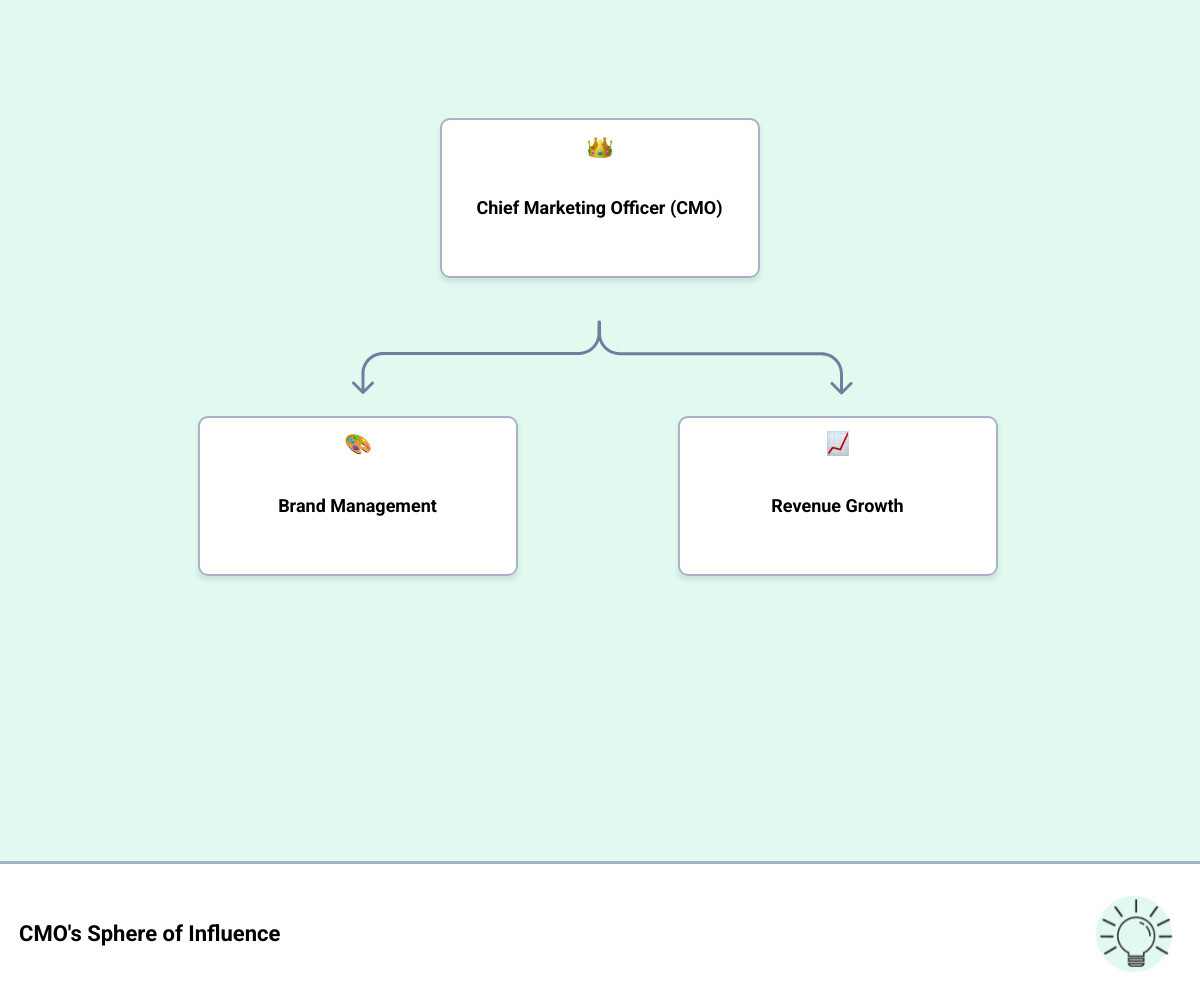
However, as we explore the chief marketing officer cmo explained, we see that the role encompasses much more than just “making things look pretty” or running social media ads. The modern CMO owns the brand’s reputation, manages the marketing budget, and increasingly, takes direct responsibility for revenue generation. They must balance the creative side of brand management with the analytical side of market research and data-driven strategy.
The Core Chief Marketing Officer Meaning in Modern Business
In a modern business context, the Chief marketing officer serves as the primary advocate for the customer within the C-suite. While the CFO looks at the balance sheet and the COO looks at efficiency, the CMO looks at the human being on the other side of the transaction.
Their responsibilities generally fall into several key buckets:
- Brand Management: Ensuring the brand’s identity is consistent, trustworthy, and resonant across all touchpoints.
- Market Research: Using data and psychological insights to understand customer needs and competitor movements.
- Promotional Efforts: Designing and overseeing advertising strategies that reach the right audience at the right time.
- Customer Service & Success: Ensuring the promise made by marketing is actually delivered during the customer journey.
Why the Chief Marketing Officer Meaning is Shifting Toward Revenue
Historically, marketing was often viewed as a “cost center”—a place where money went out to build “awareness” with no clear way to track what came back. That is no longer acceptable. The chief marketing officer meaning has evolved into that of a growth driver.
Today’s most successful CMOs focus on marketing strategy consulting within their own firms to align marketing activities with measurable business goals. They are capability builders who use data-driven empathy to understand why customers make decisions. If a marketing activity doesn’t contribute to the bottom line—whether through lead generation, retention, or increased margin—the modern CMO is the first to question its value.
The Psychology of the C-Suite: How the CMO Differs
To understand the CMO, we must understand how they interact with their peers. Each member of the C-suite views the organization through a different lens. The CMO’s unique value lies in their ability to translate human behavior into business strategy.
| Role | Primary Focus | Lens on the Business |
|---|---|---|
| CEO | Strategy & Operations | Overall health and long-term vision |
| COO | Efficiency | How the internal “machine” runs |
| CFO | Profitability | Financial risk and capital allocation |
| CIO/CTO | Infrastructure | Technology as a facilitator of work |
| CMO | Growth & Customer | The relationship between the brand and the market |
Success for a CMO often depends on having an enterprise-wide mindset. According to Gartner Marketing Insights, half of C-suite executives believe this mindset is the most important factor in a CMO’s success. Yet, there is often a friction point: while peers want the CMO to drive enterprise-wide growth, many CMOs remain siloed in tactical campaign management.
We believe that by providing marketing advisory services, a CMO can bridge this gap, using customer experience data to influence every other department, from product development to sales.
The Chief Marketing Officer Meaning vs. The Chief Information Officer
One of the most significant shifts in the last decade is the overlap between the CMO and the Chief Information Officer (CIO). As What is a Chief Marketing Officer (CMO)? | Definition from TechTarget points out, CMOs are now heavily involved in technology spending. In fact, some studies suggest that CMOs may eventually spend more on IT than CIOs do, simply because modern marketing relies so heavily on a complex “martech” stack—CRM systems, automation tools, and data analytics platforms.
While the CIO focuses on internal IT efficiency, the CMO focuses on customer-facing technology. This digital transformation has turned the CMO into a technologist who must ensure the tech stack serves the customer journey, rather than complicating it.
From Artist to Growth Architect: The Evolution of the Role
The chief marketing officer meaning has undergone a radical transformation. Twenty years ago, a CMO was primarily a storyteller focusing on the “Communications Trinity”: Marketing, Advertising, and Public Relations. Success was measured by “Grasp” or “Reach”—metrics that were often fuzzy at best.
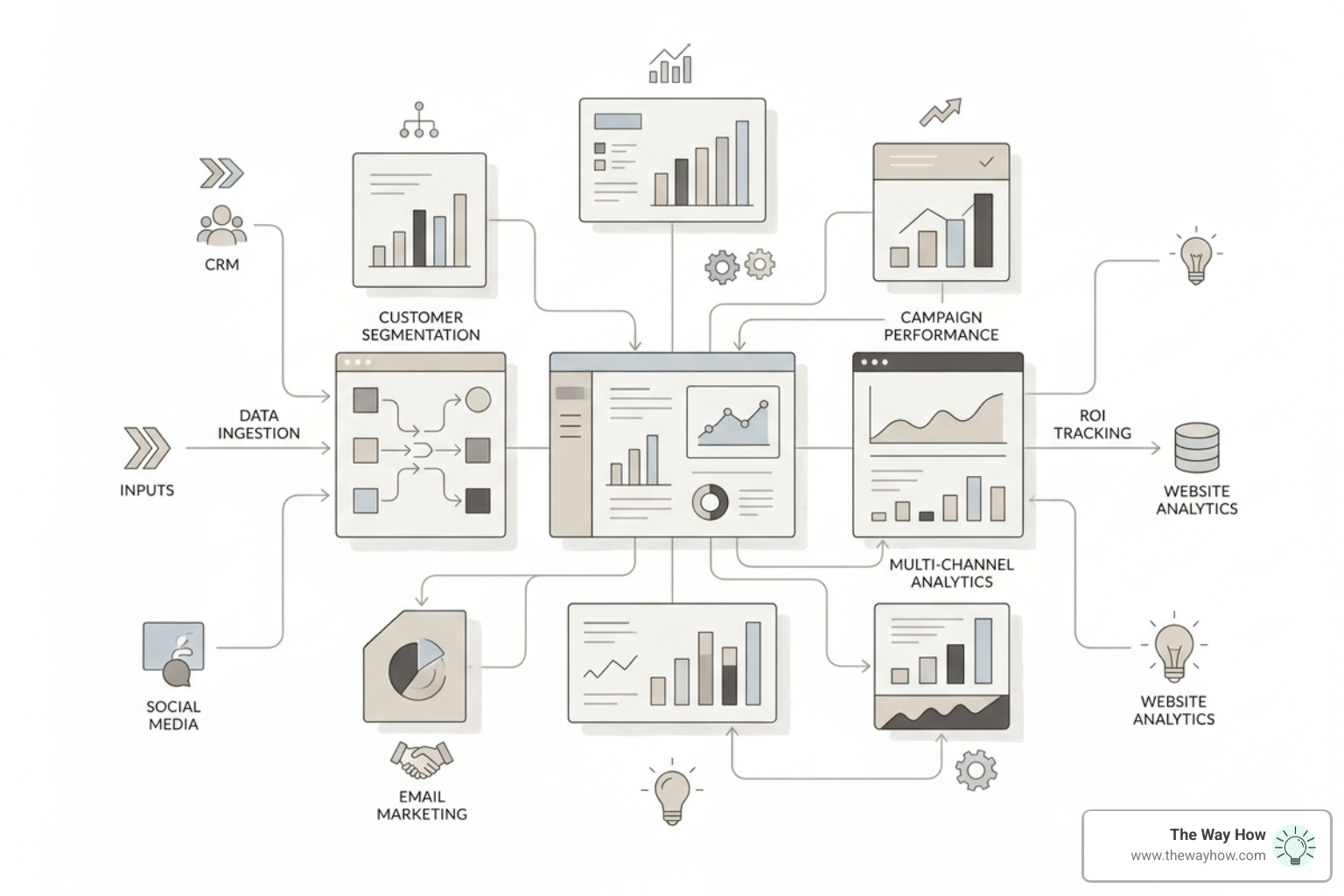
Today, the role is a blend of artist and scientist. The modern CMO uses cmo marketing tools to implement agile marketing, where decisions are made in real-time based on live data. We are seeing a move toward cmo services best practices 2026 which prioritize:
- Predictive Analytics: Moving from “what happened” to “what will happen.”
- Behavioral Psychology: Understanding the “why” behind the click.
- Revenue Accountability: Directly linking marketing spend to gross margin and market share.
The Tenure Trap: Why Marketing Leadership Often Stalls
Despite the importance of the role, the CMO position is notoriously volatile. In 2020, the average CMO tenure dropped to 40 months—the lowest in a decade. Compare that to the average CEO tenure of about seven years, and a clear problem emerges.
Why is this happening? We believe it’s a “certainty gap.”
- Misalignment: CEOs and CMOs often don’t agree on what success looks like.
- Tactical Fatigue: Companies often hire a CMO to be a “fixer” of tactics rather than a builder of systems.
- Preparation Gap: While 95% of marketing leaders say revenue is their top measure of growth, only 20% feel truly prepared to drive gross margin.
This is why many organizations are turning to a fractional cmo meaning or an outsourced cmo. There are 10 benefits of fractional cmo leadership, but the primary one is the ability to insert high-level strategic clarity without the baggage or risk of a permanent C-suite hire. The role of outsourced cmo is to diagnose why growth has stalled and build a dependable engine before handing the keys to a full-time leader.
Building the Engine: Skills, Salary, and Strategy
Becoming a CMO requires a rare blend of skills. You need the empathy to understand a customer’s pain, the creativity to tell a story that solves it, and the financial literacy to justify the budget to a skeptical CFO.
Required Qualifications & Skills:
- Education: Usually a Bachelor’s in marketing or business, with an MBA highly preferred.
- Experience: 10-15 years of progressive leadership roles.
- Tech Savvy: Proficiency in CRM, AI-driven analytics, and digital channel management.
- Psychological Insight: An understanding of human decision-making and buyer behavior.
Salary Benchmarks: Compensation for a CMO varies wildly based on company size and location. According to 2019 and 2025 data:
- Small Businesses/Startups: $54,000 to $427,000 (often with significant equity).
- Mid-Sized Companies: $228,000 to $416,000.
- Large Corporations: Base salaries of $333,000+ with total compensation packages (including bonuses and stock) often exceeding $1 million.
If you are a founder looking to bring on this level of talent, we recommend reviewing a hiring a fractional cmo guide or a fractional cmo hire complete guide to ensure you are looking for a strategic partner, not just a high-priced manager.
Frequently Asked Questions about CMOs
What is the difference between a CMO and a VP of Marketing?
The difference is primarily one of scope and reporting. A VP of Marketing is often more tactical, focusing on the execution of the marketing plan and managing the day-to-day team. A CMO is a C-suite executive who focuses on the long-term strategic direction of the company, sits at the table for corporate-level decision-making, and works to align marketing with finance, sales, and operations.
How much does a typical CMO earn?
In the United States, the median pay is approximately $169,370, but total compensation—including performance bonuses and stock options—regularly pushes this figure much higher. In large enterprises, it is common for the total package to exceed $500,000.
What are the four primary roles of a modern CMO?
As defined by Deloitte research, the four roles are:
- Growth Driver: Owning the revenue goals and expansion strategies.
- Innovation Catalyst: Using data and tech to find new ways to reach customers.
- Brand Storyteller: Safeguarding the brand’s narrative and emotional connection.
- Capability Builder: Developing the people, processes, and tech stacks required for modern marketing.
Restoring Momentum Through Behavioral Clarity
At The Way How, we believe the chief marketing officer meaning shouldn’t be a mystery. It is about creating certainty in an uncertain market. When growth stalls, it’s rarely because you aren’t “doing enough marketing”—it’s because there is a fundamental disconnect between your systems and the psychology of your buyers.
We specialize in psychology-first marketing and revenue strategy. We don’t just suggest tactics; we diagnose the “certainty gaps” in your customer journey and design systems that create trust and predictable revenue. Whether you need a full-scale revenue engine or are looking for More info about marketing and revenue services, our goal is to turn your marketing from a confusing expense into a dependable growth engine.
Growth doesn’t happen by accident. It happens when you see the problem clearly before you ever talk about solutions.