A Complete Guide to CRM Systems and Database Management
 Jeremy Wayne Howell : Jul 22, 2026 9:48:31 PM
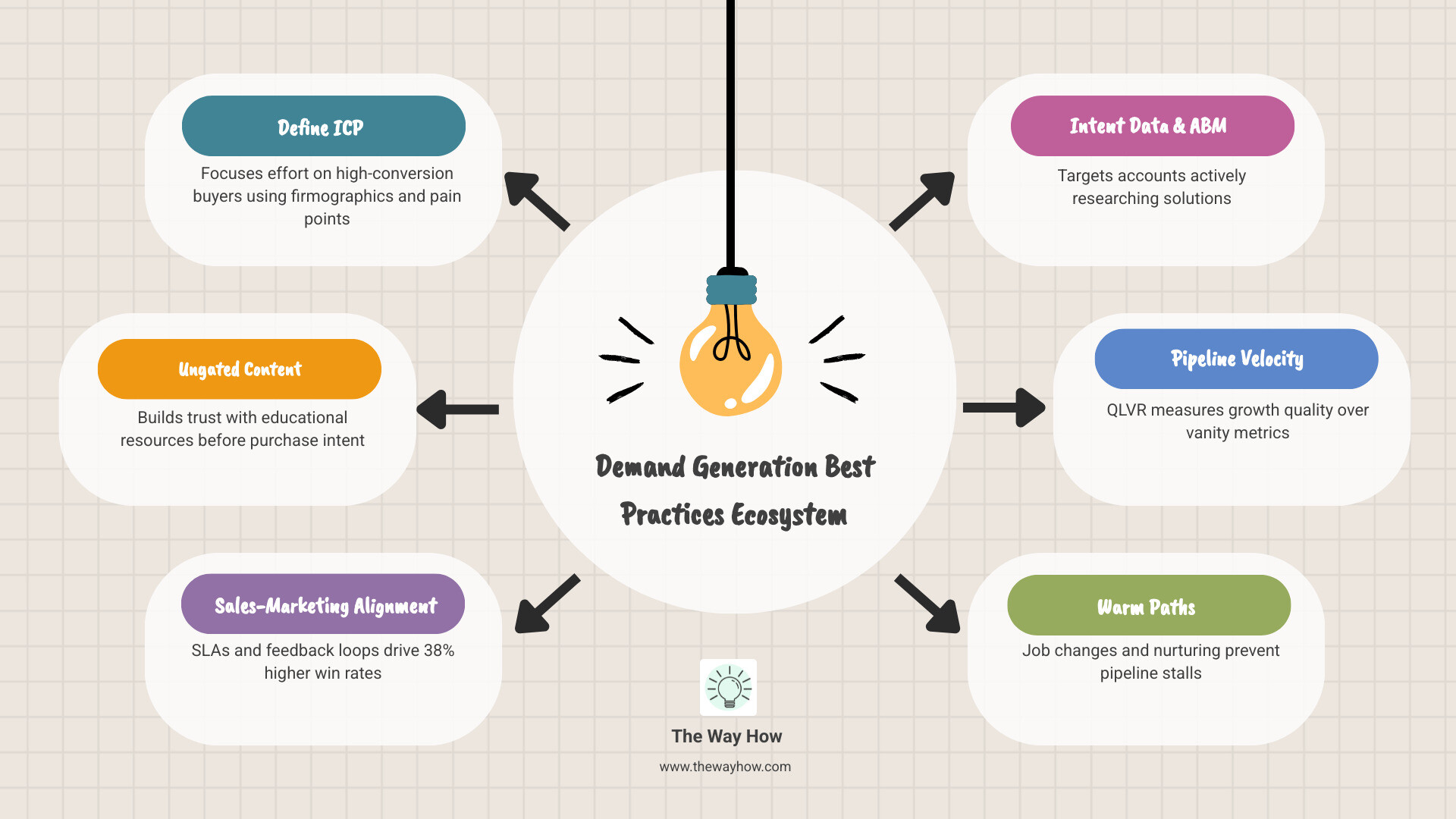
Demand generation best practices are the foundation of any B2B marketing strategy that consistently produces qualified pipeline — not just a flood of contacts that go nowhere.
Here’s a quick snapshot of what actually works:
| Best Practice | Why It Matters |
|---|---|
| Define your Ideal Customer Profile (ICP) | Focuses effort on buyers most likely to convert |
| Create ungated, educational content | Builds trust before a prospect is ready to buy |
| Align sales and marketing with shared definitions | Produces 38% higher win rates |
| Use intent data and ABM | Targets accounts actively researching solutions |
| Track QLVR and pipeline velocity | Measures growth quality, not just volume |
| Repurpose content across formats | Extends reach without increasing production costs |
| Nurture through the full buyer journey | Prevents pipeline from stalling after first contact |
| Focus on 1–3 channels at a time | Avoids spreading teams too thin |
| Leverage warm paths and job change signals | Uncovers high-value, low-competition opportunities |
| Test, measure, and optimize continuously | Turns data into compounding improvements |
| Align demand gen with business goals | Ensures tactics ladder up to actual revenue |
Most companies stall not because they lack tactics — but because they’re generating activity without generating certainty. Prospects don’t move forward when they’re confused, skeptical, or unconvinced. And most demand generation programs are built around volume, not trust.
The numbers reflect this tension. While 88% of brands use content marketing to build awareness, only 72% are using it specifically for demand generation. That gap isn’t a coincidence — it’s a signal that awareness and demand are not the same thing.
Demand generation done right means building the conditions under which a buyer feels safe enough to move forward. That requires understanding who you’re talking to, what uncertainty is holding them back, and why your current strategy may be creating noise instead of clarity.
I’m Jeremy Wayne Howell, founder of The Way How and a revenue growth strategist with over 20 years of experience helping founders and revenue teams diagnose the human problems underneath stalled pipelines — and demand generation best practices are at the center of almost every engagement I run. If you’ve invested in tactics that looked right on paper but didn’t move revenue, this guide is built for you.
Demand generation best practices terms to learn:
At its core, demand generation is about human behavior. Before a prospect ever fills out a form, they undergo a psychological shift from unawareness to interest, and finally, to a desire for change. We believe that many B2B growth engines stall because they treat buyers like data points rather than people seeking certainty.
When we implement a HubSpot Marketing Implementation, we don’t just set up workflows; we design for trust. Trust is the only currency that matters in a complex sale. Research shows that 88% of brands use content marketing to build awareness, but the most successful ones use it to remove the friction of the unknown. By providing value before asking for an email address, you lower the buyer’s cognitive load and position yourself as a safe, expert guide.
You cannot create demand for a person you don’t understand. A common mistake is building a strategy around a “target market” that is far too broad. Instead, we advocate for a rigorous definition of your Ideal Customer Profile (ICP) and detailed buyer personas.
An ICP isn’t just a list of industries; it’s a psychological profile of the organizations that have the specific pain your product solves. Using a HubSpot Personas Guide, we look beyond firmographics like company size or revenue. We ask: What keeps them up at night? What are the internal politics of their buying committee? When you identify the exact “certainty gap” your audience feels, your marketing shifts from being a nuisance to being a necessity.
The “hand-off” from marketing to sales is often where demand goes to die. In many organizations, marketing celebrates a high volume of leads while sales complains about lead quality. This misalignment creates a massive uncertainty gap in the revenue engine.
Organizations with tightly aligned sales and marketing functions enjoy 38% higher sales win rates and 36% higher customer retention rates. This alignment requires a shared language—specifically, a Service Level Agreement (SLA) that defines exactly what a “qualified lead” looks like. By using HubSpot Sales Hub Implementation, teams can establish feedback loops where sales provides real-world data on lead quality, allowing marketing to adjust their demand gen tactics in real-time.
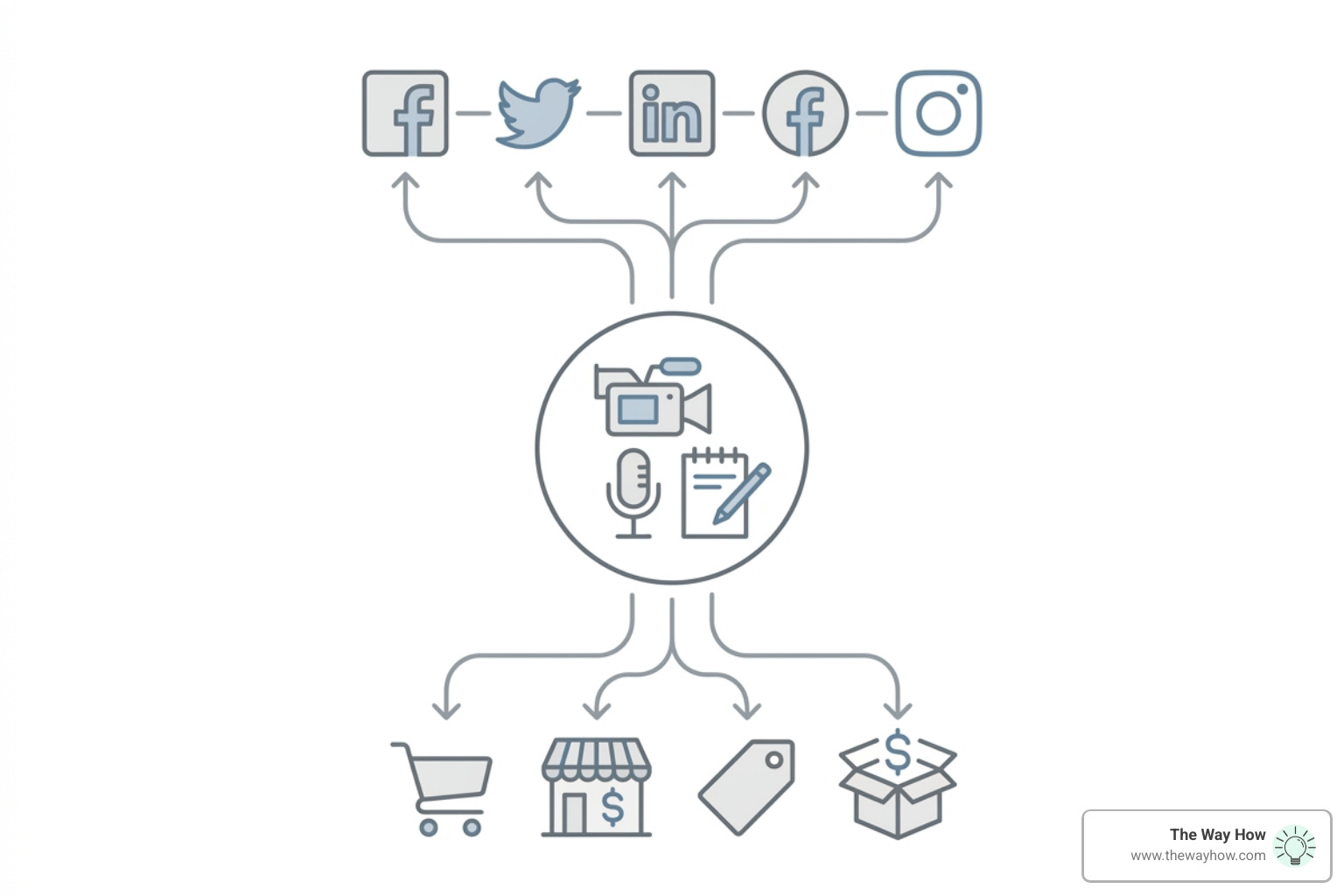
Building demand is not about “spray and pray” tactics. It is about a deliberate, multi-channel approach that prioritizes brand authority and social proof. Prospects need to see that others have successfully navigated the same problem using your solution.
Social proof is a heavy hitter in the psychology of decision-making. Tools like Case Study Buddy help capture the voice of the customer, which is often more persuasive than any marketing copy we could write. Furthermore, modern sales enablement tools like GetAccept allow teams to iterate based on actual customer feedback rather than internal assumptions, ensuring the momentum built by marketing isn’t lost during the sales process.
The shift from lead generation to demand generation is most visible in content strategy. Lead gen relies on gated content (give us your email to see this PDF), whereas demand gen thrives on ungated, educational content.
If you want to be seen as an expert, you have to act like one. Chris Zacher at Inter-Growth notes that blogging is a powerful way to demonstrate expertise. When you give away your best insights for free, you aren’t “losing” leads; you are building a relationship. By utilizing the HubSpot Content Hub, we help brands create a sustainable content ecosystem where educational series and thought leadership pieces live where the buyer is already looking for answers.
In B2B, you aren’t selling to a single person; you’re selling to a buying committee. This is where Account-Based Marketing (ABM) becomes essential. ABM focuses on a small group of high-value accounts, tailoring every piece of content to their specific organizational pain points.
This strategy is fueled by intent data. Currently, 99% of large companies are using intent data, and for good reason. It allows you to see which accounts are actively researching your category before they ever visit your site. When combined with a robust ABM strategy, intent data helps you prioritize your outreach to the people most likely to buy, significantly increasing your ROI.
One of the most overlooked demand generation best practices is tracking “warm paths” into an account. This includes tracking job changes—when a champion of your product moves to a new company, they are often your easiest path to a new sale.
Similarly, influencer marketing in the B2B space is about more than just “likes.” It’s about leveraging the trust that industry leaders have already built. Influencer marketing ROI can reach up to $18 for every dollar spent because it bypasses the “stranger danger” phase of the buyer journey. We help companies identify these champions and influencers to create a relationship-led growth engine that feels organic rather than forced.
Despite the digital-first nature of modern business, human connection still drives deals. According to Forbes, 70% of marketers say that live events are crucial to their success. Whether it’s a high-production webinar or an intimate executive roundtable, events provide a space for face-to-face interaction and real-time problem-solving.
Community building takes this a step further by creating a space where your customers can talk to each other. This builds a secondary layer of trust. When prospects see G2’s customer reviews or participate in a community discussion, they receive unbiased social proof that validates their decision to move forward with your brand.
If you measure the wrong things, you will make the wrong decisions. Many marketing teams are still incentivized by “vanity metrics” like clicks, impressions, or raw lead volume. But in a demand generation framework, these numbers mean very little if they don’t translate to revenue.
We focus on metrics that indicate health and momentum. One of the most critical is the Qualified Lead Velocity Rate (QLVR), a term championed by Jason Lemkin as the single most important B2B marketing metric. QLVR measures your month-over-month growth in qualified leads. When paired with pipeline velocity and Customer Acquisition Cost (CAC), you get a true picture of your growth engine’s efficiency. By leveraging HubSpot Analytics, we ensure that our clients have a clear dashboard that separates the noise from the signal.
| Vanity Metrics (The Noise) | Revenue Metrics (The Signal) |
|---|---|
| Total Website Visits | Pipeline Sourced by Marketing |
| Social Media Likes | Qualified Lead Velocity Rate (QLVR) |
| Raw Lead Volume | Pipeline Velocity (Speed of Deals) |
| Email Open Rates | Customer Acquisition Cost (CAC) |
| Cost Per Click (CPC) | Customer Lifetime Value (CLV) |
The primary difference lies in the goal and the content gate. Demand generation is about building awareness and interest across the entire market using ungated, educational content. It focuses on the long-term health of the pipeline. Lead generation is a subset of demand gen that focuses on capturing contact information, often using gated content (like an ebook) to identify prospects who are ready to engage with sales.
AI is moving demand generation from generic automation to high-level personalization. AI-powered demand generation tools now allow for predictive account identification, real-time content personalization, and sophisticated lead scoring. Within Marketing Automation HubSpot, AI helps identify “lookalike” audiences and optimizes send times to ensure your message hits when the buyer is most receptive.
In 2025, data privacy is not optional. With regulations like GDPR and CCPA, businesses must prioritize first-party data and transparent consent. We use HubSpot Operations Hub to centralize lead sources, automate data cleansing, and maintain a “consent ledger.” This ensures that your demand generation efforts are not only effective but also compliant and respectful of buyer privacy.
At The Way How, we’ve seen countless founders and leadership teams struggle with marketing that feels like a black box. You spend money, you get “leads,” but the revenue doesn’t follow. This is almost always a result of a strategy that prioritizes tactics over human psychology.
Our approach as a psychology-first revenue strategy firm is to diagnose the “certainty gaps” in your customer journey. We don’t just give you a list of demand generation best practices; we build the systems—through HubSpot architecture and Fractional CMO leadership—that turn marketing into a dependable growth engine.
If your growth is stalled and you’re ready to move beyond generic advice toward a strategy rooted in how people actually make decisions, we can help. More info about revenue strategy services is available for those ready to remove the uncertainty from their sales and marketing systems.
 Jeremy Wayne Howell : Jul 22, 2026 9:48:31 PM
 Jeremy Wayne Howell : Jul 21, 2026 9:47:10 PM
 Jeremy Wayne Howell : Jul 20, 2026 9:46:47 PM