
Beyond the Digital Address Book: Why Most CRM Strategies Fail Before They Start
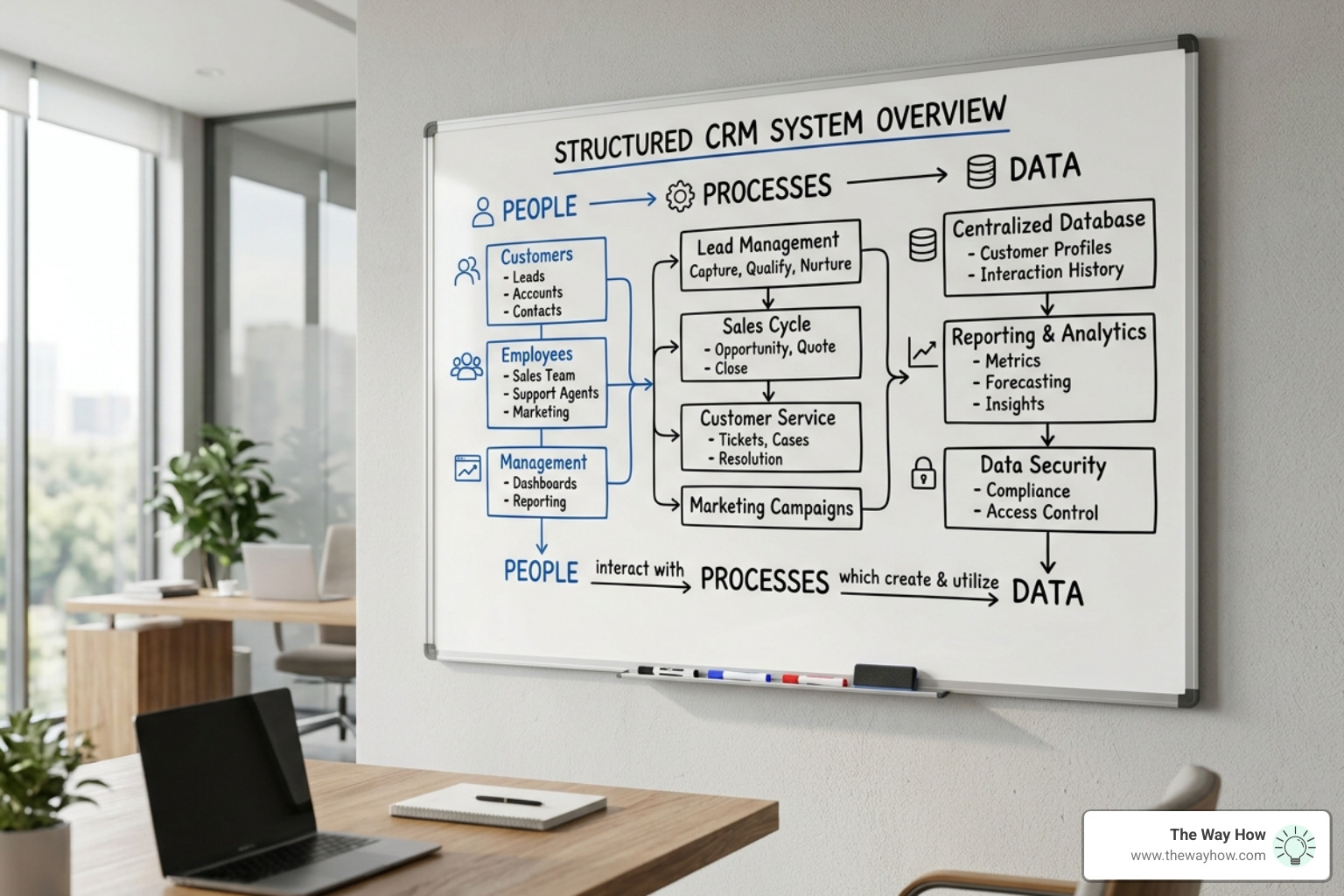
A HubSpot CRM strategy is a structured plan that connects your people, processes, and data inside HubSpot to drive predictable revenue growth.
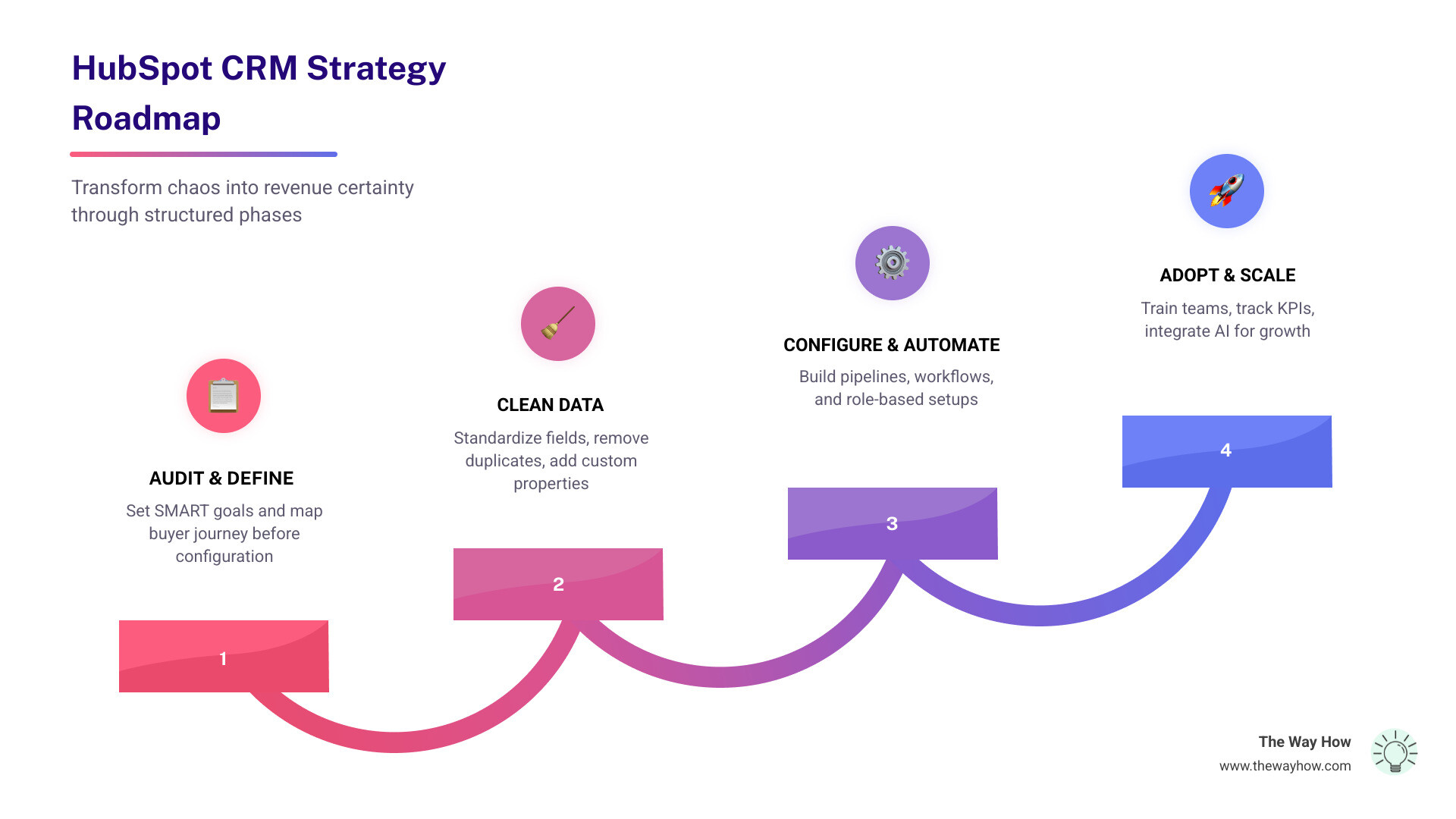
Here is what a strong HubSpot CRM strategy covers:
- Define business goals — Set clear, measurable outcomes before touching any configuration
- Map the buyer journey — Align pipeline stages and lifecycle definitions to how customers actually buy
- Clean and structure data — Remove duplicates, standardize fields, and build custom properties for behavioral insights
- Configure and automate — Build workflows that reduce friction without removing the human element
- Drive team adoption — Train by role, align incentives, and track usage KPIs
- Measure and optimize — Use dashboards to surface actionable intelligence, not vanity metrics
- Scale with intention — Add integrations, AI features, and advanced automation as your process matures
Most businesses that struggle with HubSpot are not dealing with a software problem. They are dealing with a strategy problem.
They imported contacts, set up a pipeline, maybe built a few workflows — and then waited for results that never came. The data got messy. Reps stopped logging activity. Leadership lost confidence in the numbers. And HubSpot quietly became what one common observation describes perfectly: a cluttered tool rather than a unified engine.
The gap is almost never technical. It is human.
When there is no clear strategy connecting your goals to your configuration, your CRM cannot tell you what is actually happening in your revenue cycle. It just holds data. And data without structure does not produce clarity — it produces noise.
That noise is expensive. According to research from Experian, poor data quality costs businesses an average of 15–20% of revenue annually. And yet most CRM implementations spend the first month on setup and almost nothing on strategy.
This guide exists to close that gap.
I’m Jeremy Wayne Howell — founder of The Way How and a revenue growth strategist with over 20 years of experience helping founders and revenue teams build HubSpot CRM strategies that reflect how buyers actually think, not how org charts are drawn. I have helped companies increase close rates by 20–40% and rebuild go-to-market systems that were working on paper but stalling in practice.
Discover more about HubSpot CRM strategy:
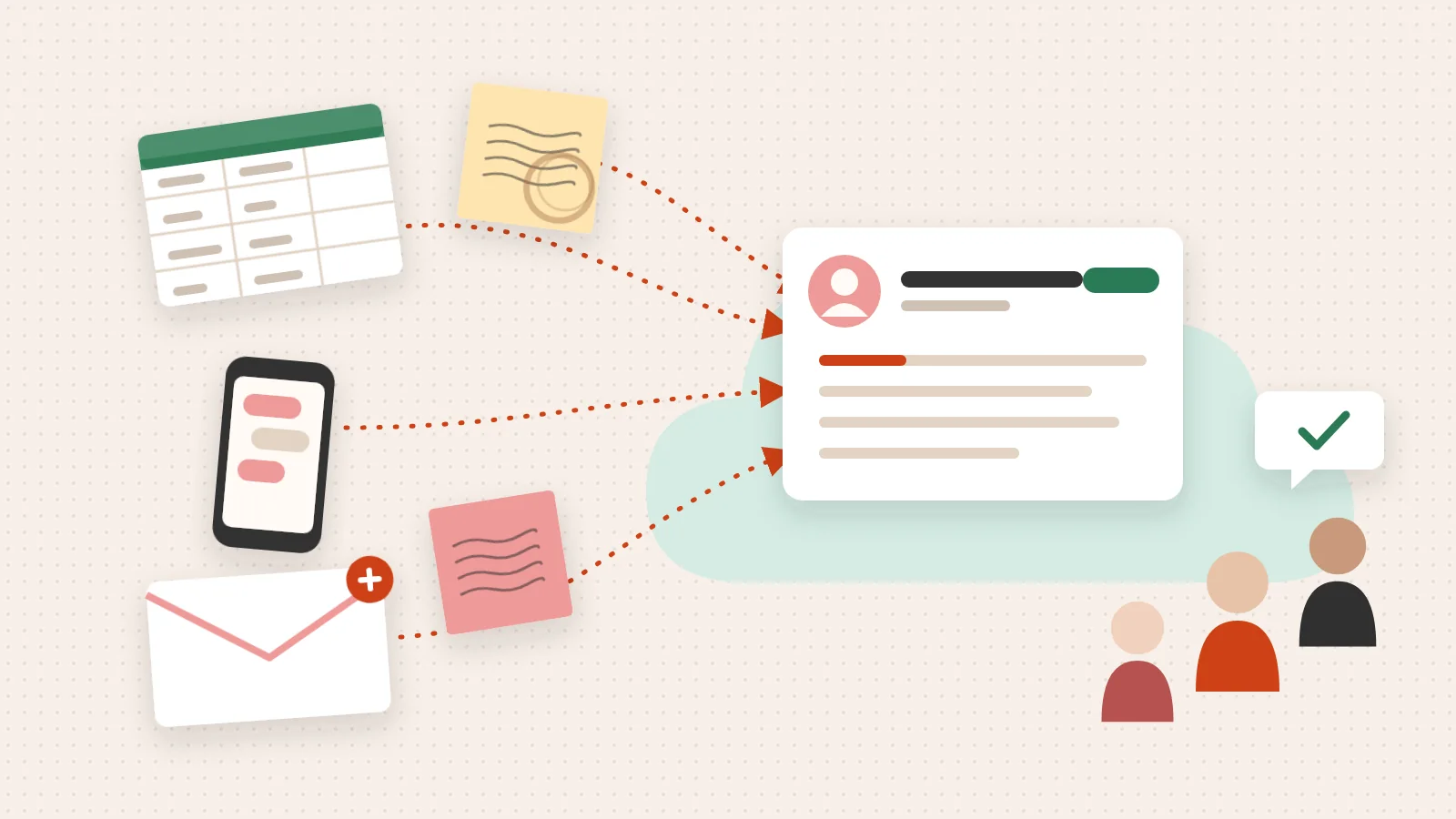
When we look at a CRM that is failing, we often see a digital version of a “junk drawer.” It is filled with duplicate contacts, outdated deal stages, and workflows that trigger emails no one wants to read. This happens because most teams treat HubSpot as a passive repository for information—a digital address book—rather than an active engine for growth.
From a psychological perspective, this creates “certainty gaps.” When a sales leader cannot trust the forecast because the data is messy, or a marketing manager cannot tell if their leads are actually closing, uncertainty takes root. This uncertainty leads to hesitation, and hesitation kills momentum.
A successful HubSpot CRM strategy requires moving away from just “tracking activity” and toward “understanding intent.” We must recognize that every record in the system represents a human being making a decision. If your CRM doesn’t reflect the psychological stages of that decision-making process, it will always feel like a burden to your team rather than a tool for their success.
The Three Pillars of a High-Performance HubSpot CRM Strategy
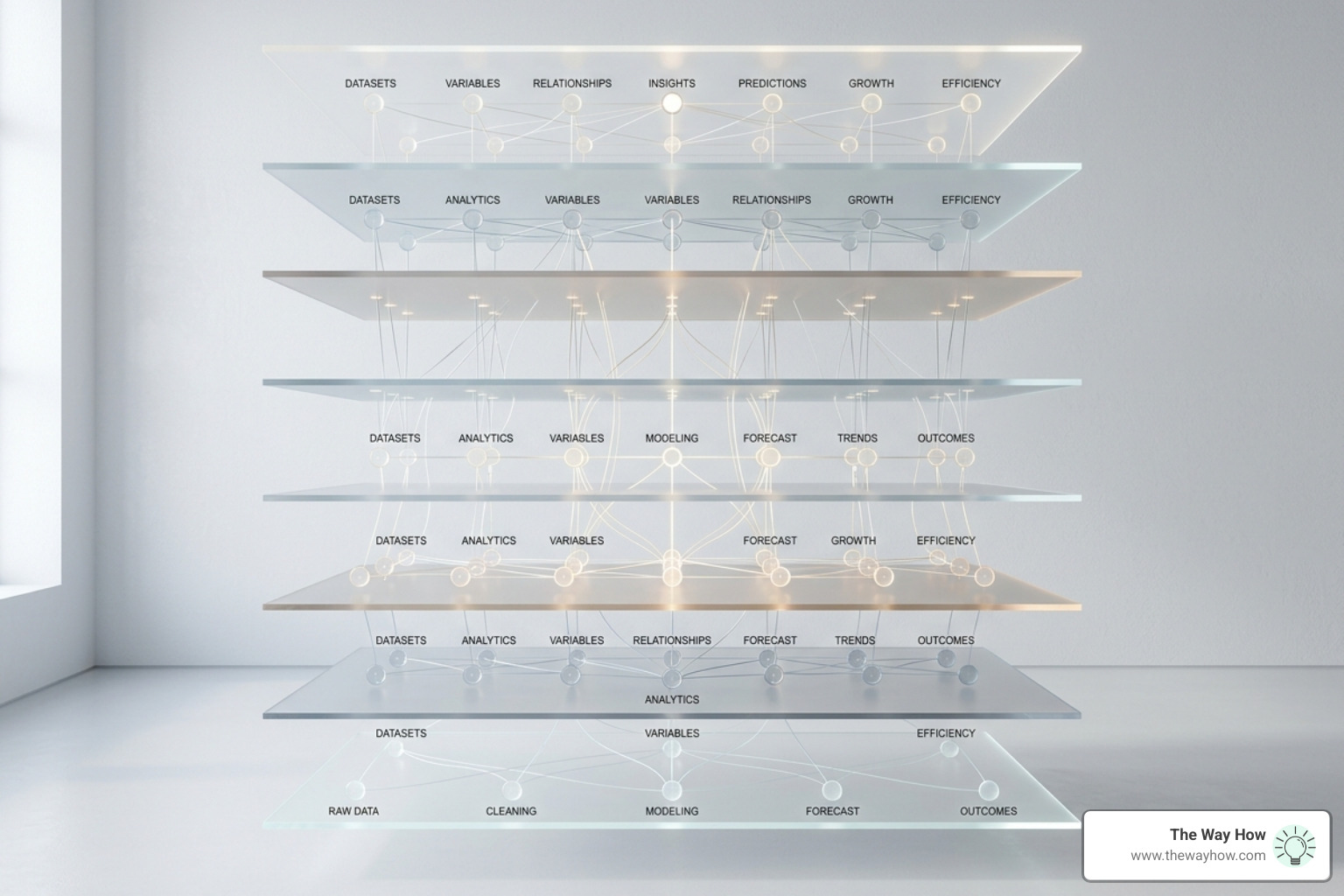
To build a system that lasts, we view the HubSpot CRM strategy through three distinct phases: Implementation, Adoption, and Growth.
- Implementation is about more than just technical setup. It is the phase where we define strategic principles. Why are we using HubSpot? Which business goals must it support? We must analyze existing data flows and identify bottlenecks before a single property is created.
- Adoption is the human element. Even the most advanced technical setup is worthless if your team won’t use it. This requires role-based configurations that make the CRM relevant to the daily lives of reps and managers.
- Growth involves continuous optimization. A CRM is a living system. As your business matures, your strategy must evolve to include deeper integrations, advanced reporting, and sophisticated automation.
Developing a CRM Strategy: Why You Need One and How to Develop It is the first step in ensuring your technology serves your revenue goals, not the other way around.
Aligning Business Goals with Your HubSpot CRM Strategy
We cannot optimize what we have not defined. A high-performance strategy starts with SMART goals—Specific, Measurable, Achievable, Relevant, and Time-bound. Are you trying to increase qualified leads by 20%? Do you need to shorten your sales cycle from 90 days to 60?
By aligning these goals with HubSpot’s capabilities, we create a roadmap for configuration. For example, if your goal is better marketing-sales alignment, your strategy should focus on defining clear lifecycle stages and lead handoff protocols. This ensures both teams are working toward the same revenue targets. For more on this, explore our guide on HubSpot B2B Marketing Strategies.
Measuring the ROI of Your HubSpot CRM Strategy
Investment in a CRM should produce a measurable return. Businesses using a CRM report 29% higher sales revenue on average. To see these results, we track specific KPIs:
- Conversion Rates: Are leads moving through the funnel more efficiently?
- Sales Cycle Length: Has automation reduced the time spent on administrative tasks?
- Customer Lifetime Value (CLV): Are we retaining customers longer through better service tracking?
According to HubSpot’s 2025 ROI Report, customers see 3x more leads and close 94% more deals after six months of proper usage. Following CRM Best Practices: How to Choose the Best Free CRM System allows you to maximize these gains from day one.
Architecting Data for Human Decisions: Cleaning and Optimization
Data is the lifeblood of your CRM, but dirty data is a toxin. We often find that “data-driven” businesses only outperform their rivals when that data is clean, organized, and actionable. A core part of our HubSpot CRM strategy is establishing a robust HubSpot CRM Architecture.
This starts with a data audit. We identify duplicates, standardize naming conventions, and ensure that the “primary key” (usually the email address, but sometimes a LinkedIn ID) is used consistently to prevent fragmented records. Tools like the HubSpot Operations Hub are essential here, providing the automation needed to keep data synchronized and clean across your entire tech stack.

Standardizing Fields for Behavioral Insights
If you allow free-text entry for critical data points like “Industry” or “Lead Source,” your reporting will be useless. We advocate for the heavy use of dropdown menus and radio buttons. This standardization allows us to segment the database with precision.
During HubSpot CRM Implementation, we also set “Required Properties” for different deal stages. This ensures that a sales rep cannot move a deal forward without capturing the information needed for leadership to make informed decisions.
Removing Friction with Data Enrichment
Manual data entry is a productivity killer—research shows repetitive tasks steal 23% of the average workday. We use data enrichment to automatically fill in missing company details, social profiles, and industry codes.
Combined with predictive lead scoring, this allows your team to focus on the leads most likely to convert. By utilizing HubSpot Operations Hub Onboarding, we can automate the removal of duplicates and the enrichment of new contacts, ensuring the sales team always has the full context they need to build trust.
Mapping the Buyer Journey: Pipelines and Behavioral Workflows
A common mistake is building a sales pipeline that reflects your internal milestones rather than the buyer’s journey. A high-performance HubSpot CRM strategy maps the pipeline to the customer’s decision-making process.
Each stage should have clear entry and exit criteria. What must the buyer believe or do before they move from “Discovery” to “Evaluation”? By defining these behavioral markers, we can use HubSpot to provide the right information at the right time. Our HubSpot Sales Implementation Guide dives deeper into this methodology.
Customizing Pipelines for Sales Momentum
Visualizing the pipeline is one of HubSpot’s greatest strengths. However, a single pipeline rarely fits all business units. We often design custom pipelines for different products or regions, each with weighted forecasting to provide an accurate picture of future revenue.
Effective HubSpot Sales Hub Implementation involves setting up these pipelines so that “stalled” deals are automatically highlighted, allowing managers to step in and provide coaching where it is needed most.
Automating Empathy with Marketing Workflows
Automation should never feel robotic. Instead, we use it to “automate empathy.” This means using personalization tokens and smart content to deliver messages that acknowledge the recipient’s specific pain points and industry.
By following a HubSpot Marketing Workflows Complete Guide, we can build nurturing sequences that react to user behavior. If a prospect visits a specific pricing page three times, the system can trigger a personal outreach from their assigned rep, ensuring the human connection happens exactly when the buyer is ready for it.
Driving Adoption Through Psychological Safety and Clear KPIs
The primary reason CRM implementations fail is weak user adoption. This is rarely a lack of skill; it is often a lack of “psychological safety.” If reps feel the CRM is a tool for “micromanagement,” they will resist it. If they see it as a “personal assistant” that helps them close more deals, they will embrace it.
We drive adoption by involving stakeholders early. We interview the people who will actually use the tool to understand their daily frustrations. This leads to a role-based setup where a salesperson sees only what they need to hit their targets, while a manager sees the high-level trends. Our HubSpot Onboarding Strategies are built on this principle of empathy-first design.
Training Teams for Strategic Consistency
Training is not a one-time event. We recommend a combination of HubSpot Academy certifications and custom Standard Operating Procedures (SOPs). Identifying “internal advocates”—top performers who already use the system well—can help bridge the gap for those who are struggling.
Providing HubSpot Onboarding Tips that focus on “quick wins,” such as time saved on reporting or automated follow-ups, helps build the momentum needed for long-term cultural change.
Building Dashboards that Remove Uncertainty
Dashboards should provide actionable business intelligence, not just vanity metrics. We build custom reports that answer specific questions:
- Which lead sources produce the highest-value deals?
- Where is the friction in our sales handoff?
- How does our current pipeline compare to our year-end goals?
By leveraging HubSpot Marketing Hub Demo Features, we can create visual leaderboards and forecasting tools that give leadership the clarity they need to make confident decisions about where to invest resources next.
Scaling Momentum with AI and Advanced Personalization
As we look toward 2026, the HubSpot CRM strategy is increasingly defined by AI and advanced personalization. HubSpot’s “Smart CRM” architecture now includes AI-powered assistants that can summarize call recordings, research companies, and even draft personalized emails.
This isn’t about replacing humans; it’s about freeing them from the “drudge work” so they can focus on building relationships. Understanding CRMs: Who Should Use One, Key Terms to Know, and Usage Tips is essential for leveraging these new tools effectively without losing the personal touch that creates trust.
Enhancing the Ecosystem with Strategic Integrations
A CRM is most powerful when it is the heart of a unified tech stack. HubSpot integrates with over 1,400 tools, and we find that customers with integrated systems close 8x more deals.
Key integrations include:
- LinkedIn Sales Navigator: For advanced prospecting and social selling.
- Slack: For real-time notifications on high-intent lead activity.
- Google Analytics: To connect web behavior directly to CRM records.
Strategic HubSpot Integrations allow data to flow seamlessly between departments, breaking down silos and creating a 360-degree view of the customer.
Future-Proofing Your CRM for 2026 and Beyond
Future-proofing means moving toward a Revenue Operations (RevOps) model. This is the practice of aligning sales, marketing, and service under a single set of data and processes.
As you Streamline Your Entire Business With a Free CRM | HubSpot, you create a foundation that can scale. Whether you are a small business or a global enterprise, the goal remains the same: to create a system that removes uncertainty and creates a clear path to predictable revenue.
Frequently Asked Questions about HubSpot CRM Strategy
What are the main benefits of a HubSpot CRM strategy?
A well-defined strategy centralizes your data, which 83% of users say is HubSpot’s greatest strength. It improves sales productivity by automating repetitive tasks, provides accurate revenue forecasting through standardized deal stages, and enhances customer relationships by ensuring no lead or ticket falls through the cracks.
How do you measure the success of a CRM implementation?
Success is measured through user adoption rates (are people actually logging their work?), lead-to-customer conversion rates, and a measurable reduction in the sales cycle length. We also look for improvements in data accuracy scores and team sentiment toward the tool.
What are common pitfalls in CRM optimization?
The most common pitfall is “paving over the cow path”—simply moving inefficient, manual processes into a digital tool. Other risks include poor data hygiene, failing to secure team buy-in before rollout, and over-complicating workflows to the point where they become difficult to manage or update.
Restoring Momentum: Your Roadmap to Revenue Certainty
At The Way How, we believe that technology should never be the bottleneck to your growth. If your HubSpot portal feels like a source of stress rather than a source of truth, it is time to step back and diagnose the underlying strategy.
We help founders and leadership teams remove the uncertainty that stalls growth. By blending psychological insight with technical expertise, we design HubSpot architectures that don’t just hold data—they create momentum.
If you are ready to turn your CRM into a dependable growth engine, we invite you to explore our approach.