
Beyond the Spicy Autocomplete: Why Your SDLC is Stalled in 2026

The AI software development life cycle is the end-to-end process of planning, building, deploying, and maintaining software — now fundamentally reshaped by artificial intelligence at every stage.
Here’s a quick overview of what it covers:
| Phase | What AI Does Now |
|---|---|
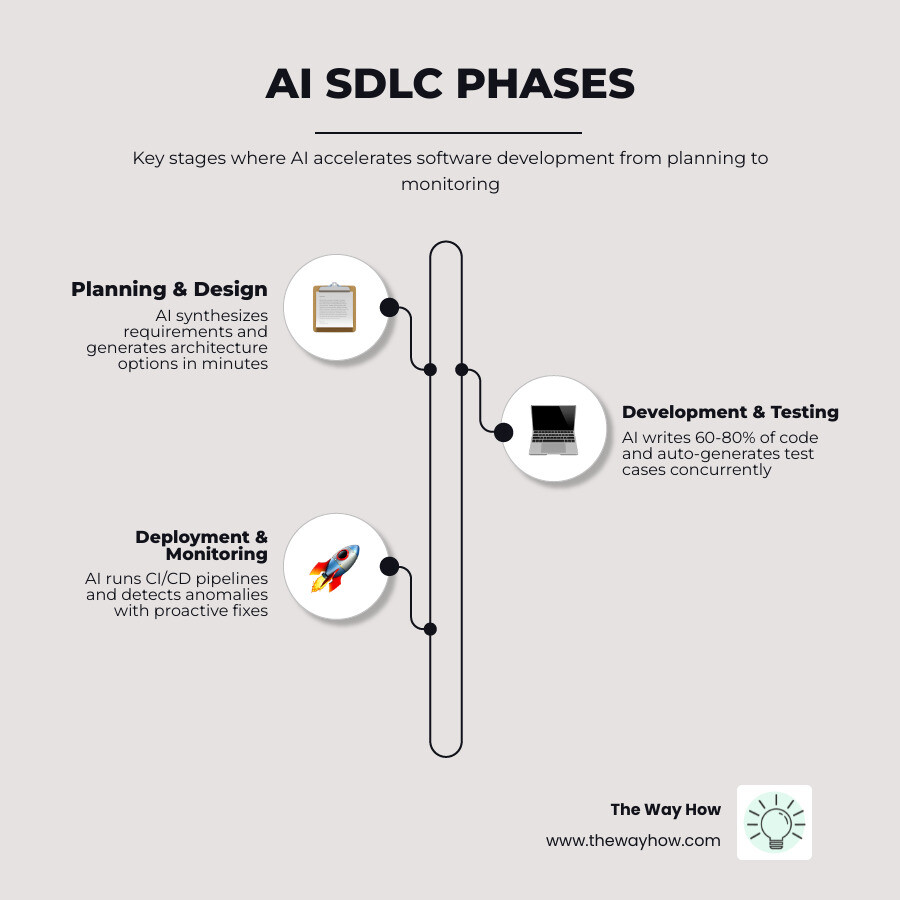
| Planning | Synthesizes requirements from tickets and analytics in minutes |
| Design | Generates architecture options and specs autonomously |
| Development | Writes 60-80% of code via AI agents |
| Testing | Auto-generated test cases concurrently with code |
| Deployment | Runs deterministic CI/CD pipelines with AI-assisted validation |
| Monitoring | Detects anomalies, investigates incidents, and proposes fixes proactively |
This is not a minor upgrade to how software gets built. It is a structural change.
For years, teams have bolted AI tools onto an existing process — using autocomplete here, a linter there — and wondered why delivery still felt slow. Scott Hanselman once called this kind of AI “spicy autocomplete.” That framing stuck because it named something real: most teams are augmenting old habits instead of rethinking the system.
The result? Faster keystrokes. Same bottlenecks.
The research is clear. AI code reviews have pushed quality improvement rates from 55% to 81%. Nearly 39% of AI-generated code review comments lead to real code fixes. Tasks that once took days — debugging, test generation, documentation — now happen in minutes.
But speed without structure creates a different kind of problem.
When AI agents operate autonomously across your entire development pipeline, the risks scale with the autonomy. Emergent behaviors. Cascading errors. Accountability gaps no one planned for.
That is why understanding the full AI software development life cycle — not just the tools, but the psychology, the governance, and the decision points — is what separates teams that accelerate from teams that stall.
I’m Jeremy Wayne Howell, founder of The Way How, and over 20 years of working with founders and revenue leaders on systems that actually produce results has taught me one thing: the problem is almost never the technology. Understanding how the AI software development life cycle reshapes human decision-making, team accountability, and organizational momentum is exactly the kind of structural clarity this guide is built to deliver.
Similar topics to ai software development life cycle:
The Fundamental Shift to an AI Software Development Life Cycle
In April 2026, we are no longer debating whether AI belongs in the engineering department. We are witnessing the total replacement of the linear, deterministic Software Development Life Cycle (SDLC) with a networked, probabilistic model.
Traditional software development is deterministic: if A happens, B follows. You write a line of code, and it does exactly what you told it to do. The AI software development life cycle (AISDLC) is probabilistic. It relies on Large Language Models (LLMs) and agentic AI that “learn” and “predict” the best path forward. This shift creates a 10x velocity advantage for teams that embrace it, compressing 12-month roadmaps into 12-week delivery cycles.
According to The AI Software Development Life Cycle (AISDLC) Explained, the core difference lies in the transition from code-centricity to data-centricity. In the old world, a bug was a flaw in logic. In the AI world, a “bug” is often a flaw in data quality or model alignment.
Reshaping the Traditional SDLC with AI
We see AI transforming each of the classic six phases:
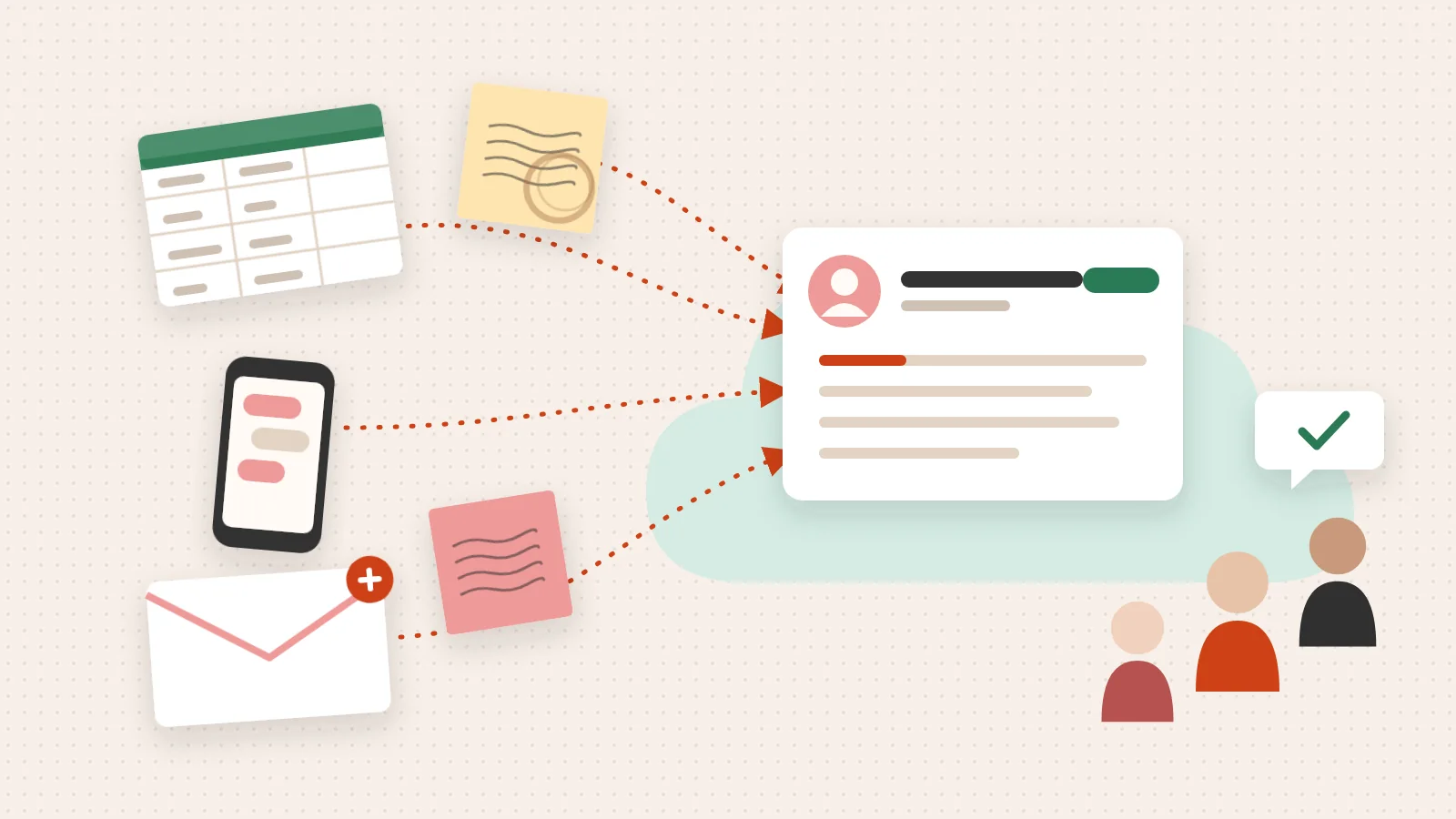
- Planning and Requirements: Instead of weeks of meetings, AI agents synthesize data from Jira tickets, customer feedback, and market analytics to generate comprehensive specs in hours.
- Design and Architecture: Agentic AI proposes multiple architectural patterns, evaluating each for scalability and security before a human architect ever opens a diagramming tool.
- Development: Tools like GitHub Copilot and Amazon Q Developer handle 60% to 80% of boilerplate code. Developers have shifted from “writers” to “editors.”
- Testing: AI doesn’t just run tests; it writes them. By analyzing the requirements, it generates test cases concurrently with the code, leading to a 45% improvement in pre-production bug detection.
- Deployment: CI/CD pipelines are now “intelligent.” They don’t just move code; they validate contextual fit and security at machine speed.
- Maintenance and Operations: SRE agents monitor services in real-time. When an incident occurs, they investigate the cause, correlate it with recent changes, and propose—or even implement—a self-healing fix.
The Psychology of the AI-Driven Development Lifecycle
At The Way How, we focus on the human element. The transition to an AI-led SDLC isn’t just a technical hurdle; it’s a psychological one.
When velocity increases by 5x, the cognitive load on developers shifts. They are no longer doing the “mundane” work that often provided mental breaks. Instead, they are constantly making high-stakes decisions, reviewing AI-generated output, and managing complex agent fleets. This can lead to burnout if the organizational culture doesn’t adapt.
There is also a “certainty gap.” Leaders often feel uncertain about AI-generated code because they don’t understand the “why” behind the machine’s decision. Restoring momentum requires building trust through transparency and ensuring that human judgment remains the ultimate anchor for business alignment.
From Code-Centric to Data-Centric: The 7 Phases of AISDLC
Building software with AI is one thing; building the AI systems themselves is another. The AI Development Lifecycle (AIDLC) introduces specific phases that traditional software engineers might find foreign.
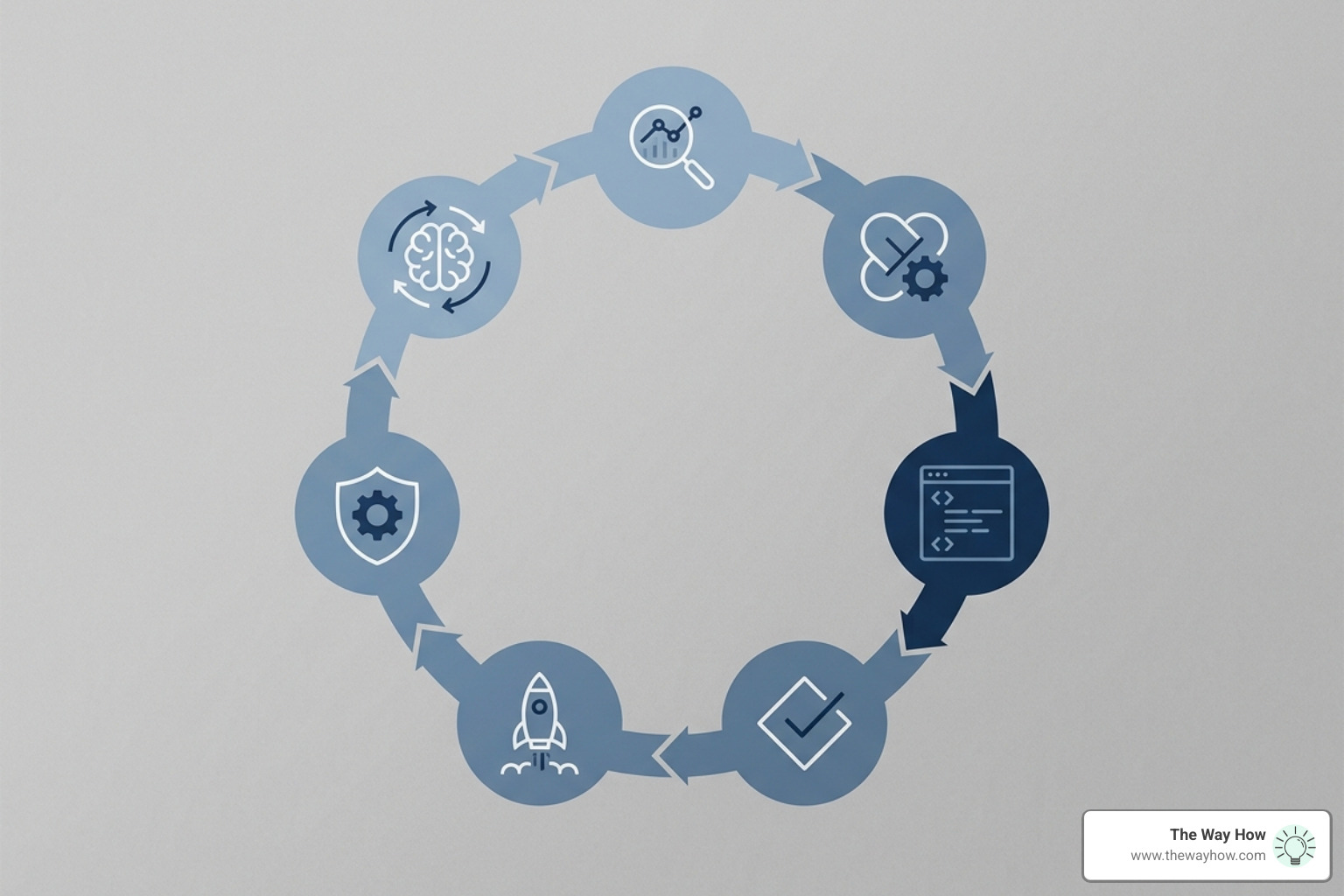
According to The AI Development Lifecycle: A Complete Guide for Business Leaders (2026) | Kovil AI, over 80% of AI projects fail to reach production because teams treat them like standard software. To succeed, we must follow a data-first approach:
- Problem Definition: Identifying the specific business KPI the AI will move. This is the most critical phase.
- Data Engineering: Collecting, cleaning, and labeling data. High-performing teams spend 70-80% of their budget here.
- Model Development: Selecting foundation models or designing custom architectures.
- Evaluation: Using benchmarks and adversarial testing to ensure the model doesn’t just work, but is robust against edge cases.
- Deployment: Moving the model into a production environment, often using containerization like Docker.
- MLOps: Setting up the infrastructure for Continuous Integration, Continuous Deployment, and Continuous Training (CI/CD/CT).
- Monitoring and Continuous Training: AI models suffer from “drift”—their performance degrades as the real world changes. Continuous monitoring is required to trigger retraining.
For organizations looking to scale these systems, exploring ai application development services can help bridge the gap between experimental pilots and production-grade reality.
Agentic Workflows and the Rise of Autonomous Execution
The most significant advancement in 2026 is the move from AI assistants to agentic AI. An assistant waits for you to ask a question; an agent takes a goal and executes the steps to achieve it.
In a modern ai software development life cycle, agents are now capable of:
- Spec-Driven Development (SDD): Using tools like Spec Kit to turn requirements into executable artifacts.
- Autonomous Debugging: Agents can clone a repository, reproduce a bug, write the fix, and submit a Pull Request (PR) for human review.
- Proactive SRE: Azure SRE agents watch services 24/7. If a latency spike occurs, the agent doesn’t just alert a human; it investigates the logs, identifies the offending microservice, and suggests a rollback or a patch.
This level of autonomy is enabled by persistent context. By feeding documentation, architectural rules, and historical PR data into a project-specific context, the AI acts less like a “spicy autocomplete” and more like a senior staff engineer who knows the codebase inside and out.
Managing Risk through Responsible AI and Human Oversight
With great velocity comes great risk. The probabilistic nature of AI means it can fail in ways humans find difficult to predict.
Emergent behaviors—where an AI agent solves a problem in an unintended and potentially harmful way—are a real concern. Cascading errors occur when one AI-generated mistake feeds into another, leading to a systemic failure.
To manage this, we advocate for a Responsible AI framework, which includes:
- Governance: Aligning with regulations like the EU AI Act to ensure transparency and accountability.
- Human-in-the-Loop (HITL): Ensuring that critical checkpoints—especially deployment and security-sensitive code—require explicit human approval.
- Bias Mitigation: Regularly auditing data and model outputs to ensure fairness, particularly in regulated industries like finance or healthcare.
As noted in AI Software Development Life Cycle - Process, Integration, and Best Practices, success in AI comes from the best lifecycle management, not just the smartest model. Human oversight isn’t a bottleneck; it is the safeguard that ensures technology serves the business strategy.
Practical Steps to Restore Momentum in Your Engineering Team
If your team is feeling the friction of the “old way” meeting the “AI way,” it’s time to diagnose the certainty gaps in your process. Here is how we recommend restoring momentum:
- Upgrade Your Infrastructure: AI generates code faster than traditional CI/CD pipelines can often validate it. Invest in automated testing and validation that matches AI’s output volume.
- Redesign Review Processes: A PR that used to be 200 lines might now be 2,000 lines of AI-generated code. Use AI-assisted code reviews to triage these changes, focusing human attention on high-risk logic and architecture.
- Shift Roles, Not Just Tools: Seniors should move toward roles as “System Architects” and “Orchestrators.” Juniors must focus on “Specification Precision”—the ability to describe a problem so clearly that an AI can solve it.
- Foster Systems Thinking: With Stack Overflow seeing a 77% decline in new questions, the “communal knowledge” of the internet is changing. Your team must become experts in your own internal systems and the foundational principles of engineering to troubleshoot the agents they manage.
Frequently Asked Questions about AI SDLC
How does AI change the speed of the software development life cycle?
In 2026, AI compresses traditional 6-12 month cycles into 6-12 weeks. Tasks like debugging and documentation that once took days now occur in minutes, while AI agents handle 60-80 percent of boilerplate code. This allows for “bolts”—ultra-short development cycles—that provide near-instant feedback to product owners.
What is the biggest risk in an AI-led SDLC?
The primary risks include emergent behaviors and cascading errors where autonomous agents make non-deterministic decisions. Without human oversight and Responsible AI governance, these can lead to security vulnerabilities, “hallucinated” logic, and accountability gaps where no one is sure who is responsible for a production failure.
Is traditional Agile still relevant in 2026?
Agile is not dead but amplified. AI-First development increases sprint velocity by 3-5x, requiring shorter cycles of hours or days instead of two-week sprints. The fundamental principles of Agile—iterative delivery and customer feedback—are more important than ever, but the “rituals” must be faster to keep pace with AI execution.
Turning Uncertainty into a Dependable Growth Engine
At The Way How, we believe that technology is only as effective as the psychology behind it. The ai software development life cycle is a powerful engine, but if your leadership team is stalled by uncertainty or a lack of structural clarity, that engine will only drive you faster toward a dead end.
We help founders and leadership teams remove that uncertainty. By diagnosing the gaps in your customer journey and engineering systems, we design frameworks rooted in human behavior and decision-making psychology. Whether you need Fractional CMO leadership to align your product with the market or a robust HubSpot architecture to track your momentum, our goal is to turn your marketing and development into a predictable growth engine.
If you are ready to move beyond the tactics and build a system that creates trust and momentum, we are here to guide you.