A Complete Guide to CRM Systems and Database Management
 Jeremy Wayne Howell : Jul 22, 2026 9:48:31 PM
Custom AI chatbot development is one of the fastest-growing investments in enterprise technology — and one of the most frequently misunderstood.
Here’s the short answer if you need it now:
| Question | Quick Answer |
|---|---|
| What is it? | Building a chatbot trained on your own data, workflows, and systems — not a generic SaaS template |
| Who needs it? | SaaS, FinTech, healthcare, and eCommerce companies with complex queries, compliance needs, or high support volume |
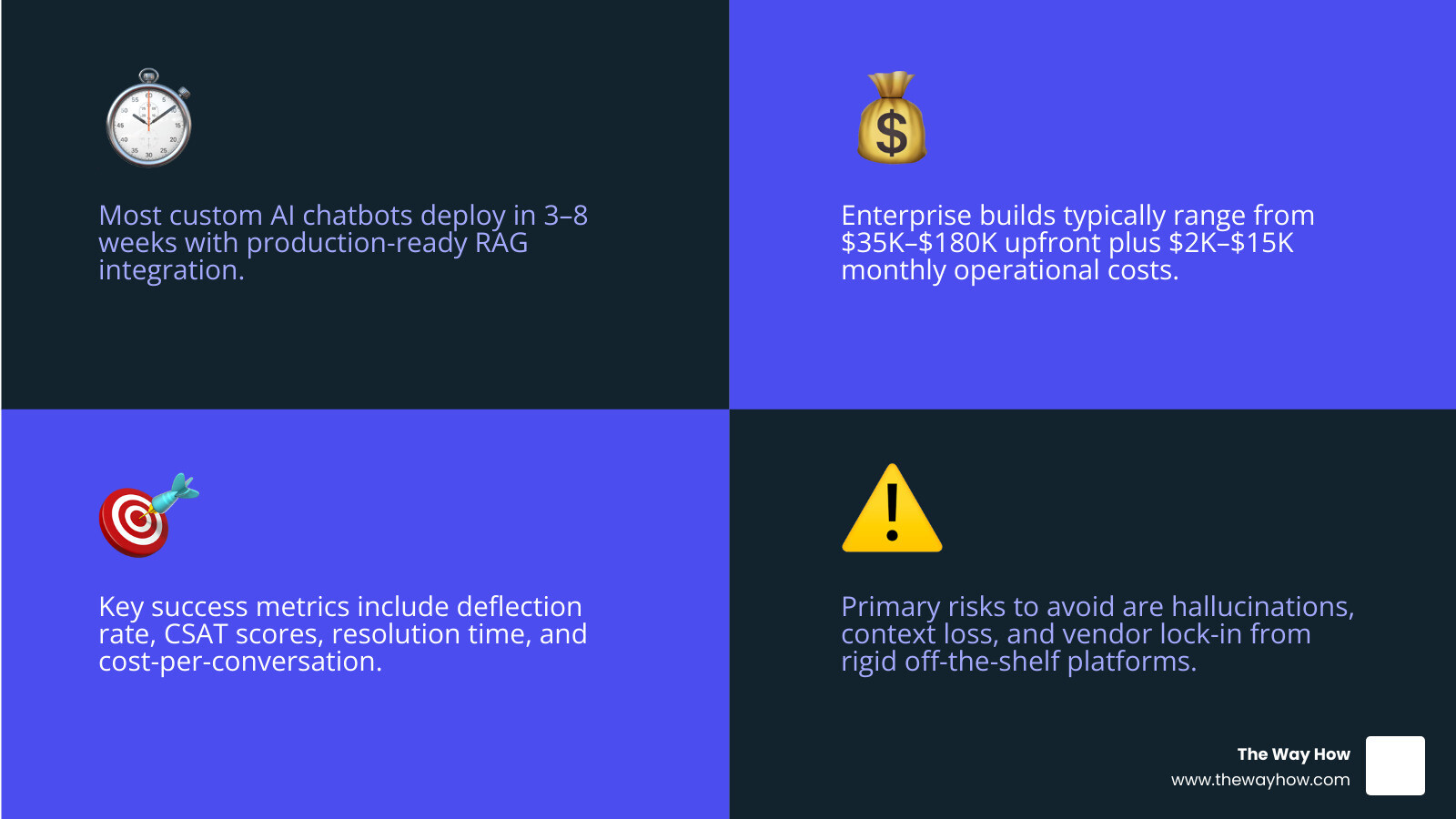
| How long does it take? | 3–8 weeks for most production deployments |
| What does it cost? | Roughly $35K–$180K to build; $2K–$15K/month to run at enterprise scale |
| Key technology? | RAG (Retrieval-Augmented Generation) grounded in your private knowledge base |
| Biggest risk? | Hallucinations, context loss, and vendor lock-in from off-the-shelf platforms |
| How do you measure success? | Deflection rate, CSAT, resolution time, and cost-per-conversation |
Most businesses don’t have a chatbot problem. They have a certainty problem.
Their customers arrive with real questions. The chatbot responds with scripted loops, irrelevant suggestions, or — worse — confident answers that are simply wrong. The customer leaves more frustrated than when they arrived.
The global AI chatbot market is projected to reach $66.6 billion by 2033. But market size doesn’t tell you why so many deployed chatbots frustrate the people they’re supposed to help.
The answer isn’t the technology. It’s the architecture underneath it.
A chatbot built on a rigid decision tree breaks the moment a user phrases something differently than expected. A chatbot built on a large language model without proper grounding hallucinates — generating plausible-sounding answers that have no basis in your actual products, policies, or data. Both outcomes destroy trust.
This guide is about building something different: a chatbot that earns trust by being accurate, contextually aware, and genuinely useful.
I’m Jeremy Wayne Howell, founder of The Way How and a revenue growth strategist with over 20 years of experience aligning marketing, sales, and technology around buyer psychology — including guiding companies through custom AI chatbot development decisions that directly impact pipeline and customer retention. My work centers on diagnosing the human problem underneath the performance problem, which is exactly the lens we’ll use throughout this guide.
Custom ai chatbot development word roundup:
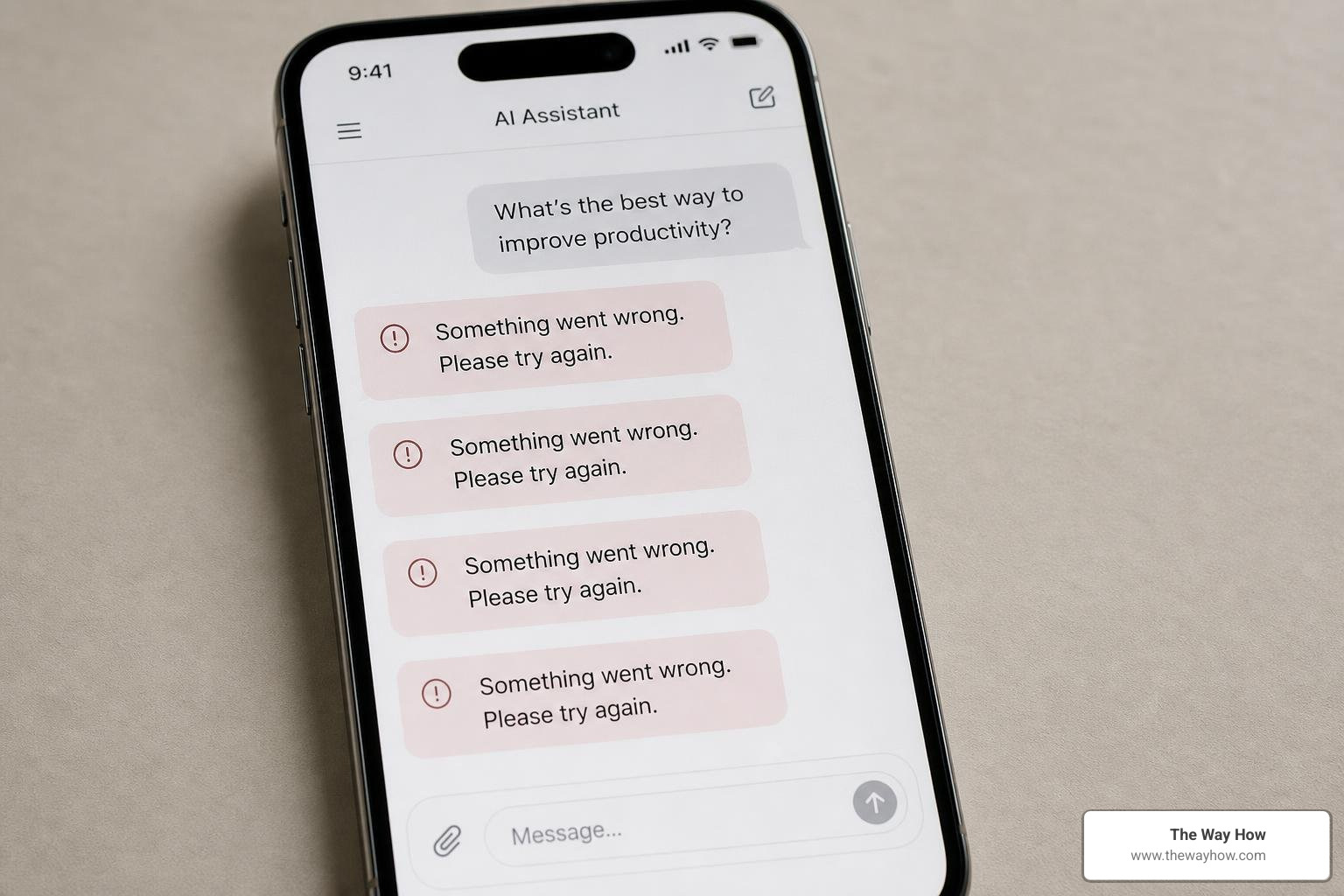
Every time a customer interacts with your brand, they are looking for a bridge of certainty. They have a problem, and they want to know if you can solve it. When you insert a generic, poorly configured chatbot into that interaction, you aren’t automating support; you are introducing conversational friction.
Traditional chatbots operate on rigid, pre-programmed decision trees. They assume the customer will follow a neat, linear path. But human psychology is rarely linear. When a customer deviates even slightly from the expected script, the bot loops, drops context, or serves up generic links.
From a cognitive perspective, this creates an immediate certainty gap. The customer realizes they are not being heard, their time is being wasted, and they must now do extra work to get a simple answer. This friction directly damages customer satisfaction (CSAT) and erodes brand trust.
To fix this, we must shift our perspective. We shouldn’t build chatbots to deflect conversations; we should build them to resolve queries. A custom solution respects the user’s intent, remembers conversational history, and adapts to natural variations in human speech.
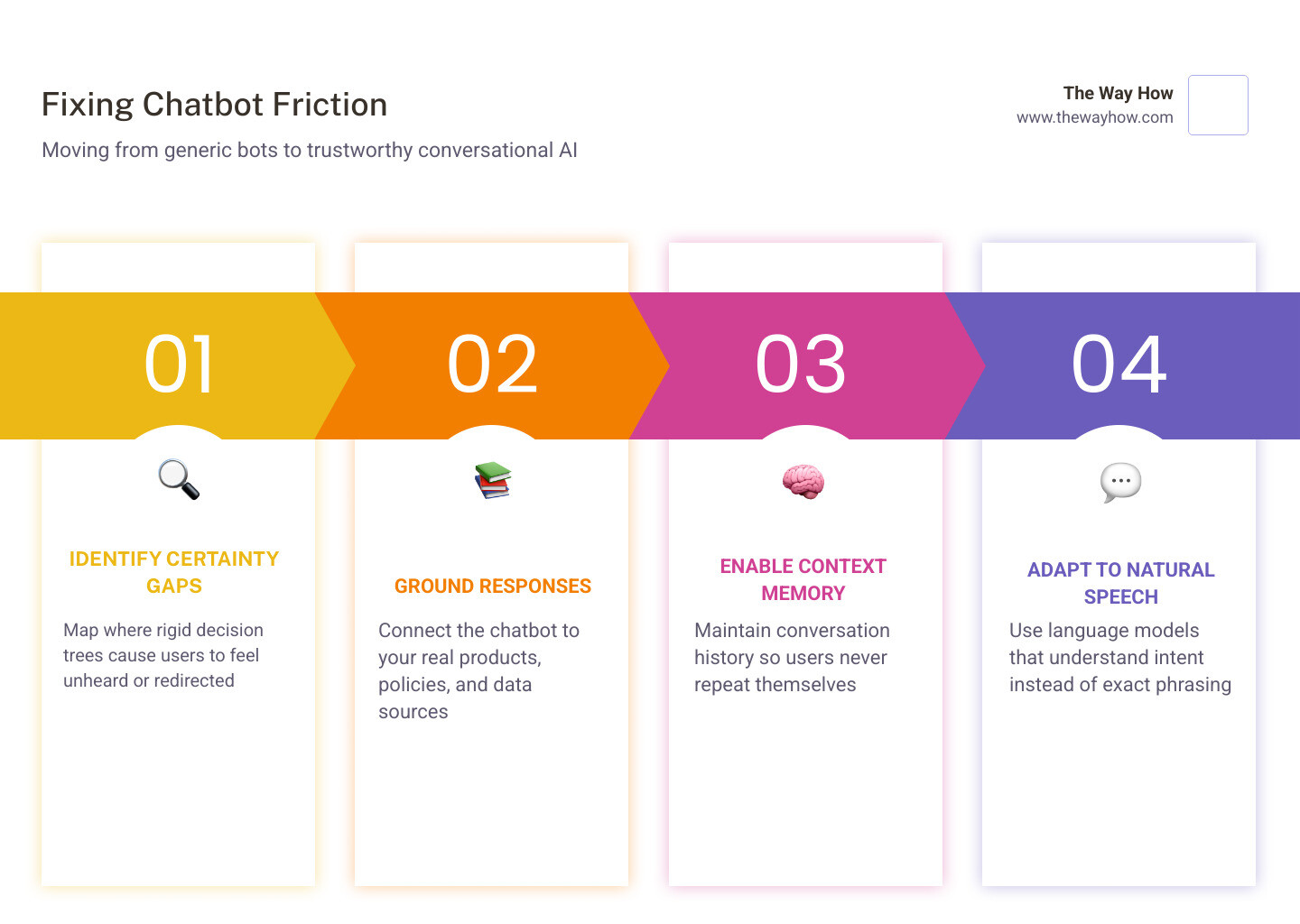
When we talk about custom ai chatbot development, we are looking at building a proprietary conversational asset tailored to your exact workflows, brand voice, and data structures. This is fundamentally different from purchasing an off-the-shelf software-as-a-service (SaaS) subscription.
Off-the-shelf platforms are renting you space inside their rigid templates. They retain control of the underlying system, charge recurring per-conversation fees, and lock your data into their ecosystem. When you invest in custom development, you build a proprietary architecture with full intellectual property (IP) ownership and zero vendor lock-in. Your code lives in your repository, runs in your cloud, and integrates deeply with your unique databases.
To understand how this fits into the broader engineering landscape, it is helpful to look at how we approach Ai Software Engineering as a discipline. Custom development allows us to treat conversational interfaces as dynamic layers built on top of your existing software assets, rather than isolated silos.
Rigid decision trees and keyword-matching scripts cannot understand nuance. If a customer writes, “I was billed twice and need a refund,” a generic bot might flag the word “billed” and send them to a pricing FAQ page. This lack of empathy and contextual awareness is where SaaS platforms fail.
They cannot maintain persistent context across multi-turn interactions. If a user asks three consecutive questions, a generic platform treats each query as an isolated event. This forces the customer to repeat information, driving down satisfaction.
In contrast, custom conversational architectures are built to handle ambiguity. According to research from the AI Chatbot Development Service — Custom Enterprise Chatbots | Clarista, production-ready custom chatbots use advanced natural language understanding (NLU) to parse complex intents and match them with appropriate backend workflows, ensuring the customer feels understood, not ignored.
For high-volume operations in specialized industries, the strategic benefits of custom bots are clear:
By investing in tailored Ai Application Development Services, businesses can transform cost centers into profit-driving assets that operate 24/7.

To build a chatbot that actually works, you must design for reliability. An ungrounded chatbot that relies solely on a public LLM will eventually hallucinate. In a business context, a hallucination isn’t just a technical glitch; it’s a liability that can lead to compliance violations, lost sales, or legal disputes.
A production-grade chatbot requires a multi-layered trust architecture:
Retrieval-Augmented Generation (RAG) is the gold standard for accuracy. Instead of relying on the broad, static training data of a foundation model, RAG acts as an open-book exam.
When a user submits a query, the system performs a semantic search across your private vector databases to retrieve the most relevant chunks of text. It then feeds those specific chunks, along with the user’s original query, into the LLM as the sole source of truth for generating the response.
This grounding technique drastically drops hallucination rates. According to the Custom AI Chatbot Development Services for B2B | n8n & LLM Experts, ungrounded chatbots have an industry baseline hallucination rate of 8-15%, whereas a properly implemented RAG pipeline reduces that rate to just 0.5-2% in production.
While large language models are incredibly capable, they are inherently probabilistic. To ensure safety, we must wrap them in deterministic guardrails.
This means setting strict confidence thresholds. If the semantic search fails to find highly relevant source documents, or if the LLM’s confidence score falls below a certain limit (e.g., 0.70), the bot must not guess. Instead, it should execute a structured fallback: “I cannot find the exact answer to that question, so I am handing you over to a live agent.”
By building these clear escalation paths during the Ai Software Development Process, you protect the customer experience and ensure your brand never provides false or misleading information.
A custom AI chatbot does not live in a vacuum. It must act as an intelligent coordinator across your entire technical ecosystem.
| Feature | Custom AI Chatbot | Multi-Agent AI System |
|---|---|---|
| Primary Scope | Single conversational interface handling direct user queries | Network of specialized autonomous agents collaborating on complex tasks |
| Integration Level | Connects to specific APIs (CRM, Helpdesk, Vector DB) | Deeply integrated into multiple workflows and system backends |
| Decision Making | Follows guided conversational flows with LLM reasoning | Operates semi-autonomously to execute multi-step business logic |
| Best Used For | Customer support, lead qualification, and knowledge retrieval | End-to-end workflow automation and complex system orchestration |
When designing your Ai Tech Stack, you must plan for deep integrations with your existing systems (CRMs, ERPs, and helpdesks) to ensure the chatbot can perform actual transactions, not just answer questions.
To provide a seamless customer journey, the chatbot must know who it is talking to. This requires secure API bridges to systems like HubSpot, Salesforce, Zendesk, and Intercom.
For example, when a user asks about their order status, the chatbot should pull their customer record from your CRM, verify their identity, query your ERP for the shipping status, and present the real-time tracking link directly in the chat window.
If you want to see a practical breakdown of how this works in a sales context, explore our guide on How Do Chatbots Qualify Leads In Hubspot A Complete Guide.
Your customers expect to interact with your brand across multiple touchpoints — whether that is a web widget, a mobile app, WhatsApp, SMS, or voice channels. Maintaining context across these channels is critical. If a user starts a conversation on your website and continues it via WhatsApp, the chatbot must recognize their session and retain the history.
This is where a Bring Your Own LLM (BYO LLM) strategy becomes highly valuable. By building a model-agnostic architecture, you avoid being locked into a single provider (like OpenAI or Anthropic). You can run GPT-4 for complex reasoning tasks, Claude for long-document processing, or an open-source model like Llama on your own secure servers for highly sensitive data, switching models as the AI landscape evolves without rebuilding your entire integration layer.
To learn more about the broader opportunities of implementing AI in your business, check out our Ai For Small Business Complete Guide.
Many leadership teams view custom software development purely as an expense. However, when designed with a psychology-first approach, a custom AI chatbot is a high-yield proprietary asset.
The return on investment (ROI) is driven by measurable performance shifts:
Building a production-ready chatbot requires a structured lifecycle. While simple wrappers can be built in a weekend, enterprise-grade systems take careful planning.
The overall cost depends on integration complexity, security requirements, and custom logic:
To understand the phases of deployment in detail, reference our comprehensive Ai Software Development Life Cycle Guide.
In June 2026, data privacy is non-negotiable. If you are in healthcare or finance, your chatbot must comply with strict regulations like HIPAA, GDPR, and SOC2.
To ensure absolute security, custom developments implement strict data minimization practices. Proprietary customer data should be anonymized, encrypted both at rest and in transit, and stored in localized vector databases or private cloud environments. This guarantees that your proprietary business data is never used to train public, third-party LLMs.
For further reading on maintaining compliance standards in modern software builds, review our Ai In Software Engineering Guide 2026.
A straightforward customer support chatbot connected to an existing knowledge base typically takes 2 to 4 weeks to launch as a Minimum Viable Product (MVP). A highly customized enterprise chatbot with deep CRM/ERP integrations, multi-language support, and custom escalation logic usually takes 4 to 8 weeks.
When you partner with a custom development team, you own 100% of the source code, the RAG pipeline, the vector database structure, and the prompt engineering. There are no recurring licensing fees or per-conversation charges, protecting you from vendor lock-in.
For businesses looking to explore specific development partners, platforms like Enterprise AI Chatbot Development Services | AHK.AI and Custom AI Chatbot Development Services | Belitsoft offer tailored building services from scratch, while AI Chatbot Development Services for Faster Customer Support | Logix Built and AI Chatbot Development Services | Custom Chatbots Built on LLMs | Automely specialize in rapid LLM-based customer support integrations.
We prevent hallucinations by implementing a strict RAG architecture that forces the LLM to write answers using only your verified source files. We then apply deterministic guardrails, confidence scoring, and explicit “I don’t know” fallback loops to handle queries that fall outside your knowledge base.
At The Way How, we believe that technology should never get in the way of human connection. If your customers are struggling to get clear answers, your growth will stall.
We are a psychology-first marketing and revenue strategy firm. We help founders and leadership teams diagnose why growth is stalled, identify certainty gaps in the customer journey, and design systems that create trust, momentum, and predictable revenue. Whether you need Fractional CMO leadership, HubSpot architecture, or a clear roadmap for custom ai chatbot development, we align your technical systems with the actual behaviors and psychology of your buyers.
Let’s remove the friction and build a system that works.
Explore how we can help you scale your business at The Way How Services.
 Jeremy Wayne Howell : Jul 22, 2026 9:48:31 PM
 Jeremy Wayne Howell : Jul 21, 2026 9:47:10 PM
 Jeremy Wayne Howell : Jul 20, 2026 9:46:47 PM