
Beyond the Hype: Why Code is No Longer the Bottleneck
AI in Software Engineering for Beginners
AI in software engineering is the use of artificial intelligence tools, models, and workflows to help developers write, test, debug, and ship software faster and with fewer errors.
Here is a quick breakdown of what that actually means in practice:
| What AI Does in Software Engineering | What Humans Still Own |
|---|---|
| Generates code drafts and boilerplate | Architecture decisions and tradeoffs |
| Suggests fixes for bugs and errors | Reviewing and validating AI output |
| Automates repetitive testing tasks | Defining requirements and intent |
| Summarizes pull requests and docs | Accountability for production systems |
| Flags security vulnerabilities | Ethical judgment and risk management |
This is not a future trend. It is already reshaping how engineering teams work today.
In 2019, most developers had not experienced how machine learning might benefit their daily work. By 2024, enthusiasm for AI in coding had become widespread across the industry. That is a complete reversal in just five years — and the pace has only accelerated since.
What started as smarter autocomplete has evolved into AI agents that can reason through multi-step problems, write entire features, run tests, and open pull requests — sometimes without a single line of human-written code.
But here is what most beginner guides miss: faster code generation alone does not mean faster software delivery. The bottleneck has shifted. Code is no longer the constraint — the systems, processes, and human judgment around the code are.
That gap between AI’s promise and its real-world results is exactly what this guide is designed to close.
I’m Jeremy Wayne Howell, founder of The Way How, a psychology-first revenue strategy firm — and over the past several years, I’ve worked closely with founders and technical leaders navigating the behavioral and organizational challenges that come with adopting AI in software engineering. The human side of these decisions is almost always where the real complexity lives, and that is the lens I bring to everything in this guide.
Ai in software engineering word roundup:
The Evolution of AI in Software Engineering
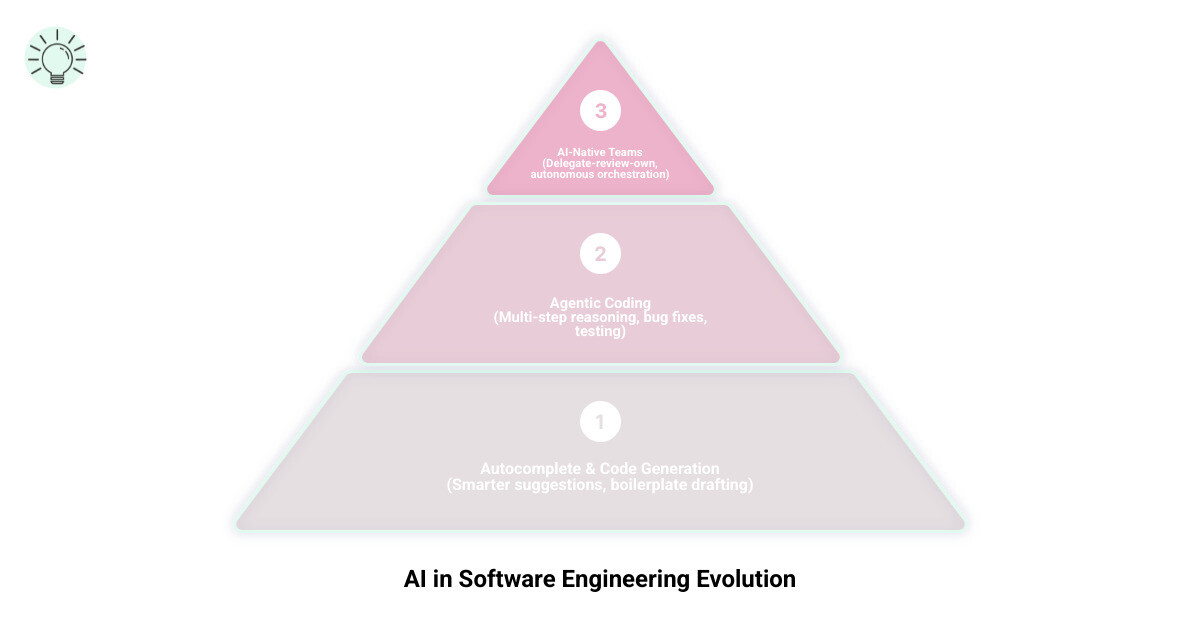
The journey of ai in software engineering has been a rapid climb from helpful helper to active collaborator. We often think of this evolution in three distinct waves: autocomplete, chat-based assistance, and the current era of agentic coding.
In the early days, around 2019, tools like Tabnine began offering “autocomplete on steroids.” These models predicted the next few characters or lines of code based on patterns. It was helpful, but it didn’t understand the “why” behind the code. Then came GitHub Copilot in 2021, which shifted the paradigm by suggesting entire blocks of code based on comments.
By 2024, the industry hit a turning point. As noted in AI in software engineering at Google: Progress and the path ahead, Google reported that LLM-based inline code completion had become their most popular application of AI, with acceptance rates hovering around 37%.
Today, in April 2026, we have moved beyond mere suggestions. We are now in the age of AI Software Engineering where AI tools act as autonomous or semi-autonomous agents. They don’t just write code; they navigate files, run terminal commands, and debug their own errors in a loop.
From Autocomplete to Autonomous Agents
The step-change from “assistant” to “agent” is driven by multi-step reasoning. Early models could manage about 30 seconds of reasoning. By August 2025, leading models could sustain continuous work for over two hours with significant confidence.
Current industry favorites like the Claude 3.5 Sonnet series and the Cursor IDE have become the “sensible default” for many. Cursor, in particular, has changed the game by being an AI-native IDE. It doesn’t just sit on top of your code; it has “codebase awareness,” allowing you to ask questions like “Where is the validation logic for the checkout flow?” and get a context-aware answer.
We are also seeing the rise of autonomous agents like Devin and OpenAI Codex. These tools are designed to take a high-level task — such as “Add a dark mode toggle to this React app” — and execute the entire workflow:
- Researching the existing CSS variables.
- Adding necessary dependencies.
- Modifying the components.
- Restarting the application to verify the fix.
- Fixing any linting errors that arise.
According to AI for Software Engineering: Practical Strategies for 2025, this task length capability is doubling roughly every seven months. This means the scope of what an agent can handle is expanding faster than most teams can adapt their workflows.
The Shift to AI-Native Engineering Teams
As these tools become more capable, the structure of the engineering team itself must evolve. We are moving toward what OpenAI calls the “AI-native engineering team,” as detailed in Building an AI-native engineering team.
The core of this new structure is the Delegate-Review-Own model:
- Delegate: Engineers hand off repetitive, well-specified tasks (like writing unit tests or boilerplate API endpoints) to AI agents.
- Review: The human engineer acts as a high-level supervisor, reviewing the agent’s logic, security, and architectural alignment.
- Own: The human retains ultimate ownership of the product intent, the user experience, and the long-term maintainability of the system.
This shift requires moving agent execution from individual local machines to cloud-based, multi-agent environments where multiple AI “specialists” can work on different parts of a codebase simultaneously.
The Psychology of the AI Teammate
At The Way How, we always look at the psychology behind the tool. When you use ai in software engineering, you aren’t just using a compiler; you are interacting with a non-deterministic entity. This creates a unique “certainty gap.”
Many developers fall into the trap of anthropomorphizing their AI assistants. To work effectively, we suggest giving your AI a specific persona. Think of it as an “eager but inexperienced intern” who is well-read but lacks context. This mental model helps you calibrate your expectations: you wouldn’t let an intern push to production without a thorough review, and you shouldn’t let an AI do it either.
This brings us to the “vibe coding” phenomenon. It’s a mode of supervised interaction where the developer provides high-level “vibes” or intent, and the AI handles the implementation. While this feels magical, it can be dangerous if the developer loses sight of the underlying logic.

Understanding the human side of this is crucial. If you’re looking for help building these systems, our AI Application Development Services focus on bridging that gap between technical capability and human-centric design.
Overcoming Cognitive Biases in AI Software Engineering
Because AI is “terrible software” (in the sense that it is probabilistic, not deterministic), it triggers several cognitive biases that can undermine an engineer’s judgment.
- Automation Bias: The tendency to favor suggestions from automated systems, even when they contradict your own knowledge. We see this when developers merge AI-generated pull requests without actually reading the code.
- The Framing Effect: How a problem is presented to the AI changes the output. A slight tweak in a prompt can lead to a completely different architectural choice.
- Anchoring Effect: Once the AI suggests a solution, the developer often gets “anchored” to that approach, even if a better, simpler path exists.
- Sunk Cost Fallacy: Spending hours trying to “fix” a broken AI suggestion instead of deleting it and starting over or writing it manually.
The most dangerous byproduct of these biases is Review Fatigue. Constantly reviewing “almost correct” code is mentally draining. As noted in the DORA | State of AI-assisted Software Development 2025, AI acts as an amplifier. If your team has a strong review culture, AI will make it faster. If your culture is weak, AI will simply help you ship bugs more efficiently.
Navigating the AI Velocity Paradox
There is a growing frustration in many organizations: they’ve adopted AI, their developers are writing code 30% faster, but they aren’t shipping features any faster. This is the AI Velocity Paradox.
The “paradox” occurs because AI speeds up the upstream part of the Software Development Life Cycle (SDLC) — the coding — but creates massive bottlenecks downstream.
According to The State of AI in Software Engineering, 63% of organizations report shipping code faster, but 45% of deployments linked to AI-generated code lead to production problems. When you squeeze the “balloon” of software development by making coding faster, the pressure just moves to testing, security reviews, and deployment.
| Phase | Manual Speed | AI-Assisted Speed | The Bottleneck |
|---|---|---|---|
| Coding | Slow | Very Fast | Context switching & tool sprawl |
| Testing | Medium | Fast (generation) | Manual QA & unautomated pipelines |
| Security | Slow | Medium | Vulnerabilities in generated code |
| Deployment | Slow | Slow | Lack of CD automation |
If your Continuous Delivery (CD) process is only 50% automated, the extra code generated by AI will simply sit in a queue, waiting for a human to manually verify it. To escape this, we must shift AI investment downstream into automated testing and deployment verification.
Measuring Impact on AI in Software Engineering
How do we know if ai in software engineering is actually helping? Most teams make the mistake of measuring “Lines of Code” (LOC). This is a vanity metric. AI can generate 1,000 lines of boilerplate that nobody needs.
Instead, we recommend focusing on these psychology-grounded metrics:
- Deployment Frequency: Are we actually getting into production more often?
- Bug Escape Rate: Is the AI introducing more defects than the humans were?
- Lead Time for Changes: How long does it take from “idea” to “live”?
- Developer Satisfaction: Is the team feeling empowered, or are they suffering from review fatigue?
Another hidden cost is Tool Sprawl. The average team now uses 8 to 10 distinct AI tools. This leads to constant context switching, which kills productivity. A cohesive AI Tech Stack should prioritize integration over having the “best” individual tool for every niche task.
Practical Workflows and Prompt Engineering
To get the most out of ai in software engineering, you need to master the art of the prompt. This isn’t just about being polite to the machine; it’s about providing the right structure for reasoning.
For example, if we were building a MERN stack (MongoDB, Express, React, Node) application called “TaskFlow,” a simple prompt like “Build a task manager” would result in generic, buggy code. Instead, expert developers use advanced techniques:
- ReAct (Reasoning + Acting): Forcing the model to explain its plan before writing code. “First, analyze the schema, then suggest the API endpoints, then write the code.”
- Tree of Thought: Asking the AI to generate three different architectural approaches, evaluate the pros and cons of each, and then proceed with the best one.
- Few-Shot Prompting: Providing 2-3 examples of your existing coding style so the AI can match your patterns.
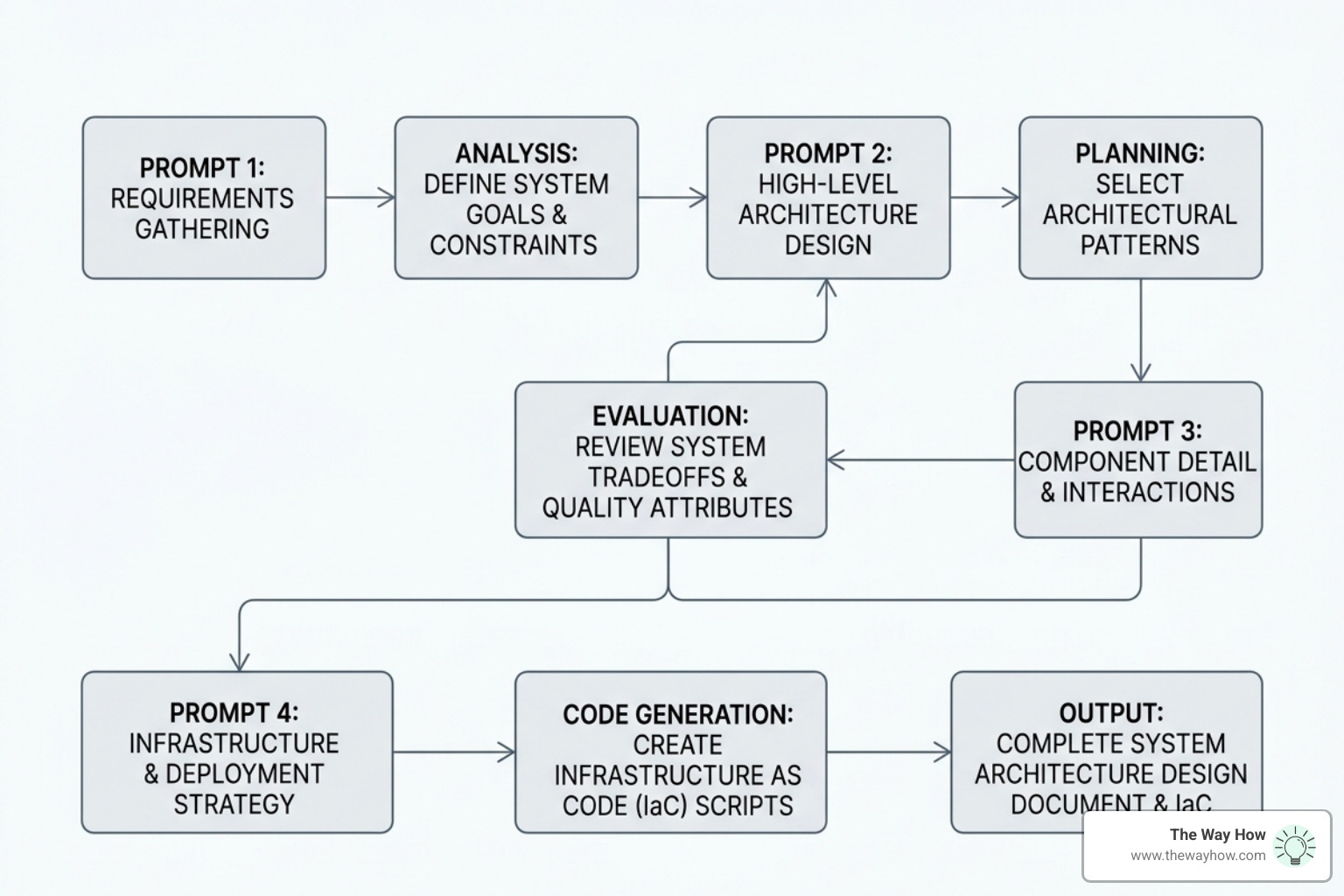
When working on complex projects, the workflow usually involves a “conversation with the codebase.” You might use an MCP (Model Context Protocol) server to give the AI access to your terminal or your Jira tickets. This allows the AI to say, “I see the bug reported in ticket #402; I’ve analyzed the logs and found the failing line in the auth controller.”
For founders looking to integrate these workflows, our AI for Small Business Complete Guide provides a roadmap for scaling these efficiencies without losing the human touch.
Risks, Security, and the Future of Development
We cannot talk about ai in software engineering without addressing the “elephant in the room”: risk.
The primary concerns we see are:
- PII and Secret Leaks: AI models can accidentally “memorize” or leak API keys or Personally Identifiable Information if they are included in prompts.
- Prompt Injection: Malicious actors could potentially trick an AI agent into executing harmful commands if it has direct access to your infrastructure.
- Intellectual Property: There is still a legal “gray area” regarding the copyright of code generated entirely by AI.
To mitigate these, teams must implement “AI Guardrails.” This includes using security filters to scrub PII from prompts and maintaining a “Human-in-the-Loop” for any deployment-related tasks.
Looking ahead, Gartner projects that by 2027, generative AI will require 80% of the engineering workforce to upskill. This doesn’t mean learning a new language; it means learning how to be an orchestrator. The future developer is less like a writer and more like an editor-in-chief.
As noted in The State of AI in Software Engineering, those who fail to integrate AI safely across the entire SDLC will likely struggle to remain competitive. The goal is to move from the “Danger Zone” (high AI use, low automation) to becoming a “Velocity Leader” (high AI use, high automation).
Frequently Asked Questions about AI in Software Engineering
Will AI replace software developers by 2027?
No, but it will fundamentally redefine the role. While AI is projected to automate repetitive tasks and “copy-paste” coding, the demand for developers who can manage complex systems, architectural tradeoffs, and human business requirements is expected to grow. The U.S. Bureau of Labor Statistics projects a 15% growth in software developer roles through 2034, which is much faster than average.
What are the best AI tools for full-stack developers?
As of April 2026, the industry favorites include:
- Cursor: For best-in-class IDE integration and codebase awareness.
- Claude (Anthropic): Widely considered the “sensible default” for complex reasoning and logic tasks.
- Aider: A powerful command-line tool for supervised agentic coding.
- GitHub Copilot: Still the leader for seamless, low-friction autocomplete and chat.
How do I mitigate security risks in AI-generated code?
We recommend a three-layered approach:
- Scrubbing: Use tools to ensure no API keys or PII are sent to the LLM.
- Scanning: Run automated security tools (like Snyk or GitHub Advanced Security) on every piece of AI-generated code.
- Reviewing: Maintain a strict policy that no AI code is merged without a human signature, specifically looking for “hallucinated” security vulnerabilities.
Restoring Certainty in an AI-Driven World
The rapid rise of ai in software engineering has left many leaders feeling like they are standing on shifting sand. The tools change every week, the “best practices” are still being written, and the pressure to move faster is immense.
At The Way How, we believe that the answer isn’t just “more tools.” It’s more clarity.
We help founders and leadership teams remove the uncertainty from their growth systems. Whether it’s through Fractional CMO leadership, HubSpot architecture, or demand generation strategies, we focus on the psychology of how people — and teams — make decisions.
In AI, the biggest risk isn’t the technology failing; it’s the human system around it breaking down. We help you design systems that create trust, momentum, and predictable revenue by aligning your technical capabilities with human behavior.
If you are ready to stop chasing tactics and start building a dependable growth engine, we are here to help you see the problem clearly before we ever talk about solutions.