
The Ghost in the Codebase
AI software engineering is no longer a future concept — it is the operating reality of software teams in 2026.
Here is what that means in plain terms:
| What’s Changing | What It Means for You |
|---|---|
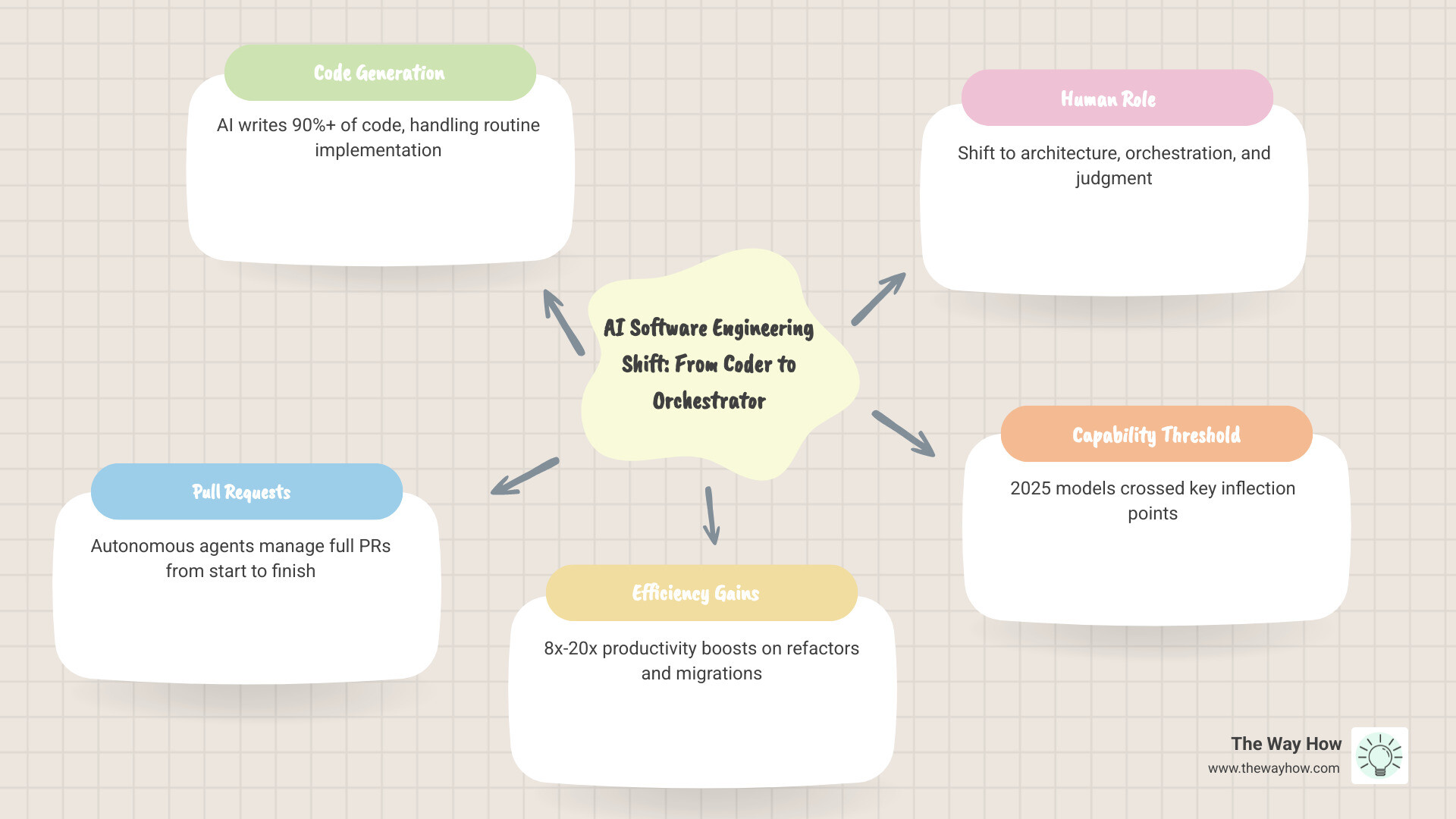
| AI writes 90%+ of code for many developers | Engineers are shifting from coders to orchestrators |
| Tools like Claude Code, Devin, and Codex handle full pull requests | Human judgment moves upstream — to architecture and decisions |
| Companies report 8x–20x efficiency gains on large refactors | The productivity gap between AI-assisted and non-assisted teams is widening fast |
| New model releases in late 2025 crossed a capability threshold | The debate is no longer hypothetical |
The software engineering job is not disappearing. But it is transforming — faster than most organizations are prepared to handle.
That gap between what AI can do today and what most technical leaders believe it can do is where real risk lives. Not in the tools. In the assumptions.
One engineer built 200 pull requests in a single month with every line of code written by AI. A major fintech company migrated millions of lines of legacy ETL code in weeks — not months — at a fraction of the cost. These are not projections. They happened.
And yet, plenty of experienced engineers remain skeptical. Rightfully so. The limitations are real, the hype is loud, and the decisions being made right now — about hiring, tooling, and team structure — will have consequences that compound for years.
This is the debate worth having.
I’m Jeremy Wayne Howell, founder of The Way How and a revenue growth strategist with over 20 years of experience helping companies align systems and human behavior — and the rise of AI software engineering is one of the most consequential decision-making environments I’ve seen leaders navigate under pressure. Understanding what is actually changing, versus what is being marketed, is the only way to move forward with clarity.
Simple ai software engineering word guide:
The Reality of AI Software Engineering in 2026
By April 2026, the threshold for what we consider “coding” has fundamentally moved. We have entered an era where the heavy lifting of syntax, boilerplate, and even complex refactoring is handled by autonomous agents. The release of models like Opus 4.5, GPT-5.2, and Gemini 3 in late 2025 served as an inflection point, pushing AI from a “helpful autocomplete” to a “junior partner with infinite stamina.”
Current tools like Claude Code and Devin are no longer just experimental toys. They are active participants in the development lifecycle. For many teams, ai software engineering now accounts for over 90% of the raw code generated. We are seeing a rise in “vibe-coding,” where developers describe a desired outcome or a system behavior, and the AI handles the implementation across multiple files and directories.
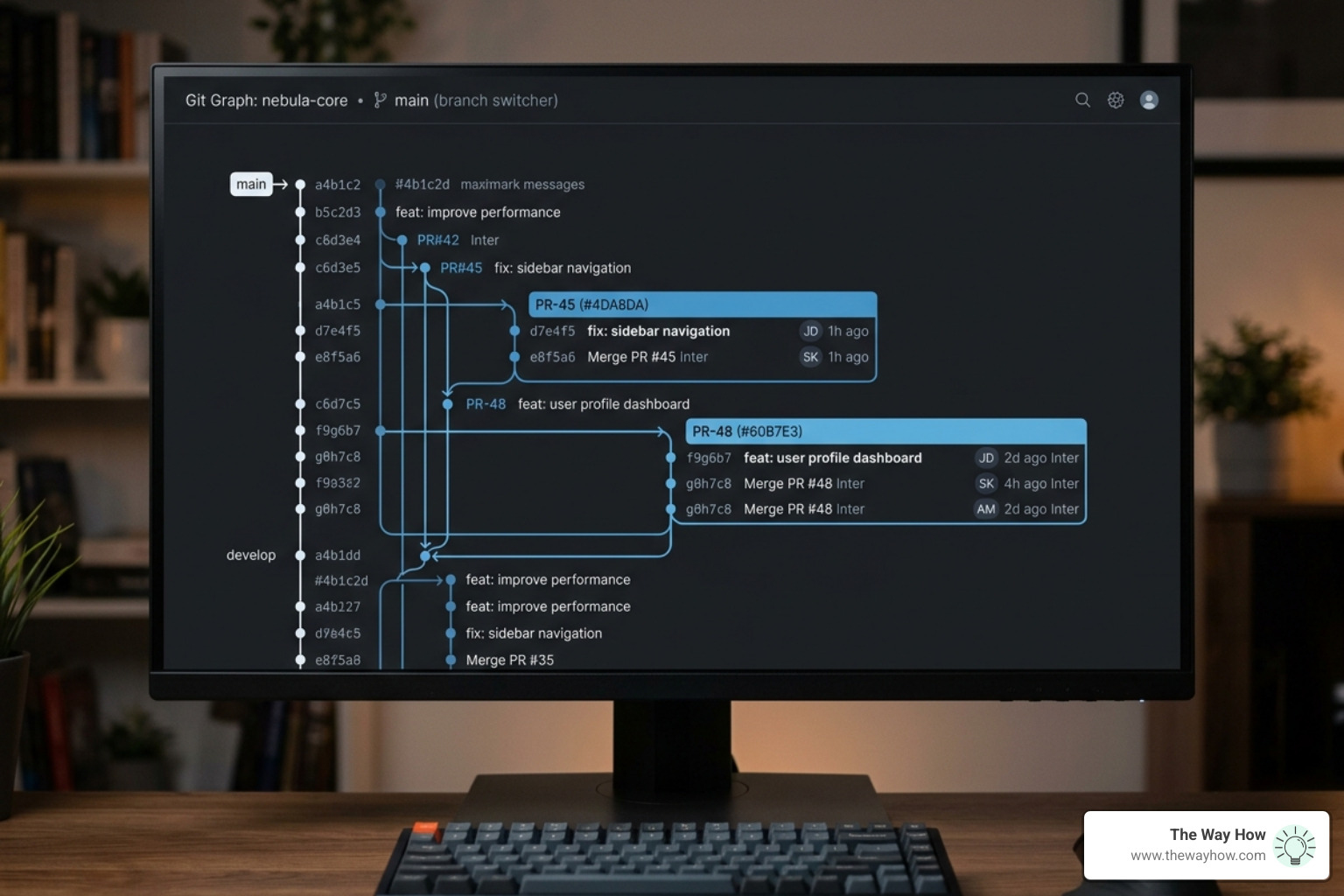
Tools such as Codex | AI Coding Agent have moved beyond the browser and into the core of the developer workflow—integrating directly into terminals and editors. These agents don’t just suggest the next line; they explore files, generate documentation, and run tests autonomously. For example, Boris Cherny, the creator of Claude Code, demonstrated this by generating 200 PRs in a single month where every single line was AI-written. This isn’t just speed; it’s a total shift in how work is produced.
Measuring the Productivity Gains of AI Software Engineering
The numbers coming out of early adopters are staggering. When we look at the psychological impact of these gains, we see a massive reduction in “uncertainty” for leadership. Projects that used to be “black boxes” with unpredictable timelines are becoming more transparent.
Consider the case of Nubank, a massive fintech player. They utilized Devin to refactor an eight-year-old ETL monolith containing millions of lines of code. Traditionally, a migration of this scale would take a massive team months of tedious work. By using AI Application Development Services and autonomous agents, they achieved an 8x gain in engineering time efficiency and a 20x reduction in cost. They didn’t just move code; they fine-tuned the AI on manual examples, which doubled the task completion scores and cut sub-task time from 40 minutes to just 10.
Other firms are seeing similar leaps:
- Harvey reduced early iteration time by 30–50%, allowing their engineers to focus on high-level system design.
- Sierra reported shipping projects in a single weekend that previously would have occupied an entire quarter.
- Wonderful replaced their entire agentic harness with a dedicated CLI for core technology work, streamlining their focus.
These aren’t just marginal improvements. They represent a fundamental decoupling of “output” from “headcount.”
Why AI Software Engineering Still Needs Human Intuition
If AI is writing 90% of the code, what are the humans doing? We believe the role of the software engineer is evolving into that of a “Product-Minded Architect.” As the cost of generating code drops to near zero, the value of knowing what to build and how it fits into the human experience skyrockets.
Strategic architecture and system design remain human domains. While AI can write a function or a component, it struggles to understand the deep business context or the psychological needs of the end-user. This is where CRM Software Developers and general engineers must focus. They are the ones who must ensure that the “perfectly written” code actually solves a “perfectly understood” problem.
Tech lead traits—such as empathy, strategic decision-making, and the ability to define problems clearly—are the new “hard skills.” We are moving away from being language polyglots and toward being orchestrators of complex systems. The human engineer is the one who provides the “contextual anchor” that keeps the AI from drifting into technically correct but practically useless territory.
Beyond the Hype: Roadblocks to Autonomous Development
Despite the meteoric rise of ai software engineering, the road is not without its craters. The primary challenge remains the “out-of-distribution” problem. AI models are trained on public data (like GitHub), but the world’s most critical systems run on proprietary, legacy codebases with unique conventions, undocumented quirks, and decade-old technical debt.
Recent research, including the paper Challenges and Paths Towards AI for Software Engineering, highlights several major roadblocks:
- Hallucinations: AI can invent plausible-looking but non-existent cloud APIs or library functions, leading to “broken” code that looks perfect to the untrained eye.
- Contextual Amnesia: Many agents still struggle with “retrieval,” favoring syntactic similarity over functional logic. They might find a piece of code that looks right but doesn’t work right within the specific logic of a private system.
- Communication Gaps: There is a significant “certainty gap” in how humans and AI communicate. AI agents often lack the ability to express their own uncertainty, leading them to confidently execute incorrect actions.
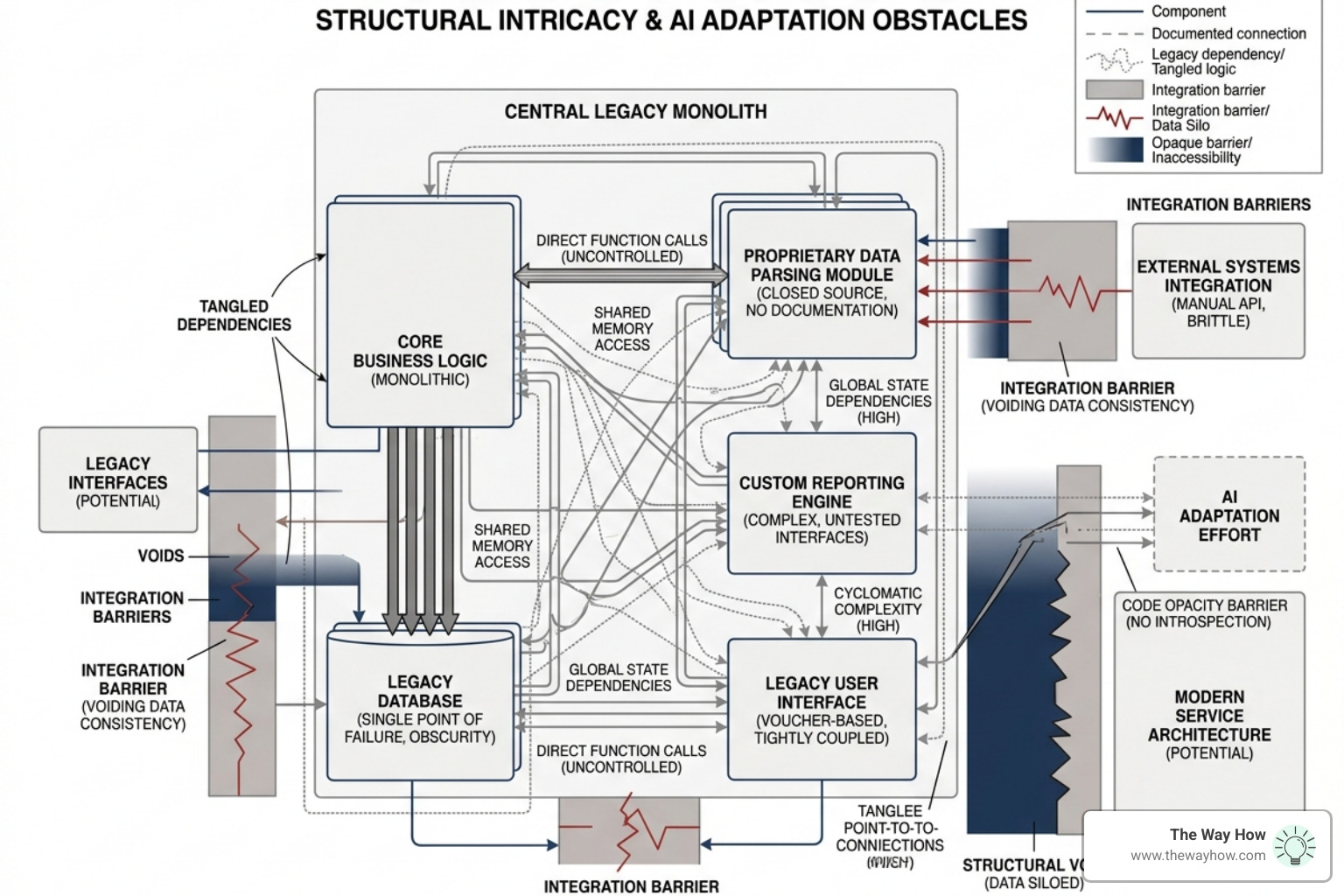
Furthermore, current benchmarks like SWE-Bench often focus on small-scale bug fixes. They don’t yet capture the complexity of massive migrations, performance optimizations, or the subtle “race conditions” that plague large-scale distributed systems. For an engineer, managing these “ghosts in the machine” is a full-time job that requires more than just a prompt.
The Evolution of the Engineering Job Market
The job market is feeling the tremors of this shift. We are seeing a paradox: while some companies are using AI to justify headcount reductions (the “4 engineers doing the work of 5” scenario), others are using that same efficiency to tackle much more ambitious projects that were previously too expensive to attempt.
Tools like Cursor: The best way to code with AI have democratized development, allowing even non-technical stakeholders to “vibe-code” basic prototypes. This has led to a decline in the market value of “low-level” coding skills—boilerplate generation, basic frontend styling, and simple CRUD operations are no longer the moat they once were.
In CRM Development, the focus has shifted from “how do I write this integration?” to “how do I design an integration that creates a seamless customer journey?” Seniority is being redefined. A “Senior Engineer” in 2026 is someone who can manage a fleet of AI agents to maintain a complex ecosystem, rather than someone who simply knows the most esoteric details of a specific framework.
Mastering the Shift from Coder to Orchestrator
To thrive in this environment, engineers must intentionally upskill. It is no longer enough to be “good at Python.” You must be “good at directing AI to write Python.”
Educational resources like the Generative AI Software Engineering Specialization on Coursera have seen massive enrollment (nearly 20,000 students by early 2026). These courses teach the core pillars of the new era:
- Prompt Engineering Patterns: Moving beyond simple questions to complex, multi-step orchestration.
- Agentic Workflows: Building systems where AI agents can analyze requirements, write code, run tests, and manage Git branches autonomously.
- Custom GPTs and Automation: Creating domain-specific assistants that understand your business’s specific legal, financial, or technical constraints.
For those working in specialized ecosystems, mastering the HubSpot API or HubSpot Custom Development now involves using tools like Codex | AI Coding Partner from OpenAI to handle the mechanical parts of the API calls, while the human focuses on the data strategy and revenue impact.
Frequently Asked Questions about AI in Coding
Will AI replace software engineers or amplify them?
The most likely outcome is amplification. History shows us that when a tool makes a task easier (like Excel for accountants or CAD for architects), the industry doesn’t shrink—it expands. We don’t have fewer accountants today than we did in the 1970s; we just have accountants who do much more complex work. The “copy-paste” coder may be at risk, but the problem-solver is more valuable than ever.
What are the best practices for integrating AI agents?
- Use the “Autonomy Slider”: Don’t give an agent full control immediately. Start with tab-completion, move to targeted edits (Cmd+K), and only use full agentic mode for well-defined, isolated tasks.
- Human-in-the-Loop Reviews: Never merge AI code without a human review. AI is like a “junior developer with amnesia”—it’s fast and capable but lacks the long-term memory of why certain architectural decisions were made.
- Automated Testing: Use the AI’s speed to generate exhaustive unit tests for every PR it creates.
How do companies achieve 20x cost savings with AI?
By applying AI to the “drudgery” of software development. Large-scale refactors, like moving from a monolith to microservices or migrating millions of lines of ETL code, are perfect for AI. These tasks are high-volume, repetitive, and often dreaded by human engineers. By fine-tuning agents on a few manual examples, companies can run these migrations in parallel at a speed and cost that was previously impossible.
Building Certainty in an Automated World
At The Way How, we understand that the rise of ai software engineering creates a “certainty gap.” Founders and leaders are often paralyzed by the choice: do we hire more people, or do we invest in more tools?
Our psychology-first approach helps you look past the tactics of AI and focus on the systems of growth. We diagnose where your growth is stalled—whether it’s a technical bottleneck or a lack of strategic clarity—and design systems that create trust and predictable revenue. When AI can write the code, the most important thing you can build is a clear, human-centered strategy.
If you are ready to remove the uncertainty from your growth engine and lead your team through this technical transformation, we are here to guide you.