
When Generic AI Stops Working and the Real Search Begins

Custom ML software solutions are purpose-built machine learning systems designed around your specific data, workflows, and business logic — not generic tools applied to your problem and hoped for the best.
If you’re evaluating providers right now, here’s a quick orientation:
| What You Need | What to Look For |
|---|---|
| Domain-specific accuracy | Custom model training on your proprietary data |
| Data privacy and control | On-premise or private cloud deployment |
| Integration with existing systems | MLOps + API-first architecture |
| Scalable performance | Cloud-native infrastructure, Kubernetes support |
| Ongoing reliability | Drift detection, retraining cycles, monitoring |
Top custom ML solution types by business need:
- Predictive analytics — churn, demand forecasting, fraud detection
- NLP and document intelligence — contracts, medical records, support tickets
- Computer vision — quality control, medical imaging, identity verification
- Recommendation engines — personalization, upsell, content matching
- Agentic AI — autonomous workflows, lead generation, compliance automation
Most companies don’t start here by choice. They arrive after an off-the-shelf AI tool underdelivered, a generic API created data privacy concerns, or a promising pilot never made it to production. The decision to explore custom ML is usually less about enthusiasm for technology and more about exhaustion with tools that almost work.
The gap between “almost works” and “actually works” is exactly where custom ML development lives. And it’s a meaningful gap. Research across the industry consistently shows custom models outperforming generic APIs by 40–60% on domain-specific tasks — and companies leading in AI adoption reporting 20–30% higher EBITDA and up to 40% productivity gains.
But those numbers don’t materialize automatically. They require the right partner, the right process, and honest clarity about where you are before you start.
I’m Jeremy Wayne Howell, a revenue growth strategist with over 20 years of experience helping businesses align technology decisions with buyer psychology and measurable outcomes — including guiding teams through evaluating and implementing custom ml software solutions without the usual fog of vendor hype. The sections ahead are designed to give you the diagnostic clarity you need to make a confident decision.
The Certainty Gap: Why Off-the-Shelf AI Often Fails
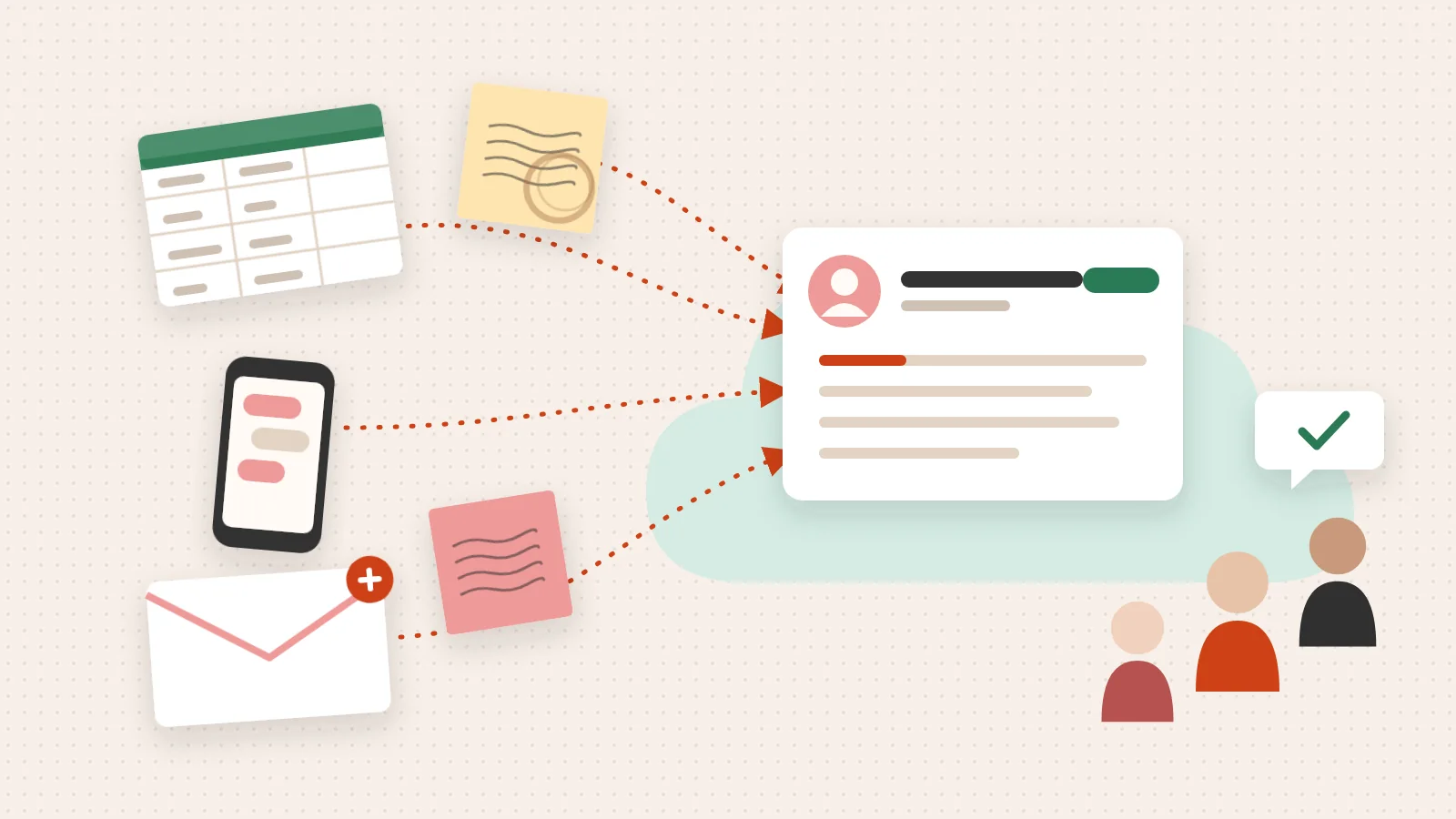
We often see leaders stuck in what we call the “Certainty Gap.” This is the space between the high-level hype of Generative AI and the messy reality of their own internal data. Most off-the-shelf AI tools are designed for the “average” user. They are broad, shallow, and fundamentally disconnected from the nuances of your specific customer journey.
From a behavioral perspective, uncertainty is the primary killer of momentum. When a leadership team doesn’t trust the output of an AI tool because it fails to account for industry-specific terminology or unique business constraints, they stop using it. The tool becomes shelfware.
The search for custom ml software solutions is really a search for predictability. You want to know that if you feed a model your historical sales data, the “Propensity to Buy” score it spits out is based on your actual buyer psychology, not a generic algorithm’s best guess.

Defining Custom ML Software Solutions for Enterprise Growth
When we talk about custom ml software solutions, we aren’t just talking about a fancy wrapper around a public API. We are talking about proprietary systems where you own the intellectual property (IP) and the model is fine-tuned on your specific data sets.
This creates a “competitive moat.” If your competitors are all using the same off-the-shelf tools, they all have the same insights. By building a custom solution, you are leveraging your unique data maturity to create an advantage they cannot simply buy.
To ensure this growth is sustainable, businesses must prioritize data governance. This includes adhering to a strict Privacy Policy for Data Handling and understanding the Terms of Service in AI Development to ensure that your proprietary data remains exactly that—proprietary.
Why Generic APIs Create Uncertainty in Custom ML Software Solutions
The primary risk with generic APIs is the “Black Box” problem. You don’t know exactly how the decision was reached, which makes it nearly impossible to debug when things go sideways. Furthermore, generic models often struggle with domain-specific accuracy. A medical imaging model needs 97% accuracy to be useful; a generic vision API might only hit 75% because it wasn’t trained on specialized pathology.
We’ve found that integration is another major hurdle. A standalone AI tool that doesn’t talk to your CRM is just another silo. Many businesses find they need specialized CRM development services just to make their AI insights actionable for their sales teams.
Building a Moat with Custom ML Software Solutions
True custom ML allows for sub-100ms inference speeds and deep legacy integration. It allows you to bake behavioral data—the “why” behind your customers’ actions—directly into the model. When you own the model, you aren’t subject to the price hikes or “model collapse” of a third-party provider.
By working with experienced CRM software developers, you can ensure that these custom models are feeding real-time intelligence directly into the hands of your frontline employees, turning data into a living, breathing part of your revenue engine.
The Psychology of Choice: Selecting Your Custom ML Partner
Choosing a partner is an exercise in trust. You aren’t just buying code; you’re buying a perspective. You need a team that exhibits “technical empathy”—the ability to understand your business problems before they start talking about Python libraries.
Enterprise-Scale Specialists
For large-scale transformations, several firms have established rigorous frameworks:
- Centroid: They specialize in Oracle-heavy environments, helping businesses leverage Oracle 23ai capabilities within their existing ERP systems. They are experts at using Kubernetes to ensure that custom software is scalable and secure.
- Chetu: Known for their Track2AI™ framework, they provide an 8-step journey from feasibility assessment to continuous optimization. They have deep experience across dozens of industries, from healthcare to fintech.
- Improving: They utilize a 5D Framework (Discovery, Design, Develop, Demonstrate, Deploy). Their focus is on enterprise-grade impact, ensuring that AI projects move beyond the prototype phase and into production.
For companies already heavily invested in specific ecosystems, seeking Hubspot custom development can be a faster route to ROI by layering AI capabilities over existing customer data.
Niche and Boutique Innovators
Sometimes, the best fit is a specialist who understands your specific vertical:
- Digital Scientists: They have a strong track record in healthcare, often achieving a 20X recurring return by using AI to close coding gaps and improve patient engagement.
- Tech.us: A great choice for those looking into Agentic AI. They focus on building intelligent agents that can automate complex pre-construction planning or sales enablement.
- Coherent Solutions: They provide excellent transparency regarding costs and timelines, specializing in AI-driven QA automation that can cut testing effort by 35%.
- Petanux: If security is your primary concern, they offer “Made in Germany” secure AI solutions that are fully GDPR-compliant and can be deployed on-premise.
- Arc53: They focus on open-source foundations, ensuring you have full source code ownership and no vendor lock-in, particularly for RAG (Retrieval-Augmented Generation) systems.
- Crescent AI: They specialize in production-ready models with a typical 8-12 week delivery timeline, emphasizing that custom models can achieve 99%+ accuracy compared to generic alternatives.
- RV Technologies: They focus on “AI-First Engineering,” helping businesses build everything from predictive maintenance platforms to custom credit decisioning engines.
- Nucleus AI: They offer an end-to-end pipeline for fine-tuning Large Language Models (LLMs) on private enterprise data.
- AltF2: They bring a strategic lens to ML, particularly for private equity and sales organizations, using custom Azure Databricks pipelines to unify CRM and market data.
Strategic Frameworks for Deploying Intelligence
A successful deployment isn’t a “one and done” event. It’s a cycle. It starts with a heavy Discovery phase to diagnose the actual business problem. From there, it moves into data engineering—cleaning the “swamp” of unstructured data into something usable.
Once the model is trained, the work of MLOps begins. This is the operational backbone that ensures the model doesn’t “drift” or lose accuracy over time. To make these models useful, they must be integrated into your workflow, often requiring a deep understanding of the Hubspot API or other core business systems.
The 5D and Track2AI™ Methodologies
Most successful projects follow a variation of these steps:
- Define/Discover: What is the actual problem? (e.g., “Our churn is too high because we don’t know who is unhappy.“)
- Design/Develop: Architecting the solution and building the data pipelines.
- Debug/Demonstrate: Rigorous testing for bias and accuracy.
- Deploy: Moving the model into a production environment (often via Kubernetes).
- Deliver/Evolve: Continuous monitoring and retraining.
For technical teams, understanding the nuances of CRM for web developers is critical for ensuring that the AI’s output is actually accessible to the end-user.
The Real Cost of Intelligence: POC, MVP, and Beyond
One of the biggest sources of uncertainty is the price tag. Because custom ml software solutions are bespoke, costs can vary. However, we can look at industry averages to set expectations.
Breaking Down the Investment
- Proof of Concept (POC): $5,000 – $50,000. This is a 1-3 month feasibility study to see if your data can actually solve the problem.
- Minimum Viable Product (MVP): $20,000 – $200,000. A 3-6 month build that results in a functional tool used by a subset of your team.
- Full-Scale Production: $50,000 – $500,000+. This is the enterprise-grade platform, fully integrated and scalable, often taking 8-12 months.
Maintenance is a recurring cost. Models require semi-annual retraining cycles and drift detection to remain accurate. If you don’t budget for MLOps, your high-performance model will eventually become a liability.
Navigating the Technical Landscape of Custom ML Software Solutions
The “stack” powering these solutions has matured significantly. While you don’t need to be a coder to hire a firm, knowing the terminology helps:
Frameworks: TensorFlow and PyTorch are the industry standards for building neural networks. Scikit-learn is often used for more traditional “classical” machine learning.
Infrastructure: Kubernetes and Docker allow for cloud-native architecture, meaning your AI can scale up or down based on demand.
Modern Trends:
- Generative AI: Creating new content or code.
- Agentic AI: Models that can take actions (like sending an email or updating a record) rather than just providing data.
- RAG Systems: Connecting an LLM to your private knowledge base so it doesn’t “hallucinate.”
- Computer Vision: Using libraries like YOLO or ResNet to “see” defects in manufacturing or anomalies in X-rays.
Frequently Asked Questions about Custom Machine Learning
How does custom ML differ from off-the-shelf AI tools?
Custom solutions are architected around unique business logic and proprietary data, whereas off-the-shelf tools provide generic capabilities that often fail to address specific organizational nuances or security requirements.
What is the typical timeline for a custom ML project?
A standard Proof of Concept (POC) takes 1-3 months, an MVP typically requires 3-6 months, and a full enterprise-grade platform can take 8 months to a year depending on data complexity and integration needs.
How do you measure the ROI of a custom ML implementation?
Success is measured through specific KPIs such as productivity gains (often 20-40%), reduction in operating costs, improved prediction accuracy over generic models (40-60% improvement), and direct revenue capture from automated workflows.
Restoring Momentum Through Data Clarity
At The Way How, we believe that technology should never be a distraction from the human element of business. Whether you are building a custom recommendation engine or a predictive churn model, the goal is always the same: removing uncertainty from the customer journey.
We help leadership teams diagnose why growth has stalled and identify the “certainty gaps” that are preventing their systems from scaling. By blending strategic clarity with behavioral insight, we ensure that your investment in custom ml software solutions isn’t just a technical achievement, but a dependable growth engine.
If you are ready to stop chasing tactics and start designing a system that creates trust and predictable revenue, we invite you to connect with our experts to design your growth system. Let’s turn your data into your most valuable strategic asset.