
The Right Tools Won’t Save a Broken Strategy — But the Right Strategy Makes Tools Work

Marketing enablement tools are platforms and systems that help marketing teams create, organize, deliver, and measure content so that sales teams can close more deals, faster.
Here are the top categories and tools to evaluate:
| Tool Category | What It Does | Examples |
|---|---|---|
| Content Management | Centralizes and organizes sales collateral | Spekit, Enablix |
| Digital Sales Rooms | Creates personalized buyer microsites | emlen, Allego |
| Revenue Enablement Platforms | Unifies learning, coaching, and content | Allego, Seismic |
| Brand Templating | Lets reps customize content without breaking brand | Marq |
| Conversation Intelligence | Analyzes calls to improve messaging and coaching | Gong, RingCentral |
| CRM Integration Layer | Connects enablement data to pipeline data | HubSpot, Salesforce |
But here’s what most comparison articles won’t tell you: the tool is rarely the problem.
Most revenue leaders who feel stuck have already tried tools. What they’re missing is a clear system — one that connects buyer psychology to content, content to rep behavior, and rep behavior to revenue outcomes. Without that foundation, adding another platform just adds noise.
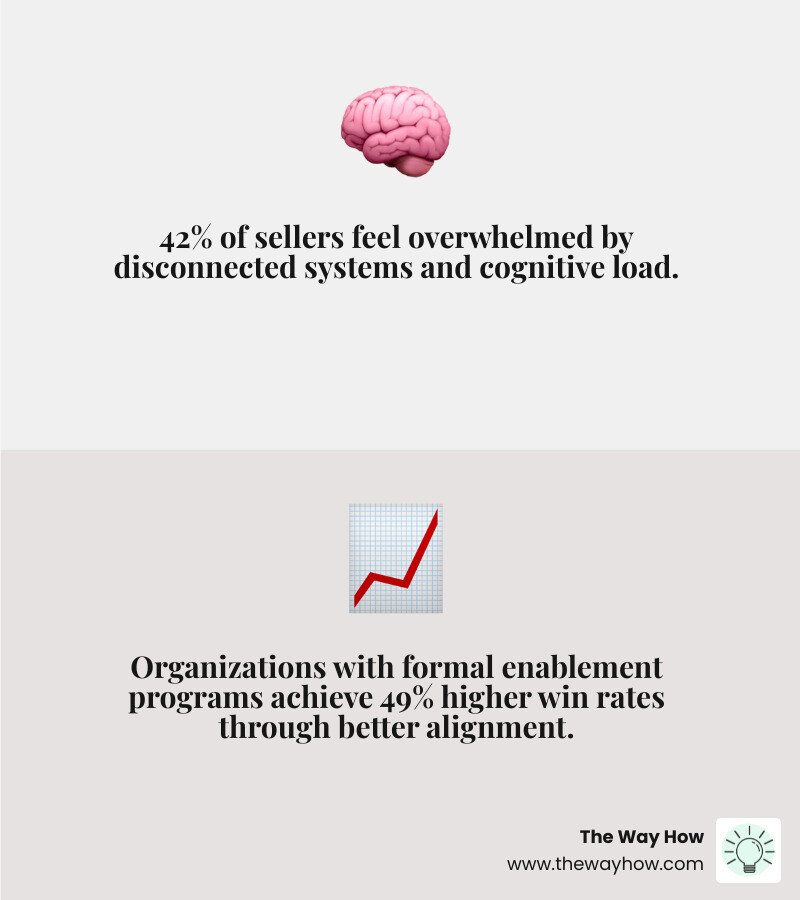
Organizations with formal enablement programs achieve up to 49% higher win rates on forecasted deals. Yet 42% of sellers already feel overwhelmed by disconnected systems. That gap — between having tools and having clarity — is exactly where growth stalls.
This guide is designed to help you close that gap. It covers what marketing enablement actually is, how it differs from sales enablement and marketing operations, which tools are worth evaluating in 2026, and how to measure whether any of it is working.
I’m Jeremy Wayne Howell, founder of The Way How, a psychology-first revenue strategy firm where I’ve spent over 20 years helping founders and revenue teams build the systems — including marketing enablement tools — that create predictable growth rather than reactive hustle. My work focuses on diagnosing what’s broken underneath the performance problem before recommending any platform or process.
The Psychology of Enablement: Closing the Certainty Gap
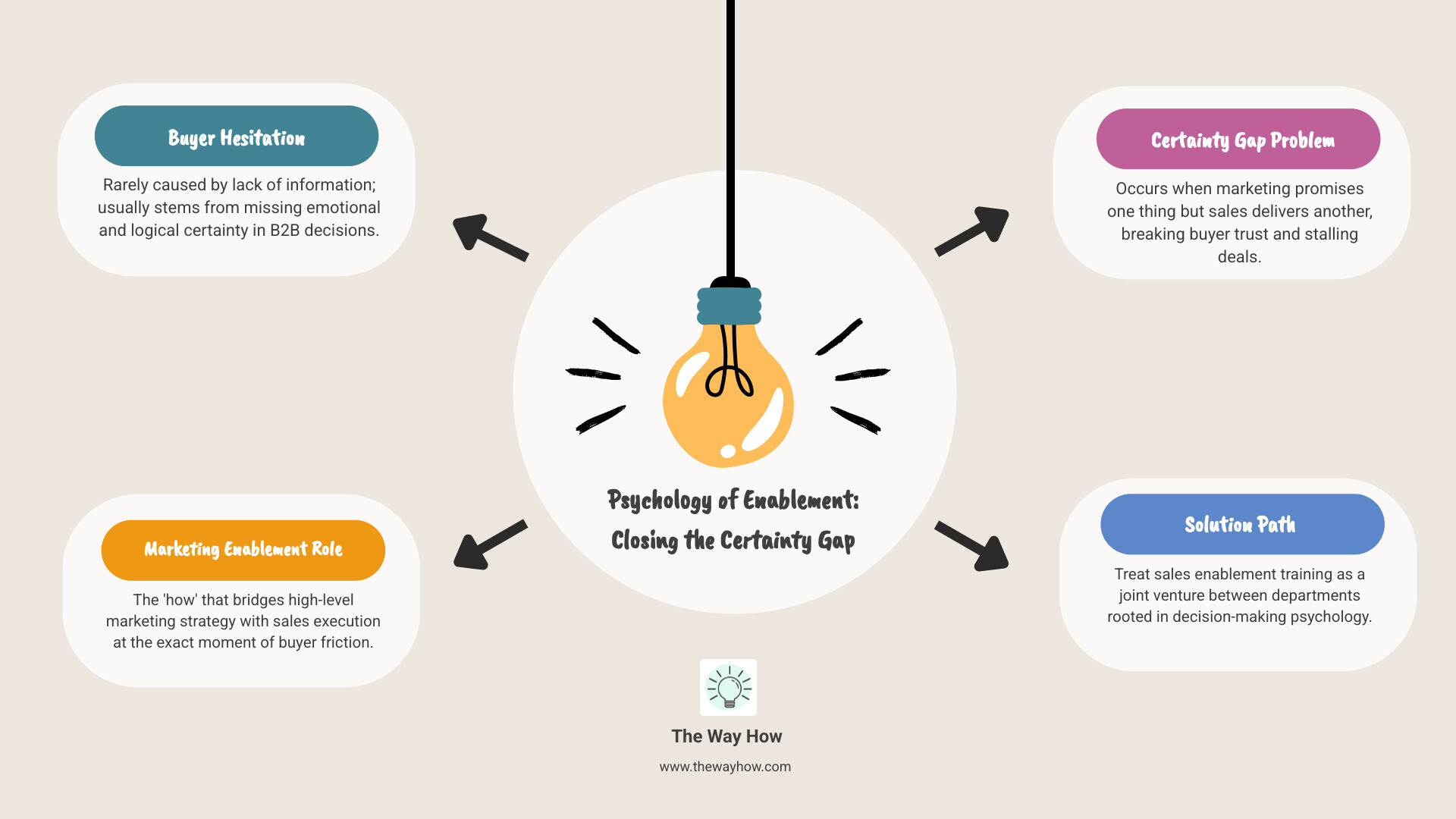
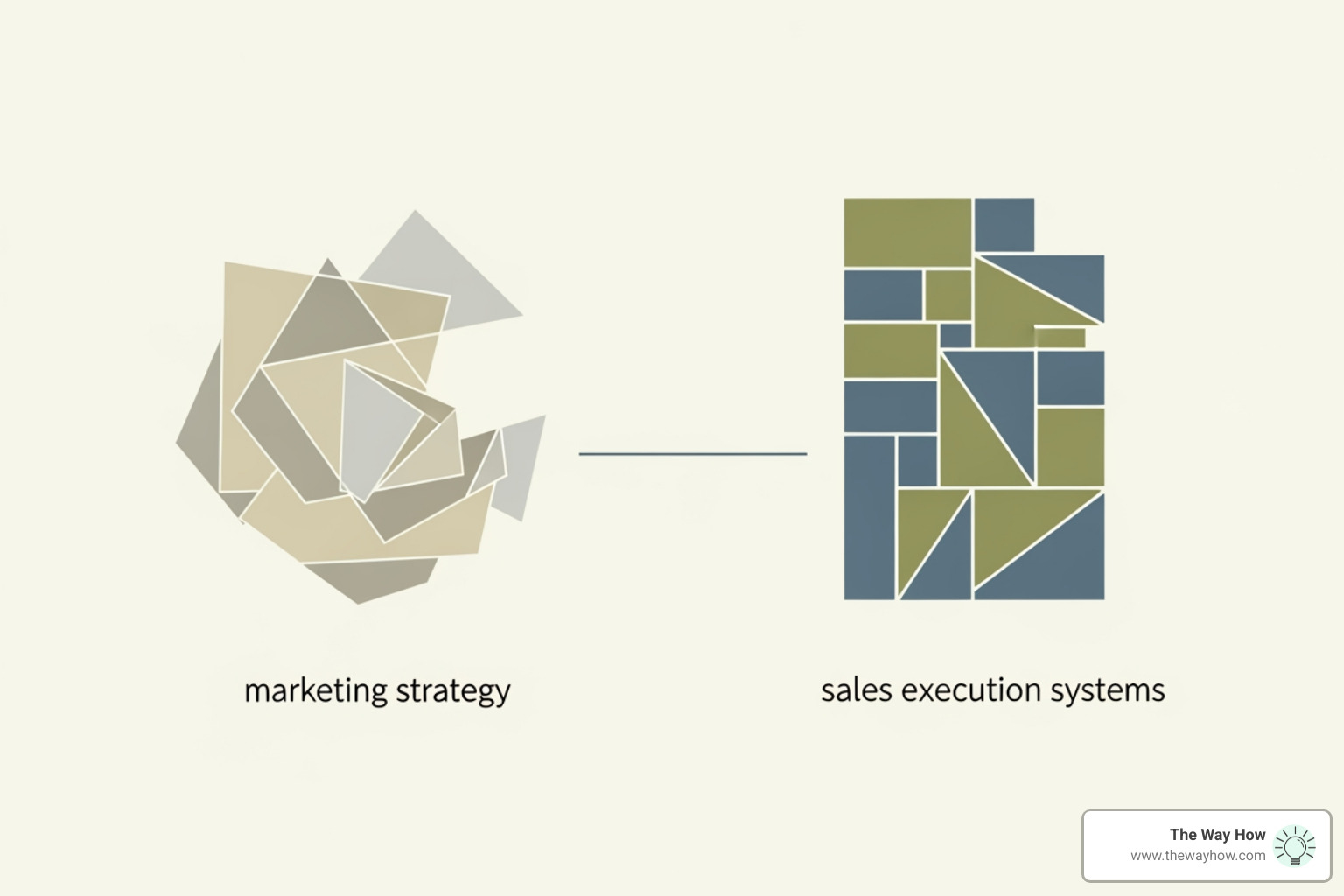
When a prospect hesitates, it is rarely because they lack information. It is usually because they lack certainty. In the B2B world of 2026, the buyer’s journey is often a search for emotional and logical safety. Marketing enablement is the bridge that carries a high-level marketing strategy into the hands of a sales rep at the exact moment a buyer feels that friction.
If marketing creates the “what” and sales handles the “who,” enablement is the “how.” We see many organizations struggle because they treat these as silos. This creates a certainty gap where the marketing message promises one thing, but the sales execution delivers another. To fix this, we must look at sales enablement training as a joint venture between departments, rooted in understanding decision-making psychology.
Defining the Role of Marketing Enablement
Marketing enablement is the process of empowering marketers to be more productive by equipping them with the technology, processes, and training they need to support the revenue engine. It shifts the focus from marketers acting as “generalists” who simply produce assets, to functional experts who build strategic narratives.
A core part of this is content governance. It isn’t enough to make a PDF; you must ensure that the story lands consistently across every rep and every buying committee. When we enable a marketing team, we are giving them the power to ensure their hard work actually gets used in the field.
How Enablement Differs from Marketing Operations
It is easy to confuse marketing enablement with marketing operations, but they serve different psychological needs. Marketing operations is about the “plumbing”—tech stack optimization, data gathering, and process streamlining. It focuses on efficiency.
Marketing enablement, however, is human-centric. It focuses on effectiveness. While operations might ensure the CRM is running, enablement ensures the human using the CRM has the behavioral insights and content they need to move a deal forward. We think of operations as building the car, while enablement is the driver’s education and the GPS that helps the driver reach the destination.
Why Enablement Drives Revenue Growth
The business case for marketing enablement tools is clear: they drive revenue by aligning the organization around a single source of truth. Organizations that take an intentional approach to enablement outperform those that treat it as an afterthought.
By tracking content ROI and improving sales alignment, companies can identify exactly which pieces of content contribute to lead generation and which are simply gathering digital dust. When marketing knows what works, they can double down on high-impact assets, leading to a more efficient use of the budget. You can explore more about the physical tech behind this in our guide on sales enablement tools.
Reducing Seller Overwhelm and Friction
We are currently seeing a crisis of cognitive load in sales departments. The average seller uses eight different tools to close a deal. Research shows that 42% of sellers feel overwhelmed by these disconnected systems.
Marketing enablement helps reduce this friction by simplifying workflows. Instead of making a rep hunt through five different folders for a case study, modern tools deliver that content directly into their existing workflow. By reducing the “search time,” we allow reps to spend more time on what they actually do best: building relationships.
Enhancing the Buyer Experience with Video
In 2026, the way buyers consume information has fundamentally shifted. Four times as many buyers prefer video over written content. This is a massive opportunity for marketing enablement. By providing reps with video case studies and personalized video demos, we tap into visual storytelling that builds trust much faster than a static whitepaper. Video allows a buyer to see and hear the success of others, which reduces the perceived risk of a purchase.
Top Marketing Enablement Tools for High-Growth Teams
Selecting the right marketing enablement tools requires looking past the feature list and focusing on how the tool integrates into the human element of your sales cycle.
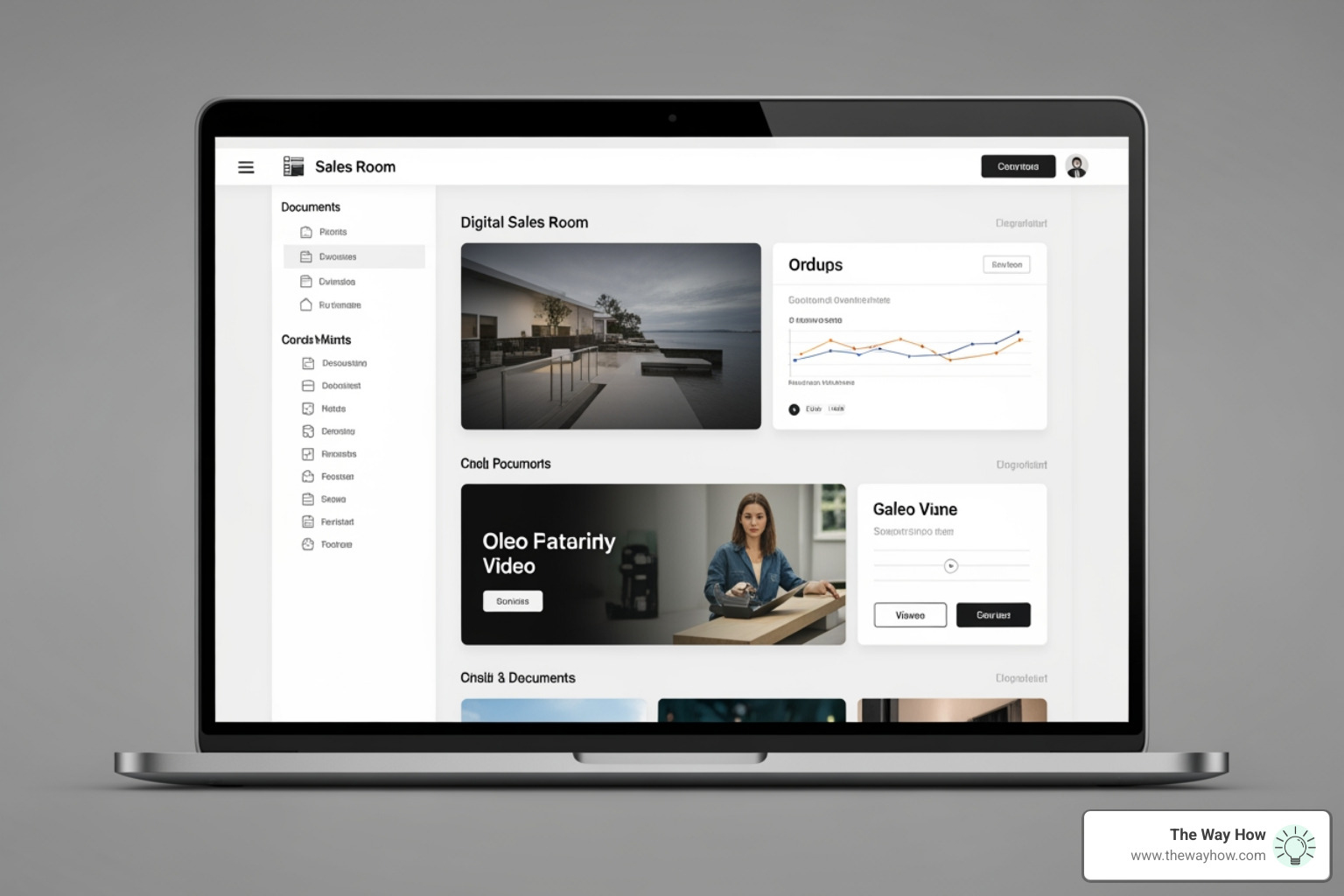
- emlen: This platform excels at creating Digital Sales Rooms—personalized buyer microsites that centralize all deal-related content. It provides real-time alerts when prospects engage, revealing hidden stakeholders in the buying committee.
- Allego: A heavy hitter for revenue enablement that unifies learning, coaching, and content. It uses AI to analyze sales calls and suggest winning behaviors, making it ideal for teams that need to scale coaching.
- Spekit: This tool focuses on “in-workflow” delivery. It uses AI to surface the right content inside tools like Salesforce or Gmail, so reps never have to leave their active window to find an answer.
- Marq: Formerly known as Lucidpress, Marq solves the “rogue content” problem. It allows marketing to create brand-locked templates that sales reps can personalize without accidentally changing the logo or using the wrong font.
Essential Features of Modern Marketing Enablement Tools
The best tools in 2026 share several core characteristics. First is contextual delivery—the ability to suggest content based on the stage of the deal. Second is AI-powered search that can query legacy documents to find instant answers. Finally, usage analytics are non-negotiable. If you don’t know which assets are actually moving the needle, you are just guessing.
Customization Without Brand Dilution
One of the biggest friction points between sales and marketing is the “edit.” Sales reps want to personalize content to feel relevant to their prospect; marketing wants to maintain brand integrity. Tools like Marq solve this through smart fields and brand templates. Reps can change the prospect’s name and industry, but the core strategic narrative remains untouched. This self-serve design model saves time for the creative team while ensuring the sales team feels empowered.
Building a Sustainable Enablement Strategy
A tool without a plan is just an expense. To build a sustainable strategy, we recommend starting with a skills gap analysis. Talk to your managers and individual contributors to find out where they are struggling. Is it a lack of content, or is it that they can’t find the content that already exists?
Once the gaps are identified, document your Standard Operating Procedures (SOPs). This creates a foundation for your training programs. Marketing enablement should not be a one-time event; it is a living part of the employee experience. For those just starting, exploring marketing automation software examples or best marketing automation tools for small business can provide a baseline for what is possible.
Integrating Marketing Enablement Tools into Your Tech Stack
Your enablement tools must talk to your CRM. Whether you are using a marketing automation hubspot setup or Salesforce, bidirectional sync is vital. When a rep sends a piece of content from an enablement platform, that activity should automatically log in the CRM. This allows leadership to see the direct correlation between content engagement and pipeline movement. For a deeper dive into this architecture, see our marketing automation hubspot guide.
Creating Deal-Specific Enablement Briefs
A generic content library is no longer enough. The “Enablement Brief” is a concept where AI assembles intelligence from call recordings, CRM data, and internal content to give a rep a specific game plan for a single deal. It tells the rep, “Based on the buyer’s concerns in the last call, here are the three case studies and the one pricing sheet you should send next.” This level of contextual guidance is what separates high-growth teams from the rest.
Measuring What Matters: KPIs for 2026
We must move beyond vanity metrics like “email opens.” To measure the success of your marketing enablement tools, we look at behavioral data.
Key metrics to track include:
- Content Usage: Which assets are being shared by reps?
- Engagement Rates: How long are buyers spending on specific pages of your proposals?
- Pipeline Velocity: Does the use of enablement tools lead to a faster time to close?
- Revenue Attribution: Can we tie a closed deal back to a specific Digital Sales Room or video demo?
While indirect metrics like Customer Acquisition Cost (CAC) and Customer Lifetime Value (CLV) are important for the overall business, enablement teams should focus on how they are reducing friction in the sales cycle.
Tracking Content ROI and Impact
By using tools that offer buyer signals, marketing can finally see which content “works.” If you notice that every deal that closes has viewed a specific video case study, you have proven the ROI of that content. This data allows marketing to stop guessing and start investing in the assets that actually drive revenue.
Qualitative Feedback and Iteration
Data tells you what is happening, but feedback tells you why. Regularly survey your sellers and managers. Are the tools easy to use? Is the content actually helpful in live conversations? Use this qualitative feedback to iterate on your training programs and content strategy. Enablement is an iterative process, not a destination.
Frequently Asked Questions about Marketing Enablement
How does marketing enablement improve sales and marketing alignment?
It creates a shared language and a shared set of goals. When both teams are looking at the same engagement data, they can collaborate on what content needs to be created next based on actual buyer behavior, rather than gut feelings.
What are the core components of a successful enablement strategy?
The core components are technology (the right tools), process (clear SOPs), content (high-quality, personalized assets), and training (ensuring the team knows how to use everything effectively).
How do I choose between a CMS and a dedicated enablement platform?
A CMS is great for storing files, but an enablement platform is designed for activation. If you just need a place to put PDFs, a CMS is fine. If you want to track engagement, deliver content in-workflow, and provide deal-specific guidance, you need a dedicated enablement platform.
Restoring Momentum to Your Growth Engine
At The Way How, we believe that growth stalls when uncertainty creeps into the system. Whether it is a rep who isn’t sure which deck to use, or a buyer who isn’t sure if your solution fits their needs, uncertainty is the enemy of revenue.
Our psychology-first approach focuses on removing that uncertainty. By combining Fractional CMO leadership with robust HubSpot architecture and human-centered strategy, we help you build a marketing enablement system that doesn’t just look good on paper but actually drives predictable results. If you are ready to turn your marketing into a dependable growth engine, we invite you to learn more about our strategic services.