

Beyond the Dashboard: Why Your Execution is Stalled

Marketing Ops Execution That Actually Works
Marketing ops execution is the process of turning marketing strategy into repeatable, measurable action — through aligned people, documented processes, integrated technology, and clean data.
If you’re trying to execute marketing operations effectively, here’s what actually matters:
| What to Get Right | Why It Matters |
|---|---|
| Process before tools | Tools without process create expensive noise |
| Data governance | Clean data drives real decisions, not gut feelings |
| Clear ownership | Accountability gaps are the #1 execution killer |
| Sales-marketing alignment | Misalignment leaks pipeline at every stage |
| Measurement infrastructure | Pre-defined metrics connect activity to revenue |
Most marketing teams don’t have an ideas problem. They have an execution infrastructure problem.
The campaigns look fine on paper. The tools are paid for. The strategy deck is polished. But revenue isn’t moving — and nobody can quite explain why.
There’s a telling observation that surfaces again and again inside high-growth organizations: nobody knows what marketing operations is until something breaks. Then suddenly everyone’s asking who’s supposed to fix it. By that point, the pipeline has stalled, the data is a mess, and leadership is questioning the entire marketing budget.
This is the gap between strategy and execution. And it’s more common — and more costly — than most revenue leaders want to admit.
I’m Jeremy Wayne Howell, founder of The Way How, and over 20 years of hands-on work in marketing, sales, and go-to-market strategy has shown me that marketing ops execution is almost never a technology problem — it’s a process, accountability, and human clarity problem. The sections ahead will show you exactly how to fix it.
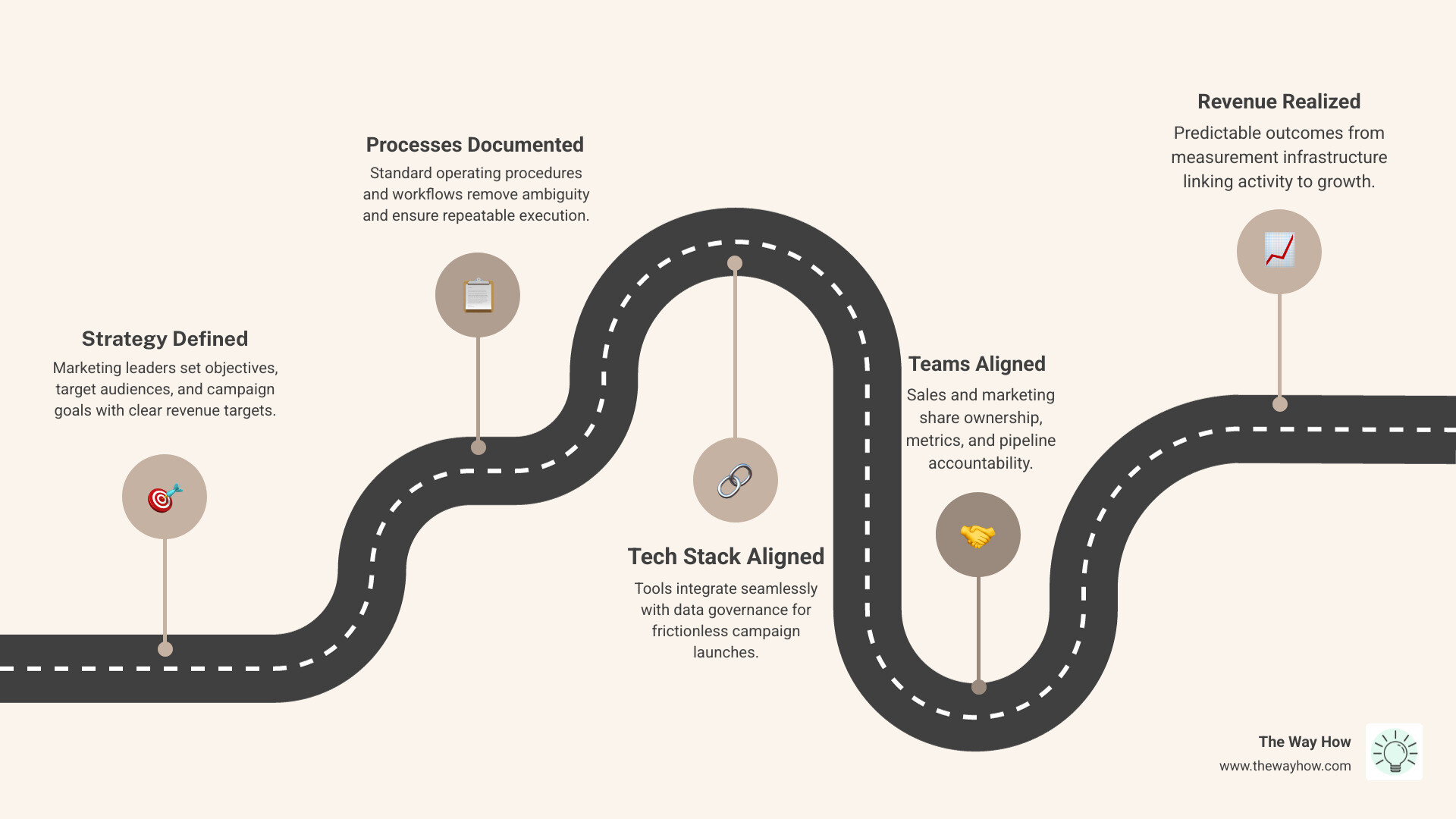
In April 2026, the complexity of the marketing landscape has reached a tipping point. U.S. firms are spending an average of 9.4% of their revenue on marketing, yet many leaders feel they are flying blind. The reason? A fundamental disconnect between the “what” (strategy) and the “how” (marketing ops execution).
When execution stalls, it usually isn’t because the creative isn’t “punchy” enough. It’s because of operational gaps that create psychological uncertainty. From a behavioral perspective, when your team doesn’t have a clear, documented path to launch a campaign, they default to “busy work.” They spend hours manually pulling reports or fixing broken syncs between tools instead of thinking strategically.
This uncertainty trickles down to the buyer. If your internal systems are chaotic, the external customer experience becomes fragmented. A lead might receive a generic email three days after requesting a high-intent demo because the routing logic failed. That isn’t just a technical glitch; it’s a trust-killer.
Statistics show that 64% of marketing leaders cite proving financial impact as their top challenge. Without a robust execution framework, marketing remains a cost center. With it, it becomes a predictable revenue driver.
The Invisible Infrastructure: Why Strategy Fails Without Marketing Ops Execution
We often say that MarOps is the “left-brain” thinking applied to “right-brain” creative functions. While general marketing focuses on the message and the audience, marketing operations focuses on the infrastructure that allows those messages to reach the audience efficiently.
According to Atlassian’s guide to marketing operations, MarOps is the strategic function that connects strategy with execution by managing processes, technology, and data. It is the backbone of high-performing teams. Without this backbone, even the most brilliant GTM strategy will collapse under the weight of its own complexity.
One of the primary reasons strategy fails is the “accountability gap.” In many organizations, it’s unclear who owns the data quality in the CRM or who is responsible for the technical specs of a new lead magnet. This is where marketing operations management steps in. It provides the governance needed to ensure that every tool in your stack has an owner and every process has a documented workflow.
For many of our clients, this starts with understanding their HubSpot CRM Architecture. If the foundation of your CRM is built on shaky ground — inconsistent naming conventions, duplicate records, or “leaky” funnels — no amount of high-spend advertising can fix the results.
Aligning Human Behavior with Marketing Ops Execution
At The Way How, we believe in a psychology-first approach. Marketing ops execution isn’t just about moving data from point A to point B; it’s about removing friction from the human decision-making process.
When a buyer interacts with your brand, they are looking for signals of certainty. If your HubSpot Operations Hub is configured correctly, it ensures a seamless journey that builds momentum. Automation should feel like a helpful hand, not a robotic intrusion.
By utilizing marketing data analysis, we can identify where buyers are dropping off. Is it a cognitive load issue? Is the form too long? Or is the follow-up timing misaligned with their urgency? MarOps allows us to diagnose these behavioral friction points and fix them at scale.
Leveraging AI to Scale Your Marketing Ops Execution
As we navigate 2026, AI has transitioned from a buzzword to a “sentient system” within the MarOps stack. It’s no longer just about generating copy; it’s about predictive analytics and real-time adaptation.
With HubSpot marketing automation, AI can now handle the “grunt work” that used to consume 80% of an operator’s time. This includes:
- Cleaning and normalizing data automatically.
- Predicting which leads are most likely to close based on behavioral patterns.
- Optimizing send times and channel selection for individual users.
To get the most out of these advancements, we recommend following specific HubSpot Operations Hub tips to ensure your AI isn’t just creating more noise. The goal is workflow optimization that allows your team to move from being “order-takers” to “system architects.”

The Core Pillars of a Revenue-Driving Operations Function
A successful marketing ops execution strategy rests on four interconnected domains. If any of these pillars are weak, the entire revenue engine wobbles.
- Platform Operations: This is the management of your martech stack. It’s estimated that martech now represents 19% of marketing budgets, yet many firms utilize only 42% of their tools’ capabilities. Platform ops ensures you aren’t paying for “shelfware.”
- Campaign Operations: This is where the magic of execution happens. It involves the planning, resourcing, and launching of campaigns. It ensures that every asset is tracked and every touchpoint is measured.
- Marketing Intelligence: Using marketing analytics solutions, this pillar turns raw data into actionable insights. It moves the conversation from “I think this worked” to “The data shows a 15% lift in MQL-to-SQL conversion.”
- Marketing Dev Ops: This focuses on the technical integrations and custom builds that keep the stack connected. It’s the “glue” that ensures your lead data flows perfectly from a LinkedIn ad into your CRM and out to your sales team’s Slack channel.
When building your team, you must choose a structure that fits your stage of growth:
| Model | Pros | Cons |
|---|---|---|
| Centralized | High consistency, standard data governance | Can become a bottleneck for fast-moving teams |
| Decentralized | High speed, team-specific agility | Leads to data silos and tool sprawl |
| Hybrid | Balances standards with local flexibility | Requires very clear communication and documentation |
Regardless of the model, the HubSpot system design must prioritize data hygiene. Clean data is the only way to achieve predictable growth.
From Order-Taker to Strategic GTM Partner
Many marketing ops professionals hit an “execution ceiling.” They are viewed as the people who “fix the HubSpot workflows” rather than the people who “drive the GTM strategy.” To break this ceiling, MarOps must learn to speak the language of finance.
Instead of talking about open rates, talk about pipeline velocity. Instead of talking about form fills, talk about the cost per acquisition (CAC) and return on marketing investment (ROMI). When you connect marketing ops execution to commercial outcomes, you become an indispensable partner to the C-suite.
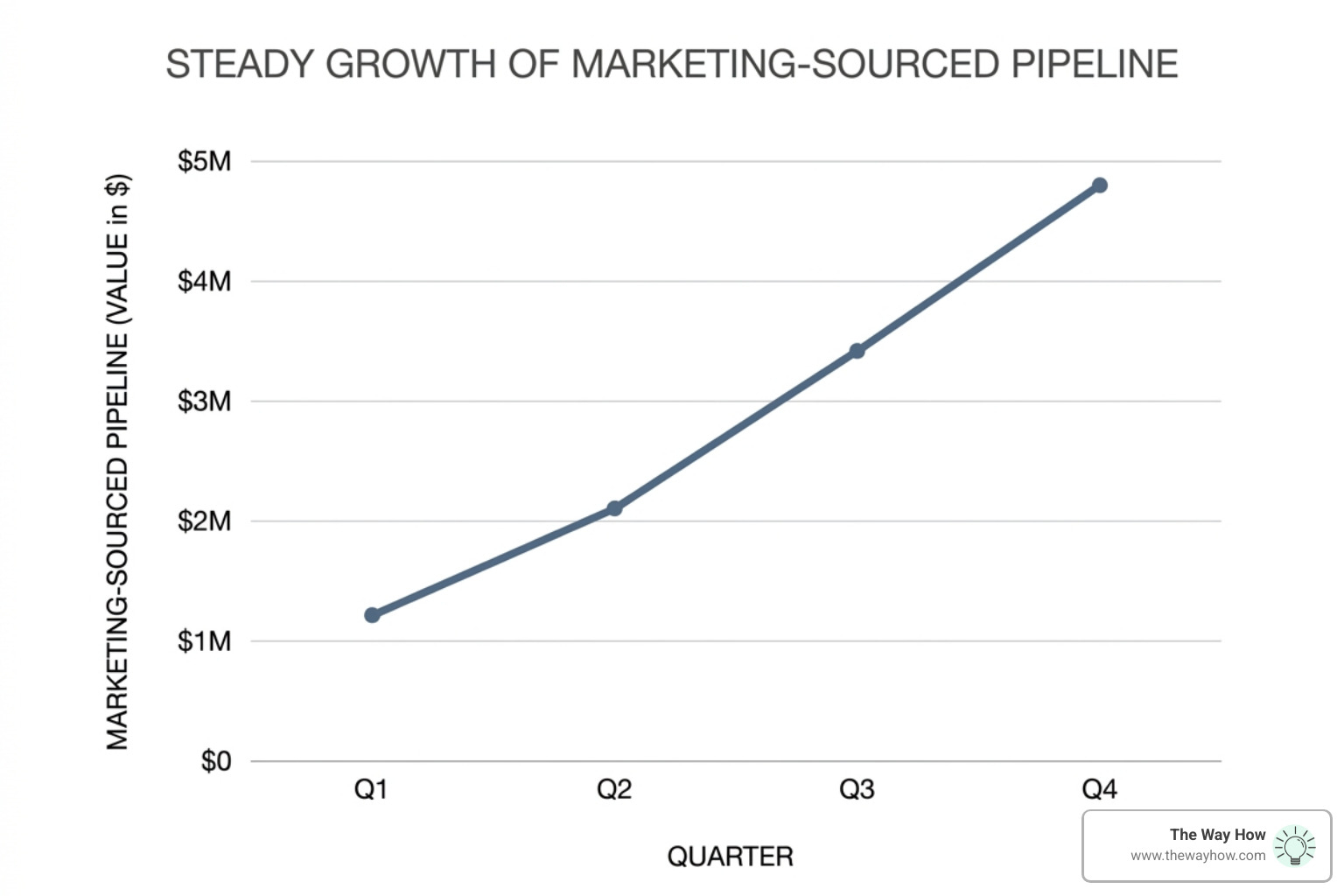
Effective HubSpot CRM implementation allows you to show exactly how marketing efforts are fueling the sales pipeline. This alignment is the heart of Revenue Operations (RevOps). By following a HubSpot integration guide, you can ensure that sales and marketing are looking at the same “source of truth,” eliminating the finger-pointing that often happens when numbers don’t add up.
Frequently Asked Questions about Marketing Operations
What is the difference between MarOps and RevOps?
MarOps is a specialized function within the marketing department focused on marketing-specific technology, processes, and data. RevOps is a broader, holistic philosophy that aligns MarOps, SalesOps, and CS Ops. While MarOps focuses on the execution of marketing campaigns, RevOps focuses on the entire end-to-end revenue process, ensuring there are no handoff gaps between departments.
When should a company invest in a dedicated MarOps role?
The general rule of thumb is that once a marketing team reaches 8 to 15 people, or when the complexity of the martech stack begins to consume more than 20% of the senior leadership’s time, it’s time for a dedicated hire. Other signs include significant reporting delays, high levels of lead “leakage,” and a general feeling that you are underutilizing your expensive software investments.
How does MarOps improve marketing ROI?
MarOps improves ROI by eliminating waste and increasing efficiency. Through lead scoring and attribution models, MarOps identifies which channels are actually driving revenue, allowing you to reallocate budget away from underperforming tactics. Furthermore, by using HubSpot analytics, MarOps can identify bottlenecks in the funnel and implement conversion rate optimization strategies that turn more existing traffic into paying customers.
Restoring Momentum: Your Path to Predictable Growth
At The Way How, we don’t believe in chasing the latest marketing “hacks.” We believe in the power of a diagnostic approach. Growth often stalls not because of a lack of effort, but because of a lack of clarity.
We help founders and leadership teams identify the “certainty gaps” in their customer journey. By blending behavioral insight with rigorous marketing ops execution, we turn fragmented marketing efforts into a dependable growth engine.
Whether you need fractional CMO leadership to set the strategy or deep HubSpot architecture expertise to build the systems, we are here to help you remove uncertainty and restore momentum.
Ready to remove the uncertainty from your growth? Explore our revenue strategy services.