
The High Cost of Disconnected Growth

A revenue operations strategy is a unified framework that aligns your sales, marketing, and customer success teams around shared data, processes, and goals — so revenue becomes predictable instead of accidental.
If you want the short version:
| What It Is | What It Does | Who It’s For |
|---|---|---|
| A cross-functional operating model | Eliminates silos, leakage, and misaligned incentives | B2B founders, CROs, and GTM leaders |
| Built on People, Process, Data, and Technology | Creates one source of truth for the entire revenue lifecycle | Companies with fragmented sales and marketing |
| Replaces reactive firefighting | Enables forecast accuracy and capital-efficient growth | Startups scaling past $5M ARR and enterprise teams alike |
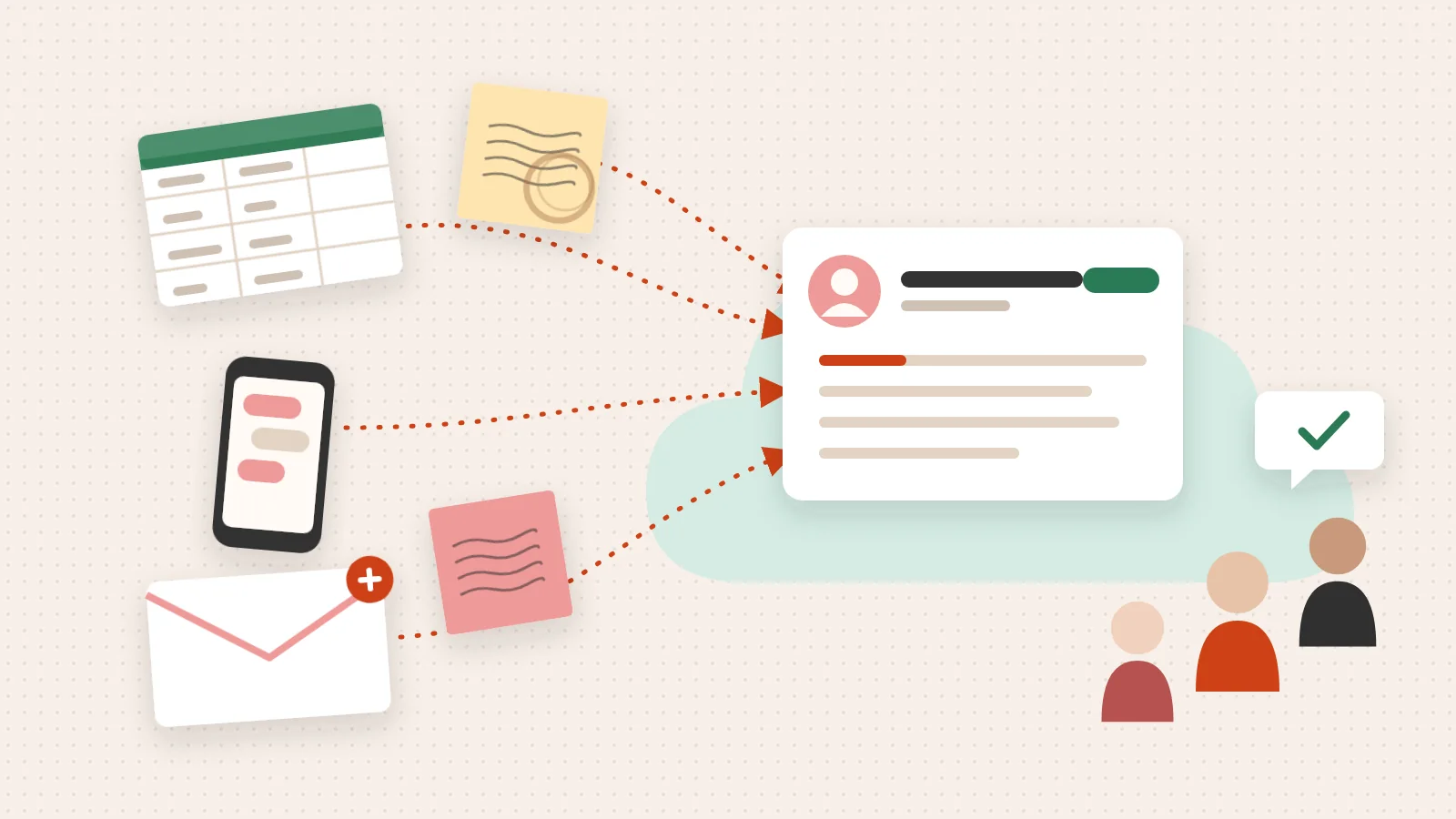
Here is what most revenue leaders already know, even if they haven’t said it out loud: your teams are working hard, but the work isn’t connecting.
Marketing hits its MQL targets. Sales misses its number. Customer success watches churn tick up. And when leadership asks what happened, everyone has a different answer — because everyone is looking at different data.
That is not a people problem. It is a systems problem.
The research makes this painfully clear. According to Gartner, by 2026, 75% of the highest-growth companies will have adopted a formal RevOps model — up from less than 30% today. And companies that achieve true sales and marketing alignment grow 19% faster and are 15% more profitable than those that don’t.
Yet 86% of B2B executives say RevOps is important to meeting their goals, while only a third say their teams are actually aligned on the critical functions that drive revenue.
That gap between knowing and doing is exactly where growth stalls.
The problem isn’t ambition. It isn’t effort. Most of the time, it isn’t even the wrong strategy. It’s that the operational foundation underneath the strategy was never built to support it.
I’m Jeremy Wayne Howell, founder of The Way How — a psychology-first revenue strategy firm — and I’ve spent over 20 years diagnosing exactly this kind of disconnect, helping founders and revenue leaders build a revenue operations strategy that reflects how buyers actually think, not how org charts are drawn. The sections ahead will show you how to do the same.
Revenue operations strategy terminology:
The Psychology of Friction: Why Your Current Revenue Operations Strategy is Stalling
When we look at a stalled revenue engine, we often see a “patchwork of optimizations” rather than a coherent strategy. Most organizations have built their systems under pressure, stitching together tools and processes to put out immediate fires. This creates massive cognitive load for your teams and, more importantly, high friction for your buyers.
The friction is often rooted in a “silo mentality.” Research shows that a staggering 87% of the words sales and marketing teams use to describe each other are negative. This internal rift isn’t just a culture issue; it manifests as a broken customer experience. If your teams don’t trust each other’s data, your buyers won’t trust your process.
At The Way How, we believe that every operational breakdown is actually a psychological one. When marketing generates leads that sales ignores, or when sales makes promises that customer success can’t keep, you are creating “certainty gaps.” These gaps force the buyer to do more work to justify a purchase, leading to stalled deals and revenue leakage. To fix this, many firms turn to revenue analytics consulting to identify where the data—and the trust—is falling through the cracks.
According to Gartner research, companies with advanced RevOps maturity are 2.3 times as likely to exceed profit goals. Why? Because they’ve removed the internal friction that slows down decision-making.

The Certainty Gap in Modern B2B Sales
Modern B2B buyers are risk-averse. They are navigating information asymmetry where they have access to more data than ever, yet less confidence in making a choice. When your internal teams are misaligned, that uncertainty is broadcast to the prospect.
If your marketing message says one thing and your sales rep says another, you’ve just triggered a “risk alert” in the buyer’s brain. An empathy-led Go-To-Market (GTM) approach requires RevOps to ensure that every touchpoint reinforces a single, trustworthy narrative. We must solve for the buyer’s need for safety before we can expect them to sign a contract.
Revenue Operations vs Sales Operations: A Mandate Shift
Many leaders ask: “Isn’t this just Sales Ops with a better outfit?” Not quite.
Sales Operations is a subset of RevOps. While Sales Ops focuses on rep productivity and closing the next deal, RevOps takes ownership of the entire revenue lifecycle. It bridges the gap between the first marketing touchpoint and the fifth year of a customer’s renewal. It shifts the focus from “quota attainment” to “total revenue efficiency.”
By integrating revenue cycle analytics, RevOps leaders can see the full picture, identifying where leads languish and where expansion opportunities are missed because no one was looking at the post-purchase data.
The Four Pillars of a High-Certainty RevOps Framework
To build a revenue operations strategy that actually works, you need more than just a CRM. You need a framework that anchors every decision. We categorize these into four pillars: People, Process, Data, and Technology.
- People: The humans who execute the strategy.
- Process: The workflows that guide the buyer.
- Data: The single source of truth that informs decisions.
- Technology: The tools that automate and scale the effort.
Without all four, the system collapses. You can have the best tech in the world, but if your people aren’t aligned on the definitions of a “qualified lead,” you’ll just be automating chaos. For those looking to optimize their tech stack, checking out Hubspot Operations Hub tips can provide a baseline for how to use tooling to support these pillars.
People: Aligning Incentives with Human Behavior
The biggest hurdle in RevOps isn’t software; it’s human behavior. If marketing is incentivized on lead volume and sales on deal revenue, they are naturally at odds. RevOps creates a “commercial coalition” where stakeholders from marketing, sales, and customer success share accountability for the same North Star metrics—like Net Revenue Retention (NRR) or Pipeline Velocity.
We recommend using a RACI matrix (Responsible, Accountable, Consulted, Informed) to define exactly who owns which part of the revenue engine. This removes the “bystander effect” where everyone assumes someone else is handling the handoff.
Process: Removing Friction from the Buyer Journey
Process design should always start with the buyer, not your internal convenience. We map the ideal buyer journey and then build the internal workflows to support it.
Key process elements include:
- Handoff Protocols: Exactly what data moves from marketing to sales?
- SLAs (Service Level Agreements): How fast must sales follow up on a high-intent lead? (Research shows reducing contact time from 48 hours to under 4 hours can increase conversions by 20%).
- Lead Routing: Ensuring the right prospect gets to the right expert instantly.
Architecting Your Revenue Operations Strategy for 2026
As we look toward 2026, the goal is capital-efficient growth. The “growth at all costs” era is over. Investors and founders now demand predictability.
A modern revenue operations strategy is built to be resilient. It accounts for the fact that 52% of consumers will stop buying from a brand after just one bad experience. By 2026, the companies that win will be those that use RevOps to ensure that “bad experience” never happens. This involves looking at workplace automation not just to save money, but to free up humans to do the high-empathy work that machines can’t.
Mapping the Buyer Journey: The Heart of Your Revenue Operations Strategy
You cannot optimize what you haven’t mapped. We look for “awareness milestones”—the specific moments when a buyer moves from “I have a problem” to “I need this specific solution.”
RevOps ensures post-purchase visibility. In a subscription economy, the deal doesn’t end at “Closed Won.” RevOps tracks the “onboarding to value” timeline, ensuring that the promises made during the sales cycle are actually delivered by the product.
Scaling Your Revenue Operations Strategy with AI and Automation
AI is the multiplier for your RevOps function in 2026. Best-in-class teams are now achieving forecast accuracy in the 90% range by using AI-powered deal scoring. AI can flag “at-risk” deals based on behavioral signals—like a sudden drop in email engagement or a missed meeting—long before a human rep notices.
However, AI requires a foundation of “clean” data. If your CRM is a mess, AI will only amplify the noise. This is why Hubspot Operations Hub onboarding is so critical; it sets the data hygiene standards that allow automation to actually work. PwC estimates that up to 40% of work time can be reduced through automation and behavior change—but only if the underlying process is sound.
Measuring What Matters: KPIs and the Future of Revenue Intelligence
If you are only tracking “new logos,” you are missing most of the story. Modern RevOps teams track metrics that reflect the health of the entire engine:
- Net Revenue Retention (NRR): Are your current customers growing? (Target 120%+).
- Pipeline Velocity: How fast is money moving through your funnel?
- LTV to CAC Ratio: Is the cost of acquiring a customer sustainable compared to their lifetime value? (Target 3:1).
- Forecast Variance: How close is your actual revenue to your predicted revenue?
Currently, 93% of revenue leaders cannot forecast within 5% accuracy. That variance is usually caused by inconsistent data definitions across departments.
Data Governance as a Competitive Advantage
Data governance is not a “nice-to-have” IT project; it is a strategic asset. Without a shared “Data Dictionary,” marketing might define a “lead” as a form fill, while sales defines it as a booked meeting. This leads to the infamous “your leads suck” versus “you can’t close” arguments.
A single source of truth ensures that when the CEO looks at a dashboard, everyone in the room agrees that the numbers are real. This builds the internal trust necessary to take calculated risks and scale.
Frequently Asked Questions about Revenue Operations Strategy
What is the difference between RevOps and Sales Ops?
Sales Ops is focused on the “middle” of the funnel—helping reps sell more effectively. RevOps is the “connective tissue” that spans the entire lifecycle. While Sales Ops manages the CRM, RevOps manages the data flow between the CRM, Marketing Automation, and Customer Success platforms. Sales Ops is about productivity; RevOps is about alignment and total revenue growth.
How long does it take to see ROI from a RevOps strategy?
Revenue operations is a discipline, not a one-time project. However, you can expect a “phased” return:
- 0–3 Months: Improved data visibility and cleaner reporting.
- 3–6 Months: Smoother handoffs and reduced “lead leakage.”
- 6–12 Months: Improved forecast accuracy and increased win rates.
- 12+ Months: Significant compounding growth in NRR and capital efficiency.
Should we build an in-house RevOps team or hire an agency?
This depends on your stage. Startups (under $5M ARR) often lack the budget for a full-time VP of RevOps and benefit from fractional experts to build the initial architecture. Scale-ups often need a hybrid model: an in-house “operator” to manage daily workflows and an external partner to provide the high-level strategy and technical architecture that keeps the system from breaking as it grows.
Restoring Momentum Through Operational Clarity
At The Way How, we’ve seen that the most sophisticated marketing tactics in the world will fail if the underlying revenue engine is fragmented. We specialize in removing the uncertainty that keeps founders awake at night. By blending psychology-first strategy with robust HubSpot architecture, we help you turn your GTM motion into a predictable growth engine.
If your teams are working harder but your revenue feels like it’s hitting a ceiling, the problem is likely a “certainty gap” in your operations. We don’t just give you a new dashboard; we help you redesign your system to reflect how humans actually make decisions. Explore our revenue strategy services to see how we can help you align your people, processes, and technology for the road to 2026.