
Your Website Isn’t Working. Here’s the Real Reason Why.
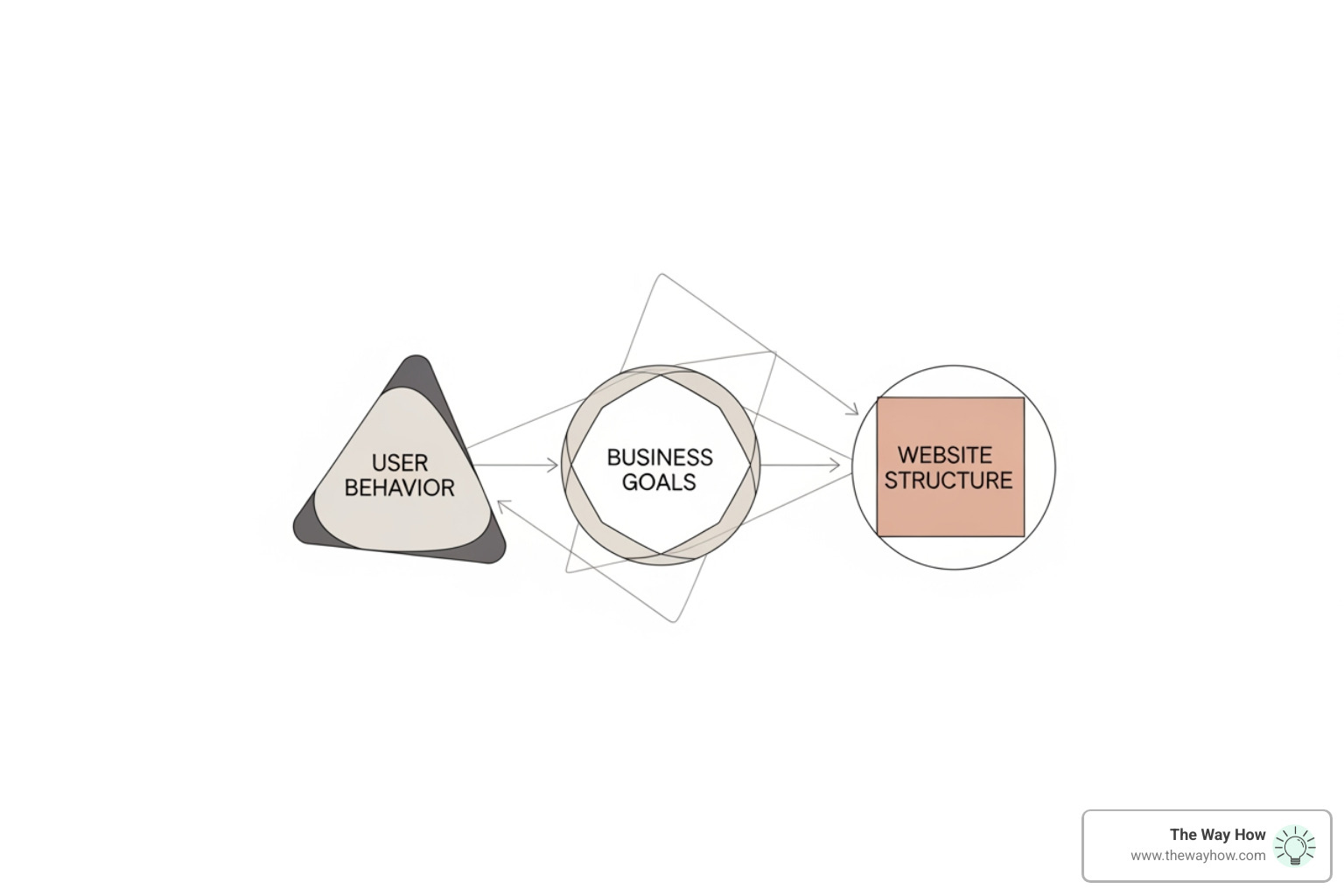
A web strategy is a comprehensive plan that aligns your website with your business goals by understanding human behavior, defining clear objectives, and creating a system that turns visitors into customers. Here’s what makes an effective web strategy:
- Purpose-driven foundation: Clear business goals tied to measurable outcomes (leads, sales, authority)
- Psychology-first approach: Deep understanding of your audience’s motivations, pain points, and decision-making process
- User experience as strategy: Information architecture, navigation, and content designed to remove friction
- Integrated content system: Every page, CTA, and piece of content serves a defined role in the customer journey
- Continuous optimization: Data analysis and testing to improve performance over time
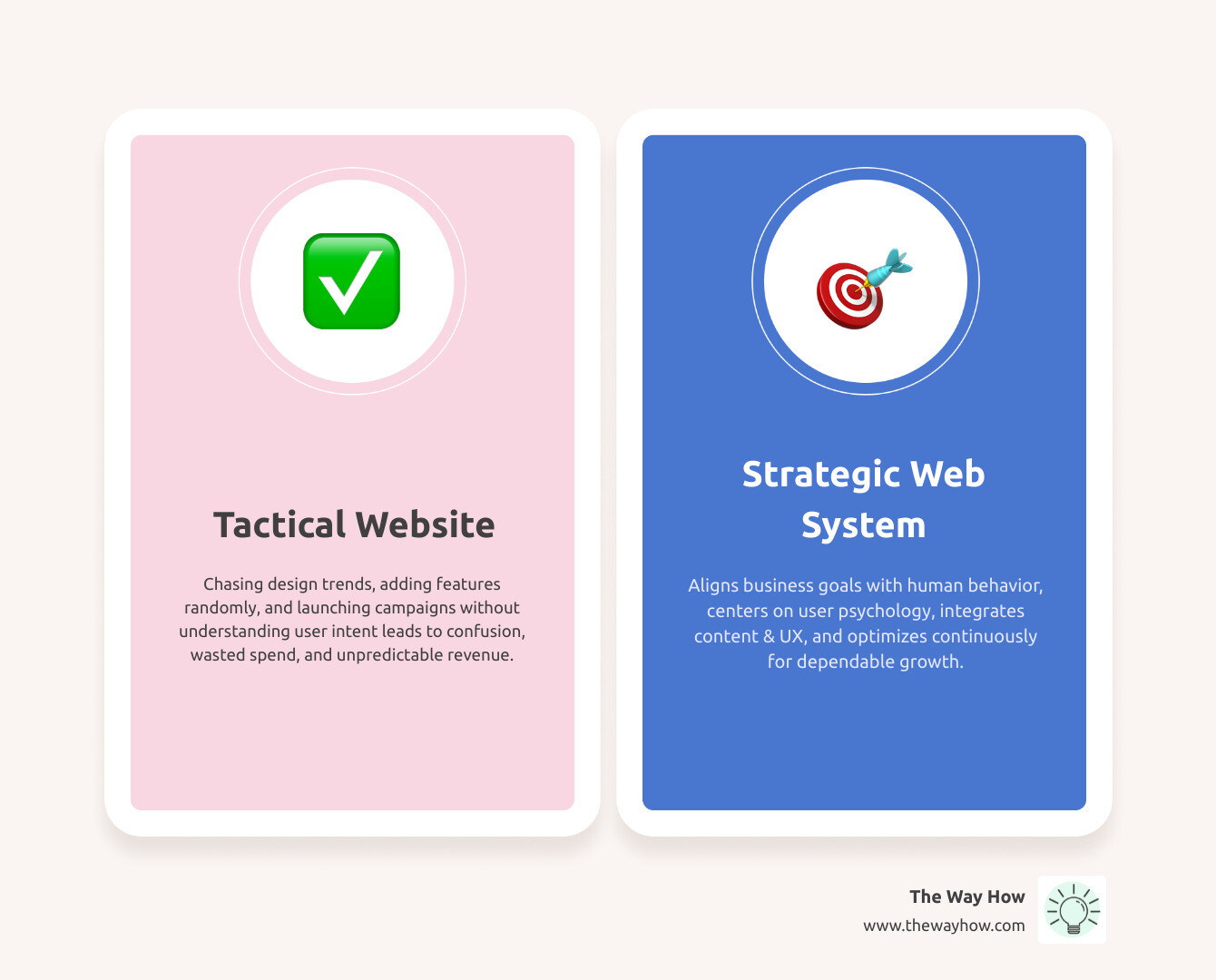
Most businesses approach their website tactically. They chase the latest design trend. They add features because a competitor has them. They launch campaigns without a clear understanding of why visitors leave without converting.
The result? Confusion. Wasted spend. A website that looks fine but doesn’t generate predictable revenue.
The real problem isn’t your design, your SEO, or your traffic. It’s the absence of a strategic foundation that connects what your business needs with what your customers are actually looking for.
A web strategy doesn’t start with tactics. It starts with understanding the human on the other side of the screen — what they believe, what they need to feel certain, and what will move them from consideration to action.
When that understanding becomes the foundation of every page, every CTA, and every piece of content, your website stops being a digital brochure and becomes a dependable growth engine.
I’m Jeremy Wayne Howell, founder of The Way How, and I’ve spent over 20 years helping businesses build web strategies that remove uncertainty and create predictable revenue by focusing on buyer psychology before tactics. This guide will show you how to build a website that actually works — not by doing more, but by understanding more.
Explore more about web strategy:
The Foundation: Aligning Business Goals with Human Behavior
At The Way How, we believe a successful web strategy begins not with technology, but with a deep understanding of human behavior. It’s a long-term strategic business plan that outlines how your company will develop its online presence, always adhering to your overarching business development strategy. For businesses of all sizes, this means defining how you’ll position yourself online, what media you’ll use, how you’ll communicate with customers, what products or services you’ll offer, and what supporting infrastructure you’ll need.
Why is this foundational step so crucial? Because without a clear understanding of your current reality and your desired future, every online effort risks becoming a shot in the dark. We diagnose why growth might be stalled by conducting thorough internal and external analyses, leveraging your strengths, and identifying weaknesses. This allows us to establish clear business objectives, creating a vision of the market that is as precise as possible before any website redesign or marketing campaign begins.
Our psychology-first approach to web strategy means we don’t just look at clicks and conversions; we look at the underlying human behavior, empathy, and decision-making psychology that drive those actions. By designing systems that create trust, momentum, and predictable revenue, we move beyond chasing fleeting tactics to building a truly dependable growth engine for your business.
Defining Your Website’s True Purpose
Every effective web strategy starts with a crystal-clear purpose and measurable business outcomes. Without this clarity, your design and content efforts risk becoming directionless. It’s impossible to set relevant Key Performance Indicators (KPIs) or adapt your strategy to different business goals if you haven’t first defined what success looks like.
We help founders and leadership teams define SMART objectives (Specific, Measurable, Achievable, Relevant, Time-bound) for an omnichannel strategy. Whether your primary goal is lead generation, increasing e-commerce sales, building authority in your industry, or enhancing customer support, each objective will shape your website differently. For example, a lead generation goal might necessitate prominent Calls-to-Action (CTAs) and educational guides, while an e-commerce site will prioritize seamless purchasing paths and product showcases. We monitor these KPIs closely, leaving nothing to chance, to ensure every dollar invested works harder for you.
Why a Web Strategy is Not a Digital Marketing Strategy
It’s easy to confuse a web strategy with a digital marketing strategy, but they serve distinct purposes. Think of your web strategy as the architectural blueprint of your online home – the ‘why’ and the ‘what’ of your digital presence. It’s the foundational system that dictates the structure, purpose, and overall user experience of your website.
A digital marketing strategy, on the other hand, is about the ‘how’ – the promotional tactics and channels you use to drive traffic to that home. It involves specific efforts like SEO, PPC campaigns, social media marketing, and email campaigns. While crucial for visibility, these are the “spokes” that lead to the “hub” – your website.
Here’s a simple comparison:
| Feature | Web Strategy (The System) | Digital Marketing Strategy (The Channels) |
|---|---|---|
| Primary Focus | The website itself: its purpose, structure, and user experience. | Driving traffic and engagement to the website and other digital assets. |
| Scope | Long-term plan for online presence development and business goals. | Short-to-medium term tactics across various digital channels. |
| Core Questions | Why do we need a website? What should it achieve? | How do we reach our audience? Where should we promote? |
| Key Components | Business objectives, audience understanding, UX, content architecture, technical foundation. | SEO, SEM, social media, email marketing, content promotion. |
| Relationship to Goals | Defines the ultimate online goals and how the website supports them. | Executes tactical plans to achieve marketing objectives that feed into web goals. |
A robust web strategy provides the clarity and direction needed for your digital marketing efforts to be truly effective. Without it, your marketing spend might attract visitors, but your website won’t be equipped to convert them into predictable revenue.
The Core Components of a Psychology-First Web Strategy
Building a web strategy with a psychology-first approach means every component is designed with the user’s emotional and cognitive journey in mind. We emphasize empathy mapping, understanding the user’s narrative, and crafting an experience that anticipates their needs and builds trust. This isn’t just about aesthetics; it’s about making deliberate choices in user experience (UX) and content strategy to guide decision-making. As Smashing Magazine articulates in “Strategic Design: 6 Steps For Building Successful Websites”, strategic design fuses organizational goals with every aspect of the design process.
Audience & Persona Development: Go Deeper Than Demographics
To truly remove uncertainty in your sales and marketing systems, we must understand who we are talking to. This goes far beyond basic demographics. Our approach to audience and persona development dives into motivations, pain points, and decision drivers. We ask: What are their “Jobs to be Done”? What are their deepest anxieties or aspirations related to your product or service?
By building detailed personas, we personalize actions based on the buying journey, creating a world adapted to your target users. For example, a local homeowner persona might be primarily motivated by reliability and ease of use, while a corporate buyer values efficiency and proven results. These insights inform everything from your website’s messaging to its functionality, ensuring we speak directly to their needs and preemptively address their certainty gaps.
Narrative & Content: Your Story is Your Salesperson
Your website, when strategically designed and built, can be your best salesperson – answering questions and nurturing leads 24/7. But for that to happen, your content needs to tell a compelling story where the customer is the hero, not your brand. We often leverage frameworks like StoryBrand to ensure your message is clear, concise, and focused on how you solve your customer’s problems.
Content isn’t just text; it’s a trust-building tool. We conduct a thorough content inventory, identifying existing articles, videos, and web page copy. Then, we plan for new content, always asking: What information does the user need at this stage of their journey? How can we make the next step clear? A well-organized learning center, for instance, can host articles, courses, templates, and videos, establishing your authority and empowering buyers to self-educate.
User Experience (UX) as a Conversion Tool
User Experience (UX) is not merely about making your website look good; it’s about making it work well for your users, directly improving conversion rates. Our focus is on creating a frictionless UX, where users can find what they need quickly and complete desired actions smoothly. This involves careful Information Architecture (IA), ensuring intuitive navigation and logical content organization.
Key priorities for effective UX include:
- Mobile-first design: Given that most visitors arrive via smartphones, your site must be designed to perform flawlessly on smaller screens first.
- Accessibility (WCAG): A strategic website should work for everyone, including people with disabilities. Adhering to Web Content Accessibility Guidelines (WCAG) ensures a wider audience reach and demonstrates inclusivity.
- Usability: Can users perform common tasks easily? Do they understand your navigation? We optimize user journeys to minimize steps for key actions, preventing frustration that often leads to abandonment.
By designing with the user’s psychology in mind – reducing cognitive load, creating clear pathways, and providing reassuring feedback – we transform your website into an intuitive system that guides visitors towards conversion.
Building Your Strategic Blueprint: A 4-Step Diagnostic Process
Developing an effective web strategy requires a structured approach to avoid common pitfalls like scope creep, wasted resources, and misalignment with business goals. Our diagnostic process ensures every decision is intentional, rooted in data, and designed to create predictable revenue. This blueprint helps us prioritize actions with the greatest potential impact, allocate resources wisely (whether in-house or outsourced), and create a clear roadmap for execution.
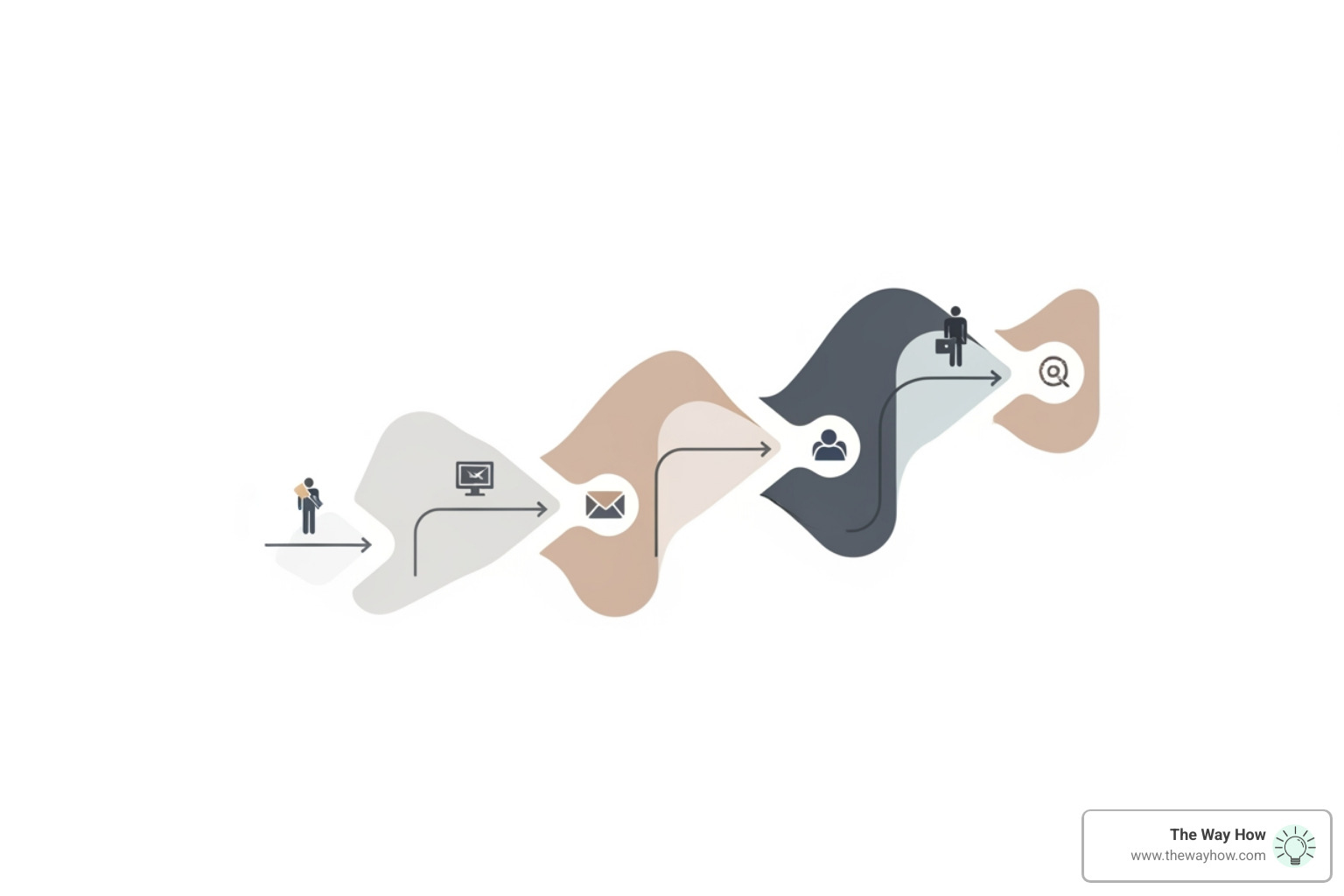
Step 1: Audit Your Current Reality
Before prescribing solutions, we diagnose. This means conducting a thorough online business intelligence audit to gain the most precise vision of your market. We dig into data analysis, leveraging tools like Google Analytics to understand visitor behavior, traffic sources, and conversion funnels. Heatmaps and session recordings (from tools like Hotjar or Clarity) provide visual insights into how users interact with your pages, revealing areas of friction or confusion.
Competitor analysis helps us identify industry standards and uncover gaps or opportunities where your rivals fall short. Most importantly, we pinpoint “certainty gaps” in your current customer journey – moments where potential customers become hesitant or confused. This comprehensive content and performance review forms the bedrock of our strategy.
Step 2: Map the Customer Journey
Once we understand your current reality, we map the customer journey. This involves tracing the path a typical user takes from their first interaction with your brand to becoming a loyal customer. We identify key entry points to your website, visualize user flows, and anticipate the questions users have at each stage.
By mapping these journeys, we can:
- Identify and remove obstacles that cause users to abandon your site.
- Ensure that content and calls-to-action are relevant to the user’s current stage.
- Design an experience that proactively addresses their needs and builds momentum.
This touchpoint analysis allows us to create a clear, empathetic path to conversion, rooted in how your actual buyers think and decide.
Step 3: Architect the Solution
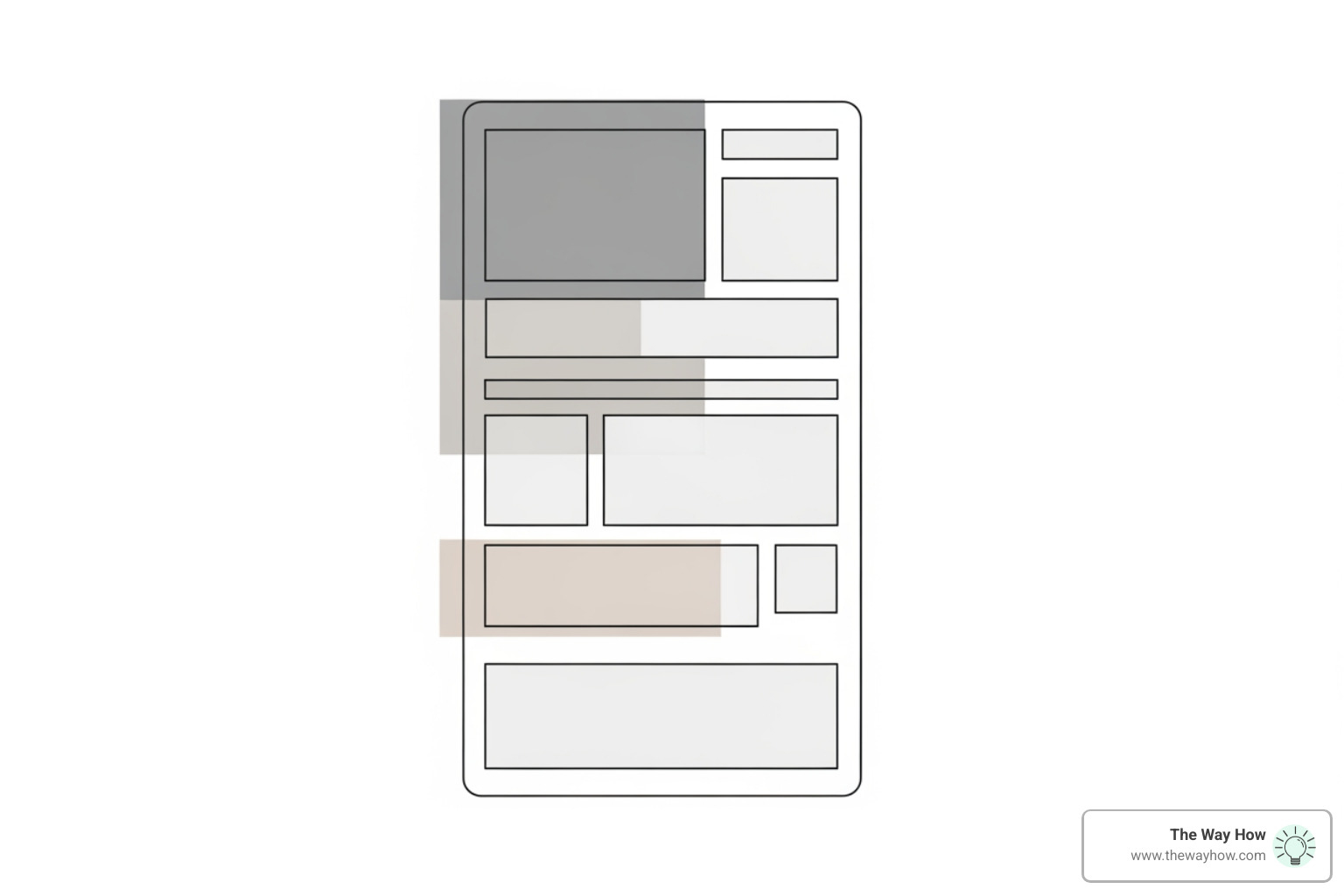
With a clear understanding of your audience and their journey, we move to architecting the solution. This step involves translating insights into a tangible structure for your website. We begin with sitemap creation, defining the hierarchy and navigation of your site to ensure logical flow. Wireframing follows, focusing on page layout and structure, ensuring every element serves a purpose without distraction from aesthetics.
Content structure is carefully planned, ensuring clarity and alignment with your narrative. Call-to-Action (CTA) planning is critical here – we design strong, action-driven CTAs that guide users toward the next step in their journey. Finally, we define the technical foundation, selecting the right Content Management System (CMS), hosting environment, and ensuring the architecture supports speed, security, and scalability. This blending of strategic clarity with operational execution ensures your website is built on solid ground.
Step 4: Implement, Test, and Launch
The final step in our blueprint involves bringing the strategy to life. We advocate for an agile development model, allowing for flexibility and continuous improvement. As elements are developed, new insights can be integrated, ensuring your website remains responsive to market changes and user feedback.
Crucial to this stage are rigorous testing protocols:
- Usability testing: We observe real users interacting with the site to identify any remaining friction points or areas of confusion.
- A/B testing: We experiment with different versions of pages or elements to determine what performs best in driving conversions.
Once testing is complete and the website meets our high standards for performance and user experience, we execute a meticulous launch plan. Post-launch monitoring is continuous, using data and reports as our rudder to guide ongoing refinements and ensure sustained growth.
Activation and Measurement: Turning Your Web Strategy into a Growth Engine
A web strategy isn’t a static document; it’s a living system that requires continuous activation and measurement to truly become a growth engine. We emphasize a philosophy of continuous improvement, or “Kaizen,” always looking for incremental gains based on data-driven decisions. Our experts are constantly on the lookout for new analytical trends to maximize your online presence and reveal the potential of every dollar invested.
Improving Conversion Rates Through Behavioral Insights
Our psychology-first approach is particularly powerful when it comes to Conversion Rate Optimization (CRO). We don’t just aim to increase the proportion of visitors who perform a predefined action; we aim to increase the quality of those conversions by understanding the underlying behavioral insights.
This involves:
- Reducing friction: Streamlining processes, simplifying forms, and ensuring easy navigation eliminate barriers to action.
- Strong CTAs: Clear, action-oriented Calls-to-Action that speak directly to the user’s motivations.
- Trust signals: Integrating testimonials, case studies, client logos, and certifications to build confidence and reduce perceived risk.
- Effortless lead capture: Designing simple forms that ask only for essential information, making it easy for users to take the next step.
By focusing on these behavioral triggers, we design systems that build trust and momentum, guiding users towards predictable revenue outcomes.
Integrating Data and Reporting for Continuous Improvement
Data is not a secret to us; it’s the foundation of informed decision-making. We integrate data analysis and reporting into every stage of your web strategy. This means defining meaningful KPIs (Key Performance Indicators) that align with your SMART objectives, rather than getting sidetracked by vanity metrics.
Our process involves:
- Analytics review cycles: Regularly reviewing performance data to understand what’s working, what isn’t, and why.
- Actionable reporting: Changing raw data into clear, concise reports that inform strategic adjustments and prioritize actions with the best Return on Investment (ROI).
We leave nothing to chance, monitoring your KPIs closely at all times. This continuous feedback loop allows us to adapt and refine your web strategy, ensuring it consistently drives growth and maximizes your online presence.
Incorporating Social Media and Other Channels
While your website is the hub of your web strategy, other digital channels, including social media, act as crucial spokes, driving traffic and extending your brand’s reach. Social media applications have become indispensable tools, allowing for two-way communication and direct engagement with your audience.
We help you incorporate social media effectively by:
- Defining its role in the narrative: How does social media amplify your brand’s story and address specific certainty gaps?
- Driving traffic to the strategic hub: Social media should act as a gateway to your website, where deeper engagement and conversion occur.
- Facilitating two-way communication: Leveraging platforms for customer service, gathering insights, and fostering community. Forbes highlights The Top 10 Benefits Of Social Media Marketing, including increased brand awareness and improved customer service.
Similarly, email marketing, paid advertising (SEM, Google Ads, Microsoft Ads, social advertising), and SEO (technical, on-page, off-page) are integrated strategically to support your overall web strategy, ensuring a cohesive and impactful online presence.
From a Static Brochure to a Dynamic Growth System
Your website is never truly “done.” In today’s rapidly evolving digital landscape, it’s a dynamic system, a program of ongoing development that constantly adapts to user behavior, market changes, and your evolving business goals. The most significant benefit of a well-defined web strategy is changing your website from a static brochure into a predictable growth engine.
At The Way How, we help founders and leadership teams remove uncertainty in their sales and marketing systems. We blend strategic clarity, behavioral insight, and operational execution to diagnose why growth is stalled and design systems that create trust, momentum, and predictable revenue. Our expertise in HubSpot architecture and demand generation strategies, rooted in human behavior, ensures your website is built to perform.
If you’re ready to shift from chasing tactics to implementing a cohesive, psychology-first web strategy that drives real, measurable results, we’re here to help.