A Complete Guide to CRM Systems and Database Management
 Jeremy Wayne Howell : Jul 22, 2026 9:48:31 PM
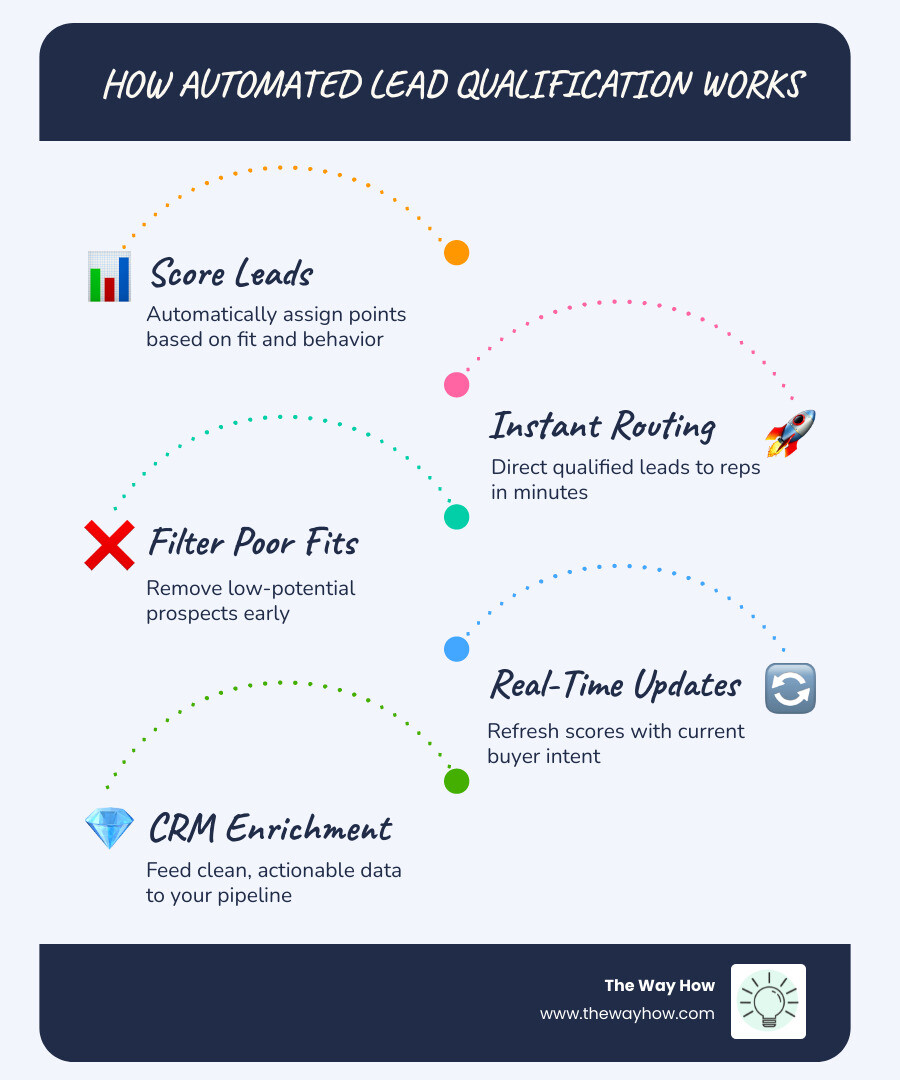
Automated lead qualification is the process of using software, scoring logic, and AI to automatically identify which prospects are worth your sales team’s time — without manual review.
Here’s what it does, fast:
| What It Does | Why It Matters |
|---|---|
| Scores leads based on fit and behavior | Focuses reps on high-probability buyers |
| Routes qualified leads instantly | Cuts response time from hours to minutes |
| Filters out poor-fit prospects automatically | Stops wasted effort before it starts |
| Updates scores in real time | Reflects current buyer intent, not stale data |
| Feeds clean data into your CRM | Creates a reliable, repeatable pipeline |
Most revenue leaders assume their lead problem is volume. Not enough leads coming in. So they spend more on ads, hire more SDRs, and add more tools.
But the real problem is usually clarity — the inability to quickly tell the difference between a buyer and a browser.
The result? Sales reps spend the majority of their day on work that doesn’t close deals. Research consistently shows that reps spend only about 35% of their time on revenue-generating activities. The rest is consumed by sorting, chasing, and guessing.
That’s not a motivation problem. It’s a systems problem.
When every lead looks the same, salespeople either chase everyone — or worse, they start ignoring leads altogether. Both outcomes kill revenue.
Automated lead qualification solves this by doing the sorting before a human ever gets involved. It creates a shared, consistent standard for what a good lead looks like, and it applies that standard at scale, instantly, every time.
I’m Jeremy Wayne Howell, founder of The Way How and a revenue growth strategist with over 20 years of experience in marketing, sales, and go-to-market systems — including designing and implementing automated lead qualification frameworks that have helped companies increase close rates by 20–40%. The sections ahead will walk you through exactly how to build this kind of system, from first principles to full execution.
Quick Automated lead qualification definitions:
We have a tendency to view sales as a numbers game, but for the person sitting in the SDR chair, it often feels like a treadmill set to a speed they can’t maintain. When we look at the data, the “hustle harder” mentality starts to look mathematically impossible.
According to a study by InsideSales, sales reps spend only 35.2% of their time on revenue-generating activities. The other 64.8% is swallowed by administrative duties, internal meetings, and—most significantly—manual lead research and triage. This is a massive “certainty gap.” If your reps don’t know which leads are likely to close, they spend their energy on the loudest prospects rather than the most qualified ones.
The psychological toll is real. Research indicates that 48% of salespeople never make a single follow-up attempt after initial contact. Why? Because after spending hours manually qualifying “tire-kickers,” the motivation to reach out to the next lead evaporates. Yet, we know that 80% of sales require at least five follow-up calls.
By implementing an automated lead qualification system, we remove the friction of the “first look.” Automation can improve lead qualification accuracy by up to 90% and reduce response times by 50%. When a rep receives a lead that has already been vetted for fit and intent, their confidence increases. They aren’t just making a cold call; they are engaging in a high-probability conversation. Businesses that excel in this kind of qualification experience a 20% boost in sales productivity.
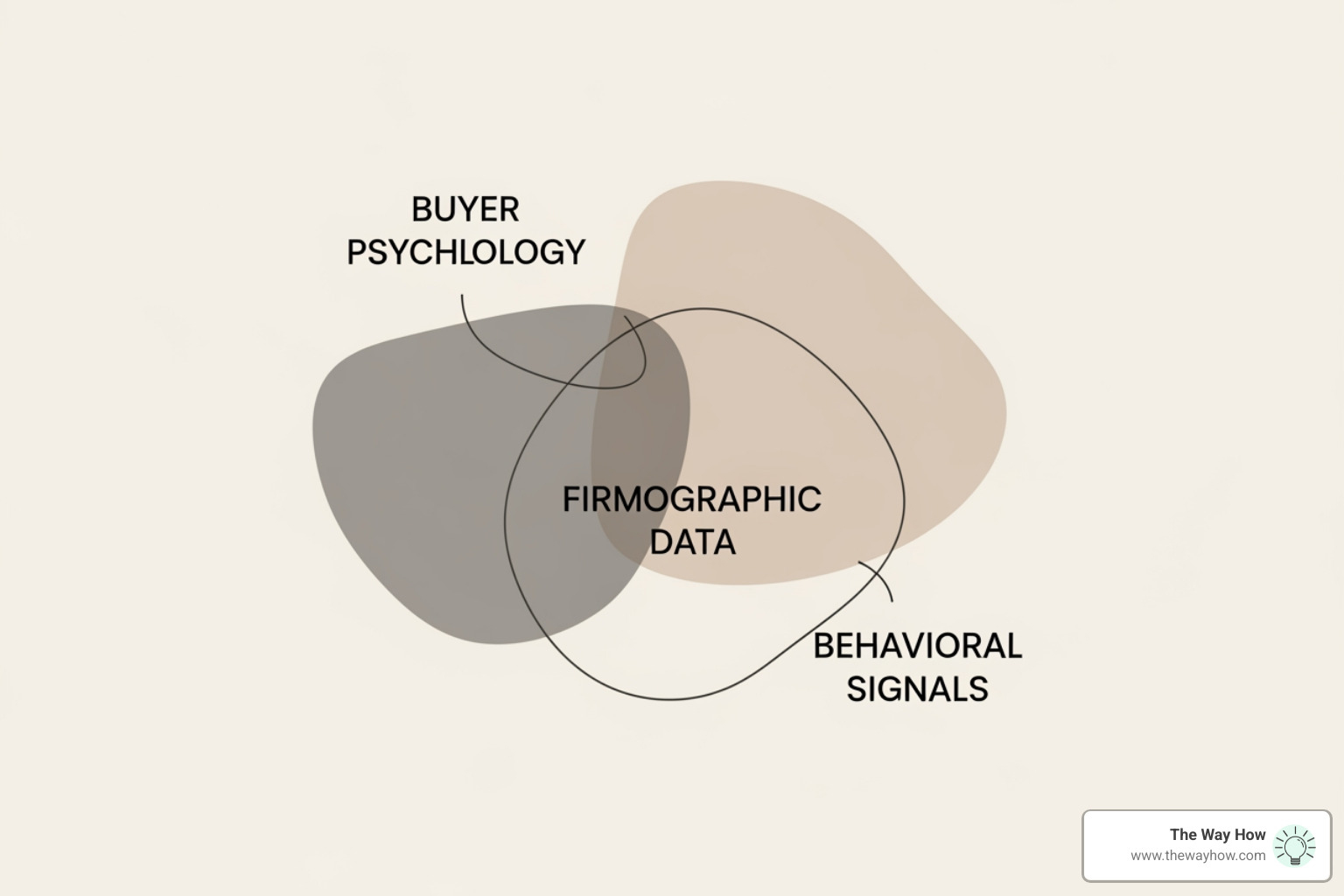
Before we touch a single piece of software, we have to define what “good” looks like. In our work at The Way How, we start with the psychology of the buyer. What are the specific attributes and behaviors that signal a buyer is ready to move?
This starts with a clear Ideal Customer Profile (ICP). If you don’t know who your best customers are, automation will simply help you fail faster. We look at two types of data:
To structure this, we use established qualification frameworks. While you might be familiar with BANT (Budget, Authority, Need, Timing), we often find it too restrictive for early-stage qualification. Other frameworks like MEDDIC (Metrics, Economic Buyer, Decision Criteria, Decision Process, Identify Pain, Champion) or CHAMP (Challenges, Authority, Money, Prioritization) offer more nuance.
For the truly adventurous (or those who appreciate a bit of sales humor), there is even the NUTCASE framework:
The goal is to bake these criteria into your HubSpot Personas so the system can recognize them automatically. When we align our automated systems with these human-centric frameworks, we create a process that feels intuitive rather than robotic.
Once we have our criteria, we need a way to quantify them. This is where lead scoring comes in. Most successful systems use a 100-point scale to bucket leads into categories:
However, a static score is a trap. If someone was interested six months ago, their score shouldn’t stay high today. We implement point decay to ensure that scores reflect current intent. If a lead stops engaging, their score should drop.
We also use negative scoring. If a lead is a student, a job seeker, or from a competitor, we dock points immediately. This prevents your sales team from wasting time on people who will never buy.
As the ZS leaders wrote for Harvard Business Review, “Automated lead scoring and intent signals can trigger effective outreach in many situations, but as complexity increases, salespeople’s judgement becomes important.” Automation handles the volume; humans handle the complexity.
| Manual Qualification | Automated Lead Qualification |
|---|---|
| Takes 4–8 hours to triage | Occurs in seconds |
| Subjective and inconsistent | Objective and rule-based |
| Wastes up to 40% of sales time | Saves up to 83% of triage time |
| High risk of human error | 90%+ accuracy in routing |
In HubSpot, the engine of qualification is the Workflow. We use triggers based on form submissions, page views, or property changes to kick off the process.
To make this truly “lazy” (and effective), we integrate data enrichment tools like Clearbit or ZoomInfo. These tools automatically fill in the blanks. If a lead only gives us an email address, these integrations can pull their job title, company size, and industry. This allows us to qualify them against our ICP without asking them to fill out a 20-field form—which we know kills conversion rates.
By setting up HubSpot marketing workflows, we can automate the “hand-raise.” When a lead hits that 70-point threshold, the system can instantly create a task for a rep, send a Slack notification, and even send a personalized “intro” email from the rep’s inbox.
The next frontier of automated lead qualification is Conversational AI. While traditional forms are passive, AI voice bots and chatbots are active. They can engage a prospect the moment they land on your site or submit a request.
Companies that respond to leads within 5 minutes are 400% more likely to qualify them than those who wait just 10 minutes longer. AI doesn’t sleep, and it doesn’t take lunch breaks. It can categorize responses using an 8-category system:
For example, if an AI detects an “Out of Office” reply, it can automatically pause the sequence and resume it when the prospect returns. This reduces conversion loss by up to 87%. If it detects a “Do Not Contact” request, it can block that lead system-wide instantly, ensuring 99.5% compliance.
This isn’t about replacing the human touch; it’s about providing HubSpot lead generation that feels empathetic and responsive. An AI can ask, “What is your primary challenge today?” and based on the answer, route the lead to the specific specialist on your team who can solve that problem.
As you grow, your system needs to remain robust. This requires a focus on “data hygiene.” If your CRM is a mess, your automation will be a mess. We recommend regular system audits—companies that do this report a 77% increase in lead generation ROI.
Using tools like Zapier, you can connect your qualification engine to almost any other tool in your stack. Whether it’s sending a gift via Postal.io to a high-value lead or triggering a custom SMS notification, the architecture should be built for speed and context.
The most critical part of the architecture is the MQL (Marketing Qualified Lead) to SQL (Sales Qualified Lead) handoff. We need clear routing rules. Should leads be assigned via round-robin? By territory? Or by lead score? We’ve found that chatbots in HubSpot are particularly effective at handling this handoff by booking meetings directly onto a rep’s calendar the moment a lead qualifies.
We believe the best automation feels like a personal favor. Use behavioral triggers to send content that is actually relevant. If a lead spends ten minutes on your “Integrations” page, don’t send them a generic “About Us” PDF. Send them a technical guide on how your API works. This uses “dynamic content” to tailor the message to the lead’s specific behavior. Pardot users, for instance, reported a 22% boost in conversions by using this kind of tailored approach.
The biggest mistake is over-complicating the model. Start with 5–7 key attributes. If you try to track 50 different variables on day one, you’ll never be able to tell which ones are actually driving revenue. Another pitfall is ignoring “data decay.” If your system doesn’t account for leads going cold, your reps will stop trusting the scores. Finally, a lack of sales alignment is fatal. If marketing defines a “qualified lead” differently than sales, the system will create friction instead of momentum.
This is not a “set it and forget it” project. We recommend quarterly audits. Look at your top 20 wins and your top 20 losses. What did the winners have in common that the losers didn’t? Use this feedback loop to adjust your point values and thresholds. Market shifts happen, and your ICP might evolve. Regular refinement ensures your automation stays aligned with reality.
At The Way How, we don’t just build workflows; we design certainty. We understand that behind every lead record is a human being trying to make a decision. Our goal with automated lead qualification is to remove the noise so that your team can focus on building trust and solving problems.
When you stop chasing everyone, you finally have the bandwidth to catch the ones that matter. You move from a state of reactive chaos to a state of predictable momentum. Your marketing becomes a dependable growth engine, and your sales team regains the time they need to actually sell.
If you are ready to stop guessing and start growing, we can help you diagnose the gaps in your current journey and build a system that works while you sleep.
 Jeremy Wayne Howell : Jul 22, 2026 9:48:31 PM
 Jeremy Wayne Howell : Jul 21, 2026 9:47:10 PM
 Jeremy Wayne Howell : Jul 20, 2026 9:46:47 PM