A Complete Guide to CRM Systems and Database Management
 Jeremy Wayne Howell : Jul 22, 2026 9:48:31 PM
7 min read


Lead generation methods and strategies are the systems businesses use to attract, capture, and convert potential buyers into paying customers — and choosing the right ones is one of the highest-leverage decisions a revenue leader can make.
Here is a quick overview of the most effective approaches:
| Category | Key Methods |
|---|---|
| Inbound | Content marketing, SEO, webinars, lead magnets |
| Outbound | Cold email, LinkedIn outreach, cold calling |
| Paid | PPC, LinkedIn Ads, retargeting |
| Data-driven | Job platform scraping, sales intelligence tools, intent data |
| Relationship-based | Referral programs, events, channel partnerships |
| Automation | AI chatbots, CRM workflows, lead scoring |
Most businesses are not failing because they lack tactics. They are failing because they are running tactics without a system.
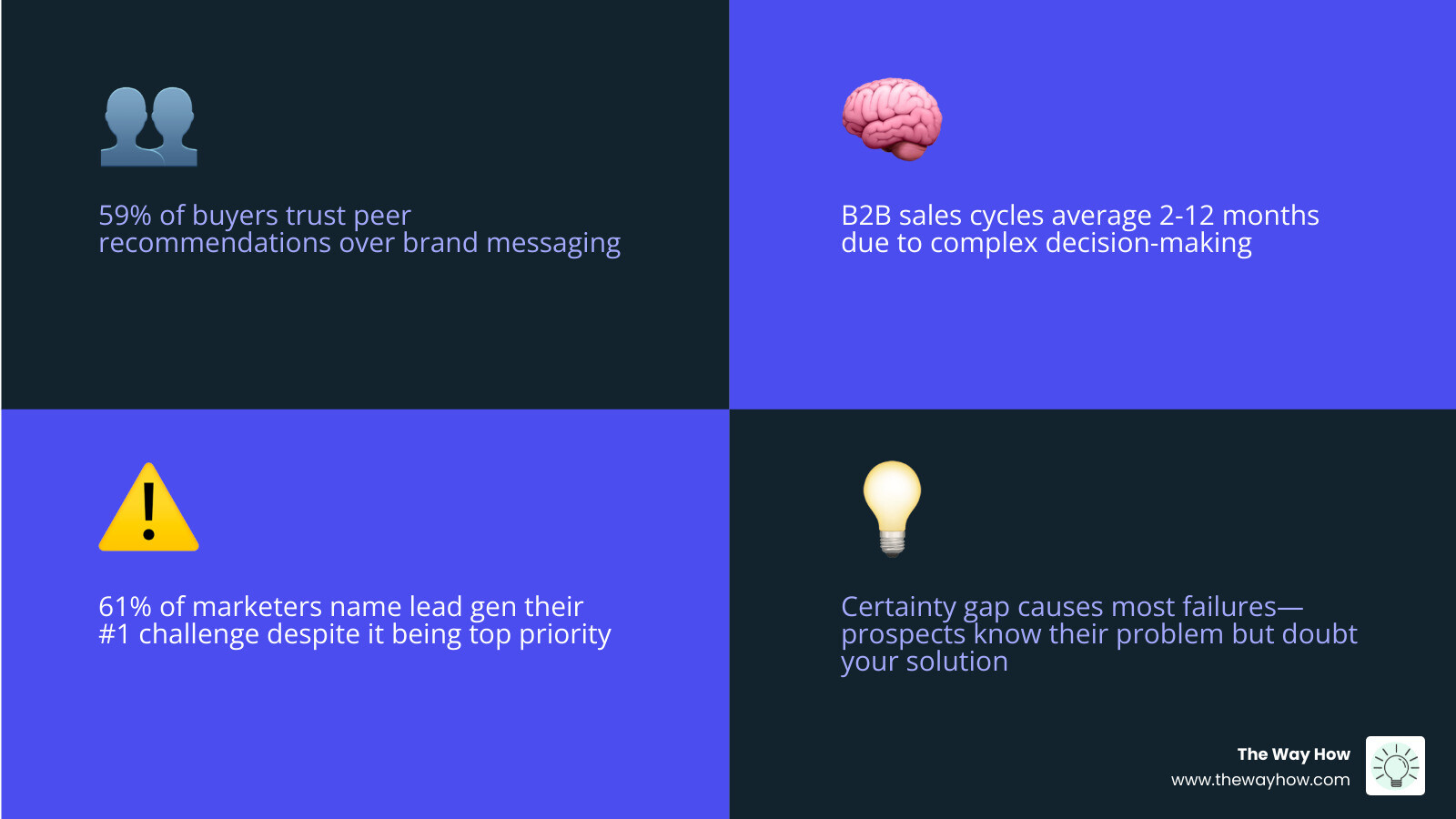
Six in ten marketers say lead generation is their top priority — yet 61% still name it their number one challenge. That gap is not a channel problem. It is a clarity problem.
The leads are out there. But without a clear Ideal Customer Profile, a structured funnel, and an honest look at buyer psychology, even the best tactics produce noise instead of revenue.
This playbook cuts through that noise. It covers every major method and strategy — from LinkedIn outreach and cold email to content marketing, paid ads, and AI automation — and more importantly, why each one works or fails depending on how it is deployed.
I’m Jeremy Wayne Howell, a revenue growth strategist with over 20 years of experience helping founders and executive teams rebuild their lead generation methods and strategies around buyer psychology and systems thinking rather than scattered tactics. This guide reflects what I have seen work — and what quietly kills pipelines — across dozens of businesses at every stage of growth.
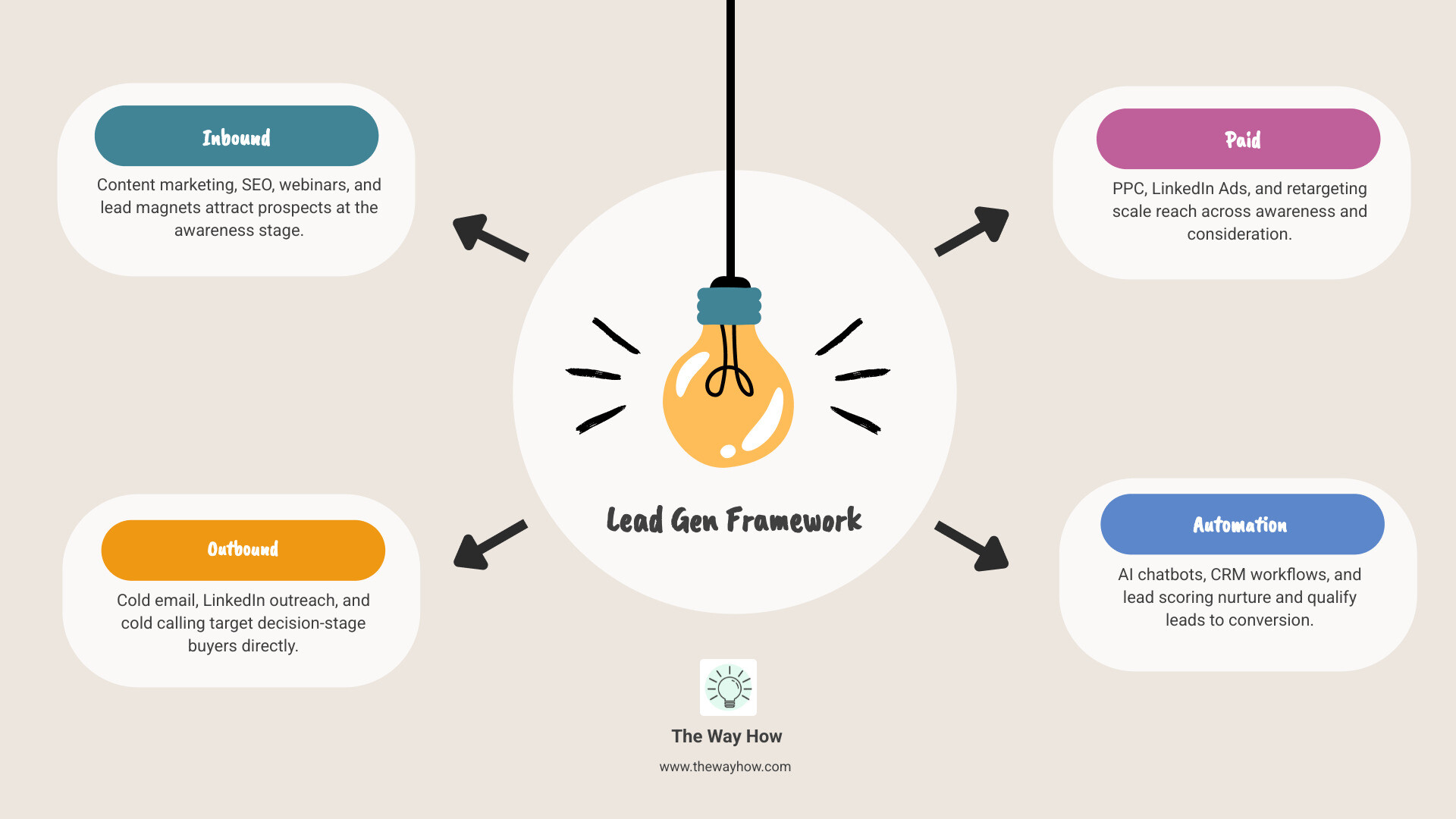
Common lead generation methods and strategies vocab:
Lead generation is the systematic process of identifying, engaging, and nurturing prospects who fit a specific profile, with the ultimate goal of converting them into loyal customers. In the B2B world, this process is the lifeblood of the business. Unlike B2C, where a single social media ad might trigger an impulse buy, B2B sales cycles can stretch from two to over twelve months.
Most lead generation fails because it ignores the “certainty gap.” This is the psychological space between a prospect having a problem and trusting that you are the specific solution to solve it. When we focus only on the “lead” as a data point, we miss the human behavior driving the click.
Modern buyers are skeptical. Research shows that while 59% of buyers trust recommendations from peers, only 36% trust company employees. This means your lead generation methods and strategies must prioritize building trust through expertise and social proof rather than just volume.
Effective lead generation follows a structured architecture. It is not a single event but a five-stage process:
According to HubSpot, 6 in 10 marketers prioritise generating business leads, but success depends on understanding the 4 Stages of Customer Journey. We must meet buyers where they are, whether they are just discovering their pain or actively comparing vendors.
The single biggest mistake in marketing is trying to speak to everyone. A high-performing system begins with a clearly defined Ideal Customer Profile (ICP) and detailed buyer personas.
Your ICP defines the types of companies you serve (industry, size, geography), while your buyer persona defines the individuals within those companies. Understanding their behavioral triggers—what keeps them up at night and what motivates their professional growth—allows us to craft messages that resonate.
Tools like LinkedIn allow for matching against buyer personas with high precision, ensuring your ads only appear in front of those with the job functions and seniority levels that matter to your bottom line.
Not all leads are created equal. To avoid wasting your sales team’s time, you must qualify leads using established frameworks:
We often use the BANT framework to assess readiness:
Modern teams also use lead scoring—assigning points based on behavior, such as downloading an ebook or visiting a pricing page. Automation plays a huge role here; for instance, understanding how chatbots qualify leads in HubSpot can help you filter high-intent prospects 24/7 without manual intervention.
The lead generation funnel is a mental model for the buyer’s journey. We break it into three distinct sections:
A healthy client acquisition funnel ensures you have a balanced mix of leads at every stage, preventing the “feast or famine” cycle common in many B2B firms.
Content marketing is the process of demonstrating expertise to build trust. It is not just about “posting”; it is about creating assets that solve problems.
While organic content takes time (often 3+ months), paid strategies offer immediate scalability.
Integrating these with your CRM using HubSpot Ads allows you to track exactly which campaigns are driving revenue, not just clicks.
The most successful B2B firms don’t rely on one channel. They use a multi-channel approach to meet the buyer wherever they are.
For a deeper dive into these methods, see our outbound lead generation complete guide.
In a digital-first world, offline and niche tactics can often break through the noise more effectively.
To manage lead generation methods and strategies at scale, you need a robust “tech stack.”
Your landing pages are the “moment of truth.” A high-converting landing page should have a single, clear CTA, minimal distractions, and messaging that perfectly matches the ad or link that brought the user there.
You cannot improve what you do not measure. We focus on these key KPIs:
LinkedIn offers purpose-built tools for B2B measurement that help you track performance across the full buying journey, ensuring you can prove the value of your marketing spend to executive stakeholders.
Even with the best tools, lead generation can stall. Common mistakes include:
| Feature | Inbound Psychology | Outbound Psychology |
|---|---|---|
| Intent | High (they are looking for you) | Variable (you are interrupting them) |
| Trust | Built through content over time | Built through direct relevance and research |
| Speed | Slow (takes time to build authority) | Fast (you can reach out today) |
| Cost | High upfront, low over time | Low upfront, scales with volume |
Lead generation focuses on capturing specific contact information from interested prospects to move them through a sales funnel, while demand generation creates broad awareness and interest in a brand or solution before a prospect is ready to share their data.
While paid strategies like PPC can generate leads almost immediately, organic methods such as SEO and content marketing typically require three to six months to yield consistent, high-quality results.
Low lead quality often stems from a misalignment between your content and your Ideal Customer Profile (ICP), or a failure to use qualification frameworks like BANT to filter out prospects who lack the budget, authority, or immediate need for your solution.
At The Way How, we believe that sustainable growth isn’t found in the latest “hack” or trending tool. It is found in clarity. We help founders and leadership teams diagnose exactly where their growth has stalled by identifying the certainty gaps that prevent prospects from moving forward.
Whether you need Fractional CMO leadership to set the strategy or a deep-dive into your HubSpot architecture to fix your data flow, we blend behavioral insight with operational execution. We don’t just generate leads; we design systems that build trust and create predictable revenue.
If your current lead generation methods and strategies feel like a series of disconnected experiments rather than a dependable engine, it is time to shift your perspective.
 Jeremy Wayne Howell : Jul 22, 2026 9:48:31 PM
 Jeremy Wayne Howell : Jul 21, 2026 9:47:10 PM
 Jeremy Wayne Howell : Jul 20, 2026 9:46:47 PM