A Complete Guide to CRM Systems and Database Management
 Jeremy Wayne Howell : Jul 22, 2026 9:48:31 PM
6 min read
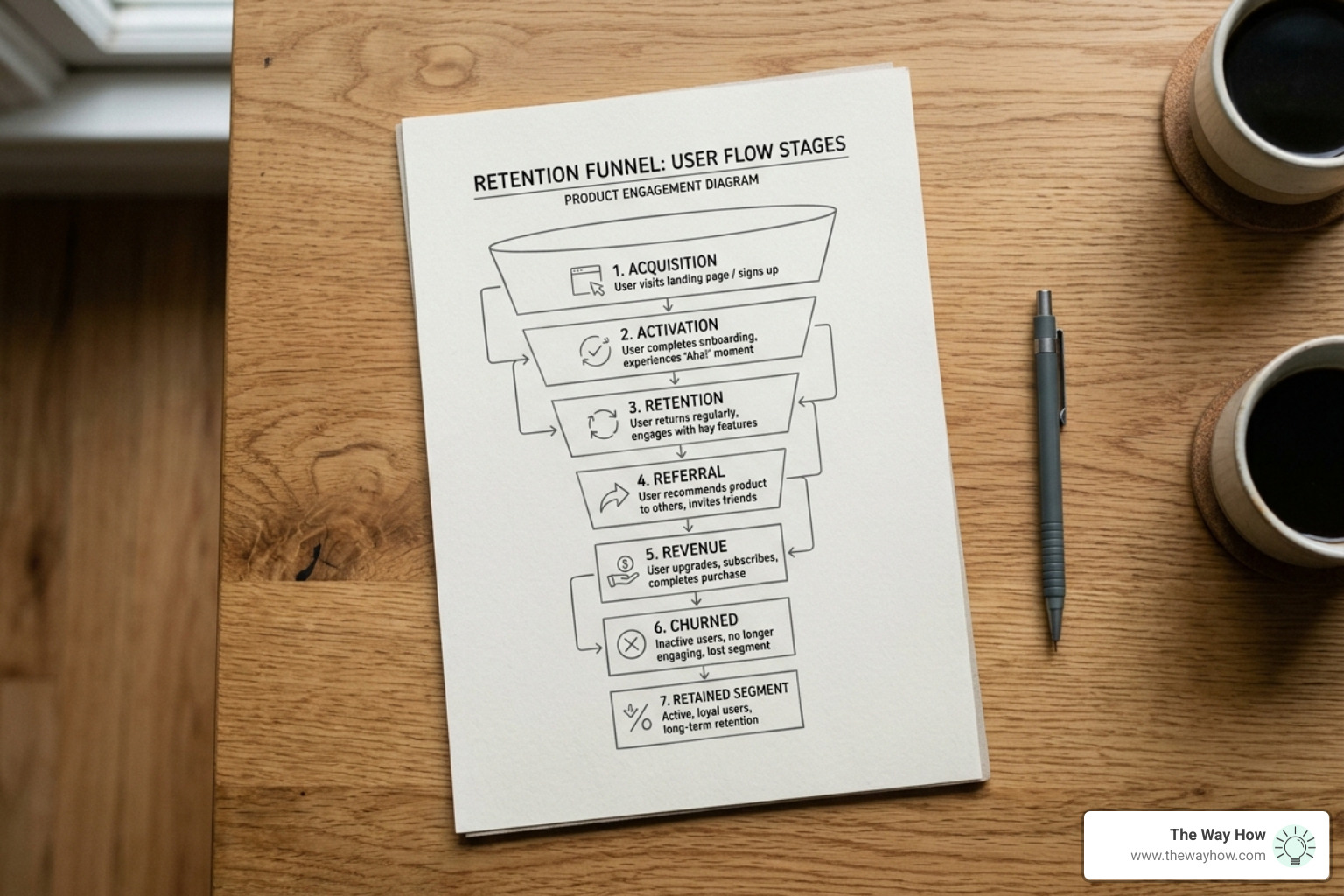
product retention strategies are the systems, tactics, and behavioral frameworks product managers use to keep users engaged, reduce churn, and increase customer lifetime value over time.
Here are the most effective product retention strategies, at a glance:
Most growth teams spend 80% of their budget on acquisition and only 20% on retention. That imbalance is expensive. It costs up to 7 times more to acquire a new customer than to keep an existing one — yet churn quietly erodes revenue in the background, often invisible until it’s too late.
The problem isn’t that teams don’t care about retention. It’s that they treat it as a byproduct of good marketing, rather than a deliberate system built around how users actually behave.
I’m Jeremy Wayne Howell, founder of The Way How and a revenue growth strategist with over 20 years of experience in marketing, sales, and go-to-market strategy — including helping companies identify the behavioral and psychological gaps that drive churn and designing product retention strategies that build predictable, compounding revenue. In this guide, I’ll walk you through what actually works, grounded in both human psychology and real product data.
We often see founders obsessed with the top of the Conversion Funnel In Digital Marketing. It feels productive to watch lead counts climb. But if your retention is broken, you aren’t building a business; you’re just paying for a temporary audience.
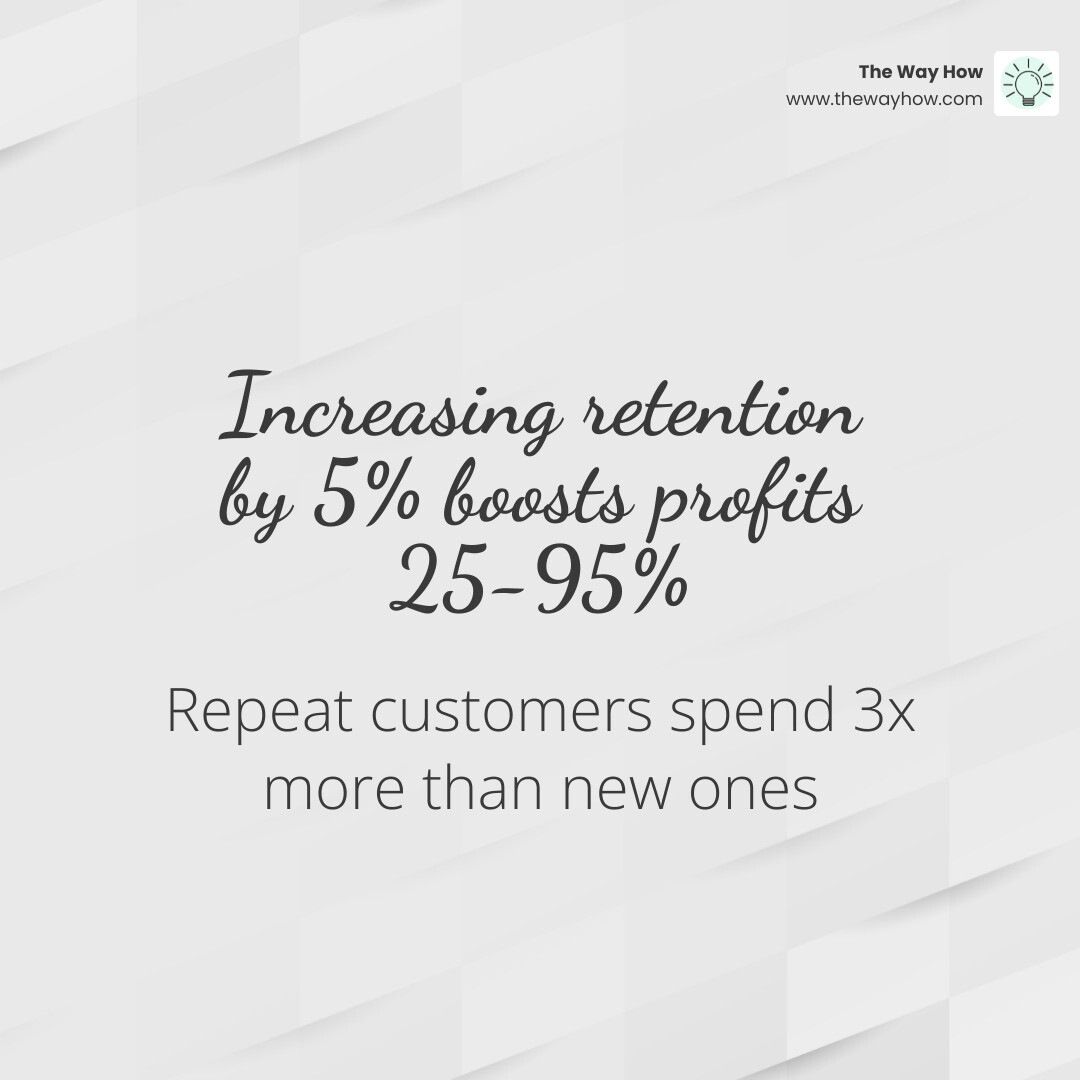
The math behind retention is staggering. Research shows that increasing customer retention by just 5% can boost profits by 25% to 95%. This happens because repeat customers spend nearly three times more than one-time shoppers, and in the SaaS world, they provide the foundation for expansion revenue.
To manage this, we must look at three core pillars:
When we ignore product retention strategies, we face the “growth mask” effect. This is a dangerous state where high acquisition numbers hide a leaky bucket. You might add 1,000 users a month, but if you’re losing 300, you have a massive “churn debt” that will eventually stall your growth when acquisition costs inevitably rise. Deep dive: Creating effective retention strategies reveals that retention is the best indicator of true product-market fit.
At The Way How, we believe that every “churn” event is preceded by a “certainty gap.” This is the moment a user loses faith that your product will solve their problem. To bridge this gap, we look at Self-Determination Theory, which suggests humans are driven by three needs: Autonomy, Competence, and Relatedness.
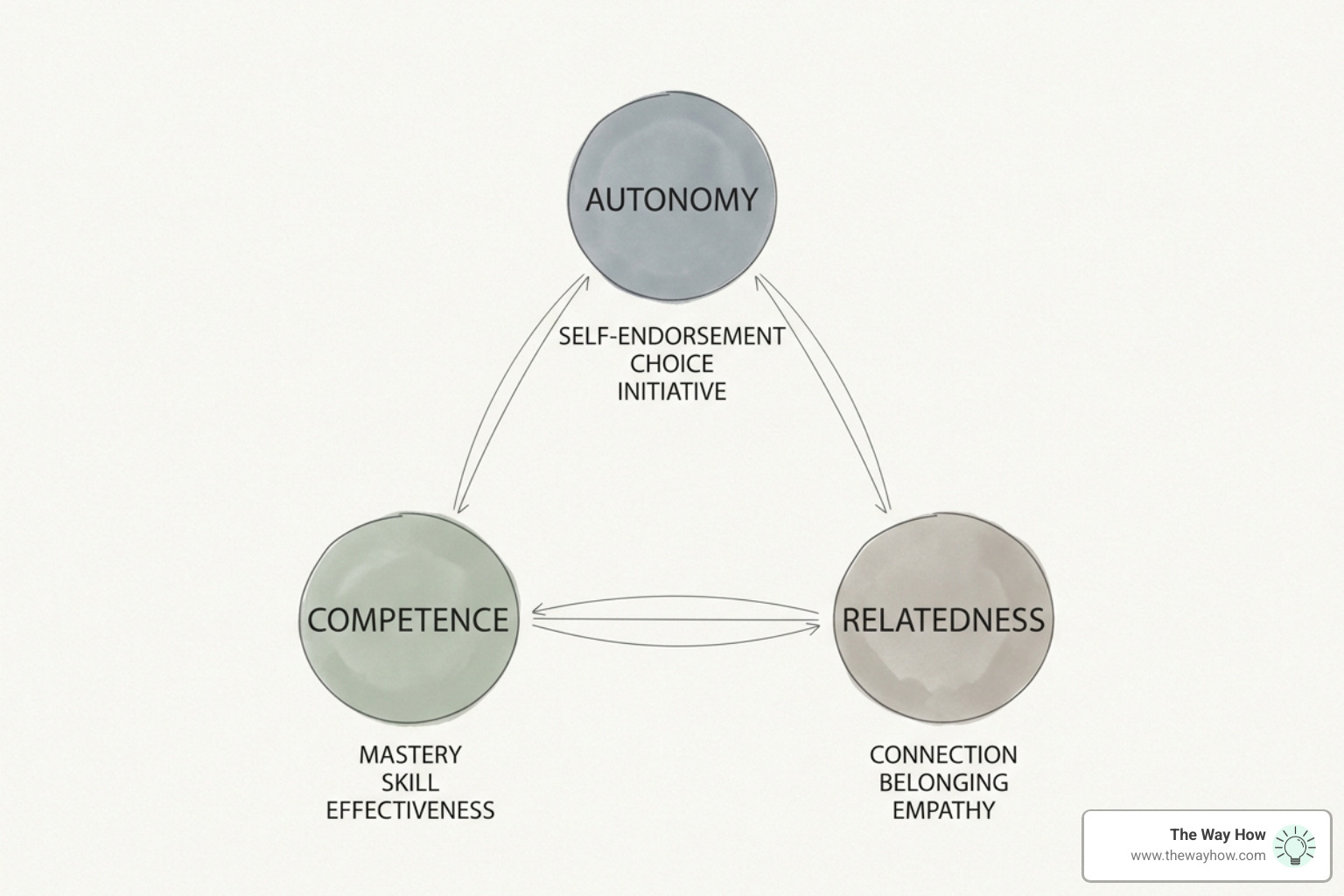
When a product makes a user feel competent (they know how to use it) and autonomous (they feel in control), they stay. If they feel confused, they leave. This is why Automated Lead Nurturing shouldn’t stop at the sale; it should transition into a behavioral education phase.
We also leverage the Zeigarnik effect—the psychological tendency to remember uncompleted tasks better than completed ones. By using progress bars and checklists in your product retention strategies, you create a gentle psychological tension that nudges users to return and finish what they started. Product Retention: 5 Strategies to Keep Users Engaged & Reduce Churn highlights how these small nudges prevent the “stale platform” feeling that leads to boredom-induced churn.
The most dangerous time for any customer relationship is the first week. If a user doesn’t reach their “Aha! moment”—the instant they realize the product’s value—within seven days, the probability of retention drops by half.
We recommend using Hubspot Marketing Workflows Complete Guide to build segmented onboarding paths. A marketing manager needs a different “Aha! moment” than an IT director. One-size-fits-all onboarding is often worse than no onboarding because it misrepresents the product’s specific value to that individual. Interactive walkthroughs and personalized checklists ensure the user feels seen and supported immediately.
How do you move from a “tool” to a “habit”? According to the BJ Fogg behavior model, you need Motivation, Ability, and a Prompt.
Elite product retention strategies use variable rewards to keep users coming back. Think of how a language app uses “streaks” or a project management tool uses celebratory animations when a task is finished. These are not just “fun” features; they are psychological hooks that build investment. The more data, time, and effort a user invests in your platform, the higher the switching cost becomes. 10 User Retention Strategies PMs Must Master in 2025 emphasizes that these habit loops transform your product into an “ecosystem hub” that is difficult to leave.
You cannot fix what you do not measure. However, many teams rely on lagging indicators like “cancellation clicks.” By then, the battle is already lost. We need leading indicators.
We use a combination of quantitative and qualitative data to build a Customer Health Score. This score should weigh several factors:
| Metric | What it Measures | Why it Matters |
|---|---|---|
| NPS (Net Promoter Score) | Sentiment and advocacy | Predicts word-of-mouth growth |
| CSAT (Customer Satisfaction) | Short-term happiness | Measures reaction to specific features/support |
| Usage Frequency | Habit formation | Declining logins are the #1 predictor of churn |
| Feature Depth | Product adoption | Users who use 3+ core features are 2x more likely to stay |
By monitoring “rage clicks” (repeatedly clicking an unresponsive element) or sudden drops in login frequency, we can trigger proactive outreach. This is a core part of Sales Funnel Optimization—treating the post-purchase experience as a continuous sales cycle. 6 Effective Strategies for Maximizing Customer Lifetime Value Through Retention suggests that saving even 10% of at-risk customers can drastically improve annual revenue.
Not all churn is loud. “Silent churn” happens when a user simply stops logging in. Another major risk is “champion departure”—when the person who bought your software leaves the company. Research shows that single-threaded relationships (where you only know one person at the account) churn at three times the rate of multi-threaded ones.

When a customer does leave, don’t make it hard. A difficult cancellation process creates resentment and kills any chance of a future win-back. Instead, use a simple exit survey to diagnose the “why.”
If the churn was due to price or a missing feature that you have since added, implement a win-back campaign. We often use Hubspot Abandoned Cart Strategy principles for SaaS; if a user disengages, we send a series of high-value content and exclusive “welcome back” offers. Using Hubspot Ecommerce Workflows, these can be automated to trigger 30, 60, and 90 days after churn, which is the critical window before a customer is lost to a competitor for good.
In 2026, benchmarks have shifted as the market becomes more crowded. For B2B enterprise SaaS, a monthly retention rate of 90% or higher is considered healthy. However, the “gold standard” is Net Revenue Retention (NRR) above 100%. This means that even if you lose some customers, the growth from your remaining customers (through upsells and expanded usage) more than makes up for the loss.
The standard formula we use is: (Average Purchase Value x Purchase Frequency x Customer Lifespan) - Customer Acquisition Cost (CAC). For example, if a customer pays $500/year, stays for 5 years, and cost $250 to acquire, their CLV is $2,250. Improving your product retention strategies directly extends the “Lifespan” variable, which is often the most cost-effective way to multiply your CLV.
This is the “Happy Customer Myth.” Often, customers aren’t unhappy; they are indifferent. 68% of customers leave because they feel the company is indifferent to them, not because of a product failure. If you aren’t constantly reinforcing your value and showing ROI—such as through monthly “Value Reports”—they will eventually see your subscription as an unnecessary line item during budget cuts.
At The Way How, we’ve seen that the most successful product retention strategies aren’t just about sending more emails or adding more features. They are about removing uncertainty. When a user feels certain that your product is the best path to their goal, they don’t look for alternatives.
We help leadership teams move away from “tactic-chasing” and toward building systems rooted in human behavior. Whether it’s through Fractional CMO leadership or optimizing your HubSpot architecture, our goal is to turn your marketing and product experience into a dependable growth engine.
If you’re seeing high churn or stalled growth, it’s rarely a problem with your product’s code—it’s a problem with the customer journey. We can help you diagnose those certainty gaps and design a strategy that creates trust, momentum, and predictable revenue. More info about our services
 Jeremy Wayne Howell : Jul 22, 2026 9:48:31 PM
 Jeremy Wayne Howell : Jul 21, 2026 9:47:10 PM
 Jeremy Wayne Howell : Jul 20, 2026 9:46:47 PM