
Beyond the Script: Why Your Sales Team is Stalled

Sales coaching is the ongoing, one-on-one process of helping salespeople improve their skills, behaviors, and mindset — so they consistently hit their numbers instead of occasionally hitting them.
Here’s what you need to know at a glance:
Most revenue leaders already know their team could perform better. The pipeline looks promising on paper. The reps aren’t bad. But something between strategy and execution keeps breaking down.
That gap is rarely a talent problem. It’s usually a coaching problem.
Only 26% of reps receive one-on-one coaching weekly. Yet sellers with regular, ongoing coaching are 51% more likely to be top performers. The math is hard to ignore — and so is the cost of doing nothing.
“There are no bad salespeople, only bad coaches.” — Mike Montague, Sandler Training
The problem isn’t that sales leaders don’t care. It’s that most coaching happens reactively — deal firefighting dressed up as development. Real coaching is different. It’s deliberate, structured, and focused on behavior change, not just closing the next deal.
I’m Jeremy Wayne Howell, founder of The Way How, and over 20 years of working directly with revenue teams I’ve seen how sales coaching — when built around buyer psychology and behavioral clarity — is often the single highest-leverage fix available to a stalled revenue organization. This guide is designed to help you diagnose what’s broken and build something that actually compounds.
The Psychology of Performance: What is Sales Coaching?
At its core, sales coaching is about closing the distance between what a rep knows and what they actually do when the pressure is on. It is an individualized process where a manager or mentor guides a seller through self-discovery to identify performance gaps and reinforce the behaviors that lead to winning.
In our work at The Way How, we view coaching through the lens of psychology-first leadership. It isn’t just about giving advice; it’s about creating a safe environment where a rep can analyze their own decision-making. When a coach asks, “What do you think stopped the buyer from committing to a next step?” they aren’t just looking for an answer—they are building the rep’s cognitive muscle for future deals.
Effective sales coaching focuses on the “how” rather than just the “what.” While a manager might focus on the CRM stages, a coach focuses on the nuances of discovery, the empathy required to handle objections, and the resilience needed to manage the mental health challenges that 70% of sellers report facing today. To dive deeper into these dynamics, explore our guide on coaching sales teams.
Sales Coaching vs. Sales Training: Closing the Retention Gap
We often see organizations confuse training with coaching, but the distinction is vital for revenue momentum. Sales training is typically an event—a workshop or a kickoff where a group learns a specific skill. Sales coaching is the continuous reinforcement that prevents that knowledge from evaporating.
The “Forgetting Curve” is a brutal reality in B2B sales: reps forget roughly 70% of training material within a single week, and up to 87% within a month if it isn’t reinforced. Coaching is the antidote to this decay. It moves a rep from passive skill acquisition to active behavior change.
| Feature | Sales Training | Sales Coaching |
|---|---|---|
| Format | Group-based / Classroom | One-on-one / Personalized |
| Cadence | Episodic / Annual | Continuous / Weekly |
| Focus | Knowledge & Theory | Application & Behavior |
| Goal | Baseline Competence | Elite Performance |
Without a structured coaching layer, your investment in sales enablement training is likely leaking revenue through the cracks of forgotten lessons.
Why Effective Sales Coaching Drives 700% ROI
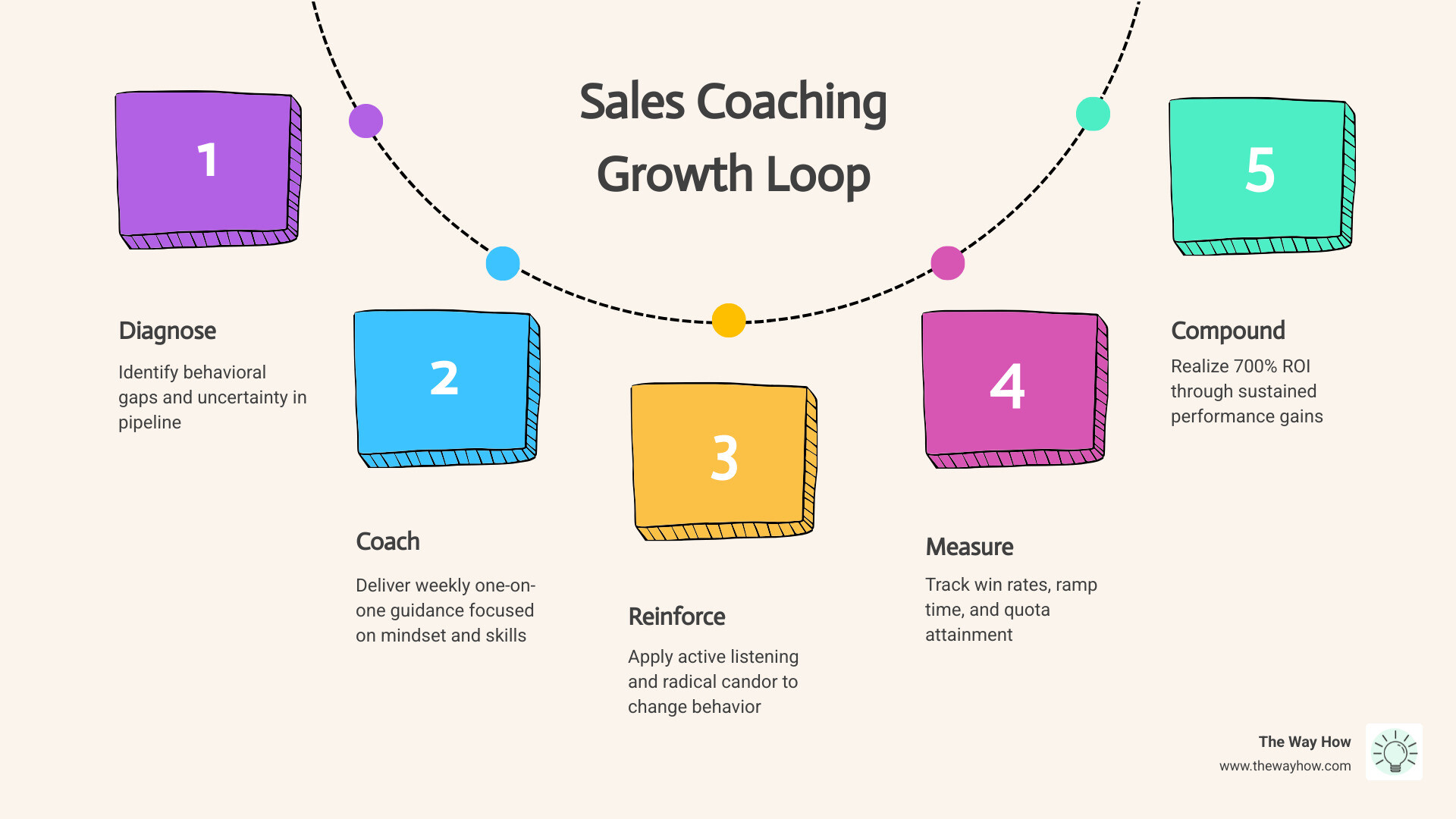
The financial argument for sales coaching is staggering. Gartner research indicates that effective coaching can increase sales performance by 8%. More impressively, the International Coaching Federation suggests that the average company investing in coaching sees a return of 700%.
This ROI manifests in several ways:
- Win Rates: Companies with consistent coaching see 32% higher win rates.
- Quota Attainment: There is a 28% increase in the ability to reach quotas when coaching is programmatic.
- Retention: 58% of workers are likely to leave if they don’t receive professional development. Coaching builds a sense of connection, with 7 in 10 people stating that learning improves their loyalty to the organization.
For a practical look at how these numbers translate into daily habits, see these examples and models of sales coaching.
Diagnosing the Certainty Gap in Your Sales Pipeline
When growth stalls, leaders often look at the top of the funnel (need more leads) or the bottom (need better closers). However, the “certainty gap” usually lives in the middle. This is where deals go to die because of poor discovery, a lack of multi-threading, or a failure to articulate value.
To fix this, we recommend focusing coaching efforts on the “middle 60%” of your performers. Your top 20% are already winning, and your bottom 20% may not be the right fit. The middle 60% represents the greatest opportunity for a massive revenue lift. By improving their consistency through targeted sales coaching, you stabilize the entire pipeline.
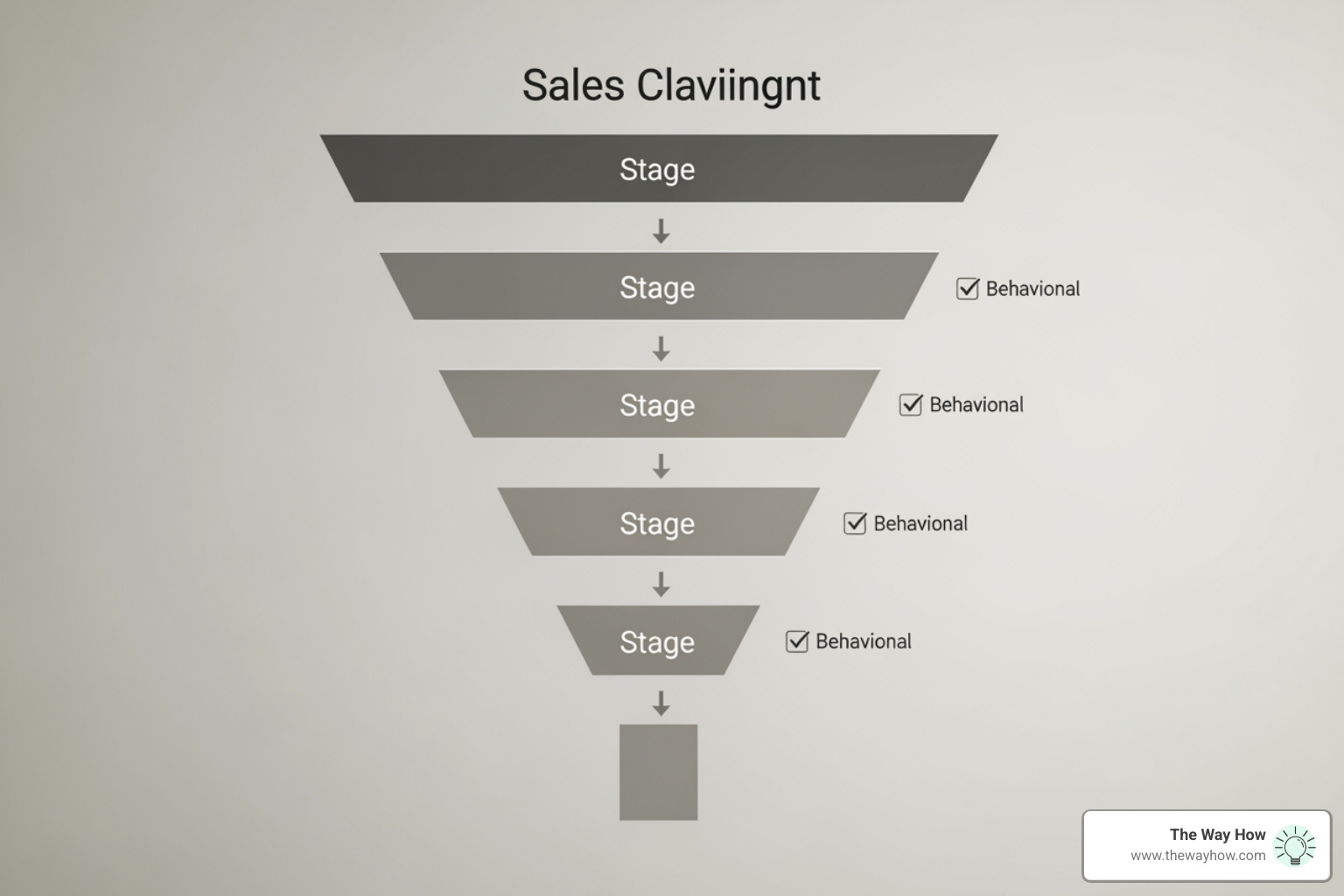
Inconsistency in the pipeline is often a symptom of underlying uncertainty—both for the rep and the buyer. Coaching addresses this by ensuring every interaction creates trust and momentum. For more on this, read about sales funnel optimization.
The Role of the Modern Sales Coach
The modern sales coach wears many hats, but they all serve one goal: removing the obstacles to a rep’s success. According to the RAIN Group, an effective coach must fulfill five key roles:
- Motivate: Go beyond compensation to understand the rep’s personal “why.”
- Focus: Help reps prioritize high-value activities over “busy work.”
- Execute: Provide the tactical tools to move deals forward.
- Advise: Offer strategic insights on complex accounts.
- Develop: Build long-term skills that outlast any single deal.
This role is distinct from traditional management. While a manager organizes and monitors, a coach collaborates. This shift is essential for any modern B2B sales strategy.
Frameworks for High-Impact Behavioral Change
For coaching to be effective, it cannot be a rambling 60-minute chat. It needs structure. One of the most effective frameworks is the “Did, Doing, Do” model:
- Did: Review the commitments made in the last session. Did the rep execute the agreed-upon action?
- Doing: Discuss current deals and challenges. What is happening right now that requires attention?
- Do: Define specific, measurable actions to be completed before the next session.
We also advocate for the “10-minute coaching session.” By using a structured 5-step approach—checking in on wellbeing, identifying a specific skill gap, observing a real-world example (like a call recording), practicing a better response, and setting an action plan—you can drive meaningful change without destroying your calendar.
Effective sales coaching techniques also rely heavily on radical candor and active listening. A coach should spend more time asking questions than giving answers, forcing the rep to self-diagnose and own the solution.
Overcoming the Six Deadly Sins of Coaching
Even with the best intentions, coaching can fail if it falls into common traps. These “deadly sins” create friction and destroy the psychological safety required for growth:
- Micromanagement: Telling reps exactly what to do instead of letting them discover it.
- Vague Feedback: Saying “be more confident” instead of “use a lower vocal inflection during the pricing discussion.”
- Deal Firefighting: Only talking about how to save a specific deal rather than the skill needed to prevent the problem next time.
- Lack of Accountability: Failing to follow up on previous action plans.
- The “Rescue” Complex: Jumping in to take over a call when a rep struggles, which prevents them from building resilience.
- Ignoring Mental Health: Failing to recognize that a “performance problem” is often a burnout problem.
Avoiding these pitfalls requires a shift toward disruptive sales strategies that prioritize human behavior over rigid scripts.
Scaling Excellence with AI and Precision Enablement
By May 2026, the biggest challenge in sales coaching isn’t knowing what to do—it’s having the time to do it for every rep. This is where AI and conversation intelligence become force multipliers.
Modern tools can now audit 100% of sales calls, whereas a typical manager might only hear 1%. AI can flag specific moments where a rep missed an objection, failed to ask a discovery question, or spoke too much (the dreaded 80/20 talk-to-listen ratio).
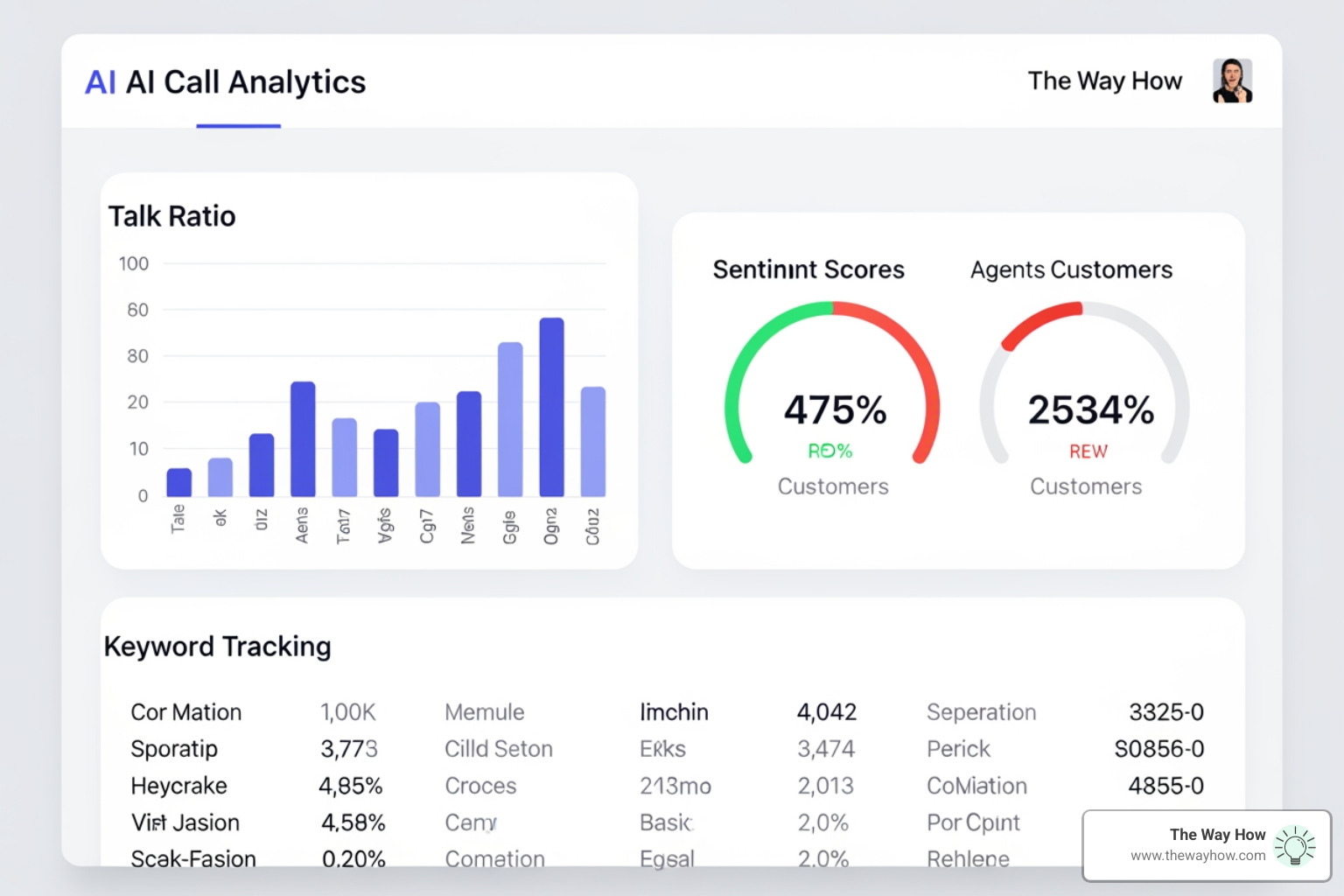
This allows for “Precision Enablement.” Instead of a generic coaching session, a manager can enter a 1-on-1 with data: “AI flagged that your discovery calls are missing timeline questions 40% of the time. Let’s practice that.”
Furthermore, AI roleplay platforms allow reps to practice their pitch 24/7. High-performing teams in 2026 average seven AI roleplay sessions per rep per month, leading to a 38% improvement in skill fluency. This significantly reduces the “Time-to-First-Deal” (TTFD), a critical metric for scaling teams. For more on this evolution, see the continuous sales coaching model.
Building a Sustainable Revenue Engine
A coaching program is only as good as the results it produces. To build a sustainable system, you must measure both leading and lagging indicators.
- Leading Indicators: Coaching session frequency, AI roleplay participation, and “Time to Readiness” for new hires.
- Lagging Indicators: Win rates, average deal size, and quota attainment.
We also recommend tracking the Employee Net Promoter Score (eNPS). A team that feels coached and supported is a team that stays. When you reduce voluntary turnover, you protect your most valuable asset: institutional knowledge.
Sales coaching is the connective tissue of your revenue engine. It ensures that your strategy actually makes it into the ears of your buyers. For a complete blueprint on building this system, consult our ultimate guide to sales coaching and our comprehensive resource on sales team optimization.
Frequently Asked Questions about Sales Performance
How often should managers provide one-on-one coaching?
Consistency beats intensity. While only 26% of reps currently receive weekly coaching, a weekly cadence is the gold standard. Even a 10-to-15 minute focused check-in every week is more effective than a two-hour marathon once a month. It keeps the “muscle memory” fresh and allows for quick course corrections.
Can AI replace human sales managers in 2026?
No. AI is a multiplier, not a replacement. AI handles the repetitive drills, data gathering, and initial roleplay practice. This frees the human manager to focus on the things AI cannot do: strategic mentoring, complex deal psychology, career development, and providing the empathy needed to navigate a high-pressure sales environment.
How do you measure the ROI of a coaching program?
Look for a lift in win rates (typically 25% to 100% in high-impact programs) and a reduction in ramp time for new hires. If your average return on coaching investment is near the industry standard of 700%, the program will pay for itself within the first two quarters of consistent implementation.
Restoring Momentum: Your Path to Predictable Growth
At The Way How, we believe that growth doesn’t stall because of a lack of effort—it stalls because of a lack of clarity. When your sales team is uncertain about how to communicate value, or your managers are uncertain about how to develop their people, momentum vanishes.
We help founders and leadership teams remove that uncertainty. By blending behavioral psychology with operational execution, we design sales systems that create trust and predictable revenue. Whether you need fractional leadership or a total architecture overhaul, we focus on the human triggers that drive decision-making.
If you are ready to turn your marketing and sales into a dependable growth engine, let’s look at the psychology behind your pipeline. Explore our revenue strategy services to see how we can help you lead your team toward their full potential.