
The Coaching Gap That’s Quietly Killing Your Revenue

Coaching sales team performance is one of the highest-leverage things a sales leader can do — yet it’s one of the most consistently underdeveloped skills in revenue organizations.
Here’s a quick answer if you want it:
How to coach a sales team effectively:
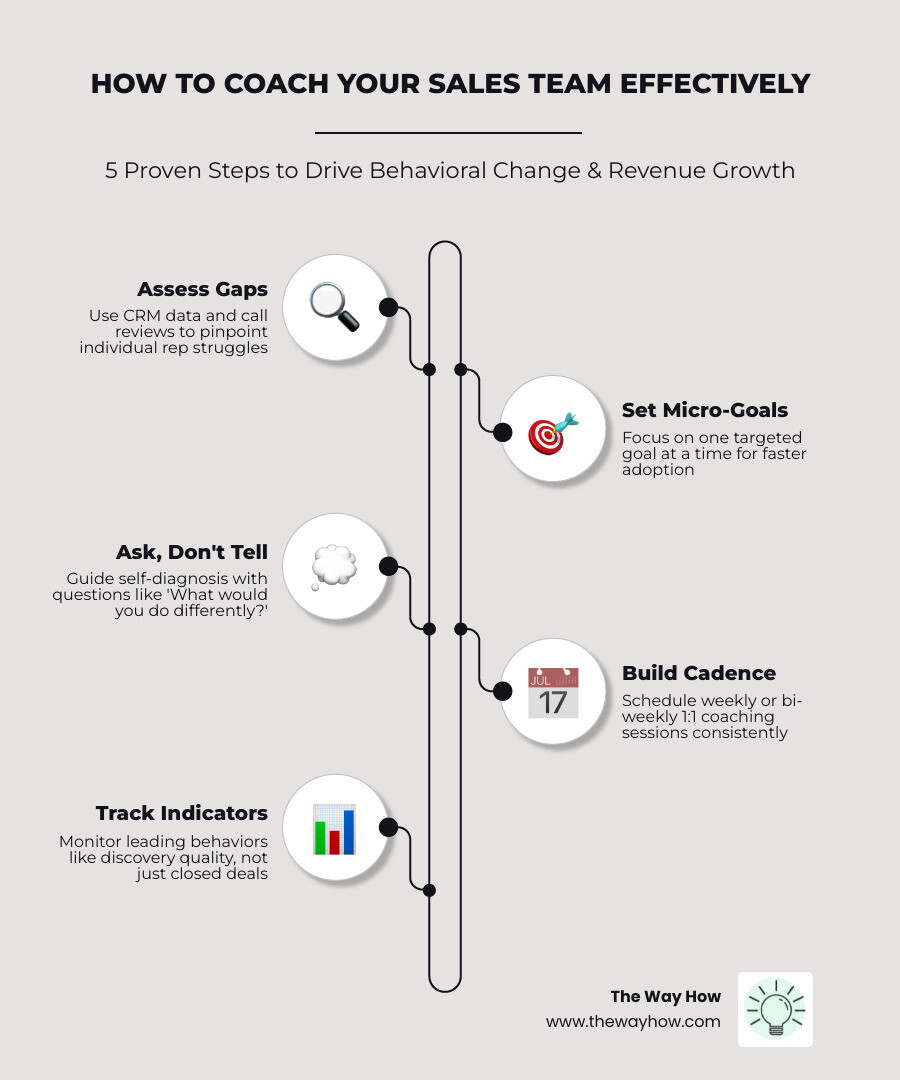
- Assess individual gaps — use CRM data and call reviews to identify where each rep struggles
- Set one focused goal at a time — micro-goals outperform broad improvement plans
- Ask, don’t tell — guide reps to self-diagnose with questions like “What would you do differently?”
- Build a consistent cadence — weekly or bi-weekly 1:1s, not ad-hoc conversations
- Track leading indicators — behaviors like discovery quality, not just closed deals
- Use AI tools to scale — conversation intelligence surfaces coachable moments you’d otherwise miss
- Measure and adjust quarterly — coaching programs that don’t evolve stop working
Most sales organizations still confuse training with coaching. Training transfers knowledge. Coaching changes behavior. And behavior is what actually closes deals.
The numbers make this hard to ignore. Sales reps who receive just three hours of coaching per month exceed quota by 7%, grow revenue by 25%, and improve close rates by 70%. Yet the average sales leader spends only about 20% of their time coaching — and nearly 60% of organizations say their biggest barrier to effective sales development is reps failing to apply what they’ve learned.
That’s not a training problem. That’s a behavior change problem. And it requires a different approach entirely.
The reader who ends up here usually already knows their team has potential. What they can’t figure out is why that potential isn’t converting into consistent results. The issue is almost never effort. It’s almost always structure — or the absence of it.
I’m Jeremy Wayne Howell, a revenue growth strategist with over 20 years of experience helping founders and sales leaders diagnose what’s actually stalling performance — and I’ve seen how a well-designed coaching sales team strategy can unlock growth that no new hire, tool, or incentive plan could produce on its own. What follows is the clearest, most practical guide I can give you on how to build that system from the ground up.
Beyond the Script: Why Most Sales Training Fails
We’ve all seen the cycle: a company flies the team in for a high-energy weekend workshop, everyone leaves “fired up,” and by the following Thursday, the new scripts are buried under a pile of old habits. Research shows that B2B sales reps forget a staggering 70% of what they learn within just one week of a training session.
This is the “forgetting curve” in action. Training is often treated as an event—a discrete injection of information. But human behavior doesn’t change through injections; it changes through iteration. The primary barrier to success isn’t a lack of information; it’s an accountability gap. When reps aren’t held accountable for applying new skills in real-world scenarios, the investment in training evaporates.
Effective coaching sales team efforts bridge this gap by focusing on long-term behavioral change rather than short-term knowledge bursts. When a manager moves from being a “commander” to a “coach,” they stop policing activities and start developing capabilities. This shift is powerful: organizations that prioritize better coaching see an average 8% increase in sales performance from their core salespeople.

Defining the Shift: Sales Coaching vs. Training
To build a high-performing team, we must first distinguish between these two often-conflated terms.
- Sales Training is group-oriented, standardized, and event-based. It’s about knowledge transfer—teaching the “what” and the “how” of a product or methodology.
- Sales Coaching is individual, personalized, and continuous. It’s about behavioral modification—helping a specific rep overcome their specific hurdles in real-time.
While training might teach a team how to use a new Sales Strategy For Consulting Firms, coaching is what helps a senior consultant handle a specific objection from a skeptical CEO during a discovery call. According to experts at Fullcast, coaching develops capability, while mere “telling” reinforces dependency.
The Psychology of Skill Retention
The reason coaching works where training fails lies in cognitive load and active recall. When a rep is overwhelmed with information in a classroom setting, their brain struggles to prioritize what matters. Coaching reduces this load by focusing on one skill at a time. By using active recall—forcing the rep to pull the solution from their own mind during a coaching session—we strengthen the neural pathways required for that behavior to become second nature. This is a core tenet of the Ultimate Guide To Successful Sales Coaching in 2026.
Moving from Telling to Asking
The most effective coaches use the Socratic method. Instead of saying, “You should have asked about their budget earlier,” a coach asks, “At what point in that conversation did you feel you had the most leverage to discuss investment?” This forces self-diagnosis. When a rep identifies the mistake themselves, they take ownership of the solution. This psychological shift is essential for any modern B2B Sales Strategy.
The Psychology of Performance: Why Coaching Sales Teams is Non-Negotiable
We live in an era where sales turnover is three times higher than in other industries. Burnout is real, and the “grind harder” mentality is failing. In fact, 70% of sellers report struggling with mental health.
When we invest in coaching sales team members, we aren’t just improving numbers; we are improving the human experience of work. Coaching builds trust and psychological safety. It signals to the rep that the organization is invested in their career path, not just their quota. This is a critical component of a Sales Team Optimization Complete Guide.
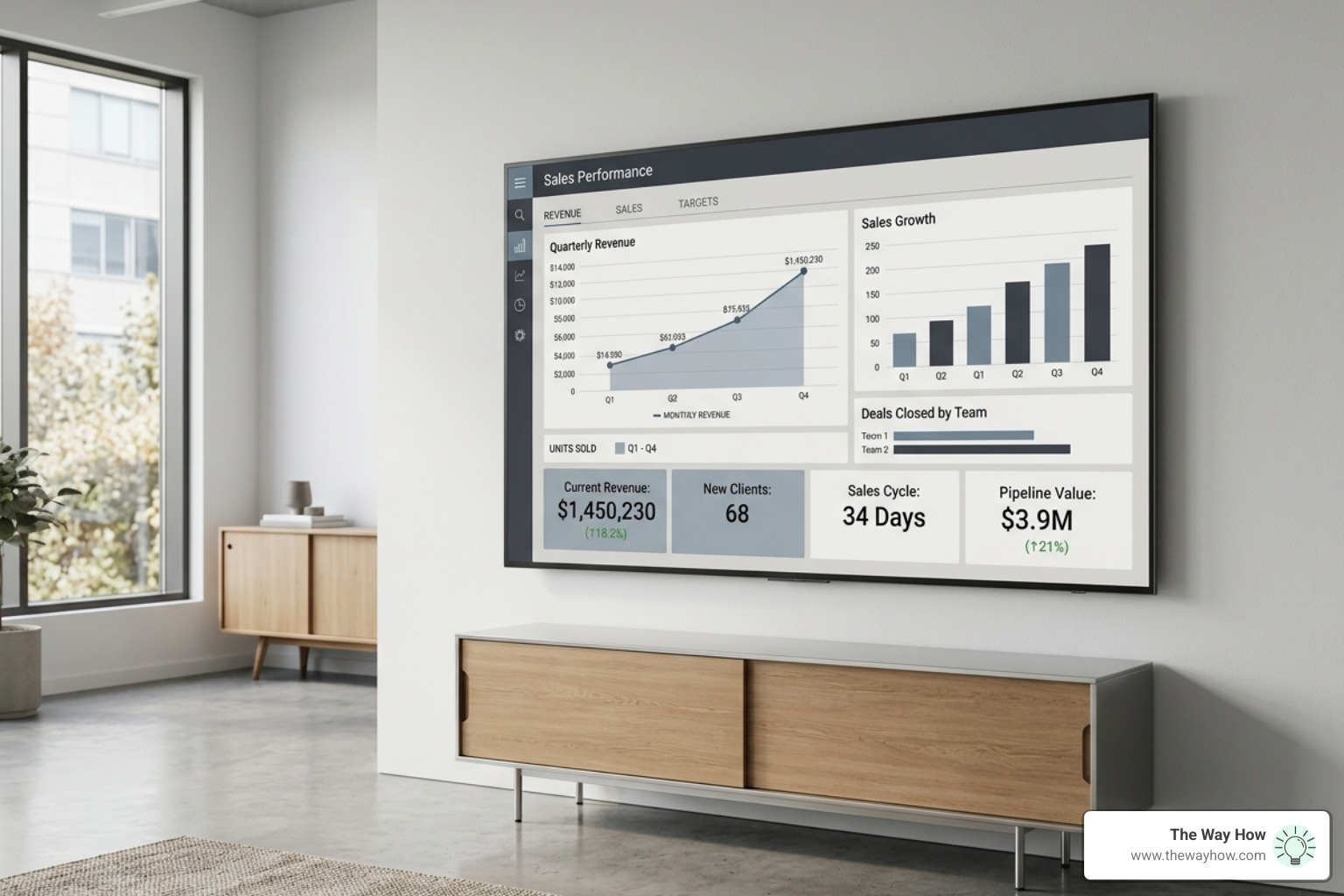
How Coaching Improves Sales Performance
The data is clear: when sales leaders spend more than 50% of their time coaching, their companies are 1.4 times more likely to outperform the competition. This isn’t magic; it’s the result of marginal gains across the entire funnel. Better coaching leads to:
- Higher Win Rates: Reps qualify deals more effectively.
- Increased Deal Size: Coaches help reps identify “multi-threading” opportunities.
- Cycle Acceleration: As noted in the Data-Driven Sales Coaching Approach, coaching can help a rep reduce a sales cycle from 100+ days down to 50 by addressing specific bottlenecks in their process.
Building Leadership and Engagement
Coaching is the ultimate tool for emotional intelligence. It allows managers to move beyond “spreadsheet management” and into true leadership. By focusing on career pathing and personal development, you create a culture of engagement. Seven in ten people say that learning improves their connection to their organization. When reps feel they are growing, they stay. This retention is a hidden revenue driver often overlooked in the Ultimate B2B Sales Funnels Guide.
Designing a Framework for Your Coaching Sales Team Strategy
A common mistake is treating coaching as an ad-hoc activity—a “quick chat” in the hallway. For coaching to drive revenue, it needs a framework. We recommend a structured approach that integrates with your existing Hubspot Sales Implementation Guide.
Needs Assessment: Use CRM data to find the “leaks.” Is the rep struggling with prospecting, discovery, or closing?
SMART Goals: Set specific, measurable targets. Instead of “get better at calls,” try “increase the listen-to-talk ratio to 60/40 over the next four weeks.”
The GROW Model:
- Goal: What do you want to achieve?
- Reality: What is happening now?
- Options: What could you do?
- Will: What will you do?
Feedback Loops: Establish a rhythm where feedback is timely and documented, as suggested by SalesHood.
Core Elements of Successful Programs
Successful coaching sales team programs share three traits: consistency, data-driven insights, and an empathy-first mindset. You cannot coach effectively if you only do it when numbers are down. Consistency builds the “coaching muscle.” Furthermore, using data ensures the conversation is objective rather than a battle of opinions. This objectivity is vital when implementing Disruptive Sales Strategies.
Creating a High-Performance Culture
A high-performance culture isn’t one where everyone is afraid to fail; it’s one where everyone is eager to learn from failure. We encourage “failure sharing” sessions where reps deconstruct lost deals without judgment. This builds psychological safety and encourages peer learning. When the top performers share their “battle scars,” the entire team levels up. This is a foundational element of B2B Sales Consulting.
Proven Techniques for Coaching Sales Teams at Every Level
Every rep is at a different stage of their journey. A “one-size-fits-all” coaching approach is a recipe for frustration. You wouldn’t coach a rookie quarterback the same way you coach a 10-year veteran, and the same applies to your sales floor.
Techniques for Coaching Sales Team Newcomers
For “greener” reps, the focus should be on foundations and confidence.
- Shadowing: Have them listen to “best-in-class” calls from your top performers.
- Script Mastery: Not to recite them like robots, but to understand the why behind each question.
- Role-playing: Create a safe environment to practice objection handling before they get on a live call.
- Micro-coaching: Give immediate, 5-minute feedback after a call rather than waiting for a weekly 1:1. This is especially helpful during a Hubspot Sales Hub Implementation.
Advanced Strategies for Coaching Sales Team Veterans
Tenured reps don’t need help with scripts; they need help with nuance.
- Deal Strategy: Focus on the complex politics of the buying committee.
- Methodology Refinement: Help them adopt new frameworks like MEDDIC or SPIN in a way that fits their personal style.
- Creative Execution: Challenge them to find non-traditional ways to re-engage stalled leads.
- Peer Mentorship: Let them coach newer reps, which reinforces their own mastery and assists with Sales Funnel Optimization.
Scaling Excellence: AI and Metrics in Modern Coaching
In 2026, the biggest challenge for sales leaders is time. How do you coach 15 reps effectively when you also have to manage board reports and strategy? The answer is technology.
AI-powered conversation intelligence can now “listen” to 100% of your team’s calls. It can flag moments where a competitor was mentioned, where a rep missed a discovery cue, or where the talk ratio was off. This allows you to walk into a 1:1 with “coachable moments” already identified, saving hours of manual review.
| Metric | Manual Coaching | AI-Enhanced Coaching |
|---|---|---|
| Call Review Coverage | 2-5% of calls | 100% of calls |
| Feedback Latency | Days or weeks | Real-time or minutes |
| Objectivity | Subjective / Gut feel | Data-driven / Pattern based |
| Ramp Time | Standard (4-6 months) | Accelerated (30% reduction) |
| Quota Attainment | 90% average | 107% average |
KPIs for Measuring Coaching Effectiveness
You cannot manage what you do not measure. We look at both leading and lagging indicators:
- Leading Indicators (Behaviors): Listen-to-talk ratios, number of discovery questions asked, use of “next steps” in every call, and ramp time for new hires.
- Lagging Indicators (Outcomes): Win rates, average deal size, and overall quota attainment.
If behaviors improve but outcomes don’t, your strategy is wrong. If outcomes improve but behaviors don’t, you’re just getting lucky—and luck isn’t scalable.
Leveraging Technology for Scalability
Modern tools allow for asynchronous feedback. A rep can record a 2-minute pitch, and a manager can leave timestamped comments while drinking their morning coffee. Automated scorecards can grade calls based on your specific criteria (e.g., “Did the rep ask about the decision-maker?”). This creates a “self-guided” coaching environment where reps can improve even when the manager isn’t in the room.
Frequently Asked Questions about Sales Coaching
What is the number one barrier to effective sales training?
Nearly 60% of organizations report that the primary barrier is salespeople failing to be accountable for applying the skills they have learned in a real-world environment. Without the reinforcement of ongoing coaching, training becomes a “one-and-done” event with very low ROI.
How often should sales coaching sessions occur?
High-performing teams typically engage in 2-3 hours of coaching per month. This is most effective when broken down into weekly or bi-weekly one-on-one sessions. Consistency is more important than duration; a focused 20-minute session every week is better than a two-hour marathon once a month.
How does sales coaching differ from sales management?
Sales management focuses on outcomes, quotas, and territory logistics—it’s about the “what” of the business. Sales coaching focuses on the individual rep’s behavioral development and skill mastery—it’s about the “how.” A manager asks, “Where is the deal?” A coach asks, “What skills do you need to move this deal forward?”
Restoring Momentum Through Behavioral Clarity
At The Way How, we believe that revenue growth isn’t just about better tactics; it’s about better systems. Most sales teams aren’t failing because they lack talent; they’re failing because they lack the behavioral clarity that only a rigorous coaching sales team strategy can provide.
We are a psychology-first marketing and revenue strategy firm. We help leadership teams remove the uncertainty that stalls growth by diagnosing the “certainty gaps” in their sales and marketing systems. Whether it’s through HubSpot architecture or demand generation strategies, our focus is always on human behavior and decision-making.
If your sales team’s performance feels like a “black box” you can’t quite crack, it might be time to stop managing the numbers and start coaching the people. We’re here to help you build the systems that turn marketing and sales into a dependable, predictable growth engine.