

Is Your Advertising Invisible? It’s Time to Change the Conversation

A disruptive advertising agency is a marketing partner that challenges conventional market assumptions and creates new competitive space rather than optimizing existing tactics. These agencies focus on reframing buyer conversations, identifying psychological gaps in the customer journey, and building long-term platforms for growth instead of chasing incremental improvements.
Key characteristics of disruptive advertising agencies:
- Psychology-first methodology – Understanding human behavior and decision-making before selecting tactics
- Strategic clarity over execution speed – Diagnosing what’s broken before implementing solutions
- Long-term platform building – Creating sustainable competitive advantages, not quick wins
- Full-funnel alignment – Connecting marketing tactics to actual business goals and revenue outcomes
- Rejection of incrementalism – Actively dismantling status quo approaches to find white space
Most marketing feels invisible because it blends into the noise of “best practices” that everyone else is following. When you optimize the same channels, use the same messaging frameworks, and chase the same metrics as your competitors, you’re not building a brand—you’re competing on price and convenience.
That’s the trap of traditional advertising: it assumes the market conversation is fixed and your job is to speak louder within it. Disruptive agencies start with a different question: What if the conversation itself is wrong?
In strategic marketing, this approach is the antidote to incrementalism and has always been about driving fundamental business change. A commitment to disruption as a methodology has spawned some of the world’s most iconic brands—not by following trends, but by embodying disruption as a daily mindset.
The difference shows up in the results. Top-tier disruptive agencies manage hundreds of millions in annual ad spend for clients, often retaining partners for four years or more. One client saw their demos increase 4x monthly while simultaneously reducing ad spend by 50%. That’s not optimization—that’s reframing the problem.
But here’s what most people miss: disruption isn’t about being provocative or going viral. It’s about understanding where certainty gaps exist in your customer’s decision-making process and building strategic clarity around those moments. It’s about diagnosing why growth has stalled before prescribing more tactics.
I’m Jeremy Wayne Howell, founder of The Way How, and I’ve spent two decades helping companies understand that most growth problems aren’t tactical—they’re psychological, which is why choosing the right disruptive advertising agency requires understanding how they diagnose problems, not just what tools they use. This guide will help you cut through the buzzwords and identify partners who actually challenge conventions rather than just claim to.
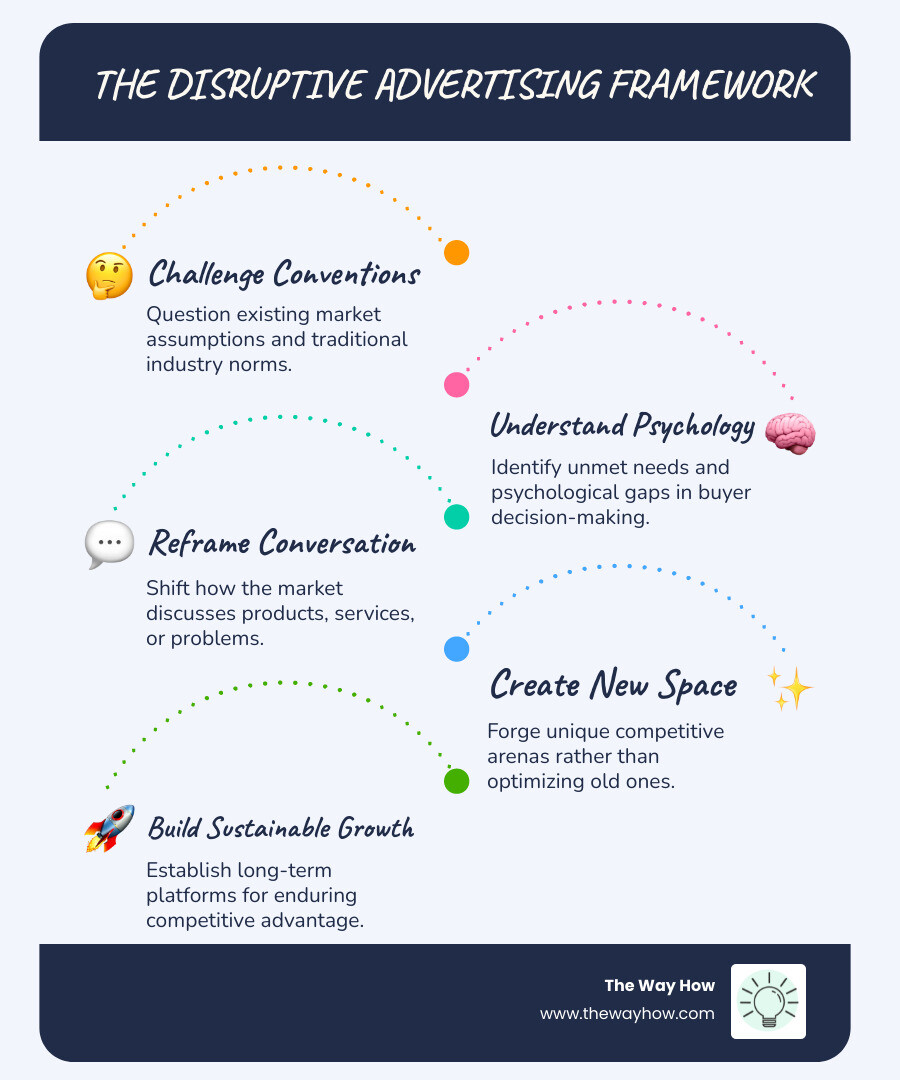
Simple guide to disruptive advertising agency terms:
What “Disruption” Really Means in Advertising (And What It Isn’t)
When we talk about a disruptive advertising agency, we’re not just referring to an agency that creates shocking or controversial ads. True disruption in advertising goes far deeper, challenging the very foundations of how a market operates and how consumers think about a product or service. It’s about finding the “white space” - unmet needs, unchallenged assumptions, or overlooked cultural shifts - and then strategically exploiting that space to create a new category or redefine an existing one.
Traditional advertising, by contrast, tends to operate within established market boundaries. It focuses on optimizing existing channels, refining messages, and incrementally improving performance within a predefined competitive landscape. While this approach can yield steady results, it rarely leads to breakthrough growth or category leadership. It’s like trying to win a race by running faster on the same track everyone else is on, rather than finding a new, shorter route.
For us, disruption is the antidote to incrementalism. It’s about asking, “What if the current conversation is wrong?” and then having the strategic rigor to reshape that conversation entirely. This involves a deep dive into disruptive marketing examples to understand how others have successfully broken away from the pack.
If you want a neutral, non-agency definition of what “disruptive” means in business strategy (and why it differs from simply being provocative), see disruptive innovation.
Here’s a snapshot of how we see the difference:
| Feature | Traditional Advertising | Disruptive Advertising |
|---|---|---|
| Goals | Increase market share within existing category | Create new category or redefine existing one |
| Tactics | Optimize existing channels, refine messaging | Challenge conventions, reframe conversations, identify white space |
| Metrics | CTR, impressions, conversion rates (incremental) | Market share shifts, brand recall, category creation (exponential) |
| Mindset | Adapt to market, compete better | Reshape market, redefine competition |
| Focus | Product features, benefits | Buyer psychology, cultural shifts, unmet needs |
The Psychology Behind Breaking Through the Noise
At The Way How, we believe that effective marketing is rooted in understanding human behavior and decision-making. This is precisely where a disruptive advertising agency excels. They don’t just aim for attention; they aim for a profound connection that changes how people think and act.
Disruption isn’t about being loud for the sake of it. It’s about changing the conversation in a way that resonates deeply with buyer psychology. We look for the underlying motivations, the unspoken desires, and the “certainty gaps” in the customer journey that, once addressed, can create entirely new categories of thought and consumption.
Consider the example of a brand that created a tampon specifically for transgender men. This wasn’t just a product; it was a profound act of disruption that acknowledged an underserved community and reframed the conversation around menstrual health. It wasn’t controversial for controversy’s sake; it was empathetic and strategic, creating a new category and fostering deep connection.
This approach moves beyond mere attention-grabbing tactics to build genuine trust and momentum. It recognizes that in an attention-scarce world, true impact comes from creating something so relevant and unexpected that it becomes indispensable.
From Incremental to Exponential: Shifting Your Growth Mindset
Many businesses find themselves stuck in a cycle of incremental improvements, constantly optimizing “best practices” that everyone else is already doing. The problem is, when everyone follows the same map, no one gets ahead. This leads to predictable, often underwhelming, results.
A disruptive advertising agency helps shift this mindset from incremental to exponential. Instead of just doing things better, they encourage us to do fundamentally different things. This means rejecting the notion that “best practices” are always the best path forward. Often, they are merely the most common practices, leading to market saturation and brand invisibility.
A philosophy of Disruption emphasizes dismantling the status quo to find that elusive “white space” - areas where conventional thinking has left opportunities untapped. This often requires unconventional behavior and a willingness to challenge industry norms. For example, creating the world’s first sneaker drop as a cake or developing a new brand character for a leading food producer are not incremental improvements; they are creative acts of disruption that capture disproportionate attention and build long-term brand equity.
For small businesses especially, embracing this mindset can open up significant Small Business Growth Strategies by allowing them to carve out unique niches rather than directly competing with larger, more established players on their terms. This isn’t about quick fixes; it’s about building a foundation for sustained, long-term brand building that drives predictable revenue.
The Anatomy of a True Disruptive Advertising Agency
What truly sets a disruptive advertising agency apart isn’t just a catchy tagline; it’s a deeply ingrained philosophy and a methodical approach to client partnerships. At The Way How, we recognize that these agencies operate with a distinct set of core principles that align closely with our psychology-first methodology.
These agencies prioritize strategic clarity above all else. They understand that without a clear understanding of the client’s “why” – their core purpose, business goals, and the unique psychological problems their customers face – any marketing effort will fall short. They don’t jump straight to tactics; they diagnose why growth is stalled and identify certainty gaps in the customer journey first.
Their approach is inherently psychology-first, focusing on human behavior, empathy, and decision-making. This allows them to design systems that create trust, momentum, and ultimately, predictable revenue. This isn’t about guessing; it’s about making Data-Driven Decisions that are informed by rigorous research and behavioral insights.
Furthermore, these agencies are committed to long-term partnerships, viewing themselves as an extension of their clients’ teams. They align their strategies with overarching business goals, ensuring that every campaign contributes to a larger, more sustainable vision. This commitment is often reflected in impressive client retention rates, with top firms often keeping clients for four years or more.

Methodologies That Drive Change
The methodologies employed by a disruptive advertising agency are often proprietary and always systematic. Take the methodology of Disruption as a prime example. It is a structured approach designed for business change, requiring a mindset and a behavior that clients embody daily. This isn’t a nebulous concept; it’s a set of tools used to dismantle conventions.
For us, this means developing a full-funnel strategy that isn’t just about awareness, but about guiding customers through every one of the Customer Journey Stages with clarity and purpose. It starts with diagnosing growth stalls by asking fundamental questions about the market, the customer, and the competitive landscape.
Leading disruptive partners often frame their core philosophy around authenticity. This principle suggests that genuine connection and transparent communication are paramount. They aim to work exclusively with authentic brands and marketers, fostering a “win-win-win” mindset where client, agency, and customer all benefit. This approach means they are not just selling a service, but a shared commitment to values that resonate with today’s consumers.
These methodologies often involve collaborative workshops, bringing together diverse teams and client stakeholders to challenge assumptions and identify new opportunities. It’s about creation, not destruction – finding innovative ways to solve problems and build brands that stand out.
The Role of Data, Technology, and Talent
In disruptive advertising, data and technology are not just tools; they are the bedrock upon which innovative strategies are built. A truly disruptive advertising agency leverages sophisticated Marketing Data Analysis to understand market dynamics, consumer behavior, and, crucially, to identify those “certainty gaps” in the customer journey that we often talk about. This data-driven approach allows them to imagine what’s ahead, not just analyze what’s worked so far.
For example, an agency might use advanced analytics to pinpoint why specific customer segments are hesitant to convert, then design a disruptive campaign to address those psychological barriers directly. This goes beyond basic analytics to robust intelligence and strategic rigor, providing clients with the confidence to be brave in their marketing decisions.
Attracting and retaining top talent is equally critical. Disruptive agencies thrive on creativity, strategic thinking, and a willingness to challenge the norm. This demands a culture that fosters continuous development and collaboration. Leading agencies invest heavily in their people, often being recognized as top places to work. They frequently establish internal training academies for ongoing talent development, ensuring their teams are always at the forefront of marketing innovation.
Collaborative teams are also essential. One client noted how their account manager joined their company’s Slack channel, demonstrating a seamless integration and flexible approach to communication. This level of partnership ensures that the agency’s diverse specialists – from internal design teams to PPC experts – can work together effectively to deliver coherent and impactful strategies. This dedication to talent and collaborative spirit is a key reason why agencies maintain high client retention rates and manage significant annual ad spend.
Measuring What Matters: How Disruptive Campaigns Prove Their Worth
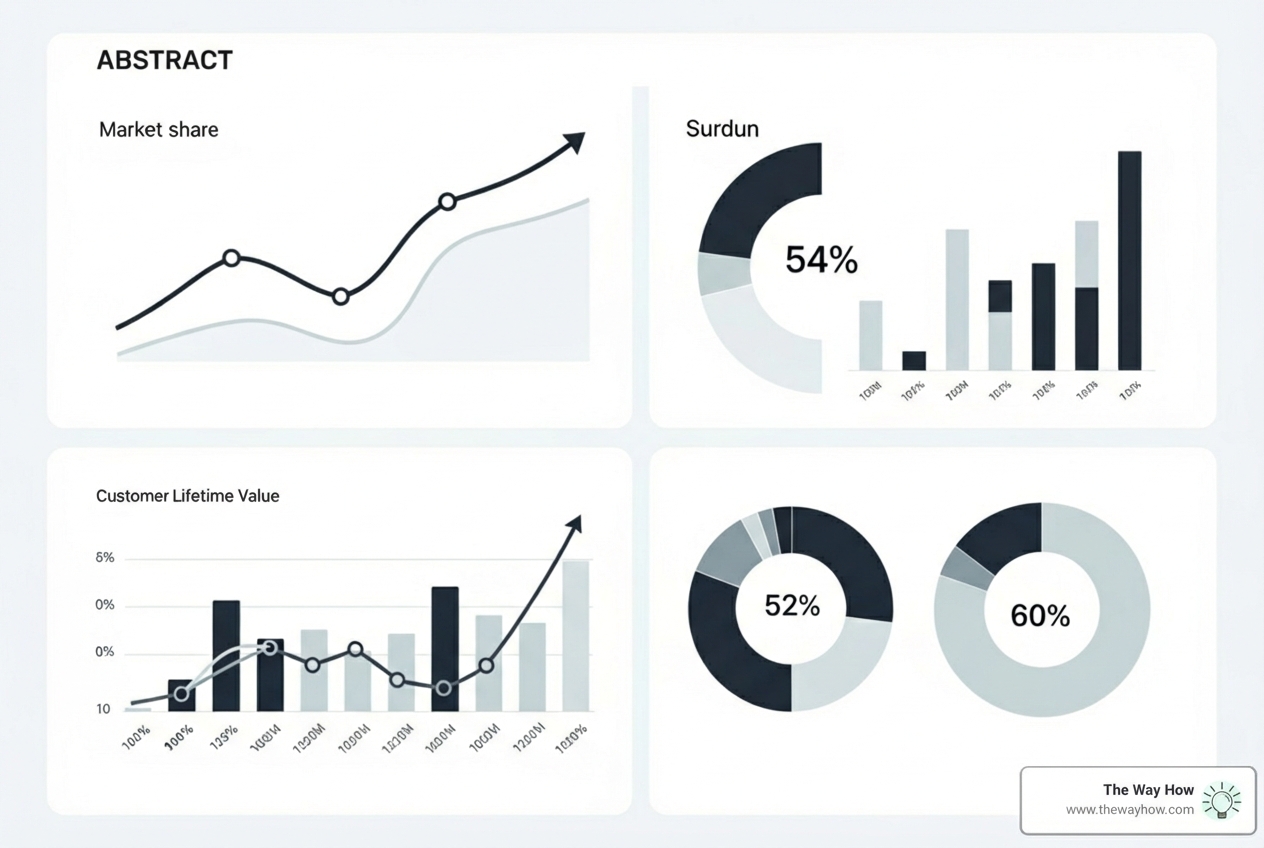
For a disruptive advertising agency, success isn’t just about likes, shares, or even clicks. While these metrics have their place, true disruption aims for far more impactful outcomes that reflect real business change. We look beyond vanity metrics to assess changes in market share, significant shifts in brand recall, and, most powerfully, the creation of entirely new market categories.
A disruptive campaign seeks to fundamentally alter the competitive landscape, making the brand not just visible, but indispensable. This means measuring success through indicators like:
- Market Share Growth: Not just a slight uptick, but a significant shift that indicates a re-evaluation of the market by consumers.
- Brand Recall & Equity: How deeply and widely the brand resonates, moving beyond mere recognition to strong emotional connection and preference.
- Category Creation/Redefinition: The ultimate disruptive metric, showing that the agency has carved out a new space or fundamentally changed how an existing category is perceived.
- Customer Lifetime Value (CLTV): Disruptive strategies often build deeper loyalty, leading to higher long-term customer value.
- Return on Investment (ROI): Crucially, these campaigns aim for a superior Boost Marketing ROI by reducing waste and maximizing impact through strategic clarity.
Client testimonials often underscore this focus on tangible results. Leading disruptive agencies often maintain exceptional client satisfaction ratings, with many boasting hundreds of positive reviews on platforms like Clutch. These aren’t just accolades; they’re evidence that their approach delivers measurable business outcomes beyond surface-level engagement.
Case Studies in Market-Shaking Success
The impact of a disruptive advertising agency is best illustrated through real-world examples that showcase their ability to reshape markets and drive significant growth.
Agencies with a long-standing commitment to Disruption have a track record of campaigns that defy convention. Industry work on “Hilton on TikTok” didn’t just promote hotel rooms; it created memorable brand experiences on a platform where consumers expect authenticity and entertainment, addressing the core question of “It Matters Where You Stay” in a fresh way. Similarly, the “Vuokkoset” campaign for tampons for transgender men was a powerful act of inclusivity that challenged traditional product perceptions and created a new conversation around a sensitive topic. The “Valio” sneaker drop as a cake or the “Atria” brand character are further examples of creative execution that create distinction and memorability. These signify a deep, embodied commitment to a transformative mindset.
Another compelling example comes from a high-growth LMS company. They needed help quickly standing up PPC campaigns and driving results. Through a psychology-first approach and meticulous execution, their disruptive partner achieved remarkable performance-focused results: they saw web traffic increase and demos quadruple monthly. What’s more, they accomplished this while simultaneously reducing the client’s ad spend by 50%. This isn’t just optimization; it’s a strategic re-evaluation of how marketing resources are allocated to maximize impact, proving that a disruptive approach can deliver both efficiency and exponential growth.
These case studies highlight that disruptive success isn’t always about massive budgets; it’s about strategic insight, creative courage, and a deep understanding of human behavior that allows brands to connect in unprecedented ways.
The Benefits and Risks of Hiring a disruptive advertising agency
Engaging a disruptive advertising agency can be a game-changer for your brand, but it’s important to understand both the opportunities and the challenges involved.
Benefits:
- Market Leadership: By challenging norms and creating new categories, your brand can become a leader rather than a follower. This can lead to increased market share and a “category of one” status, making you truly unique.
- Improved Brand Loyalty: Disruptive campaigns often resonate more deeply with consumers because they address unmet needs or challenge outdated perceptions. This can foster stronger emotional connections and fierce brand loyalty.
- Breaking Through the Noise: In an oversaturated market, traditional advertising often gets lost. A disruptive approach cuts through the clutter, capturing disproportionate attention and ensuring your message is heard.
- Higher ROI: By focusing on strategic clarity and identifying certainty gaps, disruptive agencies aim to make every marketing dollar work harder, leading to more efficient spend and a greater return on investment. The example of reducing ad spend by 50% while quadrupling demos illustrates this potential.
- Predictable Revenue: By building long-term platforms and designing systems rooted in human behavior, disruptive agencies can help remove uncertainty from your sales and marketing, creating more dependable growth engines.
Potential Drawbacks:
- Requires Client Bravery: Embracing disruption means being willing to challenge your own assumptions, take calculated risks, and potentially step outside your comfort zone. It’s not for brands content with the status quo.
- Not a Quick Fix: True disruption involves strategic change, which takes time and commitment. It’s about building long-term platforms, not chasing short-term viral sensations.
- Potential for Higher Upfront Investment: The deep research, strategic planning, and creative development required for disruptive campaigns might necessitate a more significant initial investment compared to purely tactical executions. However, this is often offset by the long-term, exponential returns.
- Challenges Internal Norms: A disruptive agency might challenge existing internal processes or beliefs, requiring organizational adaptability and open-mindedness.
The decision to partner with a disruptive agency is a strategic one, best suited for brands ready to redefine their market and build a lasting legacy.
How to Choose the Right Disruptive Partner for Your Brand
Selecting the right disruptive advertising agency is not a task to be taken lightly. It’s about finding a partner who not only understands your business but is also willing to challenge its fundamental assumptions to open up exponential growth. For us at The Way How, this vetting process is crucial because we believe in diagnosing the problem before prescribing the solution.
We encourage you to look beyond impressive portfolios and focus on an agency’s strategic fit and shared values. A true disruptive partner will align with your long-term vision, not just your immediate campaign needs. They should be able to articulate a clear methodology that goes beyond surface-level tactics and digs into the psychological underpinnings of your customer’s journey.
Consider this a strategic decision, much like when a company evaluates Hiring a Fractional CMO Guide. You’re not just outsourcing a function; you’re bringing in a strategic leader to help steer complex market dynamics.
Vetting a Potential disruptive advertising agency
To ensure you’re choosing a partner who can genuinely deliver disruptive results, here are key questions we recommend asking:
- What is your core methodology for identifying market white space or challenging industry norms? Look for a structured approach, such as a psychology-first framework or a proven disruption methodology.
- How do you integrate human behavior and decision-making psychology into your strategy development? This is critical for understanding the “why” behind customer actions and identifying certainty gaps.
- Can you walk us through your process for diagnosing growth stalls and developing a full-funnel strategy? A clear, step-by-step process shows strategic rigor.
- How do you leverage data and technology to inform your disruptive strategies, and what kind of Business Analysis and Analytics do you perform? They should be able to explain how data drives insights, not just reports.
- How do you attract, develop, and retain top talent to ensure cutting-edge strategies? Look for evidence of investment in their people, like internal training programs or high employee satisfaction.
- Describe your approach to client relationships and long-term partnerships. Do they limit client numbers to ensure focus? Do they integrate closely with client teams?
- What are your key performance indicators (KPIs) for measuring disruptive success, beyond traditional marketing metrics? They should focus on business outcomes like market share shifts, brand equity, or category creation.
- Can you provide specific examples of campaigns where you successfully reduced ad spend while increasing key business metrics (like demos or sales)? Real-world impact is key.
- How do you ensure authenticity and alignment with our brand’s values throughout the disruptive process? This speaks to their ability to understand your ‘why’ and build trust.
Red Flags That Signal a “Disruptor” in Name Only
In a marketing landscape filled with buzzwords, it’s easy for agencies to claim they’re “disruptive” without truly embodying the philosophy. Here are some red flags to watch out for:
- “Going Viral” Promises: If an agency’s primary pitch revolves around making you “go viral” without a deeper strategic framework, they’re likely chasing fleeting trends rather than building sustainable platforms. True disruption is strategic, not accidental virality.
- Lack of Clear Process: A genuine disruptive advertising agency will have a well-defined methodology, like a structured psychology-first approach. If they can’t clearly articulate their process for identifying opportunities and executing campaigns, they might lack the strategic rigor required.
- Tactics Over Strategy: If conversations immediately jump to channels (e.g., “we’ll run Facebook ads!”) before a thorough understanding of your business goals, target audience psychology, and market landscape, it’s a sign they prioritize execution speed over strategic clarity. We believe in diagnosing before prescribing.
- Inability to Connect to Business Goals: A true disruptive partner will always tie their marketing efforts directly to your overarching business objectives – revenue, market share, brand equity. If they focus solely on marketing metrics without demonstrating a path to business impact, they’re missing the point.
- Buzzword Dependency: While “disruption” itself is a buzzword, an agency that relies heavily on industry jargon without being able to explain its practical application or how it benefits your specific business might be all talk and no substance.
Choosing wisely means looking for partners who demonstrate a profound understanding of human behavior, a commitment to strategic clarity, and a proven ability to challenge the status quo for exponential, rather than incremental, growth.
Stop Blending In. Start Building Your Category of One.
In today’s dynamic market, blending in is no longer an option for brands seeking meaningful, sustainable growth. The choice to work with a disruptive advertising agency is a strategic one, representing a fundamental mindset shift from merely competing to actively reshaping your market. It’s about moving beyond the noise of traditional advertising and carving out your own unique category of one.
The future outlook for disruptive advertising is bright, as attention scarcity continues to intensify and consumers demand more authentic, meaningful connections from brands. Agencies that can consistently identify certainty gaps, leverage human behavior, and build long-term platforms will be the ones that drive the next wave of iconic brands and predictable revenue streams. They will continue to challenge established norms, foster diverse perspectives, and use robust intelligence to imagine what’s ahead, not just analyze what’s worked in the past.
At The Way How, our philosophy is simple: most growth problems aren’t tactical; they’re psychological. We specialize in helping founders and leadership teams remove uncertainty in their sales and marketing systems by blending strategic clarity, behavioral insight, and operational execution. We believe that by understanding why growth is stalled and identifying those crucial certainty gaps in the customer journey, we can design systems that create trust, momentum, and transform your marketing into a dependable growth engine.
If you’re ready to stop blending in and start leading your market, it’s time to explore a partnership that prioritizes psychology and strategy above all else.
Learn how our psychology-first approach can transform your marketing