A Complete Guide to CRM Systems and Database Management
 Jeremy Wayne Howell : Jul 22, 2026 9:48:31 PM
Effective go to market strategies are structured plans that define exactly how a business will reach its target customers, deliver value, and generate revenue — from first contact through to retention.
Here’s what an effective GTM strategy covers:
| Component | What It Answers |
|---|---|
| Target market and ICP | Who are we selling to, and why them? |
| Value proposition | What problem do we solve, and why us? |
| Pricing and packaging | What do we charge, and how is it structured? |
| Sales and distribution channels | How do customers find and buy the product? |
| Marketing and demand generation | How do we create awareness and interest? |
| Customer success and retention | How do we keep customers after the sale? |
| KPIs and success metrics | How do we know if it’s working? |
A GTM strategy is not the same as a marketing plan. Marketing focuses on ongoing demand. GTM is a cross-functional launch system — it coordinates sales, marketing, product, and customer success around a single goal: getting the right product in front of the right people, at the right time, in a way that converts.
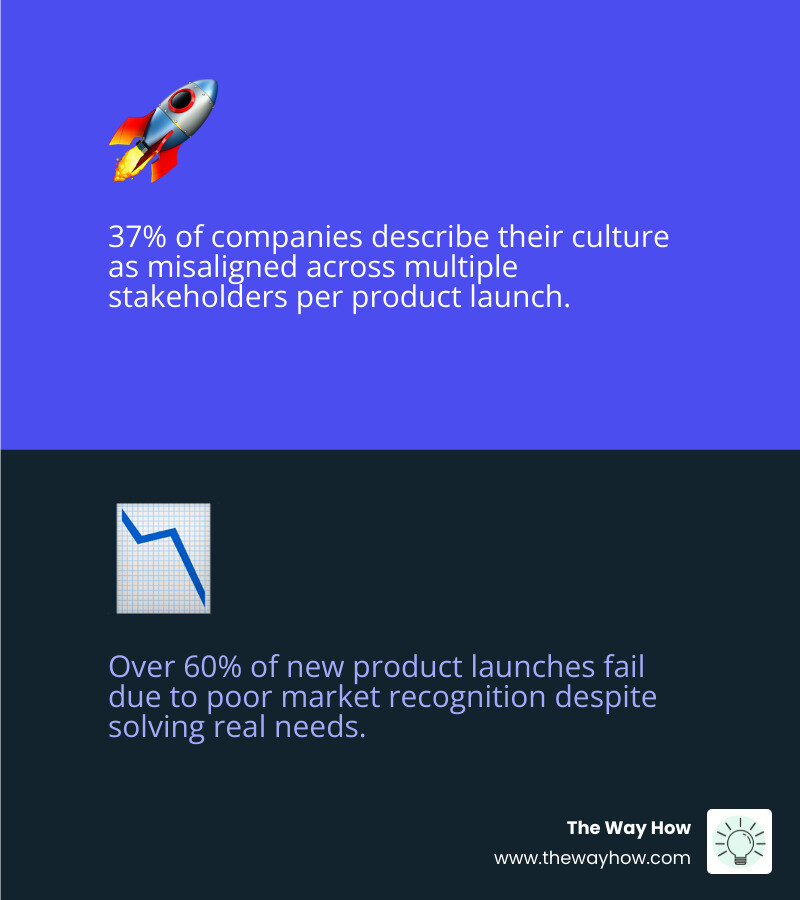
Most failed launches aren’t a product problem. They’re a clarity problem. Teams move fast, skip validation, and build campaigns around assumptions. The result? Misaligned messaging, wasted spend, and a product the market doesn’t recognize — even when it solves a real need.
When Oatly entered the U.S. market, they didn’t buy ads. They went directly to artisanal coffee shops, put their product in the hands of people who already cared, and let those advocates do the work. Revenue grew ten-fold between 2017 and 2018. That’s not a marketing win — that’s a GTM win. They understood who before they decided how.
I’m Jeremy Wayne Howell, a revenue growth strategist with over 20 years of experience rebuilding effective go to market strategies for founders and revenue leaders whose launches stalled not from lack of effort, but from lack of alignment between buyer psychology and execution. This guide is built on what I’ve seen work — and what quietly kills momentum before it ever starts.
Effective go to market strategies terms explained:
At its core, a go-to-market strategy is an operational system designed to remove uncertainty. We often see companies focusing heavily on product development while neglecting the delivery mechanism. In fact, a 2023 report found that 37% of respondents described their company culture as product-first, while only 26% identified as sales-first.
This imbalance often leads to a “build it and they will come” mentality, which is a dangerous gamble. To achieve true product-market fit, you must align what you’ve built with the actual psychological needs and behavioral patterns of your buyers. Effective go to market strategies act as the transmission that converts your product’s engine power into market momentum.
The benefits of a well-structured GTM plan include:
By integrating the 7-elements-of-go-to-market-strategy, we ensure that every department — from product to support — is reading from the same script.
We believe that an Ideal Customer Profile (ICP) is not a static PDF tucked away in a folder. In 2026, an ICP must be a living data model. It should reflect real-time behavioral signals and deep psychological triggers.
Understanding your customer requires moving beyond simple demographics. We look for the “why” behind the buy. This involves:
When we lead with empathy and behavioral insight, we stop selling features and start selling outcomes. This shift reduces the cognitive load on your buyer, making the “yes” much easier to reach.
You cannot manage what you do not measure, but measuring the wrong things is just as dangerous. While revenue is the ultimate goal, it is a lagging indicator. To understand if your GTM strategy is actually working in real-time, we look at leading indicators.
Key metrics to track include:
By following a standardized go-to-market-process, we can identify exactly where the “leaks” are in the funnel and fix them before they derail the entire quarter.
Building effective go to market strategies requires a disciplined approach. We use a 9-step framework to ensure no stone is left unturned:

Not every product should be sold the same way. The “motion” you choose depends heavily on your Average Contract Value (ACV) and the complexity of the sale.
| Feature | Product-Led Growth (PLG) | Sales-Led Growth (SLG) |
|---|---|---|
| Target ACV | < $5,000 | > $50,000 |
| Primary Driver | Product usage/virality | Relationship/Outbound |
| Sales Cycle | Short (Days/Weeks) | Long (Months) |
| Decision Maker | Individual User | C-Suite/Committee |
The classic 4 Ps (Product, Price, Place, Promotion) still matter, but modern effective go to market strategies often look more like a flywheel than a funnel. In a flywheel model, happy customers become the primary driver of new growth.
Look at how Oatly entered the U.S. market or how Microsoft positioned its third-generation Surface tablet as the “tablet that can replace your laptop.” These weren’t just ads; they were strategic choices about where the product sits in the user’s life. Similarly, Apple succeeds because they prioritize a seamless, psychology-led customer experience over raw technical specs.
The best strategy in the world will fail if the people on the front lines don’t know how to execute it. This is the “Execution Gap.” Research shows that 20% of product launches fail to meet their goals, and almost two-thirds of new product launches are struggling by the end of their second year.
The solution is alignment. We use sales enablement and AI to bridge this gap. Modern GTM teams are increasingly using agentic AI to connect live deal activity to strategic priorities, ensuring that reps are using the right messaging at the right time.
To avoid a fragmented launch:
While they overlap, the scope is different. A marketing strategy is a long-term approach to building brand presence and demand. A GTM strategy is a specific, cross-functional system for a launch or market entry. Think of a loyalty program like Sephora’s; that’s marketing. But the plan to launch a specific new product line within those stores is GTM.
You need a GTM strategy whenever the “Who,” “What,” or “How” of your sales process changes. This includes:
The biggest mistake is skipping market research and building on assumptions. We also see:
At The Way How, we’ve seen that the difference between a “good” launch and a “winning” one is the removal of uncertainty. Most growth stalls aren’t caused by a lack of talent or a bad product; they are caused by certainty gaps in the customer journey.
We specialize in diagnosing these gaps through a psychology-first lens. By focusing on human behavior and decision-making, we help you design systems that create trust and predictable revenue. We don’t just hand you a deck; we help you build a dependable growth engine.
If you’re ready to stop chasing tactics and start building a strategy rooted in clarity and empathy, we’re here to help. More info about our services can be found on our site, where we detail our approach to Fractional CMO leadership and HubSpot architecture.
 Jeremy Wayne Howell : Jul 22, 2026 9:48:31 PM
 Jeremy Wayne Howell : Jul 21, 2026 9:47:10 PM
 Jeremy Wayne Howell : Jul 20, 2026 9:46:47 PM