
Beyond the Feast and Famine Cycle

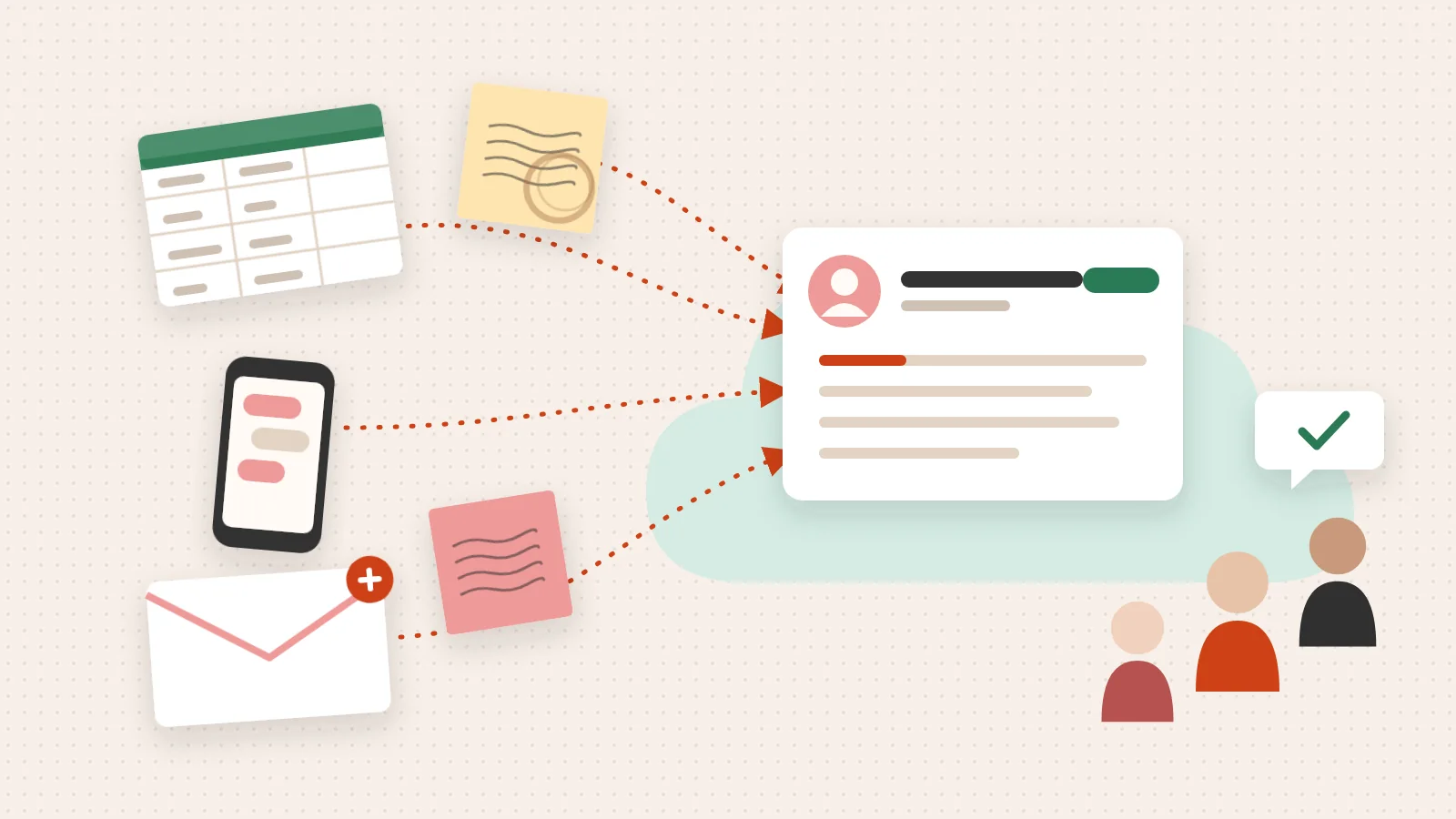
The lead generation process steps most businesses follow weren’t designed — they accumulated. A landing page here, a cold email sequence there, a webinar someone suggested last quarter. The result is a pipeline that feels unpredictable, and a team that can’t explain why some months close strong while others run dry.
Here is a clear overview of the core lead generation process steps:
- Define your Ideal Customer Profile (ICP) — Know exactly who you’re trying to reach before you build anything
- Attract and capture high-intent interest — Use content, SEO, paid ads, and lead magnets to bring the right people in
- Qualify leads using behavioral signals — Score and segment based on fit and engagement, not just contact info
- Nurture with personalized sequences — Build trust over multiple touchpoints before asking for the sale
- Hand off to sales with full context — Ensure sales receives warm, informed leads with clear next steps
- Measure, optimize, and scale — Track cost per lead, conversion rates, and pipeline quality continuously
Most revenue teams know something is broken. They just don’t know which part — or why.
The problem rarely starts with tactics. It starts earlier, at the level of strategy, clarity, and understanding who the buyer actually is before you try to reach them.
B2B buyers typically need six to eight touchpoints across multiple channels before converting. And yet most teams are still optimizing individual pieces — a headline here, a subject line there — without a coherent system holding it together.
I’m Jeremy Wayne Howell, a revenue growth strategist with over 20 years of experience helping founders and revenue leaders rebuild broken lead generation process steps into systems that create predictable, psychology-aligned growth. What follows is the framework I use — and why it works when tactics alone don’t.
Quick lead generation process steps definitions:
The Psychology of the Modern Lead Generation Process Steps
When we look at a failing sales pipeline, we often see a “certainty gap.” This is the space between what a prospect needs to feel safe making a decision and the information a business is actually providing. Modern lead generation isn’t about “hunting”; it is about mapping the customer journey to identify where that certainty is lost.
To bridge this gap, we must understand the different cognitive states a lead inhabits. Not all leads are created equal, and treating them as a monolith is the fastest way to stall your growth.
- Marketing Qualified Leads (MQLs): These individuals have raised their hand by engaging with your content — perhaps downloading a guide or signing up for a newsletter. They show interest, but they aren’t necessarily ready to buy.
- Sales Qualified Leads (SQLs): These are MQLs that have been vetted and show clear purchase intent. They might have requested a demo or asked for pricing.
- Product Qualified Leads (PQLs): Common in SaaS, these are users who have experienced the value of your product through a free trial or “freemium” model. Research suggests PQLs often convert at higher rates because their fit is confirmed by usage.
- Service Qualified Leads: These often come from your existing customer base. They are identified by service teams as being ready for an upsell or expansion.
Understanding these distinctions allows us to apply the right lead generation strategy at the right time. For instance, data from Wistia shows that videos with lead generation forms convert at 16 percent. Even more striking, placing that form within the first 20 percent of the video can drive a 43 percent conversion rate. This works because it captures interest while engagement is at its peak, rather than waiting for the “cliffhanger” at the end.

Phase 1: Diagnosing Your Ideal Customer and Strategy
Before we send a single email, we must understand who your ideal customers are. We call this the Ideal Customer Profile (ICP). This isn’t just a list of job titles; it is a deep dive into the firmographics, behaviors, and psychological triggers of the organizations that get the most value from your work.
We often see businesses casting a wide net, hoping to catch anyone. This creates noise, not revenue. By narrowing your focus to a specific ICP, you can create content that solves problems for that specific group.
Once the ICP is clear, we choose our methodology:
- Inbound: Drawing leads in naturally through SEO, content marketing, and social media. This is a long-term play that builds authority.
- Outbound: Proactive outreach through outbound lead generation strategies like cold email or LinkedIn social selling. This provides more immediate control over the pipeline.
- Hybrid: Combining both to maximize reach. You might use inbound content to build brand familiarity before launching a targeted outbound lead generation complete guide style campaign.
Phase 2: Attracting and Capturing High-Intent Interest
Once we know who we are talking to, we need to offer something compelling to earn their contact information. These “lead magnets” — such as whitepapers, checklists, or webinars — are highly effective. In fact, 50 percent of marketers reported higher conversion rates after they started using lead magnets.
However, a lead magnet is only as good as the mechanism used to deliver it. This is where we focus on the client acquisition funnel. We want to meet leads where they already are, whether that is on LinkedIn, search engines, or industry-specific blogs.
Optimizing Your Lead Generation Process Steps for Conversion
Capturing a lead is a delicate exchange of value. If the friction is too high, the prospect leaves. If it’s too low, you get “junk” data. To build sales funnels that actually convert, we follow these best practices:
- Landing Page Clarity: Every page should have a single, clear goal. Remove navigation menus that might distract the user.
- Progressive Profiling: Don’t ask for twenty pieces of information at once. Ask for the basics (name and email) first, then gather more data in subsequent interactions.
- Social Proof: Use testimonials and logos to build immediate trust.
- A/B Testing: We must regularly run A/B tests on landing page images and headlines to see what resonates. For example, A/B test results helped Notion improve open rates by 20%, proving that small tweaks lead to significant gains.
Phase 3: Qualifying and Nurturing with Behavioral Insight
Not every lead who downloads a PDF is ready for a sales call. In fact, most aren’t. This is where lead scoring assigns points based on actions. A lead who visits your pricing page three times is far more valuable than one who only read a single blog post.
We use frameworks like BANT (Budget, Authority, Need, Timing) to determine sales readiness. But we also look deeper into behavioral triggers. If a lead engages with social selling statistics, they might be looking for proof of ROI. If they watch a technical demo, they are likely further down the funnel.
For those not yet ready to buy, we nurture them more effectively through automated drip campaigns. These shouldn’t be sales pitches; they should be a continuation of the helpfulness that drew them in initially. Using insights to tailor your messages makes leads feel seen and understood.
Scaling Quality Through Automated Lead Generation Process Steps
As you grow, manual follow-up becomes impossible. Automating parts of your process allows you to maintain a personal touch at scale. By using AI to analyze data, we can predict which prospects are most likely to convert and what content they will find most relevant.
Systems like Salesforce CRM or HubSpot CRM act as the single source of truth, ensuring that sales and marketing work together seamlessly. This alignment is critical; when teams work together, they avoid the common roadblock where marketing focuses on quantity while sales demands quality.
To see how this works in a practical setting, you might explore how do chatbots qualify leads in Hubspot: a complete guide, which illustrates how automation can handle the initial heavy lifting of qualification 24/7.
Measuring Success and Aligning Revenue Teams
You cannot improve what you do not measure. To find out where leads might lose interest, we track specific KPIs across the entire journey.
| Lead Type | Definition | Qualification Criteria |
|---|---|---|
| MQL | Marketing Qualified | High engagement with content, fits ICP |
| SQL | Sales Qualified | Clear intent to purchase, BANT verified |
| PQL | Product Qualified | High usage of trial/free version |
Beyond these categories, we monitor:
- Cost Per Lead (CPL): Benchmarks suggest paid B2B SaaS leads cost around $280, while organic leads are closer to $147.
- Conversion Rates: Qualified leads should convert to customers at a rate of 10-30%.
- Speed to Lead: Leads contacted within 5 minutes are 21 times more likely to qualify than those contacted after 30 minutes.
This data allows us to perform sales funnel optimization based on reality, not assumptions.
Frequently Asked Questions about Lead Generation
What is the difference between lead generation and demand generation?
Demand generation is the process of creating awareness and interest in your category or brand. It’s about making people realize they have a problem. Lead generation is the specific act of capturing contact information from those interested parties so you can nurture them toward a sale.
How long does it take to implement a lead generation process?
A basic lead generation process steps framework can be implemented in two to four weeks. You can often see initial leads within the first week of launching outreach or capture forms, but the “engine” takes a few months of data to truly optimize.
What are the most effective tools for managing leads?
For most of our clients, we recommend an integrated stack. monday CRM is excellent for sales cycle management, while Salesforce offers deep customization. For conversational marketing, Drift is a leader, and Unbounce is our go-to for high-performing landing pages.
Restoring Momentum to Your Growth Engine
At The Way How, we believe that differentiating your business doesn’t come from shouting louder, but from understanding the human on the other side of the screen. We help founders move away from the “feast or famine” cycle by building automated client acquisition funnel guide 2026 systems that prioritize psychology over mere tactics.
If your growth has stalled, it is likely because there is a gap in your lead generation process steps where trust is being lost. We specialize in diagnosing those gaps and designing HubSpot-driven architectures that turn marketing into a dependable revenue engine.
Ready to see the problem clearly? Learn more about our services and how we can help you build a system that creates both momentum and peace of mind.