
Beyond the Spreadsheet: Why Your Growth is Stalled by Data Chaos

CRM for startups is software that centralizes every customer interaction — contacts, deals, follow-ups, and pipeline stages — into one place your whole team can access and act on.
Here’s what you need to know upfront:
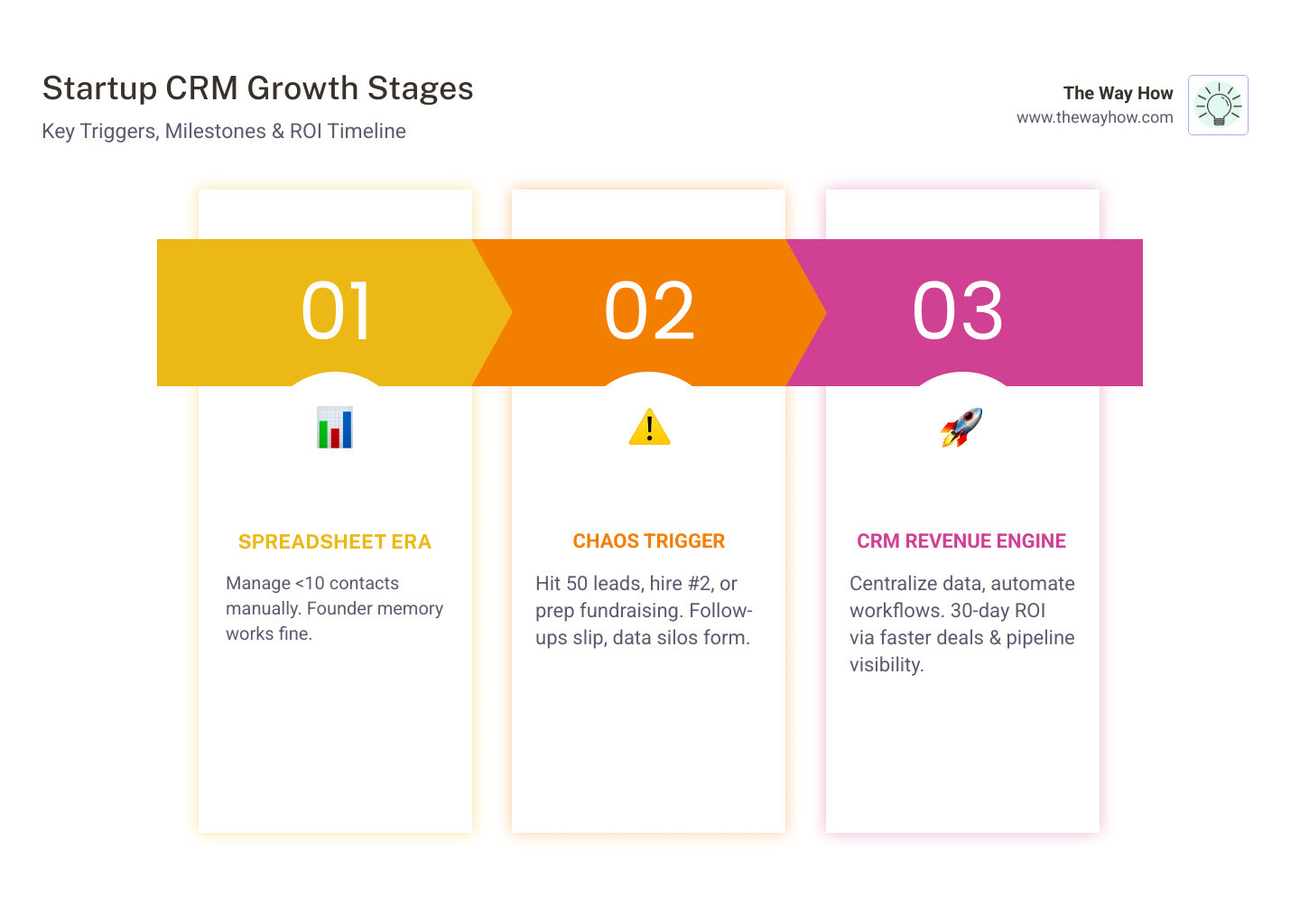
Most founders start with a spreadsheet. That’s fine. But there’s a predictable moment — usually somewhere around 50 leads, a second hire, or a fundraising conversation — where the spreadsheet stops being a tool and starts being a liability. Follow-ups slip. Duplicate outreach embarrasses your team. Someone asks “how many deals are we closing?” and the honest answer is: no one actually knows.
That’s not a discipline problem. It’s a systems problem.
The data chaos that stalls startup growth isn’t caused by laziness — it’s caused by building on infrastructure that was never designed to scale. And the cost isn’t just missed deals. It’s the creeping uncertainty that corrodes founder confidence and buyer trust at exactly the moment both need to be highest.
This guide will help you cut through the noise, choose the right CRM for where you are now, and implement it in a way your team will actually use.
I’m Jeremy Wayne Howell, a revenue growth strategist with over 20 years of experience in marketing, sales, and go-to-market strategy — including hands-on implementation of CRM for startups at every stage from pre-revenue to $1M+ ARR. The Way How was built precisely to solve the kind of human and systems problems that surface when growth stalls, and this guide reflects that same psychology-first lens.
Why Every Scaling Venture Needs a CRM for Startups
In the early days, a founder’s brain is the CRM. You remember the last conversation, the prospect’s dog’s name, and the specific pain point they mentioned. But as we reach April 2026, the complexity of the digital landscape has made “manual memory” a dangerous strategy.
When information is scattered across Slack threads, email inboxes, and disparate notes, you create what we call a “certainty gap.” This is a psychological state where the founder feels a low-level anxiety because they aren’t sure if a lead was followed up on, and the prospect feels a lack of trust because the startup’s communication feels disjointed.
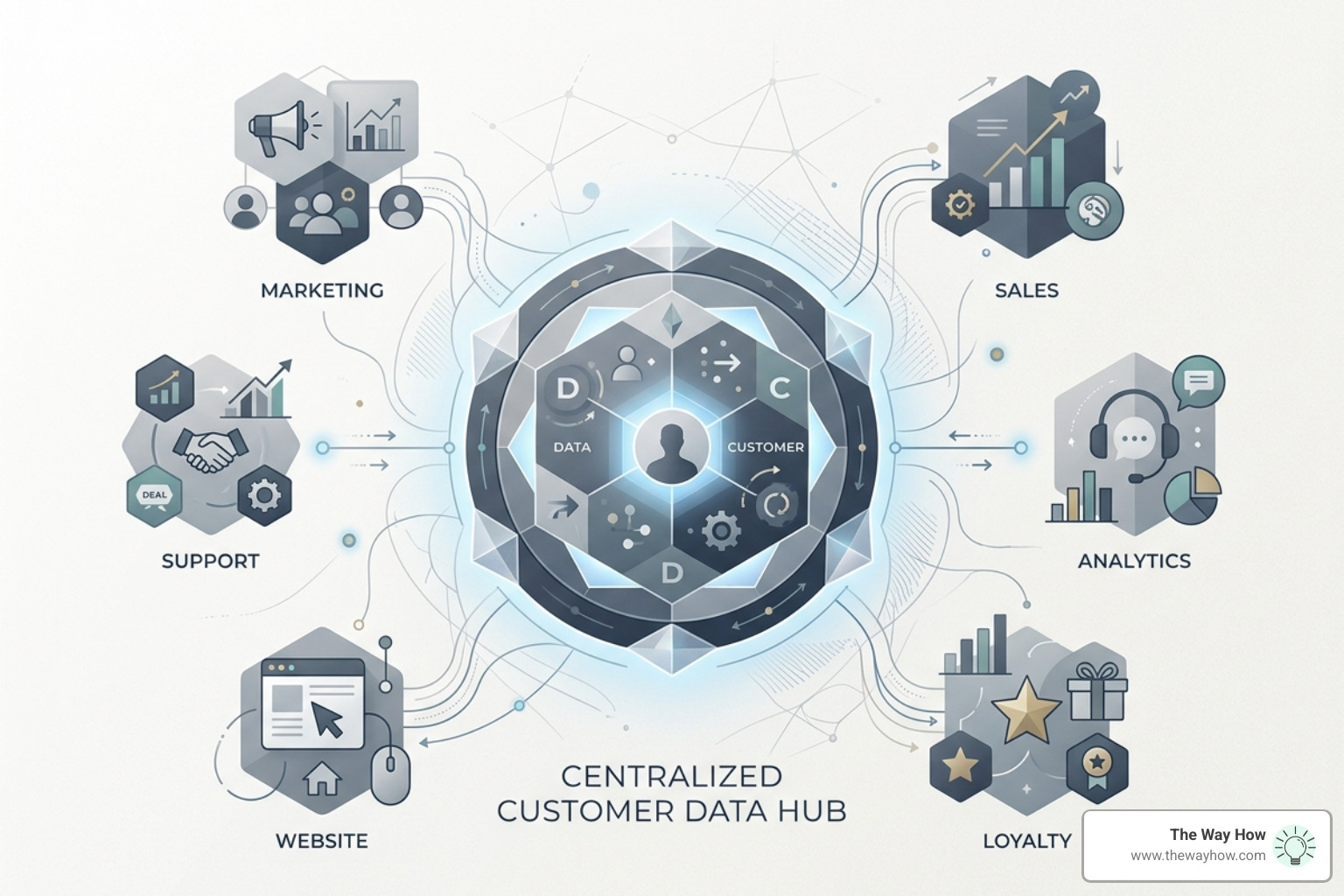
Data silos are the silent killers of momentum. Research shows that 81% of IT leaders believe data silos hinder digital transformation. For a startup, this isn’t just an IT problem; it’s a Business Growth problem. Currently, about 55% of businesses in the U.S. use CRM platforms to bridge these gaps. By implementing a crm for startups, you aren’t just buying software; you are installing a nervous system that allows your team to act with a single, unified perspective.
The Psychology of the 10-Contact Rule
We often get asked: “When is the right time?” The answer is the 10-Contact Rule. Once you have more than 10 active prospects or customers, the cognitive load required to track them manually exceeds the average person’s ability to maintain high-quality interactions. At this point, a CRM typically delivers a positive ROI within just 30 days.
This is especially critical because founders typically lead the sales motion until the company hits roughly $5M ARR. As a founder, your time is your most expensive resource. If you are spending hours doing “spreadsheet archaeology” to find a phone number, you are burning runway. A dedicated system allows you to maintain Small Business Growth Strategies that rely on precision rather than just “hustle.”
Eliminating Uncertainty in the Buyer Journey
Modern buyers are sophisticated. Roughly 71% of consumers now expect personalized experiences, and nearly two-thirds expect companies to adapt to their changing needs in real-time. If your sales process feels like a series of “re-introductions” because you don’t have a record of past interactions, you are signaling to the buyer that they aren’t a priority.
A CRM allows you to practice empathy at scale. By tracking the nuances of a lead’s journey, you can provide the right information at the right time, closing the certainty gap and building the trust necessary for a “yes.” This behavioral alignment is often where Fractional Cmo Benefits For Startups become most apparent, as they help design the systems that turn these psychological insights into revenue.
Essential Features for a High-Adoption Startup CRM
The biggest mistake we see is startups buying “too much” CRM. You don’t need an enterprise-grade monolith that requires a full-time administrator. You need a system that facilitates CRM for Startups | Close deals faster with folk and keeps the “daily loop” painless.
The most valuable feature in a startup CRM is often “feature elimination.” You want a lightweight system that focuses on the core sales activities.

Automation That Mimics Human Empathy
Automation shouldn’t make you sound like a robot; it should give you the time to be more human. Modern tools like Free CRM & Sales Pipeline Software for Startups | HeySales use AI to identify which deals are at risk or which prospects are showing high intent.
Currently, 85% of SMBs using AI report significant improvements in how their sales reps use their time. Whether it’s automated follow-up reminders or Attio: Ask more from CRM providing real-time intelligence on deal health, the goal is to remove the “busywork” so you can focus on the relationship.
Building a Scalable CRM for Startups Architecture
Scalability is about more than just adding more contacts; it’s about the Hubspot Crm Architecture and how data flows through your organization. A well-designed Crm Development strategy ensures that your CRM remains the “single source of truth.”
This includes:
- Lead Scoring: Automatically prioritizing leads based on their behavior.
- Data Governance: Ensuring that everyone enters data the same way.
- Mobile Functionality: Allowing founders to update deals on the go, which is essential for high adoption.
Navigating the 2026 CRM Landscape: Top Options and Discounts
The CRM market in 2026 is incredibly founder-friendly. Many vendors offer massive discounts for qualified startups—often 30% to 90% off the first year.
| CRM Provider | Best For | Notable Startup Program |
|---|---|---|
| HubSpot | All-in-one scaling | Up to 90% off in Year 1 |
| Close | Sales-heavy teams | 30-60% off for qualified startups |
| Attio | High flexibility | Free tier & scaling plans |
| Pipedrive | Visual pipeline users | Affordable entry tiers |
| folk | Relationship building | AI-powered lightweight setup |
The CRM for Startups: Free Software to Scale Your Business | HubSpot program remains a gold standard, especially for those who want to integrate marketing and service from day one. However, it’s not the only path.
Beyond HubSpot and Salesforce: The Best CRM for Startups Alternatives
While Salesforce is the world’s most popular CRM, its “Starter Suite” is often the only version that makes sense for a small team. Many founders find it “too heavy” and prefer nimbler alternatives.
CRM for Startups | Close CRM is built by a bootstrapped team for other bootstrapped teams, focusing on unified communication (email, call, and text in one place). Meanwhile, Hubspot For Small Businesses provides a robust free version that can carry a team through their first few million in revenue.
Qualification Requirements for Startup Programs
To snag these 2026 discounts, you typically need to meet a few criteria:
- Funding/Revenue: Usually under $2M in total funding or $1M in annual revenue.
- Company Age: Often less than 2 years since founding.
- Affiliation: Membership in a partner accelerator (like YC or Techstars) or a VC fund network.
Avoiding the Data Graveyard: Implementation and Adoption
The best CRM is the one your team actually uses. Cultural resistance is the #1 reason implementations fail. If the team views the CRM as “extra work” for the benefit of management, they will feed it bad data or ignore it entirely.
To ensure adoption, follow a “First Week Playbook”:
- The 30-Minute Walkthrough: Show the team how it makes their lives easier, not just how it generates reports for you.
- Minimize Fields: Don’t require 20 pieces of information to create a lead. Start with three.
- Connect the Inbox: Use tools that automatically log emails and meetings so manual entry is kept to a minimum.
Our Crm Consulting Services often focus on this human element. Successful Hubspot Crm Implementation is 20% technical setup and 80% change management.
Frequently Asked Questions about Startup CRMs
When is the right time to move from spreadsheets to a CRM?
The trigger is complexity, not time. If you find yourself taking more than five minutes to find a customer’s history, or if you’ve ever sent a duplicate email to the same lead, you are ready. For those in technical fields, our Crm For Web Developers Guide highlights how even small freelance or dev shops hit this wall at about 10 active clients.
How do startup discounts and qualification requirements work?
Most programs require you to be a new customer and affiliated with a partner (VC, Accelerator, or Incubator). For example, real estate tech founders might look at a Crm For Real Estate Developers that offers specific industry integrations alongside startup pricing. Always check if your current investors have a “perks” dashboard.
How quickly can a small team see ROI from a CRM?
With a 30-day benchmark, most teams see ROI through time saved on administrative tasks and an increase in lead conversion speed. Small businesses using advanced systems have reported a 42% increase in customer satisfaction because the “human” side of the business finally has the data to be proactive.
Restoring Momentum: Turning Your CRM into a Revenue Engine
A CRM is not a filing cabinet; it is an engine. At The Way How, we believe that growth stalls when systems stop reflecting human behavior. We help founders move past the “tactics of the month” and design revenue strategies that create predictable momentum.
Whether you need a psychology-first audit of your sales funnel or a complete Hubspot Crm Architecture overhaul, our goal is to remove uncertainty. When you see the problem clearly, the solution becomes obvious.