A Complete Guide to CRM Systems and Database Management
 Jeremy Wayne Howell : Jul 22, 2026 9:48:31 PM
7 min read

A digital marketing plan for new website success is a structured document that defines your goals, audience, channels, budget, and KPIs — before you spend a single dollar on traffic.
Here’s what a solid plan covers:
Most new websites don’t fail because of bad design. They fail because the people behind them skipped the plan.
According to Smart Insights research, 47% of companies have no planned digital marketing strategy — and only 17% clearly define one. That’s not a technology problem. That’s a clarity problem.
Here’s what actually happens: a new site goes live, a few social posts go out, maybe some ads run. Then… silence. Traffic trickles in. Nothing converts. The team debates whether to try a new channel or hire an agency. Months pass.
The site wasn’t the problem. The absence of a coordinated plan was.
A new website without a digital marketing plan is like opening a store with no sign, no address, and no idea who you’re trying to sell to. The building exists. But no one comes — and if they do, they don’t know why they should stay.
This guide cuts through that. It gives you a clear, psychology-first framework to build a plan that actually connects your website to the humans on the other side of the decision.
I’m Jeremy Wayne Howell, founder of The Way How — a revenue growth firm that has helped companies move from stalled pipelines to predictable growth by diagnosing the human behavior problems underneath marketing performance problems. I’ve built and rebuilt digital marketing plans for new websites and mature businesses alike, and the pattern I see most often isn’t a channel problem — it’s a clarity problem that tactics can’t fix.
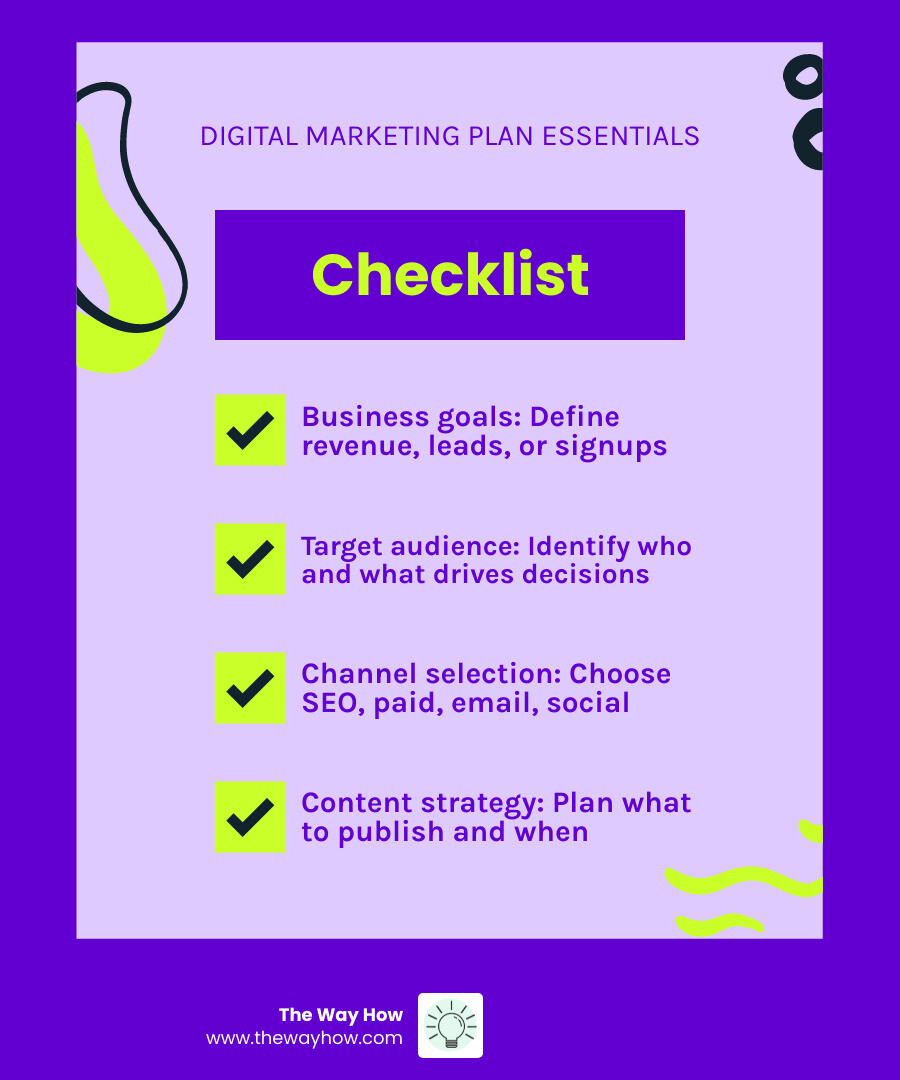
Digital marketing plan for new website terms to know:
When we talk about a digital marketing plan for new website launches, we aren’t just talking about a list of things to do. We are talking about an architecture. Most founders mistake tactics for strategy. They think “posting on LinkedIn” is a plan. It isn’t. It is a tactic.
A true plan requires a hierarchy where every action serves a higher purpose. We view this through three distinct layers:
Without this hierarchy, marketing becomes “random acts of content.” You might see spikes in traffic, but you won’t see business growth. To avoid this, we use the SMART framework for all goals: Specific, Measurable, Achievable, Relevant, and Time-bound. For a new website, a SMART goal might be “Generate 50 qualified leads per month through organic search within six months of launch.”
The biggest mistake we see in a digital marketing plan for new website development is ignoring the human on the other side. Revenue is the result of a human making a decision to trust you. Therefore, your web strategy must align with how humans actually process information and build trust.
If your business objective is to increase brand trust, your plan shouldn’t just focus on “reach.” It should focus on “depth”—long-form content, case studies, and transparent pricing. If your objective is rapid customer acquisition, your go-to-market strategy might prioritize high-intent search terms where the user is already looking for a solution to a painful problem.
A successful plan is built for scalability. You don’t want a plan that breaks the moment you double your budget. We recommend using the RACE framework (Reach, Act, Convert, Engage) to structure your activities. This ensures you aren’t just filling the top of the funnel (Reach) but also nurturing those visitors into customers (Convert) and advocates (Engage).
Integrated communications are the glue here. Your email marketing should speak the same language as your landing pages, which should reflect the promise made in your social media ads. When these are disconnected, you create “certainty gaps”—moments where a potential buyer feels a flicker of doubt and leaves your site.
Most buyer personas are useless. They list “Marketing Manager Mike, age 35, likes golf.” That tells you nothing about why Mike would buy from you. To build a digital marketing plan for new website success, you need emotional precision.
According to a HubSpot survey, 21% of marketers say their primary goal is getting a better understanding of their audience’s needs. We take this further by looking at the psychology of marketing. We want to know:
By mapping these emotional drivers, you can create content that feels like a relief to the reader. You aren’t just selling a service; you are removing a burden.
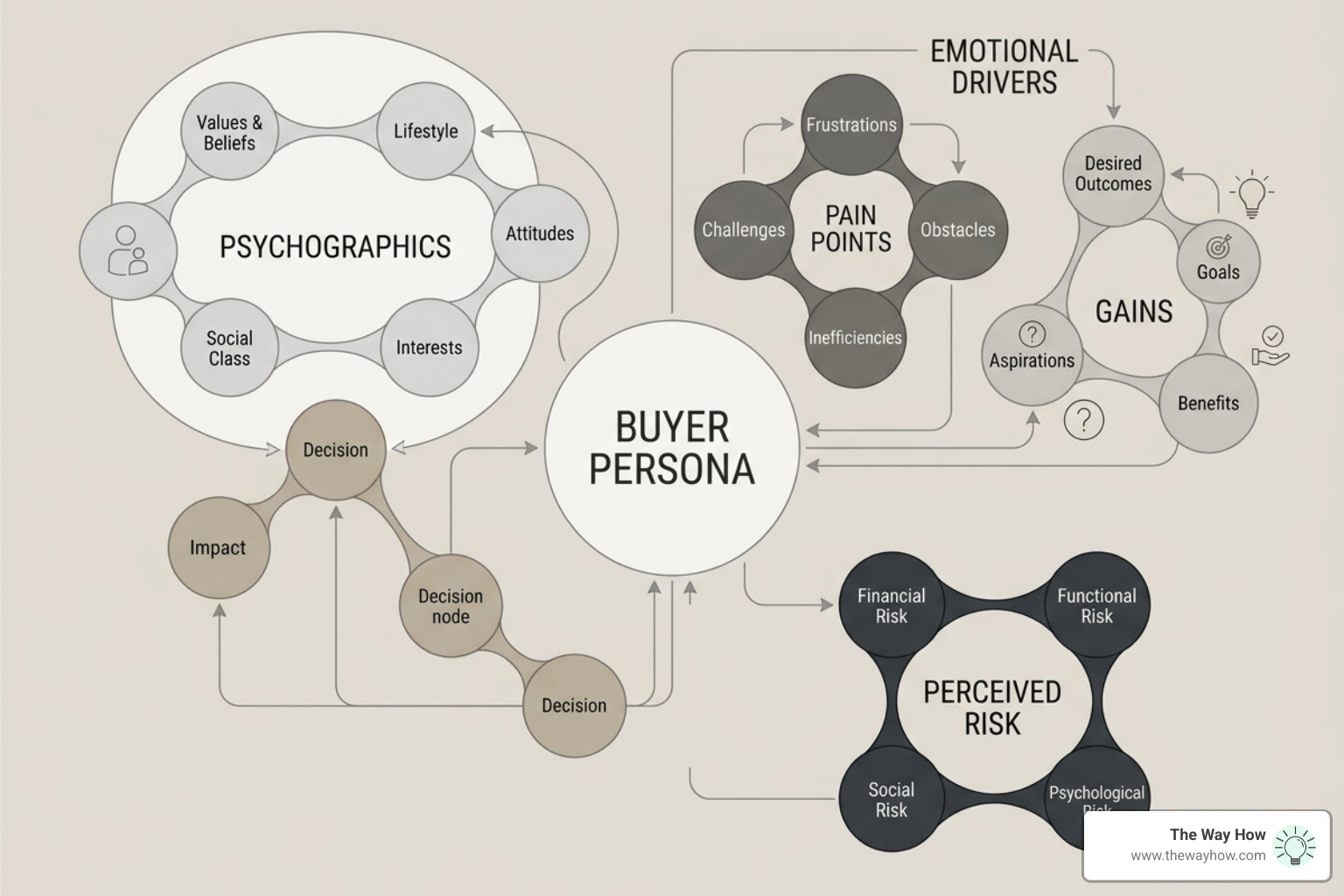
The customer journey isn’t a straight line; it’s a series of hurdles.
At each stage, there are friction points. On a new website, the biggest friction point is often a lack of social proof. If you don’t have testimonials yet, your plan must address this “certainty gap” by providing deep technical expertise or “behind-the-scenes” transparency to build authority.
Before you look forward, you must look around. A situation analysis involves an internal audit (what do we already have?), an external analysis (what is the market doing?), and a SWOT analysis (Strengths, Weaknesses, Opportunities, Threats).
Even for a brand-new website, you likely have assets: a personal LinkedIn following, a legacy email list, or deep subject matter expertise. Use tools like Ahrefs or SEMrush to see what your competitors are ranking for. Don’t copy them—find the gaps they are leaving behind. If every competitor is writing dry, academic white papers, perhaps your opportunity lies in conversational, disruption marketing that challenges the status quo.
Your Value Proposition is the “Reason to Believe.” It is a concise statement that explains how you solve a problem, what benefits you deliver, and why you are better than the alternative. In our 7 elements of go-to-market strategy, the value prop is the heart. If your new website doesn’t communicate this in the first five seconds of a visitor landing on the home page, your marketing plan will struggle to overcome that initial bounce rate.
You cannot be everywhere. For a digital marketing plan for new website launches, we advocate for “going deep before going wide.” It is better to master one or two channels than to be mediocre on five.
Common “levers” include:
Your lead generation strategy should dictate your content mix. If you are a B2B firm, your content might focus on webinars and LinkedIn articles. If you are B2C, you might lean into short-form video and influencer partnerships.
The digital landscape is shifting. The 2025 Contentsquare Digital Experience Benchmarks show that user behavior is becoming more fragmented. We are moving toward a “zero-click” reality where Google provides answers directly on the search results page.
To stay ahead, your 2025/2026 plan should include:
A plan is just paper until it’s funded and tracked. When allocating your budget, consider the “70/20/10” rule:
You must track more than just “vanity metrics” like likes or followers. Focus on marketing data analysis that tracks Cost Per Lead (CPL), Conversion Rate, and Customer Acquisition Cost (CAC).
Marketing is a living system. We recommend monthly strategy syncs to review Google Analytics and Google Search Console data. If a particular blog post is driving traffic but no conversions, you have a “certainty gap” on that page. Maybe the CTA is wrong, or the content doesn’t align with the user’s intent.
Using a marketing automation HubSpot guide can help you set up triggers to nurture these “stalled” visitors automatically, turning a static website into an active sales assistant.
The most fatal mistake is chasing tactics before strategy. People buy “ads” because they think ads equal sales. But if your B2B sales strategy hasn’t identified the buyer’s actual pain points, you are just paying to show people a message they don’t care about. Other mistakes include spreading resources too thin and ignoring the technical SEO health of the new site.
Start by identifying your “barrier to growth.” If no one knows you exist, invest more in awareness (SEO/Social). If people visit but don’t buy, invest in conversion (CRO/Email). Generally, prioritize high-intent channels like search marketing first, as these users are actively looking for you.
It depends on the lever. Paid media can drive traffic within hours. However, organic SEO and building “digital authority” typically take 3 to 6 months of consistent effort. This is why a 90-day roadmap is essential—it keeps the team focused during the “quiet” period before the momentum kicks in.
Building a digital marketing plan for new website success isn’t about finding a “growth hack.” It’s about removing the uncertainty that prevents people from saying “yes” to your business. It’s about creating a system that works while you sleep.
At The Way How, we don’t just give you a checklist of tasks. We help you diagnose the gaps in your customer journey and build the HubSpot marketing infrastructure to close them. Whether you need a fractional CMO hire complete guide to lead the way or a deep dive into your data, we are here to help you turn your website into a dependable revenue engine.
If you’re tired of “trying things” and ready to build a system rooted in human behavior and strategic clarity, request a strategy consultation with us today. Let’s stop guessing and start growing.
 Jeremy Wayne Howell : Jul 22, 2026 9:48:31 PM
 Jeremy Wayne Howell : Jul 21, 2026 9:47:10 PM
 Jeremy Wayne Howell : Jul 20, 2026 9:46:47 PM