
Beyond the Form: Why Your Pipeline is Leaking Trust
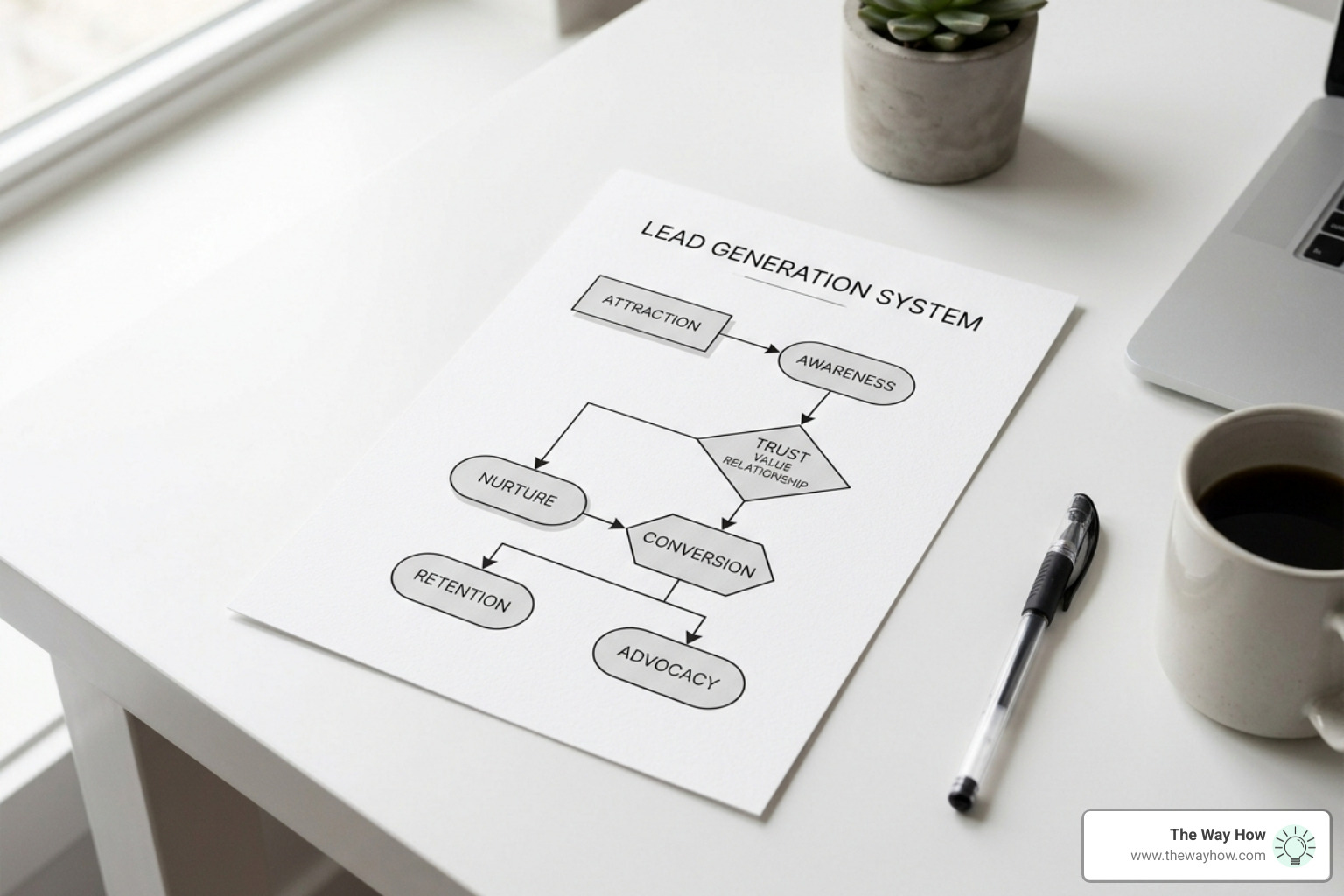
A strong lead gen strategy isn’t about collecting more contact information. It’s about building a system that earns trust, attracts the right people, and converts that trust into revenue.
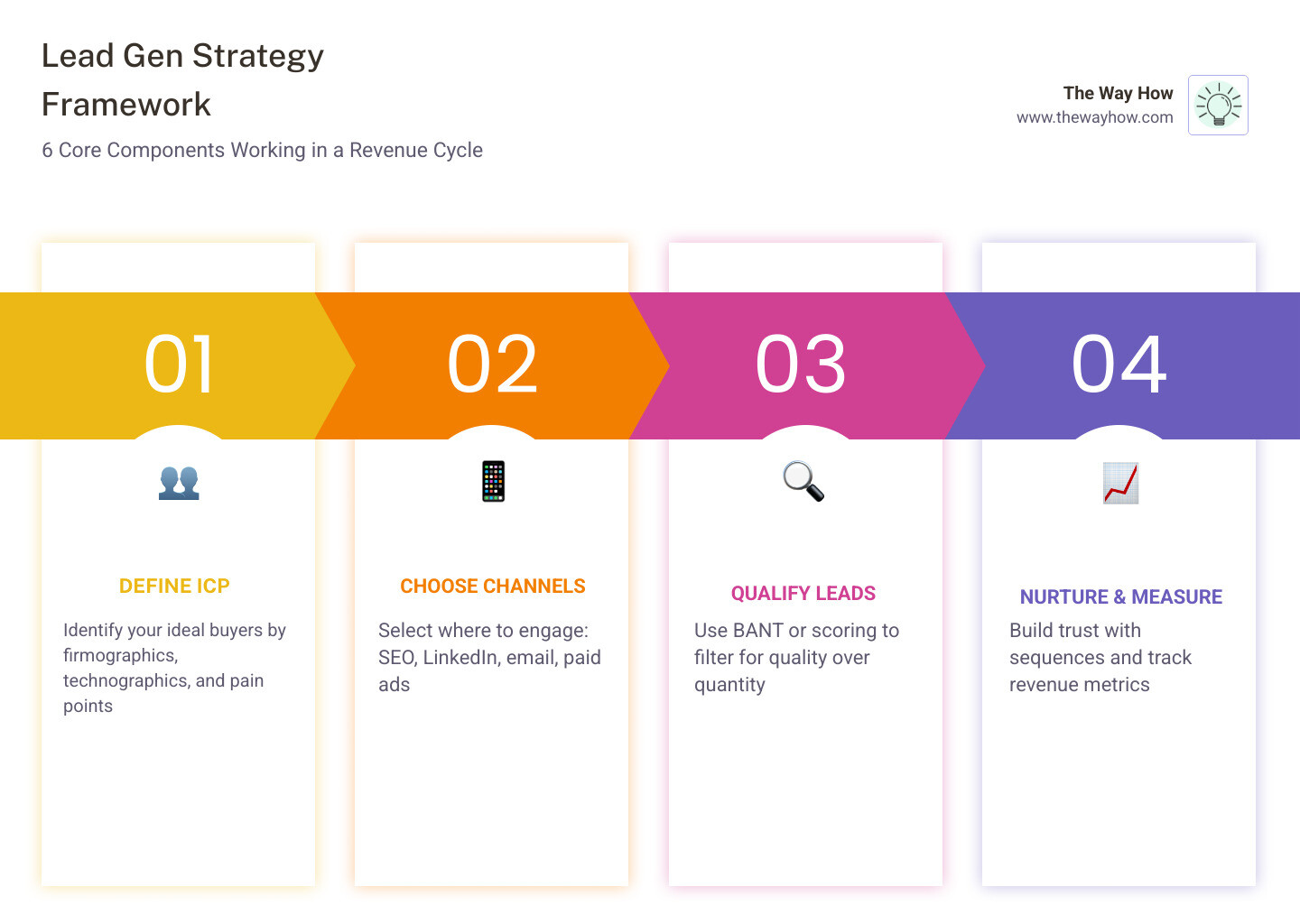
Here’s what an effective lead gen strategy includes:
| Component | What It Means |
|---|---|
| Ideal Customer Profile (ICP) | A precise definition of who your best buyers are |
| Channel Strategy | Where you show up — SEO, LinkedIn, email, paid ads |
| Lead Qualification | Frameworks like BANT or lead scoring to filter quality |
| Nurture Sequences | Automated or manual follow-up that builds certainty |
| Conversion Assets | Landing pages, forms, and offers that reduce friction |
| Measurement | Metrics tied to revenue, not just volume |
Most businesses have pieces of this. Few have all of them working together.
That’s where pipelines leak.
Not at the ad. Not at the form. At the moment a potential buyer feels uncertain — about whether you understand their problem, whether your solution fits, or whether they can trust you enough to take the next step.
91% of marketers say lead generation is their most important goal. Yet research consistently shows that 80% of leads never convert to revenue. That gap isn’t a tactics problem. It’s a trust and alignment problem.
This guide is built to close that gap — not by adding more tools or channels, but by fixing the underlying system.
I’m Jeremy Wayne Howell, founder of The Way How and a revenue growth strategist with over 20 years of experience diagnosing why lead gen strategies stall and rebuilding them around buyer psychology and commercial clarity. The frameworks in this guide come directly from that work.
Related content about lead gen strategy:
The Psychology of a High-Converting Lead Gen Strategy
At its core, lead generation is the process of stimulating interest and capturing contact information to build a sales pipeline. But in April 2026, the digital landscape is noisier than ever. People aren’t just looking for products; they are looking for certainty.
We often see businesses mistake “demand generation” for “lead generation.” While demand generation is about shouting from the rooftops to create awareness, a lead gen strategy is a quiet, one-on-one conversation. It is the second stage of inbound marketing, occurring after you have attracted visitors and are ready to convert them into known contacts.
To build a strategy that converts, we must focus on the Lead Generation Strategy as a revenue engine. It is not a standalone marketing function; it is the foundation of your entire Go-to-Market (GTM) execution. When we ignore the psychological state of the buyer—their fears, their cognitive load, and their need for empathy—we create “certainty gaps.” These gaps are the primary reason why Lead Generation: Fill Your Pipeline with High-Quality Prospects - Fullcast remains a challenge for 80% of B2B firms.
Defining Your ICP for a Targeted Lead Gen Strategy
The first step in any successful lead gen strategy is knowing exactly who you are talking to. We move beyond generic buyer personas to create an Ideal Customer Profile (ICP). An ICP isn’t just a list of job titles; it is a profile of the customer who gains the most value from your service, stays the longest, and refers others.
When defining your ICP, we look at:
- Firmographics: Company size, revenue, and industry.
- Technographics: The tools and software they already use.
- Psychographics: Their values, professional philosophy, and internal motivations.
- Buying Triggers: Specific events like a new CEO hire, a funding round, or a regulatory change that makes your solution suddenly urgent.
By following these Lead Generation Process Steps, you ensure that your marketing spend isn’t being wasted on “garbage” leads that sales will eventually reject.
Diagnosing Certainty Gaps in the Buyer Journey
Human decision-making is rarely logical; it is psychological. Every time a prospect interacts with your brand, they are subconsciously calculating the risk of engaging with you. If your website feels like an “art project” instead of a conversion system, you increase their cognitive load.
We use empathy-driven content to bridge these gaps. Instead of just listing features, we address the specific pain points identified in your ICP. We use social proof—not as a boast, but as evidence that you have solved this exact problem before. By providing Lead Generation Methods and Strategies that prioritize the buyer’s peace of mind, you transform your brand from a vendor into a trusted guide.
From Contact Info to Commercial Intent: Qualifying for Quality
A lead is not just an email address in a database. It is a person who has shown measurable interest. However, not all interest is equal. To protect your sales team’s time, we must categorize leads based on their readiness to buy.
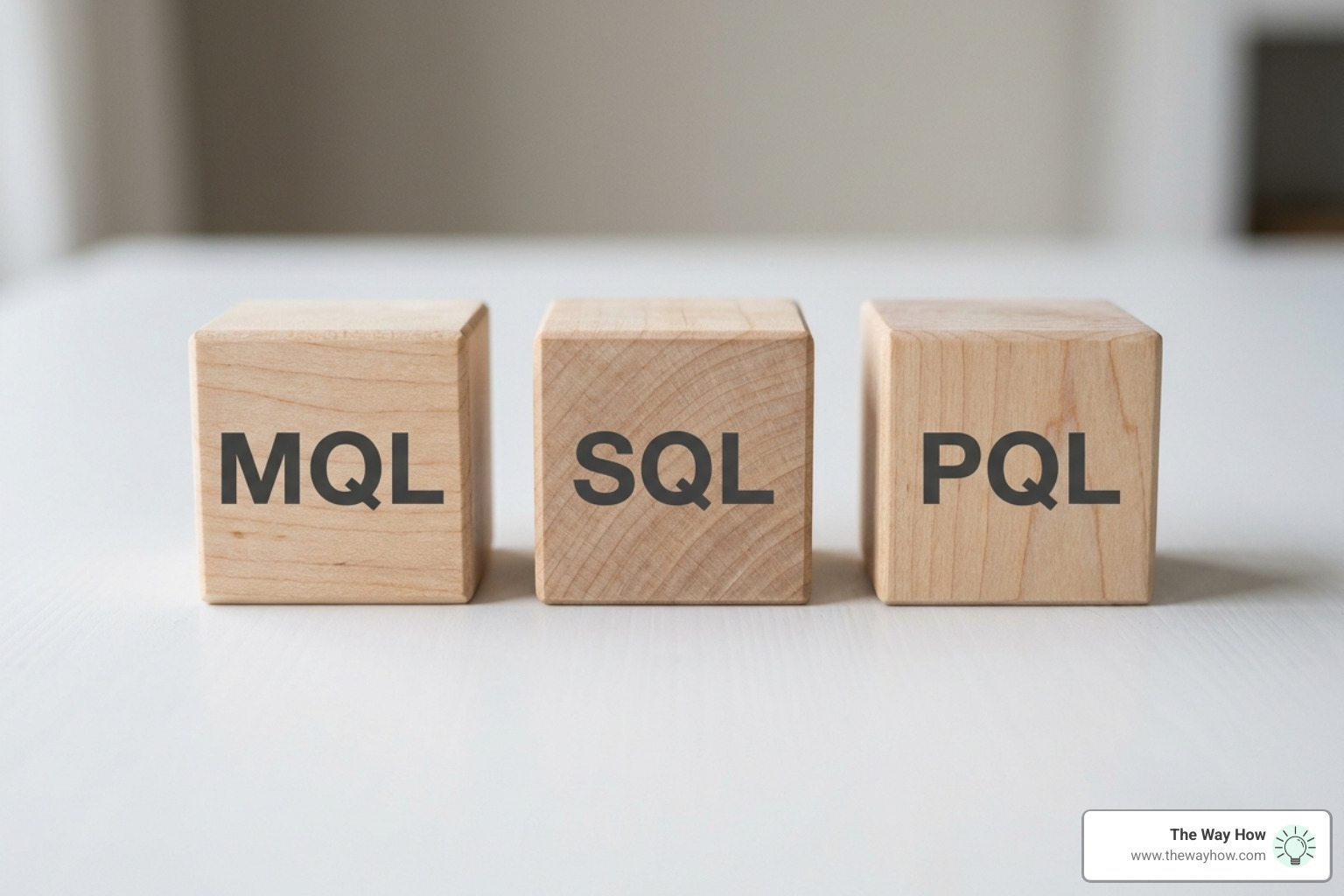
We categorize leads into several buckets:
- Marketing Qualified Lead (MQL): Someone who has engaged with your marketing content but isn’t ready for a sales call yet.
- Sales Qualified Lead (SQL): A prospect who has moved through the pipeline and is ready for direct engagement.
- Product Qualified Lead (PQL): Someone who has used your product (perhaps a free trial) and has realized its value.
- Service Qualified Lead: A lead who has indicated they are ready to talk to customer service or sales about a specific purchase.
To filter these effectively, we use the BANT framework (Budget, Authority, Need, Timing). While traditional, it remains a pillar in our Lead Generation Best Practices Guide.
Implementing Lead Scoring and Grading Frameworks
The most effective lead gen strategy uses a dual system: lead scoring and lead grading.
- Lead Scoring (Behavior-based): We assign points based on actions. Did they download a whitepaper (+5)? Did they visit the pricing page (+10)? Did they stop engaging for a month (-20)?
- Lead Grading (Fit-based): We assign a letter grade (A-F) based on how well they match your ICP. An “A” grade lead is a decision-maker at a target-sized company.
By aligning sales and marketing through a Service Level Agreement (SLA), we ensure that sales only receives leads that meet a specific threshold of both score and grade. This collaboration is detailed further in our B2B Lead Generation Complete Guide.
Engineering Certainty Across Inbound and Outbound Channels
In 2026, the most successful companies don’t choose between inbound and outbound; they use a multi-channel approach. Research shows that using 3-4 coordinated channels can increase conversion rates by as much as 287%.
- Inbound (The Pull): This involves SEO, content marketing, and social media. It is about being found when the prospect is actively searching for a solution.
- Outbound (The Push): This is proactive outreach via LinkedIn or personalized email. While some say “outbound is dead,” we find that it works exceptionally well when it is signal-based—such as reaching out within two weeks of a “job trigger event.”
For a deeper dive into proactive strategies, see our Outbound Lead Generation Complete Guide. You can also find modern updates in The Ultimate Guide to Lead Generation in 2026 — The Dench Blog.
Optimizing the Nurture Sequence in Your Lead Gen Strategy
Most leads—often over 95%—are not ready to buy the moment they first hear from you. This is where the nurture sequence becomes critical. A nurture sequence is not a generic monthly newsletter; it is a series of value-packed communications designed to guide the prospect through the buyer’s journey.
We optimize this by:
- Simplifying Lead Capture Forms: Reducing fields to the essential 3-5 can drastically improve conversion rates.
- A/B Testing: We constantly test headlines, CTAs, and visuals to reduce friction.
- Gated Assets: Offering high-value eBooks or ROI calculators in exchange for information.
Using Hubspot Lead Generation tools allows us to automate these sequences, ensuring no lead falls through the cracks while maintaining a personal touch.
Scaling Empathy with AI and Marketing Automation
Technology should never replace empathy; it should scale it. In 2026, AI-powered chatbots and autonomous agents are no longer just “scripts.” They are sophisticated tools that can analyze a lead’s purchase history and intent data to provide real-time, personalized interactions.

Marketing automation allows us to:
- Predict Engagement: AI can identify which leads are most likely to convert based on historical patterns.
- Personalize at Scale: We use dynamic content variables to send different messages to different personas within the same company.
- Bridge the Handoff: Automation can route a high-intent lead to the correct sales representative within minutes, not days.
Measuring What Matters: Beyond Vanity Metrics to Predictable Revenue
If you aren’t measuring, you’re guessing. We move past vanity metrics like “clicks” or “likes” and focus on commercial KPIs that actually predict growth.
Key metrics we track include:
- Cost Per Lead (CPL): If a campaign costs $1,000 and generates 200 leads, your CPL is $5.
- Lead Velocity Rate (LVR): The month-over-month growth in qualified leads. This is often the single most predictive metric for future revenue.
- Conversion Rate: The percentage of leads that turn into opportunities and, eventually, customers.
- ROI and CAC: Ensuring that the Lifetime Value (LTV) of a customer is at least 3x the Cost of Acquisition (CAC).
Frequently Asked Questions About Lead Generation
What is the difference between inbound and outbound lead generation?
Inbound is a “pull” strategy. You create valuable content (blogs, SEO, webinars) that attracts people to you. Outbound is a “push” strategy. You proactively reach out to potential customers via email, LinkedIn, or phone. Inbound generally has a higher ROI over time, while outbound provides faster results and more control over who you target.
How do you improve lead quality without sacrificing volume?
The key is refinement and alignment. By tightening your ICP and implementing a lead scoring system, you ensure that the volume you do generate is of higher quality. We also recommend “progressive profiling,” which asks for more information over time rather than all at once, keeping the initial friction low while gradually qualifying the lead.
What are the current trends in lead generation for 2026?
We are seeing a “Privacy Revolution,” where the deprecation of cookies makes first-party data (information leads give you directly) more valuable than ever. Video marketing, specifically short-form authentic video, has become the most effective social content. We are also seeing a rise in “Product-Led Content,” where the product itself is used to solve a small part of the prospect’s problem before they ever buy.
Restoring Momentum: Turning Your Marketing into a Growth Engine
A successful lead gen strategy is a predictable, scalable system engineered for commercial growth. It requires a blend of strategic clarity, behavioral insight, and operational execution.
At The Way How, we don’t just give you a list of tactics. We help you diagnose why growth is stalled, identify the certainty gaps in your customer journey, and design systems that create trust. Whether through Fractional CMO leadership or building out your HubSpot architecture, our goal is to turn your marketing into a dependable revenue engine.
If your pipeline feels like a sieve and you’re ready to build a strategy rooted in human behavior and empathy, we can help.
Talk to an expert today to remove the uncertainty from your sales and marketing systems.