
Beyond the Vanity of Page One Rankings

Lead gen SEO is the practice of optimizing your website to attract visitors who are actively searching for what you sell — and then converting them into qualified leads.
Here’s what it means in practice:
| Element | What It Means |
|---|---|
| High-intent keywords | Phrases buyers use when they’re close to a decision |
| Conversion-focused content | Pages built to capture contact info, not just rank |
| Technical foundations | Fast, mobile-friendly site that removes friction |
| Topical authority | Consistent, expert content that builds trust over time |
| Measurement | Tracking leads and revenue, not just traffic |
Most businesses treat SEO as a rankings game. Get to page one. Celebrate. Move on.
But here’s the problem: rankings don’t pay salaries. Leads do.
93% of online experiences begin on a search engine. Yet research from Colorado State University shows that only about 28.5% of Google queries actually result in a click on the first organic result. Nearly 58% of searches end without any click at all.
That gap is where most SEO strategies quietly fail.
Businesses pour resources into climbing the rankings — and then wonder why the pipeline stays dry. They’re optimizing for visibility when they should be optimizing for decisions.
Lead gen SEO is a fundamentally different game. It starts with the human on the other side of the search bar — what they believe, what they fear, what they’re trying to figure out — and builds backward from there into keywords, content, and conversion paths.
This isn’t a tactics problem. It’s a clarity problem.
I’m Jeremy Wayne Howell, founder of The Way How and a revenue growth strategist with over 20 years of experience helping founders and revenue teams diagnose what’s actually blocking growth — including building lead gen SEO systems that convert organic traffic into predictable pipeline. If you’ve invested in SEO and still can’t trace it to revenue, this guide is for you.
Discover more about lead gen seo:
When we look at the digital landscape in April 2026, the metrics of success have shifted. For years, marketing teams have high-fived over “ranking for a keyword.” But in a world where the average internet user spends 6 hours and 38 minutes online daily, search behavior has become more fragmented and sophisticated.
The rise of zero-click searches—now reaching nearly 58% of all queries—means that Google is often answering questions directly on the results page. If your strategy only counts on a click to a homepage, you are losing more than half of your potential audience before they even see your brand.
We believe that lead gen seo must move past the vanity of the number one spot and focus on the psychology of search intent. Why is that person searching? Are they looking for a definition, or are they looking for a partner to solve a painful business problem? When we optimize for the latter, we stop being a “result” and start being a “solution.”
The Psychology of Search: Why Lead Gen SEO Outperforms Paid Tactics
There is a fundamental difference between someone who clicks an ad and someone who finds you through organic search. An ad is an interruption; a search result is an answer.
In 2025 and beyond, trust is the primary currency of the internet. Paid tactics can buy visibility, but they struggle to buy authority. Research suggests that 96% of visitors aren’t ready to buy on their first visit. If you rely solely on paid ads, you are paying for a “bounce” if they aren’t ready to pull the trigger immediately.
Organic lead gen seo builds compounding returns. Unlike PPC, where the leads stop the moment the budget runs out, an optimized organic engine continues to produce. It meets the buyer where they are. By providing value during the research phase, you build a bridge of trust. When they are finally ready to move from “researching” to “buying,” your brand is already the established authority in their mind.
For a deeper dive into how this fits into your broader growth plan, check out our Lead Generation Methods And Strategies or our B2B Lead Generation Complete Guide. You can also explore this SEO Lead Generation Guide for 2026 for more perspective on the evolving landscape.
Mapping the Buyer Journey with High-Intent Keywords
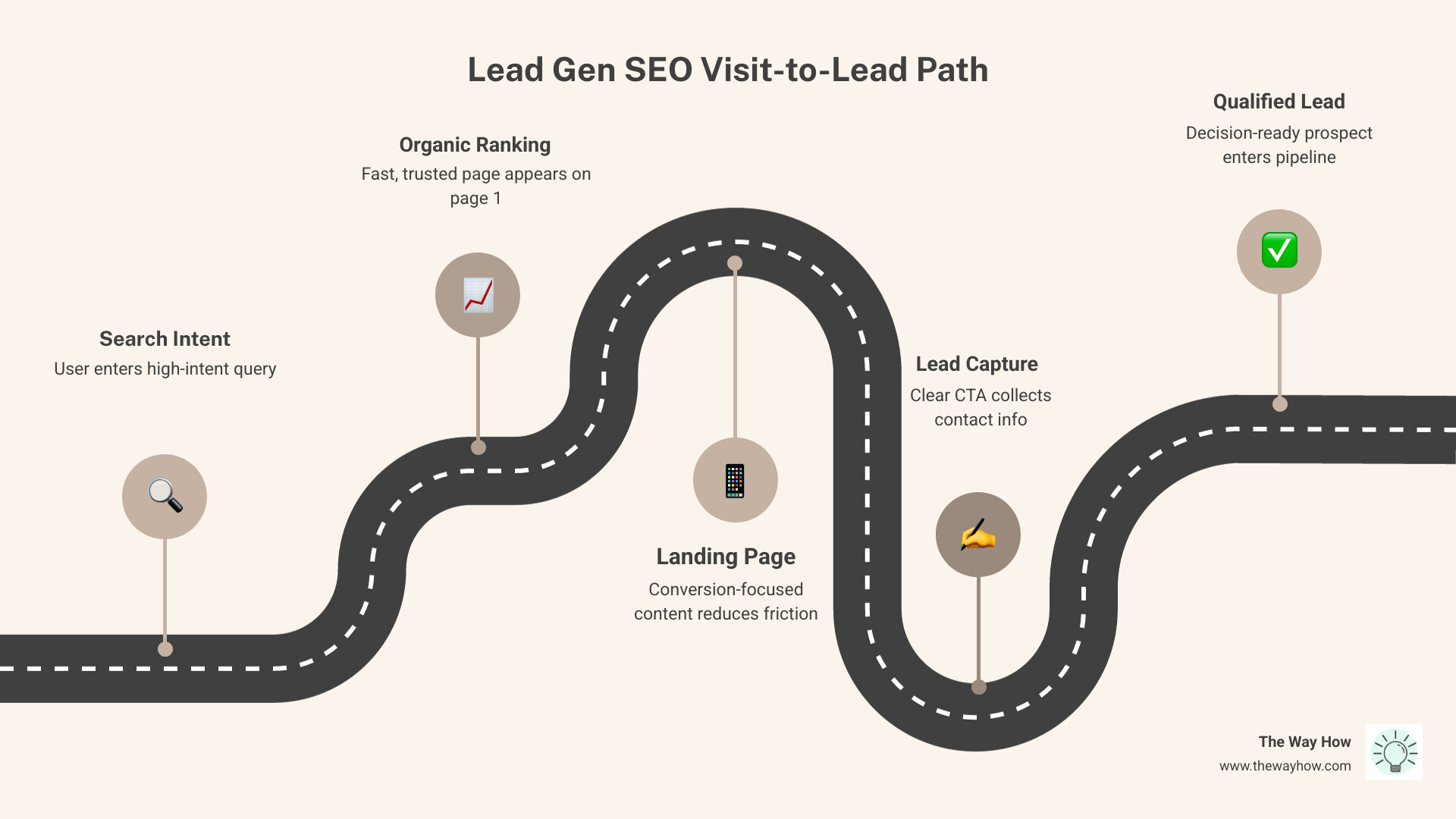
Effective lead gen seo isn’t about volume; it’s about intent. We categorize search queries into three main buckets: problem-aware, commercial investigation, and transactional.
- Problem-aware: “Why is my sales pipeline stalling?”
- Commercial investigation: “Best CRM for mid-sized agencies.”
- Transactional: “HubSpot implementation services price.”
If you only target the high-volume, broad terms, you’ll get traffic that doesn’t convert. We focus on “bottom-of-funnel” (BOFU) keywords. These are the specific, often long-tail phrases that indicate someone is ready to make a change.
To get started, we recommend learning How To Create A List Of Primary Or Seed Keywords For Your Site and then refining that list by understanding How To Create A List Of Long Tail Keywords Using Ahrefs Or Semrush.
Identifying lead gen seo Opportunities in Your Niche
The best opportunities often lie where your competitors are silent. By performing a gap analysis, we can identify high-intent terms that your rivals have overlooked. Maybe they are ranking for “marketing software” but ignoring “marketing software with empathy-based lead scoring.”
That specific long-tail keyword might only have 50 searches a month, but those 50 people are exactly who you want to talk to. We use tools to see what the market is missing. You can follow our guide on How To Do An Seo Competitor Analysis and How To Identify 5 7 Competitors to find these hidden goldmines.
Building Topical Authority to Remove Decision Uncertainty
Google (and your customers) wants to see E-E-A-T: Experience, Expertise, Authoritativeness, and Trustworthiness. You don’t get this by writing a single good blog post. You get it by becoming the “library” for your niche.
Topical authority is about removing the uncertainty in your prospect’s mind. If they have ten questions about a topic and you answer all ten of them across your site, they stop looking elsewhere. You become their trusted guide.
We recommend learning How To Build Topical Authority For Your Niche to ensure your site is seen as the go-to resource. This involves How To Cluster Keywords To Target so that your content architecture supports your expertise.
Scaling lead gen seo Through Content Clusters
A “cluster” strategy involves one massive “pillar page” that covers a broad topic, linked to several smaller “spoke” articles that dive into specifics. This structure tells search engines that you have deep knowledge of the subject.
More importantly, it guides the user. An informational “how-to” spoke article should naturally lead to a BOFU pillar page about your service. This path is highly effective; BOFU content can convert at rates of 8-10%, compared to the 2% average for generic content. For a technical breakdown of this strategy, see this SEO for lead generation: A complete strategy guide for 2026 - Decoding.
Technical Foundations for a Frictionless Conversion Path
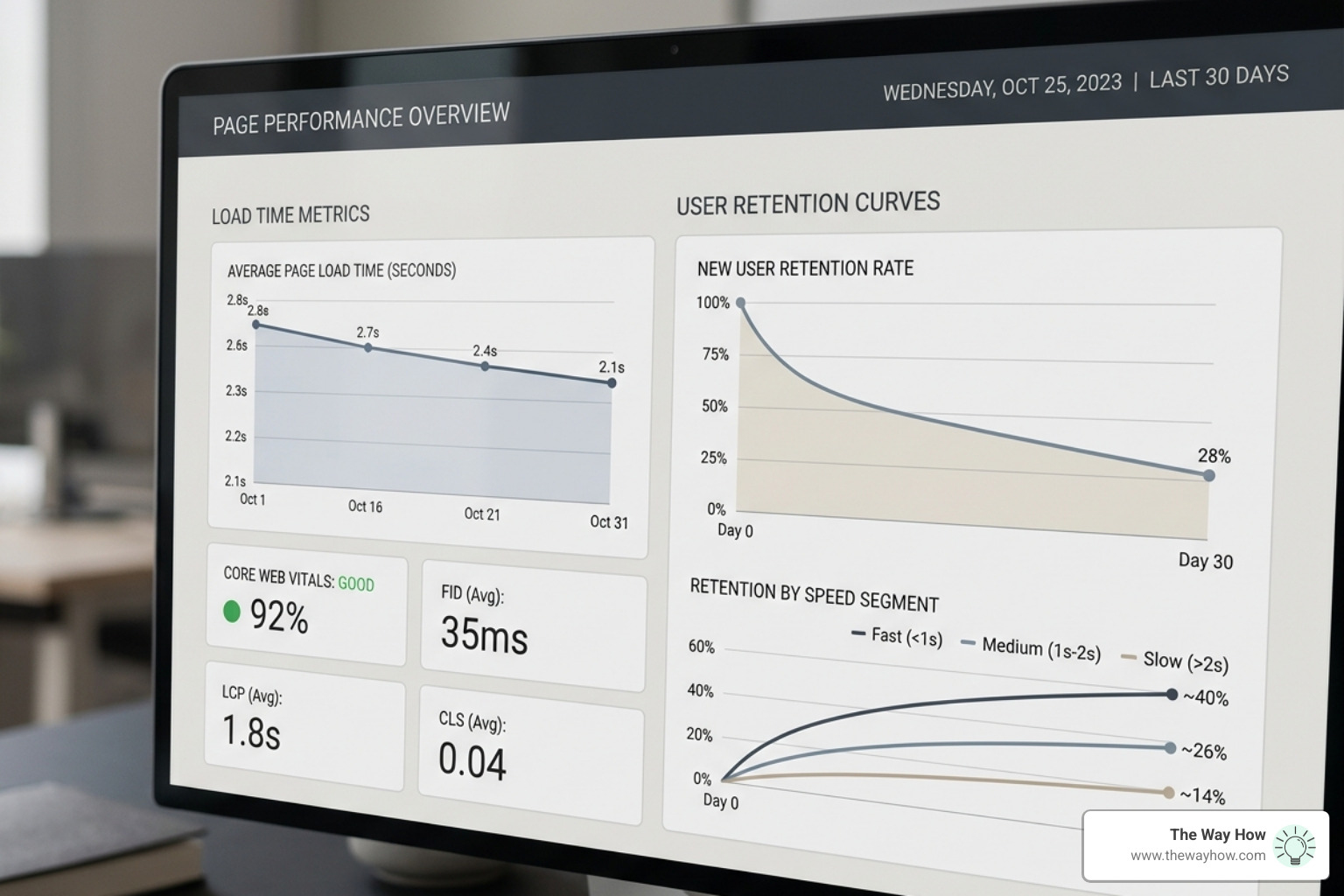
You can have the best content in the world, but if your site takes five seconds to load on a mobile device, your leads will vanish. We call this “technical friction.”
Core Web Vitals are no longer just “SEO tips”; they are the baseline for user experience. A three-second load delay can reduce your conversion rate by 40% or more. In a mobile-first world, your site must be responsive and lightning-fast.
If you are just starting, review Technical Seo Basics Essential Tips For Beginners and What Is On Page Seo Complete Strategies For Success to ensure your foundation is solid.
Optimizing On-Page Elements for lead gen seo
Every page on your site should have a “job.” If a page exists to generate leads, its design should reflect that. This means clear, contextual Calls to Action (CTAs).
One of the biggest mistakes we see is “form friction.” Asking for a phone number on an initial contact form can drop conversion rates by up to 52%. We advocate for minimal fields—just enough to start a conversation.
For WordPress users, we have a guide on How To Perform On Page Optimization On A Wordpress Post With Yoast. For everyone else, our Lead Generation Best Practices Guide offers universal principles for optimizing your conversion path.
Future-Proofing Your Strategy: AI and lead gen seo
The world of search is changing due to Generative Engine Optimization (GEO). Search engines like ChatGPT, Perplexity, and Google’s AI Overviews are now providing answers directly.
To win in 2026, you don’t just want to rank; you want to be cited. This means structuring your data so AI models can easily parse it. We’ve seen businesses achieve a 326% increase in traffic from AI engines by focusing on “answer-first” content. Interestingly, AI-driven traffic often converts at much higher rates—up to 27%—because the AI has already “vetted” the answer for the user.
| Feature | Traditional SEO | GEO (AI Search) |
|---|---|---|
| Goal | Rank in top 10 blue links | Be the cited source in AI answer |
| Metric | Click-through rate (CTR) | Share of Influence / Citations |
| Content | Keyword-optimized articles | Fact-dense, structured data |
| User Intent | Browsing/Researching | Seeking immediate solution |
For a deeper playbook on this shift, read Search Engine Optimization Lead Generation: A Step-by-Step Playbook.
Measuring What Matters: ROI and Revenue Attribution
If your SEO agency is only reporting on “rankings,” they are only telling half the story. To truly understand the ROI of lead gen seo, you must track the journey from organic visitor to Marketing Qualified Lead (MQL) to Sales Qualified Lead (SQL).
We use HubSpot to bridge the gap between “web traffic” and “closed-won revenue.” By using UTM parameters and CRM integration, we can tell you exactly which blog post generated a $50,000 deal. This allows you to calculate your organic Customer Acquisition Cost (CAC) and compare it to paid channels.
Learn more about setting this up in our Hubspot Lead Generation guide and refining your overall Lead Generation Strategy.
Frequently Asked Questions about Lead Gen SEO
How long does it typically take to see results from SEO lead generation efforts?
Most businesses see initial traction within 3 to 6 months. However, significant lead volume and compounding authority usually take 6 to 12 months of consistent effort. The good news is that once the momentum starts, it is much harder for competitors to displace you than it is with paid ads.
What is the difference between SEO and lead generation?
SEO is a method of driving traffic; lead generation is the goal of capturing information from that traffic. Lead gen SEO combines the two by specifically targeting keywords and creating content designed to turn a searcher into a prospect.
Is SEO better than paid ads for lead generation?
Neither is “better” in a vacuum, but they serve different purposes. Paid ads provide immediate results but stop the moment you stop paying. SEO takes longer to start but provides a much higher long-term ROI and builds lasting trust that paid ads often lack.
Restoring Momentum to Your Marketing Engine
At The Way How, we don’t believe in chasing the latest algorithm update just for the sake of it. We believe in building systems that respect how humans actually make decisions.
Growth often stalls not because you lack tactics, but because there is a “certainty gap” in your customer’s journey. Your SEO should be the first step in closing that gap—providing the clarity and authority your prospects need to move forward.
As a psychology-first revenue strategy firm, we help leadership teams remove the uncertainty from their sales and marketing. Whether through Fractional CMO leadership or architecting your HubSpot environment, we ensure your lead gen seo is a dependable growth engine, not a black box of “maybe.”
If you are ready to turn organic search into your most reliable source of high-quality leads, schedule a consultation with us today. Let’s diagnose what’s standing in your way and build a path to predictable revenue.