A Complete Guide to CRM Systems and Database Management
 Jeremy Wayne Howell : Jul 22, 2026 9:48:31 PM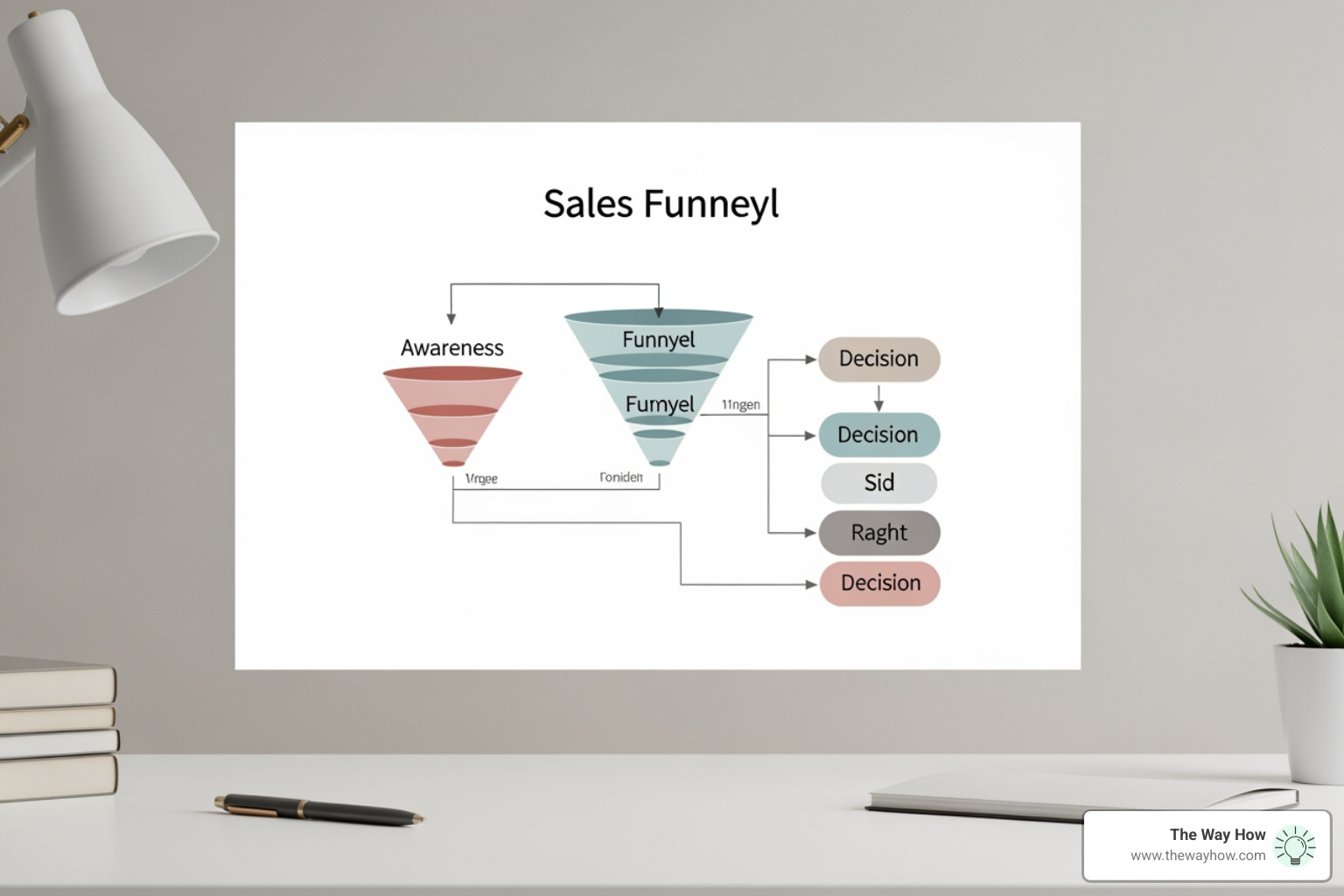
A demand generation strategy is a revenue-focused system that builds awareness, trust, and interest across the entire buyer journey — not just at the point of contact capture. Unlike traditional lead generation, it prioritizes educating future buyers, shaping demand before prospects enter the market, and aligning sales and marketing around quality over volume.
Key components of an effective demand generation strategy:
If you’ve invested in ads, content, webinars, and automation but your pipeline still feels unpredictable, you’re not alone.
Most demand generation strategies are built backward. They chase the 5% of buyers already in-market, competing on price and timing instead of trust. They prioritize lead volume over lead quality. They measure activity — downloads, MQLs, impressions — instead of influence on revenue.
The result? Tactical fatigue. Your team is busy, but revenue isn’t moving.
The real problem isn’t effort. It’s certainty. Buyers don’t trust brands they’ve never heard of. Sales teams don’t trust leads that aren’t ready. And leadership doesn’t trust a strategy that can’t explain why growth stalled.
Demand generation done right removes that uncertainty. It builds familiarity with future buyers before they enter a buying cycle. It aligns your entire go-to-market motion around a shared definition of quality. And it creates a predictable system where marketing contributes to revenue, not just activity.
But here’s what most guides won’t tell you: demand generation isn’t a set of tactics. It’s a shift in how you think about buyers. It requires understanding decision-making psychology, mapping emotional certainty gaps, and designing systems that reflect how people actually choose vendors — not how your CRM is organized.
I’m Jeremy Wayne Howell, founder of The Way How, and I’ve spent over 20 years helping companies rebuild stalled pipelines by diagnosing the human problem underneath the performance problem. A well-designed demand generation strategy doesn’t just fill your funnel — it changes how your buyers see you before they ever need what you sell.
Demand generation strategy terminology:
We often see marketing teams celebrating a “successful” brand awareness campaign that resulted in thousands of impressions but zero sales conversations. This happens because awareness, in isolation, does not solve for the “Certainty Gap”—the space between a buyer knowing you exist and a buyer trusting you to solve their specific problem.
The foundation of modern demand generation is the 95/5 Rule. Research from The B2B Institute reveals that at any given time, only 5% of your addressable market is “in-market” looking to buy. The other 95% are future buyers who aren’t ready to purchase today.
Most businesses fail to scale because they funnel 100% of their budget into capturing that 5%. This leads to high Customer Acquisition Costs (CAC) and fierce competition. True demand generation focuses on the 95%, shaping their mental models and building trust long before they ever open a Google search tab to find a vendor.

The difference between demand and lead generation is more than semantic; it is a shift in revenue-centricity. Lead generation is a subcategory of demand generation that focuses on top-of-funnel contact capture, often using gated content to “force” a relationship.
Demand generation, however, is holistic. It covers every touchpoint in the journey, including customer retention and upselling. It relies on providing ungated value—giving away your best insights for free to build authority. When you provide value without asking for an email address immediately, you reduce friction and build a client acquisition funnel rooted in empathy rather than coercion. For those looking for more direct outreach, understanding outbound lead generation can complement these efforts by targeting high-fit accounts directly.
Cognitive bias plays a massive role in B2B purchasing. Buyers are inherently risk-averse; choosing the wrong vendor can cost them their reputation or their job. To mitigate this risk, they rely on “mental availability”—the ease with which a brand comes to mind in a buying situation.
Bain & Co. research suggests that 80-90% of buyers have a set of vendors in mind before they even begin their research. Crucially, 90% of them will ultimately choose a vendor from that “day-one” list. If you aren’t building brand salience with the 95% who are currently out-of-market, your chances of winning the deal when they finally enter the market drop to nearly zero.
A sustainable demand generation strategy starts with clarity, not tactics. We begin by defining the Ideal Customer Profile (ICP). This isn’t just a list of firmographics like company size or industry; it’s an exploration of “Jobs-to-be-Done.” What is the emotional and functional “job” the buyer is trying to accomplish?
By mapping the buyer personas and their specific pain points, we can identify “certainty gaps”—the specific moments where a prospect feels hesitant or confused. Our goal is to design sales funnels that proactively answer those questions, removing friction before it stalls the deal.
To move from tactical fatigue to strategic momentum, your program needs four core pillars:
The B2B buying journey is rarely linear. We use the “5 Stages of Awareness” model to map content to the buyer’s mental state:
By understanding these stages, you can create a client acquisition funnel that delivers the right information at the precise moment it is needed.
Building trust with the 95% of buyers who aren’t currently “in-market” requires a commitment to education over promotion. This is where many companies fail; they try to sell to someone who isn’t even sure they have a problem yet.
We advocate for a “problem-led POV.” Instead of talking about your features, talk about the industry challenges your buyers face. This builds authority in “dark social”—the private channels like Slack groups, DMs, and word-of-mouth where real B2B influence happens. Using an automated client acquisition approach allows you to distribute this thought leadership consistently without burning out your team.
Different content types work best at different stages of awareness:
Distribution is just as important as creation. Research shows that 70% of marketers value live events as a crucial tactic for building credibility. Additionally, 99% of large companies now use intent data to identify which accounts are showing signs of entering a buying cycle.
By combining high-level authority (like LinkedIn thought leadership) with granular data (intent signals), we create a multi-layered approach that keeps your brand top-of-mind.
The greatest friction in any demand generation strategy is the disconnect between sales and marketing. Marketing often chases “leads” (downloads), while Sales only cares about “revenue” (closed deals).
To bridge this gap, we implement sales funnel optimization techniques that focus on Sales Qualified Opportunities (SQOs) rather than raw lead volume. This involves creating tight feedback loops where Sales provides insights into buyer objections, which Marketing then uses to create better sales enablement content.
For B2B companies targeting high-value accounts, Account-Based Marketing (ABM) is a natural extension of demand generation. ABM involves treating an individual account as its own market, creating personalized experiences for the entire buying committee. Since ABM delivers 97% higher ROI than other marketing approaches, it is a vital tool for navigating complex 6-18 month sales cycles.
We recommend a phased rollout to avoid overwhelm:
Vanity metrics like impressions and clicks don’t move the needle for leadership. To prove the value of your demand generation strategy, you must track metrics that correlate with revenue:
Tracking outbound marketing leads alongside inbound efforts provides a complete picture of your ROI.
As we look toward 2025, several trends are shaping the future of demand gen:
For a deeper dive into modern tech stacks, see our guide on HubSpot lead generation.
Demand generation is the “function” (the goal of creating a revenue pipeline), while inbound marketing is a “method” (using content and SEO to pull people toward you). You can use inbound methods to fuel demand, but demand generation also includes outbound and sales-led tactics.
ROI should be measured by looking at the total contribution to pipeline and revenue, not just cost-per-lead. We look at the “incrementality”—would this deal have happened without the marketing touchpoints?
It prevents you from over-investing in the small pool of buyers who are ready today while ignoring the massive pool of buyers who will be ready tomorrow. It forces a long-term, sustainable view of growth.
At The Way How, we believe that the most successful companies don’t just have better ads; they have more certain buyers. By applying a psychology-first approach to your demand generation strategy, we help you remove the uncertainty that stalls growth.
We don’t just suggest tools; we design systems that create trust and momentum. Whether through Fractional CMO leadership or architecting your HubSpot environment, our goal is to turn your marketing into a dependable revenue engine.
If you are ready to stop chasing tactics and start building a system that works, explore our services or reach out for a diagnostic call. Let’s identify the certainty gaps in your journey and build the momentum your business deserves.
 Jeremy Wayne Howell : Jul 22, 2026 9:48:31 PM
 Jeremy Wayne Howell : Jul 21, 2026 9:47:10 PM
 Jeremy Wayne Howell : Jul 20, 2026 9:46:47 PM