
Beyond the Tooling: Why Your Automated Funnel is Stalled

A marketing automation consultant is a specialist who helps businesses design, fix, and operate the systems that turn marketing activity into measurable revenue.
If you’re evaluating whether to hire one, here’s what you need to know upfront:
| What They Do | Why It Matters |
|---|---|
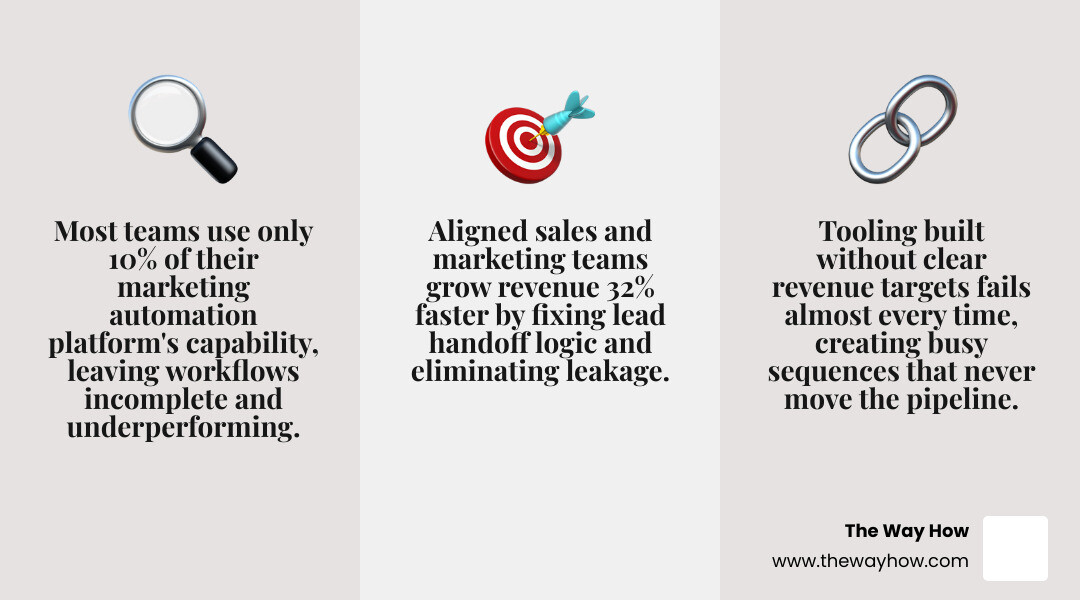
| Audit your existing automation setup | Most teams use only ~10% of their platform’s capability |
| Map your funnel to revenue goals | Tooling built without revenue targets almost always fails |
| Fix data, tracking, and CRM sync issues | Broken event tracking corrupts every workflow downstream |
| Build lead scoring and nurture systems | 72% of nurtured leads eventually become sales-ready |
| Align marketing and sales handoff logic | Aligned teams grow revenue 32% faster year over year |
| Document workflows and train your team | Systems that aren’t documented break when people leave |
Here’s the uncomfortable reality most software vendors won’t tell you: marketing software now accounts for 29% of the average marketing department’s budget — yet only 12% of marketers say they’re seeing significant value from their technology.
That gap isn’t a tooling problem. It’s a clarity problem.
Most companies don’t fail at marketing automation because they chose the wrong platform. They fail because they built workflows before agreeing on what revenue those workflows were supposed to produce. The funnel looks busy. The sequences are running. But revenue isn’t moving.
That’s the stall. And it’s almost always a human problem underneath a technical one.
I’m Jeremy Wayne Howell, founder of The Way How and a revenue growth strategist with over 20 years of experience in marketing, sales, and go-to-market systems — including hands-on work as a marketing automation consultant helping founders and revenue leaders implement CRM and lifecycle systems that reflect how buyers actually think. In the sections ahead, we’ll break down exactly what’s getting in the way, and how to fix it.
Similar topics to Marketing automation consultant:
What Does a Marketing Automation Consultant Actually Do?
When companies realize their marketing technology isn’t delivering, they often look for a B2B Marketing Automation Consultant to untangle the knots. But what does this role look like in practice?
At its core, a consultant acts as the translation layer between your high-level business strategy and your technical execution. They don’t just log into your software and build random workflows; they design the operational blueprint that makes your marketing engine run predictably.
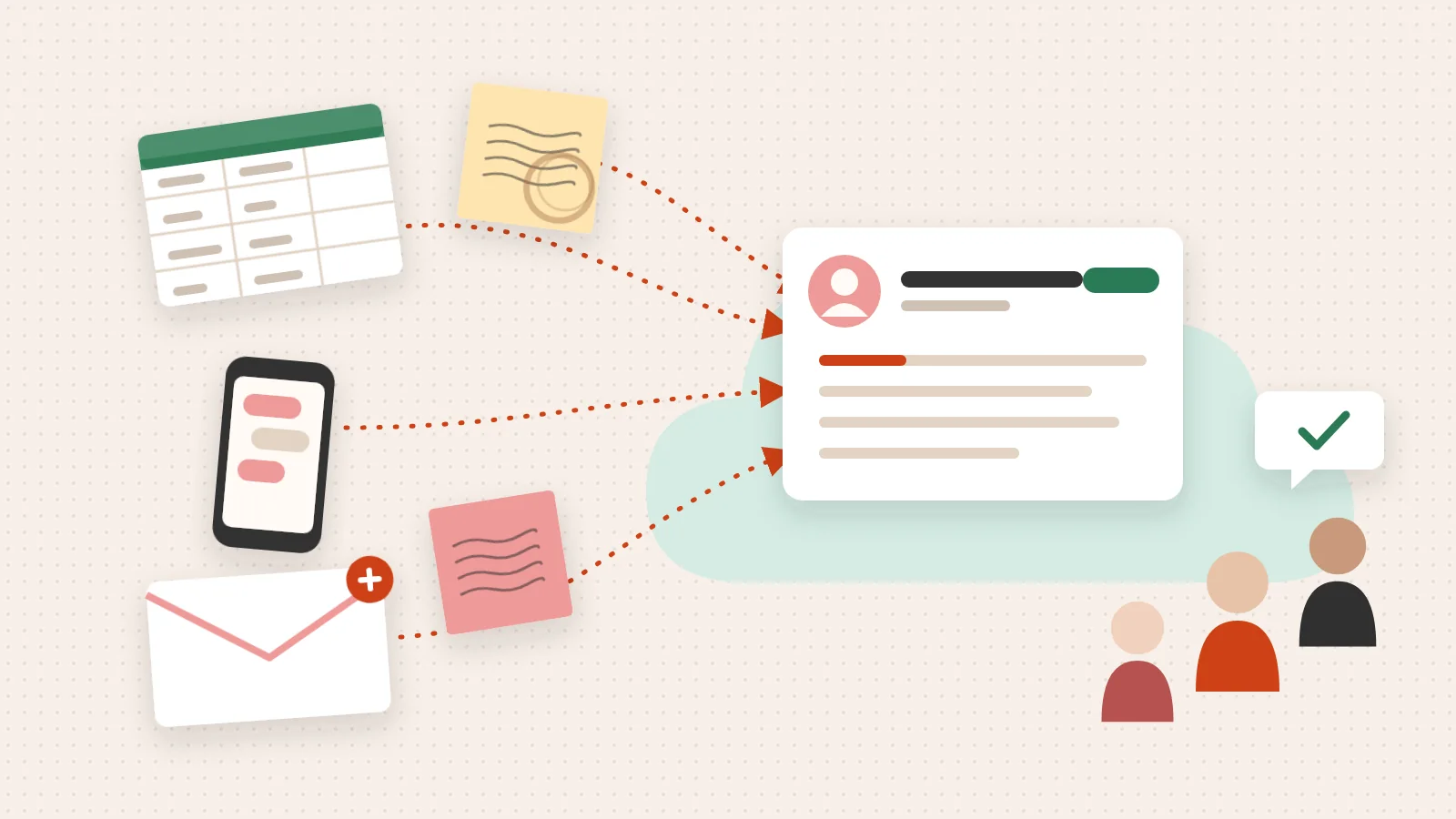
To do this effectively, a professional consultant typically begins with a diagnostic sprint. Instead of guessing where the bottlenecks are, they audit your entire systems architecture. They look at how data flows from your website to your marketing automation platform (MAP), and ultimately into your CRM.
This process involves:
- Process Mapping: Creating visual blueprints of your buyer’s journey, detailing every automated touchpoint, notification, and internal alert.
- System Architecture: Designing how different platforms talk to one another so that no lead is dropped and no data is corrupted.
- Data Hygiene: Cleaning up duplicate contacts, fixing broken sync fields, and standardizing data entry to ensure your segmentation actually works.
- Standard Operating Procedures (SOPs): Building clear, accessible documentation so that when your internal team changes, your automated systems don’t break.
Without this structured approach, automation is just a pile of integrations waiting to collapse under its own weight. A consultant ensures your systems are built for long-term scalability, not just short-term convenience.
Core Services Offered by a Marketing Automation Consultant
The work of an automation specialist goes far beyond sending blast emails. They build the digital infrastructure that powers your entire go-to-market strategy. Some of the most common services they offer include:
- Campaign Factory Design: Establishing repeatable templates, naming conventions, and QA processes so your team can launch complex campaigns 35% faster without introducing errors.
- API and Custom Integrations: Connecting systems that don’t naturally talk to one another, ensuring that behavioral data from your product or website matches up with your CRM.
- Workflow Optimization: Auditing existing rules, triggers, and branches to eliminate redundant steps and ensure prospects receive the right message at the exact right moment.
For businesses utilizing specialized ecosystems, consultants focus heavily on deep platform expertise. Whether it is Salesforce Marketing Cloud Account Engagement (formerly Pardot) or other enterprise tools, these specialists ensure your platform is configured to support complex customer journeys rather than acting as expensive, unused database storage.
Fixing the Common Mistakes That Drain Your MarTech Budget
Many companies suffer from “shelfware syndrome”—they purchase high-end Marketing Automation Software Examples but only use about 10% of their actual capabilities. A consultant’s primary job is to diagnose these platform failures and realign your technology with actual business goals.
Some of the most common budget-draining mistakes consultants fix include:
- Overmarketing and Fatigue: Sending too many uncoordinated emails to the same prospect because different departments are running siloed campaigns.
- Misconfiguration: Setting up sync rules incorrectly, which leads to sales reps seeing outdated information or marketing missing key sales updates.
- Broken Event Tracking: Building workflows based on flawed data triggers. If your platform cannot accurately track when a user views a pricing page or downloads a resource, your automated responses will be mistimed and irrelevant.
By correcting these foundational errors, a consultant helps you stop wasting budget on underutilized tools and start generating a clear return on your technology investment.
How a Marketing Automation Consultant Restores Revenue Momentum
When your growth slows down, it is easy to assume you have a traffic or lead generation problem. Often, however, the real bottleneck is lead management.
According to industry data, companies that automate their lead management see a 10% or greater increase in revenue within 6 to 9 months. By mapping out structured customer journeys, as detailed in our B2B Marketing Automation Examples Guide, consultants help you capture leaking pipeline and convert existing interest more efficiently.
This systematic approach directly impacts three critical business metrics:
- Conversion Rates: Companies that adopt marketing automation see 53% higher conversion rates than non-adopters.
- Predictable Revenue: By establishing clear, automated pathways from first touch to closed-won, your revenue pipeline becomes a visible, measurable system rather than a series of monthly surprises.
- Resource Scaling: Automation allows small marketing teams to manage hundreds of complex, personalized campaigns simultaneously, scaling your output without requiring a linear increase in headcount.
The Strategic Benefits of Hiring a Marketing Automation Consultant
The value of an experienced consultant isn’t just technical; it is highly strategic. They help you shift from a reactive marketing posture (blast-emailing your list whenever sales needs more meetings) to a proactive, behavior-driven model.
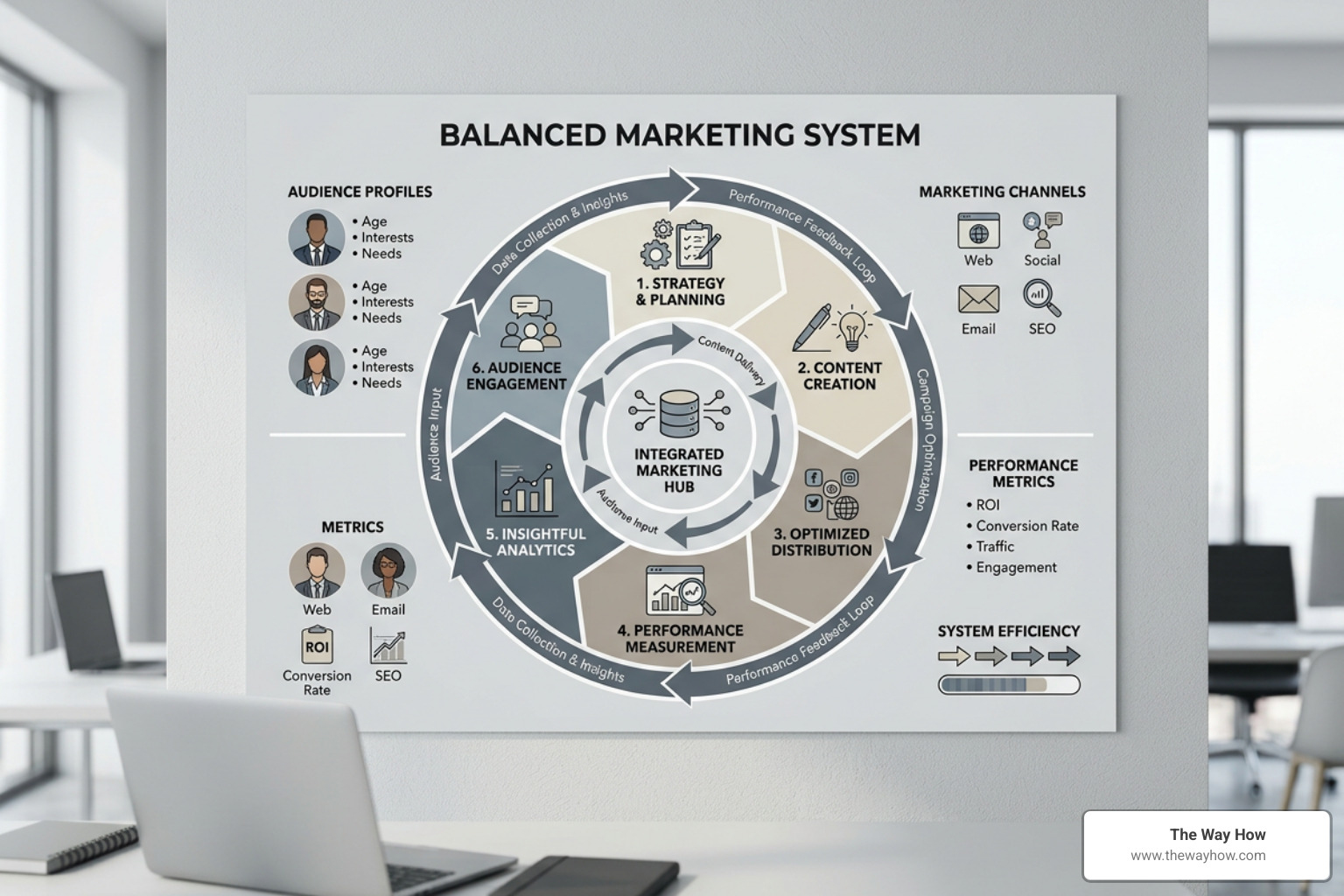
This shift unlocks several key organizational benefits:
- Significant Time Savings: Automating repetitive manual tasks like lead routing, list segmentation, and campaign tracking frees up your strategic minds to focus on creative positioning and market research.
- Increased Productivity: By standardizing how campaigns are built and approved, your operational speed increases, reducing time-to-market for new initiatives.
- Enhanced Customer Engagement: Instead of sending generic newsletters, you deploy behavioral triggers. When a prospect engages with a specific topic on your site, your system automatically responds with hyper-relevant content that matches their current stage of interest.
Navigating the MarTech Stack: Platforms and Integrations
Selecting and configuring the right tools is one of the most daunting challenges for modern marketing leaders. The technology landscape is crowded, and making the wrong choice can cost hundreds of thousands of dollars in licensing and migration fees.
To help you understand the landscape, let’s compare three of the most common enterprise platforms supported by consultants:
| Feature | HubSpot | Adobe Marketo | Salesforce Account Engagement (Pardot) |
|---|---|---|---|
| Primary Focus | Inbound marketing, ease of use, all-in-one CRM integration | Enterprise lead management, complex multi-channel campaigns | B2B lead nurturing deeply integrated with Salesforce CRM |
| Best For | Mid-market to enterprise companies looking for a unified GTM stack | Enterprise organizations with dedicated marketing operations teams | Companies already fully committed to the Salesforce ecosystem |
| Customization | High (via Custom Objects and flexible data models) | Extremely High (highly customizable, but requires technical expertise) | Moderate to High (highly dependent on Salesforce admin setup) |
| Implementation Speed | Fast to Moderate | Slow (requires deep technical configuration) | Moderate (requires CRM alignment) |
When choosing a platform, a consultant refers to frameworks like our Marketing Automation Tools Guide 2026 to match the software to your team’s technical maturity and operational needs. When the decision involves HubSpot specifically, a consultant may also validate assumptions against the platform’s own HubSpot marketing automation product resources, then translate that product capability into a system your team can actually operate.
Furthermore, they help design the CRM sync logic that keeps your marketing and sales databases in perfect harmony. They also build middleware connections using tools like n8n or Zapier to bridge gaps between niche applications and your core database, ensuring that your stack behaves like a single, unified product.
HubSpot Architecture and Enterprise Implementation
For businesses looking for a balance of power and usability, we often recommend focusing on HubSpot. Our guides on HubSpot Marketing Automation and the Marketing Automation HubSpot Guide highlight how a properly configured portal can transform your operations.
An enterprise-grade HubSpot implementation involves mapping your data layer to reflect your unique business model. Rather than forcing your processes into standard “contacts” and “companies,” an experienced consultant can design custom objects to track specific business assets, such as trial accounts, subscription tiers, or physical products.
This clean data architecture ensures that your automated workflows target the right accounts with absolute precision, eliminating the risk of embarrassing, misaligned automated messages.
Bridging the Certainty Gap: Sales and Marketing Alignment
One of the greatest points of friction in any B2B organization is the handoff between marketing and sales. Marketing complains that sales doesn’t follow up on leads; sales complains that the leads from marketing are junk.
This is a classic “certainty gap.” Neither team is certain what constitutes a qualified lead, resulting in lost pipeline and wasted effort. In fact, research shows that tightly aligned marketing and sales organizations achieve 32% annual revenue growth and 27% faster profit growth over a three-year period.
A marketing automation consultant bridges this gap by establishing clear operational frameworks:
- Service Level Agreements (SLAs): Defining exactly how quickly sales must follow up on a qualified lead, starting with small, manageable pilots to ensure adoption.
- Shared Revenue Goals: Aligning both teams around pipeline generation and closed-won revenue, rather than vanity metrics like form fills or website visits.
- Automated Lead Handoff Logic: Building clear routing rules that instantly pass hot leads to the right sales reps, complete with the behavioral context they need to have a meaningful conversation.
This structured alignment prevents “lead leakage”—the phenomenon where valuable, interested prospects quietly fall through the cracks because no one was clearly assigned to follow up.
Psychology-First Lead Generation, Scoring, and Nurturing
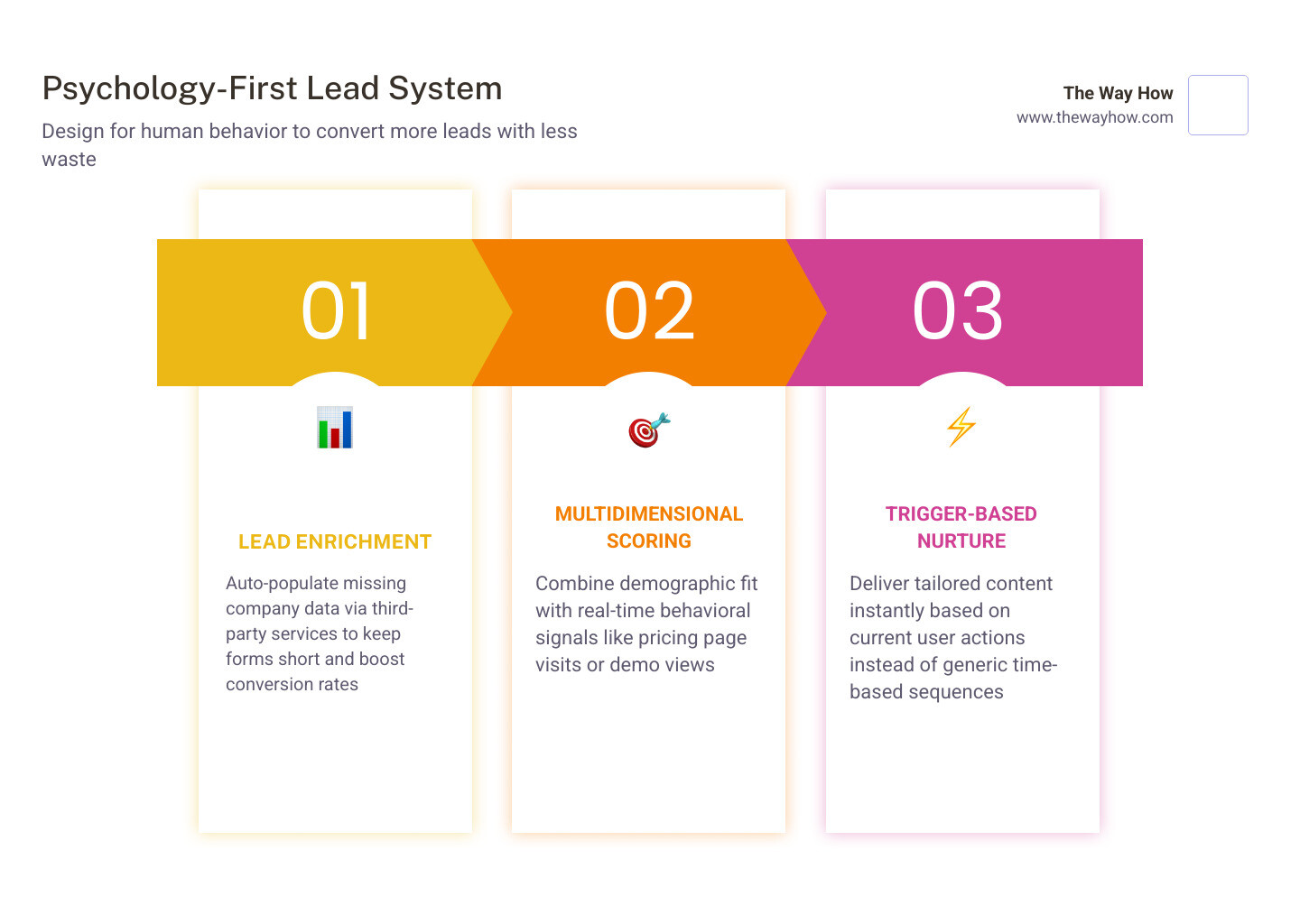
To build an automation system that actually converts, we must design for human behavior, not just database logic. This means moving away from static demographic scoring (like job titles) and focusing heavily on behavioral attributes and digital footprints.
An effective lead management system relies on three pillars:
- Lead Enrichment: Using third-party data services to automatically populate missing company information, keeping your lead forms short and conversion rates high.
- Multidimensional Lead Scoring: Combining demographic fit with real-time behavioral interest (such as visiting a pricing page multiple times or viewing a product demo).
- Trigger-Based Nurture Campaigns: Delivering tailored content based on what the user is doing now, rather than putting them into a generic, time-based email sequence.
When done correctly, this behavioral approach is incredibly powerful. Statistics show that about 72% of nurtured leads will eventually become sales-ready, effectively doubling the volume of qualified opportunities sent to sales while cutting your cost per lead in half.
The Cost of Clarity: What Does a Marketing Automation Consultant Cost?
Hiring an expert is an investment, and understanding how consultants structure their pricing is critical to planning your budget. Depending on your needs, a consultant may work under several different models:
- Hourly Rates: Typically ranging from $100 to $250+ per hour for specialized, ad-hoc technical troubleshooting.
- Diagnostic Sprints: Fixed-price engagements (often between $6,000 and $10,000) designed to audit your current tech stack, identify bottlenecks, and deliver a comprehensive strategic roadmap.
- Fractional Engagements: Ongoing retainers (ranging from $5,000 to $15,000+ per month) where the consultant acts as your fractional marketing operations leader, executing the strategy and managing your systems on an ongoing basis.
While these costs may seem significant, they must be weighed against the cost of maintaining a broken system. If your marketing software is eating up 29% of your budget and delivering zero value, hiring a consultant to unlock its potential is often the most cost-effective decision you can make.
What To Look For When Hiring Your Automation Partner
Not all consultants are created equal. To avoid hiring someone who simply builds more complex, fragile workflows, look for partners who demonstrate:
- Technical Expertise: Look for active certifications in your platform of choice (such as HubSpot or Salesforce) and a deep understanding of data structures and APIs.
- Strategic Empathy: A great consultant asks about your business model, customer journey, and revenue goals before they ever talk about software features.
- Evidence-Based Best Practices: They should rely on proven frameworks and research-backed methodologies, not just the latest marketing trends.
- Change Management Skills: They understand that software is only as good as the people using it, and they prioritize team training, documentation, and SOPs to ensure long-term adoption.
Frequently Asked Questions About Marketing Automation Consulting
Why do most marketing automation projects fail?
Most projects fail for two primary reasons. First, companies build complex workflows before agreeing on the specific revenue outcomes those workflows are supposed to drive. Second, the underlying event tracking and data hygiene are broken. If your system is working with dirty data, even the most beautifully designed automation will fail to deliver results.
How do you measure if marketing automation is actually working?
We measure success by tracking metrics that tie directly to business growth: trial-to-paid conversion rates, pipeline velocity, lead-to-opportunity conversion rates, and revenue attribution. If your automated workflows aren’t actively moving these numbers, they are just generating noise, not value.
Can a consultant integrate AI agents into our existing workflows?
Yes, but we advise doing so with a “human-in-the-loop” approach. AI can be incredibly effective for automating repetitive quality assurance tasks, cleaning up dirty database records, and reducing operational debt. However, critical customer-facing touchpoints should always maintain human oversight to protect your brand’s integrity and build genuine trust with your audience.
Restoring Momentum to Your Revenue Engine
At The Way How, we believe that technology should serve human relationships, not complicate them. We are a psychology-first marketing and revenue strategy firm that helps founders and leadership teams remove uncertainty from their growth systems.
We specialize in Fractional CMO leadership, Marketing Automation HubSpot architecture, and demand generation strategies designed around how buyers actually think and make decisions. We don’t just connect tools; we diagnose why your growth has stalled, identify certainty gaps in your customer journey, and design systems that build trust and predictable revenue.
If you are ready to stop fighting your software and start scaling your business, let’s discuss how we can help you turn your marketing operations into a dependable engine for growth.