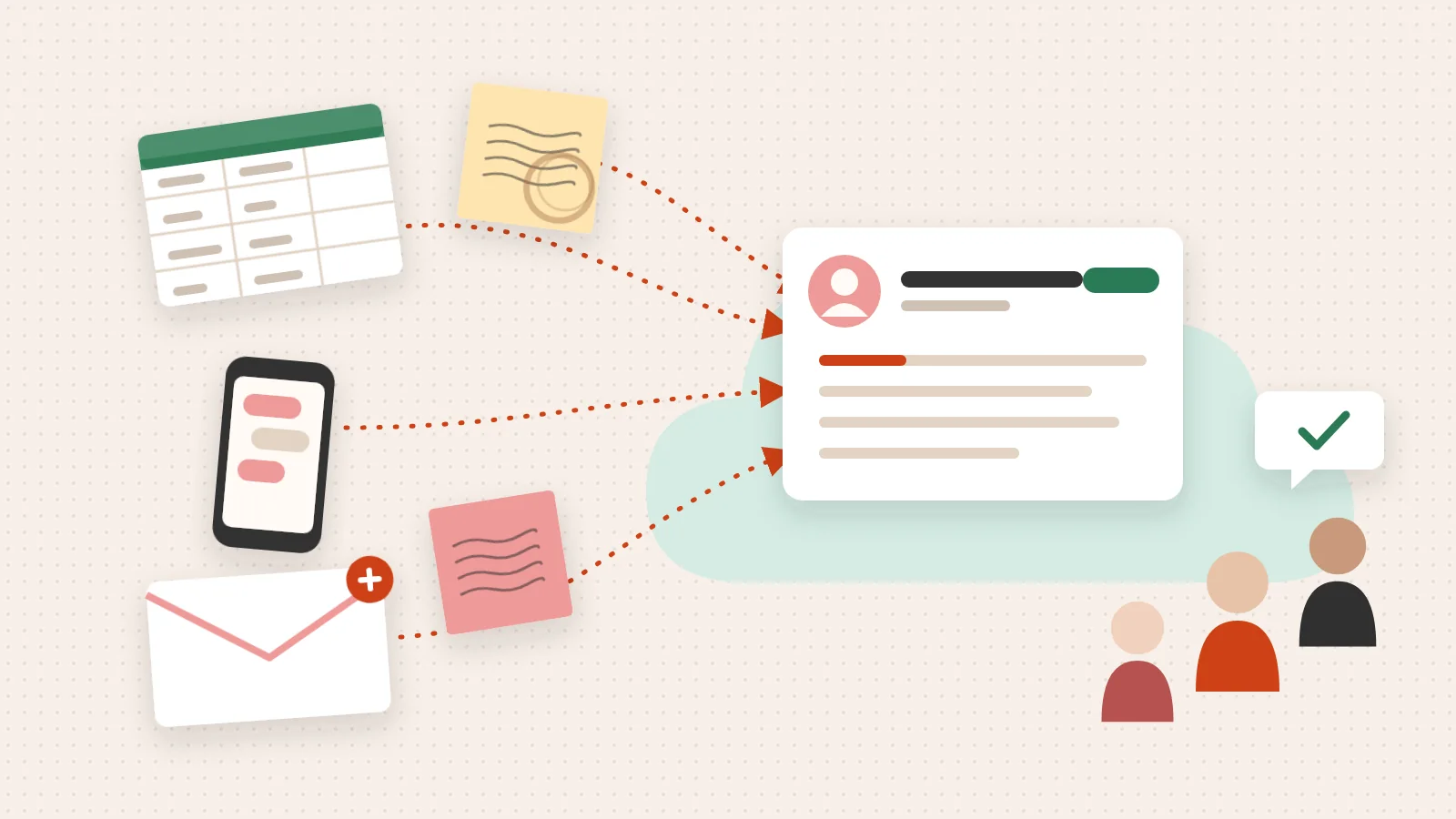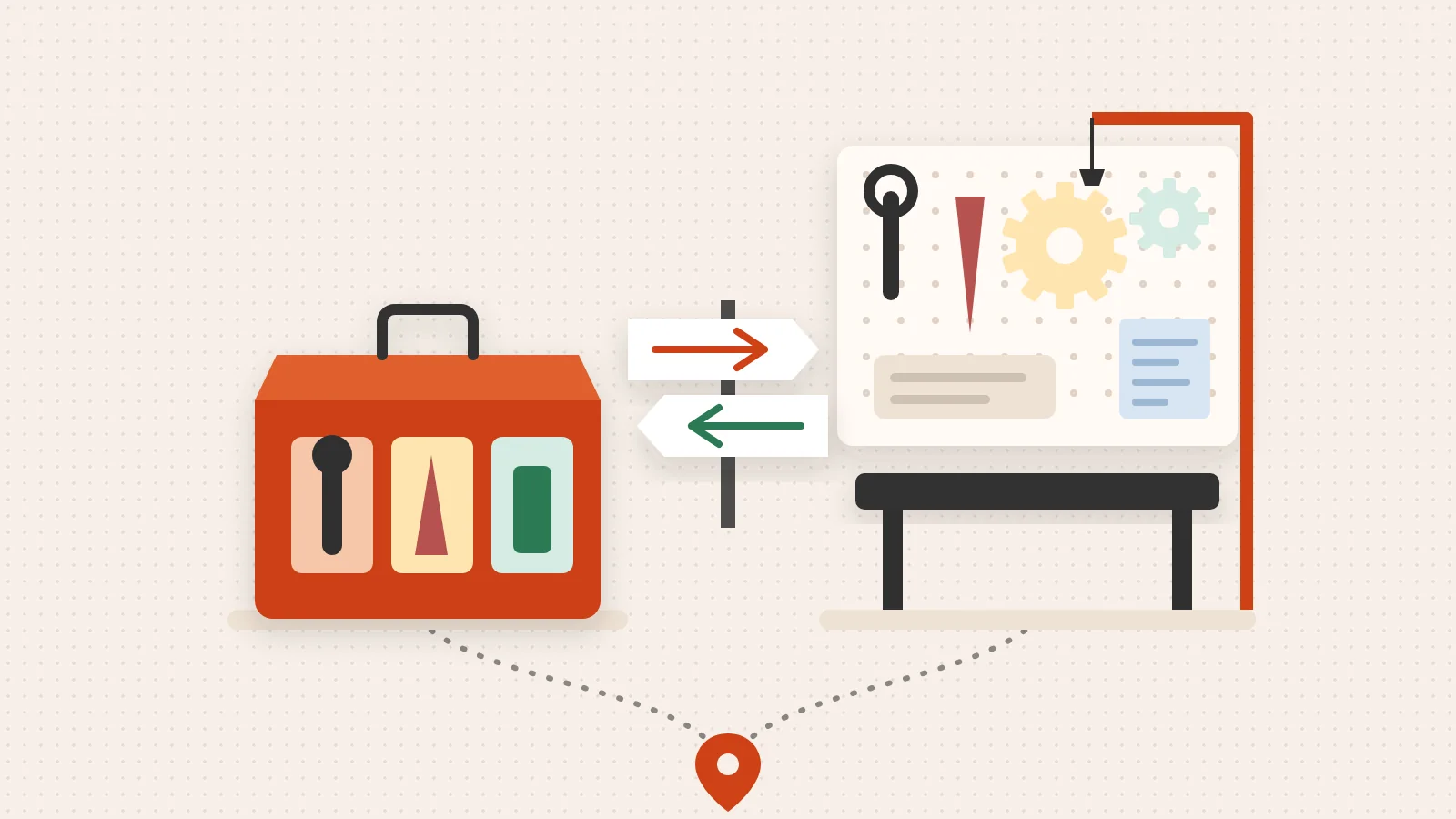

The Illusion of Efficiency: Why More Tools Aren’t Saving Your Marketing

Marketing process automation is the systematic use of software and rules to handle repetitive marketing tasks — across email, social, ads, and internal workflows — so your team can focus on strategy and human judgment instead of manual execution.
Quick answer: What is marketing process automation?
Here’s the problem most revenue leaders run into: they’ve added tool after tool, workflow after workflow, and the system is still broken. Not because the tools don’t work — but because the strategy underneath them was never clearly defined.
The promise is real. Businesses that implement marketing automation report a 451% increase in qualified leads, and 76% generate positive ROI within the first year. But those numbers belong to companies that built their automation around buyer behavior — not just around what their software could do out of the box.
Most teams skip that step. They automate the wrong things first. They build workflows on top of messy data. And then they wonder why the leads aren’t converting.
This guide is for founders, CEOs, and revenue leaders who are done guessing. It walks you through how marketing process automation actually works, what to build first, and how to avoid the traps that quietly kill otherwise promising systems.
I’m Jeremy Wayne Howell, founder of The Way How — a psychology-first revenue strategy firm where I’ve spent over 20 years helping companies diagnose what’s broken in their marketing and sales systems, including designing and implementing marketing process automation frameworks that reflect how buyers actually think and decide. If you’ve ever felt like your tools should be working harder than they are, you’re in the right place.
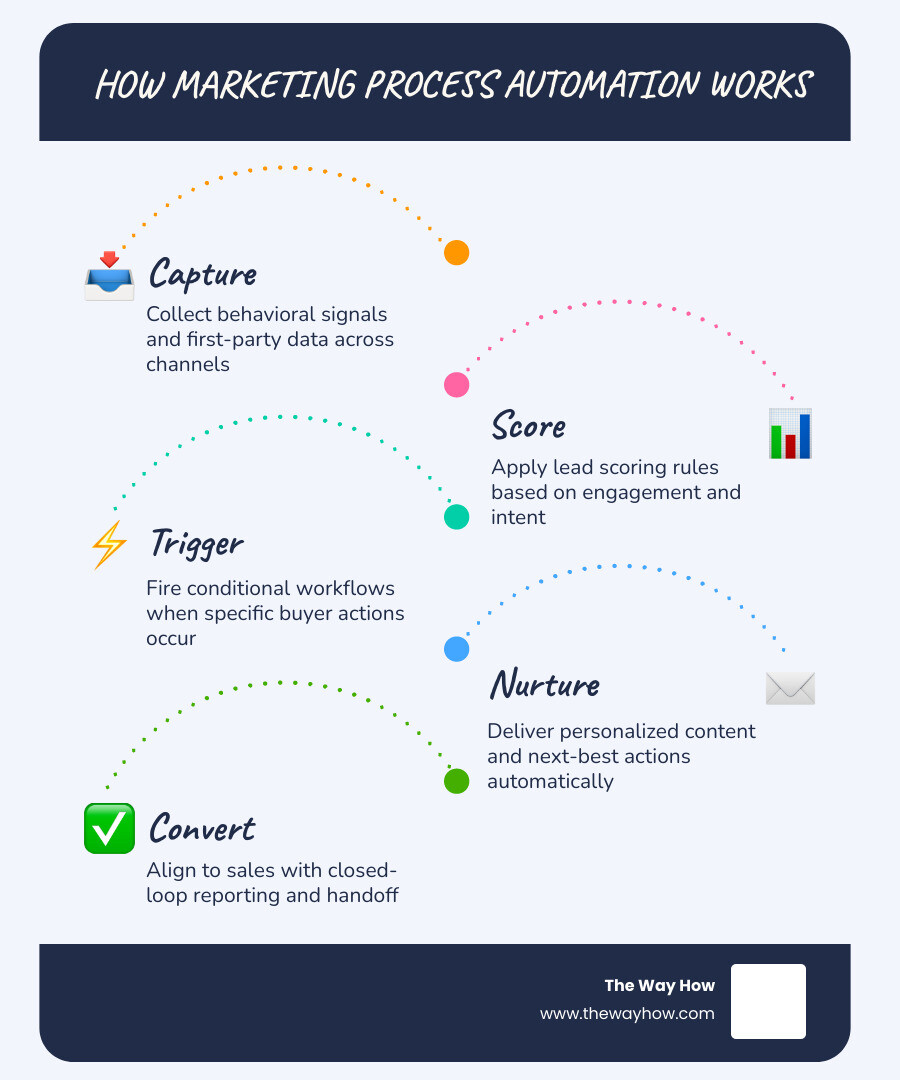
Marketing process automation definitions:
Demystifying Marketing Process Automation: Beyond the Email Blast
When most people hear the word “automation,” they think of a standard email drip campaign. But true marketing process automation is far more comprehensive. It is the connective tissue between your marketing campaigns, your sales pipeline, and your internal operations.
By mapping out the entire customer journey, we can use behavioral triggers to deliver the right message at the exact moment a prospect is ready to receive it. This approach moves beyond simple outward blasts to create a responsive, two-way dialogue with your market. To see how this looks in practice across various industries, explore our B2B Marketing Automation Examples Guide.
Traditional Automation vs. Marketing Process Automation
Traditional marketing automation focuses almost exclusively on customer-facing campaigns. It solves a single problem: how do we send thousands of emails without clicking “send” manually?
In contrast, marketing process automation coordinates both customer-facing campaigns and internal workflows. It uses process mining and data integration to streamline how leads move between teams, how content is approved, and how data is shared across your tech stack.
| Feature | Traditional Marketing Automation | Holistic Marketing Process Automation |
|---|---|---|
| Primary Focus | Outbound message delivery | End-to-end buyer journey and internal process execution |
| Core Channels | Email and basic landing pages | Omnichannel (Email, SMS, Web, Paid Ads, CRM, Internal Alerts) |
| Internal Workflows | Static list segmentation | Dynamic task routing, content approvals, and cross-team handoffs |
| Data Usage | Basic contact properties (Name, Industry) | Real-time behavioral data, intent signals, and historical CRM interactions |
| Optimization | Basic email metrics (Opens, Clicks) | Full-funnel revenue attribution and pipeline velocity tracking |
The Psychology of the Automated Touchpoint
Every time a prospect interacts with your brand, they are evaluating whether you are safe, credible, and capable of solving their problem. If your automated systems send them generic, poorly timed messages, you trigger buyer anxiety. They realize they are just a record in your database, and the trust you have built begins to erode.
Empathy-driven marketing means designing automations that respect the buyer’s cognitive load. We must understand where uncertainty exists in their decision-making process and use automated touchpoints to remove that friction. For example, instead of sending a high-pressure sales email immediately after a resource download, an empathy-driven workflow might offer a follow-up tool that helps them build an internal business case.
The Anatomy of a High-Trust Workflow
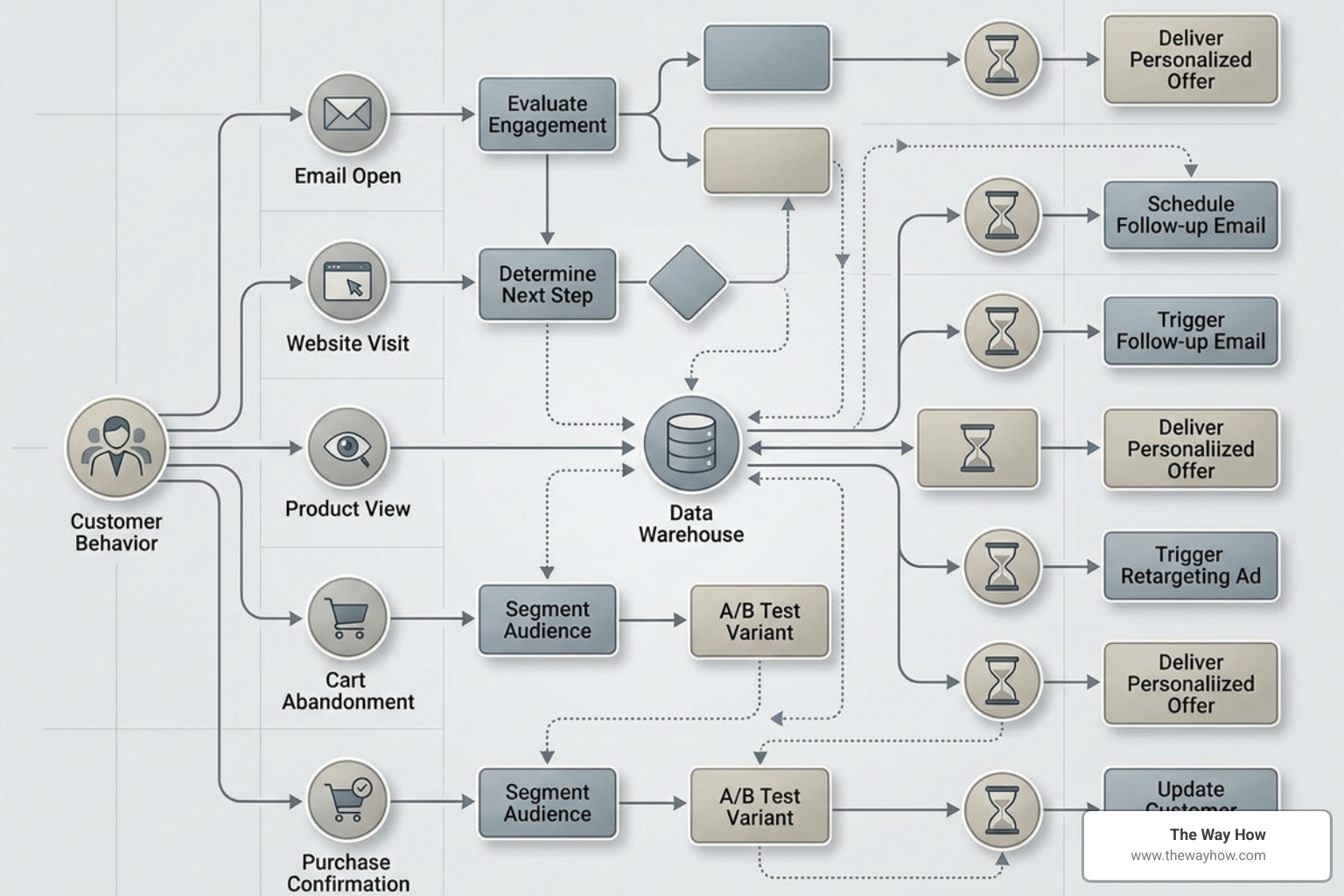
To build automated systems that feel human and build trust, we must design workflows that align with actual buyer behavior. This requires a deep integration between your marketing platforms, your CRM, and your data storage. When these systems are aligned, your workflows act as a seamless extension of your sales team. To understand how to structure this on a foundational level, see our guide on CRM Workflow Automation.
How Marketing Process Automation Works Under the Hood
Every automated workflow relies on three core elements: triggers, conditional logic, and actions.
- Triggers are the events that initiate a workflow. This could be a form submission, a specific page view, or a change in lead score.
- Conditional Logic acts as the decision-making brain of the workflow. It evaluates the prospect’s data (e.g., “Is this company’s revenue over $10M?” or “Have they viewed our pricing page?”) to route them down the most relevant path.
- Actions are the outcomes executed by the system, such as sending an email, updating a contact record, or assigning a task to a sales representative.
Advanced platforms use a listener architecture to monitor buyer behavior continuously across multiple channels, allowing for real-time personalization. This level of coordination ensures that your outbound campaigns work in harmony with your inbound channels. To explore how to manage these complex, multi-channel paths, read about Omnichannel Orchestration | Journey Optimizer B2B Edition.
The CRM and Sales Alignment Engine
One of the most common points of failure in B2B organizations is the handoff between marketing and sales. If marketing automates lead generation without aligning with the sales team’s pipeline, sales representatives end up chasing cold leads, which wastes time and increases overhead.
By connecting your automation platform directly with systems like Sales Cloud, we can establish dynamic lead scoring models. These models score prospects based on demographic fit and behavioral intent. When a lead crosses a specific threshold, the system automatically routes them to the right sales representative with a complete history of their digital interactions.
This alignment directly impacts the bottom line: organizations using marketing process automation see an average 14.5% increase in sales productivity and a 12.2% reduction in marketing overhead. To learn how to optimize these handoffs and streamline your pipeline, read our guide on HubSpot Workflow Optimization.
Data Hygiene: Cleaning the Engine Before Ignition
An automated workflow is only as good as the data that powers it. If your database is filled with duplicate records, incorrect job titles, or outdated email addresses, your automation will execute flawed actions at scale.
Before turning on any automated campaign, you must establish a process for data quality management. This includes:
- Standardizing form fields to ensure consistent data entry.
- Implementing “contact washing” programs to clean and format names, phone numbers, and company details.
- Enforcing double opt-ins to maintain compliance and protect your email deliverability.
- Regularly segmenting your database to archive inactive records and focus your resources on engaged prospects.
Designing Your Implementation Blueprint

Implementing a comprehensive automation system can feel overwhelming. The key is to avoid trying to automate everything at once. We recommend taking a structured, phased approach that prioritizes quick wins while building a foundation for long-term scalability. If you need strategic guidance to map out this transition, you may want to consult with a B2B Marketing Automation Consultant.
Where to Start: High-ROI Processes to Automate First
To generate rapid momentum and prove value, focus your initial automation efforts on highly repetitive, high-impact tasks. We recommend starting with these three essential workflows:
- The Welcome and Onboarding Sequence: First impressions matter. Automatically deliver a high-value welcome series to new subscribers or customers to establish your brand’s expertise and set expectations.
- Behavior-Based Lead Nurturing: Instead of sending generic newsletters, build targeted sequences that trigger when a prospect shows interest in a specific topic. You can learn more about setting up these systems in our resource on Automated Lead Nurturing.
- Abandoned Cart or High-Intent Recovery: For e-commerce and SaaS brands, automatically reaching out to users who abandon their cart or leave a high-intent page without converting is one of the fastest ways to recover lost revenue.
Scaling Trust: Benefits Across Business Sizes
The way you approach automation will depend heavily on the size and maturity of your organization.
- Small Businesses: For smaller teams, automation acts as a force multiplier. It allows a lean marketing team to manage hundreds of active leads, organize contacts, and maintain a consistent brand presence without hiring additional headcount.
- Mid-Market & Enterprise: For larger organizations, automation manages complex buyer journeys, coordinates global campaigns, and ensures strict brand compliance across multiple departments. Enterprise platforms like Oracle’s solution help scale these processes securely. To see how enterprise platforms handle this level of complexity, explore Eloqua Marketing Automation | Oracle United Kingdom.
Enhancing Marketing Process Automation with Agentic AI
The landscape of automation is shifting from static, rule-based systems to dynamic, autonomous engines. Historically, marketers had to manually map out every single branch of a customer journey. Today, generative AI and autonomous agents can analyze customer behavior in real time, draft personalized content, and optimize send times automatically.
According to industry research, generative AI is projected to increase marketing productivity by up to 15% of total marketing expenditure, representing roughly USD 463 billion in annual value. Furthermore, more than three out of four CMOs state that generative AI will fundamentally change how marketing operates.
Rather than replacing human creativity, these AI capabilities allow us to focus on high-level strategy and messaging while autonomous agents handle execution and real-time campaign optimization. To learn how modern platforms are incorporating these capabilities, look into the Autonomous Marketing Platform | ActiveCampaign.
Avoiding the Automation Trap: Pitfalls and Performance
When automation is implemented poorly, it backfires. It can lead to spammy, irrelevant communications that alienate your audience and damage your sender reputation. To prevent this, you must maintain a strong “human-in-the-loop” philosophy. For a deep dive into structuring high-performing campaigns that build relationships, read our HubSpot Drip Campaigns Complete Guide.
The Five Silent Killers of Automated Workflows
Through our work with growing brands, we have identified five common mistakes that can quietly derail your automation initiatives:
- Over-Automation: Trying to automate complex, highly personal relationships. Some interactions—like closing a enterprise deal or resolving a sensitive customer issue—require human empathy.
- Poor Integration: Operating with siloed tools that do not pass data back and forth smoothly, leading to fragmented customer experiences.
- Rigid Processes: Building workflows that do not allow prospects to easily opt-out, change their communication preferences, or jump to a different stage of the funnel.
- Lack of Human Oversight: Setting campaigns live and never reviewing them, resulting in outdated product references, broken links, or insensitive timing.
- No Baseline Metrics: Failing to document your baseline performance before implementing automation, making it impossible to measure your actual return on investment.
Measuring What Matters: ROI and Behavioral Metrics
To prove that your marketing process automation is working, you must look beyond surface-level metrics like email opens and clicks. Instead, focus on full-funnel performance and operational efficiency:
- Pipeline Velocity: How quickly do leads move from initial contact to closed-won revenue?
- Sales Productivity: Has the time sales representatives spend on manual data entry or chasing unqualified leads decreased?
- Marketing Overhead: Have you successfully reduced the cost of executing campaigns and managing your database?
- Closed-Loop Revenue Attribution: Can you trace closed deals back to the specific automated workflows and content touchpoints that influenced the buyer’s journey?
Selecting Your Stack: What to Look For
Choosing the right software is a critical decision that will impact your team’s efficiency for years to come. The market is filled with options, ranging from simple email tools to complex enterprise suites. To compare the leading platforms on the market today, read our comprehensive Marketing Automation Tools Guide 2026.
Core Features of Modern Automation Platforms
When evaluating marketing process automation software, prioritize platforms that offer the following core capabilities:
- An Intuitive Visual Builder: Your team should be able to design, edit, and visualize complex customer journeys using a drag-and-drop interface without needing to write code.
- Robust API Integrations: The software must connect seamlessly with your CRM, website, customer support tools, and data warehouses to ensure a single source of truth.
- AI and Machine Learning Capabilities: Look for features like predictive lead scoring, send-time optimization, and automated A/B testing to help your team scale their efforts.
For many growing and mid-market companies, HubSpot offers an exceptional balance of power, ease of use, and deep CRM integration. To learn more about its capabilities, read our detailed overview of HubSpot Marketing Automation.
Frequently Asked Questions About Marketing Process Automation
Can small businesses benefit from marketing process automation?
Yes. In fact, small businesses often experience the most dramatic relative impact from automation. Because small teams operate with limited resources, automating repetitive tasks like lead collection, introductory welcome emails, and task assignments allows them to stay organized, respond to prospects faster, and compete effectively with larger organizations.
How do I prevent my automated campaigns from feeling robotic or spammy?
The key to keeping automations feeling natural is to write conversational, human-to-human copy and use behavioral triggers instead of fixed schedules. Avoid sending generic, mass blasts. Instead, design your workflows to trigger messages based on specific actions a user takes, and ensure you use frequency capping so prospects are never overwhelmed with too many messages at once.
What is the difference between marketing automation and CRM?
While they are closely integrated, they serve different purposes. A CRM (Customer Relationship Management) system is primarily used by sales and customer service teams to store contact records, track active deals, and manage direct customer relationships. Marketing automation software is used to orchestrate marketing campaigns, nurture leads, and manage customer journeys across digital channels. When integrated, they share data to create a seamless transition from marketing lead to active sales opportunity.
Restoring Certainty to Your Revenue Engine
At The Way How, we believe that technology should serve human relationships, not complicate them. When marketing process automation is built on a foundation of behavioral psychology and operational clarity, it stops feeling like a collection of disconnected tools and becomes a dependable, high-trust revenue engine.
We help leadership teams remove uncertainty from their sales and marketing systems. Whether you are looking for Fractional CMO leadership to design your growth strategy, expert HubSpot architecture to clean up your workflows, or specialized support for your digital storefront via HubSpot Ecommerce Automation, we are here to help you build a system that delivers predictable results.
Ready to stop chasing tactical trends and build a marketing system that actually converts? Build your high-trust marketing engine with HubSpot and start turning automated touchpoints into lasting customer relationships.