
Beyond the Growth Ceiling: Why Your Revenue Engine is Stalling

A strong revenue growth strategy is the difference between a business that scales predictably and one that works harder every quarter with less to show for it.
Here’s what an effective revenue growth strategy includes:
- Diagnose before you act — identify where buyers lose confidence in your solution
- Retention over acquisition — retaining customers costs roughly 7x less than winning new ones
- Pricing as a lever — value-based pricing can outperform acquisition improvements by 2–4x
- ICP discipline first — define and saturate your ideal customer profile before expanding channels
- Data-driven forecasting — use pipeline velocity and historical data to predict growth, not gut feel
- AI for the right jobs — predictive forecasting and churn prevention, not just email drafting
- Cross-functional alignment — revenue growth is a company-wide effort, not a sales department problem
Most companies treat revenue problems as volume problems. More leads. More outreach. More spend. But the data tells a different story.
Only 1 in 8 companies breaks 10% annual growth. The median sits around 2.8% per year. And only 23% of businesses exceeded their targets last year — what researchers now call Revenue Outperformers.
What separates them isn’t effort. It’s clarity.
Revenue Outperformers are 28% more likely to increase operating expenses to capture market share — while most of their competitors are cutting costs and waiting.
They’ve diagnosed what’s actually broken. And they’ve built systems around how buyers actually make decisions — not how org charts are drawn.
That’s the gap most growth strategies never address.
I’m Jeremy Wayne Howell, founder of The Way How — a psychology-first marketing and revenue strategy firm where I’ve spent over 20 years helping founders and revenue leaders build revenue growth strategies that work by addressing buyer psychology, certainty gaps, and decision-making behavior before touching tactics or tech. In this guide, I’ll show you exactly where growth stalls and how to restore momentum.
Revenue growth strategy terms made easy:
Defining a Psychology-First Revenue Growth Strategy
When we talk about a revenue growth strategy, we aren’t just talking about “making more money.” We are talking about a structured roadmap to maximize income while managing the costs of that growth. In some circles, this is called earnings growth, but the distinction matters. Revenue growth tracks the percentage increase in top-line income compared to a previous period, while profit growth considers what is left after expenses.
To build a sustainable engine, we must look at the Compound Annual Growth Rate (CAGR). If your organization isn’t hitting a minimum CAGR of 10%, research suggests you may be falling behind the market curve. However, growth isn’t a vacuum. It is influenced by internal factors like your pricing architecture and sales efficiency, and external factors like market demand and shifts in buyer behavior.
Many leaders focus exclusively on business growth through new acquisition. But true scale comes from understanding the “flywheel”—where existing customers provide the momentum for new ones. When we ignore the psychological state of the buyer, we create friction that no amount of marketing spend can overcome.
Diagnosing the Certainty Gap in Your Revenue Growth Strategy
Why do prospects stall? It’s rarely about the price or the features. It’s about a “certainty gap.” This is the space between a prospect’s current state of doubt and the level of trust required to make a high-stakes B2B decision.
A sophisticated revenue growth strategy prioritizes buyer intent over lead volume. If your sales team is chasing “leads” that haven’t demonstrated intent, you are essentially asking them to manufacture trust out of thin air. By using account intelligence and technographics, we can identify which buyers are actually ready to solve a problem. Removing friction means making it safe for the buyer to say “yes” by providing the right information at the exact moment their decision-making psychology demands it.
The Role of Empathy in Sustainable Revenue Growth Strategy
Empathy is often dismissed as a “soft” skill, but in revenue strategy, it is a hard asset. Sustainable growth depends on customer affinity—the emotional resonance a brand has with its audience. When a buyer feels understood, brand loyalty increases, and the cost of retention drops.
We see this in the data: 86% of buyers are willing to pay more for a better customer experience. When we design systems rooted in human behavior, we aren’t just selling a product; we are solving a psychological tension. This creates long-term value (LTV) that transactional, volume-based strategies simply cannot match.
The Math of Momentum: Calculating and Forecasting Growth
To manage growth, we have to measure it accurately. The basic revenue growth formula is straightforward: (Current Period Revenue - Previous Period Revenue) / Previous Period Revenue x 100. However, high-performing teams go deeper. They look at segment-specific growth—analyzing revenue by product line, geography, or customer cohort.
When measuring global operations, we must also account for currency adjustments and one-time events that might skew the data. This level of revenue management analytics allows us to see the “truth” behind the numbers, rather than just the surface-level totals.
Predicting Future Revenue Growth Strategy Success
Forecasting is where most businesses struggle. They look at the past and hope the future looks similar. We prefer a more rigorous approach. By using historical data analysis and econometric modeling, we can account for external factors like GDP growth or consumer spending shifts.
For organizations facing high levels of uncertainty, Monte Carlo simulations can help assess the probability of different revenue outcomes. We also track forward-looking indicators like pipeline velocity—the speed at which a lead moves from first touch to closed-won. If your velocity is slowing, your future revenue is already at risk, even if this month’s numbers look good.
Benchmarking Against Revenue Outperformers
What does “good” look like in 2026? For B2B SaaS, the Rule of 40 remains the gold standard: your growth rate plus your EBITDA margin should equal 40% or more. While the median SaaS growth rate has decelerated to roughly 28%, the 75th percentile—the “Outperformers”—are still seeing rates above 65%.
These companies differ because they prioritize market share capture during volatility. While others “wait and see,” Outperformers increase their operating expenses by 28% more than their peers to saturate their market while the competition is quiet.
Five Levers to Remove Friction and Accelerate Revenue
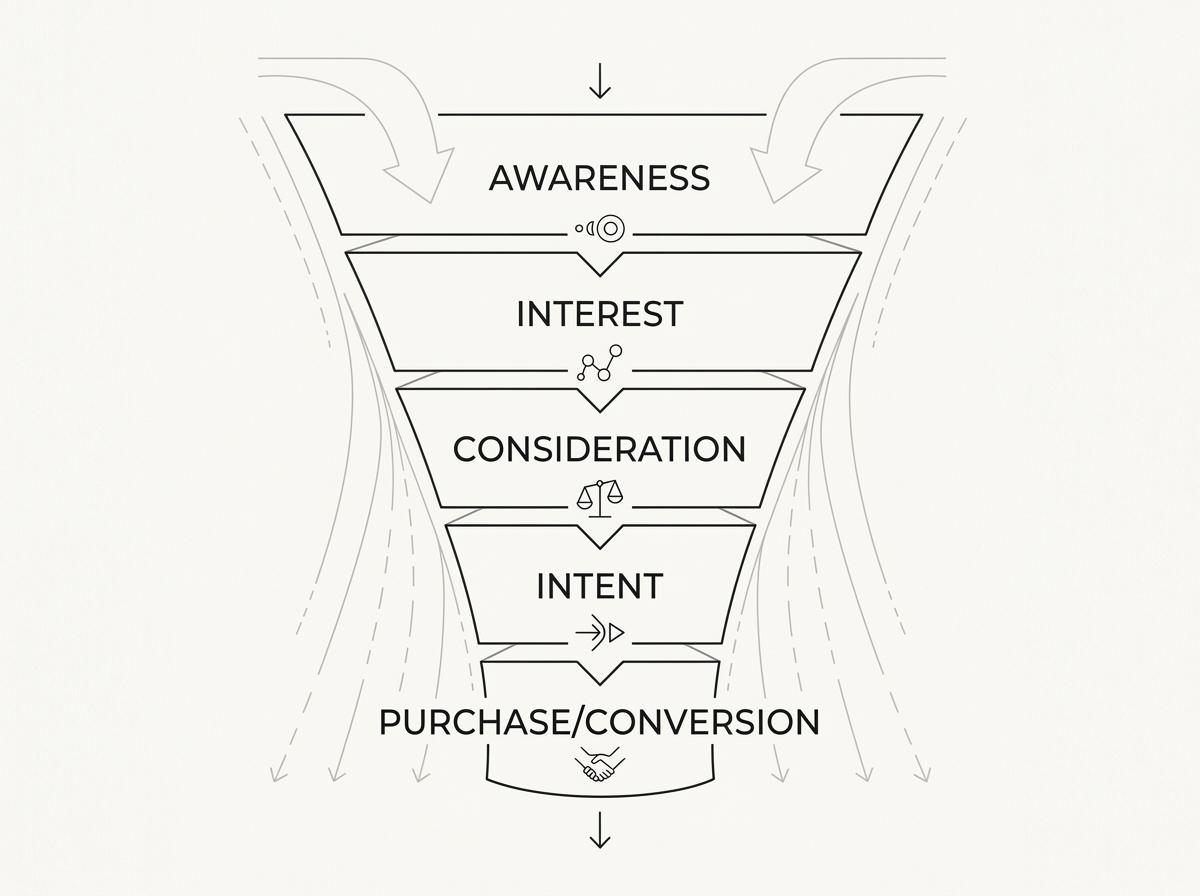
If growth is stalled, we look at five specific levers. We don’t try to pull all of them at once; we pick one or two that will have the highest impact on your specific “certainty gaps.”
- Customer Retention: It is 7x more expensive to acquire a new customer than to keep an existing one.
- Pricing Optimization: A 5% price increase can have a larger impact on the bottom line than a 15% increase in new sales volume.
- Market Expansion: Entering new segments or geographies with a proven offer.
- Service Diversification: Packaging services to solve broader customer problems (one filming company saw 900% growth simply by simplifying their pricing and diversifying their offer).
- Sales Efficiency: Reducing the time sales reps spend on non-selling tasks (currently a staggering 70%).
Effective sales funnel optimization is about identifying which of these levers is currently stuck.
Scaling Your Revenue Growth Strategy Through Retention
Retention is the “silent” growth engine. Companies with dedicated Customer Success Managers (CSMs) see Net Revenue Retention (NRR) rates of 98% compared to 90% for those without. When we focus on CLV, we open the door for upselling and cross-selling. If you can increase your NRR above 100%, you are effectively growing your business before you even sign a single new contract.
Pricing as a Psychological Growth Lever
Pricing is the most underrated lever in a revenue growth strategy. Most companies set prices based on their costs or their competitors. We set prices based on value.
Psychologically, tiered packages and subscription models reduce the “pain of paying” by spreading costs over time or allowing users to start small. Dynamic pricing and value-based models ensure you aren’t leaving money on the table with high-value segments while still remaining accessible to the broader market. If you haven’t revisited your pricing in 18 months, you are almost certainly under-pricing your value.
Building the Revenue Outperformer Framework
| Feature | Average Performers | Revenue Outperformers |
|---|---|---|
| Growth Focus | New Logo Acquisition | Expansion & Retention (40%+ of ARR) |
| Data Quality | 35-40% Email Bounce Rates | <5% Bounce Rates (Verified Data) |
| AI Adoption | Email/Content Drafting | Predictive Forecasting & Churn Prevention |
| Sales Time | 70% Non-Selling Tasks | Automated Workflows & High Efficiency |
| GTM Alignment | Siloed Sales & Marketing | Unified Revenue Operations (RevOps) |
To reach “Outperformer” status, we must align the Go-To-Market (GTM) team. Misalignment is a growth killer; it leads to mixed messaging and “leaky” funnels. A unified go-to-market strategy ensures that every department is working toward the same revenue targets.
Intelligence-Led Engagement and AI Maturity
AI is no longer just for writing emails. AI-established firms—those using it daily in over 50% of their workflows—are three times more likely to overperform on revenue targets. They use AI for win-rate insights and churn prevention. By moving from “content generation” to “predictive intelligence,” these firms can see which deals are likely to close and which customers are showing signs of disengagement before it’s too late.
Flattening the Track: Talent and Operational Efficiency
Revenue Outperformers are restructuring their teams. They are removing layers of administrative middle management and hiring “hunters”—Enterprise AEs and Key Account Reps who are AI-native. They focus on reducing sales ramp time through peer training and streamlined onboarding, ensuring that new hires contribute to the revenue growth strategy in weeks, not months.
Avoiding the Silent Killers of Scalable Growth
The biggest mistake we see is a “top-of-funnel obsession.” Leaders think that if they just pour more leads into the bucket, more revenue will come out the bottom. But if the bucket is full of holes (churn, poor data, bad ICP fit), you are just wasting capital.
Revenue leakage often happens because of “data-less decisions.” If you don’t know your CAC or your CLV, you can’t possibly know if your growth is healthy.
The Danger of Broad Market Expansion
Another common killer is going too broad too fast. Four in five companies lack a clearly defined Ideal Customer Profile (ICP). When you expand into new markets without ICP discipline, you dilute your resources and create messaging misalignment. This re-introduces the certainty gap, as your marketing no longer speaks specifically to the buyer’s unique problems.
Solving the Pipeline Data Quality Crisis
According to insights from r/sales, pipeline data quality is where most teams silently bleed. If 35% of your outbound emails are bouncing, your AEs are wasting a third of their time. By switching to verified contact data and maintaining CRM hygiene, companies have seen AE-sourced pipelines increase by 180%. Clean data is the foundation of any scalable revenue cycle management analytics system.
Frequently Asked Questions about Revenue Growth
What is the difference between revenue growth and profit growth?
Revenue growth measures the increase in total income generated over a specific period, while profit growth accounts for the remaining income after all operating expenses, taxes, and costs are deducted. A company can have high revenue growth but negative profit growth if its expenses are rising faster than its income.
Why is revenue growth important for long-term business health?
Consistent revenue growth provides the necessary capital for reinvestment in technology, talent acquisition, and market expansion, which are essential for maintaining a competitive advantage and increasing shareholder value. It also serves as a key indicator of market demand and business viability for investors.
How does AI contribute to achieving revenue targets?
AI-established firms are three times more likely to overperform on revenue targets by using predictive analytics for forecasting, identifying high-intent leads, and automating non-selling tasks to improve sales efficiency. AI helps teams focus their energy on the accounts most likely to convert, reducing wasted effort.
Restoring Certainty to Your Revenue System
At The Way How, we believe that growth doesn’t have to be a mystery. When you move away from chasing the latest “hack” and start addressing the psychological foundations of how people buy, the path to scale becomes clear.
Whether it’s through Fractional CMO leadership to diagnose stalled growth, or building a robust HubSpot architecture to ensure your data is working for you, our goal is to turn your marketing into a dependable growth engine. We don’t just give you a playbook; we help you design a system that creates trust and momentum.
If you’re ready to stop guessing and start growing, explore our revenue strategy services and let’s build a system that works for your buyers—and your bottom line.