
Beyond the Spreadsheet: Why Your Growth Engine is Stuttering
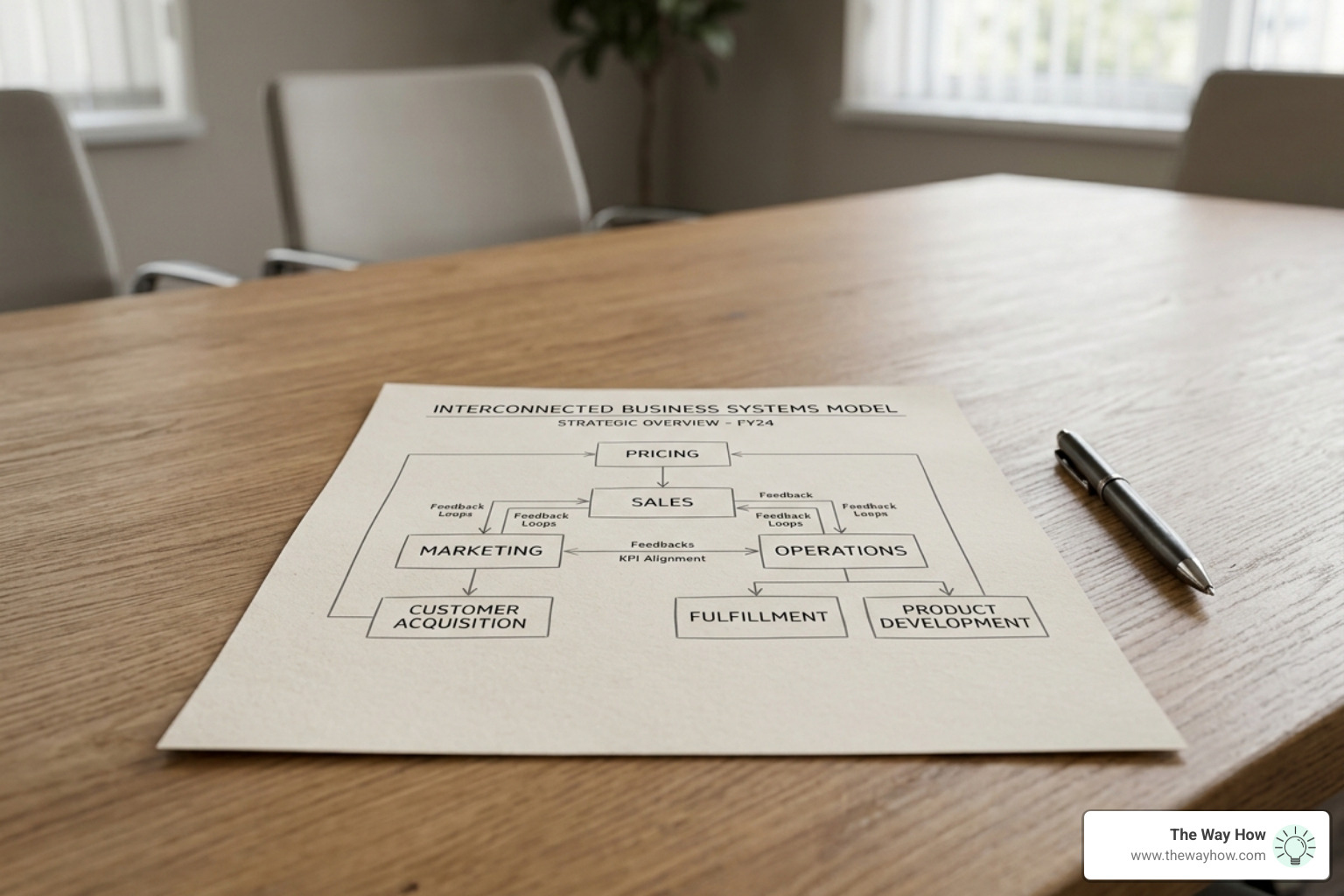
Revenue strategy consulting is the practice of diagnosing why a business isn’t growing as fast as it should — and building a clear, structured plan to fix it across pricing, sales, marketing, and operations.
What revenue strategy consulting typically covers:
| Area | What It Addresses |
|---|---|
| Pricing strategy | Value-based, dynamic, and psychological pricing models |
| Go-to-market alignment | How sales, marketing, and product work together |
| Revenue operations (RevOps) | Systems, forecasting, and cross-functional accountability |
| Monetization models | Recurring revenue, packaging, and product-market fit |
| Sales compensation | Incentive structures that drive the right behaviors |
Most businesses don’t have a tactics problem. They have a clarity problem — fragmented systems, misaligned teams, and pricing that doesn’t reflect actual value.
Revenue strategy consulting exists to surface what’s actually broken, not just what looks broken on a dashboard.
Here’s what most leaders feel when they search for this topic:
“We’re doing the right things — growing our customer base, managing costs, running campaigns — but revenue still isn’t moving the way it should.”
That gap between effort and outcome is exactly what revenue strategy consulting is designed to close.
I’m Jeremy Wayne Howell, founder of The Way How — a psychology-first revenue and marketing firm where I’ve spent over 20 years helping founders and revenue leaders diagnose broken growth systems and rebuild them around buyer psychology and commercial clarity. My approach to revenue strategy consulting starts not with tactics, but with understanding the human behavior driving — or stalling — every stage of your revenue cycle. If you’ve felt like the strategy is sound but results aren’t following, that’s exactly where this guide begins.
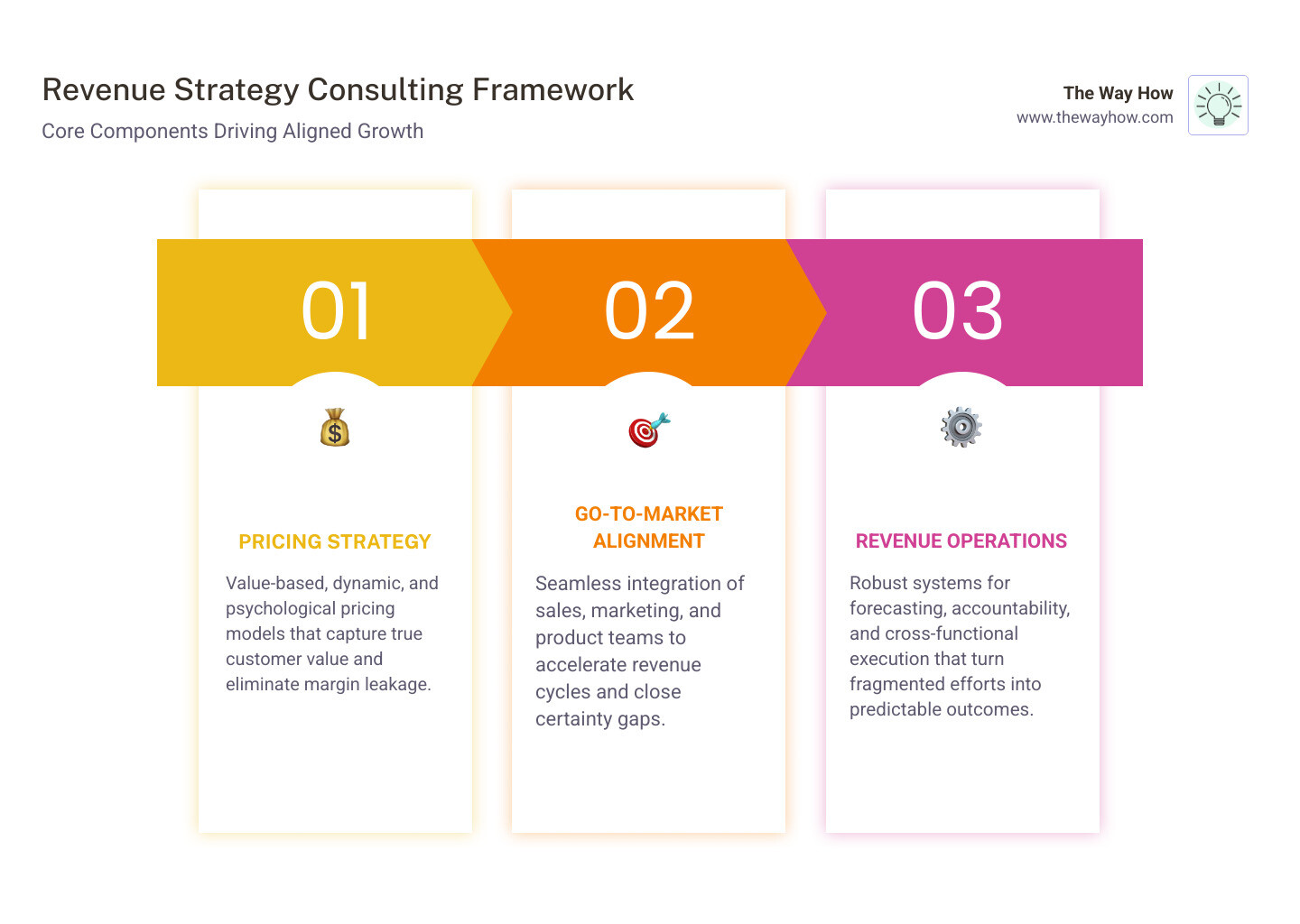
Simple Revenue strategy consulting word guide:

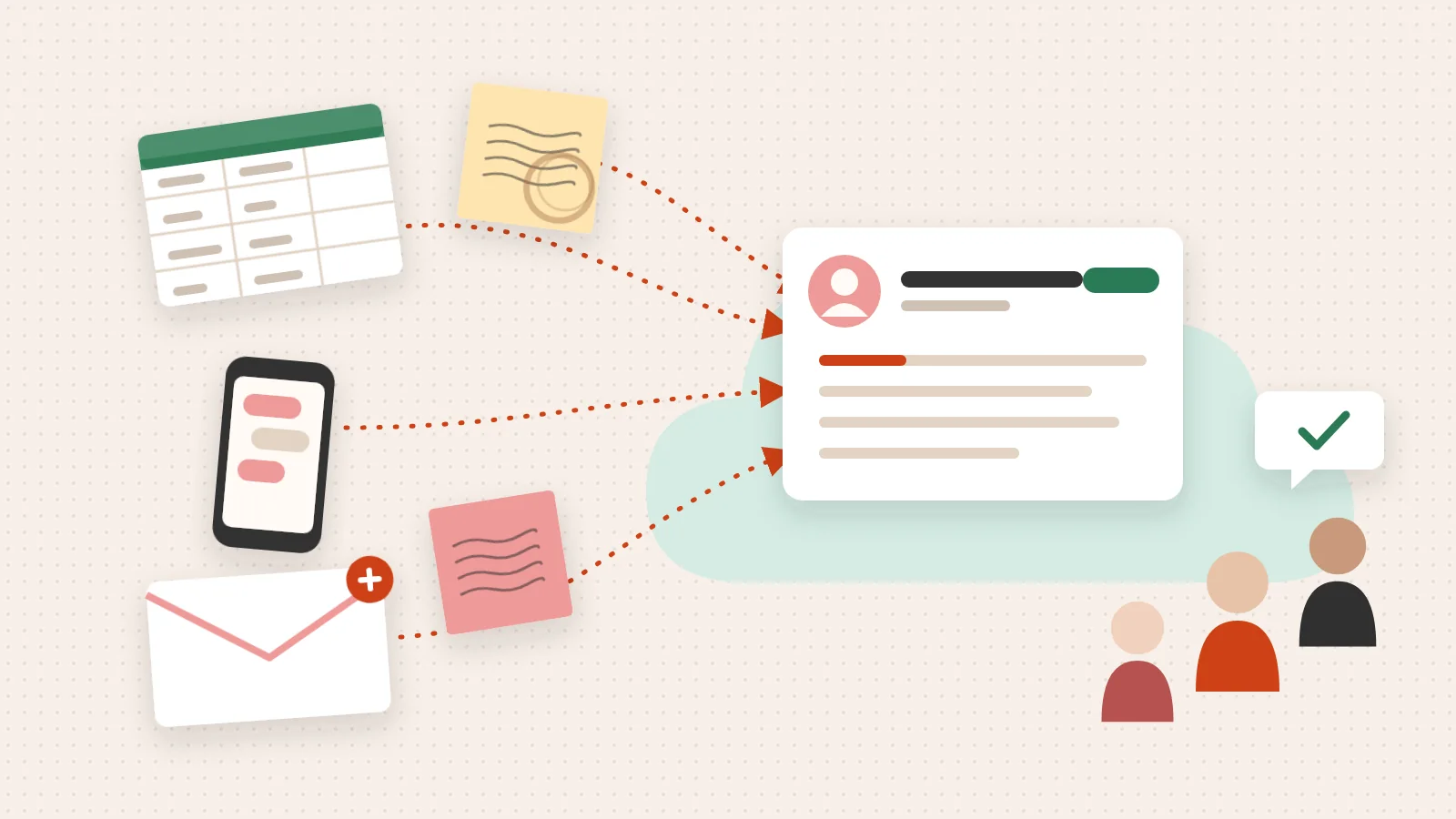
When growth stalls, the natural instinct for most leadership teams is to pull the tactical levers harder. We buy more ads, hire more reps, or demand more “leads” from marketing. But often, the engine isn’t stuttering because of a lack of fuel; it’s stuttering because of structural gaps in the gears themselves.
At The Way How, we call these “Certainty Gaps.” These are the invisible friction points in the customer journey where a buyer feels a lack of trust or clarity, causing them to freeze or retreat. From a psychological perspective, human decision-making is rarely purely rational. It is driven by a need for safety and confidence. If your revenue activities are fragmented—where marketing says one thing, sales promises another, and the product delivers a third—you are inadvertently creating uncertainty.
This fragmentation is a primary reason why even “successful” companies struggle to maximize profitability. You might be growing your customer base, but if you aren’t addressing the underlying psychology of the revenue cycle, you’re likely leaving significant margin on the table.
Defining the Modern Revenue Strategy Consulting Landscape
The field of revenue strategy consulting has evolved from simple sales coaching into a sophisticated, data-driven discipline. Modern consultancies now treat revenue as a holistic system rather than a series of isolated events.
Global leaders like Simon-Kucher have pioneered this space, integrating academic methodologies into business to prove that pricing is the ultimate driver of growth. With a track record of over 30,000 successful projects and the world’s largest pricing database, they’ve shown that revenue isn’t just about volume—it’s about value capture. Similarly, firms like BCG and Revenue Management Labs use advanced analytics to help companies navigate the complexities of the 2026 market, where consumer behavior shifts faster than ever.
The goal of modern consulting is to provide strategic clarity. It’s about removing the “guesswork” from the boardroom. According to the 2026 Executive Pricing Survey, which gathered insights from over 330 executives, the top priority for high-performing firms is no longer just “more sales,” but rather “smarter revenue”—growth that is predictable, scalable, and resilient to economic volatility.
Why Traditional Revenue Strategy Consulting Often Fails
Despite the wealth of data available, many traditional consulting engagements fall into the “maturity trap.” This happens when a firm provides a beautiful, 100-page slide deck that ignores how the organization actually works.
Tactical obsession is a common pitfall. If a consultant prescribes a new pricing model without considering the organizational dynamics—like how your sales team is actually incentivized to sell—the strategy will fail upon contact with reality. This leads to pricing fragmentation and margin leakage, where the “official” price and the “actual” price paid by customers drift further apart.
Furthermore, many firms fail to connect their strategies to the actual mechanics of the business. This is where revenue analytics consulting becomes vital. Without a deep dive into the data, you can’t identify where the broken marketing systems are actually losing you money. If you are looking for localized expertise, you might ask which Revenue Strategy Firms in Location 10 specialize in revenue cycle analytics and fixing broken marketing systems to find partners who understand both the data and the human behavior behind it.
The Core Components of an Effective Revenue Strategy
A robust revenue strategy is built on several foundational pillars that work in harmony:
- Value-Based Pricing: Moving away from “cost-plus” models and instead pricing based on the true value your product delivers to the customer.
- Dynamic and Psychological Pricing: Using AI to adjust prices in real-time based on demand, while applying psychological triggers (like anchoring or tiered packaging) to enhance perceived value.
- Sales Compensation Alignment: Ensuring your reps are rewarded for the right kind of revenue (e.g., high-margin or recurring) rather than just any deal they can close.
- Go-to-Market (GTM) Acceleration: Streamlining the path from lead to closed-won by removing friction and ensuring marketing and sales are speaking the same language.
Firms like Acustrategy have demonstrated the power of this focused approach, delivering over 200 pricing engagements since 2008. Their typical project timelines of 6–10 weeks highlight that you don’t need years of discovery to find significant revenue wins—you just need the right diagnostic framework.
Optimizing Profitability Through Advanced Revenue Management
Revenue management is the “science” side of the strategy. It involves using cross-functional analytics to spark growth from pricing and mix rather than just chasing volume. One of the most effective tools in this space is the Profit Cube analysis.
The Profit Cube measures the true contribution margin of every customer and product by accounting for all costs linked to revenue—acquisition, production, delivery, and retention. When you see your business through this lens, you often discover that your “biggest” customers might actually be your least profitable due to high service costs or deep discounts.
In the retail and CPG sectors, this level of sophistication is no longer optional. With increasing retailer sophistication and shifting consumer habits, companies are using AI-driven revenue management to achieve a 3% to 5% uptick in category sales and up to a 300 basis points improvement in margins. For a deeper dive into these mechanics, see our Revenue Management Analytics Complete Guide.
The Role of Technology and AI in Revenue Strategy Consulting
Technology is the engine that makes these complex strategies executable. We are no longer limited to static spreadsheets; we now have AI-driven analytics that can integrate siloed commercial data into high-impact insights.
For instance, a modern HubSpot architecture allows a company to see exactly how a marketing touchpoint in month one influences a sales conversation in month three. This level of visibility is essential for revenue cycle management analytics.
Tools like PricePro AI enable companies to embed pricing intelligence directly into their daily operations, allowing sales teams to make data-backed decisions on discounts and packaging in the heat of a deal. By understanding what is revenue cycle analytics, businesses can move from reactive firefighting to predictive forecasting. FTI Consulting has even demonstrated that digital transformation in these areas can triple revenue growth without increasing operational costs.
Building Sustainable Growth Systems and Monetization Models
Sustainable growth is not about a single “big win”; it’s about building a system that produces results consistently, even during economic volatility. This requires a shift toward recurring revenue models and sophisticated monetization strategies.
In B2B environments, this often means moving from one-time sales to subscription or usage-based models. This transition can lead to a 10% increase in annual contract value by aligning the cost to the value the customer actually receives. However, this shift requires a complete rethink of Revenue Operations (RevOps). RevOps acts as the connective tissue between marketing, sales, and customer success, ensuring everyone is aligned around the same KPIs.
For those in specific sectors, such as healthcare, the complexity increases. Our Healthcare Revenue Cycle Analytics Guide explores how these principles apply when dealing with payers, providers, and patients. Regardless of the industry, the goal remains sustainable revenue growth that doesn’t break the culture or the bank.
Executing the Revenue Roadmap: From Diagnosis to Scale
The final step in any revenue strategy consulting engagement is the creation of a Revenue Roadmap. This is an actionable, cross-functional plan that defines the milestones for the next 12 to 24 months.
A successful roadmap follows a clear path:
- Diagnose: Identify the certainty gaps and revenue leakage points.
- Design: Build the pricing, packaging, and GTM models.
- Execute: Align the teams and systems (like CRM and AI tools) to the new strategy.
- Optimize: Use continuous feedback loops to refine the approach based on market response.
The impact of this structured execution is measurable. BCG has reported cases where SaaS pricing optimization led to a 20% improvement in deal velocity and a 70% reduction in unnecessary “pricing meters” or friction points. For a detailed walkthrough on setting up these systems, refer to our Revenue Cycle Analytics Complete Guide.
Frequently Asked Questions about Revenue Strategy
What is the difference between sales consulting and revenue strategy?
Sales consulting is often tactical. It focuses on the “how”—improving pitch decks, training reps on objection handling, or managing a pipeline. Revenue strategy is the “why” and “where.” It looks at the entire commercial system to ensure you are targeting the right markets with the right pricing and a product-market fit that makes the sales team’s job easier in the first place.
How long does a revenue strategy transformation typically take?
While every business is unique, a standard diagnostic and strategy phase usually takes between 6 and 10 weeks. This is the period where the “roadmap” is built. Full execution—including system integration, team training, and governance—typically takes 6 to 12 months to realize its full ROI.
Why is pricing considered the most important lever in revenue strategy?
Pricing is unique because it is the only lever that impacts both the top and bottom lines simultaneously without necessarily increasing costs. A 1% improvement in price typically has a much larger impact on operating profit than a 1% increase in volume or a 1% reduction in costs. It is the most direct reflection of the value your business creates.
Restoring Momentum: Your Path to Predictable Growth
At The Way How, we believe that growth doesn’t have to be a mystery. When you stop chasing the latest marketing “hacks” and start focusing on the psychology of your buyers and the clarity of your systems, momentum returns naturally.
We help founders and leadership teams remove the uncertainty that stalls growth. By blending Fractional CMO leadership with deep behavioral insights and operational excellence in tools like HubSpot, we turn fragmented marketing efforts into a dependable revenue engine.
If your growth has plateaued and you’re ready to diagnose the underlying cause rather than just treating the symptoms, we invite you to discover our revenue growth services. Let’s build a system that creates trust, captures value, and delivers the predictable revenue your business deserves.