
The High Cost of Market Entry Guesswork

Why Go To Market Consulting Services Are Your Best Launch Ally
Go-to-market consulting services are specialized advisory engagements that help companies build a structured, research-backed plan for launching a product, entering a new market, or scaling revenue — covering target customer definition, positioning, pricing, channel strategy, and sales execution.
Here’s what they typically include:
| GTM Consulting Component | What It Does |
|---|---|
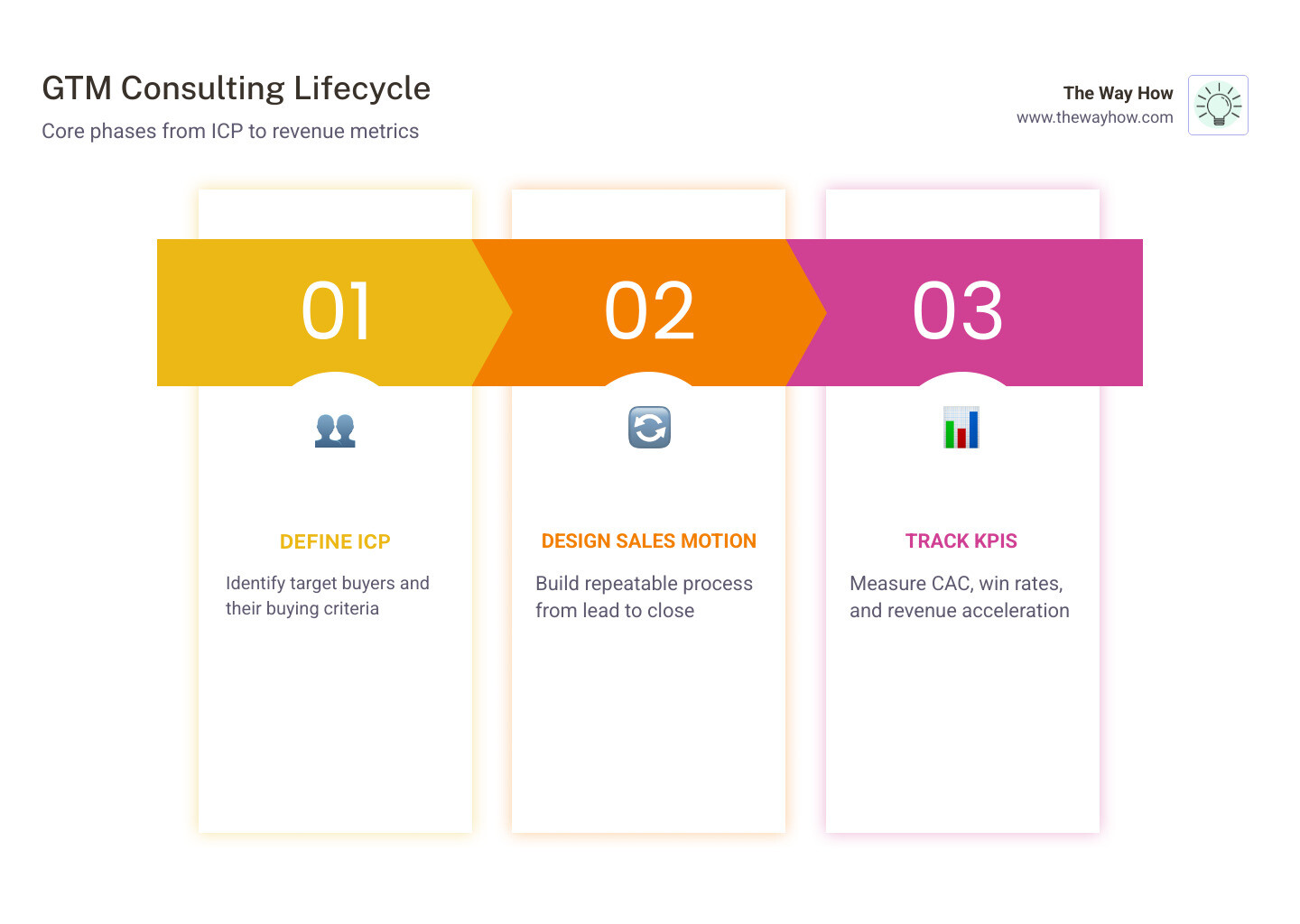
| Ideal Customer Profile (ICP) | Defines exactly who you’re selling to and why they buy |
| Positioning & Messaging | Clarifies how you stand out against alternatives |
| Pricing Strategy | Aligns price with perceived value and buyer psychology |
| Channel Selection | Identifies where and how to reach your buyers |
| Sales Motion Design | Builds a repeatable process from pipeline to close |
| Launch Sequencing | Structures rollout to generate signal fast |
| KPI & Success Metrics | Tracks what’s working — and when to pivot |
Most product launches don’t fail because the product is bad. They fail because the path to the customer was never clearly mapped.
Without a defined go-to-market framework, even well-funded companies burn through budget chasing the wrong segments, sending diluted messages, and scaling tactics before they’ve validated anything. The result is a stalled pipeline, a confused sales team, and a leadership team that knows something is off — but can’t name it.
That gap between “we have a product” and “we have a repeatable revenue motion” is exactly what go-to-market consulting services are built to close.
I’m Jeremy Wayne Howell, founder of The Way How and a revenue growth strategist with over 20 years of hands-on experience in marketing, sales, and go-to-market consulting services — helping companies diagnose what’s actually broken before rebuilding from the ground up. The sections ahead will walk you through how GTM consulting works, what to look for in a partner, and how to know if your current strategy has the foundation it needs.
Important go to market consulting services terms:
Beyond the Deck: What Go-To-Market Consulting Services Actually Solve
Many leadership teams assume that a GTM strategy is just a fancy PowerPoint deck that sits on a server. In reality, an effective define go to market process is about building a repeatable revenue engine. We see many companies treat their launch like a one-time event, but go to market consulting services focus on creating a sustainable motion that survives long after the initial press release.
The primary goal of these services is risk mitigation. Launching a new offering is inherently uncertain. Consultants help remove the “certainty gaps” that exist between what you think the market wants and what buyers are actually willing to pay for. By providing a strategic marketing plan, consultants ensure that every dollar spent on sales and marketing is directed toward a validated opportunity.
Top-tier firms like Bain & Company and McKinsey have demonstrated the tangible impact of this rigor. Research from McKinsey GTM Insights shows that structured GTM engagements can deliver a 10-20% topline improvement and a 10-15% EBITDA uptick. This isn’t magic; it is the result of aligning product, price, and place with precision.
The Danger of Conference Room Assumptions
The biggest threat to a successful launch is the “conference room assumption.” This happens when leadership teams build strategies based on internal opinions rather than external data. We often find that growth is stalled because the company is solving a problem that the customer doesn’t actually prioritize.
A professional consultant breaks this cycle by conducting deep customer research. This involves interviewing real buyers, shadowing sales calls, and analyzing win/loss data. Without this outside-in perspective, companies often fall into the trap of launching into weak demand. In fact, most GTM failures can be traced back to a lack of B2B lead generation complete guide principles—specifically, failing to validate the buying process before trying to scale it.
Common Pitfalls of Unassisted Launches
When companies attempt to launch without specialized go to market consulting services, they typically encounter four major friction points:
- Diluted Messaging: Trying to be everything to everyone, which results in being nothing to anyone.
- Inefficient Resource Allocation: Spending heavily on LinkedIn ads or expensive sales hires before knowing which channel actually converts.
- Premature Scaling: Increasing the “burn” before the unit economics (like CAC and payback period) make sense.
- Feature-Outcome Confusion: Selling what the product is (features) instead of what the product does for the buyer (outcomes).
The Psychology of a Successful Go-To-Market Strategy Framework
At The Way How, we believe that every successful GTM strategy is rooted in human behavior. Technology and tactics change, but the way humans make decisions—driven by trust, safety, and the desire to solve a specific pain—remains constant. A robust go to market strategy must account for the psychological journey a buyer takes from “unaware” to “convinced.”
A comprehensive framework usually covers the 7 elements of go to market strategy, which include market segmentation, value proposition, and revenue execution. But the “glue” that holds these together is empathy. We have to understand the buyer’s world so well that our solution feels like the obvious, inevitable choice.
Defining the Ideal Customer Profile and Pricing
The Ideal Customer Profile (ICP) is not just a list of job titles and company sizes. It is a psychological profile of the person who feels the pain your product solves most acutely. In go to market consulting services, we look for “certainty gaps”—the moments where a buyer feels hesitant or confused—and design the ICP and messaging to bridge those gaps.
Pricing is another area where psychology is paramount. Price is the ultimate expression of value. If your pricing is misaligned with the buyer’s perceived value or the complexity of their decision-making process, the whole strategy will fail. Consultants help optimize pricing models to ensure they support sustained growth rather than just short-term wins.
Channel Selection and the 3-3-3 Rule
One of the most effective go to market strategies involves the “3-3-3 rule.” To maintain focus and prevent resource drain, we recommend starting with:
- Three target segments
- Three core messages
- Three primary channels
This prevents the “spray and pray” approach. By narrowing the focus, you can generate signal faster. If a channel isn’t working within a pre-defined period, you pivot. This disciplined route-to-market ensures you aren’t waiting twelve months to realize a strategy isn’t working.
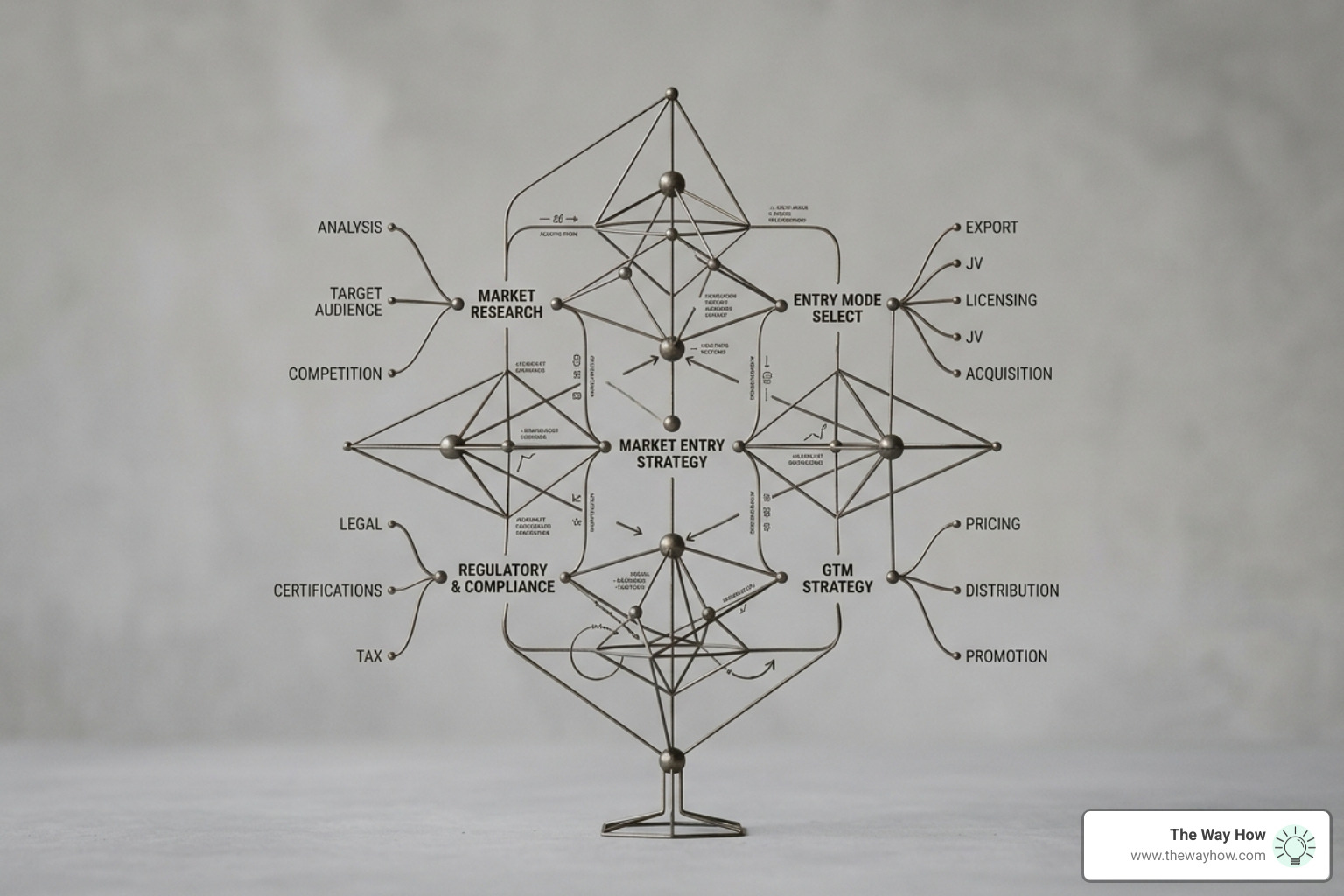
Navigating the Landscape of Go-To-Market Consulting Services
The market for go to market consulting services ranges from global powerhouses to agile boutiques. Choosing the right one depends on your scale, industry, and specific stage of growth.
- The Big Four & Global Firms: Firms like McKinsey, PwC, and Bain & Company offer massive scale and proprietary toolkits. For example, almost 90% of Global Fortune 500 companies have utilized PwC’s consulting tools. These firms are ideal for enterprise-level transformations.
- Specialized Growth Agencies: Firms like Waveup have steered startups to unicorn status and helped raise over $3B in venture funds. They often focus on the “nitty-gritty” of market entry for high-growth companies.
- Freelance Networks: Platforms like Toptal provide access to the top 3% of freelance GTM consultants. This is a flexible option for companies that need specific expertise without the overhead of a large firm. 98% of Toptal clients choose to hire their consultants after a risk-free trial.
- Boutique Strategists: Firms that specialize in marketing strategy consulting often provide more hands-on, operator-led support, focusing on execution rather than just high-level theory.
Choosing the Right Partner for Go-To-Market Consulting Services
When evaluating a partner, look beyond the brand name. You need to ensure there is a cultural fit and a shared philosophy. Consider these criteria:
- Track Record: Have they solved problems similar to yours in your specific industry?
- Analytical Skills: Do they use data-driven methodologies or just “best guesses”?
- Network: Can they introduce you to potential partners or early-adopter customers?
- Post-Launch Support: Do they disappear after delivering the deck, or do they help you execute and iterate?
Different business models require different go to market strategies. A B2B SaaS company needs a different sales motion than a D2C footwear brand. Ensure your consultant understands these nuances.
Real-World Success: From Footwear to SaaS
The impact of professional GTM consulting is best seen in the results. For instance, a footwear manufacturer utilized GTM consulting to grow its market share from 5% to 15% in a single year, reaching $160M in sales. In the software world, companies like McAfee and Consilio have used GTM consulting to improve win rates by over 20% and significantly reduce sales costs.
| GTM Need | Startup Approach | Enterprise Approach |
|---|---|---|
| Focus | Finding Product-Market Fit | Expanding Market Share |
| Sales Motion | Founder-led or small team | Complex, multi-stakeholder |
| Channels | 1-2 high-signal channels | Omnichannel & partner ecosystems |
| Primary Goal | Repeatable revenue | Profitability & Efficiency |
From Launch to Scale: Trends and Metrics for 2026
As we move through 2026, the GTM landscape has shifted. The era of “growth at all costs” is over. Today, the focus is on sustained growth—growth that is profitable, efficient, and long-term.
One major trend is technology consolidation. Companies are no longer looking for “more” tools; they are looking for “better” ones. We focus heavily on HubSpot architecture to ensure that marketing, sales, and service are all looking at the same data. This cross-functional alignment is the only way to manage the modern customer journey effectively.
Another trend is the integration of AI, not just for content, but for predictive analytics and sales enablement. However, as AI becomes more prevalent, the “human touch” becomes a competitive advantage. Empathy and behavioral insight are now more valuable than ever.
Measuring Success in Go-To-Market Consulting Services
You cannot manage what you do not measure. A successful go to market process relies on tracking the right metrics:
- Customer Acquisition Cost (CAC): How much does it cost to win a new customer?
- Payback Period: How long does it take to recover that CAC?
- Win Rates: Is your sales team actually closing the deals marketing is generating?
- LTV/CAC Ratio: Is the long-term value of a customer significantly higher than the cost to get them?
A strong B2B sales strategy will have these metrics baked into the reporting from day one.
Timelines and ROI Expectations
How long does it take? A typical GTM strategy engagement takes between 4 to 8 weeks to build. This includes research, strategy development, and the creation of sales enablement materials.
However, the “launch” is just the beginning. Most companies see the first meaningful signals within a 90-day sprint. Revenue acceleration usually follows as the system is optimized based on real-world feedback. For many firms, bringing in a fractional CMO complete definition style of leadership is the best way to bridge the gap between strategy and long-term execution.

Frequently Asked Questions about GTM Strategy
How long does it take to develop a GTM strategy?
Most professional engagements require 6–8 weeks. The first two weeks are typically dedicated to research (customer interviews and market analysis), followed by two weeks of strategy definition, and a final phase focused on sales enablement and launch preparation.
What is the difference between GTM and marketing strategy?
GTM is a foundational playbook for a specific launch or market entry. It is a “point-in-time” strategy to get a product from 0 to 1. Marketing strategy is broader and ongoing, covering brand building, demand generation, and long-term customer retention. GTM is the foundation; marketing is the execution.
How much does GTM consulting typically cost?
Costs vary widely. Large firms may charge six-figure fees for enterprise transformations, while boutique firms or freelance consultants offer more accessible project-based pricing. The real question is the ROI—if a consultant helps you avoid a $500k failed launch or improves your win rate by 15%, the service pays for itself many times over.
Restoring Momentum Through Strategic Clarity
At The Way How, we don’t believe in chasing the latest marketing fad. We believe in the power of clarity. If your growth is stalled, it’s usually not because you aren’t working hard enough—it’s because there is a fundamental disconnect in how you are approaching the market.
We specialize in psychology-first strategies that remove uncertainty. By combining Fractional CMO leadership with deep behavioral insight and robust HubSpot architecture, we help you turn your marketing into a dependable growth engine. We don’t just give you a deck; we help you design a system that creates trust and momentum.
If you are ready to stop guessing and start growing, we are here to help you see the problem clearly before we ever talk about solutions.