
Beyond the Lead Gen Trap: Why Your Revenue is Stalled

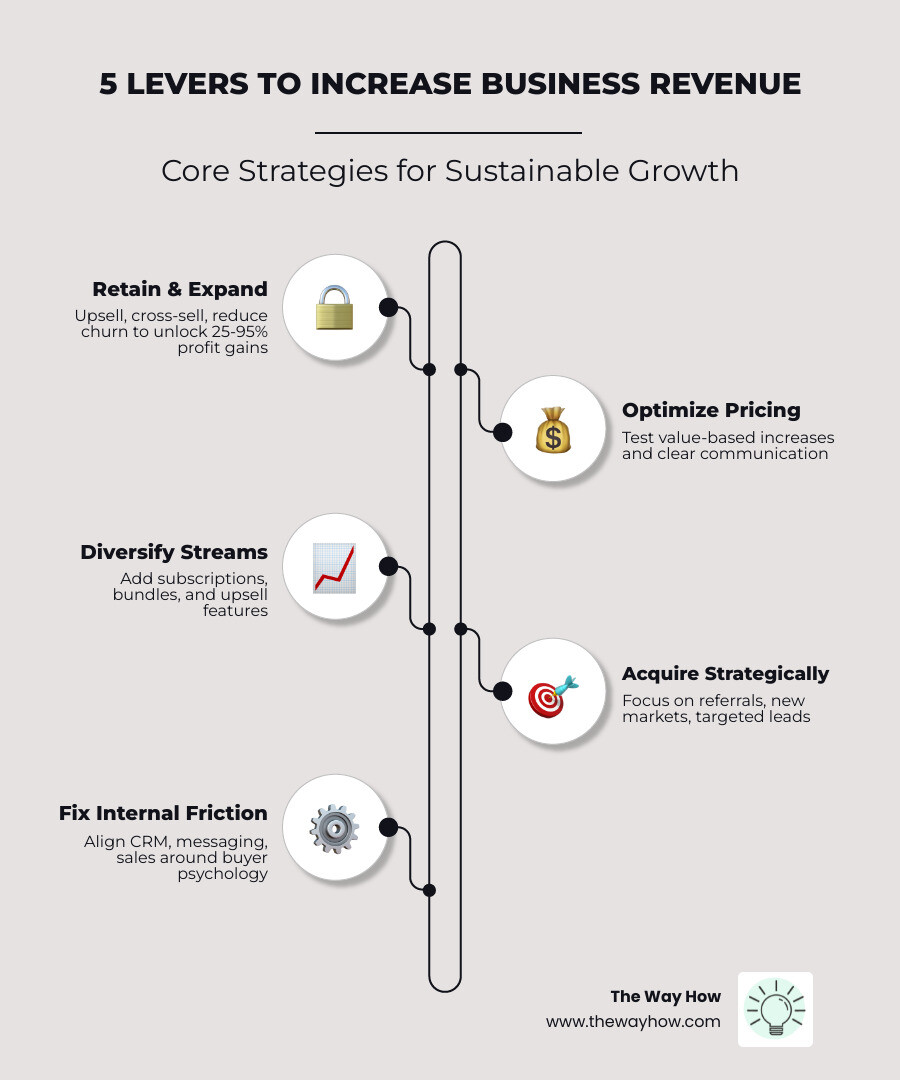
To increase business revenue, focus on these core levers:
- Retain and expand existing customers — upsell, cross-sell, and reduce churn
- Optimize your pricing — communicate value clearly and test price increases
- Diversify revenue streams — subscriptions, bundles, and add-ons
- Acquire strategically — referrals, new markets, and targeted lead generation
- Fix internal friction — align your CRM, messaging, and sales systems around buyer psychology
Most businesses already have more revenue potential than they realize. The problem is rarely the market.
Here’s the uncomfortable truth most growth advice skips: chasing new customers while ignoring the ones you already have is one of the most expensive habits in business. Research consistently shows that increasing customer retention by just five percent can increase profits by anywhere from 25 to 95 percent. Yet most companies pour budget into top-of-funnel acquisition while their existing customer relationships quietly erode.
The reason isn’t laziness. It’s a certainty gap — a gap between what leaders believe is broken and what’s actually broken. Teams are handed tactics without a clear diagnosis. Funnels get optimized. Ads get tested. But revenue stays flat. That’s not a channel problem. That’s a clarity problem.
Before you can grow revenue, you need to understand why it’s stalled — and that starts with understanding the human on the other side of every buying decision.
I’m Jeremy Wayne Howell, a revenue growth strategist with over 20 years of experience helping founders and revenue teams increase business revenue by diagnosing the behavioral and psychological gaps that tactics alone can’t fix. This guide is built on what I’ve seen work — and what I’ve watched quietly fail — across dozens of businesses at every stage of growth.
Quick Increase business revenue terms:
The Psychology of Sustainable Revenue Growth
In 2026, growth is no longer a matter of shouting louder than the competition. It is about understanding human behavior and the decision-making friction that prevents a prospect from saying “yes.” When we look at sustainable revenue growth, we must move past the “growth at all costs” mindset of previous decades.
The math is simple but often ignored: an extra five percentage points of revenue growth per year correlates with an additional three to four percentage points of total shareholder returns (TSR). However, achieving this requires an empathy-driven strategy. We have to ask: Why do our customers stay? Why do they leave? And what is the cognitive load we are placing on them during the buying process?
To truly master this, businesses need a robust framework for revenue management analytics. It’s about more than just tracking dollars; it’s about tracking the health of the relationship.
The Cognitive Cost of Customer Churn
Every time a customer leaves, it isn’t just a loss of recurring revenue; it’s an erosion of market trust. High churn rates signal a “certainty gap” in your delivery. In the psychology of revenue, trust is the primary currency. When trust is broken, the cost to re-acquire that customer—or a similar one—skyrockets.
By utilizing revenue cycle management analytics, we can identify exactly where customers lose momentum. Is it during onboarding? Is it a lack of perceived value six months in? Understanding the Customer Lifetime Value (CLTV) allows us to invest in the relationships that actually drive long-term stability rather than just chasing the next “hit” of new business.
Defining Growth in a Post-Digital Economy
By April 2026, the distinction between “digital” and “traditional” revenue has largely vanished. Over 54% of all revenue is now expected to flow through digital channels. But we must distinguish between revenue growth and profit growth. Revenue is the total income from sales, interest, and investments, while profit is what remains after the bills are paid.
A typical company pre-2020 grew at a measly 2.8% per year. To outpace the mean, we look at business growth as a holistic system. It’s not just about selling more units; it’s about increasing the value of every transaction and the frequency of those transactions.
8 Strategic Steps to Increase Business Revenue from Existing Customers
The most effective way to increase business revenue is to look at the goldmine you already own: your current customer base. We use a “Growth Profile Quadrant” to help our clients prioritize their efforts:
- Platinum Customers: High revenue, high margin, high potential. These need senior management contact and collaboration meetings.
- Growth Customers: Moderate revenue but high potential. These are your primary targets for upselling.
- Managed Customers: Steady revenue but low growth potential. Keep them happy, but optimize the cost of service.
- Milk or Fire: Low margin, low potential, and high service cost. These are the customers you may need to “fire” or transition to self-service to protect your resources.
By applying revenue analytics consulting to your database, you can stop treating all customers the same and start applying the right psychological triggers to the right groups. FreshBooks research suggests that targeting repeat customers is significantly more efficient than hunting for new ones.
Increase business revenue through strategic bundling
One of the most effective strategies to increase revenue is moving up or down the value chain. If you sell hardware, can you bundle it with installation and maintenance? Bundling creates “sticky” customers. When services are integrated, the “exit barrier” becomes higher because the customer relies on you for a complete process, not just a single tool.
If you are in the e-commerce space, you can maximize sales with HubSpot Ecommerce by using data to suggest the perfect bundle at the moment of highest intent.
The Power of Expansion MRR
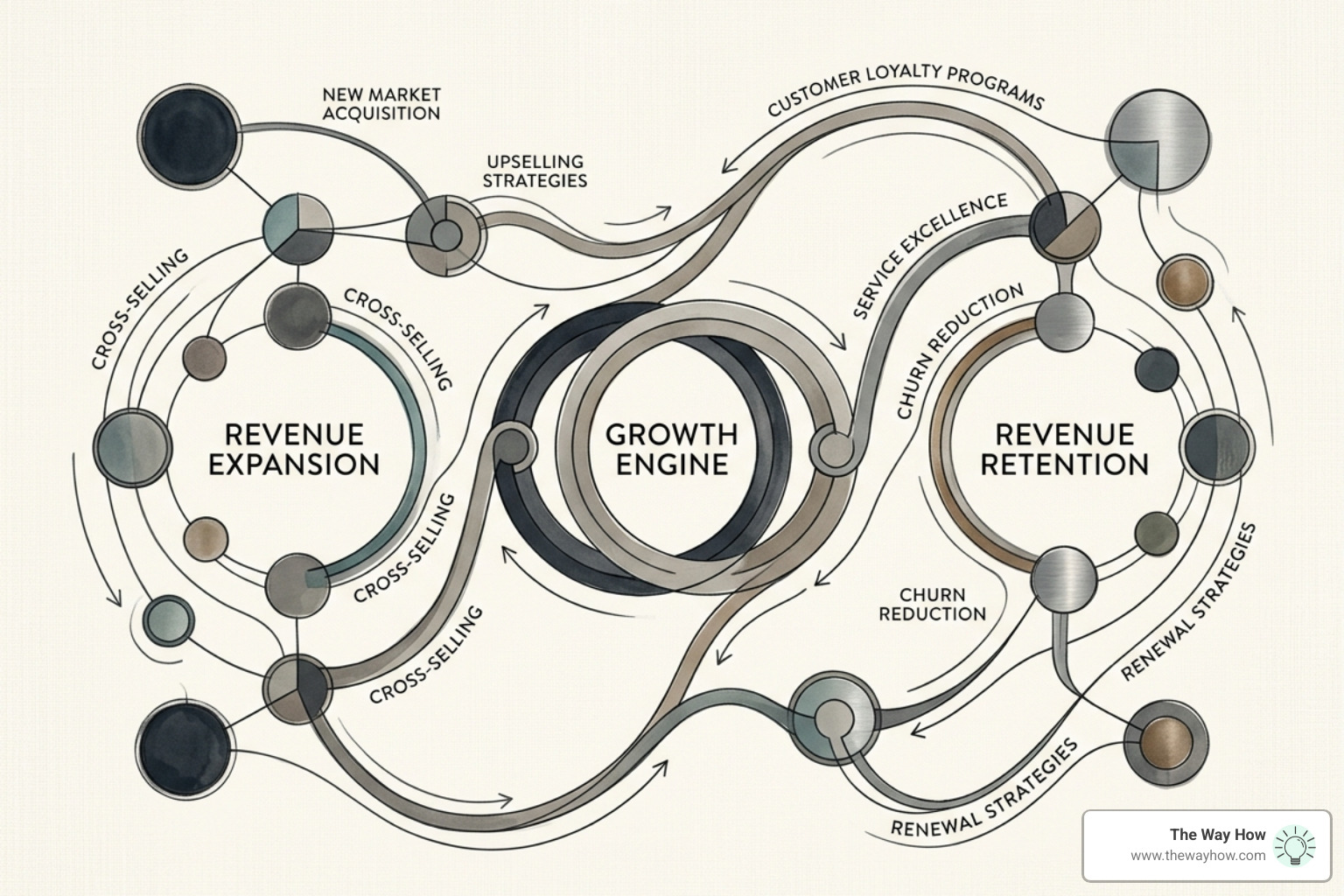
For SaaS and subscription businesses, the “holy grail” is Net Negative Churn. This happens when your Expansion Monthly Recurring Revenue (MRR)—the extra money from existing customers via upsells and add-ons—exceeds the revenue lost from customers who canceled.
Most successful SaaS companies aim for a 10% to 30% expansion MRR rate. To achieve this, you need a revenue cycle analytics complete guide to track how users interact with your features. If they are hitting a limit on their current tier, that is a psychological “readiness signal” for an upgrade.
Re-Engineering Your Pricing Strategy for Maximum Expansion
Many businesses are terrified of raising prices. They believe customers buy on price alone. In reality, customers buy on value and certainty. If you haven’t touched your pricing in two years, you are likely underpricing your value.
Strategic pricing involves understanding price elasticity—how much demand changes when the price moves. You can use:
- Value-Based Pricing: Setting prices based on the perceived value to the customer rather than your cost.
- Dynamic Pricing: Adjusting prices in real-time based on demand and competitor activity.
- Psychological Pricing: Using “charm pricing” (like $99 instead of $100) to reduce the perceived “pain of paying.”
As noted by Indeed’s career development resources, even small, tested increases can lead to massive revenue gains when compounded across a large customer base.
Communicating Value to Reduce Price Sensitivity
The key to raising prices without losing customers is transparency. Communicate the why behind the change. Are you adding new features? Improving support? Moving to a more sustainable supply chain?
Subscription models also help reduce price sensitivity by breaking large costs into smaller, manageable payments. In specialized fields, such as medicine, using a healthcare revenue cycle analytics guide can help providers find the balance between patient affordability and operational sustainability.
Proven Tactics to Increase Business Revenue Through New Market Acquisition
Once your existing base is optimized, it’s time to look outward. But don’t just “spray and pray.” You need a clear Ideal Customer Profile (ICP). Who are the people who see the most value in what you do?
First Internet Bank recommends diversifying your income sources to stabilize cash flow. This might mean geographic expansion or entering adjacent markets where your current competitive advantage is transferable.
For larger firms, programmatic M\&A—making several small, thematic acquisitions rather than one giant “bet-the-company” deal—has been shown to outperform purely organic growth. This is a core tenet of small business growth strategies for those looking to scale rapidly in 2026.
Increase business revenue with referral psychology
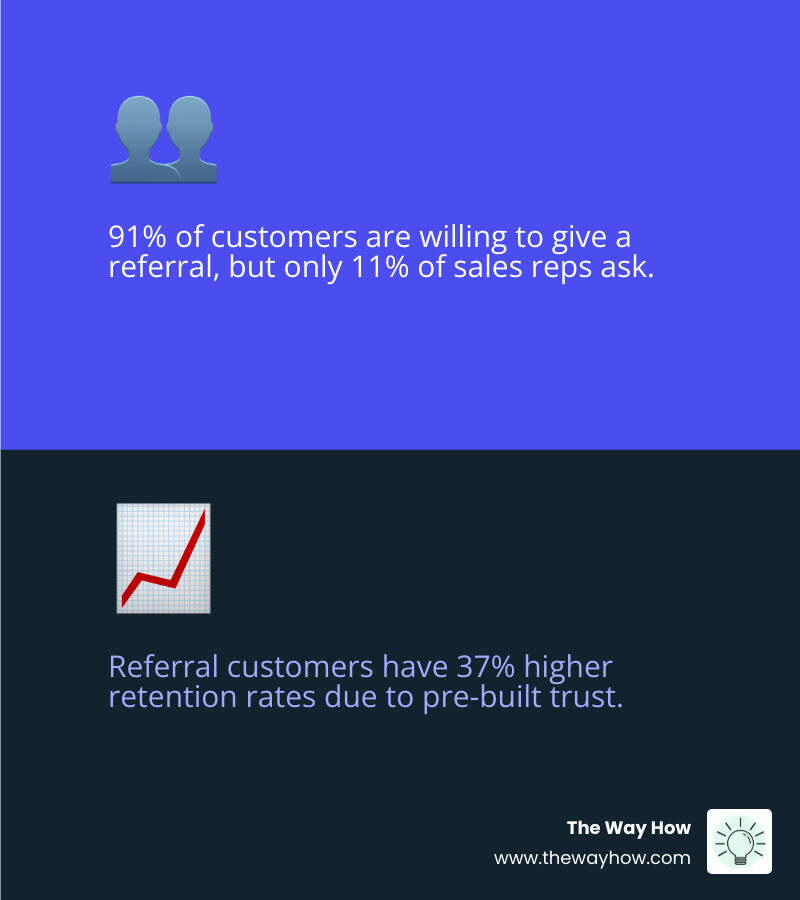
Referrals are the most overlooked revenue driver. Statistics show that 91% of customers are willing to give a referral, but only 11% of sales reps actually ask for one. Customers acquired through referrals have a 37% higher retention rate because the “trust gap” has already been bridged by a friend or colleague.
To turn this into a system, you must optimize your B2B sales funnels. Incentivize the referral, but make the process frictionless. If it’s hard to refer you, they won’t do it, no matter how much they like you. Use sales funnel optimization to ensure the “ask” happens at the peak of customer satisfaction, usually right after a successful delivery or milestone.
Leveraging Thought Leadership for Market Authority
In a world of AI-generated noise, true thought leadership is a trust signal. When you share deep insights into why problems exist, you position yourself as the only logical solution. One predictive maintenance firm used a thought leadership campaign to improve annual revenue by over 15% in just two years. This is the essence of business growth acceleration: reducing the time it takes for a prospect to trust you.
Avoiding the Certainty Gaps That Kill Growth
The biggest mistake we see is an obsession with the top of the funnel while the middle and bottom are leaking. If your conversion rate is low, pouring more leads into the top is like trying to fill a bucket with a hole in the bottom.
We often see “data silos” where marketing doesn’t know what sales is doing, and neither knows what customer success is seeing. This is where revenue cycle analytics becomes vital. You need a single source of truth—typically a well-architected CRM like HubSpot—to see the entire journey.
| Strategy | Organic Growth | Acquisition (M\&A) |
|---|---|---|
| Risk Level | Lower | Higher |
| Speed | Slower | Faster |
| Cost | Spread over time | High upfront |
| Integration | Natural | Complex |
To fix these gaps, you must build sales funnels that are rooted in how people actually make decisions. Use our funnel optimization complete guide to audit your current system for friction points.
Frequently Asked Questions about Revenue Growth
How do you calculate revenue growth percentage?
Calculating growth is the first step toward managing it. The formula is: ((Current Period Revenue - Previous Period Revenue) / Previous Period Revenue) x 100.
For example, if you earned $1M this year and $800k last year, your growth rate is 25%. Tracking this monthly helps you boost marketing ROI by seeing which campaigns actually moved the needle.
What is the difference between revenue expansion and acquisition?
Acquisition is finding new customers. Expansion is getting more value from current ones. Lusha’s growth strategies point out that expansion is almost always more cost-effective because the cost of acquisition (CAC) has already been paid. Successful companies typically generate 20–30% of their total revenue from expansion.
What KPIs are most important for revenue tracking in 2026?
In 2026, we focus on:
- ARPU (Average Revenue Per User): Is the value of each customer increasing?
- Churn Rate: Are we losing trust?
- Pipeline Velocity: How fast are deals moving through the funnel?
- Expansion MRR: Are our current customers buying more?
Restoring Momentum: Your Path to Predictable Revenue
At The Way How, we believe that revenue growth isn’t a mystery to be solved—it’s a system to be designed. If your growth has stalled, it’s rarely because you aren’t working hard enough. It’s usually because there is a “certainty gap” in your system that is creating friction for your buyers.
We help founders and leadership teams remove that uncertainty. Whether through Fractional CMO leadership, HubSpot architecture, or demand generation strategies rooted in behavioral psychology, we focus on the “why” before the “how.” We don’t just give you a list of tactics; we help you build a dependable growth engine.
If you’re ready to stop chasing trends and start building a system that creates trust and predictable revenue, we should talk.